
Ask “7.62 vs 5.56” at a gun counter and you will get two different arguments at once, because 7.62 means two different cartridges. One guy is talking about the 7.62×39, the stubby round the AK and SKS made famous. The other is talking about 7.62×51 NATO, the full-power cartridge of the M14, the FAL, and the G3. Both fire a .30 caliber bullet. They have almost nothing else in common, and each one stacks up against the 5.56 very differently.
So this page covers both. The short version: the 5.56 is the light, flat, cheap, high-capacity choice, and it is the right default for most AR owners. The 7.62×39 throws a heavier bullet at lower speed from a handy rifle and is a great short-range brush and hog round. The 7.62 NATO is a different class altogether, roughly twice the energy of a .223 at the muzzle, in a heavier rifle with heavier recoil.
Here is how I would pick. Want one rifle for training, home defense, and steel out past 300 yards? 5.56. Love the AK or want a .30 caliber carbine for hogs and deer inside 200 yards? 7.62×39. Need real reach and power for big game or long shots and do not mind the weight? 7.62 NATO. Our writers have tested all three in ARs, AKs, bolt guns, and battle rifles, and their numbers are below.
If the AK side is pulling you, our SKS vs AK-47 comparison covers the two classic 7.62×39 rifles.
Table of contents
Buyer’s Guide: 7.62 vs 5.56
Which 7.62 Are You Talking About?
Check the full name before you buy anything. The 7.62x39mm is a short intermediate cartridge with a tapered case, which is why AK magazines curve so hard. The 7.62x51mm NATO is a long, full-power rifle cartridge, the military counterpart of the .308 Winchester, and it needs an AR-10 size rifle or a bolt gun. The 5.56x45mm NATO is the military counterpart of the .223 Remington and runs in a standard AR-15.
Energy and Bullet Weight
A typical 55 grain .223 load leaves the muzzle around 3,240 fps with about 1,282 ft-lb. A typical 150 grain .308 hunting load runs around 2,820 fps with about 2,648 ft-lb, and at 500 yards it still carries more than twice the energy of the .223. Those are Federal’s published numbers from our .223 vs .308 page. The 7.62×39 sits between them, typically with a 123 grain bullet; every load our reviewer ran through a Bear Creek Arsenal 7.62×39 AR used a 123 grain bullet.
Recoil
Tom McHale used Andrew Chamberlain’s recoil math for an 8 pound rifle: 3.16 ft-lb for a 55 grain .223 and 6.34 ft-lb for the AK round. Roughly double, but still mild in a full-size rifle. The 7.62 NATO is noticeably heavier again, which is why battle rifles weigh what they do.
Range and Trajectory
The original 5.56 load was intended to hit point targets out to 500 yards, and a 5.56 stays flat well past where the 7.62×39 starts dropping fast. For close brush shots, that does not matter much. For shots past 300 yards, the 5.56 or the 7.62 NATO is the better tool, and the 7.62 NATO’s heavier bullets buck wind better.
Accuracy
The 7.62×39 gets called inaccurate, but much of that reputation belongs to cheap AKs. Our writer CitizenHush found even budget AK-pattern rifles capable of 3 to 4 MOA, and he held about 1 MOA with cheap Tula from a CZ-527 bolt action. Brian McCombie shot a 0.75 inch group at 100 yards with Winchester 123 grain FMJ from the Bear Creek AR.
Rifles, Magazines, and Ammo Cost
The 5.56 runs in more rifles than any other cartridge in the country. The 7.62×39 runs best in rifles designed for it, like the AK, SKS, and Ruger Mini Thirty; in an AR it needs special magazines and a stronger firing pin for hard steel-case primers. CitizenHush noted the main reason for a 7.62×39 AR was that it was cheaper to shoot than 5.56, and in 2021 he wrote that this was no longer true after the Russian ammo import bans. The 7.62 NATO costs more per round and weighs more to carry.
5.56 NATO: Best All-Around AR Cartridge (2026)
The 5.56 replaced the 7.62 NATO in U.S. service rifles for a reason. Military studies after World War II and Korea showed most fighting happened under 300 meters, and the M14’s full-power 7.62 round brought heavy recoil and heavy ammo. The little .22 caliber round let soldiers carry more, shoot faster, and still hit point targets far out. Those same traits make it the best home defense and training rifle round for most civilians today.
Read our full .223 Remington and 5.56 NATO history and specs here.
Key Specs
- Bullet Diameter: 0.224 inch
- Common Bullet Weights: About 35 to 77 grain
- Typical Load: 55 grain at about 3,240 fps, about 1,282 ft-lb
- Recoil Energy: 3.16 ft-lb (8 pound rifle)
- Platform: AR-15 and countless others
- Chamber Rule: 5.56 or .223 Wylde rifles shoot both; .223-only rifles should not be fed 5.56
Pros
- Flattest and lightest of the three
- Lowest recoil, highest capacity
- Widest choice of rifles, parts, and ammo
- Usually the cheapest to train with
Cons
- Light bullet for deer and larger game
- Depends on velocity, so short barrels hurt it
- Less wind resistance than 7.62 NATO at long range
🛒 Check Current Price for 5.56 AR-15 Rifles on GunsAmerica

7.62×39: Best for Short-Range Hogs, Deer and AK Fans (2026)
The 7.62×39 is the round you pick when you want a heavier .30 caliber bullet in a light, handy rifle, and you do not care what happens at 400 yards. CitizenHush hunts Texas hogs almost exclusively with Tula 122 grain hollow points, and he liked that the cartridge let him ditch a heavy AR-10 for shots under 300 yards. McCombie’s Bear Creek Arsenal AR in 7.62×39 ran 250 rounds and printed 0.90 inches with Federal Fusion soft points; he felt it ran smoother than any AK he had tried. His one gripe was the long 30-round AK-style magazine hanging six inches below the magwell, with no 10 or 20 round options he could find.
Read our full Bear Creek Arsenal 7.62×39 AR review here, plus our guide to making a 7.62×39 AR run reliably.
Key Specs
- Bullet Diameter: .30 caliber
- Typical Bullet Weight: 122 to 123 grain
- Recoil Energy: 6.34 ft-lb (8 pound rifle)
- Platforms: AK, SKS, Ruger Mini Thirty, CZ-527, purpose-built ARs
- Example Accuracy: 0.75 inch at 100 yards, Bear Creek AR, Winchester 123 grain FMJ
- AR Notes: Needs 7.62×39 magazines, bolt, and an enhanced firing pin for steel-case primers
Pros
- Heavier bullet than 5.56 for brush and hogs
- Runs in light, handy rifles
- AKs and SKSs are simple and rugged
- Good soft-point hunting loads available
Cons
- Drops fast past 200 to 300 yards
- Tapered case makes AR versions finicky
- Steel-case ammo wears AR bolts and extractors faster
- No longer the cheap ammo it once was
🛒 Check Current Price for 7.62×39 Rifles on GunsAmerica
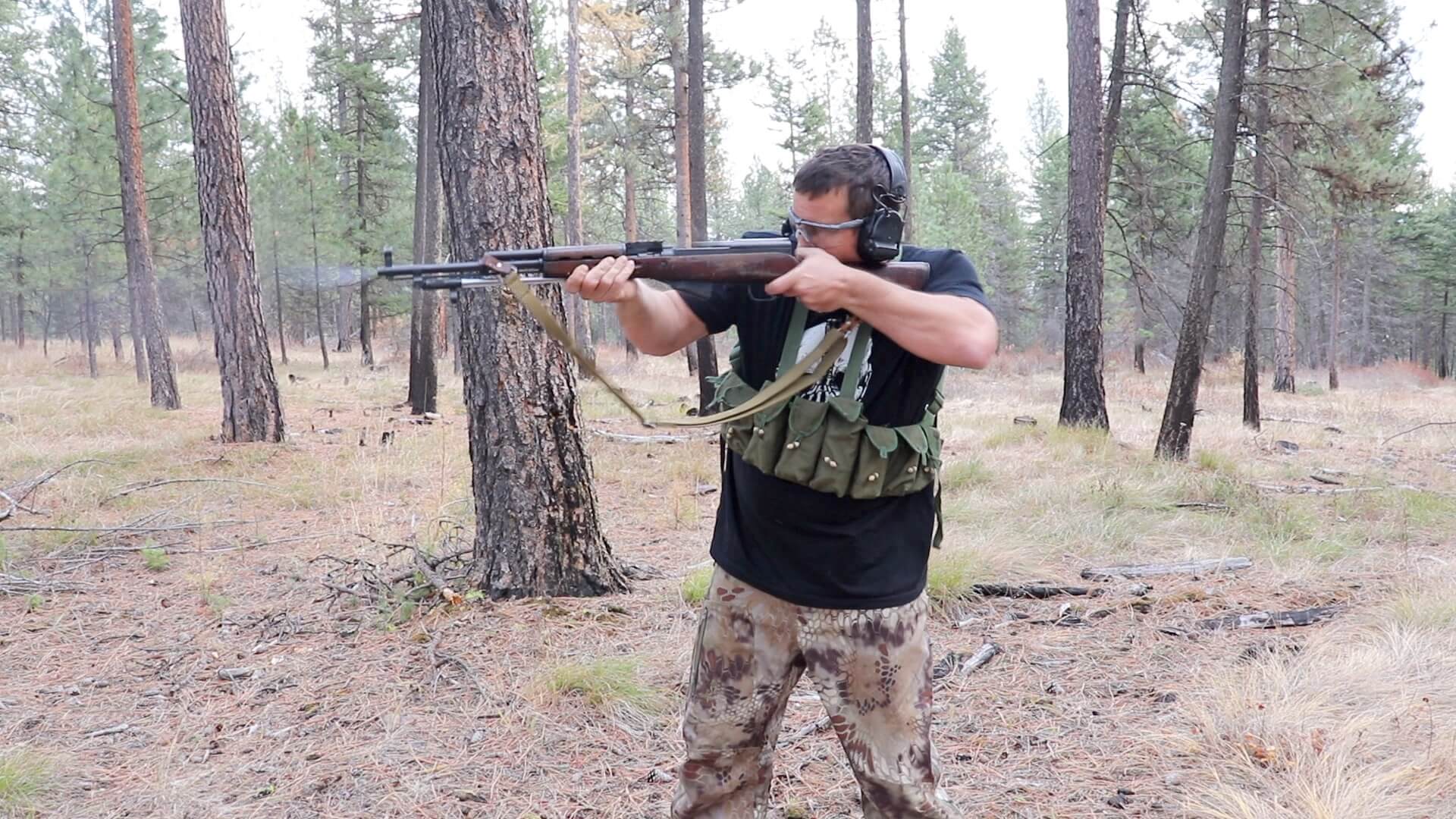
7.62 NATO: Best for Power, Reach and Big Game (2026)
The 7.62x51mm NATO is the full-power option, and our battle rifles guide calls it a sledgehammer to the AR-15’s scalpel. Everything about it is bigger: the bullets, the energy, the rifles, and the bill. Our test guns ranged from 8.0 pounds empty for the FN SCAR 17S to 11.4 pounds for a scope-ready M1A, and many push past 12 pounds with an optic and a loaded magazine. In return you get far more energy at every range and a long record on big game and in long range shooting.
Read our full best battle rifles guide here, and our .223 vs .308 ballistics comparison for the full energy table.
Key Specs
- Cartridge: 7.62x51mm NATO, the military counterpart of .308 Winchester
- Common Bullet Weights: 150 to 180 grain
- Typical .308 Hunting Load: 150 grain at about 2,820 fps, about 2,648 ft-lb
- Rifles: AR-10 pattern, M1A, FAL, G3 clones, SCAR 17S, bolt actions
- Battle Rifle Weight: 8.0 to 11.4 pounds empty in our tests
Pros
- Roughly twice the energy of 5.56
- Better for deer, elk, and long shots
- Heavier bullets buck wind
- Proven in bolt guns and semi-autos
Cons
- Heavier rifles and heavier recoil
- Costs more per round and weighs more to carry
- Magazines can be expensive depending on platform
- Overkill for most home defense
🛒 Check Current Price for 7.62 NATO Rifles on GunsAmerica

7.62 vs 5.56: Head to Head
- Flattest trajectory: 5.56.
- Most energy: 7.62 NATO, by a wide margin.
- Best short-range brush and hog round in a light rifle: 7.62×39.
- Lowest recoil and highest capacity: 5.56.
- Cheapest and easiest AR to own: 5.56.
- Big game at distance: 7.62 NATO.
Which Should You Buy?
If you are buying one rifle, the 7.62 vs 5.56 question goes to 5.56 for most people. It is light, flat, soft shooting, and cheap enough to practice with, and that is what makes a rifle useful. Buy a 7.62×39 if you love the AK or SKS or want a handy .30 caliber carbine for hogs and deer inside 200 yards; our best AK-47 rifles and best non-AK 7.62×39 rifles guides list the ones we tested. Buy a 7.62 NATO when power and range matter more than weight, and look at our best AR-10 rifles if you want it in a familiar AR layout.
Running a suppressor? Our 300 Blackout vs 5.56 comparison is worth a read too.
Whatever you choose, learn the full cartridge name and match the ammo to the barrel stamp every time. GunsAmerica.com has rifles in all three calibers, new and used.

As the Chief Operating Officer of GunsAmerica.com, Chris blends his passion for firearms with years of experience in marketing, communications, and technology. A dedicated 3-Gun competitor, firearm collector, and staunch Second Amendment supporter, he is deeply involved in the shooting community.
Beyond the firearms world, he’s an avid overlander, nature lover, and sailor.
Experience
Tech Founder:Specializing in accelerated growth and digital transformation.
Competitive Shooter: Active 3-Gun competitor with a strong foundation in practical shooting disciplines.
Advanced Training: Completed high-level courses in pistol, carbine, concealed carry, shotgun, and precision rifle.
2A Advocate: Committed to promoting responsible gun ownership, education, and 2A rights advocacy.
Outdoor Enthusiast: Avid overlander, sailor, and adventurer, with a background in self-reliance and off-grid exploration.