
Estimated reading time: 11 minutes
Born from Cold War military requirements and carried into the civilian mainstream by the AR-15, the .223 Remington became America’s most popular centerfire cartridge for a reason. From low recoil and staggering rifle variety to its complicated relationship with 5.56 NATO, this little cartridge still has plenty to say.
The .223 Remington Is Bigger Than the AR-15
The .223 Remington is the most popular centerfire cartridge in the United States. Its rise in popularity is associated with the rising tide of the AR-15 as that platform leaped from military applications to popular acclaim. But the .223 Remington does not start or end with the AR. There is no shortage of bolt-action, single-shot, and even lever-action designs to choose from. Likewise, the .223 has evolved from a varmint cartridge to serious deer medicine. In this overview, we will cover the history and development of the .223 Remington, how it differs from 5.56 NATO, and its continued potential today.

.223 Remington Guide: History, Specs, Comparisons and FAQs
- .223 Remington: The Cold War Origin Story
- .223 Remington Specs: Small Cartridge, Serious Range
- .223 Remington Quick Specs
- .223 Remington vs. the Competition
- .223 Remington vs. 5.56 NATO
- .223 Remington vs. .22-250
- .223 Remington vs. .22 Creedmoor
- .223 Remington vs. .243 Winchester
- Beyond the AR-15: .223 Rifles
- .223 Remington Strengths and Limitations
- .223 Remington FAQs
.223 Remington: The Cold War Origin Story
The .223 Remington was born out of Remington’s attempts to improve upon the .222 Remington in order to meet CONARC requirements for a new service cartridge for the US Army in the late 1950s. At the time, the Army fielded the M14 select-fire rifle that fired the full-powered 7.62 NATO cartridge. The tradition of full-powered ammunition held sway in the face of studies of combat in World War II and Korea indicating that most fighting occurred at ranges under three hundred meters. The effort to replace the light machine gun and submachine gun with the M14 was also problematic due to the 7.62’s excessive recoil and weight. The US Air Force still had vast stocks of one intermediate solution in the .30 Carbine as used in the M1 and M2 carbines. But these stocks were aging, and the .30 Carbine had a reputation for being underpowered. Gen. Curtis LeMay was keen on the solution of a small caliber, high velocity cartridge.
The .222 Remington was a small rimless cartridge developed in 1950 as a varmint cartridge that grew popular in benchrest shooting. Remington developed the .222 Special, which had a longer 1.76 inch case and slightly more case capacity than the original. The round was adapted to a scaled-down AR-10 and renamed the .223 Remington in 1961. The new AR-15 platform performed sufficiently for LeMay to adopt the rifle and cartridge.1

2The select-fire M16 in .223 Remington was tested by the US Army and adopted in 1964. Much to some modern confusion, the Army named the .223 round the 5.56mm ball M193. That is not to be mistaken for the nearly identical 5.56x45mm NATO adopted in 1980.
On the civilian side, the .223 Remington, with a slightly longer case length and powder capacity over the .222, was marketed for varmint hunting. It was formally introduced with the Remington Model 760 pump-action rifle in 1963. The following year, Colt introduced the semi-auto AR-15 in the same caliber.3
The .223 Remington would go on to be chambered in a number of single-shot rifles, bolt actions, and even lever-action designs, but its popularity was tied closely to semi-automatic rifles, particularly as the AR platform gained in availability and popularity.
🛒 Check Current Price for .223 Remingto on GunsAmerica.223 Remington Specs: Small Cartridge, Serious Range
The .223 Remington is an intermediate-powered cartridge that comes in a variety of bullet styles and weights. The original military load consisted of a 55-grain FMJ running at 3,200 feet per second out of a 20-inch barrel. That equates to 1,290 foot-pounds of energy. Unlike full-powered rifle cartridges like the 7.62 NATO, the .223 FMJ relied on tumbling and fragmentation at high velocity to do its damage.
Although the old 55-grain M193 load remains popular for target shooting and even personal defense, the .223 is available in common weights ranging from 35 grains at about 4,000 feet per second to 77-grain match ammunition at 2,700 feet per second.

In all its guises, the .223 is a noisy yet low-recoiling cartridge that is easy to shoot. In its original configuration, the .223 was intended to hit point targets out to five hundred yards. Some target shooters have found success with 77-grain open tip match rounds at ranges of one thousand yards, but the practical range for most shooters is far less, as the .223 lacks the velocity of other cartridges in the .22 centerfire rifle category.
Another point of contention is the sheer number of rifles in different rifling twist rates for the .223 Remington. The original M16 platform had a slow 1:14 twist that barely stabilized standard 55-grain ammunition. Later, this was revised to 1:12. On the civilian side, rifles with 1:9-1:12 twists have long been available and shoot well with light varmint loads up to 55 grains. Heavier 62-77 grain loads can struggle to stabilize and will group poorly. Modern AR-15 rifles and manually operated platforms with 1:7-1:8 twist work best across the gamut of ammunition.4
.223 Remington Quick Specs: The Numbers That Matter
| Caliber | .223 Remington |
|---|---|
| Parent Case | .222 Remington |
| Case Length | 1.760 inches |
| Overall Length | 2.260 inches maximum |
| Shoulder | 23 degrees; .0907 inch |
| Throat | .2027 inch5 |
| Case Capacity | 31.4 grains H2O 6 |
| Maximum Average Pressure | 55,000 psi 7 |
.223 Remington vs. the Competition: Where It Wins and Loses
.223 Remington vs. 5.56 NATO: Nearly Twins, Not Identical
The 5.56 NATO is derived from the .223 Remington and was an effort to improve on the cartridge. The .223 looks dimensionally identical to the 5.56, and it is common practice to shoot .223 ammunition in 5.56 chambered rifles. But they are not strictly identical. The 5.56 has a cartridge base diameter of .377 inch, while the .223’s diameter is .376 inch. The primer pocket of the 5.56 is also thicker, and primers tend to be seated and crimped. Although powder capacity is slightly less, the 5.56 is loaded to pressures of up to 58,000 psi. In addition, the 5.56 has a slightly longer throat to accommodate a longer 62 grain bullet without powder intrusion.89

On the whole, the 5.56 NATO boasts slightly higher velocity compared to the .223 Remington. The 5.56 is available in popular bullet weights such as 55, 62, and 77 grain. However, the .223 Remington does have an edge due to the sheer variety of bullet configurations available.
.223 Remington vs. .22-250: Versatility Meets Raw Speed
The .22-250 is a preeminent varmint cartridge that gained popularity on whitetail deer. As such, there is some overlap with the .223. By virtue of its case capacity, the .22-250 has a flatter trajectory and higher velocity than the .223. Standard .22-250 40 grain varmint loads race at about 4,000 feet per second. A 55-grain bullet can be pushed at a respectable 3,800 feet per second.10
But speed comes at a price. The .22-250 is known for wearing barrels faster than the .223. It is also overpowered for a conventional AR-style autoloading rifle. The .22-250 is a popular bolt-action round, although some makers have found success in chambering it in larger AR-10 rifles.
.223 Remington vs. .22 Creedmoor: Old Guard Meets Long Range
The .22 Creedmoor is one of the latest in the Creedmoor family of cartridges meant for long-range target shooting. The .22 is based on the 6.5 Creedmoor and inherits a more generous case capacity over the .223 Remington.
Like other Creedmoor rounds, the .22 has a long throat for seating heavy-for-caliber bullets. That advantage has not been fully realized, as the .22 has common bullet weights ranging from 69 to 80 grains, not dissimilar to .223 match ammunition. The main advantage of the .22 is higher pressure and higher velocities of over 3,200 feet per second with these heavier rounds. While the .223 has an edge in ammunition availability, in the arena it is intended, the .22 Creedmoor has the edge at long range.11
.223 Remington vs. .243 Winchester: Recoil or Raw Power?
Traditionally, the .243 Winchester has been a popular choice for deer and pronghorn. This is particularly true among youth and smaller-statured hunters who appreciate the lower recoil of the .243 over heavier .30 caliber rounds. Where legal, the .223 has served as a challenge.

The .223 is a softer shooting cartridge. As aforementioned, a 55-grain standard load generates just 3.2 pounds of recoil energy. The .243 with a 75-grain bullet generates 7.2.12 Like the .22-250, the .243 is generally a cartridge reserved for bolt-action rifles and a few AR-10 platforms. The .243 holds the edge in power and range with nominal 95-grain deer loads running at about 3,000 feet per second.
Beyond the AR-15: The Wildly Diverse World of .223 Rifles
Because of the popularity of the 5.56 and .223 Remington, a list of rifles in those calibers would be exhaustive. Most manufacturers of AR platforms produce a rifle that will shoot .223 Remington ammunition. But that does not make the .223 Remington a one-trick pony.
If you are looking to keep your brass or limit yourself to one well-placed shot, consider a rifle like the Henry Single Shot or Rossi LWC. There are also a number of excellent bolt-action rifles in .223 Remington. These range from budget rifles like the Savage Axis and Ruger American to higher-end models from CZ, Sako, and Tikka.
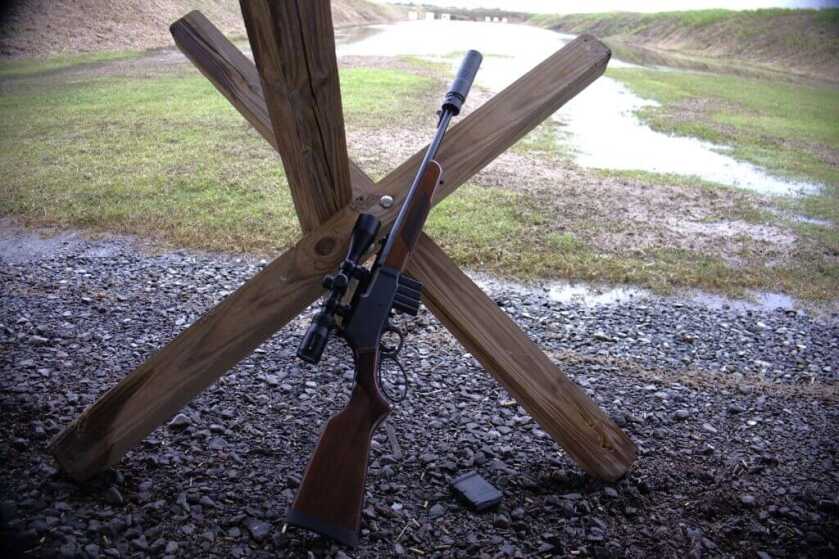
For a quick-cycling suppressor host, there are a few lever-action rifles chambered in .223. Henry Repeating Arms has gotten a lot of mileage in this category with their Long Ranger, Supreme, and SPD line of rifles. The Browning BLR is another more traditional option for a .223 lever action.
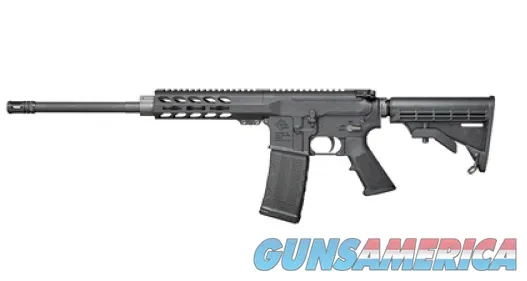
The semi-auto .223 does not need to be an AR-15. Last but not least among those options is the Ruger Mini-14, the anti-AR if there ever was.
.223 Remington Strengths and Limits: Why It Still Works
- Pros: Low recoil for a centerfire rifle cartridge, broad ammunition availability, bullet weights from light varmint loads to 77-grain match ammunition, enormous rifle selection, and compatibility with everything from single shots and bolt actions to lever actions and AR-platform rifles.
- Cons: Less velocity and downrange authority than larger or more specialized cartridges, performance that can depend heavily on rifling twist rate and bullet weight, and legal limitations on .22 caliber centerfire cartridges for big game in some states.
.223 Remington FAQs: Straight Answers to the Big Questions
What Caliber Is .223 Remington?
The .223 Remington uses a .224-inch diameter bullet and is nominally .22 caliber.13
What Suppressor Should You Use on .223 Remington Rifles?
A minimum of a .223 or 5.56 rated can is necessary. A suppressor can use 1/2 x 28 inch direct threads or can be used with a quick detach system over a muzzle device.
How Much Recoil Does .223 Remington Have?
The .223 Remington recoils sedately for a centerfire rifle cartridge, one reason it remains so approachable for a broad range of shooters, although felt recoil can be more pronounced in particularly light rifles. Standard .223 55 grain ammunition generates just 3.2 lbs. of recoil energy from an eight-pound rifle. By comparison, the old 7.62 NATO generates five times that amount.14
What Can You Hunt With .223 Remington?
Although marketed for small to mid-sized light-skinned varmints, hunters have found success hunting whitetail deer with the .223 Remington. Heavier controlled expansion rounds at closer distances are preferred.15 However, some states prohibit .22 caliber centerfire cartridges for use on big game.
Does the Military Still Use .223?
The adoption of the 5.56 NATO in the 1980s, followed by the adoption of the M4 Carbine in 1994, saw a phase out of true .223 Remington chambered M16 platform rifles.
Why Do People Hate the .223?
Some hate for the .223 is linked to the initial botched rollout of the M16 platform during the Vietnam War. Since then, the rifle platform has improved, but the .223 and 5.56 NATO cartridges developed a reputation for waning trajectories and energy at longer ranges in combat theaters like Afghanistan.16
Related Reads from GunsAmerica Digest
- .223 Remington Relevance in 2026
- What Is A .223 Wylde Chamber?
- The Evolution of 5.56 Ball: A Look Then and Now
Available on GunsAmerica Now




Jim Maybrick has been a consistent voice in the firearms world for over a decade, writing hundreds of articles and producing dozens of videos that span nearly every corner of the shooting sports. With a background in military and economic history, Jim has a talent for weaving compelling stories around historic firearms designs and the rise and fall of legacy manufacturers.
But Jim’s interests go far beyond the past—he’s just as comfortable diving into muzzleloading traditions as he is testing the latest rimfire loads or mastering cutting-edge modern systems. His thoughtful, data-driven approach brings clarity and depth to every review.
When he’s not at the range or deep in a spreadsheet, you’ll find him enjoying time with family, chasing game, or refining the lost art of starting a perfect campfire.
Experience:
– Veteran Writer & Content Creator – Over twelve years of experience in firearms journalism with hundreds of published pieces.– Military & Economic Historian – Academic background that fuels in-depth analysis of historic firearms and industry trends.– Versatile Shooter – Covers a wide range of topics from muzzleloaders and rimfire ballistics to today’s most advanced platforms.– Storyteller at Heart – Known for insightful writing that blends technical detail with engaging historical context.– Outdoorsman & Family Man – Reconnects with nature through hunting, fishing, and old-school firecraft.– Analytical Mindset – Brings precision, structure, and storytelling to every article—whether it’s a gear review or a deep historical dive.
Let us not forget the Gov and Mfr “neutering” the weapon platform by changing the primary 20 inch barrel to 16 for civillian and 14.5 for the Gov M4. No suprise when users complain it doesn’t have stopping power or an accurate reach.
As ammo prices rise and occasionally fall, the .223 is still more bang for the buck. The average Joe/Jane can still reasonably build depth in their inventory stockpile over time. Though not specifically addressed above it is an adequate man stopper for the average citizen if things go absolutely sideways and a primary handgun or short PDW doesn’t measure up to the threat environment.
All things considered: AR variants and the .223 will remain America’s must have and go to combo for decades to come.
Lastly, firearm manufacturers should abandon chambering for the “.223” and opt for the 5.56 chambering across the board. Feed them whatever you have/prefer.
Basically it is light and it works well.