
9mm vs .40 S&W was the hottest argument in American gun shops for about 25 years, and then the FBI more or less ended it. In 2014 the Bureau produced a report finding that modern 9mm loads performed, in some cases, as well as or better than comparable .40 and .45 ACP law enforcement loads, with less recoil and lower cost. Agencies started trading in their .40s, and the 9mm took over. Case closed, right? Not quite.
The .40 was born out of the 1986 Miami shootout, where a 9mm round to the chest did not stop a determined attacker before he killed two agents. Smith & Wesson and Winchester shortened the 10mm into a cartridge that fit 9mm-size pistols, and Dr. Will Dabbs, an ER physician who writes for us, notes it pushed a 165 grain bullet past 1,100 fps. He has seen what both do to people, and he still keeps a .40 in the truck.
So here is where I land. If you are buying one handgun for carry, home defense, and practice, buy a 9mm. It holds more rounds, kicks less, and costs less to shoot, and modern hollow points close most of the old performance gap. Buy a .40 if you live under a magazine limit that erases 9mm’s capacity edge, if you shoot it just as well, or if you want a pistol-caliber carbine with more punch. Both cartridges are rated to the same 35,000 psi SAAMI maximum; the .40 just puts a heavier bullet on top.
Shopping the guns? Our best 9mm pistols guide covers the carry, home, and range options we have shot.
Table of contents
Buyer’s Guide: 9mm vs .40 S&W
Recoil, by the Numbers
Snappy is subjective, so Tom McHale used Andrew Chamberlain’s cartridge comparison math from a 40 ounce gun. An average 9mm load with a 115 grain bullet at 1,250 fps generates 3.67 ft-lb of recoil energy. A 180 grain .40 at 1,020 fps generates 6.12 ft-lb. That is almost twice the 9mm and less than a 230 grain .45 ACP at 7.25. McHale described the .40 as more of a snap and the .45 as more of a push.
Capacity
Because most .40 pistols are built on 9mm frames, Dabbs notes that converting between them was often as simple as swapping the barrel and magazine, with capacity typically reduced by 2 to 4 rounds. The Glock 22 he profiled holds 15 rounds of .40; its 9mm sibling holds more.
Terminal Performance
Max Slowik made the point that many commercial .40 loads are on the light side to reduce recoil and wear, which is partly why they perform so much like 9mm +P. On the other end, makers like Buffalo Bore, Double Tap, and Underwood load .40 all the way to the top, past anything a 9mm can reach. Dabbs puts it simply: shot placement is everything, bullet design is a force multiplier, and no handgun round guarantees a one-shot stop.
Hit Rates and Training
Slowik and Dabbs both cite FBI data that officers in real shootings connect with roughly one shot in five. Softer recoil means faster, more accurate follow-ups, and cheaper ammo means more practice. That is the strongest case for 9mm, and it applies to private citizens even more than cops, since most of us do not get department ammo.
Magazine Limits
Slowik points out the .40’s quiet advantage: in a state capped at 10 or 15 rounds, 9mm’s capacity edge shrinks or disappears. If both pistols hold the same number, the heavier bullet starts to look better.
Accuracy
Mechanically, neither cartridge has a real accuracy edge. Miller found the .40 offers nearly identical accuracy to 9mm, and Opinion believes the .40 is one of the truest-shooting rounds he owns, though he admits that is his own experience rather than exhaustive testing. The practical difference is the shooter. Dabbs says he shoots a .40 a bit better than a .45 ACP and a 9mm a little better than a .40. Most people will find the same, especially in rapid strings from a small carry gun.
Wear and Cost
Justin Opinion, a .40 fan, admits most .40 pistols are 9mm guns with heavier springs and wear out faster. Ammo costs more too, though in the last couple of ammo panics .40 was often easier to find than 9mm. Many .40 pistols can also run .357 SIG with a conversion barrel, which is a handy bonus.
9mm Luger: Best for Most Shooters and Most Uses (2026)
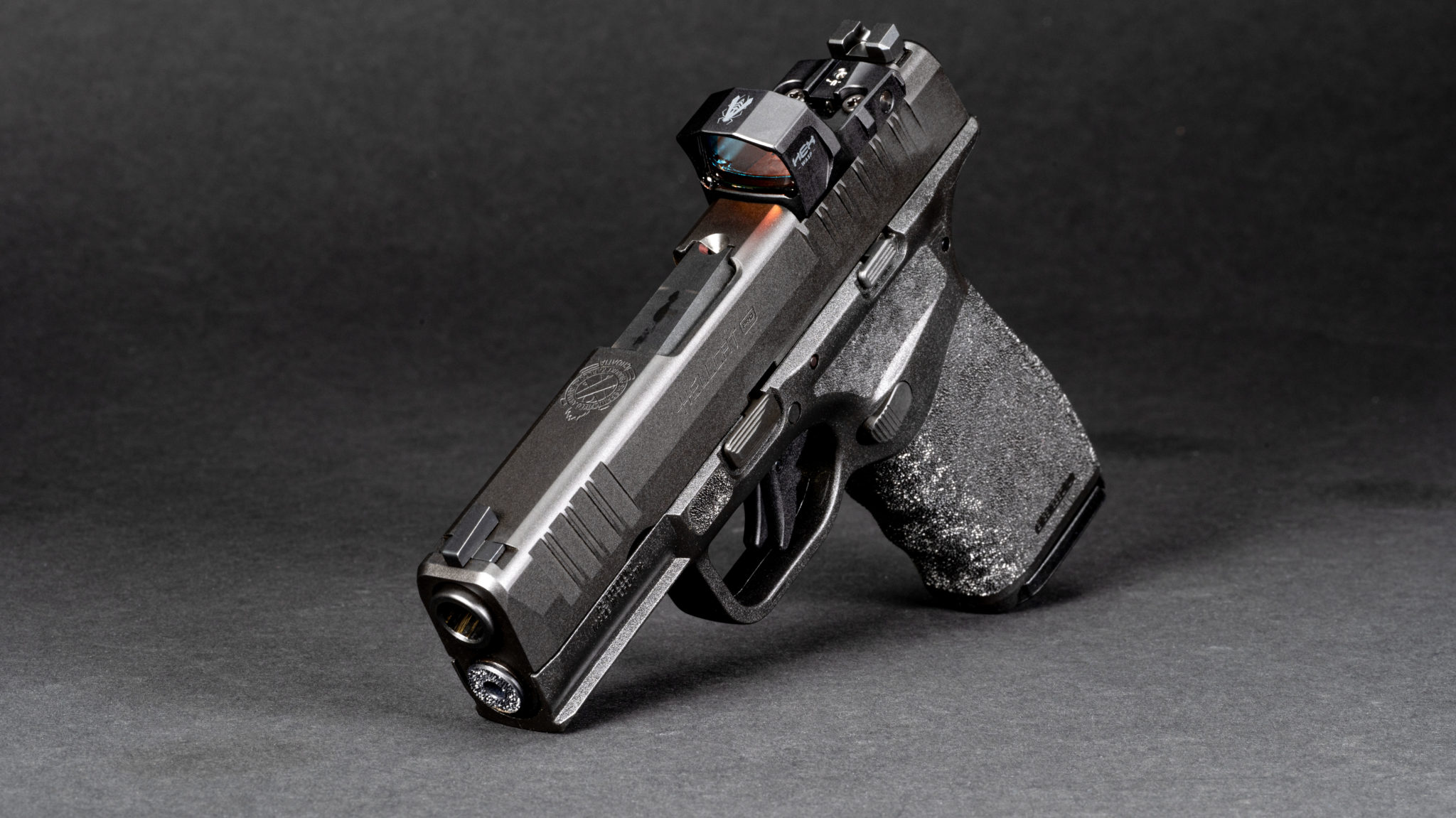
Georg Luger designed the 9mm Parabellum in 1902, and today it is the most popular centerfire pistol cartridge in the world. Dabbs notes that 60 percent of American police carry it. Its military load pushes a 124 grain full metal jacket bullet to about 1,150 fps. Modern defensive hollow points from good makers expand and penetrate reliably, and the cartridge runs in everything from micro-compacts like the Hellcat to full-size duty guns. As Slowik put it, if you only have one handgun, it is probably best if it is a 9mm.
Read our full 9mm vs .45 ACP cartridge showdown here for more on why the FBI went back to 9mm.
Key Specs
- Bullet Diameter: 0.355 inch
- Common Bullet Weights: 115 to 147 grain
- SAAMI Max Pressure: 35,000 psi
- Military Ball Load: 124 grain at about 1,150 fps
- Recoil Energy: 3.67 ft-lb (115 grain at 1,250 fps, 40 ounce gun)
- Capacity: Typically 2 to 4 more rounds than the same pistol in .40
- Cost: Usually the cheapest centerfire pistol ammo to practice with
Pros
- More rounds per magazine
- Least recoil, fastest follow-up shots
- Cheapest to train with
- Modern defensive loads perform very well
Cons
- Lighter bullet than .40
- Can be scarce in ammo panics
- Capacity edge shrinks under magazine limits
🛒 Check Current Price for 9mm Pistols on GunsAmerica
.40 S&W: Best for Power in a 9mm-Size Pistol (2026)
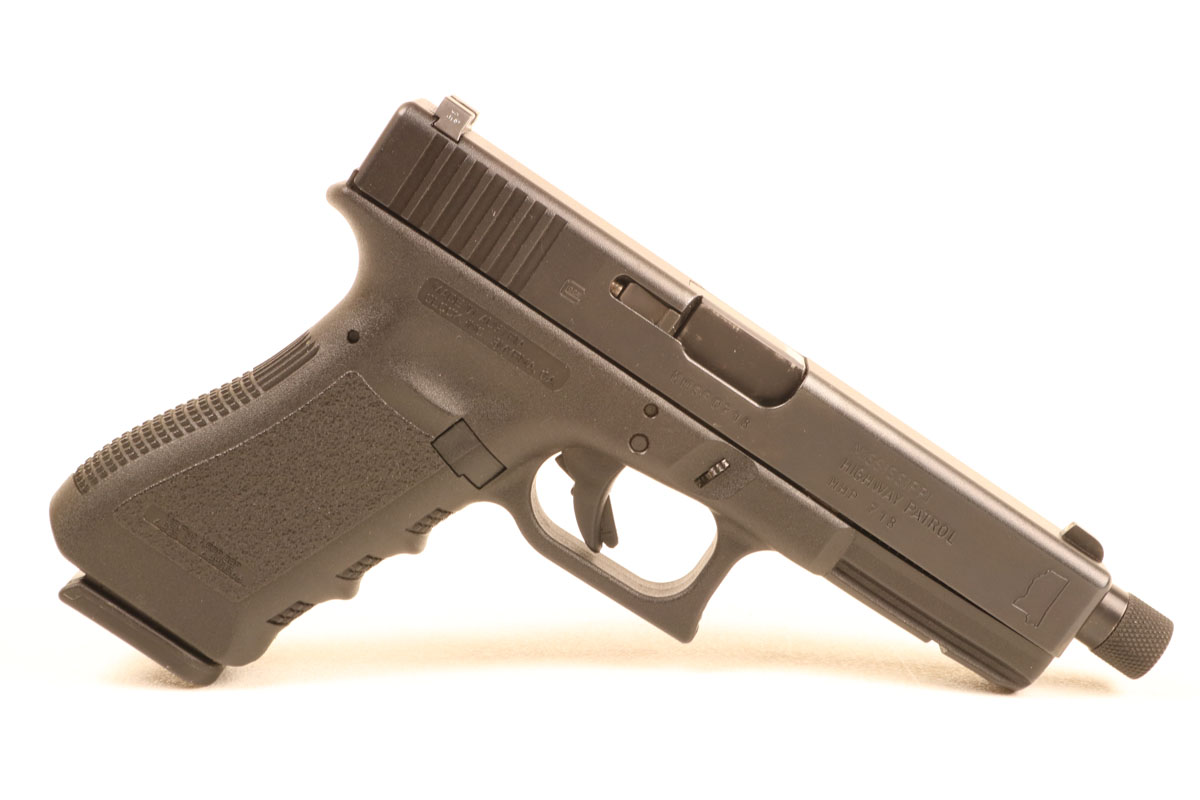
Dabbs calls the .40 the grand compromise: more power than 9mm and less recoil than .45 ACP, in a package the size of the weaker gun. Mark Miller found it offers nearly identical accuracy to 9mm with an energy advantage. Opinion swears by its accuracy and calls it a reloader’s dream with a big case mouth that you will never confuse with .380 brass. And Slowik notes it shines in pistol-caliber carbines, where the recoil that makes handguns flip does not matter.
Read our full .40 S&W analysis by Dr. Will Dabbs here, plus Max Slowik’s case for and against the .40 and the Barnes TAC-XPD .40 ammo test.
Key Specs
- Bullet Diameter: 0.400 inch
- Common Loads: 125 to 140 grain at 1,100 to 1,350 fps, up to 200 grain near 950 fps
- SAAMI Max Pressure: 35,000 psi
- Classic Duty Load: 165 grain above 1,100 fps
- Recoil Energy: 6.12 ft-lb (180 grain at 1,020 fps, 40 ounce gun)
- Primer: Small pistol
- Bonus: Many pistols accept .357 SIG conversion barrels
Pros
- Heavier bullet in the same size pistol
- Full-power loads exceed anything in 9mm
- Makes more sense under magazine limits
- Excellent in pistol-caliber carbines
Cons
- Nearly double the recoil energy of 9mm
- 2 to 4 fewer rounds in most pistols
- Faster wear on many 9mm-based designs
- Costs more to shoot
🛒 Check Current Price for .40 S&W Pistols on GunsAmerica
9mm vs .40 S&W: Head to Head
- Capacity: 9mm.
- Recoil: 9mm, at roughly half the recoil energy.
- Bullet weight: .40.
- Cost to train: 9mm.
- Under magazine limits: .40 closes the gap.
- Carbines: .40 gets more from the longer barrel without the recoil penalty.
Which Should You Buy?
For most people, the 9mm vs .40 S&W question has a clear answer: 9mm. You will carry more rounds, shoot faster and more accurately, and practice more because the ammo is cheaper. Modern 9mm hollow points do the job, and the FBI agreed in 2014.
Buy a .40 if you shoot it as well as a 9mm, if your state caps magazines, or if you want a carbine with more thump. It is still a proven cartridge with huge support, and Slowik is right that cartridges this successful never really go away.
Whatever you choose, pick quality defensive ammo and train with it. Our best concealed carry handguns guide has pistols in both calibers, and GunsAmerica.com has thousands listed.
If you want more power than the .40, read our 10mm vs .40 S&W comparison.

As the Chief Operating Officer of GunsAmerica.com, Chris blends his passion for firearms with years of experience in marketing, communications, and technology. A dedicated 3-Gun competitor, firearm collector, and staunch Second Amendment supporter, he is deeply involved in the shooting community.
Beyond the firearms world, he’s an avid overlander, nature lover, and sailor.
Experience
Tech Founder:Specializing in accelerated growth and digital transformation.
Competitive Shooter: Active 3-Gun competitor with a strong foundation in practical shooting disciplines.
Advanced Training: Completed high-level courses in pistol, carbine, concealed carry, shotgun, and precision rifle.
2A Advocate: Committed to promoting responsible gun ownership, education, and 2A rights advocacy.
Outdoor Enthusiast: Avid overlander, sailor, and adventurer, with a background in self-reliance and off-grid exploration.