

Estimated reading time: 13 minutes
The Ruger American Gen II in 400 Legend brought upscale features to the budget-rifle fight and backed them with a best 0.74-inch group at 100 yards. Ruger made the American look fancier, but the real question was whether it could shoot.
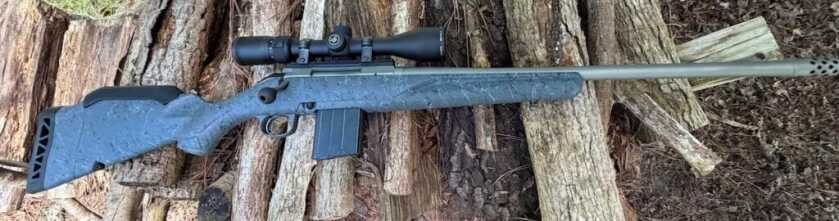
Table of contents
- Six Ruger American Gen II Models Give Hunters Options
- Ruger American Gen II Features Punch Above Its Price
- Three-Position Safety Is Simple, Ambidextrous, and Useful
- Ruger American Gen II Range Test: Can It Actually Shoot?
- 400 Legend Ballistics Match the Vortex BDC Surprisingly Well
- Ruger American Gen II Accuracy Hits 0.74 Inches
- How the Ruger American Gen II Behaved From the Bench
- Ruger American Gen II 400 Legend Specifications
- Ruger American Gen II Pros and Cons: Plenty to Like
- Is the Ruger American Gen II Worth It? Ruger Raised the Bar
- Related Reads from GunsAmerica Digest
Ruger American Gen II Looks Fancy, But Can It Shoot?
The original Ruger American was a good meat-and-potatoes rig that offered nothing fancy or new. Accuracy and performance were good, and that’s what you expect in an inexpensive rifle. With the second generation of American rifles, Ruger has set a higher standard for economy hunting rifles. The American Rifle Gen II is packed with features that are normally found on more expensive rifles, like spiral fluted barrels, splattered finish stocks, Cerakote finishes, and an oversized bolt knob that can be swapped out and customized. Those features are the sexy enhancements, but there are also practical enhancements like the stock, which is adjustable for LOP and comb height and a no-nonsense three-position safety that is right- and left-hand friendly. When I pulled the rifle out of the box, I mumbled to myself: Ruger sure has upped the American’s game. It looks nothing like the older version of the American. Then my thought went to: It looks fancy, but can it shoot?
Six Ruger American Gen II Models Give Hunters Options
If you are wondering why Ruger discontinued the original American series, they actually made a few improvements to the design and rebranded it as the Glenfield Model A.
This Ruger American Gen II review is for the Standard model of Generation II American rifles. There are a total of six different models: Standard, Ranch, Predator, Patrol, Prairie, and Scout. The models differ by barrel configuration and finish. The names pretty much describe the features. For instance, the American Scout model has what you would expect a Scout rifle would have, which is military-style iron sights, a 16.1-inch barrel, and a scout-length Picatinny rail for mounting a variety of optics, from traditional scopes to long eye relief scopes and night and thermal optics. The American Prairie has a bull contour barrel for long-range shooting. The Ranch has a 16-inch barrel, making it more compact and lighter. You get the idea.
Ruger American Gen II Features Punch Above Its Price
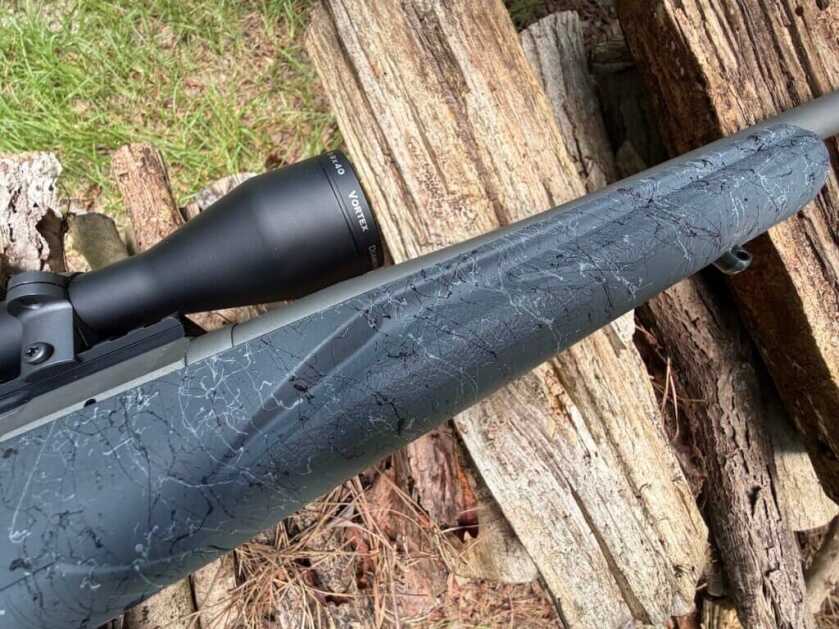
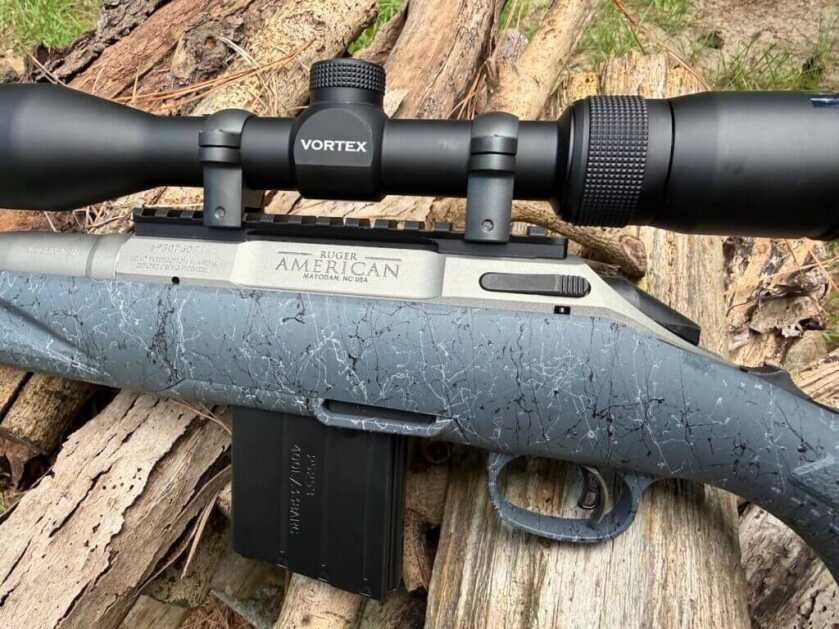
The American Gen II Standard is chambered in a hunting caliber suitable for coyote, wild pigs, whitetail deer, black bear, and elk. Barrels are all 20 inches in length, have spiral fluting, and wear a radial port muzzle brake. Two calibers, the 400 Legend and 450 Bushmaster, do not have fluted barrels. Consistent with all American Standard rifles is a gunmetal gray Cerakote finish barreled action and a dark gray stock textured with a black and gray splatter. The texture is grippy. In hand, the pistol grip and forend are thin, which is good, especially when wearing gloves.

The LOP is adjustable from 12 to 13.75 inches via spacers and is shipped with a 13.75-inch length-of-pull spacer installed. You need to purchase 12.75- and 13.25-inch spacers separately for $30. A low comb comes with the rifle, and medium and high can be purchased from Ruger for $20. There is also stock weight kit for $99, which is used to counterbalance a bipod or suppressor and make the rifle less muzzle-heavy. The extra weight also helps stifle felt recoil. Not including these parts keeps the cost of the rifle down.
The comb is a contrasting black piece of smooth plastic that offers a comfortable cheek weld when shooting, and the vented rubber recoil pad absorbs kick. As I looked over the rifle, the LOP spacer insert wiggled slightly, then I figured that the rear sling swivel attaches the insert to the stock. I tightened the sling swivel stud and the wiggle went away.
400 Legend Magazine Setup Has an AR15 Twist
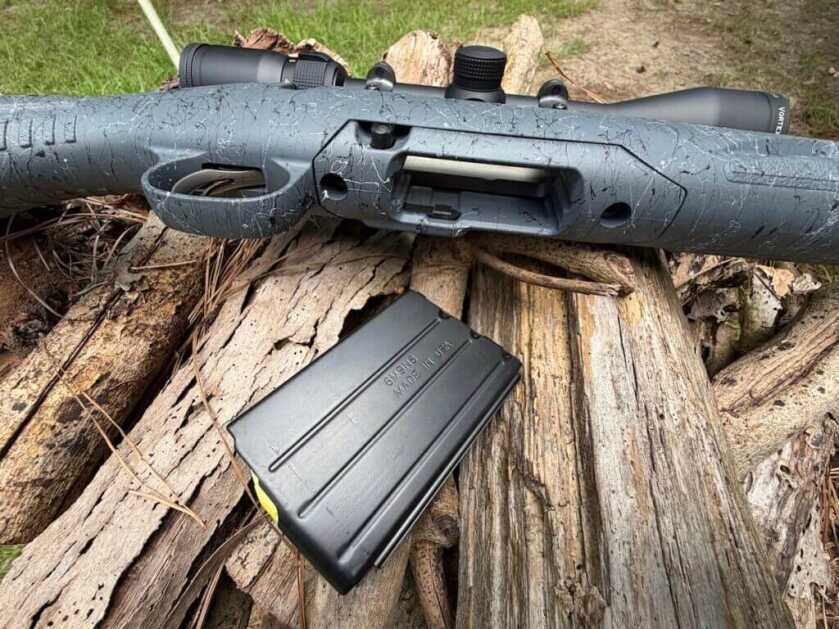
The magazine well differs on American Gen II rifles depending on the caliber. It is a specific insert to accommodate either a flush-fit AR-style mag, a metal AR mag, or an AI-style mag. The 400 Legend uses a 5-round, steel AR-style magazine and a magazine release exactly like an AR15, with the magazine release button located forward of the trigger guard. You can’t press the mag release while gripping the American Gen II unless your fingers are as long as churros. The AI-style mags have an oversized paddle magazine release.

I like to carry a hunting rifle by cradling it in my firing hand just forward of the trigger guard. This is a comfortable carry position for flush-fit mags, but in the 400 Legend the AR magazine sticks out the bottom of the stock, so I carried the rifle by gripping the front of the magazine.
Adjustable Stock and Bedding Add Real Hunting Utility
The stock free-floats the barrel, and there are two V-shaped aluminum blocks that lock the action to the stock. The inside of the forend is filled with ribs forming a series of triangles to stiffen the stock.

To adjust the Ruger Marksman trigger, the barreled action needs to be removed from the stock. Only two action screws need to be removed, depending on the magazine well module. Rifles equipped with an AI-style magazine well have an additional step. Make sure you torque those screws down to 60-80 in-lbs after taking the rifle apart. From the factory, the trigger broke at a crisp, clean break that averaged 4 pounds. A good trigger for the price point.
70-Degree Bolt Throw Leaves Plenty of Scope Clearance

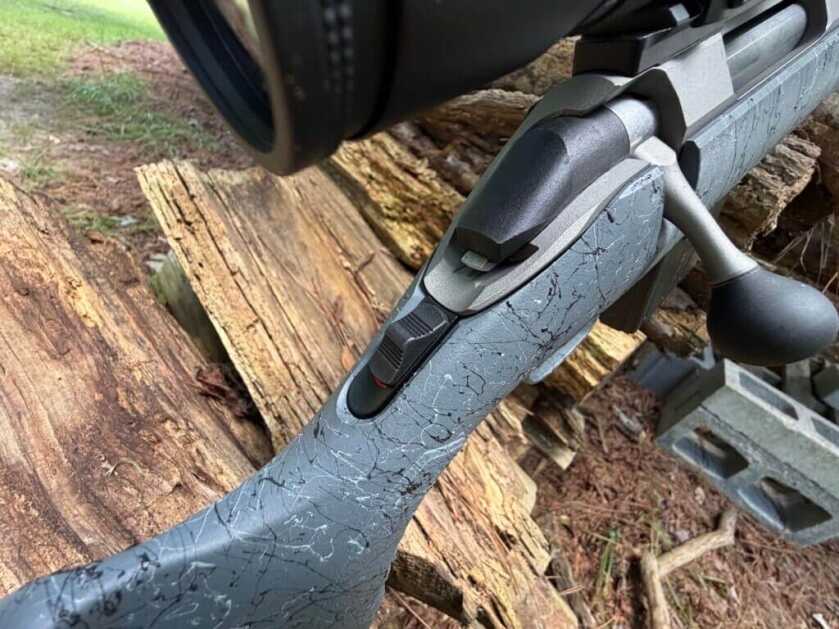
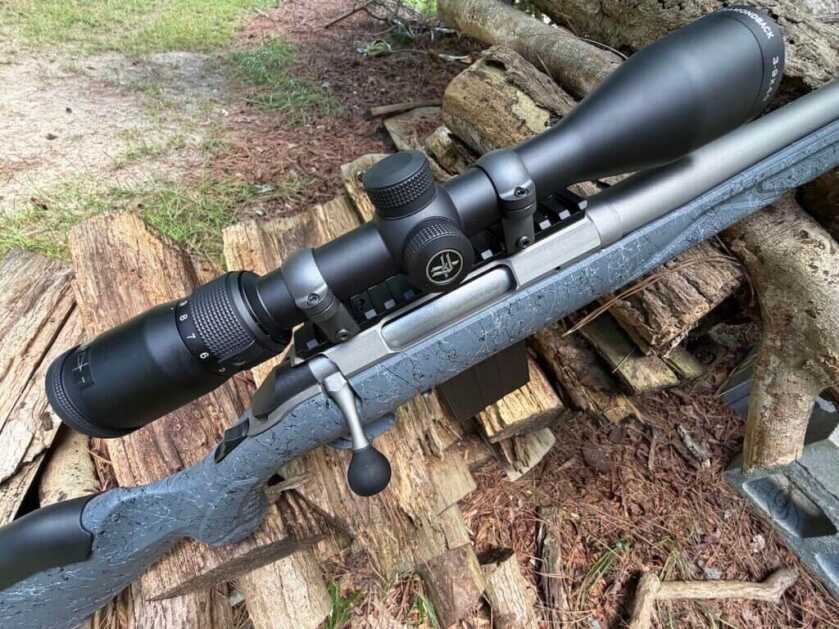
At the factory, Ruger installed a one-piece Picatinny rail to the receiver that provides multiple mounting options for an optic. The one-piece bolt is equipped with three lugs, so the bolt throw is only 70 degrees, which means your fingers clear the eyepiece of the scope. The bolt knob is polymer, oversized, and replaceable. Fully raising the bolt handle cocks the firing pin, and a cocking piece will protrude from the bolt shroud when the firing pin is cocked. Manipulating the bolt was smooth.

Three-Position Safety Is Simple, Ambidextrous, and Useful
The three-position tang safety is ambidextrous. When the safety is moved fully forward, it is in the “FIRE” position with one red bar visible. The middle position is “SAFE” with one white bar visible. In this position, the bolt can be lifted. The third, rearmost position is the “SAFE-LOCKED” with two white bars visible that locks down the bolt.
Ruger American Gen II Range Test: Can It Actually Shoot?
The Vortex Diamondback 3-9x40mm is a popular, no-nonsense hunting optic with a SFP Dead-Hold BDC reticle. Like the Ruger American Gen II, the Vortex Diamondback is inexpensive, but don’t call it cheap. The resolution is clear, and images are sharp. The reticle subtensions are in MOA, so it is simple to figure out what holdover mark to use on the vertical strata.
400 Legend Ballistics Match the Vortex BDC Surprisingly Well
One MOA is equal to 1.047 inches, so you’ll have to do some math or run ballistic data through a ballistic calculator. The distance from the center of the crosshair to the second elevation aiming mark is 1.5 MOA and the third aiming mark is 4.5 MOA. The 400 Legend load I used was Hornady American Whitetail with a 210-grain SP bullet as an example. With a 100-yard zero, the bullet will drop 2.98 inches or 1.89 MOA at 150 yards, and will drop 9.17 inches or 4.37 MOA at 200 yards, which means you can use the second aiming point at a 150-yard shot since the reticle is calibrated for a 1.5 MOA drop. The difference between the reticle’s 1.5 MOA and the load’s 1.89 MOA is minimal. I don’t think the deer will notice. Use the third aiming point for a shot at 200 yards since the reticle is calibrated for 4.5 MOA and the bullet will drop 4.37 MOA at 200 yards. Again not much of a difference between the reticle and load. Remember the magnification needs to be on the maximum setting to use the reticle’s additional aiming mark. Of course, you need to throw ballistic data into a ballistic calculator for your load through your rifle, and then actually test the ammo, rifle, and optic to be 100 percent sure.
Ruger American Gen II Accuracy Hits 0.74 Inches

The best 3-shot group measured 0.74 inches with Hornady American Whitetail 210-grain SP bullet; average was 1.22 inches. With 215-grain JSP bullets in Winchester’s Power Point load, the best group measured 0.78 inches and averaged 1.18 inches. Remington Core-Lokt 210-grain SP bullets gave up a best that also measured 0.78 inches and averaged 0.93 inches. I’ll take that in a heartbeat, especially with inexpensive Core-Lokt ammo.


How the Ruger American Gen II Behaved From the Bench
There were no issues. Accuracy was good, with the Ruger American Gen II averaging 1.11 inches across all ammo. The bolt was smooth to cycle, and I liked the leverage the oversized bolt offered. Rounds fed smoothly and ejected cleanly. The magazine seated with a definitive click. I could not load single rounds by dropping a cartridge on top of the empty magazine; I had to remove the mag and drop one in the chamber to load a single round. The bottom of the stock is round so the Ruger could roll side-to-side when using a rest. Recoil was managed with the stock and muzzle brake, which with the 400 Legend, is more than a 350 Legend and less than a .308 Winchester. The 20-inch barrel makes the rifle manageable, especially in a tree stand or ground blind if you should opt for a suppressor.
Ruger American Gen II 400 Legend Specifications
🛒 Check Current Price for Ruger American Gen II on GunsAmerica| Model | American Gen II Standard |
|---|---|
| Caliber | 400 Legend (tested) |
| Action | Bolt-action, 70-degree throw |
| Barrel Length | 20 inches |
| Overall Length | 41.2 inches |
| Weight Without Optic | 6.4 pounds |
| Capacity | 5-round AR15-style magazine |
| Finish | Gun Metal Gray Cerakote |
| Stock | Polymer, Gray Splatter |
| Sights | None, one-piece Picatinny scope base |
| Trigger Pull | Adjustable 3-5 pounds, 4 pounds tested |
Ruger American Gen II Pros and Cons: Plenty to Like
- Pros: Sexy looks, good accuracy
- Cons: Stock adjustment parts need to be purchased separately; stock needs to be removed to adjust trigger
Is the Ruger American Gen II Worth It? Ruger Raised the Bar
The Ruger American Gen II not only looks impressive with features normally found on more costly rifles, but it also shoots well, too. I’ll bet you will turn heads when you bring a Gen II American into deer camp; it is a smart-looking rifle. The American Gen II offers looks and performance at a reasonable cost. Ruger just raised the bar in economy rifles.
Related Reads from GunsAmerica Digest
- Testing the Ruger American Gen II: Full Review
- Ruger’s American II Review
- Ruger American Gen II Predator Review That Hits Sub MOA
Available on GunsAmerica Now

Robert A. Sadowski is an American writer and journalist.
He has written about firearms and 2A issues for decades, and has trained with some of the country’s finest firearm instructors in handguns, rifles/carbines, shotguns and long-range shooting. He has also had the opportunity to interview numerous individuals deeply involved in protecting our 2nd Amendment.
He a is a frequent contributor to numerous gun-enthusiast publications, a few of which include:
- TheArmorylife.com
- TheTruthAboutGuns.com
- GunsAmerica.com
- GunBroker.com
- Gun-Tests.com
- Shooting Illustrated
- SHOT Business
- Gun Digest
Sadowski is also the author of numerous gun books, including: “9MM — Guide to America’s Most Popular Caliber” and “Book Of Glock,” both of which were #1 new releases on Amazon. He also wrote the popular DIY gun book series: Shooter’s Bible Guide to Firearms Assembly, Disassembly, and Cleaning Volume 1 and Volume 2. Other gun books authored by Sadowski include “50 Guns That Changed the World,” and edited “The M16A1 Rifle: Operation and Preventive Maintenance”originally published by the U.S. Department of the Army. He also edits the annual “Gun Trader’s Guide” to firearm values.
Sadowski is also the Treasurer/Secretary of the GLOCK Collectors Association, a non-profit organization with the mission to educate and preserve: Educate the public on the models, variations, and commemoratives built by GLOCK, as well as provide members with information on GLOCK serial numbers, importation, and other facts unique to GLOCK pistols.