
Estimated reading time: 19 minutes
The Savage 110 Ultralite Pro packs a carbon fiber barrel, AICS magazine compatibility, and serious long-range features into a 6.78-pound hunting rifle. I tested this .308 Winchester out to 634 yards, and while its paper accuracy wasn’t perfect, its practical performance and thoughtful design make a compelling case at $1,949 MSRP.

Table of contents
- Savage 110 Ultralite Pro Review: A Lightweight Rifle With Serious Reach
- Savage 110 Ultralite Pro Specifications: Carbon Fiber, .308, and 6.78 Pounds
- Out of the Box: Savage Packed the Ultralite Pro With Features
- AccuFit V2 Stock: Lightweight Hunting Comfort Without Compromise
- Savage 110 Action and Bolt: Smooth Cycling With a Carbon Fiber Twist
- Savage AccuTrigger: A Crisp 1.5-Pound Break Straight From the Factory
- Carbon Fiber Barrel and Omniport Brake: Lightweight With One Dusty Downside
- AICS Magazines: Why Savage’s Nonproprietary Setup Matters
- Savage 110 Ultralite Pro Accuracy Test: The Numbers Don’t Lie
- 634 Yards With the Savage 110 Ultralite Pro: Steel Tells Another Story
- Savage 110 Ultralite Pro Pros and Cons: What Impressed Me and What Didn’t
- Savage 110 Ultralite Pro Verdict: Is This $1,949 Rifle Worth It?
- More Savage Rifle Reviews and Long-Range Gear Tests From GunsAmerica Digest
Savage 110 Ultralite Pro Review: A Lightweight Rifle With Serious Reach
The Savage 110 Ultralite Pro combines a carbon fiber barrel, AICS magazines, and long-range features in a lightweight hunting rifle. Chambered in .308 Winchester, my test rifle weighs just 6.78 pounds before adding optics or accessories. After putting it through accuracy testing and stretching it out to 634 yards, I came away impressed with its performance and thoughtful feature set. At $1,949 MSRP, Savage has put together a rifle that offers a lot for the money.
What makes the Savage 110 Ultralite Pro interesting isn’t just the weight. It’s the combination of features Savage includes without making hunters immediately start shopping for upgrades. Between the adjustable stock, factory optic rail, carbon fiber barrel, and AICS magazine compatibility, this rifle checks a lot of boxes before the first round is fired.
Of course, features on paper only tell part of the story. I wanted to see how the Ultralite Pro handled on the range, whether its lightweight construction compromised usability, and what kind of accuracy I could actually squeeze out of it.
🛒 Check Current Price for Savage 110 Ultralite Pro on GunsAmericaSavage 110 Ultralite Pro Specifications: Carbon Fiber, .308, and 6.78 Pounds
Here are the specifications for the Savage 110 Ultralite Pro in .308 Winchester as tested. The combination of a 20-inch carbon fiber-wrapped barrel, adjustable AccuTrigger, and AccuFit V2 stock provides the foundation for this lightweight hunting rifle.
| Model | Savage 110 Ultralite Pro |
|---|---|
| Caliber | .308 Winchester (as tested) |
| Barrel | 20-inch carbon fiber-wrapped stainless steel |
| Twist Rate | 1:10 |
| Muzzle Threading | 5/8×24 |
| Overall Length | 41.78 inches |
| Weight | 6.78 pounds |
| Magazine | AICS-compatible, 3-round polymer MDT magazine included |
| Trigger | Adjustable AccuTrigger, 1.5 to 4 pounds |
| Stock | AccuFit V2 synthetic, adjustable comb and length of pull |
| Rail | One-piece 20 MOA Picatinny |
| Muzzle Device | Omniport muzzle brake |
| MSRP | $1,949 |
Out of the Box: Savage Packed the Ultralite Pro With Features
The Savage 110 Ultralite Pro comes with a feature set that makes it ready for a wide range of hunting applications. It includes a carbon fiber-wrapped barrel, a one-piece 20 MOA Picatinny rail, an adjustable AccuTrigger, and a threaded muzzle with an Omniport muzzle brake installed. The receiver wears a Blackout Cerakote finish, while the diamond-fluted bolt adds some visual appeal without looking overly flashy.

The rifle is available in Savage Woodland or Savage Western camouflage. I requested the Western pattern for my test rifle because it suited my environment well. However, the Woodland option could be a better fit for other hunting locations.
Savage offers the Ultralite Pro in a wide selection of chamberings, including .308 Winchester, 6.5 Creedmoor, 6.5 PRC, 6.8 Western, .270 Winchester, .30-06 Springfield, 7mm PRC, .300 Winchester Magnum, and .300 PRC, among others. Left-handed options are also available in multiple chamberings. That wide variety makes it easier to find a configuration suited to your hunting needs.
For me, the .308 Winchester version made sense as a test platform. It provided an opportunity to evaluate the rifle using several commonly available loads while seeing how well the lightweight package worked at extended distances. The rifle’s features also made it easy to configure for the type of shooting I had planned.
AccuFit V2 Stock: Lightweight Hunting Comfort Without Compromise
The AccuFit V2 stock is one of my favorite features on this rifle. It offers tool-free length-of-pull and comb-height adjustments, along with interchangeable grip modules and integrated M-LOK slots. These additions make it easy to tailor the rifle to your shooting position and accessories.

I especially appreciate Savage including an adjustable cheek riser. Being able to fine-tune comb height makes a difference when setting up an optic, and the adjustment screw has fine threads that allow for incremental changes. Once I had the Vortex Razor HD LHT 4.5-22 mounted, I could dial in a comfortable cheek weld and consistent eye alignment.
That adjustability becomes even more valuable when swapping shooting positions. A rifle that feels comfortable on a bench doesn’t always translate well to prone shooting or field positions. Having the ability to adjust the stock without extensive modifications is something I appreciate, especially when using an optic with a specific mounting height.
The grip angle works well for prone shooting, yet it remains comfortable when shooting from a tripod or standing. Rubberized panels on the handguard and grip provide excellent traction. They offer enough texture to keep the rifle secure without feeling unnecessarily aggressive.

The handguard also incorporates M-LOK slots, which I appreciate on a modern hunting rifle. I used them to attach an ARCA rail for my bipod. That setup gives me a convenient mounting option without needing an aftermarket chassis or extensive modifications.

Savage also fitted the stock with an exclusive LimbSaver recoil pad. It does a good job of dampening recoil, and the manufacturer claims up to a 50% reduction. While I didn’t independently measure that reduction, the pad felt effective during my testing.
Lightweight rifles can sometimes be less enjoyable to shoot than their heavier counterparts, so recoil management matters. Between the stock fit and the LimbSaver pad, the Ultralite Pro remained comfortable during my range sessions. I appreciate that Savage considered the complete shooting experience rather than focusing exclusively on cutting weight.
Savage 110 Action and Bolt: Smooth Cycling With a Carbon Fiber Twist
The action cycled consistently throughout testing, and I never experienced binding or feeding issues. The bolt operated smoothly and felt dependable, which is exactly what I want in a hunting rifle. Reliability matters more to me than cosmetic details, but Savage managed to deliver both here.
The diamond-fluted bolt body removes some material while adding a distinctive appearance. I like the contrast it creates against the black receiver. The threaded bolt handle also offers some flexibility if you want to change the handle configuration.
Another detail worth mentioning is the carbon fiber bolt knob. Beyond its appearance, it avoids the metallic ringing you can get when a metal bolt handle or knob bumps against equipment in the field. It is a small touch, but I appreciate practical details like this on a hunting rifle.

The receiver comes with a factory-installed, one-piece 20 MOA Picatinny rail. I consider this a worthwhile inclusion, especially for anyone who may want to stretch the rifle beyond 1,000 yards. The added elevation built into the rail provides more adjustment range for a suitable optic, reducing the need to purchase and install an aftermarket base.

It’s another example of Savage including a feature that many shooters would otherwise purchase separately. The rail, adjustable stock, and threaded barrel all contribute to making this rifle adaptable without requiring a completely different setup.
Savage AccuTrigger: A Crisp 1.5-Pound Break Straight From the Factory
Savage’s AccuTrigger has a solid reputation, and the example on my test rifle performed as expected. Mine broke cleanly at 1.5 pounds straight from the factory, with no noticeable take-up. That made it easy to shoot consistently without anticipating the trigger.
The pull weight is user-adjustable. Savage lists a range of 1.5 to 4 pounds for this model, giving hunters the ability to tailor the trigger to their preferences. I was happy with the factory setting and didn’t feel the need to change it.
For a lightweight hunting rifle, a predictable trigger is especially important. The AccuTrigger provides a crisp break without requiring an aftermarket upgrade, which helps make the overall package more appealing.

I spent enough time behind this rifle to appreciate having a trigger that didn’t require any tinkering. A good factory trigger is something that can get overlooked when evaluating a rifle’s overall value, but it’s an important part of the package.
Carbon Fiber Barrel and Omniport Brake: Lightweight With One Dusty Downside
The .308 Winchester version comes with a 20-inch carbon fiber-wrapped stainless steel barrel. It has a 1:10 twist rate and 5/8×24 muzzle threads, so there are plenty of options for suppressors, muzzle brakes, and other compatible devices.
The carbon fiber barrel looks as good as it performs. I like the texture and premium appearance, and it complements the rifle’s overall finish. More importantly, it helps keep weight down without sacrificing the performance I expect from a hunting rifle.

Savage includes its Omniport muzzle brake from the factory. It looks sleek and fits the rifle well, but it has one drawback worth noting. When shooting prone, the brake kicks up a significant amount of dust. That can be frustrating in dry conditions, particularly when trying to observe impacts or maintain a clear view through the optic.
That dust issue is worth considering if you spend much of your time shooting from the ground. It’s not something that shows up on a specifications sheet, but it certainly becomes noticeable when testing in dry conditions.

For my testing, I replaced the brake with a Tenet Limited 30 suppressor. This ultralight suppressor was an excellent match for the rifle’s lightweight design. I also used a 5.7-ounce MDT Mountain Bipod and a Vortex Razor HD LHT 4.5-22 scope.

With those accessories installed, the complete rifle weighed just 9 pounds, 6 ounces unloaded. That’s a very capable setup for someone who wants a lightweight hunting rifle with the ability to shoot at extended distances. Despite the optic and other additions, the package remained manageable and practical.
I particularly appreciate that the overall setup didn’t abandon the rifle’s original purpose. The Ultralite Pro is intended to be lightweight and practical, and even with a capable optic, bipod, and suppressor installed, it remained a combination I could see using for hunting as well as range work.
AICS Magazines: Why Savage’s Nonproprietary Setup Matters
The rifle ships with a three-round polymer MDT magazine, but the more important detail is its AICS compatibility. I consider that a major advantage and selling point.
AICS-pattern magazines are widely available and have a proven track record across many platforms. I haven’t had problems with them in other rifles, and the Ultralite Pro continued that trend. During testing, the rifle fed perfectly with the factory magazine and even with 12-round MDT magazines.
Having reliable magazine compatibility makes a rifle more versatile. Hunters can stick with the included three-round magazine for a compact hunting setup or use larger magazines for range sessions and other applications such as hog hunting. Either way, there is no need to rely on a proprietary magazine system.

The feeding reliability was particularly encouraging. Throughout my testing, I didn’t experience any issues with either magazine configuration. That’s exactly the kind of consistency I want to see from a hunting rifle, and it’s another reason I like the decision to use AICS-pattern magazines.
Savage 110 Ultralite Pro Accuracy Test: The Numbers Don’t Lie
AmmunitionToGo.com sponsored the ammunition portion of this review. I ordered several Hornady loads for testing, and the ammunition arrived at my doorstep within the week. The site offers a broad selection of competitively priced ammunition, along with a straightforward ordering process and quick shipping.

I shot groups with this rifle at 50 yards prone. While I almost always shoot from 100 yards, I had some of the worst mirage I’ve ever experienced so I moved up to 50 yards to avoid the target dancing around in the scope. Across five Hornady loads, the Ultralite Pro produced three-shot groups ranging from 0.76 to 2.48 MOA. Those results covered both hunting ammunition and match-oriented loads. My recorded group sizes are listed below.
.308 Winchester Accuracy Results: Five Hornady Loads Compared
The following table includes average velocity, extreme spread, standard deviation, and three-round group size for each load. All group measurements were recorded at 50 yards and expressed in MOA.
| Hornady Ammunition | Average Velocity (FPS) | Extreme Spread (FPS) | Standard Deviation (FPS) | 3-Round Group Size (MOA) |
|---|---|---|---|---|
| Hornady American Whitetail 150 gr. InterLock | 2734 | 70.2 | 28.7 | 1.70 MOA |
| Hornady Black 155 gr. A-MAX | 2793 | 38.0 | 15.5 | 2.48 MOA |
| Hornady Match 168 gr. BTHP | 2575 | 9.3 | 3.8 | 1.54 MOA |
| Hornady Superformance 168 gr. ELD Match | 2782 | 20.3 | 8.9 | 1.79 MOA |
| Hornady Precision Hunter 178 gr. ELD-X | 2575 | 12.5 | 5.3 | 0.76 MOA |

The Precision Hunter load delivered the smallest group at 0.76 MOA, followed by Hornady Match at 1.54 MOA. While this is much larger than I would like to see, most of the groups had 2 rounds touching with one flier. However, I was consistently getting a flier in every group so I am not sure if this was a rifle or ammunition issue. My last group with the 178gr Precision Hunter ammo finally delivered what I would expect from this rifle.
These results were a mixed bag. The rifle clearly showed it was capable of producing a tight group with the right ammunition, but I can’t ignore the larger groups or the repeated fliers. The Hornady Precision Hunter 178 gr. ELD-X produced the best result of the test, while the other loads left me wanting more consistency.
It’s also important to separate the best recorded group from the rifle’s overall performance. A 0.76 MOA group is encouraging, but it doesn’t erase the 2.48 MOA group or the other results. I would rather report what actually happened than claim the rifle consistently delivered accuracy it didn’t demonstrate throughout testing.
With the mirage conditions I encountered and the repeated fliers, I wasn’t able to determine whether the inconsistency came from the rifle, the ammunition, or another variable. What I can say is that the last Precision Hunter group showed the potential I had hoped to see from this lightweight .308.
634 Yards With the Savage 110 Ultralite Pro: Steel Tells Another Story
The paper groups told one story, but stretching the Savage 110 Ultralite Pro out to 634 yards was a lot more satisfying. I made consistent hits on steel using less expensive FMJ ammunition. I also had no trouble connecting with a silhouette-sized steel target in a 15 mph crosswind.
That kind of practical performance matters to me. A hunting rifle doesn’t need to be a dedicated competition gun, but it should provide enough accuracy and consistency to handle realistic field conditions. The Ultralite Pro proved capable beyond typical hunting distances, and it did so without requiring expensive ammunition for every shot.

The rifle also felt well thought out throughout testing. The stock adjustments made it easy to establish a comfortable position, the action cycled without issue, and the trigger broke cleanly. Meanwhile, the factory rail and AICS compatibility meant I didn’t have to spend extra money just to get the rifle configured the way I wanted.
There’s a difference between shooting small groups on paper and making repeatable hits on steel at distance. Both are valuable measurements, but I was glad to see the Ultralite Pro perform well during the more practical portion of testing. Its performance at 634 yards helped reinforce my appreciation for the rifle’s overall design, even though I wasn’t completely satisfied with every accuracy group.
The combination of a comfortable stock, clean trigger, and smooth action made the rifle enjoyable to use. I also appreciated having a platform that could transition from a lightweight hunting configuration to a capable range setup without requiring major changes.
Savage 110 Ultralite Pro Pros and Cons: What Impressed Me and What Didn’t
After spending time with the Savage 110 Ultralite Pro, I found plenty to like. However, there are also a few areas worth considering before deciding whether it’s the right rifle for your hunting or shooting needs.
Available on GunsAmerica Now
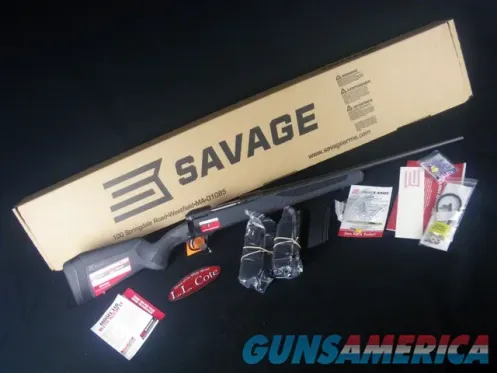
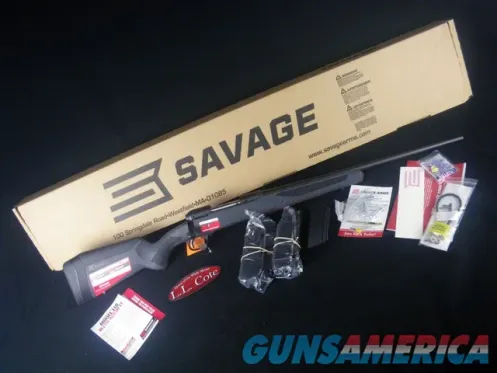
- Pros: Lightweight 6.78-pound rifle; carbon fiber-wrapped barrel; adjustable AccuFit V2 stock; crisp factory AccuTrigger; reliable AICS magazine compatibility; smooth bolt operation; factory 20 MOA Picatinny rail; practical steel-target performance out to 634 yards.
- Cons: Accuracy varied noticeably between ammunition loads; repeated fliers appeared in the three-shot groups; factory Omniport brake kicked up significant dust when shooting prone; $1,949 MSRP may be a consideration for hunters who don’t need the carbon fiber weight savings.
Savage 110 Ultralite Pro Verdict: Is This $1,949 Rifle Worth It?
The Savage 110 Ultralite Pro is a well-equipped hunting rifle that gets many important details right. Its carbon fiber barrel keeps weight down, the AccuFit V2 stock provides useful adjustability, and the AccuTrigger offers a clean break straight from the factory. I also appreciate the factory 20 MOA rail, reliable AICS magazine compatibility, and the rifle’s ability to produce consistent hits at extended distances.
At an MSRP of $1,949, I think Savage has priced this rifle well for what it offers. Carbon fiber barrels and adjustable stocks can push hunting rifles into considerably higher price brackets, yet the Ultralite Pro includes a practical collection of features without requiring a long list of aftermarket upgrades. While my rifle didn’t group as well as I would have hoped across the board, with the right ammunition it can still do the trick.
For hunters who want an identical feature set at a lower price, Savage also offers the 110 Core Hunter Pro. It retains much of the same overall concept but uses a fluted steel barrel instead of a carbon fiber-wrapped barrel, with an MSRP of $1,049. That’s a substantial savings of $900, and I think it represents an excellent value for anyone who doesn’t need the weight savings of carbon fiber.
That comparison is worth keeping in mind. The Ultralite Pro’s appeal comes from its combination of weight savings and included features, not just from having a carbon fiber barrel. If keeping weight down is a major priority, the Ultralite Pro makes a stronger case. If you don’t need the carbon fiber construction, the Core Hunter Pro offers another option worth considering.
Ultimately, the Ultralite Pro delivers a lightweight, versatile package that works well both in the field and on the range. It looks good, shoots well, and includes the features I want in a modern hunting rifle. I came away impressed, and I think it deserves consideration from anyone shopping for a capable lightweight bolt-action rifle.
The accuracy results weren’t as consistent as I had hoped, and the dusty muzzle brake was a legitimate annoyance. Still, after making repeatable hits at 634 yards and spending time with the rifle’s adjustable stock, smooth action, and excellent factory trigger, I came away appreciating just how much Savage managed to fit into this lightweight package.
More Savage Rifle Reviews and Long-Range Gear Tests From GunsAmerica Digest
If you’re comparing lightweight Savage rifles or looking for more information about the optics used in this test, these related GunsAmerica Digest reviews offer additional firsthand shooting impressions and performance data.
- Savage 110 KLYM V2 Review: Carbon Fiber and Real-World Accuracy
- Savage 110 Core Tactical Review: 22 ARC Goes Long
- Vortex Razor HD LHT 4.5-22×50 Review: Lightweight Long-Range Hunting Optic

Mitchell Graf is a dedicated hunter, competitive shooter, and firearms enthusiast. As a former instructor and president of Oklahoma State’s Practical Shooting Team, he has a strong foundation in marksmanship and competition shooting. These days, he spends as much time as possible chasing pigs and coyotes with night vision and thermal optics.
When he’s not in the field or on the range, Mitchell works as a full-time Mechanical Engineer in the Aerospace and Defense industry and manages a part-time farming operation. Whether he’s behind a rifle, designing parts, or working the land, his drive for precision and performance remains the same.
Experience:– Mechanical Engineer – Full-time professional in the Aerospace/Defense industry.– Competitive Shooter & Instructor – Former President and Instructor of Oklahoma State’s Practical Shooting Team.– Night Vision & Thermal Hunter – Passionate about night time predator and hog hunting.– Part-Time Farmer – Working to provide for my family, and raise food for this great nation.