
Estimated reading time: 15 minutes
The FightLite MCR-556-DFRS combines a compact 12.5-inch barrel, dual-feed versatility, and a quick-change barrel system in one unusual AR-compatible upper. After approximately 500 rounds, however, persistent reliability problems left me questioning whether this approximately $7,000 setup could justify its premium price.
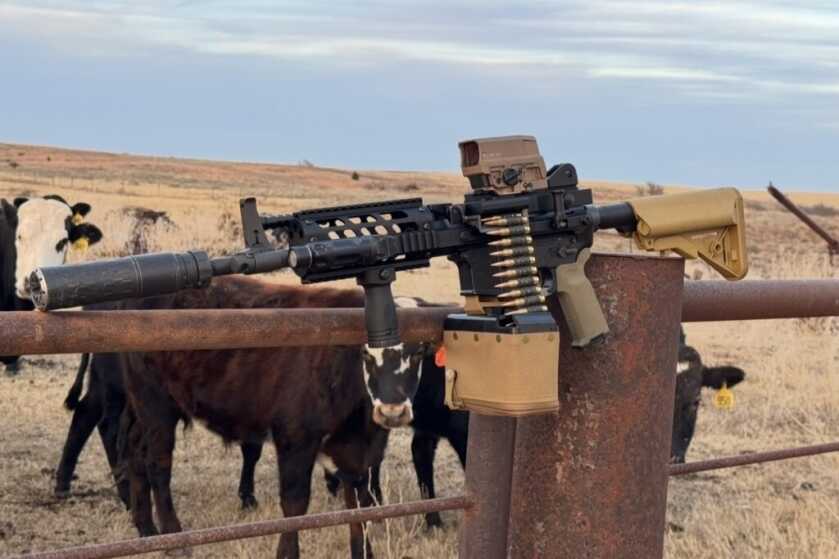
The FightLite MCR-556-DFRS is a compact belt-fed upper that also accepts standard AR-15 magazines, offering great versatility. Its 12.5-inch quick-change 5.56 NATO barrel, short-stroke piston system, and compatibility with existing AR-pattern rifles make it an interesting option for anyone wanting a civilian-legal belt-fed rifle. However, after putting approximately 500 rounds through mine, I have some serious reservations about its reliability and price. I appreciate what FightLite has accomplished, but my experience hasn’t matched what I’d expect from a premium firearm.
Table of contents
- FightLite MCR-556-DFRS Review: Why This Belt-Fed AR Upper Caught My Attention
- FightLite MCR-556-DFRS Specifications: A Closer Look at the Compact Belt-Fed Upper
- FightLite MCR Dual-Feed Design: M27 Links and AR-15 Magazines
- FightLite MCR 12.5-Inch Barrel: Compact Handling With Real Tradeoffs
- FightLite MCR Quick-Change Barrel: A Clever Feature With Specific Uses
- Ammunition Sponsor: AmmunitionToGo.com
- FightLite MCR Accuracy Test: Five Loads at 50 Yards
- FightLite MCR Reliability Problems After Approximately 500 Rounds
- FightLite MCR Price: My Experience With a $7,000 Upper
- FightLite MCR-556-DFRS Pros and Cons: Innovation vs. Reliability
- FightLite MCR-556-DFRS Final Verdict: I Wanted to Love It
FightLite MCR-556-DFRS Review: Why This Belt-Fed AR Upper Caught My Attention
Belt-fed firearms have always appealed to me. There’s something about running linked ammunition through a rifle that makes for a completely different shooting experience. Unfortunately, traditional belt-fed machine guns come with significant legal and financial barriers for civilian shooters. FightLite helped change that equation by developing the Mission Configurable Rifle, or MCR, which brings belt-fed capability to a platform that can interface with compatible AR-pattern lower receivers.
The MCR-556-DFRS takes that concept a step further by supporting both M27 linked ammunition and standard AR-15 magazines. That means you can use conventional box magazines when you want a lighter, simpler setup, then switch to linked ammunition when you want more sustained fire. It’s a clever design, and the flexibility is one of my favorite things about the MCR.
FightLite offers several MCR configurations, but I chose the compact model with its 12.5-inch barrel. I wanted something short and maneuverable, rather than a longer support-rifle setup. The compact upper delivers on that front, although it isn’t without some compromises.
FightLite MCR-556-DFRS Specifications: A Closer Look at the Compact Belt-Fed Upper
| Manufacturer | FightLite Industries |
|---|---|
| Model | MCR-556-DFRS |
| Caliber | 5.56 NATO |
| Barrel Length | 12.5 inches |
| Barrel Twist | 1:7 inches, right-hand twist |
| Muzzle Thread | 1/2″-28 TPI |
| Operating System | Short-stroke gas piston |
| Feed System | M27 linked ammunition or AR-15 magazines |
| Barrel | Quick-change design |
| Upper Receiver | 7075-T6 billet aluminum |
| Handguard | MIL-STD-1913 Picatinny rail |
| Finish | Manganese phosphate and Type III, Class 2 hardcoat anodizing |
| Country of Manufacture | United States |
The MCR ships with a belt-feed main action spring, an H3 buffer, a carbine stock spacer, an extended bolt catch, a magazine adapter, a RIP Brake muzzle compensator, 100 M27 links, and an operator’s manual. The manufacturer also applies dry-film lubricant to critical high-friction surfaces.
FightLite MCR Dual-Feed Design: M27 Links and AR-15 Magazines
The MCR’s defining feature is its dual-feed system. Unlike a conventional AR-15 upper, which feeds ammunition from a magazine, the MCR can feed from either a standard AR-15 magazine or linked ammunition. The linked ammunition runs through a feed tray on top of the receiver, giving the rifle the appearance and functionality of a traditional belt-fed firearm.
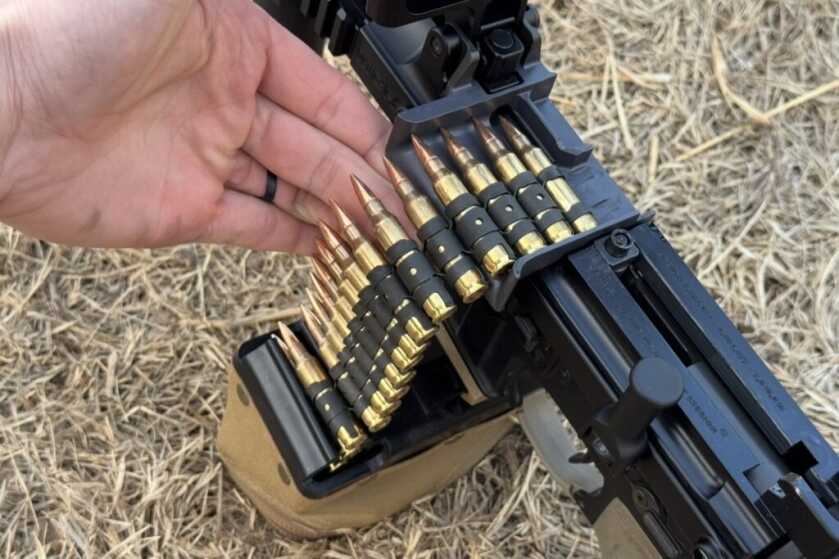
That arrangement provides a level of versatility I really appreciate. You don’t have to commit to linked ammunition for every trip to the range, and you can still use the magazines you already own. The ability to switch between feed systems is a genuine advantage.
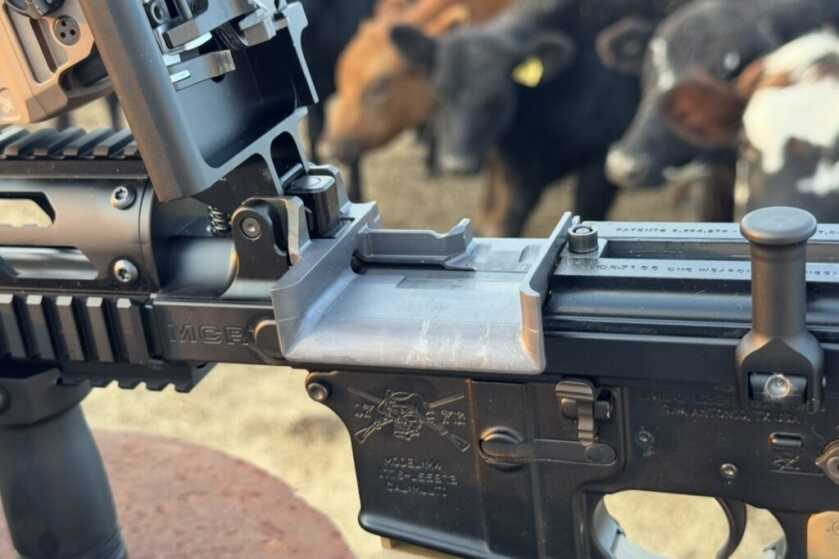
However, the MCR doesn’t simply drop onto every standard AR lower without additional considerations. It requires a special flared bolt catch to provide clearance and prevent interference with the upper receiver. FightLite includes an extended bolt catch in the package, but buyers should understand that lower compatibility involves more than just checking whether the receiver is technically MIL-SPEC.
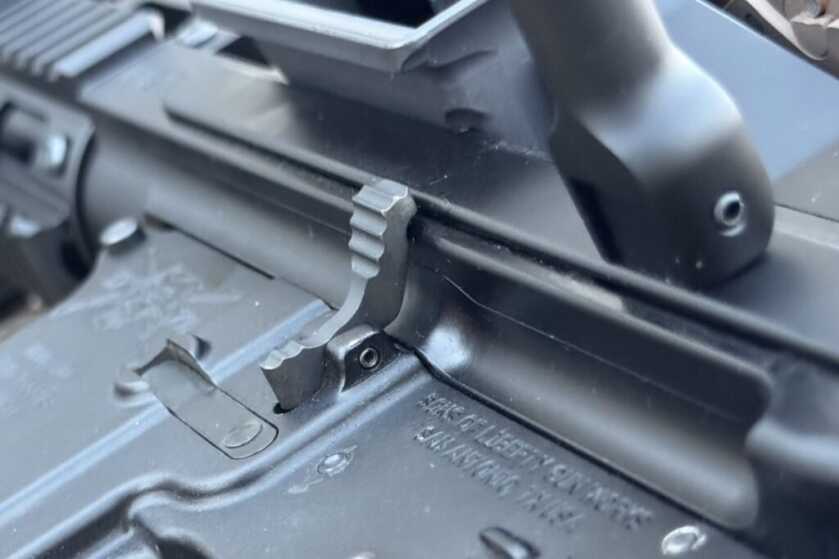
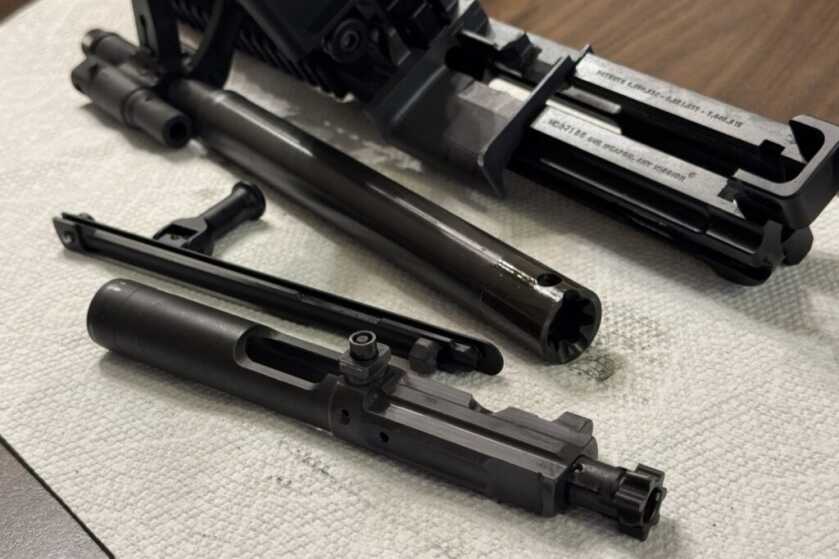
The operating system is another notable feature. FightLite uses a short-stroke gas piston rather than the direct-impingement system found in most standard AR-15 rifles. This design helps mitigate the amount of gas and residue entering the receiver. FightLite also applies dry-film lubricant to critical contact surfaces to improve performance under demanding conditions.
FightLite MCR 12.5-Inch Barrel: Compact Handling With Real Tradeoffs
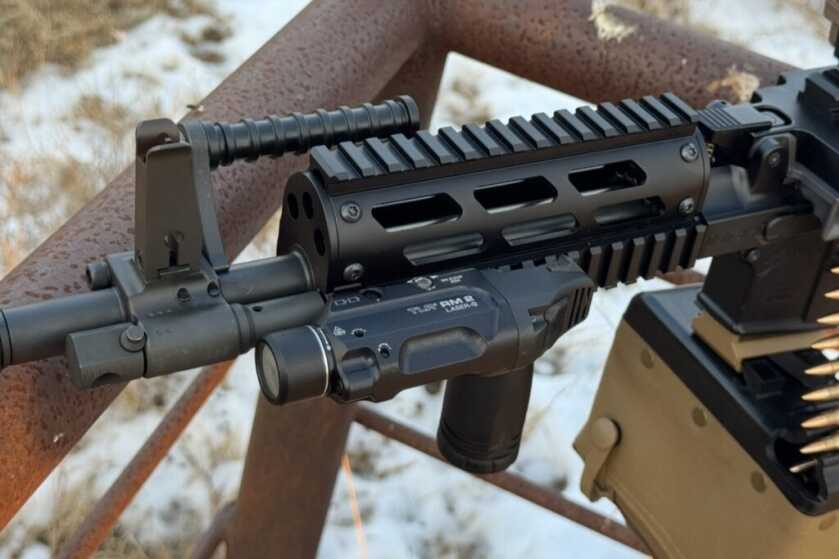
I really like the overall size of the MCR-556-DFRS. The 12.5-inch barrel gives it a compact profile that feels much more maneuverable than a longer belt-fed rifle. That was the primary reason I chose this model, and I haven’t changed my mind about the configuration.
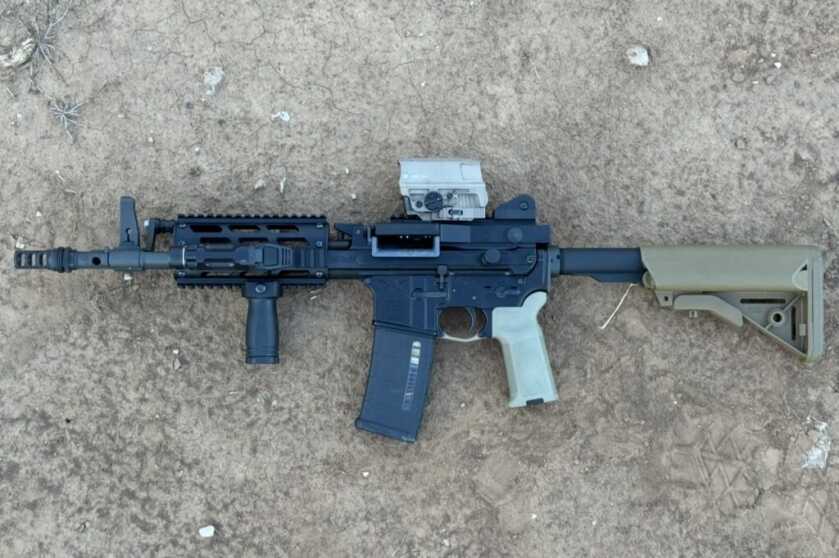
To give mine the traditional belt-fed appearance, I fitted it with a Tribe Tactical nutsack, a Vortex UH-1 red dot, and a B5 Systems stock. The combination looks the part while keeping the rifle relatively compact. The UH-1 also worked well for my intended use case.
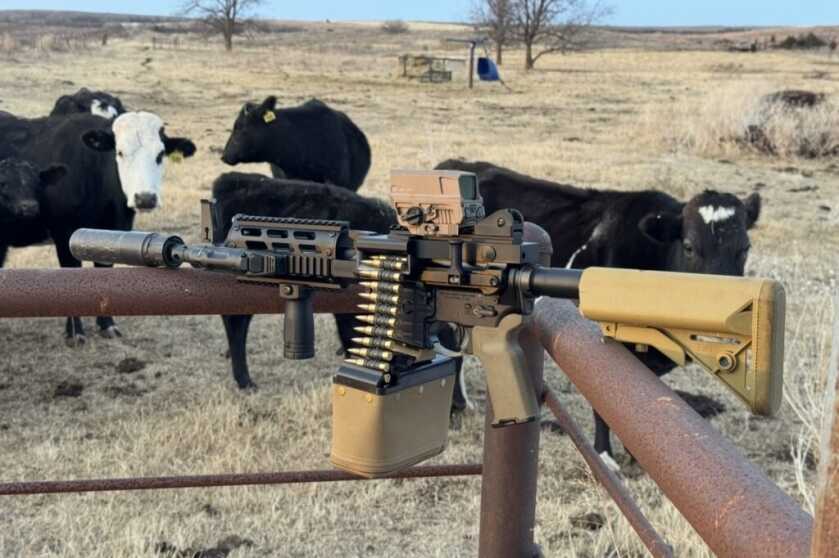
Optic placement deserves some thought, though. The folding feed tray occupies the top of the receiver, so you need to be mindful of how far forward you mount an optic. A conventional magnified scope can become impractical if you intend to use linked ammunition because it can interfere with the feed tray and its operation. A compact red dot like the UH-1 is a much more natural fit for this configuration.
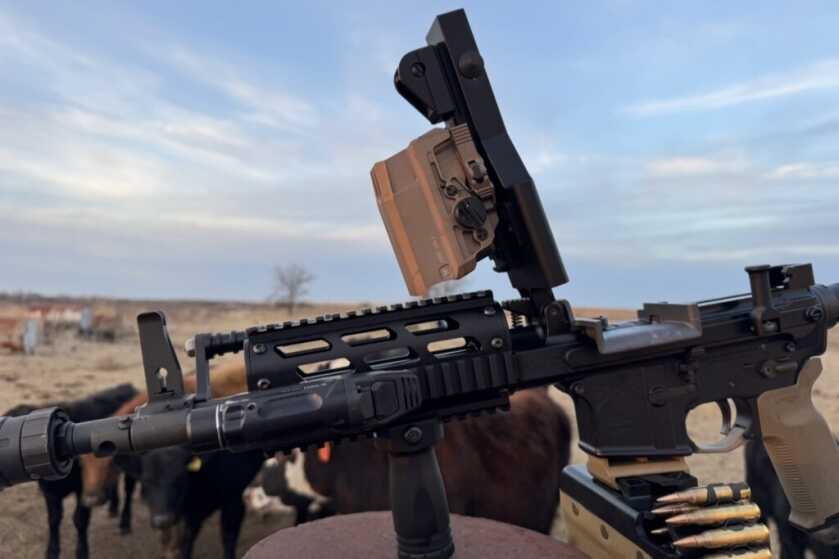
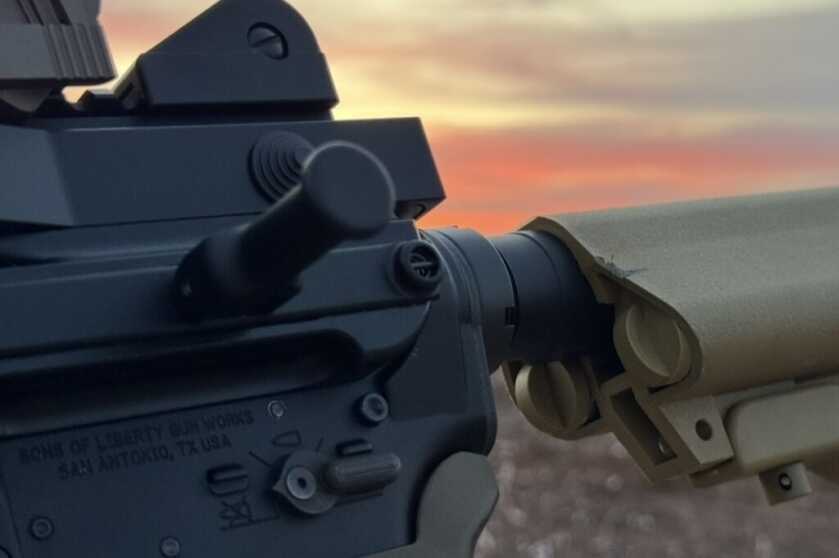
The side charging handle introduces another compatibility consideration. With my B5 Systems stock, the cheek rest interfered with the charging handle unless I extended the stock all the way to the rear. That isn’t necessarily a dealbreaker, but it limits how freely you can adjust the stock to your preferred length of pull.
The carry handle is another disappointment. It’s too small to get a comfortable grip on, and its position close to the barrel makes it difficult to grab when the barrel is hot. For a rifle that emphasizes rapid configuration changes, I would have preferred a more practical handle.
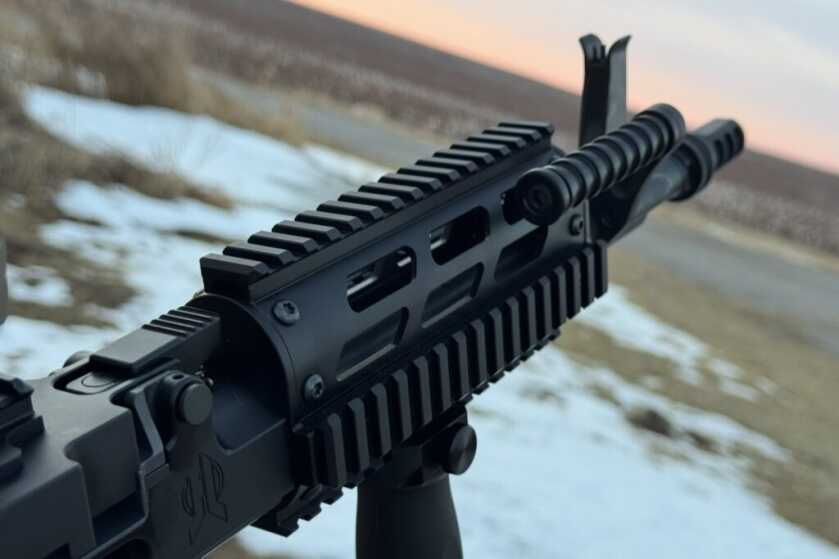
The MCR is also noticeably front-heavy. That isn’t surprising given the feed mechanism, barrel assembly, and additional hardware, but it affects how the rifle feels in the hands. The compact barrel helps keep the overall length down, yet it doesn’t eliminate the weight concentrated toward the front.
FightLite MCR Quick-Change Barrel: A Clever Feature With Specific Uses
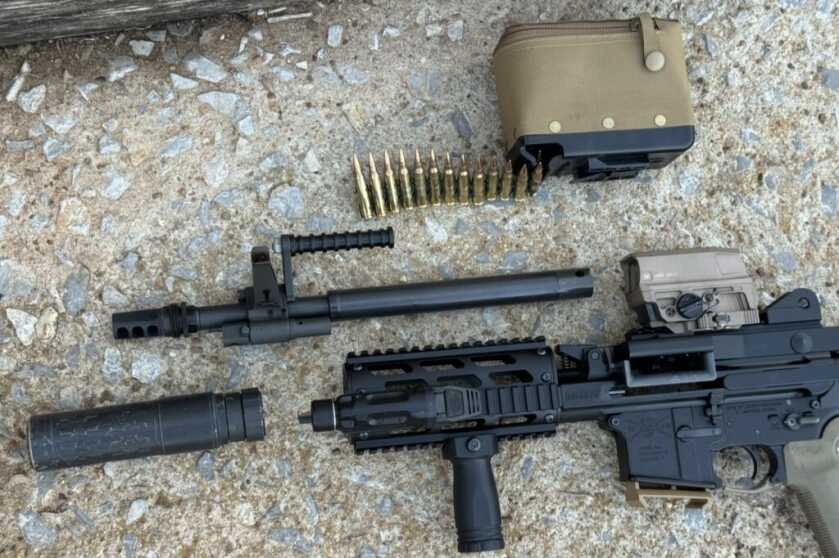
One of the MCR’s most interesting features is its quick-change barrel system. FightLite advertises a barrel change in approximately three seconds, allowing the user to change configurations without tools.
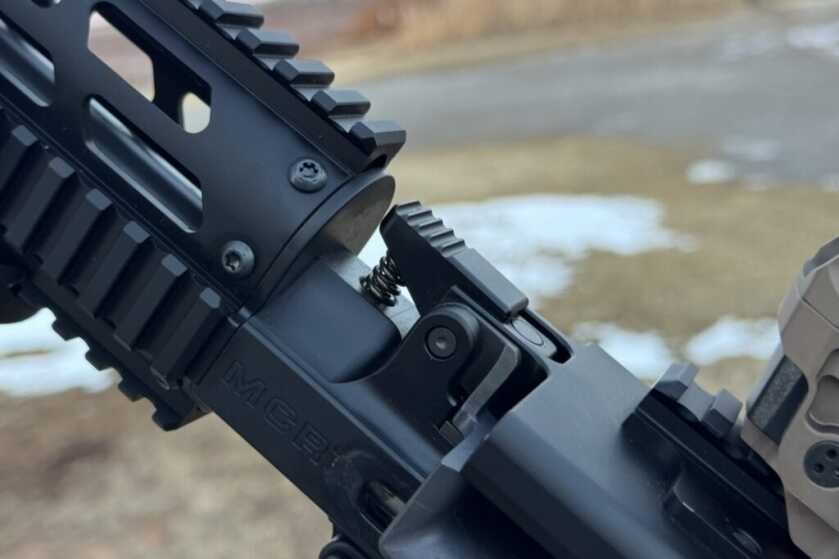
I like the idea, particularly for commercial ranges that might use an MCR for extended periods. A quick-change system could be useful when rotating barrels during high-volume shooting or when removing the barrel for maintenance and cleaning. It also adds to the modular nature of the platform.
Ammunition Sponsor: AmmunitionToGo.com
AmmunitionToGo.com is the ammunition sponsor for this review. My order arrived within the week, and the company offers a wide selection of competitively priced ammunition through an easy-to-use website. Shipping was also fast, making it a convenient option for stocking up on range or defensive ammunition.
FightLite MCR Accuracy Test: Five Loads at 50 Yards
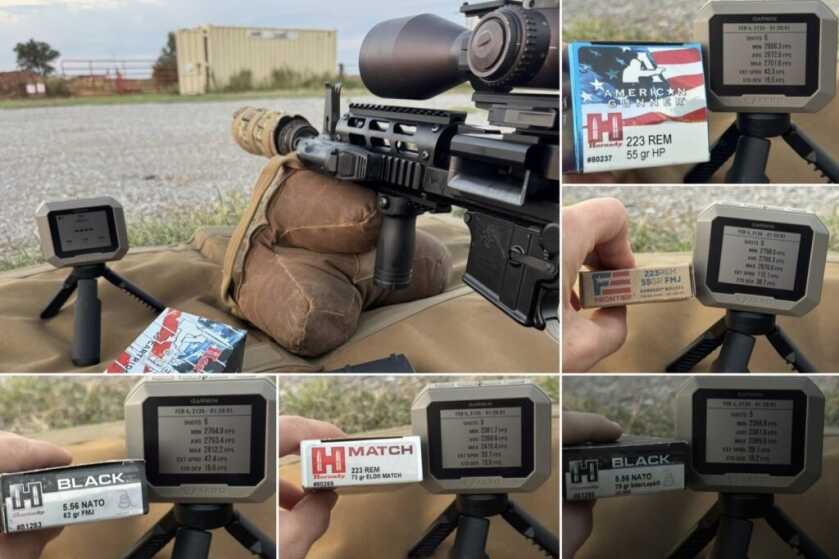
I tested the MCR-556-DFRS with five different loads at 50 yards. I used a Garmin Xero C1 chronograph to record velocity and calculated five-shot group sizes in MOA. The results varied by ammunition, as expected.
FightLite MCR-556-DFRS Velocity and Accuracy Results
| Ammunition Type | Velocity | Standard Deviation | Extreme Spread | Group Size |
|---|---|---|---|---|
| Hornady American Gunner 55-grain HP | 2,673 fps | 16 fps | 43 fps | 5.14 MOA |
| Frontier 55-grain FMJ | 2,796 fps | 39 fps | 112 fps | 4.12 MOA |
| Hornady Black 62-grain FMJ | 2,793 fps | 17 fps | 47 fps | 2.48 MOA |
| Hornady Match 73-grain ELD | 2,399 fps | 14 fps | 34 fps | 3.23 MOA |
| Hornady Black 75-grain InterLock | 2,382 fps | 16 fps | 39 fps | 3.57 MOA |
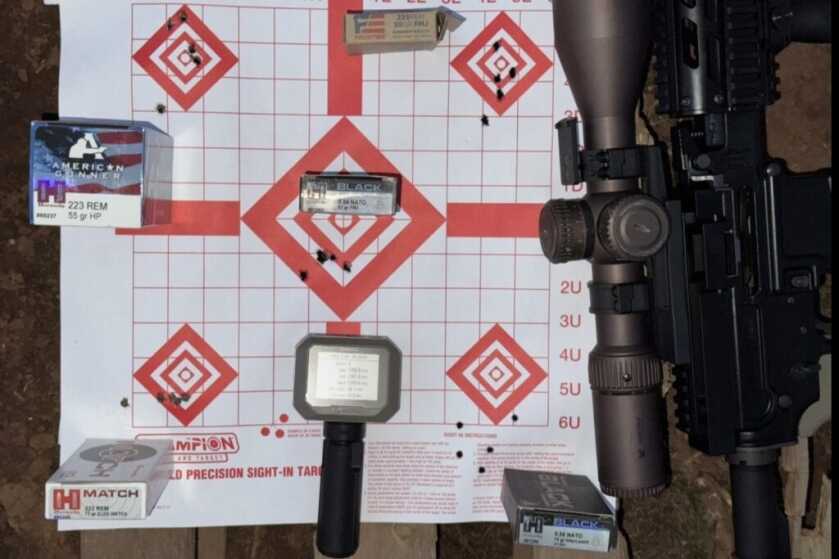
The Hornady Black 62-grain FMJ produced the smallest group at 2.48 MOA. The American Gunner 55-grain load produced the largest group at 5.14 MOA, while the remaining loads fell between those extremes.
These aren’t particularly tight groups. However, I think the results are reasonable for a compact, belt-fed platform designed around sustained fire and versatility rather than precision shooting. The MCR isn’t a precision rifle, and I wouldn’t judge it by the same standards as a dedicated match upper.
The velocity numbers also show the expected differences between bullet weights. The lighter 55- and 62-grain loads approached 2,800 fps, while the heavier 73- and 75-grain loads ran around 2,400 fps. Those figures provide useful context for this short barrel.
FightLite MCR Reliability Problems After Approximately 500 Rounds
This is where my experience with the MCR-556-DFRS becomes frustrating. After approximately 500 rounds, I continued to experience a mix of light primer strikes and failures to feed. I saw visible dents on the primers of cartridges that failed to fire, and the rifle also struggled to feed ammunition consistently.
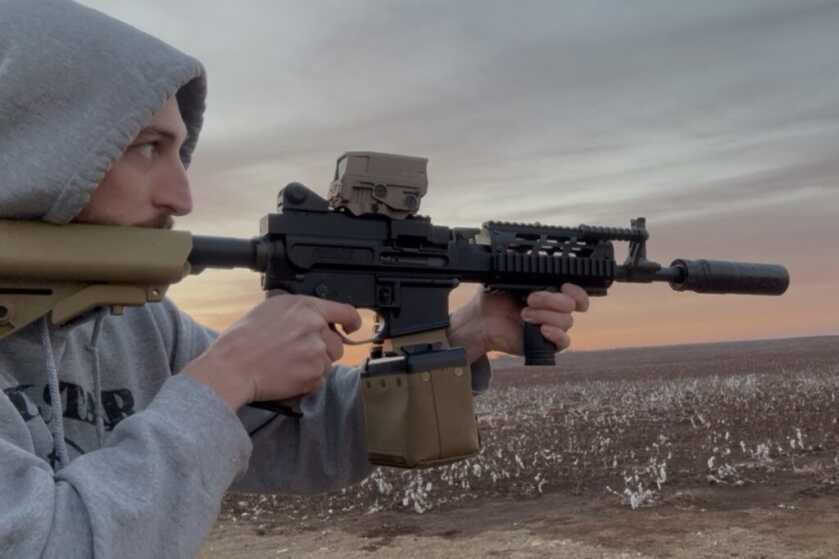
When shooting linked ammunition, the carrier frequently failed to fully seat the next round. I also experienced feeding problems with standard PMAGs, which was especially disappointing because magazine compatibility is one of the main selling points of this design.
FightLite specifies a break-in period of approximately 300 rounds. I understand that some firearms benefit from a break-in period, but I find it difficult to accept that a firearm at this price should require hundreds of rounds before it works reliably. A premium product should provide a much better experience out of the box.
FightLite Customer Service: The Reliability Issues Continued
After dealing with the malfunctions, I paid to ship the upper back to FightLite for customer service. The company reported that it found nothing wrong and that the upper functioned properly during its testing. Unfortunately, when I received it back, I continued to experience the same problems.
I also tried the upper with an actual full-auto lower and an AS Designs ARC FRT trigger. Both setups worked with standard AR-15 uppers, but neither consistently ran the MCR. Those experiences added to my frustration because I had made a substantial investment in a platform that I expected to perform.
FightLite told me that linked ammunition other than Lake City links was likely to cause problems. I was using Magtech linked ammunition, so ammunition compatibility may explain some of the belt-feed issues. However, that doesn’t resolve my concerns about the failures I experienced while feeding from PMAGs.
I can accept that a specialized firearm may have ammunition preferences. What I struggle with is spending approximately $7,000 on an upper, paying to ship it back for service, and receiving it with the same problems I had before, all while the company tells me nothing is wrong. I wanted a top-of-the-line belt-fed upper that simply worked. Instead, reliability has been the biggest weakness of this platform.
FightLite MCR Price: My Experience With a $7,000 Upper
The MCR-556-DFRS is an expensive way to get into civilian belt-fed shooting. I paid approximately $7,000 for mine, which is a substantial investment for an upper receiver assembly, even one with such a specialized feed system.
FightLite deserves credit for helping establish the modern civilian belt-fed upper market. The MCR’s dual-feed capability, piston operation, and quick-change barrel system represent meaningful engineering work. I also appreciate that the company offers a compact configuration that doesn’t require committing to a full-length support-rifle setup.
Nevertheless, the market has expanded. Companies such as Cloak Industries, Lima Six, and Cryostructure now offer competing belt-fed platforms at lower price points. Depending on the configuration, some of these options cost substantially less than the MCR. That makes the FightLite a harder purchase to justify, particularly for buyers who don’t specifically need its combination of features. Price alone wouldn’t necessarily put me off a premium product. However, reliability needs to justify that premium. In my case, it hasn’t.

FightLite MCR-556-DFRS Pros and Cons: Innovation vs. Reliability
My experience with the FightLite MCR-556-DFRS wasn’t entirely negative. There’s plenty to appreciate about the engineering, compact configuration, and dual-feed capability. Unfortunately, the persistent malfunctions overshadowed those features during my time with the upper.
- Pros: Dual-feed compatibility with M27 linked ammunition and standard AR-15 magazines; compact 12.5-inch barrel; quick-change barrel design; short-stroke gas piston operation; distinctive belt-fed configuration.
- Cons: Repeated feeding failures with linked ammunition and PMAGs; light primer strikes; approximately 300-round specified break-in period; front-heavy balance; limited carry handle clearance; stock and optic compatibility considerations; approximately $7,000 purchase price; unresolved reliability concerns after customer service evaluation.
FightLite MCR-556-DFRS Final Verdict: I Wanted to Love It
I went into this purchase wanting the MCR-556-DFRS to be my dream civilian belt-fed. Its compact configuration, dual-feed capability, and quick-change barrel system all appeal to me. I still think the design is clever, and I appreciate FightLite’s role in bringing this type of firearm to the civilian market.
Unfortunately, my experience has left me with regrets about the purchase. The carry handle is poorly positioned, but that is still a manageable compromise. The reliability problems are much harder to overlook.
After approximately 500 rounds, repeated feeding problems, visible primer dents, and a return to customer service that didn’t resolve the issues, I can’t confidently recommend the MCR based on my experience. I understand that my results may not represent every unit, but prospective buyers deserve to know what happened with mine.
At approximately $7,000, I expected much more. I even paid extra for FightLite’s professional version of the MCR, hoping to avoid any issues. The MCR helped pave the way for civilian belt-fed platforms, and I respect the engineering behind it. However, with less expensive competitors now available, the MCR needs to deliver dependable performance to justify its premium. Mine hasn’t done that, and I wish I had a better experience to report.

Mitchell Graf is a dedicated hunter, competitive shooter, and firearms enthusiast. As a former instructor and president of Oklahoma State’s Practical Shooting Team, he has a strong foundation in marksmanship and competition shooting. These days, he spends as much time as possible chasing pigs and coyotes with night vision and thermal optics.
When he’s not in the field or on the range, Mitchell works as a full-time Mechanical Engineer in the Aerospace and Defense industry and manages a part-time farming operation. Whether he’s behind a rifle, designing parts, or working the land, his drive for precision and performance remains the same.
Experience:– Mechanical Engineer – Full-time professional in the Aerospace/Defense industry.– Competitive Shooter & Instructor – Former President and Instructor of Oklahoma State’s Practical Shooting Team.– Night Vision & Thermal Hunter – Passionate about night time predator and hog hunting.– Part-Time Farmer – Working to provide for my family, and raise food for this great nation.