
Estimated reading time: 11 minutes
A World War I bullet should have killed Hungarian soldier Paul Kern. Instead, he survived a catastrophic brain injury and reportedly spent the rest of his life without ever sleeping again.
Table of contents
- Insomnia, 3:30 A.M., and the Reason I Write So Much
- Why Sleep Is Stranger Than We Think
- How World War I Put Paul Kern in the Crosshairs
- The Eastern Front Was a Meat Grinder
- The Three-Pound Machine We Barely Understand
- The 7.62x54R Bullet That Should Have Killed Paul Kern
- Paul Kern Came Home, but Sleep Never Did
- The Paul Kern Mystery Still Defies Easy Answers
- More Strange Military History From GunsAmerica Digest
Insomnia, 3:30 A.M., and the Reason I Write So Much

You might observe that I write a lot. I sold 240 commercial writing projects last year while holding down a full-time job in a busy medical clinic. There’s a reason for that. I am afflicted with a curious medical malady. I really struggle to sleep. In fact, I am typing these very words at 330 in the morning.
I am hardly alone in that regard. 30 to 40% of Americans complain of insomnia. 10 to 12% struggle with it chronically. That equates to between 30 and 60 million people worldwide. I see folks for this professionally all the time.

To be honest, there are no easy answers. Alcohol typically makes things worse long-term. Good sleep hygiene is no caffeine after lunch, nothing to drink after supper, and the bed is for sleeping. That means if you roll around in bed for half an hour, then you should get up and do something boring. Spending too much time lying awake in bed can transform lack of sleep into a self-fulfilling prophecy. True chronic insomniacs can come to fear sundown.
Drugs are a poor substitute for good sleep. Many are controlled or habit-forming. Most any sedating medicine, if taken chronically, will substantially increase your long-term risk of dementia. That includes OTC meds like diphenhydramine (Benadryl/ZzzQuil) and doxylamine (NyQuil). Of course, chronic insomnia also increases your risk for dementia, so you’re pretty much screwed either way.
In my case, I just gave in to the inevitable and started writing in the middle of the night. What you see here each week is the tangible result of my unfortunate affliction. When life gives you lemons…
Why Sleep Is Stranger Than We Think

Despite the fact that everybody who ever lived needs it, we still don’t really understand sleep all that well. Most healthy adults sleep 7 to 9 hours per night. We might reasonably assume that’s just an opportunity for our bodies and minds to recharge, but there is so much more to it than that. Sleep flushes toxins from our brains, regulates metabolism and tunes the immune system, promotes a healthy heart, reduces anxiety, and improves emotional balance. Sleep is also way more than just not being awake.
Normal people cycle through four stages of sleep every 90 to 120 minutes. Non-REM sleep comes in three different flavors and sort of prepares you for REM sleep. REM sleep, or Rapid Eye Movement sleep, is where we supercharge our brains and do our dreaming. That’s the good stuff you need to be refreshed.

When you see a baby or a dog in REM sleep, they are flaccidly paralyzed everywhere but their extraocular muscles and their diaphragms. You need your diaphragm to breathe, so God left that hooked up. Those rapidly-gyrating eyes underneath your eyelids reflect your dreaming. For whatever reason, it is this state that is so necessary to rejuvenation.
Obstructive Sleep Apnea ruins all of that. Folks with sleep apnea might be unconscious for eight or more hours. However, whenever they reach that paralyzed REM state, their throats close and they stop breathing. This involuntarily wakes them up, not enough to become fully conscious, just enough to deprive themselves of the REM sleep that they need. For reasons I have never understood, untreated sleep apnea is notorious for causing congestive heart failure as well.

Sleep really is important. You die from lack of sleep long before you die from lack of food. On two occasions I went four days without sleep while I was a soldier. In both cases I actively hallucinated.
So, why all this talk of insomnia within the hallowed realm of GunsAmerica? Because in all of human history there is but a single documented case of a person having been rendered sleepless as the result of brain trauma who lived to tell the tale. That guy was a Hungarian soldier fighting the Russians on the Eastern Front during World War 1.
How World War I Put Paul Kern in the Crosshairs
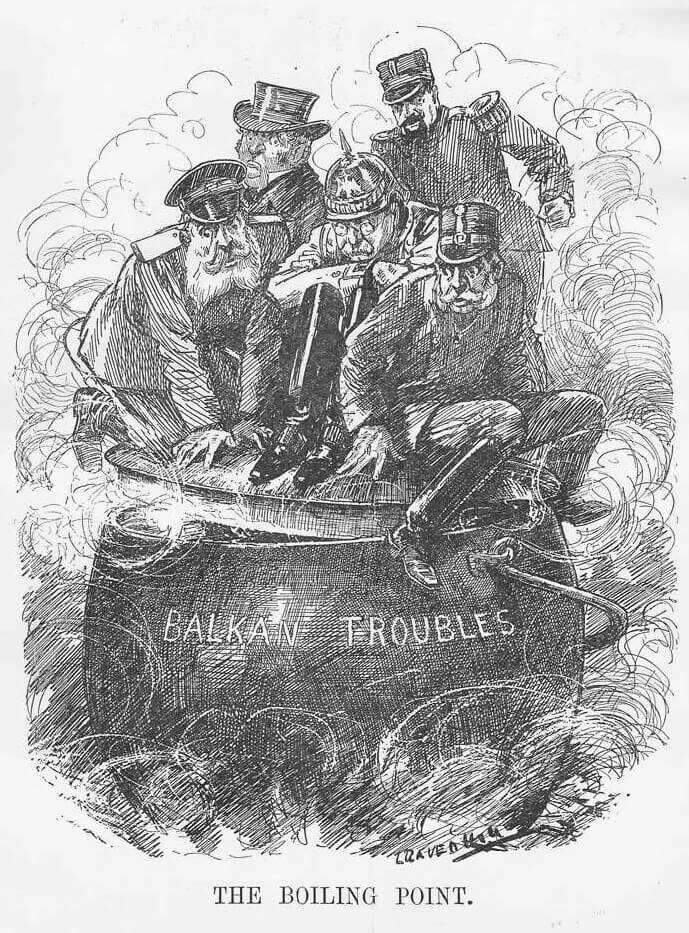
The First World War was arguably humanity’s greatest misunderstanding. Nation states banded together in alliances originally intended to keep world war from happening. Then a disaffected anarchist named Gavrilo Princip assassinated Archduke Ferdinand and his devoted wife Sophie in Sarajevo, and the whole world came unglued.
These murders engaged national commitments that eventually snowballed into World War 1. Some sixteen million people subsequently lost their lives. WW1 was the planet’s first real taste of total war on an industrial scale. Two decades later we tried it again and found ourselves even better at it. The resulting hemoclysm that was the Second World War rather overshadowed the first.
The Eastern Front Was a Meat Grinder

Throughout the modern era, the Russians have always done war in a fairly ham-handed fashion. Even today, Russian commanders throw waves of poorly-trained conscripts onto battlefields dominated by modern Western weapon systems and Ukrainian drones. The end result has been 1.4 million Russian casualties and 450,000 deaths, most of which have been incurred in the past four years.
This same meat-intensive approach to warfare guided their conduct in World Wars One and Two as well. That meant carnage aplenty on the Eastern Front for both sides. In WWI, the Allied Powers were known as the Entente. This included France, the UK, the US, Russia, Italy, and Japan. In the opposite corner were the Central Powers. They consisted of Germany, Austria-Hungary, the Ottoman Empire (Turkey), and Bulgaria.
That’s the big picture. Historians have prattled on for more than a century about the geopolitics of the thing. However, while we talk about kings, presidents, and generals, it is the individual soldier around whom true war actually orbits. The grunts do the suffering and dying, while the political leadership generally retires to some sprawling estate afterwards to address their lucrative book deals. One such normal Joe was Paul Kern, an infantryman in the Hungarian Army.
The Three-Pound Machine We Barely Understand

The human brain is the most complex piece of machinery in the known universe. It weighs about three pounds and is mostly fat. A fresh brain will run through your fingers kind of like Jell-O. Don’t ask me how I know that.
Your brain contains around 86 billion neurons/nerve cells and produces some 20 watts of power. That CPU is unimaginably fast. A typical human can recognize a familiar face in around 13 milliseconds. The storage capacity of a healthy human brain is around 2.5 petabytes. That’s the equivalent of about 20,000 standard iPhones.
In addition to all of that amazing technical stuff, your brain determines your temperament, your proclivities, your affections, and your political beliefs. For instance, I think communists, radical militant Muslims, and gun control enthusiasts are breathtakingly misguided. I love Jesus and would willingly give my life for my children. I also harbor an almost unnatural affection for Count Chocula cereal. We have no idea where all that stuff lives, nary a clue.
The 7.62x54R Bullet That Should Have Killed Paul Kern

Not much is known about Trooper Kern. He was born in 1884 and served with an elite Hungarian infantry regiment in action against the Russians in 1915. During one particularly furious engagement, he was shot cleanly through the head. By all reasonable metrics, he should have died on the spot.
The Russian 7.62x54R round passed straight through his noggin, transecting his frontal lobes in the process while fortuitously sparing his optic nerves. Miraculously, he survived the acute injury and the near-inevitable infection that should have followed. Kern underwent emergency surgery in what is now Lviv, Ukraine, wherein Army surgeons actually removed the damaged portion of his brain. They expected him to be ruined. However, against all odds, the poor guy actually recovered. The weird bit was that he no longer needed to sleep, like not even a wink.
Paul Kern Came Home, but Sleep Never Did
Once he healed, Paul Kern left the Army and returned to Budapest. He took a job as a government clerk and gained a bit of a cult following. While the rest of the planet spent a third of their time unconscious, Kern invested his nighttime hours reading.
Paul Kern was interviewed extensively by both journalists and physicians. Kern’s health really should have predictably deteriorated into madness and death. That’s what would happen to any normal person. However, Kern lived until 1955 before dying at age 71 of something unrelated. As near as could be ascertained, he never suffered any deleterious effects from his lifelong chronic insomnia.
The Paul Kern Mystery Still Defies Easy Answers

Lots of folks claim they don’t sleep much. I made that very assertion several paragraphs ago. However, Paul Kern was the real deal. After enduring what should have been a uniformly fatal injury given the standards of medical care at the time, Kern fully recovered, led a fruitful life, and eventually died never having slept again.
Dr. Duane Haines literally wrote the book on Neuroanatomy. His textbook is used by medical schools around the world. He also taught me neuroanatomy in medical school. I got to know the man fairly well. There were likely not a dozen people on the planet who knew more about the human brain than that guy.
I once asked Dr. Haines why my favorite color was blue, why I really liked 1970’s classic rock and roll, and why my wife still made my heart flutter despite many years of marriage. He just smiled and said he had no idea. It seems we don’t know nearly so much about the deep magic of the world as we really let on.
More Strange Military History From GunsAmerica Digest
- The Wolf Truce of 1917: When Soldiers Faced a Different Enemy
- A Mosin-Nagant for the US Army?
- The Life and Times of the Brain-Damaged Gunslinger Clay Allison

Will is still trying to figure out what he really wants to be when he grows up. However, shooting guns and claiming it was work seemed like a pretty sweet hustle. As a result, Will serendipitously transformed an avocation into a vocation.
Raised in the Mississippi Delta, Will flew UH1H, OH58A/C, CH47D and AH1S helicopters operationally as an Army Aviator. He is SCUBA-qualified and has parachuted out of perfectly good airplanes at 3 o’clock in the morning. Will has summited Mount McKinley, Alaska, six times…always at the controls of an Army helicopter, which is the only way sensible folk climb mountains.
Will has delivered sixty babies and occasionally wrung human blood out of his socks. He is married to his high school sweetheart and has three awesome adult children. Turn-ons include vintage German machineguns, flying his sexy-cool RV6A airplane, Count Chocula cereal and the movie “Aliens.”
www.word-monkey.com
Experience:
-Professional Writer-thousands of publishing credits for dozens of titles
-Mechanical Engineer/Practicing Physician
-Instrument-rated Commercial Pilot
-Sunday School Teacher