
Estimated reading time: 26 minutes
The SIG P226 TacOps earned its reputation the hard way, with training, hard use, and more than 1,000 rounds without a failure in this original test. More than a decade later, Legion, SAO, E2-style grips, optic-ready models, X-Fives, and the P320 have changed the shopping landscape, but not the basic question: Is the old-school hammer-fired P226 still worth the money?
Editor’s Note: This article began as a hands-on review of the SIG SAUER P226 Tactical Operations. We have preserved the original author’s content while adding updated 2026 buyer context covering today’s P226 family, Legion models, SAO operation, E2-style grips, optic-ready choices, and the P226 versus P320 question. New material is clearly presented as an editorial update and should not be read as a claim that the original author personally tested every newer variant.
Table of contents
- SIG P226 Models Compared: Classic, TacOps, Legion, SAO & E2
- The P226 TacOps: The Original Badass SIG Review
- What Makes It a P226? Hammer, Decocker and Metal Frame
- P226 Legion: The TacOps Idea Gets More Refined
- P226 SAO: What If You Love the Gun but Hate the First Pull?
- P226 E2: The Model Name Faded, but the Grip Won
- The P226 Family Is Bigger Than Classic, Legion and E2
- SIG P226 vs P320: Old-School Hammer or Modern Modularity?
- How Does the P226 TacOps Shoot After the Hype Stops?
- Is the SIG P226 Still Worth Buying in 2026?
SIG P226 Models Compared: Classic, TacOps, Legion, SAO & E2
| Version | Operating Style | What Sets It Apart | Best Fit |
|---|---|---|---|
| Classic P226 DA/SA | Hammer-fired DA/SA | Traditional P226 controls, decocker, alloy-frame feel | Shooters who want the classic duty-pistol experience |
| P226 TacOps | Hammer-fired DA/SA | 20-round magazines, magwell-style grips, extended beavertail, SRT, tactical sights | High-capacity training and duty-style use |
| P226 Legion DA/SA | Hammer-fired DA/SA | Premium trigger treatment, G10 grips, X-RAY3 sights, Legion upgrades | Buyers who want a refined version of the classic P226 |
| P226 Legion SAO | Hammer-fired single action only | Consistent single-action trigger and manual safety | 1911-minded shooters who dislike the DA-to-SA transition |
| P226 with E2 Grip | Usually DA/SA | Reduced-circumference one-piece ergonomic grip | Shooters who find traditional P226 grips too large |
| P226-XFIVE | Performance-oriented SAO platform | Competition-focused controls, trigger and all-steel variants depending on model | Range, competition and premium-performance buyers |
The P226 TacOps: The Original Badass SIG Review

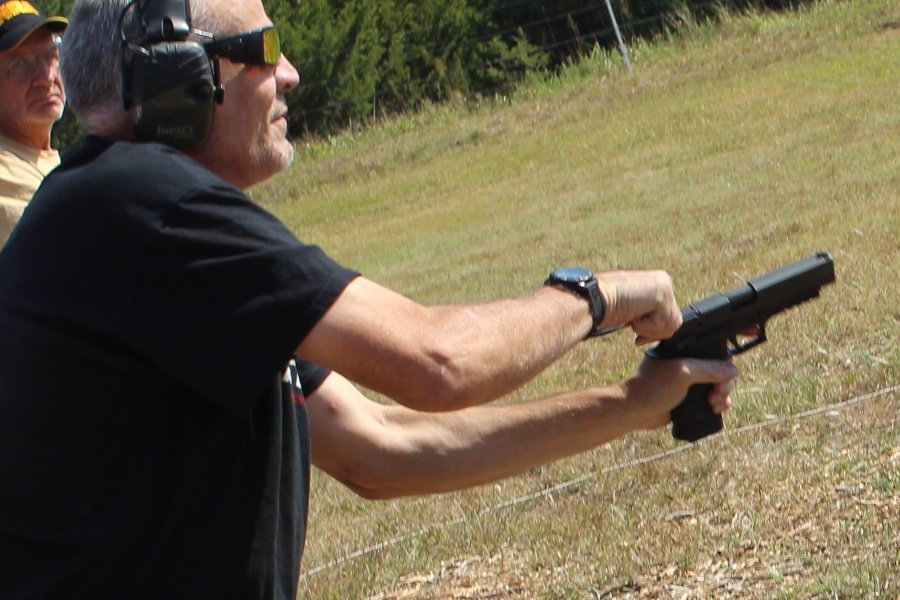
The SIG SAUER P226 is a badass pistol. No doubt about it. This gun is a dynamic full-sized 9mm handgun capable of extraordinary accuracy and known for its proven dependability. The P226 has served with numerous agencies and military units. SIG makes numerous versions of the P226, but this one, in my considered opinion, is the best.
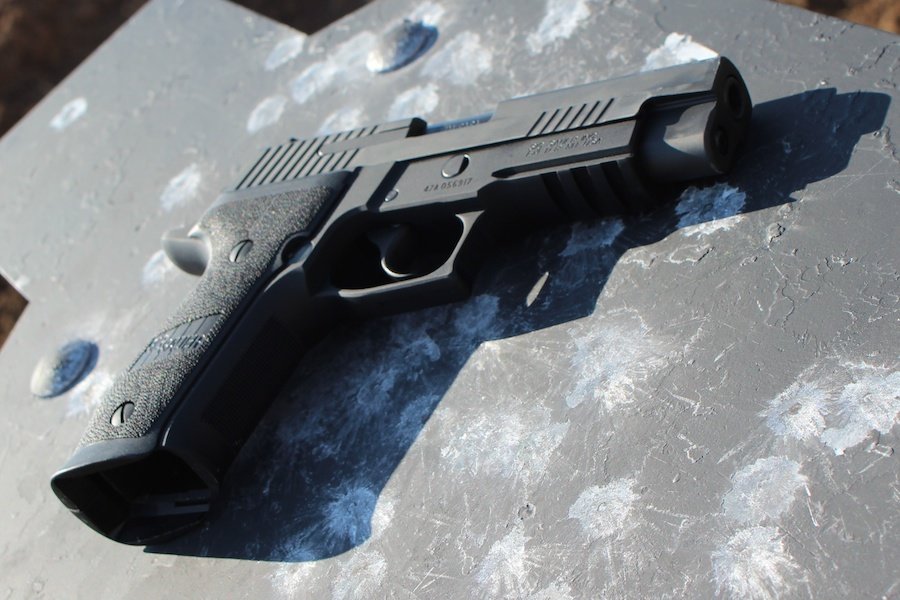
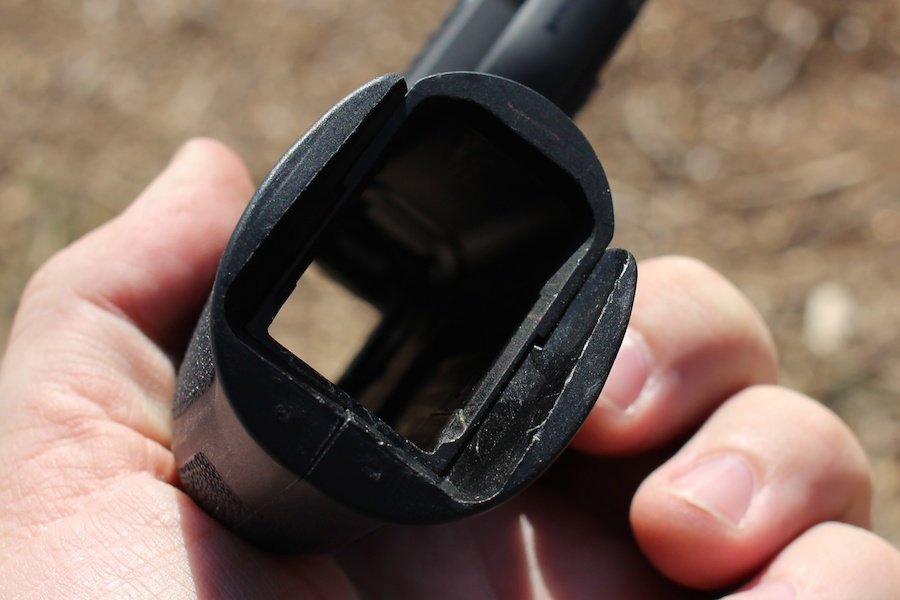
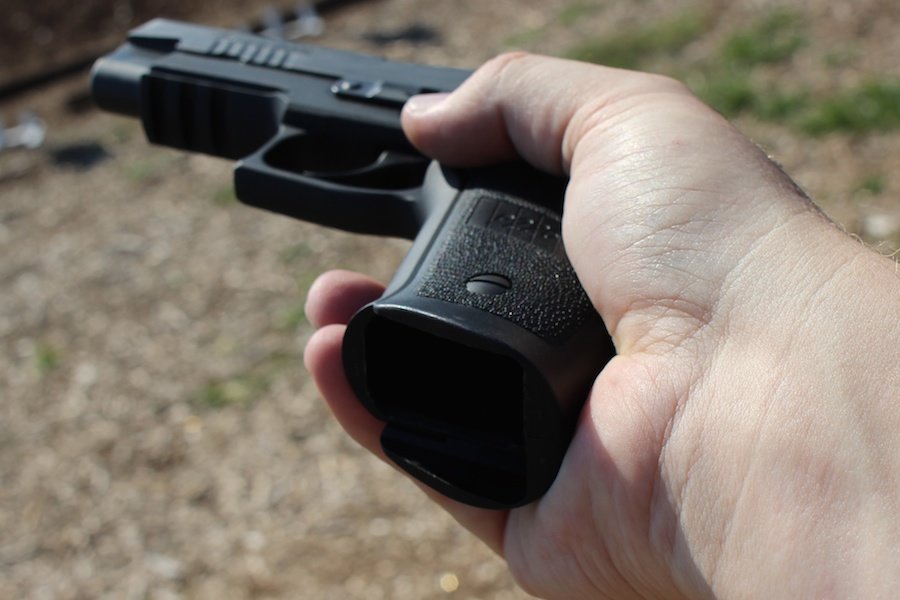
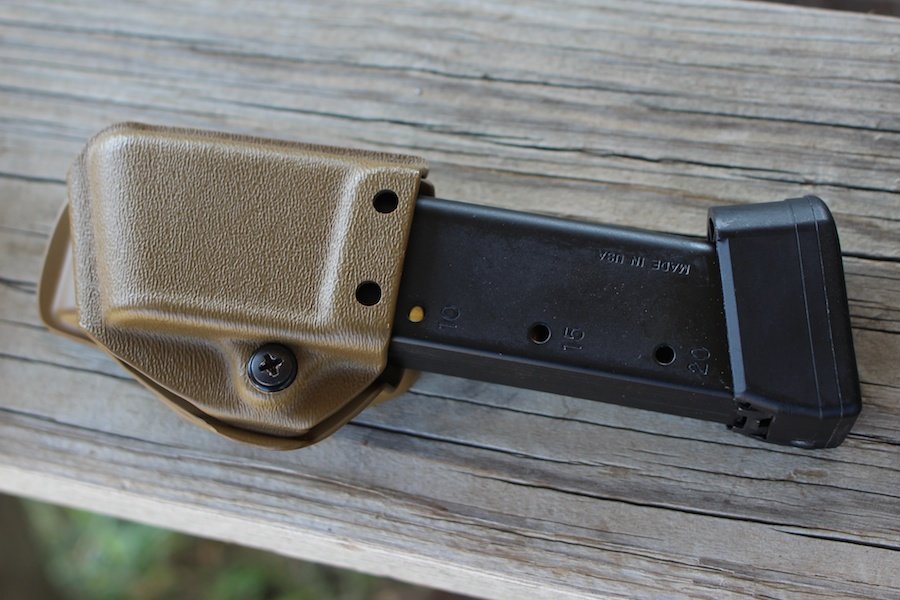
The P226 Tactical Operations, or TacOps, is a typical P226 with a couple of significant upgrades. The result is a gun that’s functionally ergonomic, fast out of the holster, and faster on target. And when it does run dry, after you’ve run through the 20 rounds in the magazine, the magwell makes it that much easier to feed.
I was first introduced to the full capabilities of the P226 when I attended a handgun class taught by Daniel Shaw at Thunderbird Tactical in Wichita, Kansas. This was years ago, before Daniel ever began writing the occasional review for GunsAmerica. At that class, he was using a SIG P226. I’d seen the gun before, but hadn’t spent much time behind the trigger. After a couple of magazines during the class, I came away convinced. I borrowed one from another writer and got to work.
Almost a year later, I took another class with Daniel. This time, I was ready. I’d gotten SIG to send me a TacOps for this review. I’d had the gun in long enough to put it through its paces. A serious training class is the best practical way to truly evaluate how a gun works. I’ve yet to find a better way to push reliability, test holstering and ergonomics, and learn the controls of a gun. And training also will allow you to learn how you work with a given gun. I went into this class knowing that the P226 was a good fit for me, and my opinion hasn’t changed.
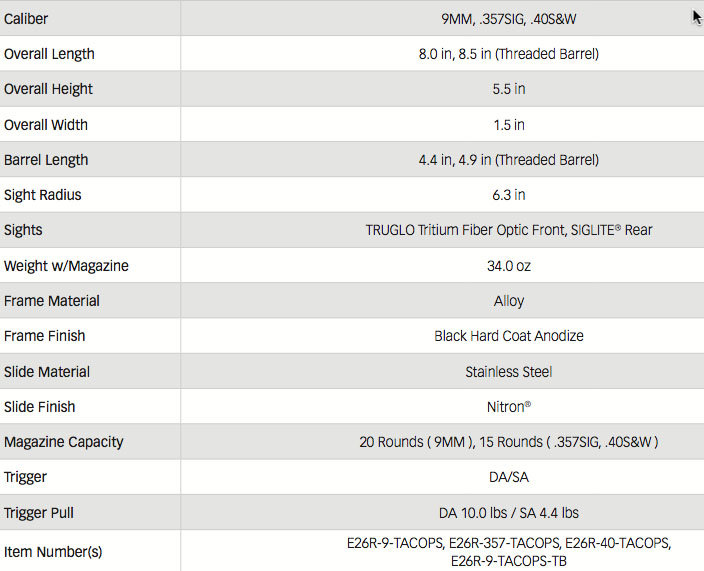
P226 Tactical Operations Specs From the Original Review
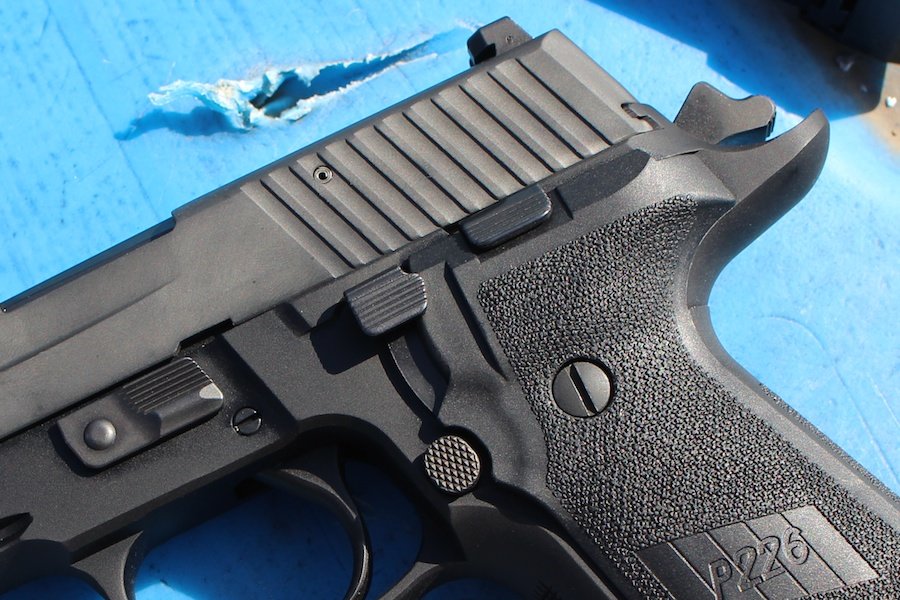
What Makes It a P226? Hammer, Decocker and Metal Frame
The SIG P226 line was already broad when this review was first written. The guns were offered in 9mm, .40 S&W, and .357 SIG. Traditional DA/SA versions don’t have external manual safeties. The exposed hammer can be decocked with a lever on the side of the pistol. The heavy double-action pull, 10+ pounds on the reviewed gun, sets up successive single-action pulls that are much lighter, at 4.6 pounds. The trigger has a short reset, at about .25″. The frame is aluminum, but it is still substantial in size, and the slide is Nitron-finished stainless steel.
The pistol uses the locked-breech, short-recoil system familiar to 1911 fans, and even has a beavertail that follows in the tradition of Browning’s venerable single action.
Unlike the 1911, the P226 locks the barrel into the slide without a separate locking lug arrangement like the older Browning design. Yet the 1911 heritage is easily seen, even in the lines. The P226 was SIG’s entry into the pistol trials that placed the Beretta M9 in thousands of holsters back in 1984, the trials to replace the 1911. For many fans of the older single action, the SIG seemed like a more logical transitional gun than the M9. And in the years since, the P226 has continued to gain traction.
There’s even a single-action version of the P226. You can read our original review of the P226 Elite SAO here.
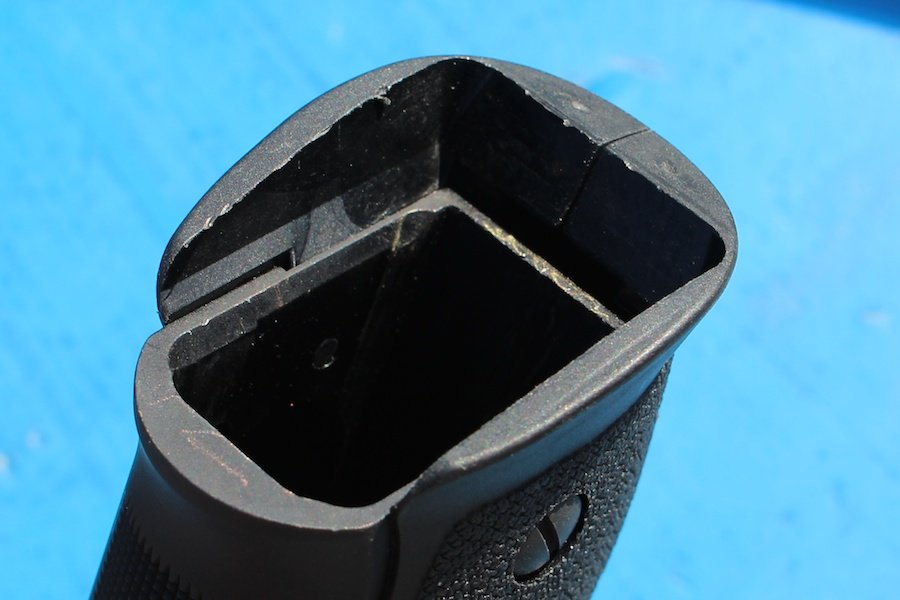
What Makes It a P226 Tactical Operations?
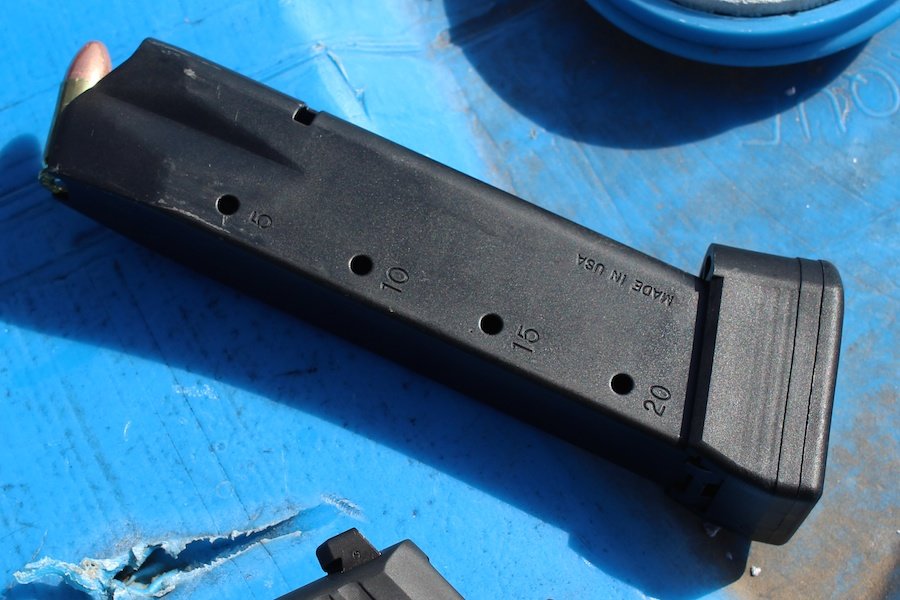
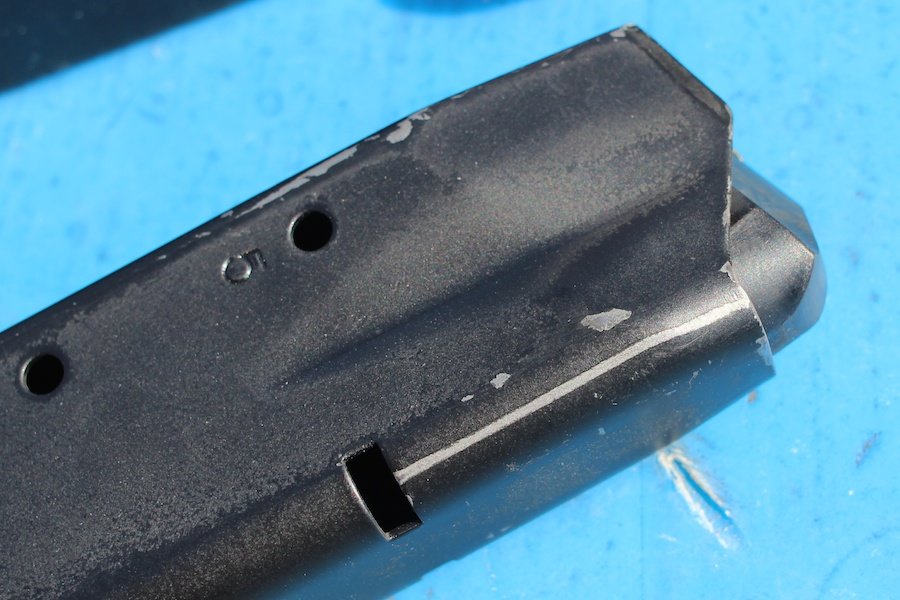
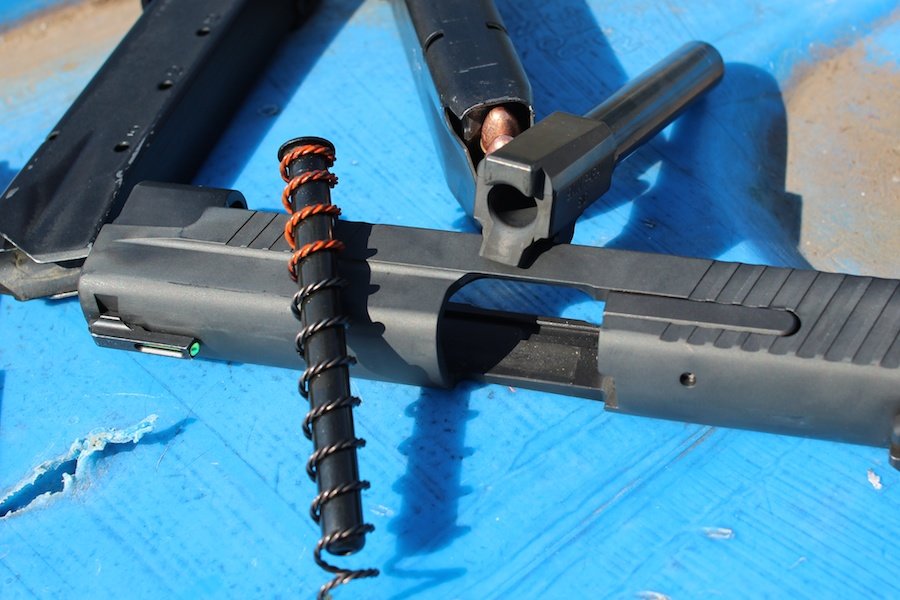
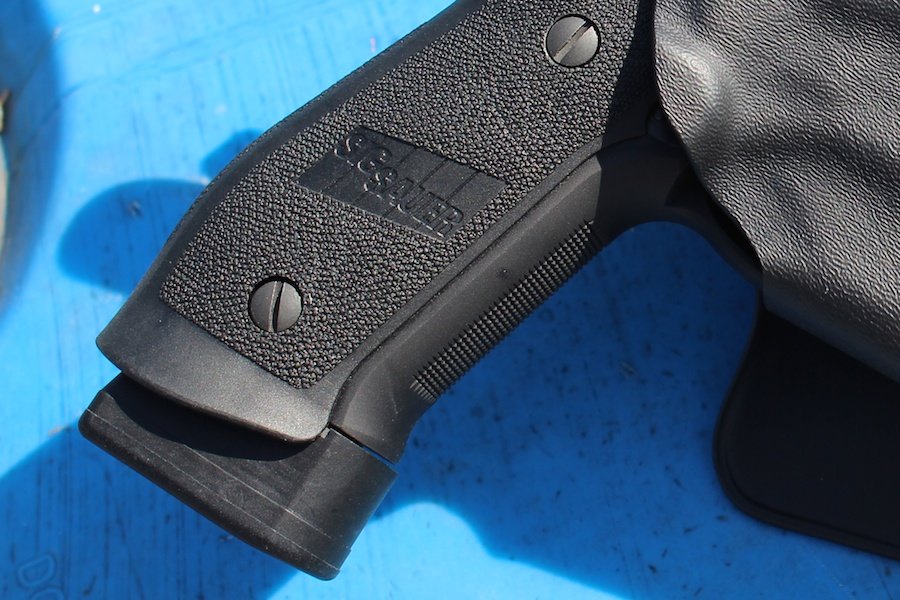
One of my favorite upgrades is truly an extra. The TacOps comes with four 20-round magazines. The most noticeable feature will be the grips. These one-piece dynamos have a deep contour for the back of the hand. They also have a wraparound lip at the base that flares out to serve as a guide. This grip makes reloads a bit faster, as you can move with less pinpoint precision. The round on the top of a double-stack magazine will act as an arrowhead of sorts. Get it close to the center, and the extra grip extension will guide it home.
That grip design has not vanished into history. SIG still sells P226 polymer magwell grips and describes them as the standard grips installed on the P226 TacOps.
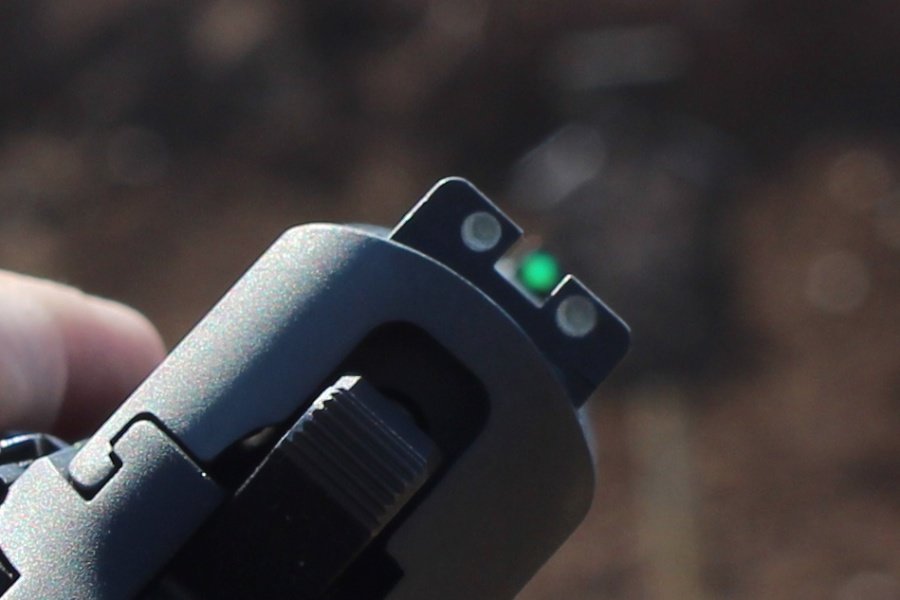
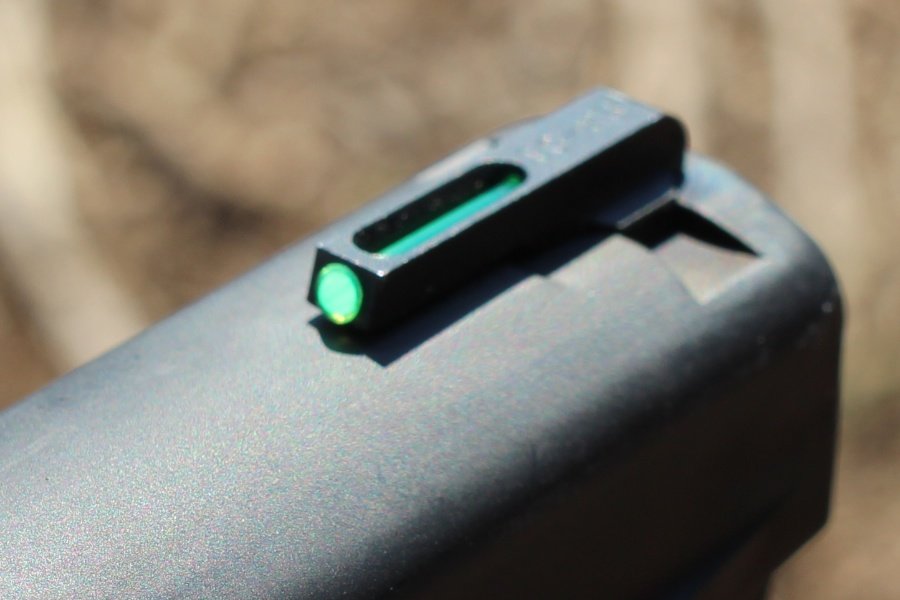
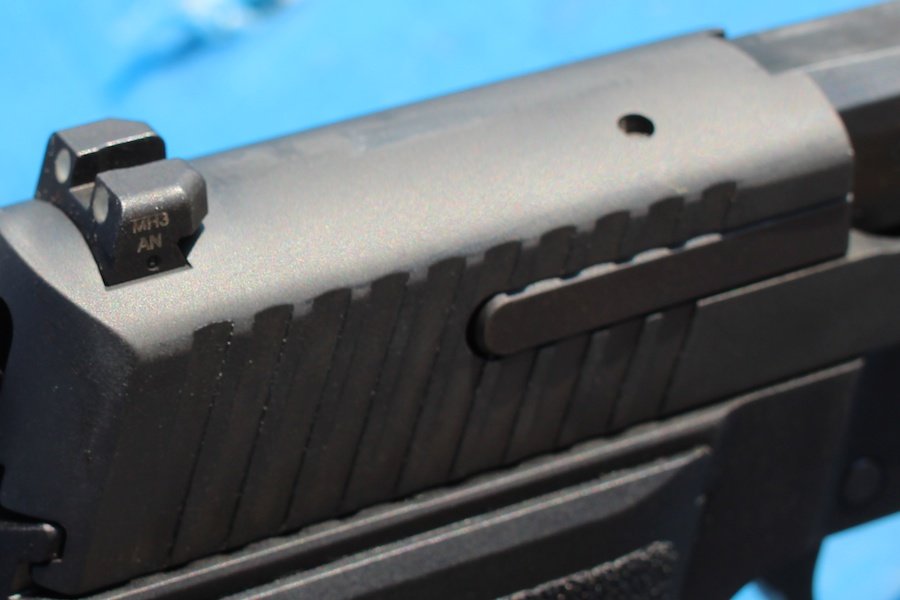
On top of the gun, the front sight is a TRUGLO tritium fiber-optic bead that glows green in both low and no light. TRUGLO has a great combination with this. The tritium lights it up just enough for it to glow in every situation. I’ve been most impressed by them. The rear sight is SIG’s SIGLITE Night Sight. It has just enough bulk to be useful as a shelf for cocking the gun one-handed, a must for a gun in this class.
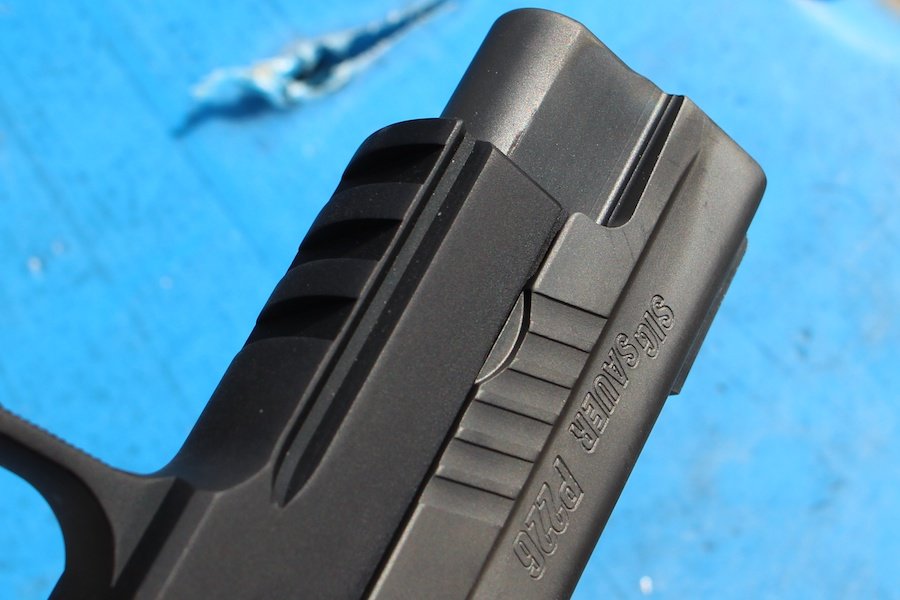
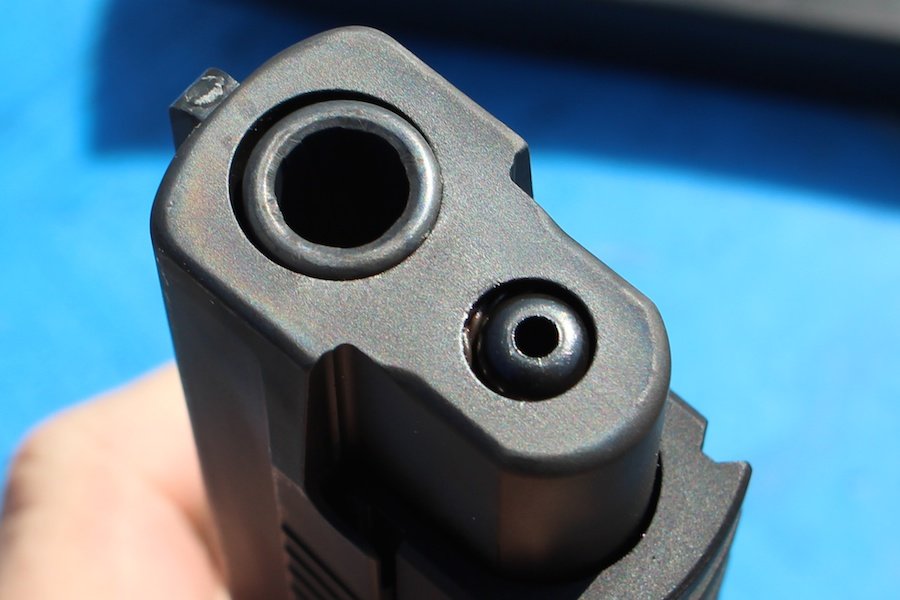
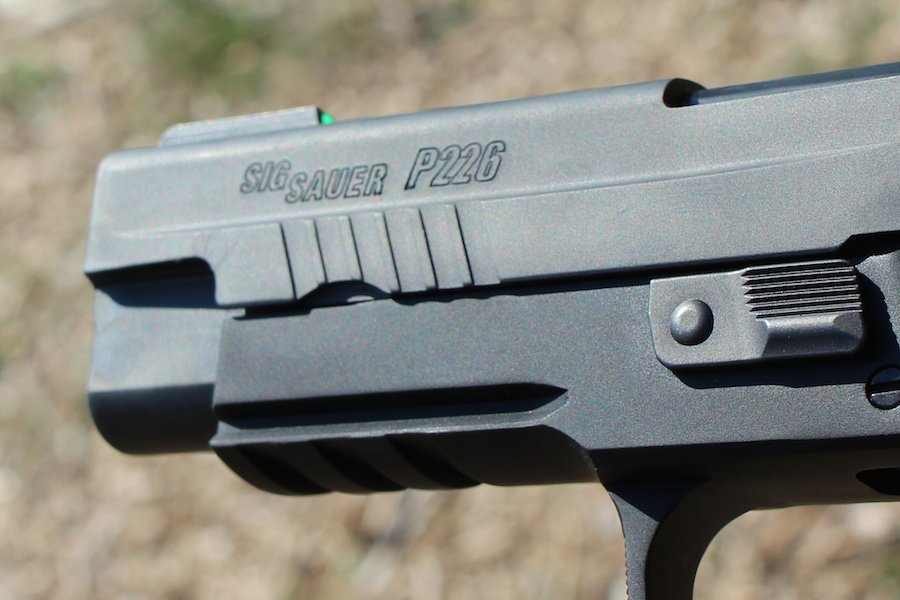
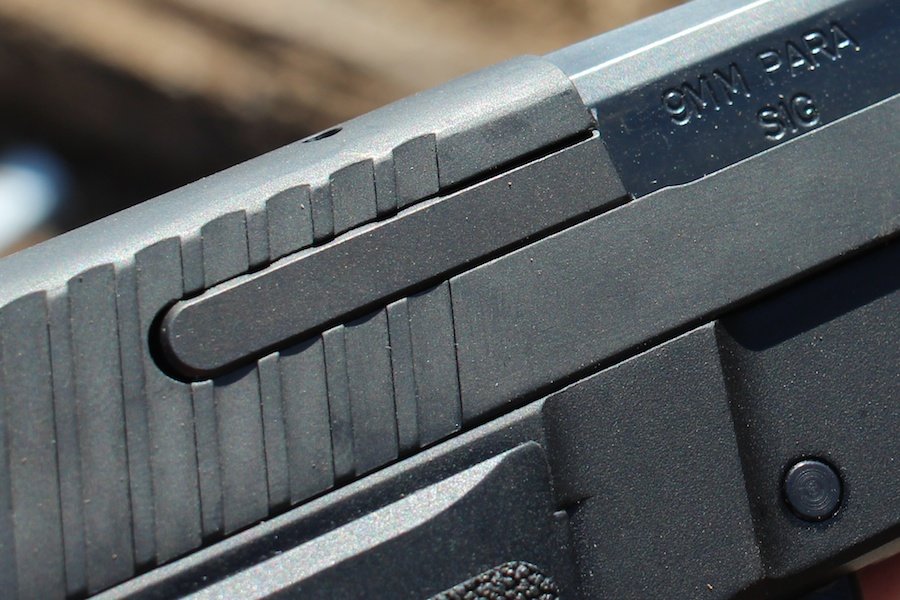
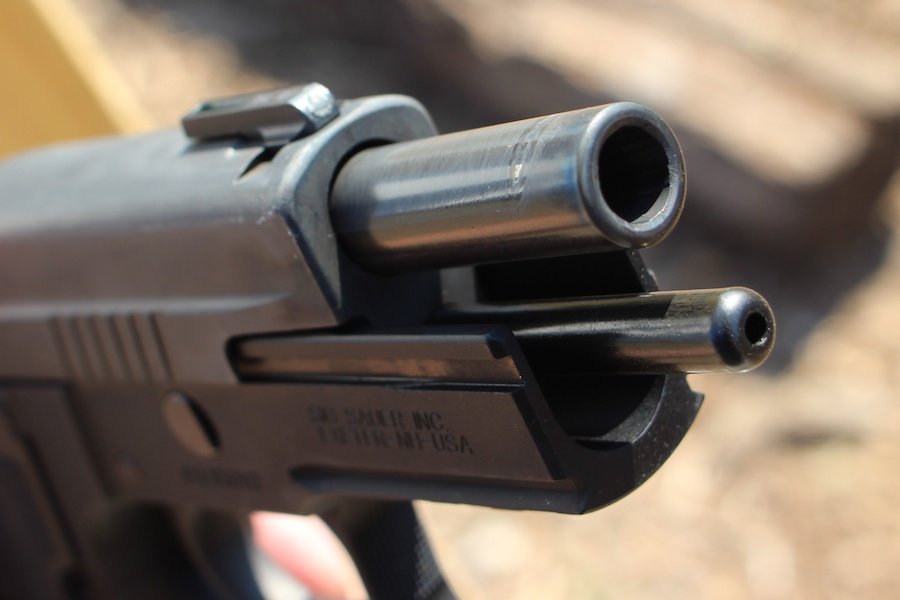
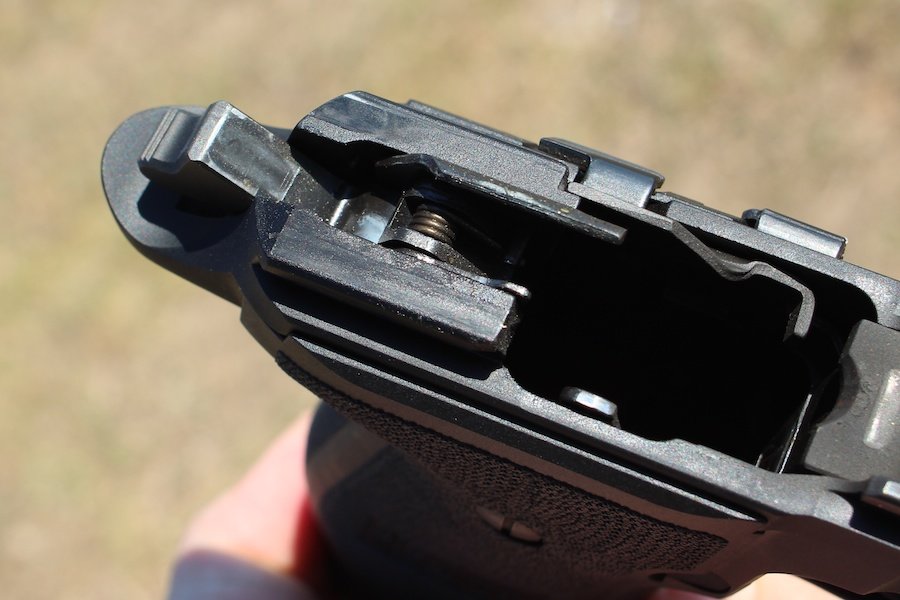
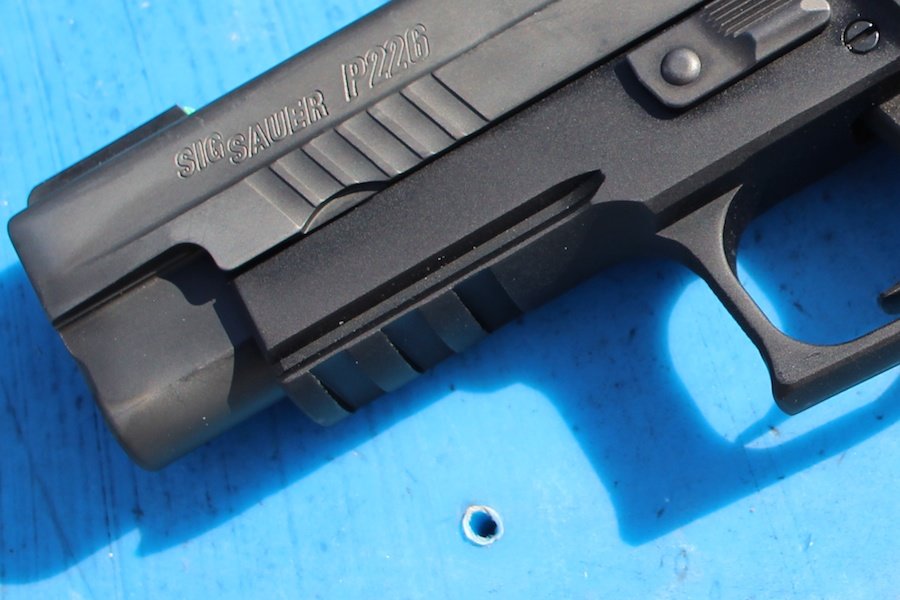
There are front slide serrations and an upgraded trigger. Even the beavertail has been extended, which is a great feature for those of us with larger mitts who like to hold high on the gun. It isn’t a beauty queen like some of the old single actions, but it is a complete collection of functional features that make it ideal for, wait for it, Tactical Operations. If you’ve got any tactical operations in your future, this may be the gun for you. Says so in its name.
P226 Legion: The TacOps Idea Gets More Refined
If the TacOps was the author’s favorite expression of the P226 formula in the original review, the Legion family is one of the clearest places a modern buyer should look today. The basic idea is familiar: take the proven P226 architecture and give the shooter the details enthusiasts typically end up paying to change anyway.
SIG has offered P226 Legion models in both DA/SA and SAO configurations. Factory documentation lists a 4.4-inch barrel, X-RAY3 day/night sights, G10 grips with Legion medallions, upgraded trigger components, and 9mm chambering. The SAO and DA/SA models are not merely cosmetic variations. They fundamentally change how you interact with the pistol’s trigger and controls.
For somebody who likes exactly what the original TacOps does well, the Legion is the natural modern branch to investigate. In this case, a full-sized metal frame, excellent balance, a real hammer, and a trigger that rewards practice. It is still a P226. It just arrives with fewer reasons to immediately open the Brownells catalog.
P226 SAO: What If You Love the Gun but Hate the First Pull?
The original review spends a fair amount of time wrestling with the DA/SA question, and that debate did not die with 2014. Traditional P226 operation gives you a heavier double-action first trigger pull followed by lighter single-action pulls. When you’re done shooting, you decock the pistol before holstering.
Some shooters love that system. Others spend their entire relationship with a DA/SA pistol wishing the first trigger pull felt like all the others.
That is where the P226 SAO earns its keep. The single-action-only version trades the traditional decocker system for a consistent single-action trigger and a manual safety. SIG has offered Legion SAO configurations with flat triggers and X-RAY3 sights, making the concept especially appealing to shooters coming from a 1911 or other cocked-and-locked pistol.
Neither system is universally better. The DA/SA gun preserves the classic P226 manual of arms and gives you that heavier first press. The SAO gives you consistency from shot one. Pick the one your hands and training understand rather than the one somebody on the internet says makes you more sophisticated.
P226 E2: The Model Name Faded, but the Grip Won
The E2 story is a good example of how SIG’s P226 lineup can confuse buyers. E2 was once a distinct model designation. SIG now explains that those specific E2 pistols were a limited production run, but owners liked the ergonomic grip so much that the company made the grip concept a permanent part of the broader classic-line pistols.
That matters if you’ve picked up a traditional P226 and thought, “Great gun, shame I need a catcher’s mitt to wrap around it.” The one-piece E2 grip reduces the circumference and changes how the pistol sits in the hand. SIG still lists an E2 grip upgrade kit for DA/SA P226 pistols, and current SIG product listings continue to show P226 configurations equipped with E2 grips.
So in 2026, do not get hung up looking specifically for a pistol with “E2” engraved into its identity. Think of E2 primarily as an ergonomic branch of the P226 story.
The P226 Family Is Bigger Than Classic, Legion and E2
A modern SIG P226 buyer can run into substantially more than the old TacOps-versus-standard decision. SIG’s current product ecosystem continues to include the traditional P226 platform alongside Legion, Elite, MK25, PRO-CUT and P226-XFIVE products.
P226 MK25: This is the branch for buyers attracted to the military-service lineage. It keeps the classic 4.4-inch-barrel P226 format and historically adds corrosion-focused internal treatment, phosphate-coated barrel treatment, anchor marking, and UID details.
P226 Elite: Elite configurations add performance-oriented touches while staying much closer to the familiar DA/SA classic-line experience. Current SIG listings include optic-ready Elite versions with E2 grips.
P226 PRO-CUT and optic-ready models: The red-dot era eventually came for the P226 too. SIG now sells P226 optic-ready components and models, including PRO-CUT products, so buyers no longer have to accept that choosing a traditional hammer-fired SIG means choosing irons forever.
P226-XFIVE: This is a different animal. X-Five variants push the P226 architecture toward premium performance and competition rather than duty-gun simplicity. SIG’s current storefront includes P226-XFIVE Legion and other P226-XFIVE configurations.
SIG P226 vs P320: Old-School Hammer or Modern Modularity?
This is the comparison that 5 or 8 years ago we could not really make in the way a buyer can today. The P226 and P320 may wear the same SIG name, but they come from very different schools of handgun design.
The P226 is the old-school answer: a metal-frame, hammer-fired pistol with a long record of duty use and, in traditional form, DA/SA operation with a decocking lever. You buy the gun largely because you like what it already is.
The P320 is the modular answer. SIG describes current M17 and M18 versions of the P320 as striker-fired, mechanically locked, short-recoil-operated pistols with interchangeable grip modules, reversible magazine releases, and ambidextrous controls.
That modular architecture is the P320’s giant advantage for buyers who want to alter grip size, configuration, slide length, or other components within the platform. It also gives you a consistent striker-fired trigger system instead of learning the P226’s DA-to-SA transition.
But modularity does not automatically make the P226 obsolete. Some shooters specifically want the weight, balance, hammer, decocker, aluminum frame, and trigger character of the classic gun. A P320 feels like a modern service pistol because that is what it is. A P226 feels like somebody machined a serious pistol and then dared you to wear it out.
If you want maximum configuration flexibility, the P320 has the easier argument. If you want the classic SIG shooting experience, the P226 still owns that lane.
How Does the P226 TacOps Shoot After the Hype Stops?
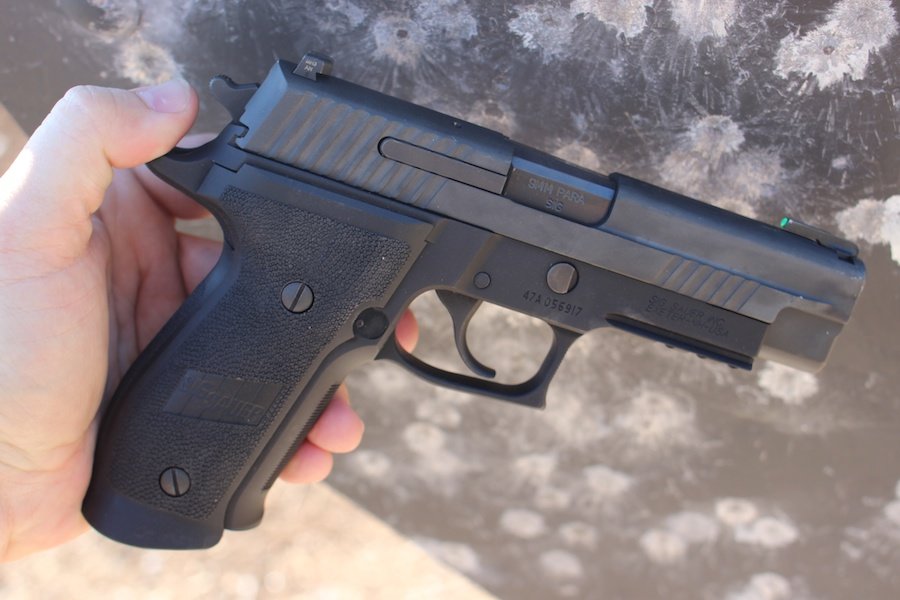
The P226 is fast. The balance is perfect, even with 20 rounds in the grip. The ergonomic shape of the grip and the way the P226 points combine to make it incredibly reliable for point shooting. I’m not 100% in love with the sight combination. I’m learning that I don’t care for two-tone sights. The green between the white is harder for me to line up. On the compact GLOCK, with three green dots, I didn’t have the problem. With the two-tone setup, I find my focus shifting more between the green and white.
The result is a more complicated, refined sight picture, at least for me. The same odd phenomenon makes point shooting incredibly fast, as I can see that green glow very easily and have no problem indexing it as I transition from a draw to a fully extended stance.
A fully loaded P226 is heavier than a lot of the polymer-framed competition, so you’ll have to accommodate that. I think the weight is what keeps more people from considering the P226 for competition. But it would certainly serve those purposes well.
For my purposes, this is a full-sized fighting gun. I like the 9mm round, if not the ballistic performance of 115-grain ball. The capacity and capabilities of the TacOps make this a home run.
🛒 Check Current Price for Sig Sauer P226 on GunsAmerica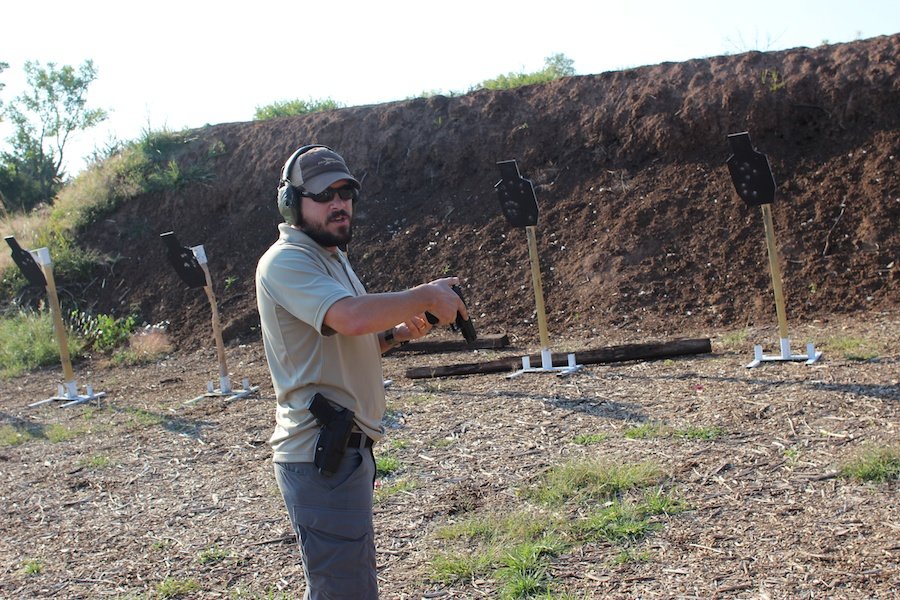
P226 Criticisms: DA/SA Still Divides Shooters
From where I’m sitting, none. I’ve carried this gun many times and put more than 1,000 rounds through it in the last two months, and I’ve had no failures. I’ve yet to find a bullet shape that it won’t feed. I’ve had no failures to eject. I can shoot it right-handed or left-handed, and control it well with both.
I respect SIG’s decision to make guns without external safeties. There’s one less hangup between the impulse to shoot and the ability to do so. If I were to design a set of features for a fighting pistol, this would be it. It might have more classic lines, and it could have an even longer barrel, but it would do what the TacOps does.
But there are those less enamored with the gun. Some folks want a safety. The weight is an issue for some. I get it. Both are valid concerns. There are those thrown by the decocker. Consistency of carry is also an issue I’ve heard mentioned. Some shooters don’t like the heavy double-action pull.
Then, at the end of a string, the gun should be decocked before putting it back in the holster. This makes it safe and sets it back up for a double-action pull. The P226 doesn’t have a really good option for drawing from the holster without this double-action first pull in its traditional decocked DA/SA configuration. Those who like to have a single-action setup, made safe with an external safety, may not jive with this setup.
That criticism is exactly why the SAO branch deserves more attention in 2026. Buyers who love everything else about the P226 but dislike transitioning between double and single action no longer have to pretend the issue doesn’t bother them.
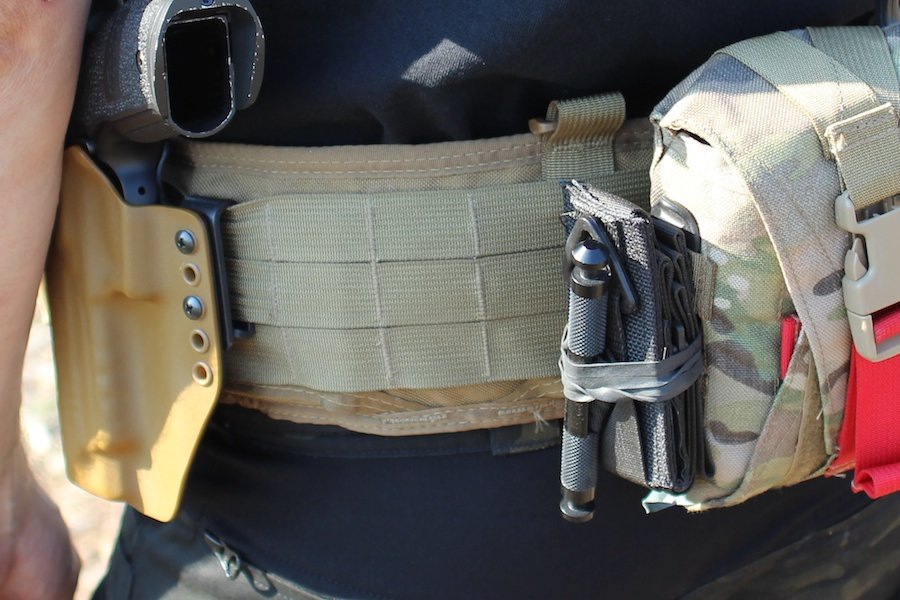
Think of it this way. If I pull this gun, I’m going to shoot it. I was talking to Jacob Epstein, my go-to for such philosophical ponderings, and he presented this as an issue. For police and military use, where guns are often drawn and not fired, this heavy pull is less of an issue. One can stand with the gun presented on a target for a long time.
If I’m pulling the TacOps in a defensive situation, though, odds are I’m going to pull the damn trigger. In Jacob’s mind, the heavy pull on that first pull is more of an impediment than simply dropping an external safety and pulling with a lighter trigger. Adrenaline being what it is, I’d prefer to pull the trigger. Jacob, not so much. There you have it. Which one of us is right? It is a difference of opinion that we pray we’ll never settle.
The Extras: Safariland ALS and Hard Training
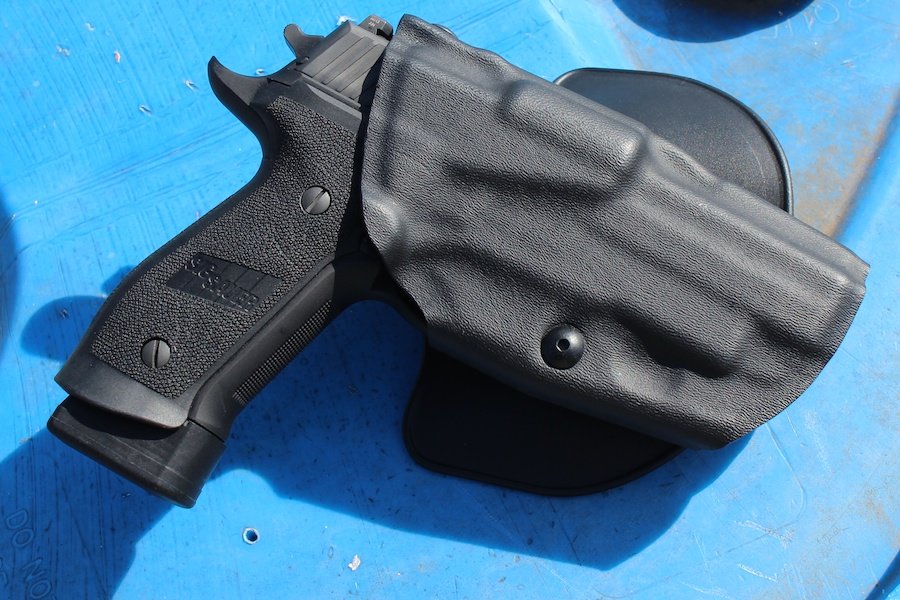
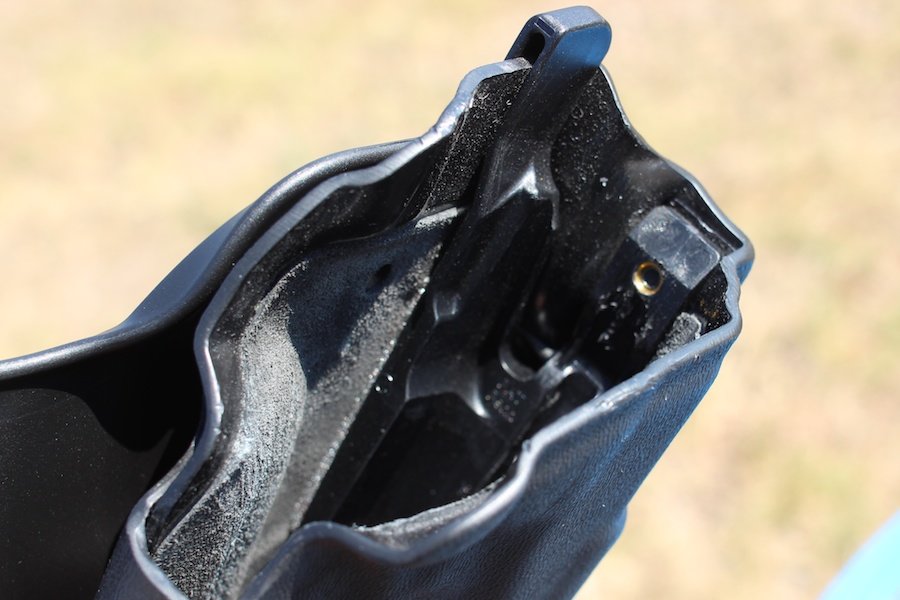
I’ve been carrying the TacOps in a Safariland ALS Paddle Holster. It is sufficiently strong, making it a natural for everyday carry. The wide paddle slips in and out easily, but grips the belt and pants securely. It is my favorite design for convenient retention.
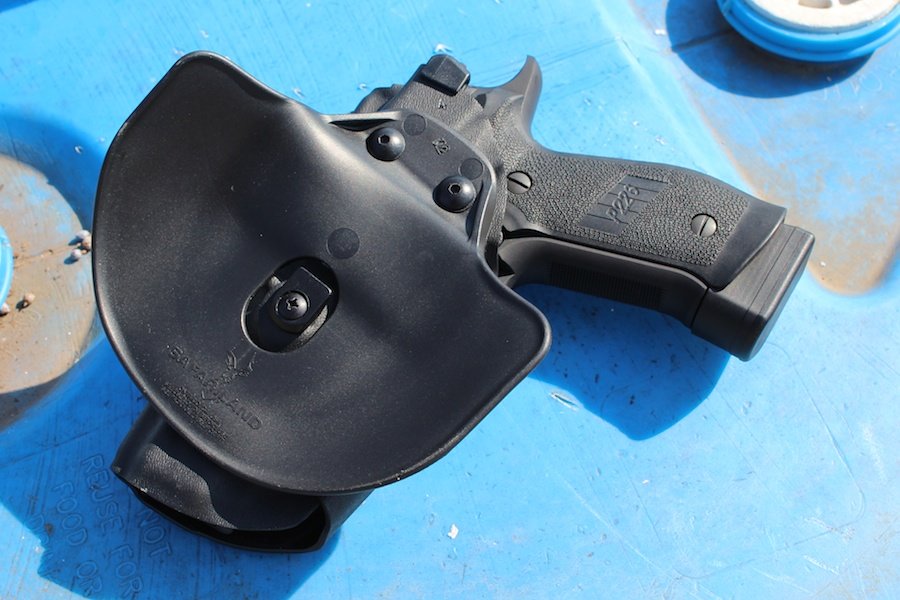
The Safariland paddles are super easy to put on and take off, but offer really innovative retention. The ALS lock is dropped with a natural approach to the gun. Your thumb falls on a lever that clears the retainer. It is fast. I’m able to draw and fire, with an accurate hit, in 1.4 seconds. And I’m no speed demon.
SIG Ammo Through a SIG P226: Where Were the Angels?
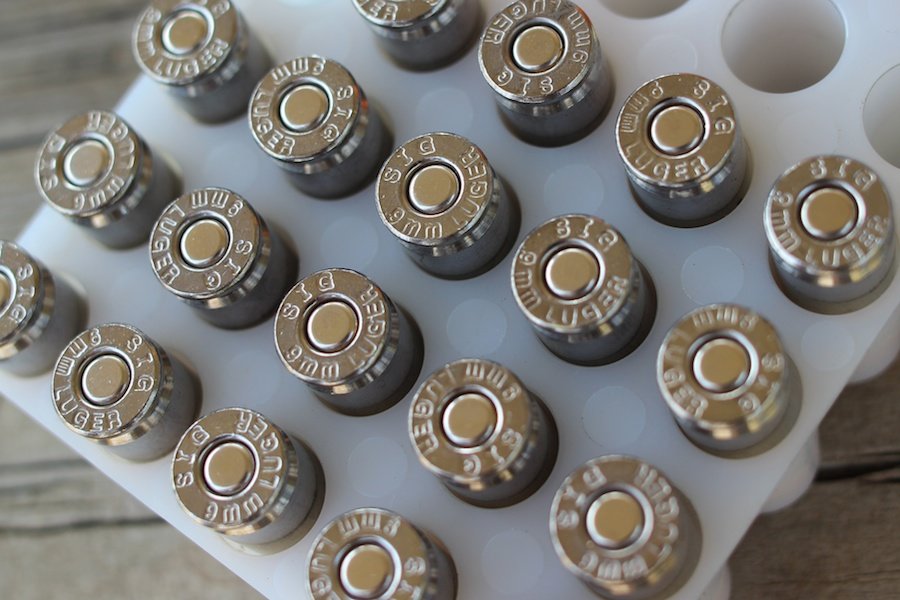
For those of you keeping score at home, SIG deserves another point for bringing their own line of ammo to the table. They sent me some to evaluate. While I haven’t done the formal evaluations of speed consistency or gel-block testing, I’ve been shooting some of the ammo.
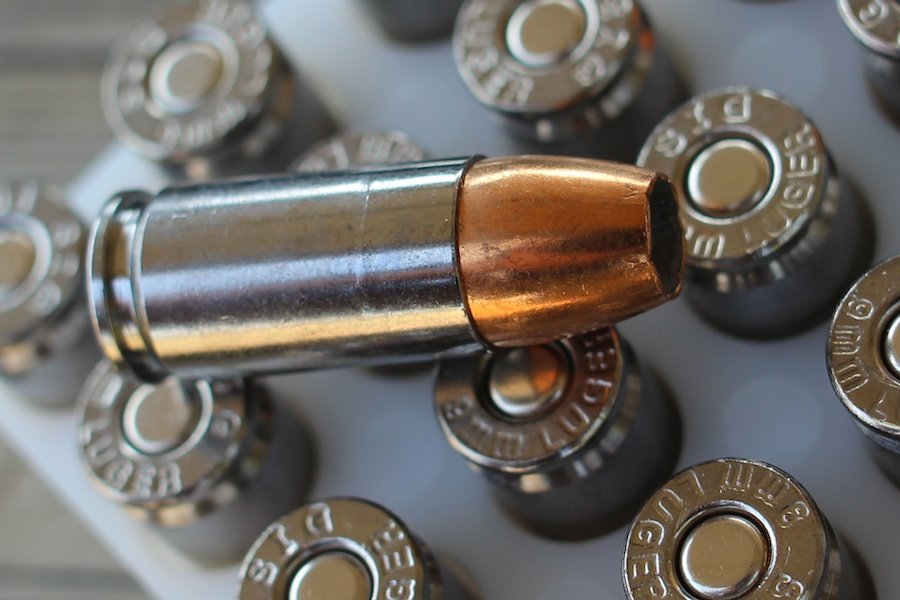
It seemed fitting to shoot some SIG ammo through the P226. I had halfway expected to see sparkling lights and hear angels sing. Not so. But it shoots well. We’ll have a lot more on the SIG ammo soon, as soon as we get some gel to poke holes in.
Is the SIG P226 Still Worth Buying in 2026?
The short answer is yes, if the things that make a P226 a P226 are the things you’re actually shopping for.
Do not buy one because you think a decades-old service-pistol pedigree automatically makes it superior to every modern striker-fired handgun. The P320 is lighter in many comparable configurations, dramatically more modular, and built around a modern striker-fired operating system. Plenty of buyers will prefer that.
Buy the P226 because you want a hammer-fired metal-frame SIG. Buy the DA/SA version because you appreciate the decocker and two-stage trigger experience. Buy an SAO because you want the P226’s weight and balance with a consistent single-action trigger and manual safety. Look toward the Legion if you want the classic design with more factory refinement. Look for an E2-equipped configuration or grip conversion if the traditional grip circumference fights your hands. And look toward X-Five territory if the gun’s job is more range and performance than duty simplicity.
The original TacOps itself remains a fascinating version because so much of what enthusiasts now ask for was already there: capacity, an extended beavertail, functional grip treatment, short-reset trigger, useful sights, forward serrations, and a magazine well that wanted the next magazine almost as badly as you did.
The Original P226 TacOps Conclusion
At the risk of dating this review, I’ll provide an anecdote. When the Ferguson Grand Jury decision was announced, I found myself in an odd situation. I was driving across the top end of the South on my way to visit relatives. I watched the events unfold on that Monday night, very leery about making any kind of road trip. We’d planned out our trip well, but had a limited window for travel and would be driving through Tuesday night, through several metropolitan areas.
I’m always prepared to one degree or another. While I wasn’t expecting massive road closures, much less L.A. Riot-style bullshit or the chaos that I could have encountered in Missouri, I still packed my bug-out bag. And I carried the P226. Concealed-carry reciprocity allowed me to carry the whole way. I tucked the P226 under the tail of my Carhartt field coat, with a couple of magazines on my hip. I rolled out that night with 60 rounds of good 9mm and the confidence that comes from serious training with a serious handgun. I could have done worse, I think.
That’s what the P226 is. It is a gun that goes with you when you have to prepare for the worst. It isn’t a logical choice for concealed carry, but it can be concealed. Its 20-round capacity puts this TacOps configuration at the top of its class. The balance is ideal, the controls are accessible, and I’ve yet to find a gun that I can get on target faster.
It isn’t cheap. The MSRP on the TacOps was $1,329 when this review was written. This, though, included four of these magazines. That’s something. Still, I know some of you reading this will balk at the price. So be it. The gun is worth it.

Pros & Cons: Why the P226 Still Has Teeth
- Pros: Proven full-size P226 architecture, excellent balance, strong practical accuracy, excellent reliability in the original test, multiple modern trigger choices, DA/SA and SAO availability, ergonomic E2-style grip options, premium Legion configurations, optic-ready choices, and a huge base of institutional and enthusiast experience.
- Cons: Heavier and less modular than many modern polymer pistols, traditional DA/SA requires mastering two trigger pulls, the full-size frame is a lot of pistol to conceal, premium P226 variants can become expensive quickly, and buyers now have enough P226 versions to need a buyer’s guide just to buy the buyer’s guide.
Final Verdict: The P226 Is Old School, Not Obsolete
The P226’s biggest problem in 2026 is also the reason people still want one. It has not transformed itself into another lightweight modular striker pistol. SIG already has those.
The P226 remains the big metal hammer-fired SIG. That means weight, a substantial grip, a real hammer moving under your thumb, and, depending on which version you pick, either the traditional DA/SA rhythm or a crisp single-action-only trigger.
The TacOps showed what that platform could do when somebody stacked useful fighting-pistol features on top of it. Legion takes the refinement further. SAO solves the first-pull argument for shooters who never wanted DA/SA in the first place. E2-style grips make the gun friendlier to more hands. Modern optic-ready variants solve another complaint the original gun never had to worry about.
So, is a SIG P226 still worth buying? If you want a modern polymer pistol simply because it is lighter, modular, and efficient, buy one. The P320 exists for a reason.
If what you actually want is a P226, though, very little else scratches the same itch.
More than a decade after this TacOps went through a training class without faltering, that may be the strongest argument of all.
I had one for a bit. Sold it to fund something else.
I kind of think I should have kept it.
SRT, good grip and decent sights.
Great article on an exceptional handgun from the SIG lineup! I would add one more to your chart, the SIG P226 Combat Threaded Barrel (Model E26R-9-CBT-TB). Some of these had a MK25 designation. DA/SA, threaded barrel, 3 mags. A bit more of a compact version of the SIG P226 Tac Ops, easy to shoot and great to pair with a suppressor.
Terrific article, I really enjoyed reading it. I di have to say, all of the photographs are lousy. Everybody with a cell phone has a camera and they think they are pros…these are not professional images…unless they were good and got messed up royally in production.
Cheers.
Excellent, accurate review of the P225 Tacops. I’ve owned one now for 6+ years and out of all the handguns I own, the P226 is the one I keep on my nightstand. Far and away the most accurate pistol I’ve ever shot, which I attribute to the extra weight which helps to absorb much of the recoil, which in turn helps keep my on target. I’ve put between 3,000-4,000 rounds through it on range, and it’s still as accurate as the day I bought it.
Just got my hands on it finally my wife and I went out and shot it…by far the most accurate pistol I have ever shot..my wife shot well with it as well her only complaint was it was a little big for her hands. But said if it was on the night stand and someone entered our home univited she would not hesitate to grab it…I agree the best pistol on the market today 4-11-17
I’m a Texas cop and I am a police trainer in the Middle East. Do you mind if I translate and use this article and pictures for my slideshow and youtube channel?
this is one good article and full of effort!
Under the first photo, the author said that the P226 shared the lines of the 1911. Respectfully, the P226 looks absolutely nothing like a 1911…not even remotely. I don’t know if the author said this to capture the readers’ attention by mentioning the 1911, or to give 1911-like credibility to the P226, but it seems a bit disingenuous, as the P226 shares zero with the 1911 in either looks or function, and instead stands on its own merits. I just don’t understand why gun writers feel this incessant need to pointlessly interject the 1911 into articles about other firearms.
I carry the 226 as a concealed carry pistol. I use a Clipdraw and no holster. For home I carry it in 9mm and for the road I carry it in .357 Sig.
I carry the 226 as a concealed carry pistol. I use a Clipdraw and no holster. For home I carry it in 9mm and for the road I carry it in .357 Sig.
I own 3 Sigs, 1911 nightmare bobtail (fastback), a p229 and a p226 Tacops. I love all three. The tacops is an absolute beast! I am a medium size guy and do cc the tacops most of the time. It is a little big but the comfort of carrying 61 rounds in an awesome handgun outweighs the negative. The tacops is as natural a pointing handgun as I have ever shot. The front sight aids me in this as I am always looking to put the green dot on target. I have never had a ftf or free out of any of my Sigs. The tacops to me is just beautiful and when I take it to the range I always get comments on how accurate and quickly I can put it on target and dump a magic. My advice to anyone considering this gun…Save up and buy one it is worth every penny. Sure it’s as much as two glocks but two Chevrolet Malibus are as much as one Corvette….just my thoughts and opinion.
Glad you finally got the opportunity to run the best SIG if not best work/war horse of all time. I’ve been working mine out on the range for 8 years and on duty for the last 3 and it is the most reliable and accurate pistol I’ve ever owned. The confidence it inspires will walk you in and out of any scenario you encounter with gusto. As a bigger guy I have no trouble concealing it with a 10 degree cant IWB at 2:00, but it is truly at home in a duty rig or mounted on your plate carrier. I find the beaver tail to be more for looks than function as there’s zero risk of slide bite and if anything it’ll end up jabbing you in the ribs or hanging up on your cover garment. (This is why all my SIG classics are bobbed) I love the SRT, the sites and the front cocking serrations, but it’s the addition of the magwell grips that gives this piece the intangible feeling in your palm that makes you wanna race it or take it into battle. If you already have a p226, get a set of magwells. (It’ll bring out that “inner operator” for sure.)
What is the exact type of safariland holster? I want one for my 226 tacops!
I’ve been waiting about 1 year to pick one of these up and finally bought one Friday night. Went out in 15 degree temps and froze my fingers a little at the range, but absolutely worth it. I’d say your review hits the nail on the head and I’ll probably read through it again. Thanks!
Great review.I bought my first Sig in 1990,a 226,and have been a huge fan ever since.Ive owned several models as well as many firearms from Sigs competition.I recently picked up a 226 Blackwater ( same gun as Tacops) in 9mm and it quickly became one of my favorite handguns ever.The SRT is my favorite feature and ill likely be adding it to all of my Sigs in the future.To address two concerns in the comments #1 the coating on the barrel is easily and safely removed with a 3M scratchpad and #2 there are so many great custom Kydex holster makers out there now that its cheap ( $35 ) and easy to get a great holster for this or any gun nowadays.
I agree with almost everything in the review except, not liking the sights, I think they are fantastic. I can get on target much faster with these than any other platform. But again this is only my opinion and others will vary also. My only after thought was not loving the beaver tail. I think adding the SRT, front fiber/tridium sight combo to a mk25 might just make that the perfect pistol.
Dave I own a Sig 226 Tac ops I have called safariland five times they to not know the complete model No. of the ALS Holster , you used in your testing of the Pistol can you please let me know all the numbers so i can order this holster. I own six sig pistols they all by fare Best semi s made . I have from your article ALS 6378 what our the middle Numbers should be three sets of Numbers. need your help so I can buy this Holster . SEMPER FI OLD Marine 0331 1969 3/3 Vince
No dates on this forum so I may be years too late but the Safariland paddle you are looking for is # 6377-477-411. Also Fobus makes a nice one model # SG-21.I just picked up a custom Kydex holster for $35 that I love.Sempre Fi
I have owned two Sig tac ops, one in .357 sig and the other in 9mm. Loved them both. I actually preferred the 9mm over the .357 because it was easier to shoot and hold on target. I just bought the new Sig 320 compact and it shoots outstanding also. If you don’t have big bucks, that is the gun you want and it has interchangeable calibers which is nice.
Thanks!
Got my first 1911 at age 15. Carried one for sixteen years of service. I’ve been carring a Sig 226 in 9mm almost as soon as they came out. In the days of useless 9mm ammo, I reconfigured/reloaded my own… it was not useless. Mec-Gar makes a flush fiting 18 round magazines for it. 18+1 is not a bad amount of ammo. I like a “Clipdraw” rather than a holster and I find that placing my thumb on the hammer as I tuck the pistol into my belt is comforting. Don’t see much use for the beaver tail sweep. The 15 round mags have a nice lip on them that aid pull from holster or waistband. As for the 10 lbs. first pull… BFD! What are you?
I also own .40 and .357 Sig 226’s as well as 229’s.
Oh, and Fred, our Sig rep says the design staff is working on a fix for the few cracking alloy frames. When the new 10mm debuts in February on the P-220 frame you’ll see an all-stainless steel (slide and frame) Sig that should handle 10mm power. I understand there is a part number, but no pre-orders yet. There will be a hunter version (interesting finish with mounted reflex sight) for around 1.5K, and a plain reverse for around a grand. I doubt you’ll see stainless 226’s, but Sig’s been good at altering their metallurgy to correct issues……just not really fast at doing so.
Sig does make an “all steel” 220, 226, and 229 in their Stainless Steel Series. I have the 220 and two of the 226’s (9mm and .40). Fantastic pistols. Have never been an aluminum fame fan.
Good to know! I’m with you. All-steel are heavy, but worth the reliability.
Yeah, I was stationed in Italy when Beretta got that contract. Sig and Beretta were neck and neck in the trials, but we traded the contract to the Italian manufacturer for the GLCM base in Sicily (Comiso AB).
I love my 226! I do want to get better sights on it eventually, and since I live in NY I can’t have fun with a 20 rounder. Still, it’s a great firearm nonetheless.
Nice review, but one significant problem was omitted. With extended use alloy framed P 226s can develop cracks in the fame rail area. This problem is common enough for at least one gunsmith to be working on replacement rails. The real problem is tht SIG will not repair or replace the frame under warranty.
I,ve always found that sigarm lack of a external safety a plus in my book , the long d/a trigger pull is the safety other than not puttting a finger on the trigger . i have regular da/sa double action only models of sigs . in twenty plus years of carrying one never a problem with them reliable and well thought out design has made this gun last so long as a top choice in my world .
Great review, I concur with pretty much everything it it.
I have the Sig 226 MK25 that I purchased a couple of years ago. Although, I am a big fan of the Beretta, owning several; the MK25 quickly became my favorite. It took a little getting used to, but once I did, wow! There was nothing I didn’t like about it. The thing that surprises me in articles like this is the fact that the capabilities of having a hammer seem to be overlooked. Having decocked the gun, and then pulling it from the holster, I have the option (a great one) to simply cock the hammer. This option is often limited by time, and if I don’t have the luxury of time to do this, I can simply pull the trigger for a DA shot. I find this works well for me and I use it on my other DA/SA pistols: Beretta’s, CZs, etc. This is a good system, because under stress cocked or uncocked doesn’t matter; the gun is going to fire. This is much superior to a safety where you could pull your trigger several times and finally realize you have intentionally disabled your gun with it’s safety.
I did upgrade with a trigger job and short reset trigger (SRT), both were nice enhancements. And I may give the extended grips a try. I do have 20, 18 and 15 mags and find that more is definitely better. When you are in a class putting many bullets downrange, and your classmates are using low capacity mags or 1911s or wheelguns, you really see the difference.
Thanks for the informative article. I was just wondering if anyone has done a comparative review between the P226 TACOPS and the P226 MK-25.
Great article. I have a p226 x5 comp 9mm and too agree sig make the best quality . Expensive but you get what you pay for.
I got mine in .40 and 16 rounds of this potent caliber is easy to shoot. I have no issues with the sights and love how bright the front is at night. Brighter than any other front night sight I have seen. I added a Streamlight laser/light combo on the rail and feel I have a top notch home self defense pistol. I have taken it to the range, flipped on the laser and bringing it up to my chin I rapid fire two in. center groups at 7 yards. However, I think it would be ridiculously too big for CCW. Not for weight, but for bulk. I am still trying to figure out the best way to carry my M11-A1 and 227 SAS. I would say these will be the largest guns I would ever carry.
I also own a P226 in .40 and a P227 (among other Sigs) and have found a Blackhawk Serpa adjusted for crossdraw suits my purposes for carry. Have a Wright Regulator on order, but the Blackhawk works well for me. Just my opinion, but may be an option for you.
I also own a P226 in .40 and a P227 (among other Sigs) and have found a Blackhawk Serpa adjusted for crossdraw suits my purposes for carry. Have a Wright Regulator on order, but the Blackhawk works well for me. Just my opinion, but may be an option for you.
Mods-
Sorry about the double post (I hate this touchpad!) Please delete one of them.
Just bought this model. Everything I wanted standard. May shoot it as my pistol in 3 gun comp at my local club.
I second you notions for the Sig TacOps being the premiere defensive handgun, despite it’s hefty dimensions. I have the original version without the beaver tail and mag well flare. It easily reloaded without the flare and you have 61 rounds with 2 additional mags when packing for the what if’s. If I can’t take ’em down, I damn sure can keep the pinned down while I gain distance & cover! Hope I never have to put it into service for that purpose, but it’s comforting knowing that no matter what I feed it, it fires and keeps on firing until the last cartridge is spent. My only ‘trouble’ with it in 7 years of ownership is that somehow I managed to knock the from day glow rod from the sight. Sig sent me a new front sight and I had a local smith replace the defective one. Easy to see that bright set of sights in almost any light. Thanks for the breakdown for all the others that haven’t entertained this pistol as a dependable friend. Oh…And it has a hammer that can easily be cocked so that first shot doesn’t have to be the full 10#s when it’s not used in an instantaneous shoot or die scenario. I like that coupled with the proved de-cocker. Send me some of that Sig ammo if they over load you with too much!
“Think of it this way–if I pull this gun, I’m going to shoot it.”
Very definitive statements like this one are a bit scary, as the very fast and easily changing dynamics of a use-of-force encounter dictate adaptive defensive techniques, to include observations of changes that mitigate that use-of-force. I am a 22-year LEO, yet I had to utilize my off-duty firearm twice – Once, as I was drawing my firearm from kidney carry, the suspect immediately disengaged and put his hands up, which was a win-win, as I do not want to shoot anyone. Our number one skillset that we practice is observations skills. We use it to avoid problems and we use it to adapt to potential or actual threats.
I liked the article and actually own a P226R SCT .40 with a AE, the SRT, and short trigger. Not a beavertail fan, so I love the SCT. Never one malfunction in thousands of rounds. Bought the extended grips, but carry it on-duty with Hogue G10 checkered gray/black. When off-duty I have the EFK Firedragon match barrel and recoil spring, along with Elite adjustable sights on it. The gun is crazy great and just balances well.
Regards from sunny Florida.
Great review. As a lefty, I too am interested in your assessment of it being ambidextrous. More so regarding the decocker. I’m already used to the slide and mag release on the left. Not sure if I can operate the decock lever and maintain muzzle control in a natural way. Thanks!
Leo instructor here: for left handers, to use the decock lever:
***while keeping your handgun pointed toward your known or expected threat*** before returning to a compressed ready position or back to the holster,
WITH THE LEFT HAND (maintaining your strong hand master grip): ROTATE THE FIREARM 90 DEGREES CLOCKWISE (along the barrel axis). BREAK YOUR RIGHT HAND GRIP, ALLOW YOUR RIGHT HAND THUMB TO CROSS OVER THE TOP OF THE SLIDE AND DECOCK THE HAMMER (pushing down on the decock lever). ROTATE THE FIREARM BACK UPRIGHT AND RE-ESTABLISH YOUR TWO HANDED GRIP as needed.
I have had the Tac-Ops and like you loved it – but … like you I didn’t care for the sights. Being an FFL I have access to any handgun my heart desires. Also, being a retired State Trooper I was and am fully trained in the use of this (P226) handgun platform as we were issued this handgun as a duty pistol throughout most of my career (only in the .40S&W). So when it was time to get serious about a range pistol and a SHTF pistol to be used and carried in all types of situations it was an easy choice for me.
Here’s what I did: I acquired what I believe to be the best P226 that Sig makes “The MK25” and transformed it into a Tac -Ops, simply by purchasing the extended grips from Sig and adding the 20 round mags. Now I have essentially a Tac-Ops only I have what I consider the best of both Worlds as I have the night sights I want, and these additions: – a short extractor, phosphate coated internals, phosphate coated barrel, hard chrome lined barrel, a true Mil-Spec Pic rail and oh yeah the cool anchor, lol…
But seriously, hands down (my opinion) the best handgun platform money can buy. Easy to clean, easy to breakdown, easy to use, easy to learn, accurate beyond your expectations, failures are RARE, easy to acquire parts if needed, a million accessory choices holsters, grips, different sights, etc, etc. Torture tested by everyone including the Military and DOD. Like Glock the most LEO issued pistol platform in the US. As originally stated, I can and do have them all but when it comes time to defend my life or the lives of my family I will look to the P226 or my other trusted G17 or G19… The three best 9mm handguns money can buy.
To answer the ambidextrous question, no the 226 is not. It is not set up from the factory with ambi controls. I enjoyed the article but do disagree with your if I pull it I am going to shoot philosophy. That train of thought is flawed on so many levels. I do agree with you on the external safety, there is no need for one with the DA setup and one might be good for range use but is useless on a true fighting weapon.
Well written and quite comprehensive. You state or imply + at least twice that the 226 has ambidextrous controls. From the pictures I don’t see that as to the safety or the mag release. Does it have these features.
Thanks for your time and your well written analysis.
I have the original P226 TacOps, the P226 BWTac (Blackwater Tactical). It is the same gun but was out while SIG still had license from Blackwater to put their name and logo on the guns. This was the SIG that got me back into shooting SIGs, because of the beavertail, SRT trigger and short trigger. Great gun, accurate and dependable. I switched the Blackwater grips out on mine for standard P226 grips so I can use regular mags with less problems, have a 8 of the 20 round ones too. Great gun.