
The best pistol laser of 2026 is not a gimmick or a substitute for learning your sights. It is a tool that helps when your sights are not an option: shooting from an awkward position, from retention, around cover, or in light so poor you cannot see the front post. Put the dot on the target, press the trigger, and the round goes there. For newer shooters especially, that confidence counts for a lot.
Lasers have changed. A decade ago, adding one meant a bulky rail unit with a pressure switch glued to the grip. Today you can get a compact green laser built into a weapon light for a micro-compact, a grip that turns the laser on when you squeeze it, or a guide rod laser that does not change the outside of the gun at all. When Mark Kakkuri wrote the original version of this guide in 2018, he sorted lasers by type. We kept his framework in the buyer’s guide and added the specific products our writers have tested.
We flag older reviews and short first looks. Prices are listed as they were at the time of review, so check current pricing and model fit for your pistol.
Start with the buyer’s guide, then find the pistol laser that fits your gun and how you carry it.
Table of contents
- Buyer’s Guide: How To Choose The Best Pistol Lasers In 2026
- Best Pistol Lasers Ranked: 2026 Product Roundup
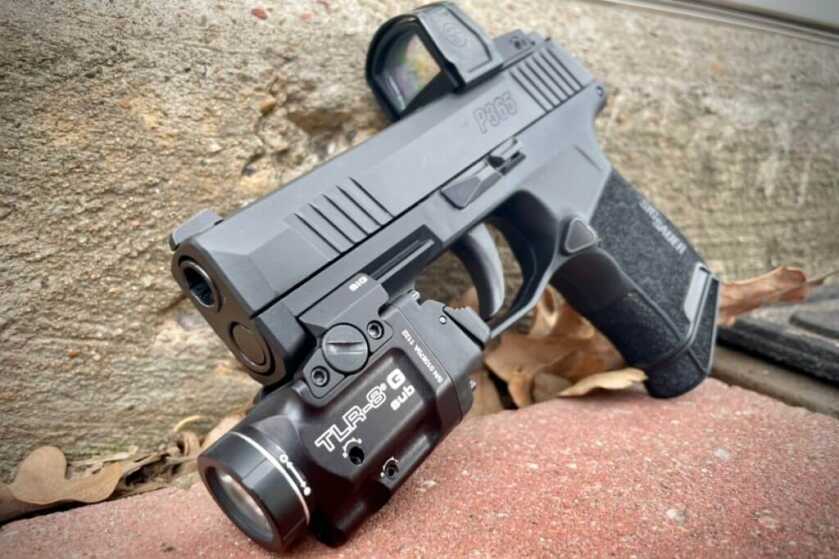
- Streamlight TLR-8G Sub: Best for Overall Laser/Light For Micro-Compacts (2026)
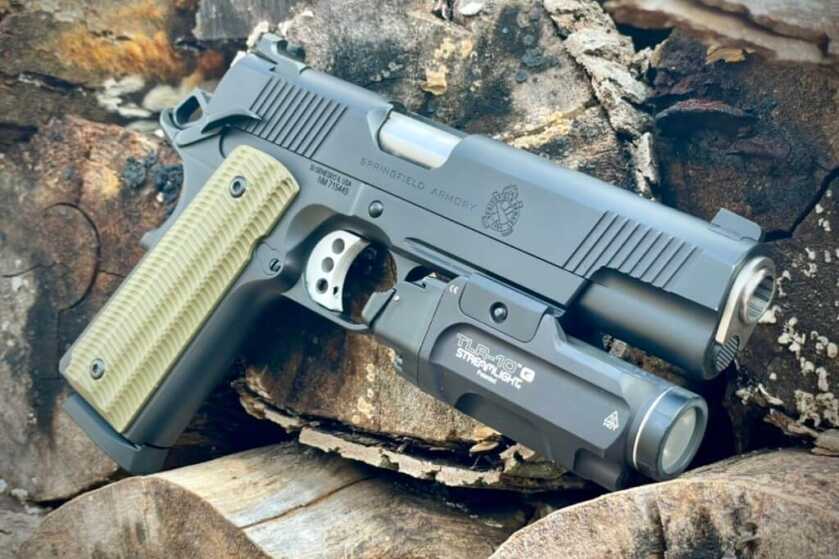
- Streamlight TLR-10G: Best for Full-Size Laser/Light Combo (2026)
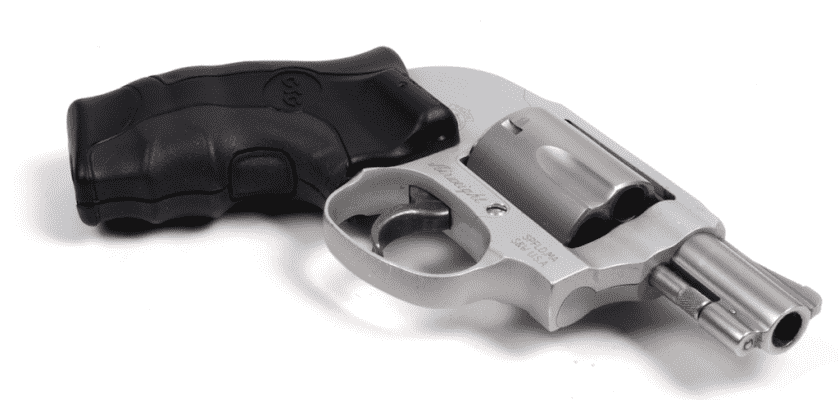
- Crimson Trace Lasergrips LG-350G: Best for Grip-Activated Laser For Revolvers (2026)
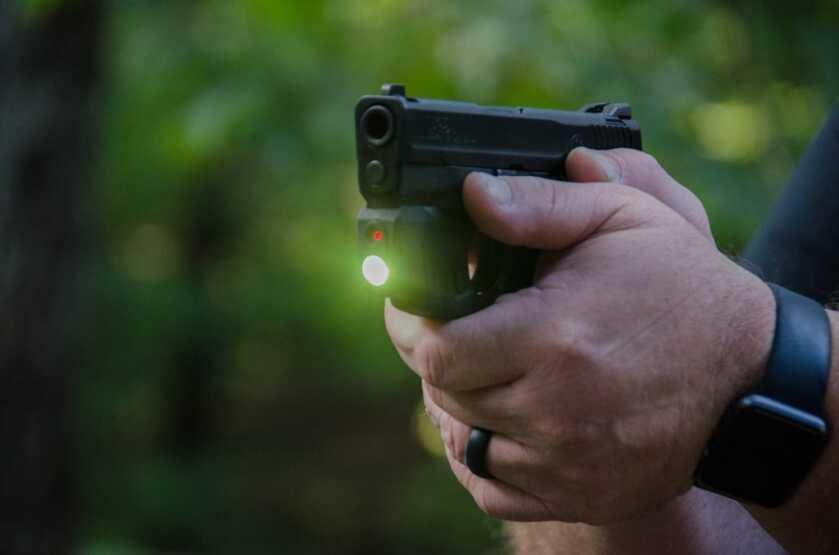
- LaserMax CenterFire With GripSense: Best for Trigger-Guard Light/Laser For Carry Guns (2026)
- Crimson Trace Laserguard Pro: Best for Pocket Pistol Light/Laser (2026)
- Crimson Trace Defender Series: Best for Budget Rail Laser (2026)
- LaserMax Guide Rod Laser: Best for Invisible Laser That Fits Your Holster (2026)
- Final Thoughts On The Best Pistol Lasers Of 2026
Buyer’s Guide: How To Choose The Best Pistol Lasers In 2026
Choosing the best pistol laser starts with the type of system, then the color, activation, and holster fit. Here is what to know.
Light/Laser Combo Or Laser Only
A rail-mounted light and laser combo does two jobs in one unit. You can identify a threat with white light and see your point of impact at the same time, and our writers believe every defensive handgun should wear a light. The tradeoff is size, weight at the muzzle, and the need for a specific holster. A laser-only unit is smaller and easier to conceal.
Green Or Red
Green lasers are much easier for the human eye to see, especially in daylight, because the eye is more sensitive to green wavelengths. Red lasers typically use less battery power and cost less. For a defensive gun, most of our testers prefer green.
Types Of Laser Mounts
Rail-mounted units clamp to the accessory rail and hold zero well. Trigger-guard-mounted lasers fit guns with no rail and put the beam right under the barrel. Laser grips replace the factory grips and turn on when you grasp the gun, though a trigger finger can block the beam on some models. Guide rod lasers replace the recoil spring guide rod, keep the gun’s exterior unchanged, and fit existing holsters, but they replace an important part and usually need a separate switch.
Activation
Some shooters want the laser to come on automatically when they grip the gun. Others want a deliberate step so the laser does not give away their position. Grip-activated systems are instinctive. Ambidextrous switches on rail units let you choose momentary or constant-on. Think through the situations you expect and pick accordingly.
Zero And Mount Rigidity
A laser and a bullet only meet at one distance, so set your laser zero for typical defensive distances. Small polymer frames can flex enough to move a laser zero if you squeeze the trigger guard, which our TLR-8G Sub reviewer noticed. Metal-framed guns are more rigid hosts.
Holsters And Batteries
Almost every laser except a guide rod unit changes your holster needs, so budget for a new one. Check and replace batteries on a schedule, because a laser that does not turn on is worse than none at all.
Best Pistol Lasers Ranked: 2026 Product Roundup
Streamlight TLR-8G Sub: Best for Overall Laser/Light For Micro-Compacts (2026)
Our reviewer believes all defensive handguns should wear a light, and the TLR-8G Sub puts a light and green laser on the smallest carry guns. It pushes 500 lumens and 5,000 candela, with a 510 to 530 nm green laser he found surprisingly bright, though not daylight bright. He ran a few hundred rounds on a SIG P365-380 and the light never flickered and the laser held its zero. He did note that squeezing the trigger guard could shift the laser slightly, a common issue with small polymer frames.
Read our full Streamlight TLR-8G Sub review here.
Ambidextrous switches give momentary or constant output, and windage and elevation adjust with an Allen wrench. It survived an hour in a 10 degree freezer and turned right on. Runtime is about 1.5 hours with or without the laser, and about 11 hours laser-only on one CR123A. It comes in versions for Glock 43 and 48, SIG P365, Springfield Hellcat, and short 1913 rails, but they are not interchangeable. MSRP was $389, with street prices around $290, at the time of the 2023 review.
Key Specs
- Output: 500 lumens, 5,000 candela
- Laser: Green, 510 to 530 nm
- Battery: 1 CR123A; 1.5 hr light, 11 hr laser only
- Fits: Glock 43/48, SIG P365, Hellcat, 1913 short rail versions
- MSRP: $389 at time of review
Pros
- Light and laser for micro-compacts
- Bright green laser
- Held zero through testing
- Cold-weather tested
Cons
- Model-specific mounts are not interchangeable
- Laser shifts if the trigger guard is squeezed
- Needs a specific holster
🛒 Check Current Price for Streamlight TLR-8G Sub on GunsAmerica
Streamlight TLR-10G: Best for Full-Size Laser/Light Combo (2026)
For duty-size and compact pistols, the TLR-10G pairs a 1,000 lumen, 10,000 candela light with the same bright green laser. Our reviewer found the laser faintly visible even on an overcast day. On a Smith and Wesson M&P9 M2.0 it held zero through a few hundred rounds, and he could flex the housing on a polymer frame but it bounced back to zero when released. A nice feature: you can run light only, laser only, or both.
Read our full Streamlight TLR-10G review here.
The impact-resistant lens wiped clean easily after heavy carbon buildup. Streamlight includes six rail keys to fit different pistols, plus two switch options. Runtime is about 1.5 hours with or without the laser, 3 hours on strobe, and 11 hours laser-only on two CR123A batteries, and it also passed the freezer test. MSRP was $385, with street prices around $275, at the time of the 2023 review.
Key Specs
- Output: 1,000 lumens, 10,000 candela
- Laser: Green, 510 to 530 nm
- Battery: 2 CR123A; 1.5 hr light, 11 hr laser only
- Fit: Six rail keys included
- MSRP: $385 at time of review
Pros
- Very bright light
- Light, laser, or both modes
- Fits many rails
- Held zero
Cons
- Larger and heavier at the muzzle
- Needs a light-bearing holster
🛒 Check Current Price for Streamlight TLR-10G on GunsAmerica
Crimson Trace Lasergrips LG-350G: Best for Grip-Activated Laser For Revolvers (2026)
Our reviewer put Crimson Trace’s LG-350G Lasergrips on his favorite Smith and Wesson 638 snub, and he loved them. Grip the gun, the button on the frontstrap is pressed, and the green laser comes on. He called the activation switch reliable every time and the beam easy to see even in daylight. The grips also improved the snubby’s notoriously small handle, using two plastics for structure and comfort.
Read our full Crimson Trace Lasergrips review here.
The laser sits beside the barrel, so at very close range point of aim and impact can differ by an inch or so, but at normal distances the rounds land on the dot. His gripes were mild. Some holsters will not fit the laser housing, though the Blade-Tech Klipt worked perfectly, and you must turn on a master switch before the grip button works. He leaves it on all the time and had not used up the original batteries, with about two hours of steady activation per set at the time of the 2018 review.
Key Specs
- Type: Laser grip, grip-activated
- Laser: Green
- Fit (tested): Smith and Wesson J-frame 638
- Battery: About 2 hr of steady activation
- Power: Master switch plus frontstrap button
Pros
- Instinctive grip activation
- Bright green laser
- Better grip on a snub
- Excellent battery management
Cons
- Some holsters will not fit
- Master switch must be on
- 2018 review
🛒 Check Current Price for Crimson Trace Lasergrips on GunsAmerica
LaserMax CenterFire With GripSense: Best for Trigger-Guard Light/Laser For Carry Guns (2026)
LaserMax’s CenterFire with GripSense clamps around the trigger guard of compact carry guns and turns on when you grip the bottom of the trigger guard, then shuts off when you let go. It even works with gloves. You can choose light and laser, light only, or laser only, and flashing or constant beam, with manual override switches on both sides. At the time of our 2017 review it fit the Smith and Wesson M&P Shield and Ruger LC9, LC9s, and LC380.
Read our full LaserMax GripSense review here.
Our reviewer installed it in about 10 minutes and found it accurate right out of the box, with no adjustment needed. The 5 mW laser came in red at 650 nm or green at 520 nm, and the light is a 100 lumen LED with a slight greenish hue. He tended to rely on his sights and use the laser as confirmation, and he noted an academic study showing moderately skilled shooters learn lasers faster than red dots. Check current model fit.
Key Specs
- Type: Trigger-guard light and laser
- Laser: 5 mW, red 650 nm or green 520 nm
- Light: 100 lumens
- Activation: GripSense plus side switches
- Fit (2017): M&P Shield, Ruger LC9/LC9s/LC380
Pros
- Instinctive activation
- Many modes
- Zeroed out of the box
- Easy install
Cons
- Limited gun fit
- Dim light by modern standards
- 2017 review
🛒 Check Current Price for LaserMax GripSense on GunsAmerica
Crimson Trace Laserguard Pro: Best for Pocket Pistol Light/Laser (2026)
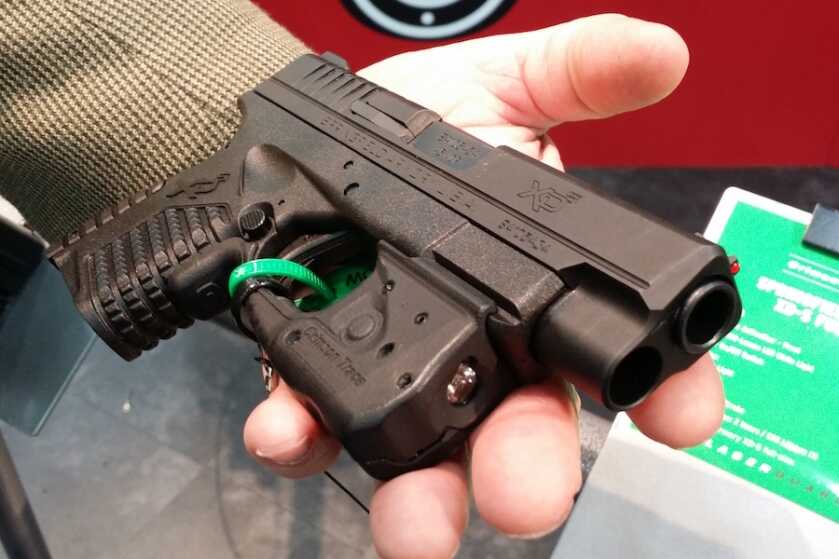
Crimson Trace introduced the original Laserguard in 2007 for compact and subcompact handguns. It clamps around the trigger guard and uses the company’s Instinctive Activation button under the rear of the guard, so the laser comes on as you grip the gun. The Laserguard Pro, which we saw at the 2016 NRA show, adds an integrated white light, putting a laser and light on guns too small for a rail light.
Read our full Crimson Trace Laserguard Pro coverage here.
At launch it was available for the Smith and Wesson Shield series. Our coverage is a short show report rather than a full test, so check Crimson Trace’s current lineup for your pistol. For Glock owners, Crimson Trace also offered Laserguard models for Gen 5 Glocks, which listed at $249 at the time of our 2017 coverage.
Key Specs
- Type: Trigger-guard laser plus white light
- Activation: Instinctive Activation button
- Fit (2016): Smith and Wesson Shield
- Related: Laserguard for Glock Gen 5 ($249 at time of review)
- Coverage: 2016 show report
Pros
- Light and laser for small guns
- Grip activation
- Compact
Cons
- Show report only
- Limited fit at launch
🛒 Check Current Price for Crimson Trace Laserguard Pro on GunsAmerica
Crimson Trace Defender Series: Best for Budget Rail Laser (2026)
Crimson Trace built the Defender Series to bring a quality laser down to roughly the price of good night sights, with list prices between $129 and $149 at the time of our 2013 review. Our reviewer mounted versions on a Glock 17 and a Springfield XD(M). The fit was tight, and getting the front tab into the rail took more pressure than he liked, but it went together fine.
Read our full Crimson Trace Defender Series review here.
Crimson Trace sets the laser at the factory for 50 feet, and he zeroed it with the supplied wrench using a simple dry process, though the height adjustment direction took some trial and error. Battery life was about two hours of normal use per Crimson Trace. The ambidextrous push-button switch worked reliably through hundreds of presses, but the laser shut off twice during strings of fire. Holster support was limited at launch. Check whether the Defender Series is still offered for your gun.
Key Specs
- Type: Rail-mounted red laser
- Fits (tested): Glock 17, Springfield XD(M)
- Zero: Factory set at 50 feet
- Battery: About 2 hr
- Price: $129 to $149 at time of review
Pros
- Affordable
- Easy dry zero
- Ambidextrous switch
Cons
- Shut off twice during fire
- Tight install
- Limited holsters at launch
- 2013 review
🛒 Check Current Price for Crimson Trace Defender Series on GunsAmerica
LaserMax Guide Rod Laser: Best for Invisible Laser That Fits Your Holster (2026)
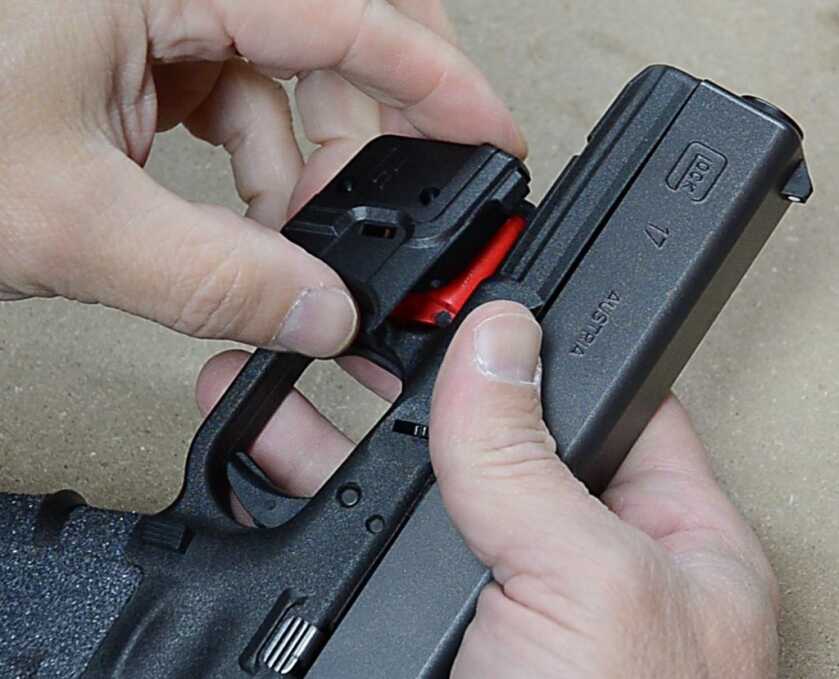
If you want a laser without changing the outside of your gun or buying a new holster, the guide rod laser is the answer. The LaserMax unit replaces your recoil spring guide rod, and an ambidextrous switch replaces the takedown lever. Our reviewer called the instructions clear, concise, and thorough, and LaserMax includes a tool for the trickiest step, swapping the slide lock spring, though it was fiddly for big fingers.
Read our full LaserMax guide rod laser review here.
Once installed, nobody can tell it is there. His index finger naturally landed on the switch as he drew, and the laser lined up well with his sights out of the box. Turning it off takes a push from the other side with the support hand. Our original guide noted the tradeoffs: you replace an integral part, and the laser has to survive heat and recoil inside the spring. Versions were offered for Glock, Beretta, Springfield XD, SIG, Smith and Wesson, Taurus, and most 1911s. MSRP was $349 at the time of the 2011 review.
Key Specs
- Type: Internal guide rod laser
- Switch: Ambidextrous, replaces takedown lever
- Holsters: Fits existing holsters
- Fits: Many popular pistols
- MSRP: $349 at time of review
Pros
- No change to gun exterior
- Uses your current holster
- Ambidextrous switch
Cons
- Replaces a critical part
- Two-handed to turn off
- Red laser
- 2011 review
🛒 Check Current Price for LaserMax guide rod laser on GunsAmerica

Final Thoughts On The Best Pistol Lasers Of 2026
For most carry guns today, the best pistol laser is part of a weapon light. The Streamlight TLR-8G Sub is our pick for micro-compacts, and the TLR-10G is the choice for larger pistols. If you carry a revolver or want grip activation, Crimson Trace Lasergrips are proven. The LaserMax GripSense and Crimson Trace Laserguard Pro add light and laser to guns without rails, the Defender Series is a budget rail option, and the LaserMax guide rod laser is the stealthy choice that keeps your holster.
Whatever you choose, zero it, practice with it, and keep training with your sights too. For weapon lights without lasers, see our micro weapon light rundown, and for optics see our best pistol red dots. Find lasers, lights, and handguns on GunsAmerica.com. Train hard, shoot straight, and stay dangerous.

is a nationally published freelance writer who covers guns and gear, 2nd Amendment issues and the outdoors. His writing and photography have appeared in many firearms-related publications, including the USCCA’s Concealed Carry Magazine. You can follow him on Twitter @markkakkuri.
I have and use the trigger guard laser(LC9, LCP, LC380), the guiderod laser(Glock 22) and the rail mounted laser( HyPoint Carbine). Would not recommend the rail mount but love both the trigger guard and the guide rod and would suggest a trigger guard on compact-subcompact and guide rod on full size.
That’s my story and I’m sticking to it.
Have a lasermax internal guide rod that is still kicking after 14 years. In a Springfield trp 45 it’s only on its second set of battery since I’ve had it.
I hate to mention this but the slide return spring has NOTHING to do with recoil. It does not “manage” recoil at all. Physics says that the recoil is caused by case diameter impinging on the slide, recoil shield or bolt, all the slide return spring does is return the slide to the battery position while feeding the next round. The larger the case diameter, the larger the recoil, why a 12 ga has more recoil than a 9mm. This is basic stuff Mark, there is no “magic”. The return spring is at its lowest point of energy until the slide moves to the rear, its impact on recoil is negligible.
The recoil spring works counter to the recoil action – it resists the rearward movement of the reciprocating parts, in addition to returning the slide to battery. The strength of this spring (and the hammer spring, as applicable) must be balanced with the recoil force; which is why you cannot interchange springs between all calibers. Too little strength and you’ll get frame battering, cracked slides, and premature wear (imagine shooting with no spring at all), and too much, and you’ll get functional problems, like failure to eject. This is also why a lighter recoil spring is necessary on a race pistol once a brake is attached; otherwise it won’t cycle properly. Mark was actually quite correct.
A work buddy showed me his new Glock 30 with a LaserMax guide rod laser back in 2000 and I fell in love. Bought one just like it and gave my best friend my Beretta 92F. 2018 and it is still my favorite. Yes it does take using the other hand to turn the laser on and off but never has the laser fail to work and I only changed the battery pack once in 18 years. All I can say is this combo has worked without fail for me.