
Estimated reading time: 3 minutes
Well, this is a big one.
Smith & Wesson announced that it has acquired Savage Arms in a deal valued at $160 million. The transaction closed on October 21, bringing two of America’s oldest and best-known gunmakers under the same corporate roof.
Smith & Wesson paid approximately $37.5 million in cash and issued roughly nine million shares of company stock to Savage owner JDH Capital. Following the deal, JDH owns 16.7 percent of Smith & Wesson and becomes its largest shareholder. The investment firm also received a seat on the Smith & Wesson board.
Two Very Different Gunmakers Join Forces
From a product standpoint, this combination makes plenty of sense.
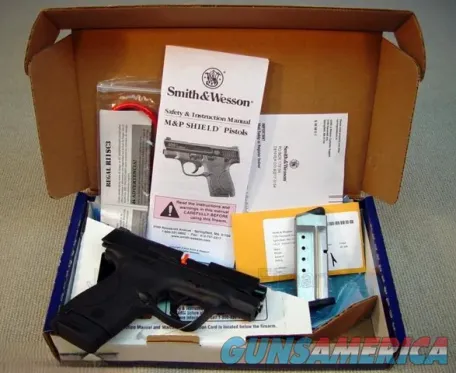
Smith & Wesson is best known for handguns, particularly its M&P pistols and revolvers. The company has also expanded into modern sporting rifles, lever guns and suppressors through Gemtech.
Savage brings a very different set of strengths. Its bread and butter remains bolt-action hunting and precision rifles, along with rimfire guns and shotguns.
In other words, there is not much direct overlap. Smith & Wesson’s investor presentation claims the two companies’ product lines are more than 99 percent non-overlapping.
SEE ALSO: FN SCAR Buyer’s Guide 2026: 16S vs. 17S vs. 20S
Together, the companies now cover virtually every major commercial firearm category, including pistols, revolvers, modern sporting rifles, lever guns, bolt-action rifles, shotguns and suppressors.
“This is a transformative step for Smith & Wesson,” company President and CEO Mark Smith said. He added that Savage significantly expands the company’s position in the hunting market.
The Numbers Are Substantial
Savage generated approximately $160 million in sales during the 12 months ending September 30, 2026. Smith & Wesson expects the acquisition to add roughly $18 million in annual EBITDAS before additional savings and efficiencies are realized.
The combined operation represents some serious manufacturing muscle:
- Approximately $711 million in annual revenue
- Roughly 1.6 million firearms shipped annually
- 2,227 employees
- Five manufacturing facilities
- More than 300 years of combined brand history
Smith & Wesson is calling the combined company the top U.S. firearms producer by commercial unit and dollar market share, based on company-supplied 2026 sales data.
The company also expects the acquisition to add about seven cents per share to annual earnings before synergies and roughly 10 cents once planned savings are realized.
What Happens to Savage?
For now, there is no indication that Savage is going away or being folded into the Smith & Wesson name.
The announcement continues to describe Savage as its own historic brand. Smith & Wesson’s presentation also lists Savage’s headquarters in Westfield, Massachusetts, and its manufacturing facility in Lakefield, Ontario, as part of the combined five-facility operation.
No immediate product cancellations, layoffs, facility closures or leadership changes were announced.
The early focus appears to be on the behind-the-scenes stuff: shared distribution, better purchasing power, supply-chain improvements and getting more products in front of the same dealers and customers. Smith & Wesson says roughly 80 percent of the two companies’ business already runs through shared customers and sales channels.
That could eventually create some interesting possibilities. Smith & Wesson now has an established bolt-gun and hunting operation, while Savage gains the resources and distribution reach of a much larger publicly traded manufacturer.
Could we eventually see more shared technology, manufacturing or even collaborative products? That remains to be seen. But this is clearly more than a small portfolio addition.
Smith & Wesson just bought one of the biggest names in American hunting rifles. The firearms industry now has a considerably larger player at the table.
*** Buy and Sell on GunsAmerica! ***
Available on GunsAmerica Now
is a seasoned outdoorsman, lifelong hunter, and the kind of guy who’d rather track whitetails than scroll social media. As an editor for GunsAmerica, he’s got a sharp eye for spotting both solid gear and bad gun laws. Whether he’s deep in the woods or deep in editorial deadlines, Larry brings a no-nonsense, tell-it-like-it-is approach to firearms, hunting, and the great American tradition of self-reliance. If there’s a hot debate on gun rights or the latest in hunting tech, you can bet Larry’s got an opinion—and it’s probably backed up with both facts and field experience.
Experience:
– Licensed Bowhunter, Hunter, and Trapper – Experienced in ethical hunting and wildlife conservation.
– Concealed Carry Permit Holder (NYS & AZ) – Trained and licensed to carry in multiple states.
– 2A Journalist – Covering firearms legislation, Second Amendment issues, and gun rights for over a decade.
– Emergency Medical Technician (EMT) – Certified to provide emergency medical care in the field.
– Field-Tested Gear Reviewer – Hands-on experience with firearms, optics, and hunting tech.