
Estimated reading time: 16 minutes
The Ruger Mini-14 Ranch is the old-school 5.56 NATO rifle that refused to disappear. After decades of love, hate, and accurate jokes, the newer Ranch Rifle showed up ready to rewrite some history.
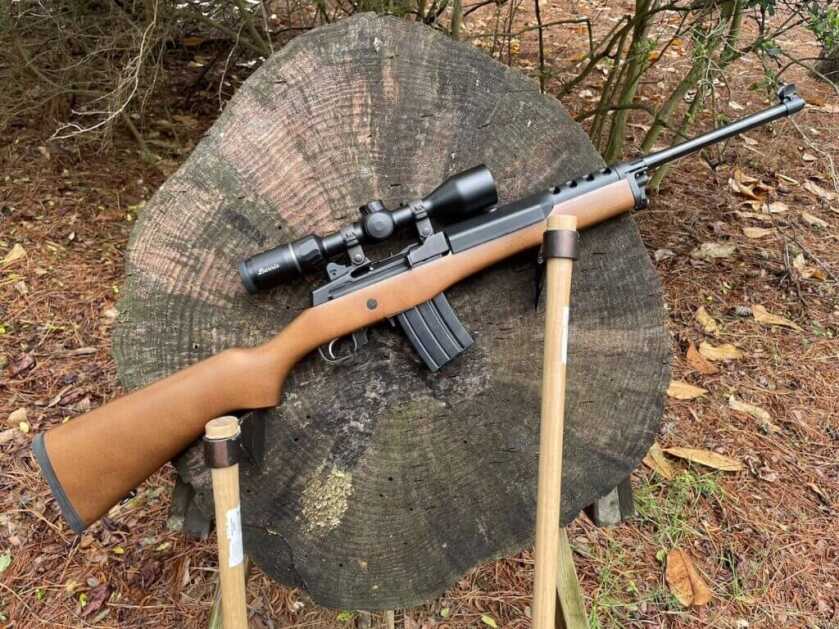
Table of contents
- The Ruger Mini-14 Ranch Still Owns Its Weird, Useful Lane
- Ruger Mini-14 Ranch Specs: Classic Size, Modern 5.56 NATO Utility
- The Ruger Mini-14’s M14 DNA Is the Whole Point
- Why the Ruger Mini-14 Earns a Spot on Your Bucket List
- Mini-14 vs Mini-14 Ranch: The Scope-Mount Fix That Mattered
- Ruger Mini-14 Model Variants: The Mini Family Tree
- Mini-14 vs Mini-30: Same Ruger Attitude, Bigger Bullet
- The Rarest Ruger Mini-14: The AC-556 Unicorn
- Mini-14 Series Differences: The Serial Number Clues That Matter
- Ruger Mini-14 DIY Customization: Not an AR15, Still Plenty Cool
- Ruger Mini-14 Ranch Accuracy Test: The New Gun Rewrites Old Complaints
- Pros and Cons: Ruger Mini-14 Ranch Reality Check
- Final Verdict: The Ruger Mini-14 Ranch Still Has Teeth
- Related Reads from GunsAmerica Digest
The Ruger Mini-14 Ranch Still Owns Its Weird, Useful Lane
The Ruger Mini-14 was introduced in 1973 and quickly became one of the most popular semi-automatic centerfire rifles ever produced. Last count, some 3 million have been built. I would argue that the Ruger Mini-14 began our country’s fascination with the 5.56 NATO/.223 Remington caliber in semi-automatic rifles. In part because it is a handy, capable rifle, and it makes a great rifle to have tucked behind the seat of your truck. It can tackle nearly any situation thrown at it, be it hunting, taking care of varmints, protecting the homestead, or just plain plinking. It is also safe to say the Mini-14 is a ‘sanitized’ semi-auto rifle without the evil looks of an AR15, which gives it a pass on many states’ assault rifle ban lists.

Then there is the love/hate relationship some shooters have had with the rifle over the years. Some Mini-14s I’ve fired are amazingly accurate, while others, let’s just say, if I were lying on the ground and aiming up, I’d have a hard time hitting the sky. The popularity of the Mini-14 has waned because of the availability of AR15 rifles by countless manufacturers and builders, but the rifle is still handy and, as I found out with a newer model, pretty darn accurate.
🛒 Check Current Price for Ruger Mini-14 on GunsAmericaRuger Mini-14 Ranch Specs: Classic Size, Modern 5.56 NATO Utility
| Model | Ruger Mini-14 Ranch Rifle |
|---|---|
| Caliber | 5.56 NATO/.223 Remington |
| Barrel Length | 18.5 inches |
| Overall Length | 38 inches |
| Weight | 6.4 pounds |
| Capacity | 5-, 10-, 20- and 30-round magazines |
| Action | Gas-operated short-stroke fixed piston with rotating bolt |
The Ruger Mini-14’s M14 DNA Is the Whole Point
The Mini-14 design was based on a miniature design of the M14 to take the .223 cartridge, according to Bill Ruger. L. James “Jim” Sullivan, the man responsible for scaling down the AR-10 into the AR-15, was the lead engineer on the Mini-14. The rifle runs on a gas-operated short-stroke fixed piston with a rotating bolt and looks like a shrunk M14, but operates more like an M1 Garand. Ruger had a knack for using investment casting instead of forged receivers. All Ruger revolvers used a similar, cost-saving process. The same undertaking is used to produce the Mini-14 receiver.
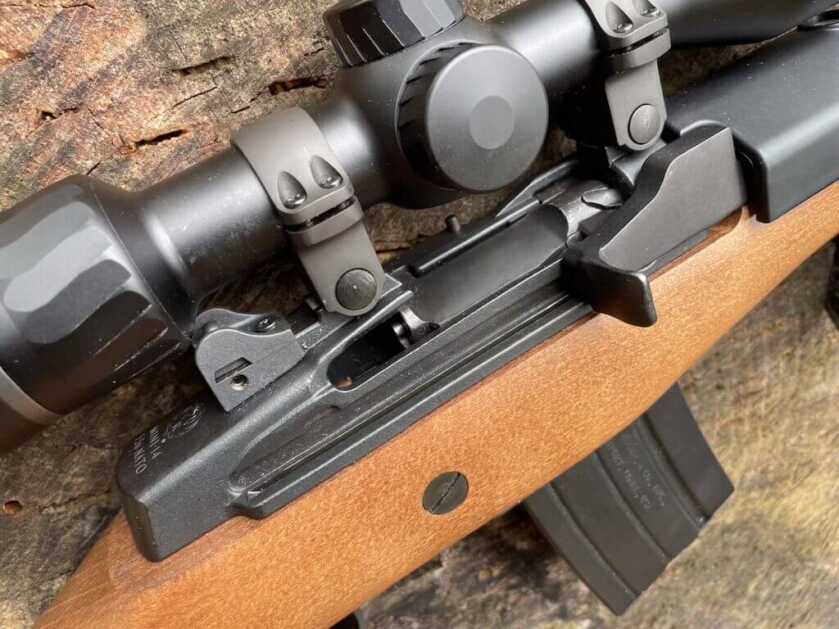
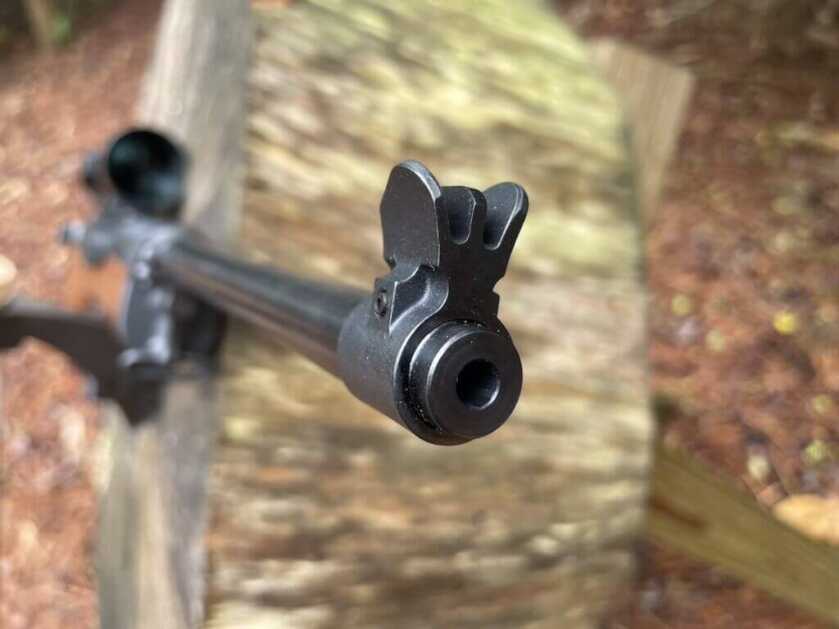
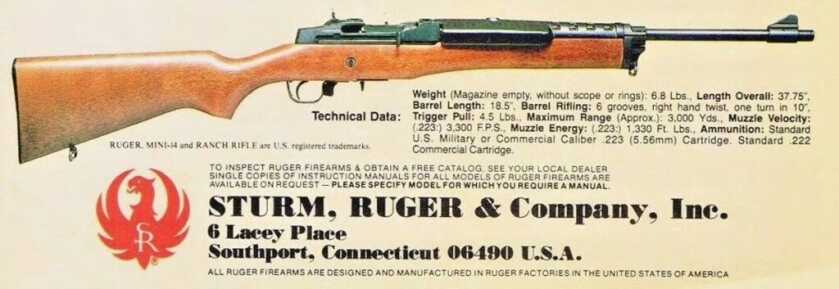
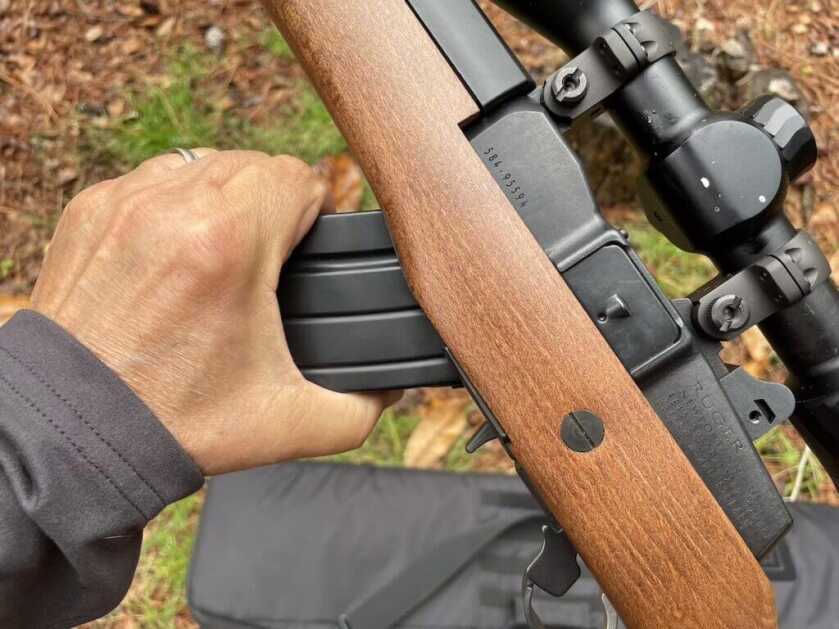
Initially, the barrel length on the Mini-14 was 18.5 inches. It came equipped with a military-style peep sight in the rear and a ramp front sight. The stock and handguard were made of hardwood, and you could originally get it in any finish you wanted as long as it was blued. Stainless variants appeared in 1999. At 6.4 pounds and an overall length of 38 inches, it was a compact, easy-to-maneuver, and capable rifle with factory magazine capacities ranging from a flush-fitting 5-round mag, 10-, 20-, and 30-round magazines.
Why the Ruger Mini-14 Earns a Spot on Your Bucket List
The Mini-14 was once the undisputed king of sporting 5.56 semi-automatic rifles, then in the 80s and 90s, a new breed of rifle emerged. Liberal politicians chose to blame the guns instead of the people and created a list, basically a death sentence for certain firearms. Assault rifle bans placed many military-looking rifles with a pistol grip, high-capacity magazines, flash hiders, and folding stocks on a list guaranteeing these rifles were purged from dealers’ shelves. At the same time, however, the Mini-14 with its traditional wood stock and lack of ‘assault rifle features’ kept the rifle off the banned rifles list. Ruger also complied with the time, and from 1994 through 2004, only shipped the rifles with 5-round magazines. That peeved some shooters at the time, but a lot of time has passed, and the current variants are as badass-looking as any AR15. The long plan for the Mini-14 has worked for Ruger, and in the words of Hannibal Smith, perhaps the most famous user of the Mini-14: “I love it when a plan comes together.” Hannibal Smith was a character on the A-Team and used a stainless Mini-14 with a folding stock.
In states that are AR-15-phobic, the Mini-14 is an exceedingly reliable alternative. The fact that the Mini-14 paved the way for the AR-15 to be embraced is enough to put this iconic rifle on your bucket list.
Mini-14 vs Mini-14 Ranch: The Scope-Mount Fix That Mattered
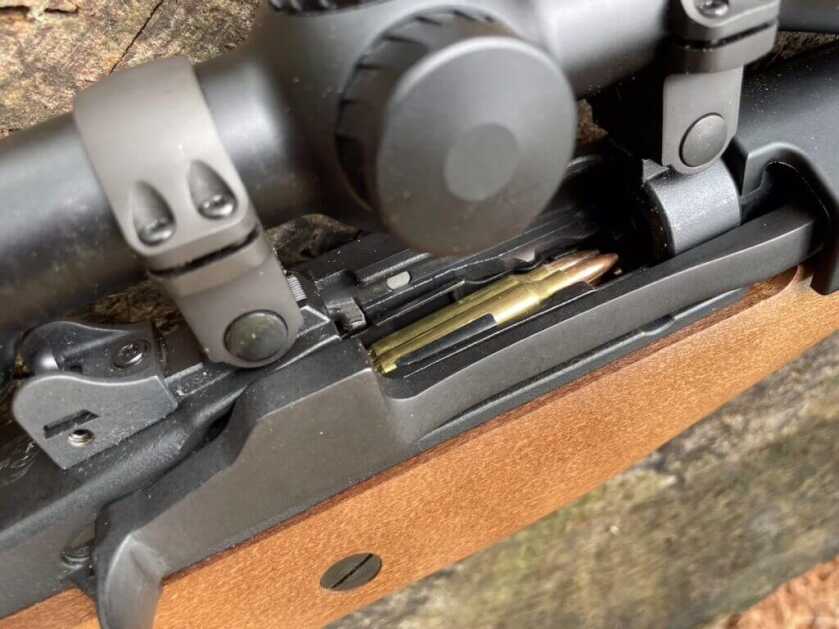
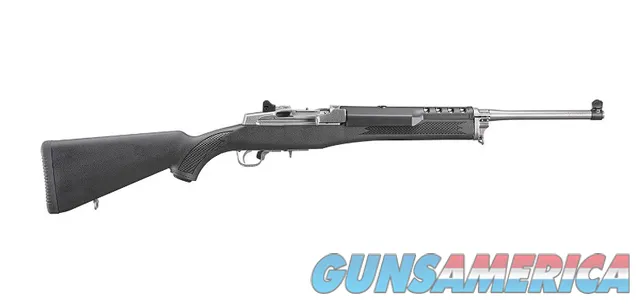
The main difference between the Mini-14 and the Mini-14 Ranch Rifle is the rear sight. The Mini-14 has an aperture rear sight, while the Mini-14 Ranch Rifle has a folding aperture sight, and the receiver is milled for scope mounts. One of the drawbacks of the original Mini-14 was the difficulty of mounting a scope.
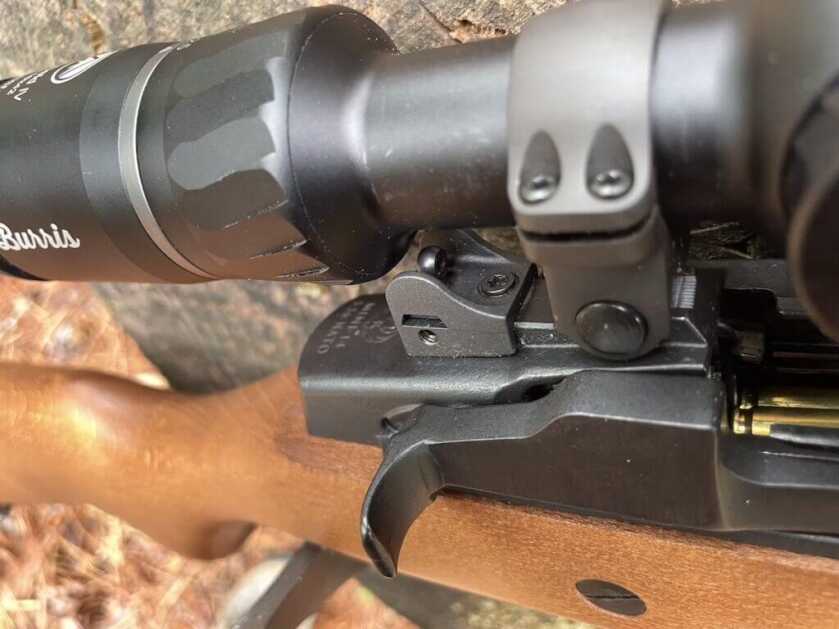
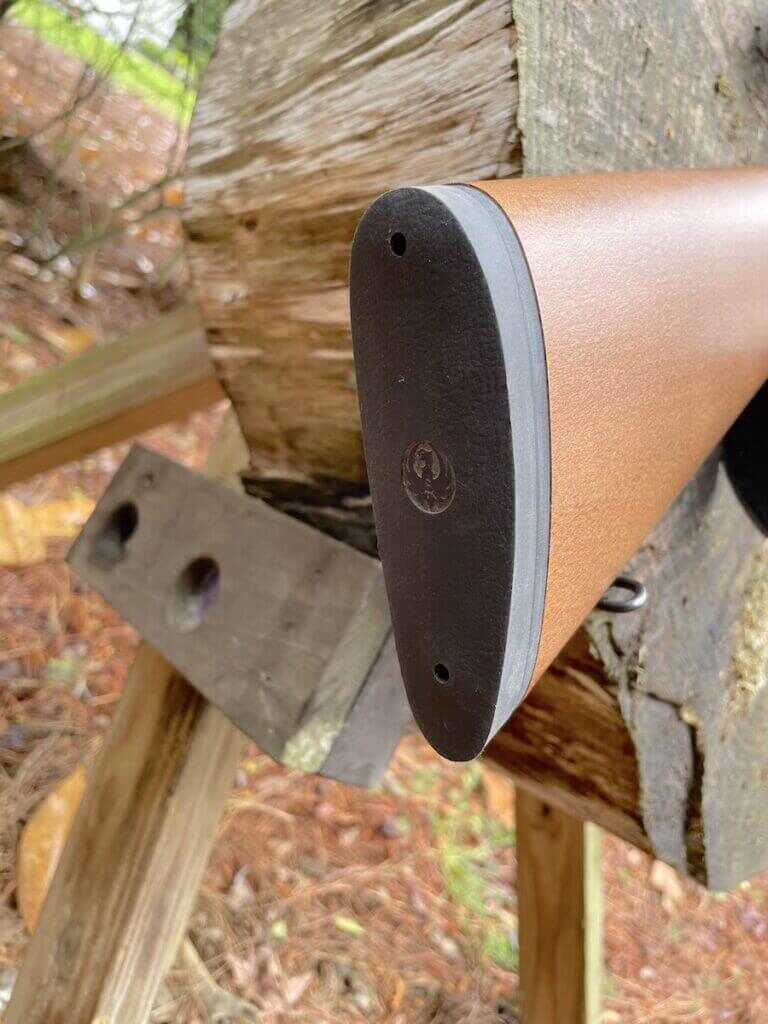
In 1982, Ruger introduced the Mini-14 Ranch Rifle and fixed the problem by drilling and tapping the receiver for a Picatinny rail as well as machining integral scope mounts into the receiver. The first Mini-14s also had a steel buttplate. The Ranch has a rubber recoil pad. The original Mini-14 was produced from 1975 through 2004. The Mini-14 Ranch Rifle has been in production since 1982. Since 2005, all Mini-14 rifles have been based on the Mini-14 Ranch Rifle design.
Ruger Mini-14 Model Variants: The Mini Family Tree
There are many model variants, and all are collectively called Mini-14s. As the popularity of the Mini-14 grew, so did caliber options, stock choices, and other features. Here is a general breakdown of Ruger Mini-14 rifle models.
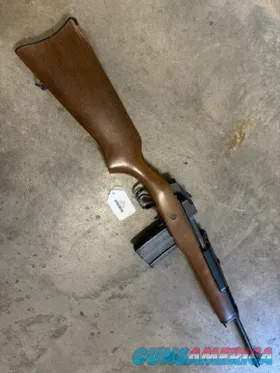
Mini-14: All early Mini-14 rifles had a smooth hardwood, military-style stock with a steel butt plate and, as mentioned, an aperture rear sight. Both blued and stainless steel finish rifles were made. These rifles were mostly chambered in .223 Remington, while some were chambered in .222 Remington.
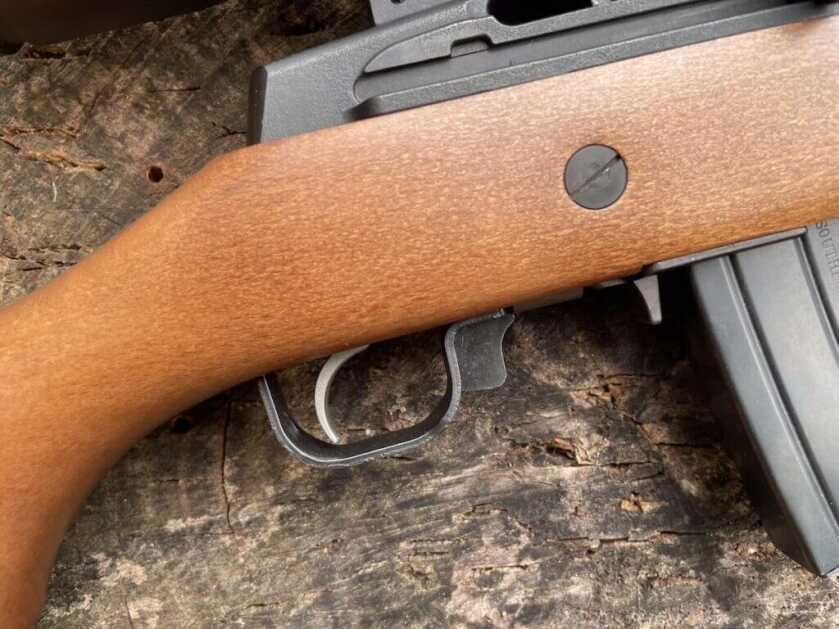
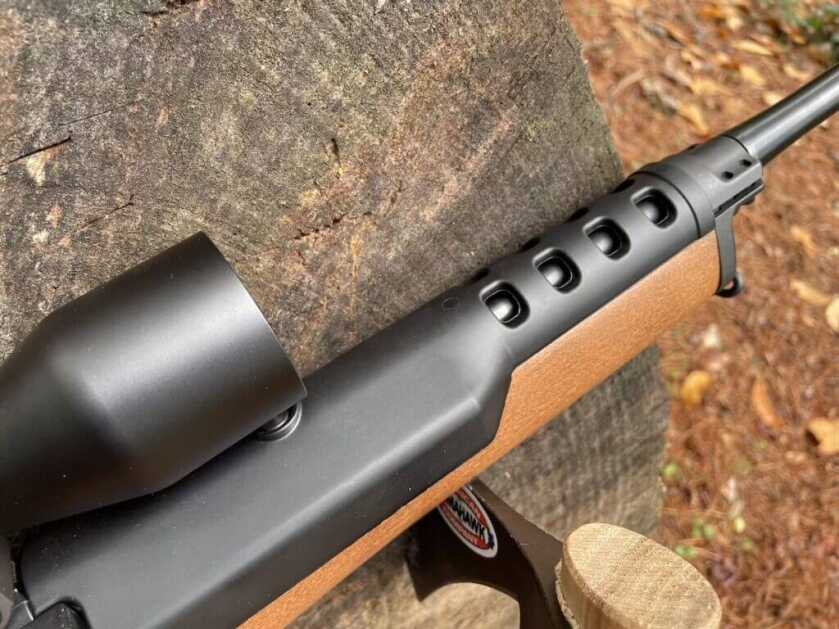
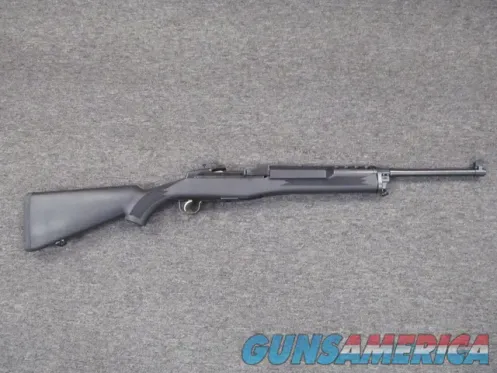
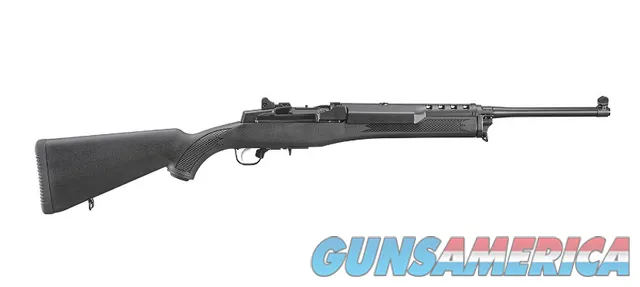
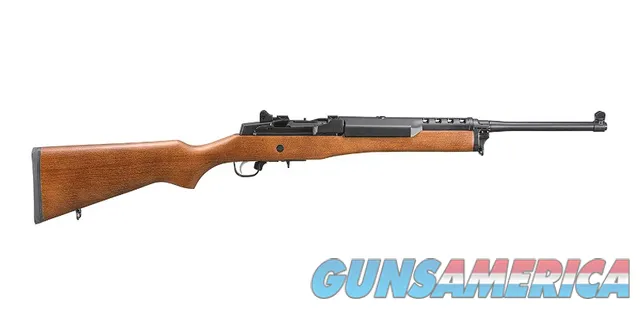
Mini-14 Ranch Rifle: The Mini-14 Ranch Rifle is made with either a smooth hardwood stock or a black synthetic stock. Some distributor exclusives, like those from Talo Distributors, have a laminated wood stock. Most Mini-14 Ranch Rifles were built with an 18.5-inch barrel, but some are produced with a 16.1-inch barrel. Mini-14 Ranch Rifles were originally chambered in .223 Remington, with some chambered .222 Remington, 300 BLK, or 6.8 SPC. Currently, the Mini-14 Ranch Rifle is chambered only in 5.56 NATO. Ruger transitioned to heat-resistant plastic handguards on the Ranch rifles in late 1984 or early 1985.
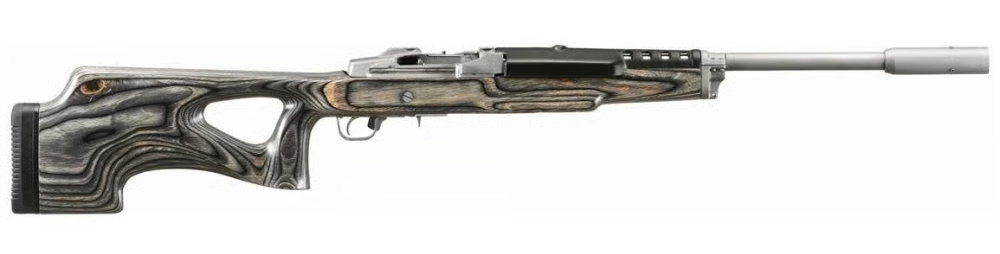
Mini-14 Target Rifle: The Mini-14 Target rifle was produced from 2007 through 2016 and is equipped with either a Hogue overmolded black synthetic stock or a laminated wood thumbhole stock. Target Mini-14s featured a 22-inch heavy barrel with an adjustable harmonic tuner muzzle device.
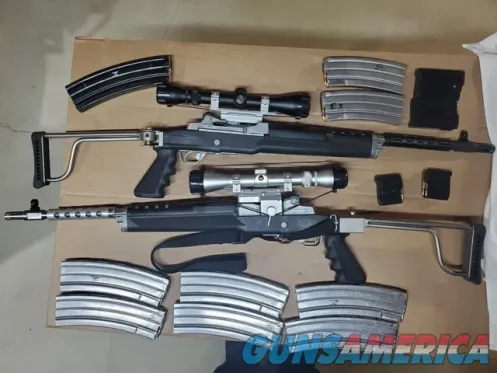
Mini-14 Tactical Rifle: In 2009, the Mini-14 Tactical rifle was introduced with either a traditional fixed stock or a collapsible stock with a pistol grip. Caliber options ranged from 5.56 NATO, 8.6 SPC, and 300 BLK. Tactical variants feature a 16.1-inch threaded barrel with a flash suppressor.
Mini-14 vs Mini-30: Same Ruger Attitude, Bigger Bullet
The Mini-30 is the same as a Mini-14 Ranch Rifle except that a Mini-30 is chambered in 7.62x39mm. It was introduced in 1986, with either a smooth hardwood or black synthetic stock and either a 16.1- or 18.5-inch barrel. It is available in either a blued or stainless finish. The Mini-30 Tactical is equipped with a 16.1-inch barrel with a flash suppressor and a fixed black synthetic stock.

I have a stainless Mini-30 I used as a woods rifle. It’s a short, fast-handling rifle that is made to be carried in thick forested areas. The equivalent 50 years ago would be a lever-action carbine chambered in .30-30 Win., which just happens to be the caliber the 7.62x39mm is always compared to because the 150-grain bullet in the .30-30 has a muzzle velocity of 2,300 fps, and the 123-grain bullet in the 7.62x39mm has a muzzle velocity of 2,350 fps. Not exactly an apples-to-apples comparison, but let’s just say good enough for government work. My 3-shot groups at 100 yards average a little over 2 inches, which is venison tagged, processed, and in the freezer. Add an extra point to your bucket list if you ever fire a Mini-30.

The Rarest Ruger Mini-14: The AC-556 Unicorn
The rarest Mini-14 is the AC-556 model introduced in 1979, which is a select-fire version of the semi-automatic Mini-14. It featured semi-auto, three-round burst, or full auto fire modes, and a folding stock. Barrel length was either 13 or 18 inches. The GB stands for Government Barrel, and these rifles were made primarily for military and law enforcement markets. Some of these rifles have made their way onto the commercial market, and you need a Tax Stamp to purchase one. Ruger introduced a model similar to the Mini-14 GB called the Mini-14 Tactical in 2024, which is similarly equipped and semi-auto only.

Mini-14 Series Differences: The Serial Number Clues That Matter
Mini-14 series refers to a three-digit number that precedes the serial number, indicating an engineering upgrade such as a change in barrel twist rate. For example, the 180 series is an early Mini-14s chambered in .223 Rem. with a 1:10 twist rate made from 1974 to 1977. As other design modifications were made to the Mini-14, the series number was changed, continuing with 181 through 186.
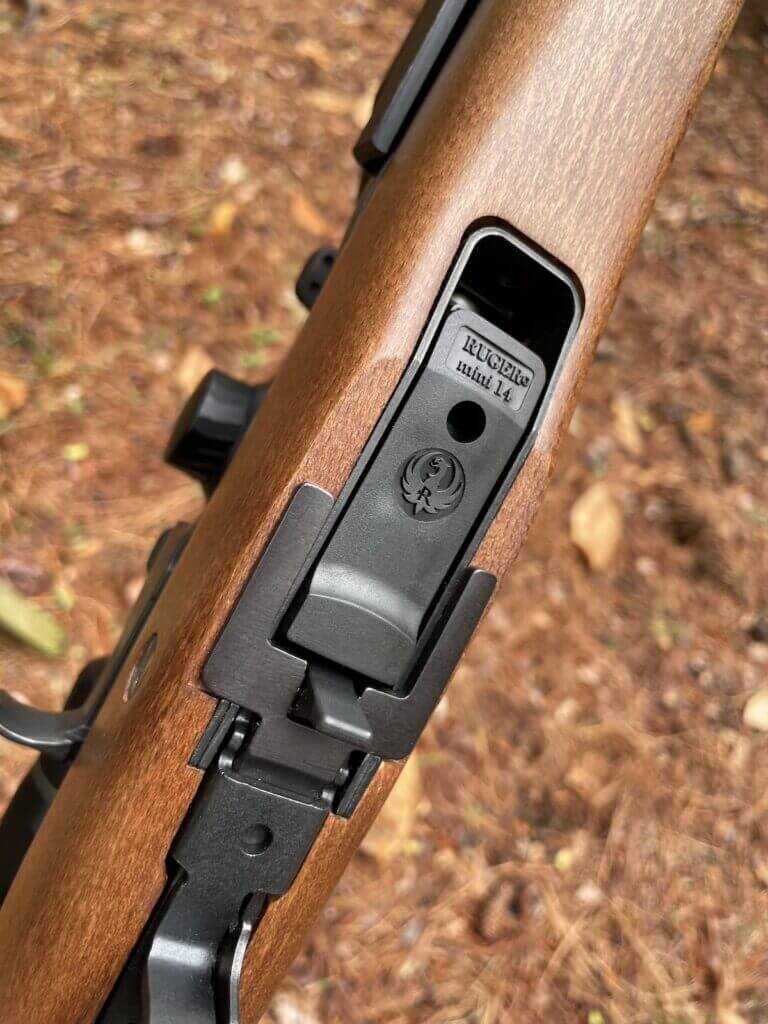
The Mini-14 Ranch Rifle began with series 187 through 188, and 195 through 197. From about 1986 to 1997, the twist rate was 1:7. The new Mini-14 Ranch Rifle introduced in 2005 was designed to be more accurate than previous Mini-14s and is marked with series 580 and later 581. The Mini-30 is marked with series 186, 189, and 197; and in 2006 with series 581.
Newer production guns since 2005 have addressed the accuracy issue in 5.56 NATO with a heavier, larger-diameter barrel and a twist rate of 1:9, which plays nicely with both 55-grain and slightly heavier 62-grain bullets.
In my experience, Mini-14s chambered in 300 BLK and 6.8 SPC have very good accuracy, delivering 1.5 to 2 MOA. The Mini-30, in my experience, delivers 1.5 to 3 MOA accuracy. Mind you, these are all 3-shot groups. As the barrel heats up on some Mini-14s, watch accuracy erode.
Ruger Mini-14 DIY Customization: Not an AR15, Still Plenty Cool
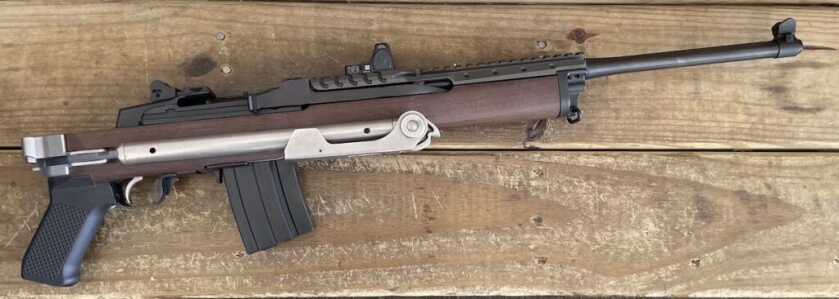
Changing the stock or optic mount is about the extent to which a Mini-14 can be customized. The Mini-14 platform is not as modular as the AR15. You may never get to run an AC-556, but a Mini-14 Ranch outfitted with the same style folding stock? Add two points to your bucket list if you fired a Mini-14 Ranch with a folding stock from the hip.
Ruger Mini-14 Ranch Accuracy Test: The New Gun Rewrites Old Complaints
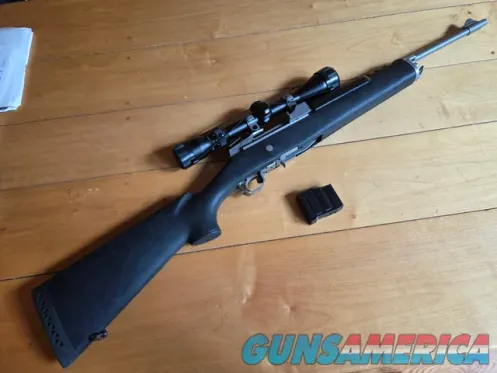
In all honesty, I forgot about the Mini-14 with all the AR15s available. Curiosity got the better of me, and I bought a brand-new, circa-2023 Mini-14 Ranch. I scrounged up a scope with a 1-inch tube since 1-inch rings are included with the rifle. Note to Ruger: include 30mm rings in the future. I have plenty of LPVO scopes, which, in my opinion, are perfect for the Mini-14, but mine are all built on a 30mm tube. However, a Burris Fullview IV 2.5-10x42mm worked like a charm. It’s equipped with a simple duplex reticle.
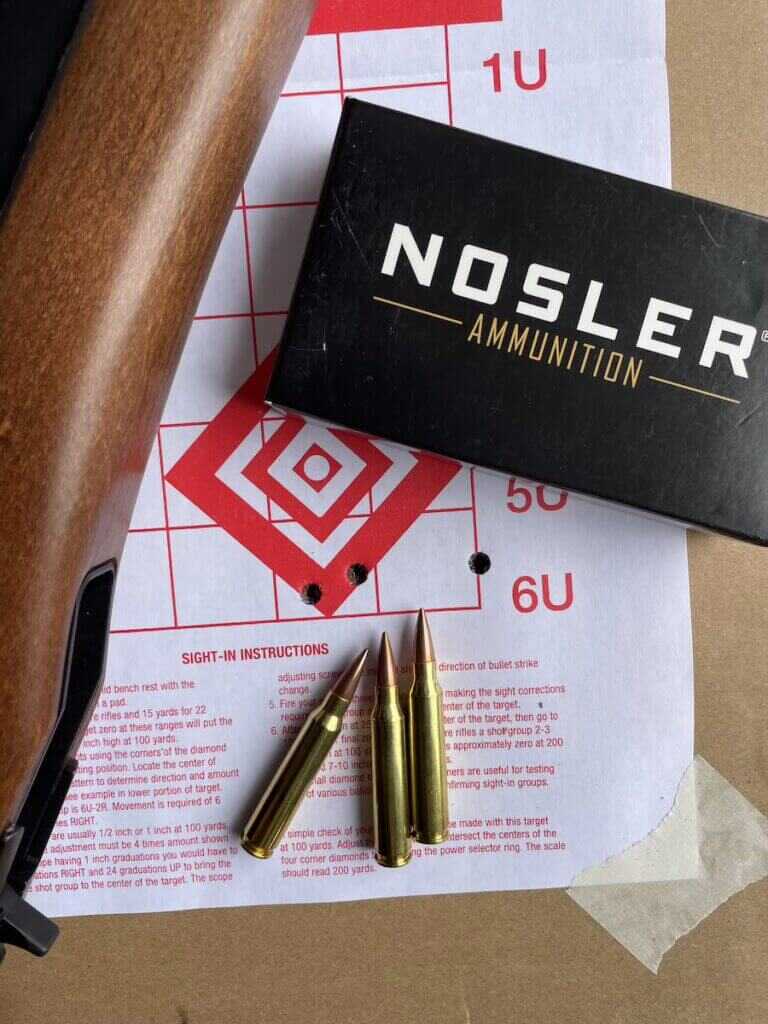
I had 55-grain FMJ-BT ammo from Lake City and Nosler Match Grade ammo with a 70-grain RDF bullet on hand. I also grabbed 5-, 10-, and 20-round magazines. Using my range bag as a rest and a target at 50 yards, I dialed in the Mini-14 with 3 shots, then moved the target to 100 yards. It wasn’t long after that that the latest Mini-14 Ranch started to rewrite its history on accuracy. I averaged 1.14-inch 3-shot groups at 100 yards with Lakewood ammo. With the Nosler Match Grade, I averaged 1.78 inches. Not bad considering the trigger had about a quarter of an inch take-up before it hit the wall, and then 7.1 pounds of trigger finger pressure was needed to break the shot.
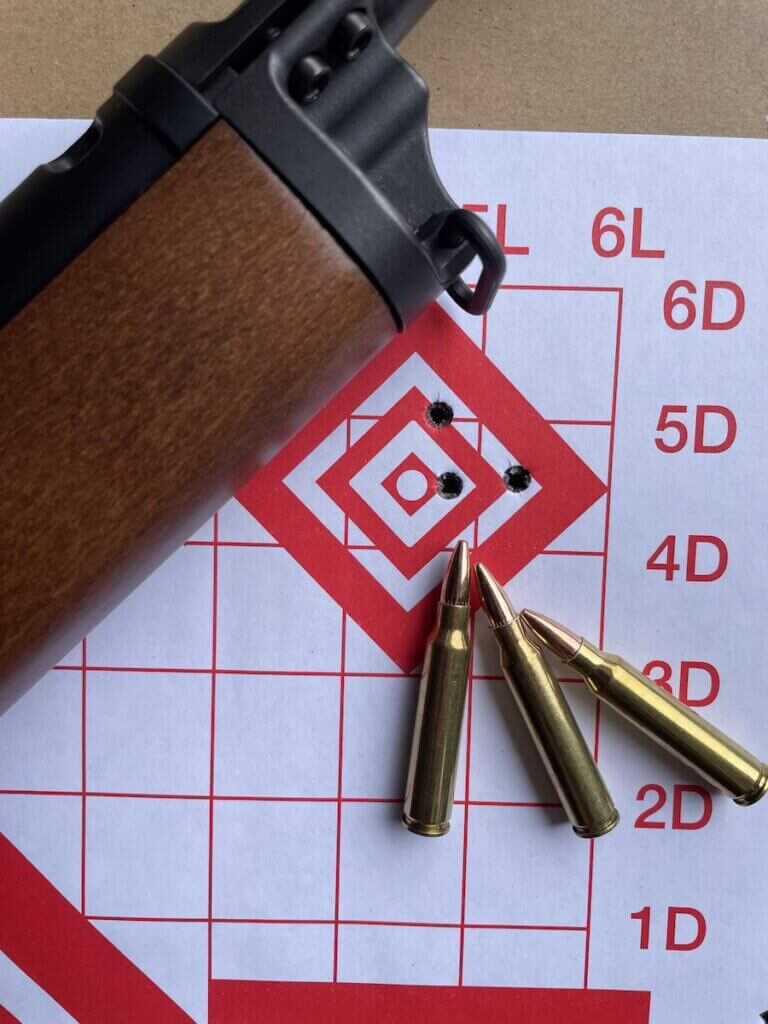
The Mini-14 Ranch has mild recoil, and the reciprocating charging handle may be odd for those of you brought up on AR platforms.
Pros and Cons: Ruger Mini-14 Ranch Reality Check
- Pros: Handy size, classic Mini-14 feel, 5.56 NATO utility, mild recoil, integral scope mounting on Ranch models, improved newer-production accuracy, and plenty of truck-rifle personality.
- Cons: Not as modular as an AR15, the reciprocating charging handle may feel odd to AR shooters, original rifles had scope-mount limitations, and some older Mini-14s earned their accuracy reputation the hard way.
Final Verdict: The Ruger Mini-14 Ranch Still Has Teeth
Clearly, Ruger’s move to produce a more accurate Mini-14 Ranch has written another chapter in this classic rifle’s history. I know what I’m keeping propped up by the back door when I spot coyotes in the back 40.
Related Reads from GunsAmerica Digest
- More Ruger Mini-14 Reviews and Features
- 5.56 NATO Rifle Reviews on GunsAmerica Digest
- Ruger Mini-30 Reviews and Hunting Rifle Coverage
Available on GunsAmerica Now


Robert A. Sadowski is an American writer and journalist.
He has written about firearms and 2A issues for decades, and has trained with some of the country’s finest firearm instructors in handguns, rifles/carbines, shotguns and long-range shooting. He has also had the opportunity to interview numerous individuals deeply involved in protecting our 2nd Amendment.
He a is a frequent contributor to numerous gun-enthusiast publications, a few of which include:
- TheArmorylife.com
- TheTruthAboutGuns.com
- GunsAmerica.com
- GunBroker.com
- Gun-Tests.com
- Shooting Illustrated
- SHOT Business
- Gun Digest
Sadowski is also the author of numerous gun books, including: “9MM — Guide to America’s Most Popular Caliber” and “Book Of Glock,” both of which were #1 new releases on Amazon. He also wrote the popular DIY gun book series: Shooter’s Bible Guide to Firearms Assembly, Disassembly, and Cleaning Volume 1 and Volume 2. Other gun books authored by Sadowski include “50 Guns That Changed the World,” and edited “The M16A1 Rifle: Operation and Preventive Maintenance”originally published by the U.S. Department of the Army. He also edits the annual “Gun Trader’s Guide” to firearm values.
Sadowski is also the Treasurer/Secretary of the GLOCK Collectors Association, a non-profit organization with the mission to educate and preserve: Educate the public on the models, variations, and commemoratives built by GLOCK, as well as provide members with information on GLOCK serial numbers, importation, and other facts unique to GLOCK pistols.
Three shit groups are worthless what is this the 80s? Retire already.
I bought a brand new 195 series Mini-14 in 1997. I’m sure that I didn’t pay much more than $400 for it brand new at Walmart (How times have changed!!) I hated the scope mounting points initially but I put a Simmons 3-9X scope on it forever ago and get 2 inch groups at 100 yards consistently. One of the first things that I did after I bought it was mount it in a Choate pistol grip stock which reduced the weight and added comfort, BUT now makes it “scary looking”.
Just a correction sir for your good article. Stainless versions were available by 1979, and the AC556 was among the first offered in stainless.
As a young FFL holder, I purchased and resold several 20GB versions with both fixed and folding stocks prior to 1981.
Hello, how much it cost it i buy sniper riffle from you? From Philippines
Mine is in 6.8SPC it’s so cool and fun to shoot. Put a lot of custom work into it.
I wish Ruger would start from the action and try updating from there.
I just bought the Mini 30 in SS/synthetic and 18.5”. Loaded the mag, stood up and put all 5 in my fist at 100yds. Loved the way it felt. Smooth and easy. Probably my new favorite plunked.
I bought my stainless steel Ruger Mini-14 in 1984 for about $280. At Williams Gun Sight, Davison, Mi. It had a black plastic fore end cover. Out of the box I shot 4” groups at about 90 yards not full 100 on the range). Years later, I put the plastic ATI folding stock on it. With the new stock I was able to mount lights and scopes. The amazing thing about the Ruger Mini-14 is the reliability. I might clean it every thousand rounds but it really doesn’t need it.
I was 9 when I saw a early mini14 in western auto. I thought it was cool and tried to convince my dad we needed one. a few years later my school bus was stopped at a roadblock and a deputy walked down the isle with a mini at port arms. decades later I was enraged at bill ruger for restricting 20rd mags after California banned mags over 10rds.
Grest article and good details.
However, the vintage advertisement shown has a copyright from 1980, not 1999 as noted in the caption. Its doubtful they sold for a measly $227.50.in 1999. As a testament to the Mini 14, it is the only rifle a friend of mine who is LEO will carry in the trunk of his squad car.
The vintage advertisement shown in the article has a copyright from 1980, not 1999 as noted in the caption. Its doubtful they sold for a measly $227.50.in 1999. As a testament to the Mini 14, it is the only rifle a friend of mine who is LEO will carry in the trunk of his squad car.
A couple things. My 70s era Mini has a plastic butt plate. My 7.62 Mini-30 does not reliably fire Russian hard-primered ammo (Midway has an enhanced firing pin for about $35. My Mini 14 target model is pretty accurate. I’m very interested in seeing more accuracy reviews on the new Mini. Stay safe. j
Definitely a platform I would give a go instead of any modern AR-15 like firearm, would I have a need for 223. The look and feel of such platform compared to any skeletonized one simply makes me feel I am still a human and not a robot. Also, staying out of radar appears more and more a good idea these days.
Thank’s for the review.