

Estimated reading time: 16 minutes
The Winchester Model 70 Featherweight brings wood, blued steel, controlled round feed, and old-school hunting rifle swagger into a world obsessed with carbon fiber and plastic. We tested this 6.5 Creedmoor classic to see if the Rifleman’s Rifle still deserves a spot in the deer stand.
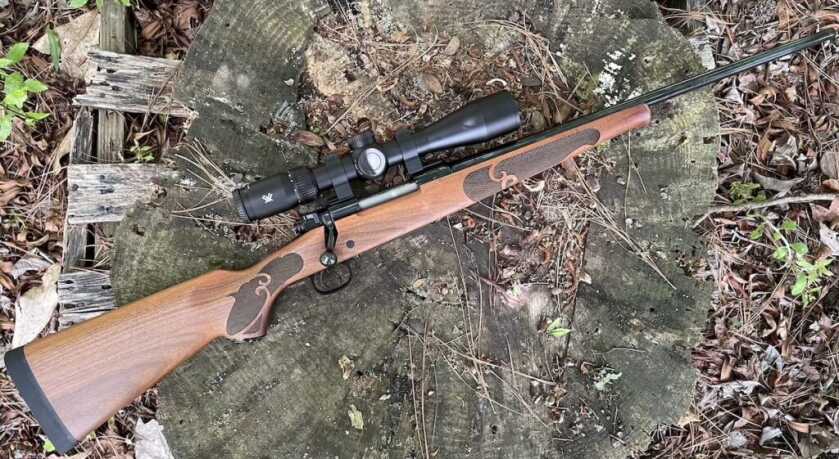
Table of contents
- Why the Winchester Model 70 Still Belongs on Every Hunter’s Short List
- Why the Winchester Model 70 Still Feeds Like a Dangerous-Game Rifle
- Why Every Serious Rifle Hunter Owes the Winchester Model 70 a Range Day
- Gun Writers, PHs, Snipers, and the Winchester Model 70 Legend
- Pre-64 Winchester Model 70 vs Post-64 Model 70: Why Hunters Still Argue
- Post-64 Winchester Model 70 Rifles: The Change That Made O’Connor Sick
- Winchester Model 70 Variants: From Safari Bruisers to Long-Range Hunters
- Winchester Model 70 Featherweight Features: Walnut, Steel, and No Apologies
- Winchester Model 70 Featherweight Specs From This Review
- Winchester Model 70 Featherweight Accuracy Test: 6.5 Creedmoor on Paper
- Winchester Model 70 Featherweight Pros and Cons: Classic Charm, Real-World Tradeoffs
- Final Verdict: The Winchester Model 70 Featherweight Still Has Teeth
- Related Reads from GunsAmerica Digest
Why the Winchester Model 70 Still Belongs on Every Hunter’s Short List
The Winchester Model 70 is a serious hunting rifle and has been since it was introduced in 1936. Ask a group of seasoned hunters what their top-5 hunting rifles are, and I’m sure the Model 70 will be on that list. The Model 70 may not have the stature that synthetic stock and carbon-fiber barrel rifles hold today, but the Model 70 was the standard in American-made hunting rifles. It’s called the Rifleman’s Rifle for a reason. You may think you know bolt-action hunting rifles, but if you have never fired a Winchester Model 70, you have a void in you as big as a mountain, as large as Africa.
Why the Winchester Model 70 Still Feeds Like a Dangerous-Game Rifle
The Model 70 uses a Mauser-style controlled feed action, which makes it unique among contemporary rifles. The CRF (Control Round Feed) action uses a massive, non-rotating claw extractor that securely grabs the cartridge from the magazine and holds it as the bolt chambers the round. The CRF action ensures flawless feeding and extraction even if the rifle is held upside down, or you are being eyed by a Cape buffalo, and you can’t remember if a round is in the chamber, if you should take a selfie, or run like hell.
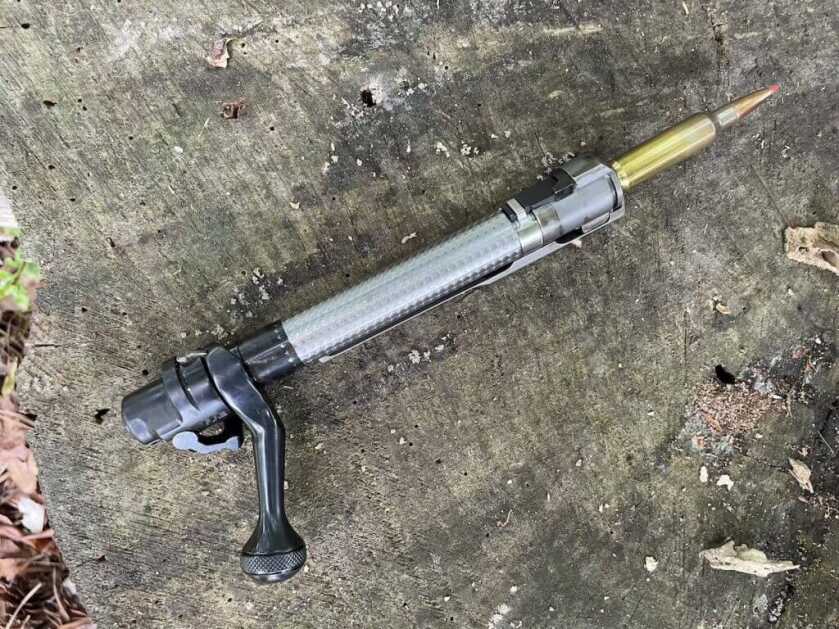
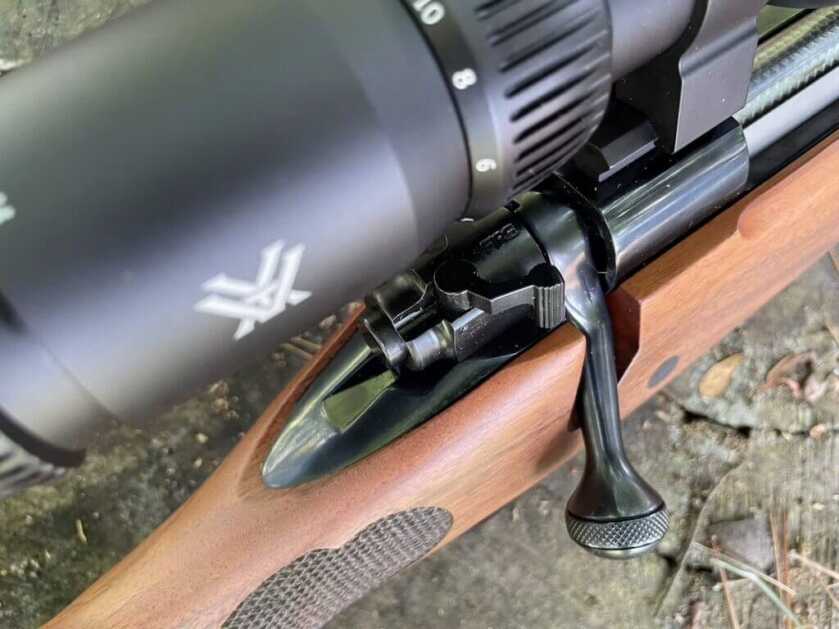
The Model 70 is also known for its three-position safety: fully locked, the bolt cannot move; unlocked, the bolt can be cycled to safely unload, and ready to fire. The wing-style safety lever is intuitive. Flip it forward toward the target, and you are ready to fire. It was originally chambered in 18 different calibers ranging from .22 Hornet up to the mighty .458 Win. Mag.
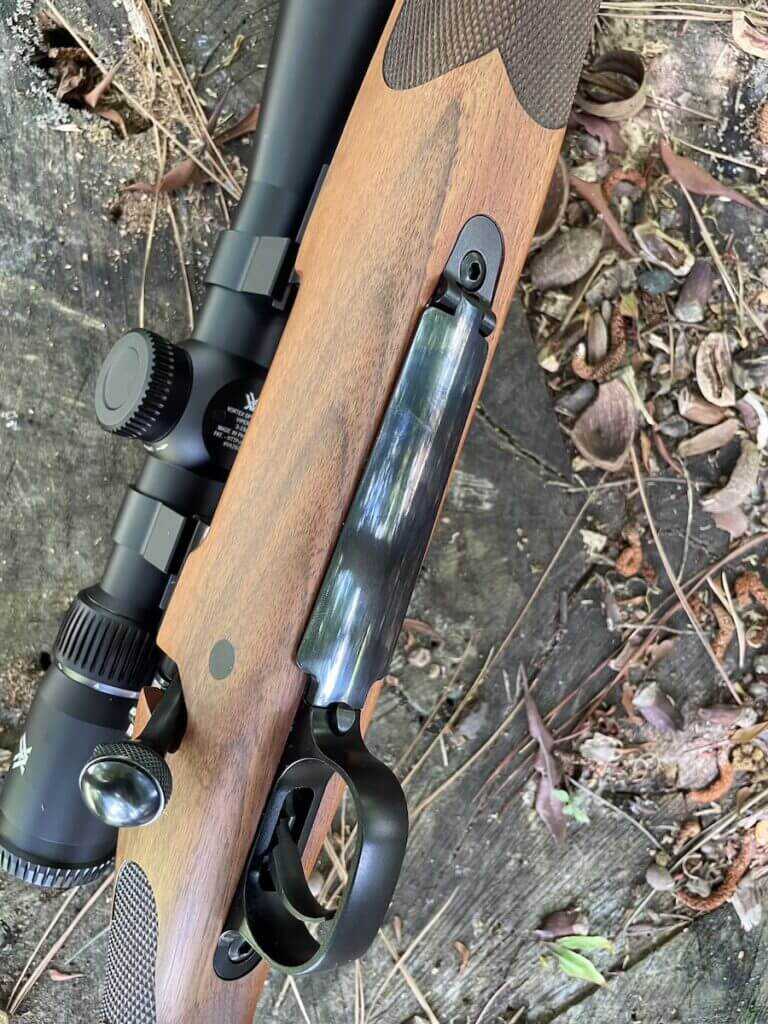
Current Model 70s and pre-64 models all use a hinged floor plate magazine design. It is old school bottom metal. The norm these days is a detachable type box magazine.
Models with wood stocks have classic lines with wood ranging from kind of plain to Super Grade with fancy walnut, ebony forearm tip, and hand-cut checkering. Metal work finish also runs the spectrum from pedestrian matte blue to polished blue. There are plenty of models outfitted with synthetic stock and Cerakote finishes.
Why Every Serious Rifle Hunter Owes the Winchester Model 70 a Range Day
If you are a rifle hunter, there should be no doubt that the Winchester Model 70 is on your bucket list. The Model 70 is special. The timeless Mauser-style action design has proven itself reliable countless times by hunters chasing game of all sizes, and the Model 70 was used effectively by military snipers.

Gun Writers, PHs, Snipers, and the Winchester Model 70 Legend
The Model 70 didn’t magically become the preeminent American hunting rifle. It had helped. The late Jack O’Connor was the Shooting Editor for Outdoor Life, and a Model 70 enthusiast, especially in .270 Winchester. O’Connor helped fuel the interest and popularity of the rifle and the caliber. If you shoot a Model 70 in .270 Win., add a bonus point to your bucket list.

You may have heard the quote attributed to legendary outdoor writer Robert Ruark to “use enough gun.” Ruark also stated that the .375 H&H Magnum chambering was “the quintessential cartridge for African safaris.” Ruark’s .375 H&H was a Winchester Model 70. Two well-known African professional hunters, Finn Aagaard and Harry Selby, both used a Model 70 during part of their careers. Their Model 70s were chambered in .458 Win. Mag. Double points on your bucket list for shooting a Winchester Model 70 in .458 Win. Mag.
Marines procured Winchester Model 70 rifles during WWII and used them in the Pacific theater. These rifles were chambered in .30-06, the same caliber as the M1 Garand rifle, had 24-inch barrels, and were fitted with an 8x Unertl scope. When the Marines reengaged their sniper program during the early stages of the Vietnam War, they used the same Model 70 rifles stored in mothballs from WWII. Gunnery Sergeant Carlos Hathcock used a Model 70 during one of his most famous accomplishments: shooting an enemy sniper through the enemy’s own rifle scope, hitting him in the eye and killing him.

Pre-64 Winchester Model 70 vs Post-64 Model 70: Why Hunters Still Argue
Collectors look at early Winchester Model 70 rifles in three ways. The first is Type I or Pre-World War II rifles produced from 1936 to 1941, then Type II or Transition guns built from 1946 to 1948, and finally Type III or Post-World War II manufactured from 1949 to 1963. Without getting too far down a rabbit hole, these three types have distinct characteristics, but all of these rifles are considered pre-64 models. Unique to pre-64 guns is a forehand screw that contacts the barrel. The thought back in the 1930s was that the barrel needed to be connected to the forend for better accuracy.
Post-64 Winchester Model 70 Rifles: The Change That Made O’Connor Sick
Post-64 Model 70s were made from 1964 to 1992. Winchester, in an effort to reduce production costs, changed the Model 70 design from a controlled feed action to a push feed action. The receiver was changed, and the bottom metal was made out of stamped aluminum. Hand-cut checkering gave way to machine-pressed checkering. Not everyone was happy with the changes. When O’Connor saw a pre-production post-64 Winchester Model 70, he nearly puked on his boots. He hated it and told Winchester execs that it would never sell. But sell it did, and O’Connor eventually warmed up to the post-64 version. Post-64 Model 70s did not have the same level of craftsmanship as pre-64 models. They were still very good rifles, and generations of hunters grew to like the push-feed action.

There was grumbling, however, and Winchester listened to hunters by offering “Classic” models during this time, which used the old-style control feed action. But it was too late. The latest generation of hunters had cut their teeth on push-feed actions from Remington, Savage, and others and didn’t look back. In 1992, Winchester dumped the push feed action and reverted to controlled feed rifles, manufacturing them until 2006 when Winchester, then called U.S. Repeating Arms, went belly up. FN purchased Winchester, and the Model 70 was reborn in 2007. Needless to say, current production Model 70s offer all the finishes, stocks, and calibers a 21st-century hunter would want from traditional wood and blued steel to Cerakote-finished metal and tough, lightweight synthetic stocks.
Winchester Model 70 Variants: From Safari Bruisers to Long-Range Hunters
A tome could be written about all of the different Model 70 rifles built over the years. Here is a short list of current production rifle variants you might encounter.
Model 70 Alaskan: This is the rifle to buy if you want that traditional Model 70 look and feel. It features a wood stock, blued metal finish, iron sights, and comes chambered in standard long action .30 calibers like .30-06 and .300 Win. Mag.

Model 70 Safari: The Safari model is a classic dangerous game rifle decked out in beautiful wood, blued steel, and in calibers that can drop a pachyderm in its tracks. This is the rifle to get if you want to do your best Robert Ruark impression on the Dark Continent.
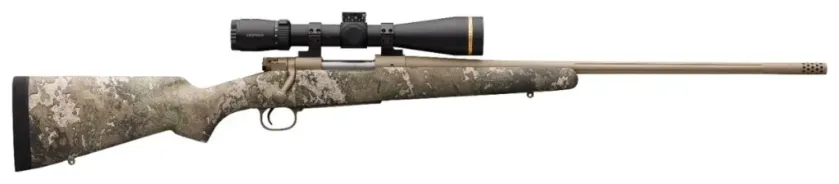
Model 70 Extreme: The Extreme series of Model 70s is outfitted with lightweight synthetic stocks and perfectly applied Cerakote finishes. Some have fluted barrels and muzzle brakes and are available in traditional and modern hunting calibers.

Model 70 Long Range: This model will scratch that long-range itch you have in calibers that can span the gap between canyons or across an open bean field. These rifles have the latest finish technology, fluted barrels, muzzle devices, and lightweight synthetic stocks in nearly any camo finish you desire.
Model 70 Featherweight: The Featherweight is a classic lightweight version designed a generation ago, before synthetic stocks controlled the lightweight rifle market. It features a beautiful cut checkering and Schnabel fore-end stock and is chambered in popular short and long action calibers.
🛒 Check Current Price for Winchester Model 70 Featherweight on GunsAmericaWinchester Model 70 Featherweight Features: Walnut, Steel, and No Apologies
Handling a new Model 70 Featherweight, you immediately notice the rifle weighs a scant 6.7 pounds without an optic. It is fast and comfortable. The satin finish walnut stock is adorned with classic Featherweight-style cut checkering and schnabel fore-end. The polished metal gives the rifle style and elegance. It looks beautiful.

Since 2008, all Model 70 rifles feature the M.O.A Trigger System that can be adjusted within a range of 3 to 5 pounds. This rifle came from the factory with the trigger adjusted to 5.9 pounds. Like all currently manufactured Model 70s, the Featherweight is equipped with an alloy one-piece bottom metal. I like fixed box magazines in a hunting rifle, especially because it is flush with the stock and make for a comfortable carry hold.
I disassembled the Featherweight to see what Winchester did to the inside of the wood for added accuracy, and found the receiver’s recoil lug is bedded front and rear to eliminate shifts in zero. One reason Model 70s tend to be so accurate, even when using a wood stock, is that the front action screw hole is located in the middle of the flat behind the recoil lug. When the screw is tightened, that flat in the action is tightly pulled against a flat area of the stock.
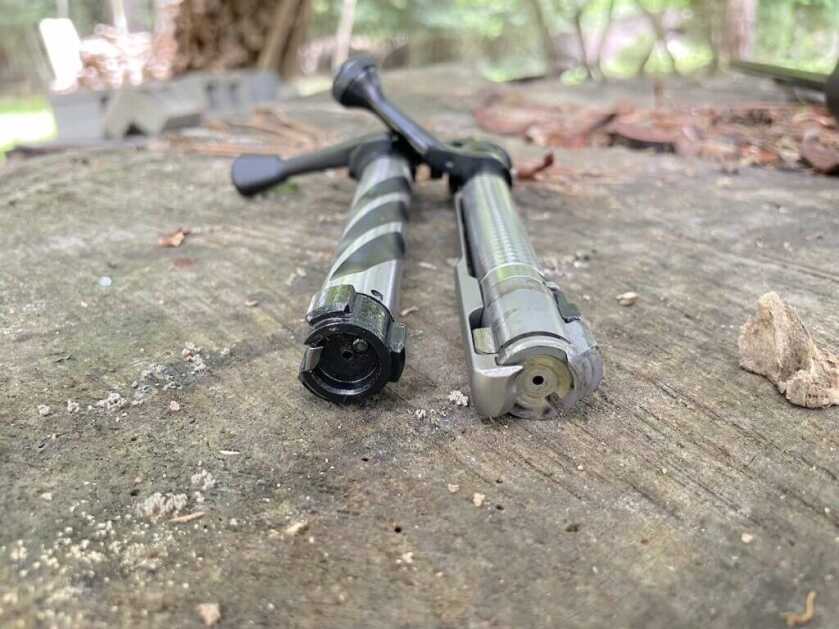
There’s a hefty Pachmayr Decelerator recoil pad to help soak up felt recoil, but with the rifle being chambered in 6.5 Creedmoor, I wasn’t too worried about suffering from shoulder whack delivered by a lightweight rifle. Featherweights have a smaller diameter, tapered barrel, i.e., skinny barrel, to reduce weight. The bolt was jeweled and slick to manipulate.
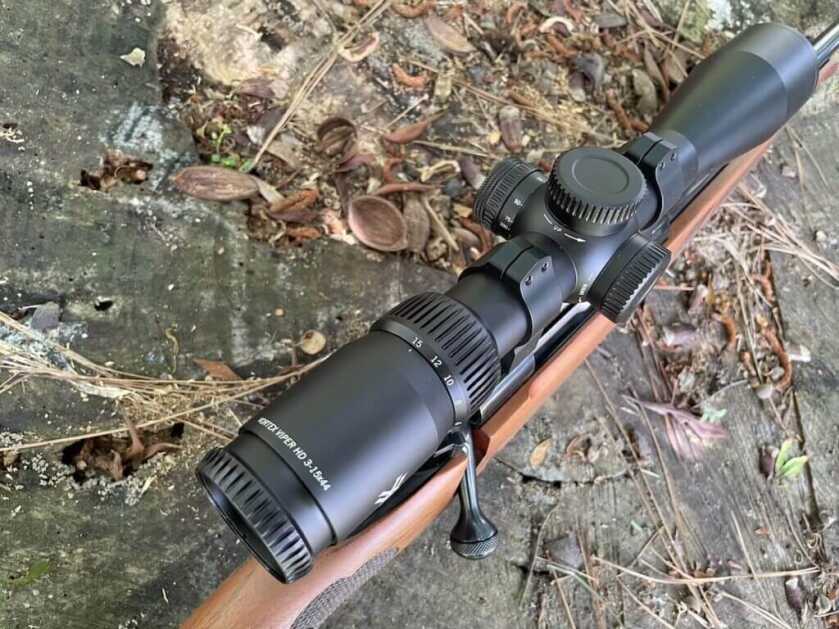
I mounted a Vortex Viper HD 3-15x44mm scope. This optic has an SFP reticle that is a simple illuminated Dead-Hold BDC with strata hold marks along the horizontal strand for wind compensation and a hold mark on the vertical strand below the horizontal strand to compensate for elevation. A simple reticle perfect for hunting.

Winchester Model 70 Featherweight Specs From This Review
| Model | Winchester Model 70 Featherweight |
|---|---|
| Caliber Tested | 6.5 Creedmoor |
| Action | Mauser-style controlled feed action |
| Extractor | Massive, non-rotating claw extractor |
| Safety | Three-position wing-style safety lever |
| Magazine | Hinged floor plate magazine design |
| Weight | 6.7 pounds without an optic |
| Trigger | M.O.A Trigger System |
| Trigger Adjustment Range | 3 to 5 pounds |
| Factory Trigger Pull | 5.9 pounds |
| Bottom Metal | Alloy one-piece bottom metal |
| Stock | Satin finish walnut stock with classic Featherweight-style cut checkering and schnabel fore-end |
| Recoil Pad | Pachmayr Decelerator recoil pad |
| Scope Used | Vortex Viper HD 3-15x44mm |
| Ammunition Tested | Hornady Precision Hunter 143-grain ELD-X, Nosler Trophy Grade 140-grain AccuBond, Hornady SuperFormance 129-grain InterBond, SIG 140-grain OTM |
Winchester Model 70 Featherweight Accuracy Test: 6.5 Creedmoor on Paper
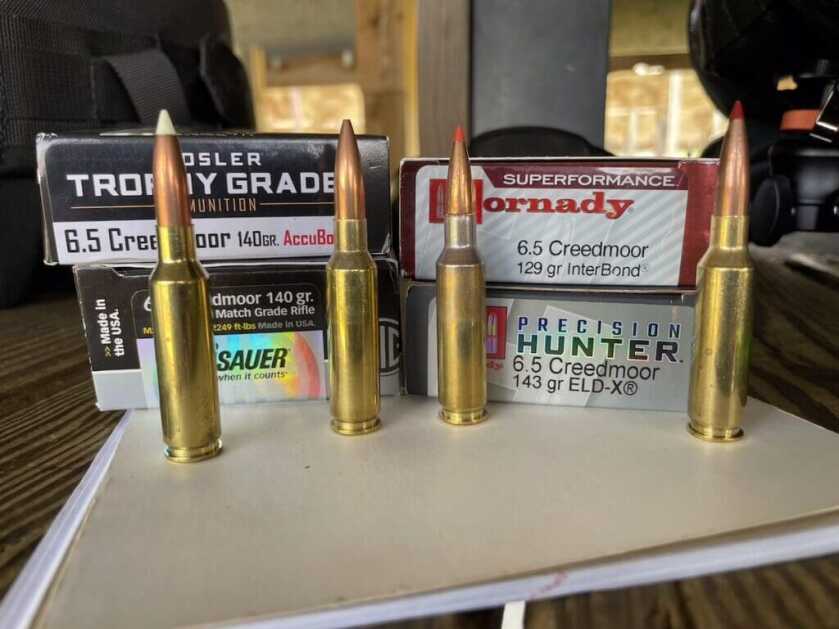
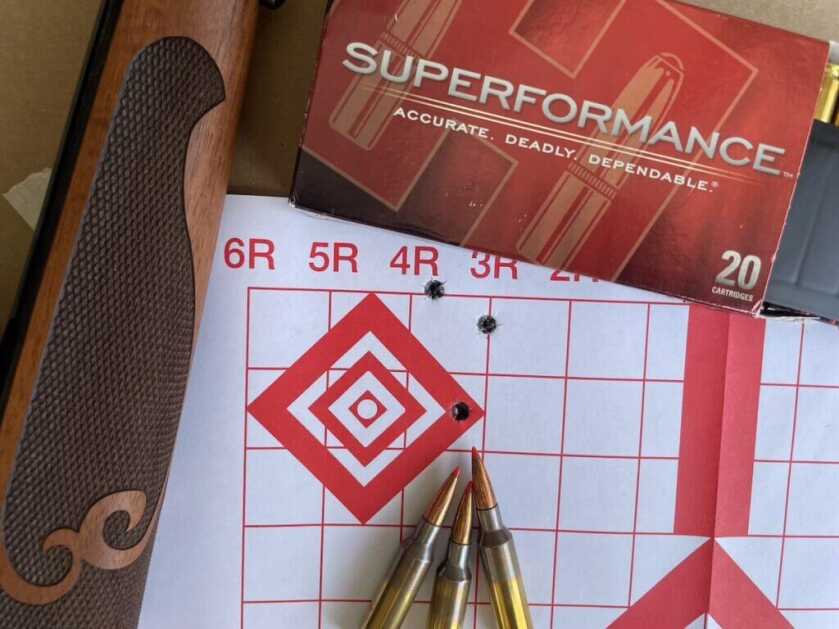
I had match and hunting ammo on hand. For hunting loads, I had Hornady Precision Hunter with a 143-grain ELD-X bullet, Nosler Trophy Grade ammo with a 140-grain AccuBond bullet, and Hornady SuperFormance loaded with a 129-grain InterBond bullet. Match ammo was SIG 140-grain OTM.
The Vortex Viper HD has nice glass, offering a clear image with enhanced clarity. I fired three-shot groups and allowed the barrel to cool between strings. Skinny, pencil barrel tends to heat up fast after the fourth or fifth shot, and groups open up.
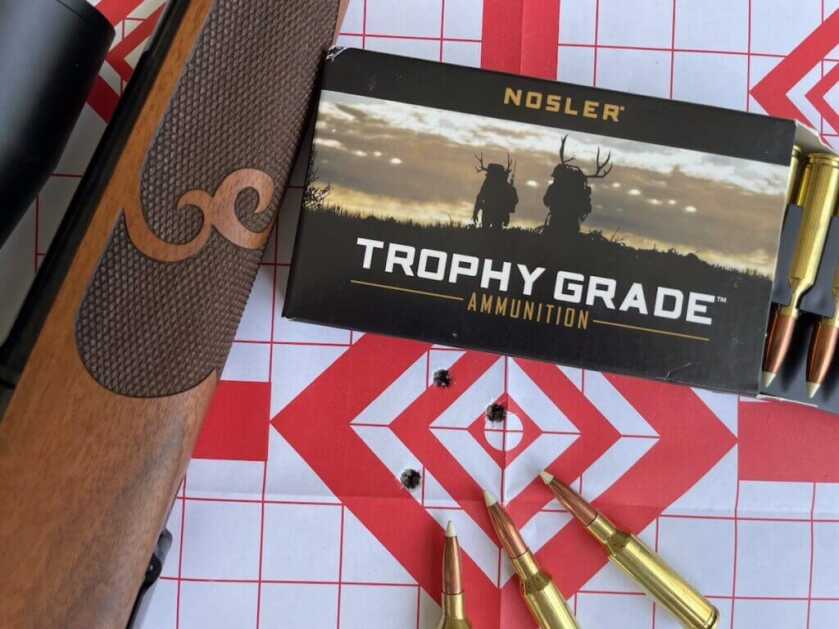
The best 3-shot group at 100 yards measured 0.84 inches with SIG Elite. The average with the SIG measured 1.64 inches. For hunting ammo, the best 3-shot group at 100 yards was with Nosler Trophy Hunter with a 1.29-inch group; the average was 1.83 inches. Next best group with hunting ammo was with Hornady Superformance at 1.54 inches and an average of 1.63 inches. Finally, Hornady Precision Hunter gave up a best group that measured 1.67 inches and averaged 2.25 inches. Clearly, the Model 70 liked bullets 140 grains and lighter. I wouldn’t think twice about hunting with this rifle and getting reacquainted with wood and blued steel, but I’d first adjust the trigger to about 3.5 to 4 pounds. In fact, we have a reservation in a tree stand this deer season.
Winchester Model 70 Featherweight Pros and Cons: Classic Charm, Real-World Tradeoffs
- Pros: Mauser-style controlled feed action, massive claw extractor, classic walnut stock, 6.7-pound carry weight without an optic, slick jeweled bolt, three-position safety, hinged floor plate magazine, comfortable fixed box magazine design, and enough old-school rifle soul to make synthetic stocks feel like microwave dinners.
- Cons: The factory trigger on this rifle measured 5.9 pounds, skinny barrels heat up fast after the fourth or fifth shot, and shooters raised on detachable box magazines may need to reacquaint themselves with old school bottom metal.
Final Verdict: The Winchester Model 70 Featherweight Still Has Teeth
The Winchester Model 70 is a classic and capable hunting rifle that is as traditional or as cutting-edge as you want it. In Featherweight trim, chambered in 6.5 Creedmoor, it carries like a hunting rifle should, feeds with the confidence of controlled round feed, and still reminds you why wood and blued steel never really went out of style.
This Winchester Model 70 Featherweight review proved the old Rifleman’s Rifle still has real field value. It is not trying to be a carbon-fiber space gun, and that is the point. It shoulders fast, looks beautiful, shoots well enough for real hunting, and has the kind of personality that makes you want to take it into the woods instead of just admiring it in the safe. There is a reason we have a reservation in a tree stand this deer season.
Related Reads from GunsAmerica Digest
- More Rifle Reviews from GunsAmerica Digest
- More Hunting Rifle Coverage from GunsAmerica Digest
- More Optics Reviews from GunsAmerica Digest
Available on GunsAmerica Now










Robert A. Sadowski is an American writer and journalist.
He has written about firearms and 2A issues for decades, and has trained with some of the country’s finest firearm instructors in handguns, rifles/carbines, shotguns and long-range shooting. He has also had the opportunity to interview numerous individuals deeply involved in protecting our 2nd Amendment.
He a is a frequent contributor to numerous gun-enthusiast publications, a few of which include:
- TheArmorylife.com
- TheTruthAboutGuns.com
- GunsAmerica.com
- GunBroker.com
- Gun-Tests.com
- Shooting Illustrated
- SHOT Business
- Gun Digest
Sadowski is also the author of numerous gun books, including: “9MM — Guide to America’s Most Popular Caliber” and “Book Of Glock,” both of which were #1 new releases on Amazon. He also wrote the popular DIY gun book series: Shooter’s Bible Guide to Firearms Assembly, Disassembly, and Cleaning Volume 1 and Volume 2. Other gun books authored by Sadowski include “50 Guns That Changed the World,” and edited “The M16A1 Rifle: Operation and Preventive Maintenance”originally published by the U.S. Department of the Army. He also edits the annual “Gun Trader’s Guide” to firearm values.
Sadowski is also the Treasurer/Secretary of the GLOCK Collectors Association, a non-profit organization with the mission to educate and preserve: Educate the public on the models, variations, and commemoratives built by GLOCK, as well as provide members with information on GLOCK serial numbers, importation, and other facts unique to GLOCK pistols.
I bought a feather weight in 280 REM. From a friend, I had never heard of 280 REM before. I had the trigger lightened up and the bolt action is just butterly smooth, way better than any other bolt gun I have tried. I am a big fan now and an starting to hand load because of it (well that and the 3 ARC guns I have acquired in The AR Platform