
The ComTac VIII is the newer, lighter, more configurable headset. The ComTac V is the older AA powered workhorse. The ComTac VII sits between them with wireless and headset-to-headset talk features aimed at teams. All three are rated in the low 20s for NRR, so the real differences are listening modes, power and weight.
The VIII adds 3M’s Mission Audio Profiles, Soundscape and Earplug Mode, and 3M lists it at 294 grams with batteries on the lightest version. The V runs on AA batteries for a far longer run time but lacks the MAP listening modes. Mitchell Graf spent months in a ComTac VIII on the range, the farm and the hunting stand. The comparison table comes first, then his full review.
Months of range time, farm work, and hunting put the 3M PELTOR ComTac VIII to the test. This tactical headset blends electronic hearing protection, clear radio comms, and MAP listening modes that boost real situational awareness without sacrificing protection.

Table of contents
ComTac V vs VII vs VIII at a Glance
| ComTac V | ComTac VII | ComTac VIII | |
|---|---|---|---|
| NRR | 20 to 23 dB depending on band and cushions | 22 dB foam, 23 dB gel (headband) | 22 dB foam, 23 dB gel (headband) |
| Batteries | AA | 2 x AAA | 2 x AAA |
| Run time | About 100 hours | About 50 hours (about 30 with NIB) | About 50 hours |
| Mission Audio Profiles | No | Yes | Yes |
| Headset-to-headset talk (NIB) | No | Yes | No |
| Wireless link to 3M control unit | No | Yes (NFMI) | No |
| Weight with batteries | Not on 3M’s ComTac V product page | 330 g (11.6 oz) | 294 to 339 g (10.4 to 12 oz) by version |
Which ComTac Should You Buy?
- ComTac VIII: the pick for most wired radio users who want MAP listening modes, a lighter headset and Earplug Mode for double protection.
- ComTac VII: worth it if your team needs headset-to-headset talk or a wireless link to 3M’s system control unit. Read our ComTac VII SHOT Show coverage.
- ComTac V: still a solid headset, and AA batteries last far longer, but you give up the MAP modes.
One note on NRR from 3M itself: people often get less protection than the label because of fit, and 3M recommends cutting the NRR in half to estimate typical protection. For gunfire, doubling up with plugs is cheap insurance. For muffs and earbuds beyond tactical headsets, see our best shooting ear protection guide, which picks the ComTac VIII as its tactical headset choice.
🛒 Check current 3M PELTOR ComTac listings on GunsAmerica
Hearing Protection and Environmental Listening: Real NRR and Situational Awareness With ComTac VIII
The ComTac VIII provides a noise reduction rating that in practice lands at 23 dB with gel ear pads and about 22 dB with the standard foam pads, which squares with my experience on the range. This might not sound like much compared to big passive muffs, but they handled everything I threw at them, including shooting an unsuppressed .50 BMG from a 20 inch barrel. Paired with 3M’s Earplug Mode, the headset can be run with passive earplugs or TEP-300 electronic in-ears for dual protection, which adds confidence for extended shooting or extremely loud environments.

But I only had to endure less than 10 rounds of .50 BMG, and this ear pro still did the trick. They also worked great through the thousands of rounds I put downrange with other rifles, pistols, and shotguns during my time with them. Environmental listening is one of the best features here. The directional microphones do a fantastic job of not only amplifying ambient sounds but also preserving spatial awareness. While hunting, I was able to pick up faint crunches of leaves and immediately pinpoint direction almost as if I wasn’t wearing ear protection at all. For tactical or hunting use, that is a big advantage.
Comfort and Fit: Headband vs Helmet Mount and Gel Pad Upgrades
Out of the box, the standard foam ear seals were comfortable enough for a few hours, but I upgraded to the Noisefighters SIGHTLINES gel ear pads. These gel pads have a relief cut designed for shooting glasses, and they make all-day use more comfortable by eliminating pressure points while still keeping a perfect seal. From 100 degree sunny range days to quiet nights moving through the woods, the comfort stayed consistent.

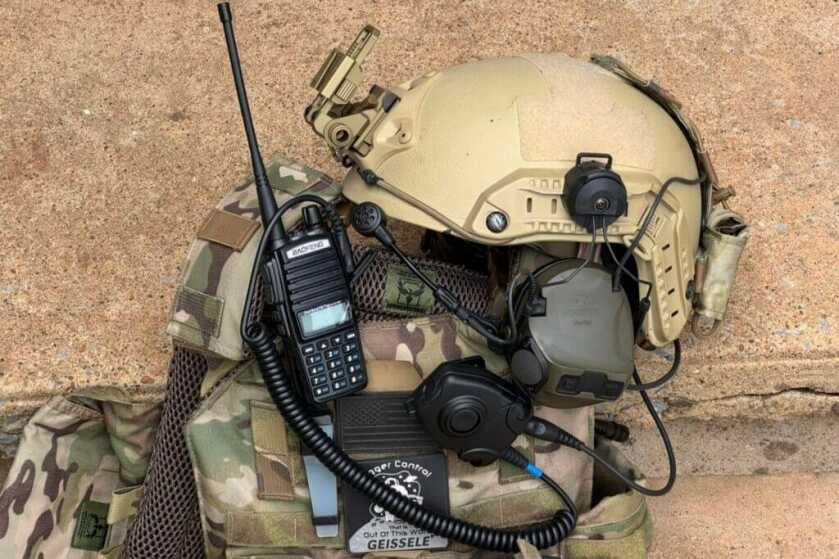
Mounted on a helmet using the PELTOR ARC rail adaptors, the headset remained secure and well balanced. The adaptors allow for clamping firmly to my ears, and they also have a relaxed mode where there is a slight air gap to let my ears breathe while still being able to hear and send communications.

Off the helmet, the headband worked just fine. I spent most of my time with the ComTac VIII using the headband during long days on the range.

Comms and Mic Clarity: Noise Canceling Boom and Downlead Performance
For those running radios, the ComTac VIII uses a downlead cable and a noise canceling boom microphone. I paired mine with the 3M FL5035-02 Push To Talk adapter, which I ran with Kenwood compatible Baofeng radios. The PTT feels rugged. It has a tactile rubber button and a protective raised lip that makes it easy to find by feel, even in the dark or with gloves. The coiled cord has enough give for flexible routing without being excessive.

Mic clarity was strong. On the receiving end, I was told my voice came through loud and crisp when the mic was properly positioned within a few millimeters of my lips. Any further away and volume dropped noticeably, though clarity stayed intact. That means mic placement is important, but once you use it a few times, you will figure out the sweet spot.
One issue I ran into. When the mic is stowed up and out of the way, the cord tends to pop loose from its connection point. This mainly happened when I wasn’t running helmet mounted, but it is something I think 3M could make more secure. Losing the ability to talk to your team in the middle of a mission or training scenario would be a bigger issue for some users than it is for me.
After writing this article, 3M notified me that all in line headsets have this issue fixed. Also, there are now shims available for those with earlier models. It took me like 10 seconds to install the shim and get a tight fit with the cord which doesn’t feel like it will ever accidentally fall out again.

Controls and Audio: Volume, Muting, and Radio Management on the ComTac VIII
Operating the ComTac VIII is simple. Hold the plus button to power on or off, tap plus or minus for volume adjustments, then hold minus to mute ambient listening. There are four main ambient volume levels and a fifth setting for off. I found the highest setting never got uncomfortably loud, even when amplifying quiet sounds.

Radio volume is controlled on the radio itself. With cheaper radios like my Baofengs, this meant occasionally bumping the knob and getting blasted with unexpectedly high volume. That is more of a radio problem than a headset flaw. With higher quality radios, this would be less of an issue. Still, it is worth being aware of. Within the headset settings you can change radio volume from low to high to help, but it can still get loud. The ComTac VIII also projects radio volume much louder than the ambient sounds it picks up, which is good for clarity when calls matter.
Mission Audio Profiles Explained: MAP Modes That Change How You Hear
The headset supports Mission Audio Profiles, which are advanced listening modes tailored to specific environments. From maximum comfort in high noise to clear conversation or heightened awareness in quiet conditions, there is a profile for it. I found the Patrolling and Observation profiles especially useful for hunting and general range use. For a quick summary, these are the different modes you can toggle between:
- MAP 1, Ambient Listening Off: Turns off external microphones. Use for maximum noise reduction when firing very loud weapons or riding in a helicopter and relying only on radio comms.
- MAP 2, Comfort: Reduces harsh background noise to make long exposure more tolerable. Good for vehicles, machinery, and heavy gunfire where you still want awareness but less audio fatigue.
- MAP 3, Conversation: Mimics natural open ear hearing and maintains sound localization. Ideal for face to face talk or extended wear when you need speech intelligibility.
- MAP 4, Patrolling: Increases situational awareness by amplifying subtle sounds while filtering steady noise. Useful for walking patrols, hunting, or reconnaissance.
- MAP 5, Observation: Maximizes auditory awareness and sound detection, boosting faint noises at range. Great for stationary listening posts or glassing while hunting.
Field Durability and Battery Life: Months of Use With the ComTac VIII
Over months of use, the ComTac VIII held up well in conditions ranging from hot Oklahoma summers on the farm to long nights of hunting. I wore them while running farm equipment, shooting, hunting, and training. They consistently provided reliable protection, great sound amplification, and comfortable wear.


One quirk I noticed. If the mic housing bumps something solid, like when the headset is resting on the ground, it produces a loud ringing noise inside the cups. It is just a potential battery drainer and kind of annoying, but I never had ringing in my ears during use. Color options include O.D. Green, Coyote Brown, and Charcoal Gray, which match most kit. Battery life has been solid around 50 hours on a pair of AAA batteries.
3M PELTOR ComTac VIII Specifications
| Model | 3M PELTOR ComTac VIII |
|---|---|
| Type | Electronic hearing protection and tactical communications headset |
| Noise Reduction Rating | 22 dB with foam cushions, 23 dB with gel cushions |
| Listening Modes | Mission Audio Profiles: Ambient Off, Comfort, Conversation, Patrolling, Observation |
| Microphone | Noise canceling boom mic on left cup, IP68 rated mic assembly |
| Connectivity | Single or dual comm downleads, 4-pin, 5-pin, or 10-pin TAC options |
| Power | AAA batteries |
| Battery Life | Approximately 50 hours |
| Features | Soundscape for speech intelligibility, Earplug Mode for dual hearing protection |
| Colors | O.D. Green, Coyote Brown, Charcoal Gray |
| Street Price | About $850 depending on configuration |
READ MORE HERE Vulcan Headrest Safe Review: Vehicle Safe Hidden in Plain Sight
Final Verdict: Who Should Run the 3M PELTOR ComTac VIII
The 3M PELTOR ComTac VIII is a professional grade option that lives up to its reputation. It is expensive, with a street price around eight hundred fifty dollars depending on the model, but you are paying for real world performance and reliability trusted by military and law enforcement. For me, the combination of solid hearing protection, clear comms, situational awareness, and customization with accessories like the Noisefighters gel pads and ARC rail adaptors makes it an excellent investment. Behind a .50 cal, creeping through the woods on a hunt, or running radios during training, the ComTac VIII delivers protection, awareness, and communication.
Related Reads from GunsAmerica Digest
- Vulcan Headrest Safe Review: Vehicle Safe Hidden in Plain Sight
- Vortex Viper Shotgun Enclosed Micro Red Dot Review
- InfiRay Outdoor RH25 V2 Thermal Review
- Archon Type B Gen 2 Review
FAQ
What is the difference between the ComTac V and ComTac VIII?
The VIII adds Mission Audio Profiles, Soundscape and a lighter build, and runs about 50 hours on two AAA batteries. The V runs on AA batteries for about 100 hours but lacks the MAP modes. NRR is in the low 20s for both.
Is the ComTac VIII better than the ComTac VII?
Not better, different. The VII adds headset-to-headset talk (NIB) and a wireless link to 3M’s control unit. If you do not need those team features, the VIII is the simpler choice.
What is the NRR of the ComTac VIII?
3M rates the headband version at 22 dB with foam cushions and 23 dB with gel cushions.
How long do ComTac VIII batteries last?
3M lists about 50 hours on two AAA batteries, and our reviewer saw about the same.
Available on GunsAmerica Now










Mitchell Graf is a dedicated hunter, competitive shooter, and firearms enthusiast. As a former instructor and president of Oklahoma State’s Practical Shooting Team, he has a strong foundation in marksmanship and competition shooting. These days, he spends as much time as possible chasing pigs and coyotes with night vision and thermal optics.
When he’s not in the field or on the range, Mitchell works as a full-time Mechanical Engineer in the Aerospace and Defense industry and manages a part-time farming operation. Whether he’s behind a rifle, designing parts, or working the land, his drive for precision and performance remains the same.
Experience:– Mechanical Engineer – Full-time professional in the Aerospace/Defense industry.– Competitive Shooter & Instructor – Former President and Instructor of Oklahoma State’s Practical Shooting Team.– Night Vision & Thermal Hunter – Passionate about night time predator and hog hunting.– Part-Time Farmer – Working to provide for my family, and raise food for this great nation.
Great article! You spent quite a lot of time testing and using the product before writing about it. That allows a much more accurate evaluation over time, and produces a more honest review than someone who spends a day (at most) with an item… then hypes all of its “gee-whiz” attributes. Unfortunately, they are not in my price range.