
Estimated reading time: 16 minutes
The Vortex Viper was already a compelling little pistol optic when we originally put it through a match and several hundred rounds of practice. In 2026, the harder question is whether you actually want the Viper, Venom, Razor, SPARC AR, or the very different AMG UH-1 Gen II.
Editor’s Note
Editor’s Note: We have updated this full review of the Vortex Viper red dot for 2026 to include current pricing, Vortex Venom, Razor, SPARC AR, and AMG UH-1 Gen II coverage, a comparison table, and a use-case guide. The original Viper specifications, photographs, range testing, and conclusions remain part of the review.
Table of contents
- Editor’s Note
- Vortex Viper vs. Venom vs. Razor vs. SPARC AR vs. UH-1
- Vortex Viper: The Low-Profile Pistol Specialist
- Vortex Venom: More Window, More General-Purpose Appeal
- Vortex Razor Red Dot: The Premium Open-Emitter Option
- Vortex SPARC AR: The Rifle Red Dot That Does the Work
- Vortex AMG UH-1 Gen II: When a Red Dot Is Not Actually a Red Dot
- Original Vortex Viper Review: Are You Red Dot Ready?
- Vortex Viper Range Test: Zeroed, Raced, and Still Holding
- Which Vortex Red Dot Should You Buy in 2026?
- Related Reads from GunsAmerica Digest
Vortex Viper vs. Venom vs. Razor vs. SPARC AR vs. UH-1
The first thing to understand is that these optics do not all compete for the same job. The Viper, Venom, and Razor are open reflex sights that make sense on pistols and other compact platforms. The SPARC AR is a tube-style rifle red dot built around an AR-height mounting system. The AMG UH-1 Gen II is larger again and technically is not a conventional LED red dot at all. It is a holographic sight designed around carbine use.
In other words, asking which one is “best” without specifying the gun is a bit like asking whether a pickup, motorcycle, or bulldozer is the better vehicle. That depends heavily on what you intend to hit with it.
| Optic | Type | Reticle | Best Use | 2026 MSRP |
|---|---|---|---|---|
| Vortex Viper | Open reflex | 6 MOA dot | Low-mounted handgun optic | $369.99 |
| Vortex Venom | Open reflex | 3 or 6 MOA dot | Pistols, rimfire, general reflex use | $369.99 |
| Vortex Razor | Premium open reflex | 3 or 6 MOA dot | Premium pistol, rifle, or shotgun setup | $599.99 |
| Vortex SPARC AR | Tube-style LED red dot | 2 MOA dot | ARs and defensive carbines | $279.99 |
| Vortex AMG UH-1 Gen II | Holographic sight | EBR-CQB holographic reticle | Duty, tactical, NV-capable carbines | $959.99 |
Vortex Viper: The Low-Profile Pistol Specialist
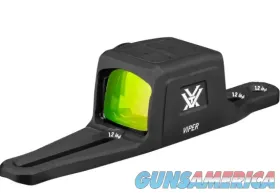
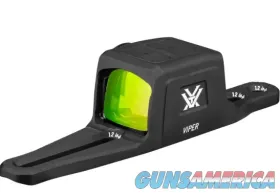
The original Viper remains the simplest optic in this group to understand. It is small, light, carries a big 6 MOA dot, and was specifically designed to sit low on a handgun slide. That large dot gives up some precision at distance in exchange for speed at normal handgun ranges, which was exactly what we found useful during the original review.
Vortex currently lists the Viper at $369.99 MSRP. Current specifications call out the same 1.8-inch overall length, 6 MOA dot, CR2032 battery, 1 MOA adjustments, and 120 MOA of both elevation and windage travel. Vortex now lists the optic itself at 1.03 oz. The original test specification below listed 1.1 oz with the battery, so we are preserving that original number rather than rewriting history.
Best for: Shooters who want a low-mounted 6 MOA handgun dot and prioritize fast acquisition over a tiny aiming point.
Skip it if: You want an enclosed emitter, extremely long battery life by modern standards, or a finer dot for deliberate precision work.
Vortex Venom: More Window, More General-Purpose Appeal

The Venom sits close enough to the Viper that buyers have been comparing the two for years. The difference is mostly philosophy. The Viper chases the lowest possible handgun profile, while the Venom surrounds a larger viewing window with a rugged aluminum housing and leans more toward all-around reflex-sight use.
Vortex currently lists the traditional Venom at $369.99 MSRP and the new enclosed Venom Micro Red Dot at $259.99. The sight has been offered with 3 MOA and 6 MOA dots, making the smaller-dot version especially attractive if you want a little more precision than the 6 MOA Viper can provide. Battery life is rated up to 150 hours at the highest setting and up to 3,000 hours on lower settings.
The Vortex lineup has moved beyond even that original Venom concept. Vortex now also offers an enclosed Venom Micro Red Dot, showing just how far the market has traveled since this Viper review was written. Rain, dust, mud, and snow have an easier time ruining your day when the emitter is hanging out in the open, so enclosed optics have become an increasingly important part of the modern conversation.
Best for: Shooters who want a versatile open reflex sight, particularly if the 3 MOA version better fits their preference for a finer aiming point.
Viper vs. Venom: Pick the Viper when a low handgun profile and fast 6 MOA dot are the priority. Pick the Venom when window size and broader versatility matter more.
Vortex Razor Red Dot: The Premium Open-Emitter Option
The Razor moves the same general reflex-sight concept farther up the food chain. It uses a large, clear window protected by a substantial aluminum housing and offers either a 3 MOA or 6 MOA dot. The side-loading battery tray is a practical improvement because replacing a battery does not require removing the optic from the gun and then wondering whether your zero came along for the ride.

Vortex lists the Razor Red Dot at $599.99 MSRP and currently marks it for limited distribution. Weight is 1.3 ounces without the included low Picatinny mount and 2.4 ounces with it.
Best for: The shooter who wants a premium open reflex sight and does not mind spending considerably more than Viper or Venom money.
Reality check: The Razor was once the obvious step-up answer inside Vortex’s compact reflex family. Today, enclosed emitters and the newer Defender family make the buying decision less automatic. The Razor is still interesting, but “premium” no longer means there is only one road to take.
Vortex SPARC AR: The Rifle Red Dot That Does the Work
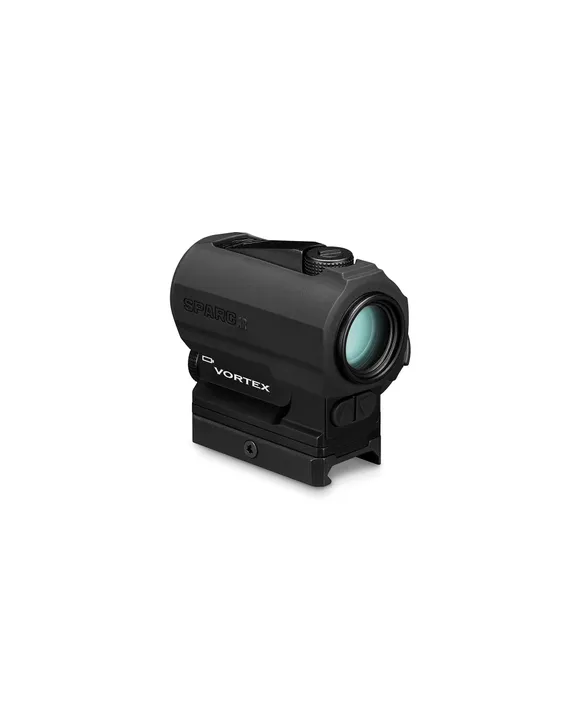
The SPARC AR belongs on the other side of the room from the Viper. This is not a slide-mounted handgun optic. It is a compact rifle sight with a 2 MOA dot, AR-oriented mounting system, substantial battery life, and the sort of enclosed tube that makes sense on a carbine getting bounced through range bags and barricade drills.
The current SPARC AR carries a $279.99 MSRP and runs on a common AAA battery. Vortex rates battery life at 50,000 hours, and the optic ships with both absolute co-witness and lower 1/3 co-witness mounting options. The current model automatically shuts down after approximately 12 hours if you forget about it.
GunsAmerica has previously put the SPARC AR through its own review, and that test reached essentially the conclusion the optic’s design suggests: it fills the useful middle ground between questionable bargain-bin electronics and red dots priced like somebody accidentally included a spare rifle in the box.
Best for: AR-15s, defensive carbines, training rifles, and shooters who want a simple 2 MOA red dot with sensible mounting hardware included.
Do not buy it for: Direct mounting to a pistol slide. Wrong animal.
Vortex AMG UH-1 Gen II: When a Red Dot Is Not Actually a Red Dot

The AMG UH-1 Gen II gets grouped into “red dot” conversations because it provides a red illuminated aiming solution at 1x, but mechanically it is a different beast. The UH-1 is a holographic sight. Instead of using the same basic LED-reflection system as a conventional red dot, it uses a laser-driven holographic reticle system.
The result is a much larger optic aimed squarely at serious carbine use. The current UH-1 Gen II has an EBR-CQB reticle, night-vision-compatible settings, a quick-detach mount, rugged aluminum construction, and Vortex’s FHQ technology intended to reduce stray light emissions. Current MSRP is $959.99.
This is also the one in the comparison that makes the least sense to buy simply because you found it while shopping for a Viper. If your pistol needs a dot, this is not your answer. If your carbine needs a hard-use holographic sight with night-vision capability and you are comfortable spending serious money, now we are having the right conversation.
Best for: Tactical carbines, duty-style setups, night-vision use, and shooters who specifically want a holographic reticle.
Skip it if: Compact size, low weight, or budget pricing are the reason you started shopping Vortex in the first place.
Original Vortex Viper Review: Are You Red Dot Ready?
One of the fastest-growing trends in the handgun world is red dots. Now manufacturers are incorporating milled-out slides, Picatinny rails, and other options to give shooters the ability to affix an optic or red dot.
Several manufacturers now offer red dot-ready variants of their most popular handgun models. Use of red dot sights on handguns continues to gain popularity and legitimacy, as organized shooting sports add competition classifications for red dot-equipped handguns.
That was the landscape when this review was written. By 2026, red-dot-ready slides are no longer an exotic feature. They have become normal enough that many shooters now begin the buying process by asking which optic footprint a pistol accepts rather than whether it accepts an optic at all.
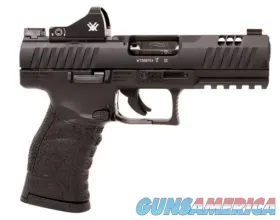
The Viper, from Vortex Optics, was designed specifically for mounting on handguns with red dot-ready milled slides, or those with Picatinny sight rails. The low-profile sight positions the red dot as close to the bore line as possible so shooters who want to co-witness their red dot and iron sights can do so by installing taller iron sights typically used on handguns equipped with suppressors.
The waterproof and robust Viper is also lightweight. Increasing the handgun weight by only 1.1 ounces when mounted directly to the slide, or 2.1 ounces when mounted with the included Picatinny rail mount base.
🛒 Check Current Price for Vortex Optics on GunsAmericaOriginal Vortex Viper Red Dot Specifications
Historical test specifications: These are the specifications published with the original review. Current Vortex pricing and current product data are discussed separately above.
| Magnification | 1X |
|---|---|
| Eye Relief | Unlimited |
| Dot Size | 6 MOA |
| Adjustment Graduation | 1 MOA |
| Max Elevation Adjustment | 120 MOA |
| Max Windage Adjustment | 120 MOA |
| Parallax Setting | Parallax free |
| Length | 1.8 in. |
| Weight with Battery | 1.1 oz. |
| Weight with Picatinny Mount | 2.1 oz. |
| MSRP | $329 |
| Manufacturer | Vortex Optics |
The Viper’s 6 MOA Dot Is Built for Speed
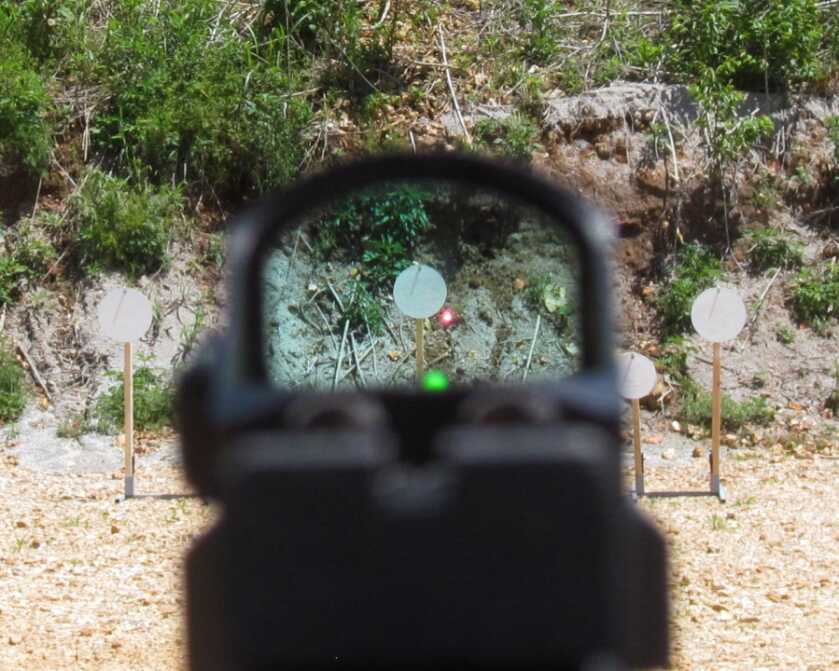
The Viper features a 6 MOA red dot. That means the dot will cover 6 inches of your target at 100 yards, 3 inches at 50 yards, and 1.5 inches at 25 yards. It’s large and bright enough to be easily seen in the brightest conditions, but it doesn’t cover very much of your target at the shorter ranges handgun shooters typically engage with their targets.
The red dot activation controls are located on the left side of the sight. A single press on either of the two buttons turns on the red dot. Tapping the forward button increases brightness; tapping the rearward button decreases brightness. Tapping and holding the rear button for 5 seconds turns off the red dot.
If you accidentally forget to turn the sight off, it will shut down automatically after 14 hours of inactivity. One very nice feature of the Viper is the memory of your last brightness setting. Turning the red dot on brings you back to the last brightness setting used when the red dot was previously turned off.
Vortex Viper Battery Life and CR2032 Power
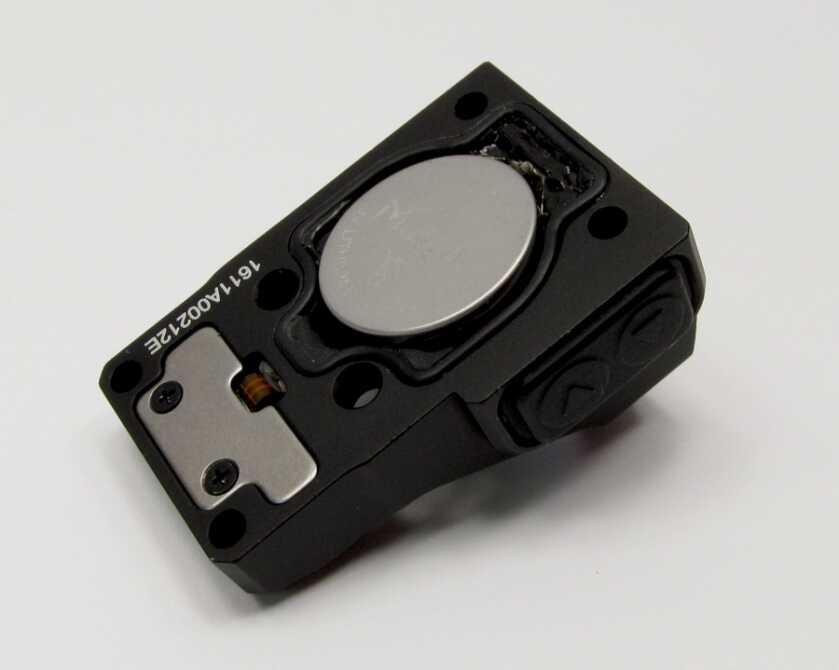
The Viper uses a common CR 2032 3-volt lithium coin cell battery. Battery life is very good. Expect 150 hours of battery life at the brightest setting. Running the sight at the lowest setting extends battery life to 30,000 hours.
“Name Brand” CR 2032 batteries can be found at most mass food and drug stores for about $5 per battery. Online shoppers can buy the same brand of batteries from Amazon in bulk packaging for 45 cents per battery when buying 10 batteries at a time.
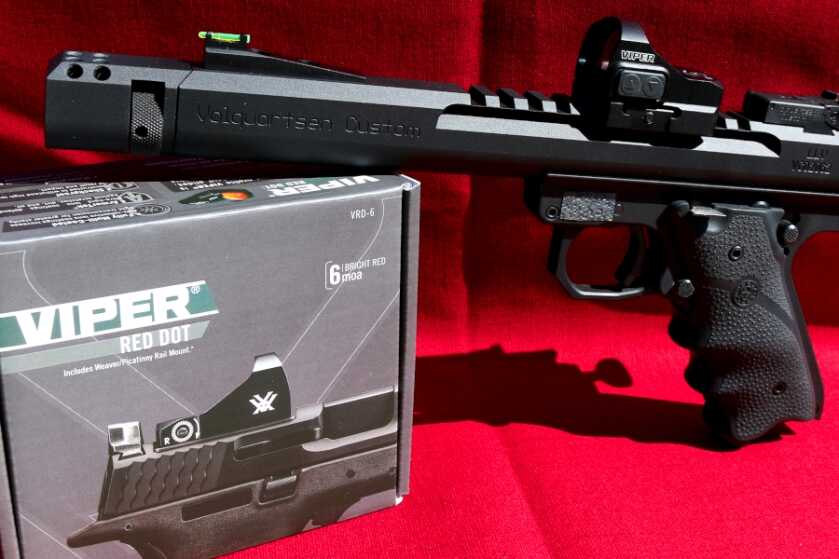
Installing the Vortex Viper on a Volquartsen Scorpion
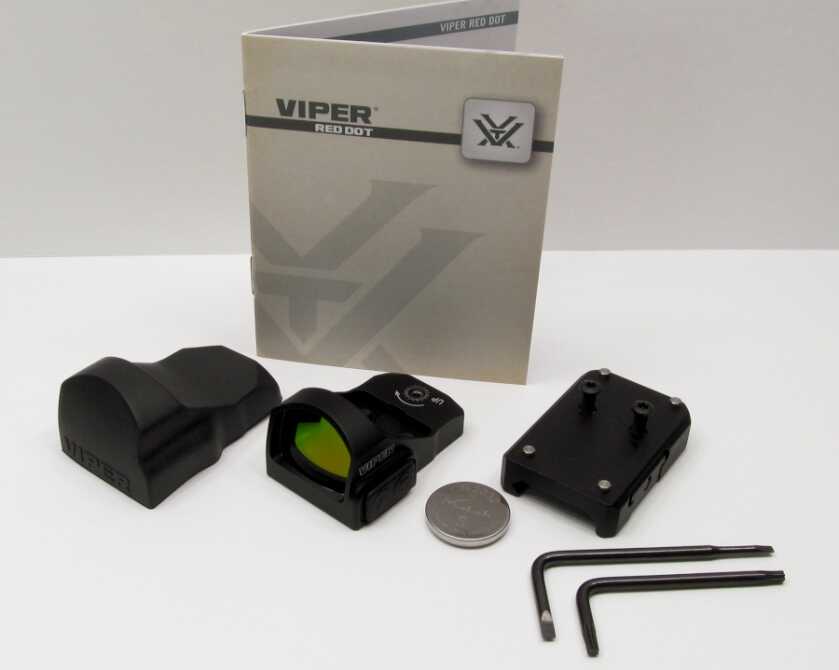
Since I was reviewing the Viper, I took the time to read through the excellent instruction manual included with the sight. I originally planned to use the sight on a red dot-ready centerfire handgun and try my hand at USPSA Carry Optics Division and Steel Challenge club matches.
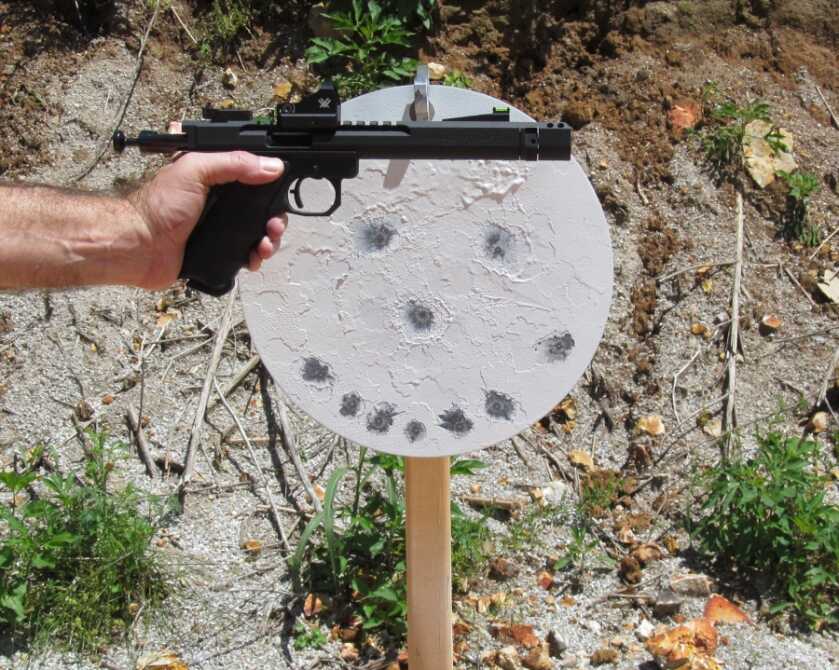
Plans changed and instead I used the included Picatinny rail mount to install the Viper on a Volquartsen Scorpion that has a section of rail machined into the receiver and barrel. Following the instruction manual, I had the battery installed, sight attached to the Picatinny base, and the whole assembly mounted on my pistol in less than 10 minutes. I was ready for the range.
Vortex Viper Range Test: Zeroed, Raced, and Still Holding
At 25 yards, the high-velocity .22LR bullets impacted exactly where the red dot indicated they would as I sighted in the Viper from the bench. The red dot was crisp and bright with no visible scatter around the edge of the dot.
I had an NSSF Rimfire Challenge match coming up, so I adjusted the red dot so the bullets would impact about an inch above the red dot at 25 yards. I do this because I will occasionally shoot under some targets after long transitions between the steel plates. Using the included windage and elevation adjustment tool and the instruction manual turned this into a simple exercise.
Additional shooting with the Viper included a few hundred rounds of practice and a day of match shooting at the NSSF Lone Star Rimfire Challenge. I also shot one last target just to confirm the sight had held the initial zero set at the start of the review. It did. The sight worked perfectly throughout the entire evaluation.
Original Viper Verdict: A Small Dot Sight That Delivered
The Vortex Viper proved to be a great little red dot sight for pistols. It should work equally well on rifles and shotguns where targets are engaged at 50 yards or less and great precision isn’t required. The 6 MOA dot is just too large for precision shooting. Vortex makes other red dot models with smaller red dots for precision shooting.
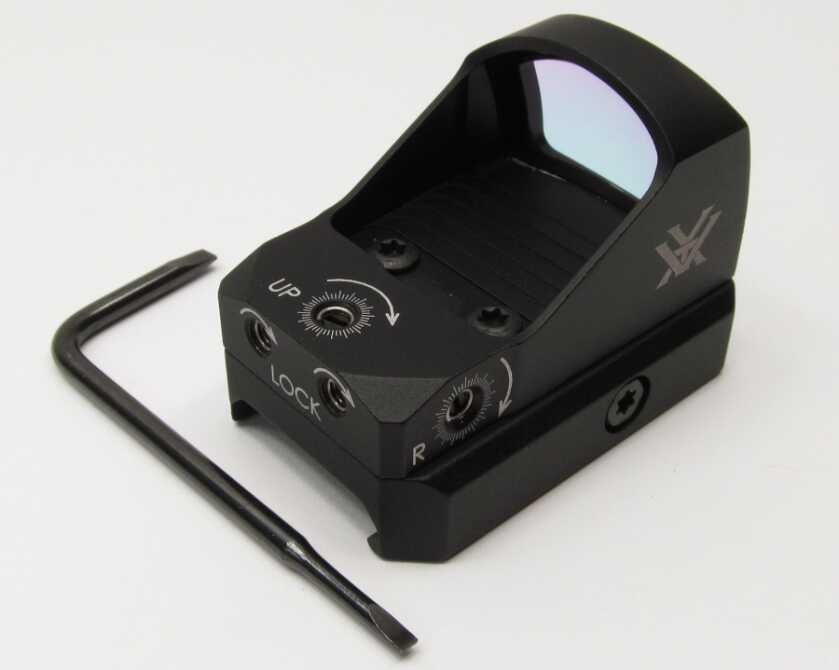
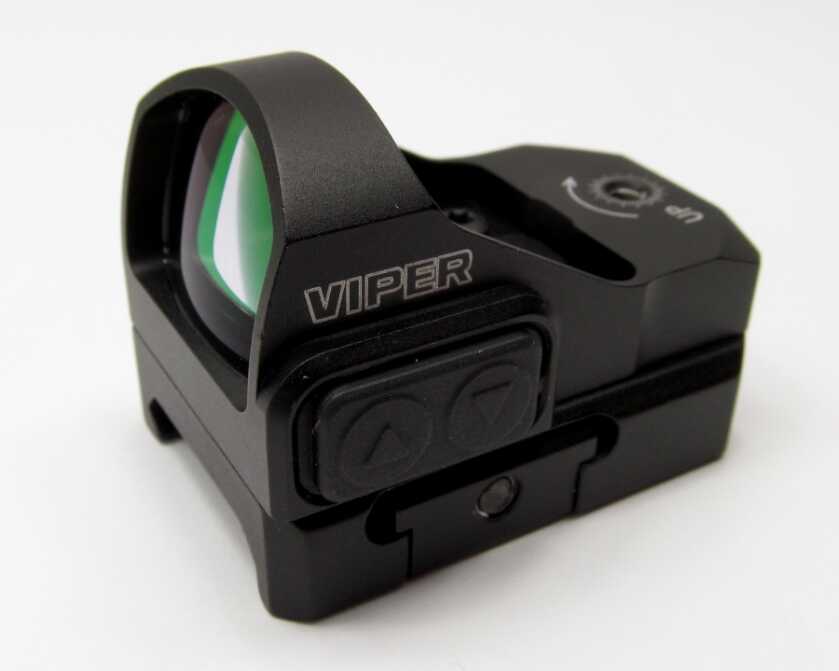
When you consider the quality of the sight, unique features like last brightness memory and the very competitive price, the Viper stands out as a great buy in red dot optics. If you also consider the Vortex VIP Warranty and replacement policy covering everything except loss, theft or intentional damage, the deal gets even better. If you are shopping for a red dot optic to mount on your handgun, you should check out the Vortex Viper before you make your final decision.
Which Vortex Red Dot Should You Buy in 2026?
Buy the Viper if: You want a low-profile handgun optic with a large 6 MOA dot that is exceptionally easy to find at speed. The original range test remains a strong argument for its basic reliability.
Buy the Venom if: You want a more general-purpose open reflex sight and prefer the option of a finer 3 MOA dot. Its larger window makes it an appealing middle ground.
Buy the Razor if: You specifically want Vortex’s premium open reflex design, appreciate the side-loading battery, and are comfortable paying significantly more than Viper or Venom money.
Buy the SPARC AR if: The optic is going on an AR or similar carbine. The 2 MOA dot, long battery life, AAA power, and included co-witness mounting options make vastly more sense there than trying to make a pistol reflex sight do rifle duty.
Available on GunsAmerica Now
Buy the AMG UH-1 Gen II if: You want a serious holographic carbine sight, need night-vision-compatible settings, like the EBR-CQB reticle, and consider $959.99 a price rather than a cry for help.
Our pick by role: The Viper still makes sense for a simple low-mounted 6 MOA pistol setup. The Venom is the more flexible open reflex choice. The SPARC AR is the obvious carbine value in this five-optic comparison. The UH-1 is the premium tactical choice, while the Razor occupies an increasingly specialized premium open-emitter niche.
Vortex Red Dot Pros & Cons
- Viper Pros: Low profile, light weight, bright 6 MOA dot, simple controls, brightness memory, proven zero retention in the original test.
- Viper Cons: Bottom-loading battery, open emitter, 6 MOA dot is less suited to precision, battery life trails newer designs.
- Venom Pros: Large viewing window, 3 or 6 MOA options, broad reflex-sight versatility.
- Razor Pros: Premium housing and glass, 3 or 6 MOA options, side-loading battery.
- SPARC AR Pros: 2 MOA rifle dot, AAA battery, 50,000-hour rating, included AR-height mounts.
- UH-1 Pros: Holographic EBR-CQB reticle, night-vision compatibility, QD mounting, heavy-duty carbine focus.
Had a viper and would not keep zero even when locked. Upgraded to a venom. Much better due to holding zero, battery on top and no need to lock adjustments
Aren’t the sight adjustment locking screws on the back of the Viper sight covered up by the rear sight of most pistols? It looks like they would not be accessible when mounted. It looks as if the sight can be mounted far enough forward on the picatinny rail of the Scorpion so it’s not a problem. But it looks like that is what would happen if it was mounted on my S&W M&P CORE. Wouldn’t that be a problem?
I prefer the Venom as well because of the smaller dot size, but the most important feature to me is the fact that the venom allows for the battery to be removed from the top of the unit. With the Viper you have to unmount the unit to change the battery and you end up losing your zero. If that design change alone was fixed, I’d go with the viper.
I also prefer the venom for its smaller dot size, but for the more important feature in that the battery is accessible through the top without having to unmount the sight and upset your zero. The Viper fails in this regard and will keep me away from it until that is fixed.
I’ve got the Venom version mounted on a Henry lever in .41 Magnum for Wisconsin deer hunting in brushy woods hunting. It’s perfect in this duty as it allows easy two-eyed siting and doesn’t upset the excellent balance of the little lever action rifle the way a traditional optical scope would.
I prefer their Venom model personally. It has a smaller dot, which makes for a more precise shot but is still easy to pick up. I use one on a modified HK USP and on my Vepr 12 shotgun. As far as brightness settings on it, I just keep it on the automatic setting and it sets the level of brightness based on the ambient light in the area.