
Estimated reading time: 14 minutes
The Leofoto Juggernaut S2 and S3 bring serious carbon fiber muscle, outstanding stability, and a 120-pound load rating to the shooting tripod market for $749 each. One is built for maximum stiffness, the other for easier packing and faster adjustments, and both have what it takes to challenge some of the best shooting tripods I’ve tested.

Table of contents
- Leofoto Juggernaut S2 vs S3: Can These $749 Tripods Challenge the Best?
- Watch the Leofoto Juggernaut S2 vs S3 Video Review
- Leofoto Juggernaut S2 vs S3 Specs: Same Price, Different Muscle
- Leofoto Juggernaut S2: Massive Carbon Fiber Legs, Almost Zero Flex
- Leofoto Juggernaut S3: Less Bulk, Faster Adjustments, Serious Stability
- Juggernaut 40mm Ball Head: Arca, Picatinny, and a Rock-Solid Lockup
- Built Like Tanks: Features Both Leofoto Juggernaut Tripods Share
- Forged Aluminum Apex: Strength Where It Matters Most
- Patented Leg Lock: No More Legs Folding Under Pressure
- Three Leg Angle Stops: From Standing Shots to Prone Stability
- Quarter-Turn Twist Locks: Fast Adjustments Without the Frustration
- Rubber Feet vs. Steel Spikes: Traction for Real Hunting Conditions
- Accessory Mounts and a 10-Year Warranty: Built for the Long Haul
- Juggernaut Tripod Field Test: A 1,000-Yard Hit From a Standing Position
- The Catch: Weight, Packed Length, and What You Give Up
- Leofoto Juggernaut S2 and S3 Pros and Cons: The Good and the Heavy
- Final Verdict: Are the Leofoto Juggernaut S2 and S3 Worth $749?
- Leofoto Juggernaut S2 vs S3 FAQ: Price, Capacity, and Compatibility
- Leofoto Juggernaut S2 vs S3: What’s the Biggest Difference?
- How Much Do the Leofoto Juggernaut S2 and S3 Cost?
- Can the Juggernaut S2 and S3 Handle Heavy Precision Rifles?
- Does the Juggernaut Ball Head Fit Arca-Swiss and Picatinny Rails?
- Will the Juggernaut Tripod Legs Collapse While Moving?
- What Warranty Comes With the Leofoto Juggernaut Tripods?
- More Shooting Tripods Worth Your Money: Related GunsAmerica Reviews
Leofoto Juggernaut S2 vs S3: Can These $749 Tripods Challenge the Best?
People ask me all the time which tripods I think are the best in the industry. If you want the best American-made tripod, it is Really Right Stuff. It is made in Utah, elite military units and top shooting schools use it, and I have beaten mine hard. It is also around $1,600.
The Leofoto X Mountain Forged Juggernaut S2 and S3 come in well below that, and they are right on Really Right Stuff’s heels. They are not American made, which will matter to some readers. But for anyone predator hunting day or night, glassing, spotting, or shooting PRS or NRL Hunter off a tripod, these two deserve a look.
To be clear, I don’t work for Leofoto, they don’t pay me, and I don’t earn a commission on sales. I have bought more tripods than I can count, tested most of the rest at events, and sent plenty back. I have a pile of broken ones at home.
That’s why these Leofoto Juggernaut shooting tripods caught my attention. The S2 and S3 take different approaches to leg design, but both aim to deliver the kind of stability serious rifle shooters and hunters actually need. The question is whether you want the stiffest setup possible or a tripod that is easier to carry.
Watch the Leofoto Juggernaut S2 vs S3 Video Review
Want to see the Leofoto Juggernaut S2 and S3 before diving into the details? Watch my Leofoto Juggernaut S2 and S3 video review on YouTube for a closer look at these heavy-duty carbon fiber shooting tripods, their features, and how they compare.
Leofoto Juggernaut S2 vs S3 Specs: Same Price, Different Muscle
The easy way to remember them: the S2 has two leg sections and the S3 has three.
Both Leofoto Juggernaut tripods use 10-layer Toray carbon fiber, carry the same maximum load rating, and cost the same. But their leg configurations change how they handle, how stiff they feel, and how easily they pack. Here is how the Juggernaut S2 vs S3 specifications stack up.
| Spec | Juggernaut S2 | Juggernaut S3 |
|---|---|---|
| Leg sections | 2, non-inverted | 3, inverted |
| Leg diameters | 44.7 mm / 40 mm | 36 mm / 40 mm / 44.7 mm |
| Leg material | Toray 10-layer carbon fiber | Toray 10-layer carbon fiber |
| Max height | About 66.7″ | About 65″ |
| Folded length | About 41″ | 28.7″ |
| Weight (tripod only) | 6.68 lb | 6.9 lb |
| Max load | 120 lb | 120 lb |
| Leg angle stops | 24°, 55°, 85° | 24°, 55°, 85° |
| Price, tripod only | $749 | $749 |
| Price, with head | $949 | $949 |
The Juggernaut head adds 1.08 pounds. The S2 also includes a 28 mm center column for spotting use.
On paper, the differences may not look dramatic. In the field, those extra leg sections and the way the locks are positioned make a real difference. The S2 favors maximum rigidity, while the S3 gives you more flexibility when it’s time to pack up and move.
Leofoto Juggernaut S2: Massive Carbon Fiber Legs, Almost Zero Flex
The S2 is the stiffest tripod Leofoto makes, and one of the stiffest I have tested. With a heavy rifle on top, I can barely get the apex to flex.
The legs are huge, 44.7 mm at the top and 40 mm at the bottom, made from 10 layers of woven Toray carbon fiber. Carbon that thick soaks up shock and dampens vibration, and it is still lighter than aluminum. Marked lines on the legs help you set all three to the same height quickly.
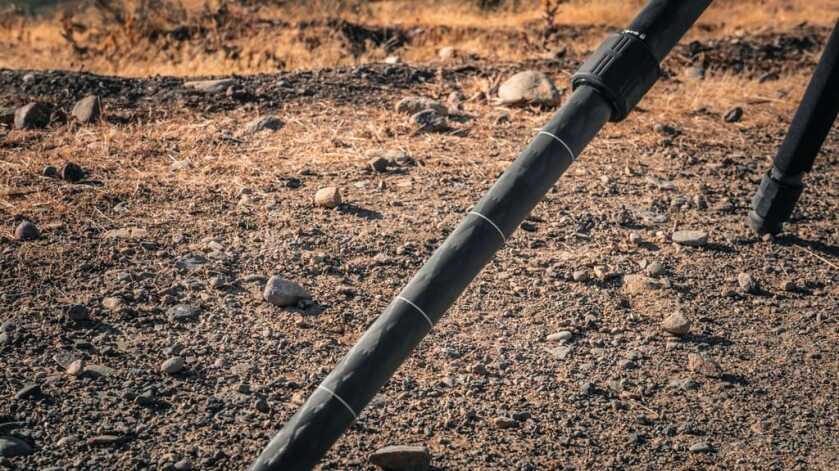
The tradeoff is length. Folded, the S2 is still about 41 inches tall. It doesn’t fit in a backpack and it is awkward in tight spaces. For night predator hunting with a thermal, that doesn’t bother me. I set the legs where I want them, fold it up, toss it in the truck and never touch the leg sections again. When I put my big spotter on a tripod in the wind and want maximum stability, this is the one I grab.
For a shooting tripod that spends most of its life moving between the truck and a hunting position, that extra length is a compromise I’m willing to make. The Juggernaut S2 is about stiffness first, and it delivers exactly what I want when a heavy rifle or spotting scope needs a stable platform.
Leofoto Juggernaut S3: Less Bulk, Faster Adjustments, Serious Stability
The S3 uses three inverted leg sections, 36 mm, 40 mm and 44.7 mm. Inverted means the narrow section sits at the top, which puts the leg locks higher. You don’t have to bend over to adjust them, and you can make changes quickly even with gear mounted.
The third section also lets it fold down to 28.7 inches, short enough to fit in a backpack, a bag or a case much more easily than the S2.
It isn’t quite as stiff as the S2, but it is still extremely stable. I would use it all day without a second thought. If you carry your tripod on foot, the S3 is the better pick. If you want the absolute stiffest, get the S2.
That’s the real advantage of the Leofoto Juggernaut S3. You aren’t giving up the heavy-duty construction or the 120-pound load rating. You’re trading a little of the S2’s incredible stiffness for a shorter folded length and leg locks that are easier to reach when you need to adjust your shooting position.
Juggernaut 40mm Ball Head: Arca, Picatinny, and a Rock-Solid Lockup

Both tripods are sold with or without a head, and I recommend getting the head. The new Juggernaut head uses an inverted design with a 40 mm ball. The design is borrowed from Really Right Stuff, as most heads in this style are, but Leofoto made it bigger and heavier, and it locks up very tight. Both tripods are rated for 120 pounds, so a 16-, 18- or 25-pound rifle is no problem.
One lever controls the ball. Open it fully for fast, free movement, or barely push it in to add just enough tension to pan and follow an animal. I don’t lock the head when I shoot, because I have found that a locked head can change point of impact under recoil. That is my preference, and yours may differ.

The clamp takes both Arca-Swiss and Picatinny. A lever locks Arca rails in, with a small catch that keeps it from opening unless you press it. I have run it in the dark without trouble. If your Arca rail is a little out of spec, a stainless steel wheel on the outside, marked plus and minus, tightens or loosens the clamp to fit. A separate knob locks in Picatinny accessories, and there is a bubble level on the side. Leofoto also includes six security screws you can tighten after installation for extra stability.
For predator hunting, PRS, or NRL Hunter shooting, that combination of Arca-Swiss and Picatinny compatibility matters. The head gives you options for mounting different equipment without making the whole setup complicated. More importantly, the controls are easy to use, even when you’re working in the dark.
Built Like Tanks: Features Both Leofoto Juggernaut Tripods Share
Beyond the differences in their leg configurations, the Juggernaut S2 and S3 share the same attention to strength and practical shooting features. These are the details that help explain why both tripods feel so solid in actual use.
Forged Aluminum Apex: Strength Where It Matters Most

The apex, the part where the legs meet, is forged aluminum. That makes it stronger with less flex, and it matters at this level. It is based on Leofoto’s LQ Urban Apex, and the head can be popped out and swapped for other heads.
Patented Leg Lock: No More Legs Folding Under Pressure
A patented pull-down lock keeps the legs from collapsing. When you are moving a tripod quickly from position to position, legs can fold in on you. Pull the lock down and they can’t. It is fast and simple to use. The lock is hollow, so a center column still fits for spotting.
Three Leg Angle Stops: From Standing Shots to Prone Stability

The legs set at 24, 55 or 85 degrees. Spread wide, you can shoot from awkward positions or use the tripod like a big bipod, and the legs are strong enough to put your weight on. Collapse the legs short, spread them out, and you can even shoot prone. I sometimes zero my thermal prone off my tripod.
Quarter-Turn Twist Locks: Fast Adjustments Without the Frustration

The rubber leg locks take a quarter turn to release or lock, with no endless spinning. They are some of the best leg locks in the industry, and they lock up tight.
Rubber Feet vs. Steel Spikes: Traction for Real Hunting Conditions
The large rubber feet work in almost any conditions and hold up well in mud and soft ground without sinking. Five-inch stainless steel spikes also come in the included bag. They make the tripod very hard to move and add weight. I prefer the rubber feet.
Accessory Mounts and a 10-Year Warranty: Built for the Long Haul
Threaded accessory holes on the side let you mount extra gear. Leofoto also backs both tripods with a 10-year warranty.
Juggernaut Tripod Field Test: A 1,000-Yard Hit From a Standing Position

Everything on these tripods stays tight. There is no play in the legs. A couple of weeks ago I was shooting a very light 300 PRC, around 6 pounds, standing off one of these tripods and hitting a 1,000-yard target. It was stable, and it wasn’t hard to do.
That kind of field experience tells me more than a load rating on a spec sheet. A shooting tripod can look impressive sitting in a showroom, but what matters is how it feels when you have a rifle mounted and you’re actually using it. These Juggernaut tripods have the rigidity and stability I look for in a serious shooting setup.
The Catch: Weight, Packed Length, and What You Give Up
These are heavy tripods. At nearly 7 pounds without a head, they weigh considerably more than my Really Right Stuff. They are built for shooting, range work and competition, not ultralight backcountry hunts. Leofoto makes lighter models, but they aren’t as stiff.
The S2’s 41-inch folded length makes it hard to pack. The S3 gives up a little stiffness for portability. And neither is made in the USA, if that matters to you.
If your priority is covering miles with the lightest possible hunting setup, these probably aren’t the tripods you want strapped to your pack. But if you’re looking for a heavy-duty shooting tripod that stays planted under a rifle, the extra weight comes with a purpose. It’s a tradeoff worth understanding before you buy.
Leofoto Juggernaut S2 and S3 Pros and Cons: The Good and the Heavy
- Pros: Exceptionally stiff 10-layer Toray carbon fiber construction, massive leg diameters, 120-pound load rating, strong forged aluminum apex, versatile 40 mm ball head, Arca-Swiss and Picatinny compatibility, quick quarter-turn twist locks, and a 10-year warranty.
- Pros: The S2 provides maximum stability for heavy rifles and spotting scopes. The S3 folds shorter and places the leg locks higher for easier adjustment.
- Cons: Both are heavy at nearly 7 pounds without a head, and the S2’s approximately 41-inch folded length makes it difficult to pack. The S3 is slightly less stiff than the S2, and neither tripod is American made.
Final Verdict: Are the Leofoto Juggernaut S2 and S3 Worth $749?

Aside from Really Right Stuff, these are the two tripods I think are actually worth your money. They are the best Asian-made tripods I have seen to date. If I didn’t have the money for Really Right Stuff, these are what I would save for.
If a family member asked me for the best bang-for-the-buck shooting tripod, I would point them here. Get the S2 if you want maximum stiffness and can live with the length. Get the S3 if you carry your tripod or need it to fit in a pack.
For $749 without the head or $949 with it, both Leofoto Juggernaut tripods offer a serious alternative to spending around $1,600 on a premium Really Right Stuff setup. They aren’t ultralight, and they aren’t made in America, but they are extremely well-built shooting platforms that have earned my respect through actual use.
My pick: The Leofoto Juggernaut S2 wins for pure stiffness and stability. The Juggernaut S3 wins for portability and easier adjustments. Neither is a bad choice, but the one I’d buy depends entirely on how I’m going to use it.
Leofoto Juggernaut S2 vs S3 FAQ: Price, Capacity, and Compatibility
Leofoto Juggernaut S2 vs S3: What’s the Biggest Difference?
The S2 has two non-inverted leg sections and is the stiffer of the two, but it folds to about 41 inches. The S3 has three inverted leg sections with higher leg locks and folds to 28.7 inches.
How Much Do the Leofoto Juggernaut S2 and S3 Cost?
Each is $749 for the tripod only or $949 with the Juggernaut ball head.
Can the Juggernaut S2 and S3 Handle Heavy Precision Rifles?
Both are rated for a 120-pound maximum load.
Does the Juggernaut Ball Head Fit Arca-Swiss and Picatinny Rails?
Yes. The clamp takes Arca-Swiss rails with an adjustable fit and has a separate knob for Picatinny.
Will the Juggernaut Tripod Legs Collapse While Moving?
Not with the patented leg lock engaged. Pulling it down keeps the legs from folding in.
What Warranty Comes With the Leofoto Juggernaut Tripods?
Leofoto covers both tripods with a 10-year warranty.
For full specs and current pricing, see the Leofoto X Mountain Forged Juggernaut S2 and the Leofoto X Mountain Forged Juggernaut S3 on the Leofoto Outdoors website.
More Shooting Tripods Worth Your Money: Related GunsAmerica Reviews
Want to see how these Leofoto Juggernaut tripods compare with other shooting platforms? GunsAmerica Digest has covered everything from premium Really Right Stuff tripods to more affordable rifle supports. These reviews offer a closer look at the competition and can help you decide which features matter most for your type of hunting or precision shooting.
- Best Shooting Tripods of 2026: Leupold, RRS, Primos & More
- Really Right Stuff TFCX-13 Tripod Review: Premium Gear for Hunters and Shooters
- Really Right Stuff Ascend Tripod: American-Made Performance

As the Editor-in-Chief of GunsAmerica, Hunt365, Decoding Darkness, and Suppressor Academy, True Pearce brings a rare blend of legal expertise, competitive shooting credentials, and deep hunting knowledge to the forefront of the firearms world. A former professional sponsored 3-Gun and Multigun competitor with multiple championships and titles, True’s shooting career began in long-range and tactical sniper matches—and he still burns powder in precision competitions, now branching into Hunter NRL.
A certified firearms instructor who has trained over 10,000 students face-to-face, True has also served on both sides of the courtroom as an attorney and currently as an elected Prosecuting Attorney. He has prosecuted and defended high-profile self-defense and firearms cases, giving him a unique, real-world perspective on the Second Amendment.
Outside the courtroom and off the range, True is a true western outdoorsman. A lifelong hunter and rancher, he rides and hunts off his own string of horses and pack animals, chasing elk, mule deer, wolves, coyotes, and anything else in season. He’s a longtime reloader, producing both precision rifle ammo and, back in the day, handloading over 40,000 rounds of 9mm and 5.56 annually for competition.
He’s also a thermal and night vision expert, known for his obsession with high-end optics, and is rarely found without a camera or a guitar nearby. Whether he’s glassing a distant ridge, reviewing cutting-edge gear, or deep in legal research, True brings passion, precision, and grit to everything he does.
Experience:
– Professional Shooter – Sponsored 3-Gun & Multigun competitor with multiple titles and a foundation in long-range and sniper/tactical matches.– Firearms Instructor – Certified instructor with over 10,000 students trained face-to-face.– Elected Prosecuting Attorney – Attorney with real-world experience defending and prosecuting self-defense and gun-related cases.– Hunter & Rancher – Horseback hunter with a working ranch, passionate about elk, deer, predator, and backcountry hunting.– Reloading & Ballistics Expert – Precision reloader and former high-volume competition handloader.– Optics Authority – Known for his deep knowledge and unrelenting standards in optics, thermal, and night vision gear.– Outdoor Creative – Avid photographer, guitar player, and outdoorsman with a sharp eye for gear and storytelling.– 2A Advocate – Committed to protecting the Second Amendment and educating Americans about their rights and responsibilities.