
Most of us call every non-magnified electronic sight a red dot. Tom McHale compared it to calling every fizzy drink a Coke. It works fine at the gun counter until you are trying to decide between an EOTech and an Aimpoint, and suddenly the holographic vs red dot difference matters for your money, your batteries, and your eyes.
Here is the short version. A red dot, or reflex sight, uses an LED to put a dot on a coated lens. A holographic sight uses a laser and a holographic grid to project a full reticle, usually a big ring with a small dot, into the window. The holographic gives you a faster reticle up close, a reticle that stays usable even if part of the window cracks, and a clean picture behind a magnifier. The red dot gives you far longer battery life, less weight, and lower prices.
The battery gap is not small. Our holographic guide notes these sights run hundreds or low thousands of hours. Aimpoint’s CompM5 runs about five years at setting 7 on one AAA battery, and the H2 is rated for 50,000 hours.
So here is where I land. For a duty or home defense carbine you want to leave on and forget, buy a quality red dot. For fast close-quarters work, night vision, or a magnifier setup, a holographic sight earns its weight and price. Our best holographic sights guide and our best AR-15 red dots guide cover the optics we have tested.
Table of contents
Buyer’s Guide: Holographic vs Red Dot
How Each One Works
McHale’s optics buying guide explains it well. A reflex sight beams an LED onto a lens coated to reflect that red light back to your eye. A holographic sight uses no such coating. Its laser reflects off a holographic grid outside the direct field of view, and that grid carries the reticle pattern onto the window you look through. Because the reticle is a projected image, makers can build a complete pattern like a circle and dot instead of a simple dot.
Reticle and Speed
The signature holographic reticle is a large ring around a small dot. EOTech’s EXPS3 uses a 65 MOA ring with a dot of about 1 MOA, and Vortex’s EBR-CQB reticle on the UH-1 Gen II adds a small chevron for close holds. The ring is for speed and the dot is for precision. Red dots are usually a single dot, and most AR dots are 2 MOA, about 2 inches at 100 yards. Matt Kartozian argued in his Aimpoint H2 review that a 6 MOA dot is faster up close and still precise enough at 100 yards if you turn the brightness down.
Battery Life
This is the biggest practical difference. McHale notes that a laser draws much more power, so a holographic sight’s battery life can be a fraction of a reflex sight’s. Vortex quotes about 1,500 hours for the UH-1 Gen II. On the red dot side, the CompM5 runs about five years at setting 7, the H2 is rated for 50,000 hours, and Trijicon’s MRO SD runs up to three years on a CR2032 at a medium setting. Clay Martin remembers soldiers changing EOTech batteries every night. If you buy a holographic, change the battery on a schedule and keep a spare.
Size and Weight
Holographic sights are big. The UH-1 Gen II is about 3.9 inches long and 11 ounces, fine on a carbine and silly on a light truck gun. Micro red dots like the Aimpoint H2 and Sig Romeo5 are small and light, and larger window red dots like the CompM5 and MRO give a bigger field of view on the same reflex principle.
Magnifiers and Night Vision
Our holographic guide notes these sights pair well with flip-to-side magnifiers because there is no parallax to fight and the reticle stays crisp behind the glass. For night vision, look for dedicated settings: the EXPS3 has 10 night vision settings on top of 20 daylight settings, and the UH-1 Gen II has 4 out of 15. Many red dots offer night vision settings too, like the two on the MRO SD.
Astigmatism
Some shooters with astigmatism find holographic reticles look cleaner than LED dots, and others do not. Riley Baxter, who has astigmatism, wrote that the UH-1 Gen II looked fuzzy but not starburst to him. Try both at a counter before you spend the money.
Price
Current maker pricing for holographic sights runs from $569 for the EOTech 512 to just under $1,000 for the UH-1 Gen II and EXPS3 HD, per our 2026 holographic guide. Red dots span a far wider range, from budget dots that cost $169 at the time of our review and held zero to the CompM5 at $971 with mount at the time of review. Our guide is blunt: a bargain holo with a fake reticle is a worse buy than a quality LED red dot.
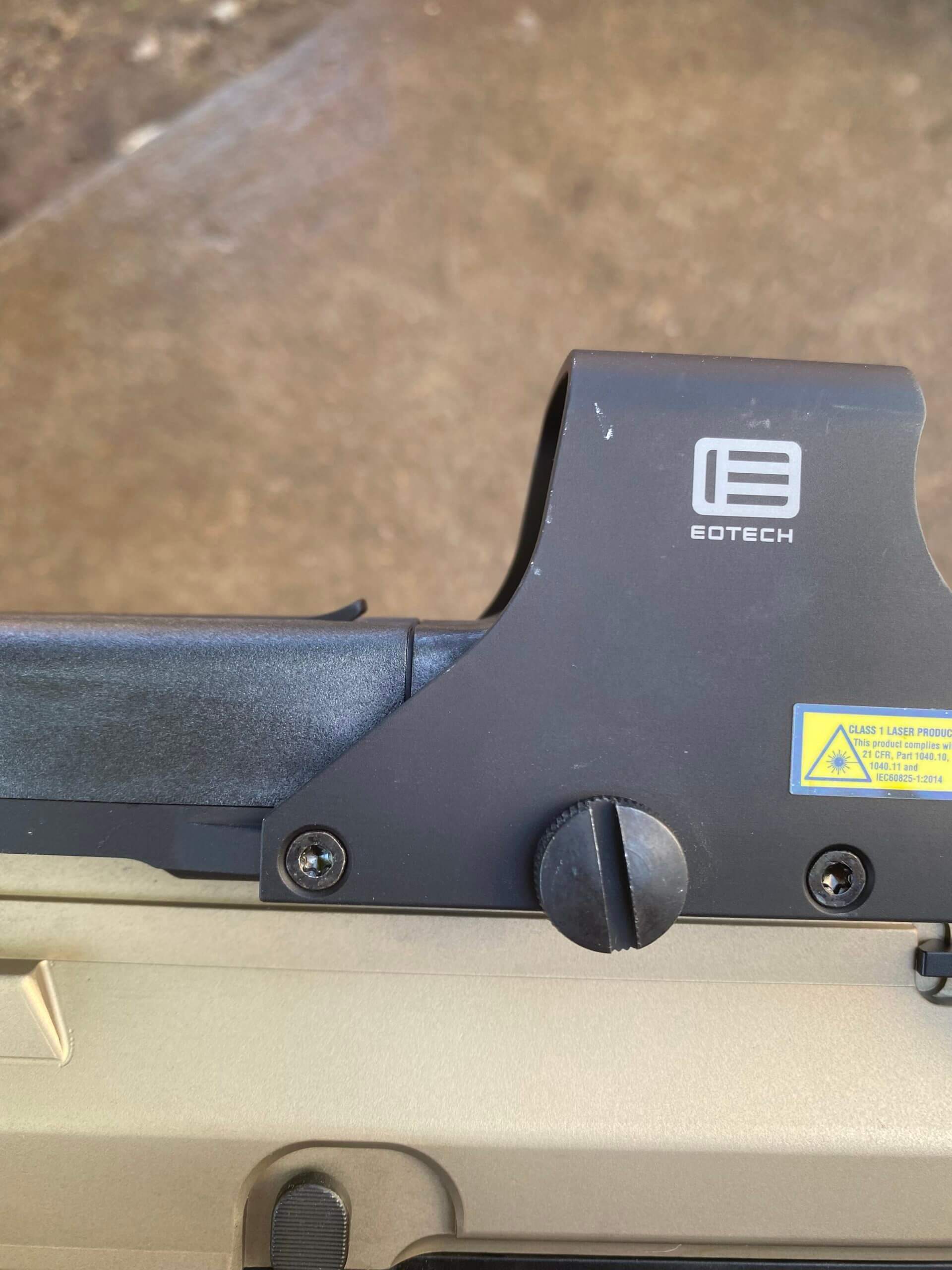
Holographic Sight: Best for Fast CQB, Magnifiers, and Night Vision (2026)
The EOTech 512 is the sight that taught a generation of soldiers what a holographic reticle could do. Clay Martin ran one for most of his career and calls it a fantastic CQB sight with a field of view few can match, and it runs on plain AA batteries you can find anywhere. He is also honest about the bad years: in 2015 the government sued over thermal drift that could shift the aiming point as much as a foot at 300 yards, and EOTech and L3 settled for $25.6 million and offered buybacks. He says he does not fully trust it yet. For a tougher option, Baxter pulled and reinstalled a Vortex UH-1 Gen II between groups without seeing a point of impact shift, and left it switched on for more than two months.
Read our full EOTech 512 review here, and our Vortex UH-1 Gen II review.
Key Specs
- Light Source: Laser and holographic grid
- Typical Reticle: 65 MOA ring with about 1 MOA dot (EOTech EXPS3)
- Battery Life: Hundreds to low thousands of hours; about 1,500 hours for the UH-1 Gen II per Vortex
- Size Example: UH-1 Gen II, about 3.9 inches and 11 ounces
- Price: $569 to just under $1,000, maker pricing (2026)
Pros
- Very fast ring and dot reticle up close
- Reticle stays usable if part of the window cracks
- Pairs cleanly with flip-to-side magnifiers
- Strong night vision options
Cons
- Much shorter battery life
- Bigger and heavier
- Higher prices with no good budget options
- EOTech’s thermal drift history
🛒 Check Current Price for Holographic Sights on GunsAmerica
Red Dot: Best for Battery Life, Weight, and Value (2026)
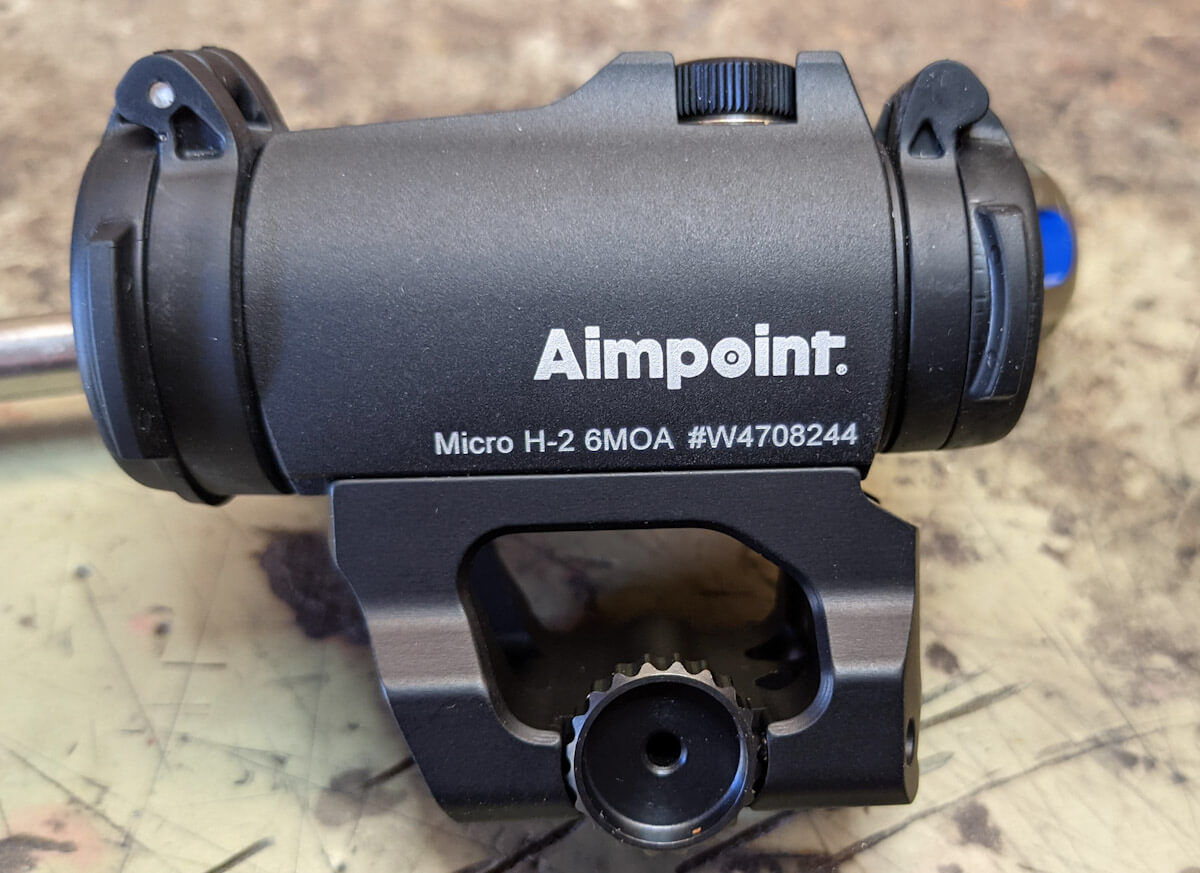
Aimpoint built its reputation on battery life, and that is the red dot’s biggest win. Clay Martin, a former Army door kicker who ran Aimpoints in combat, tested the CompM5 against his T-1, an optic with eight years of service as a CQB, competition, and instructor sight. The CompM5 runs five years at position 7, or over a year at position 8, on one AAA battery. Its MSRP was $971 with mount at the time of review, and our guide calls it an optic that will outlast most rifles. Kartozian called the 6 MOA Aimpoint H2 the new king of rifle dot sights and argued the industry oversold small dots.
Read our full Aimpoint CompM5 review here, and our Aimpoint H2 6 MOA review.
Key Specs
- Light Source: LED reflected off a coated lens
- Typical Dot: 2 MOA, about 2 inches at 100 yards; 6 MOA options for speed
- Battery Life: About 5 years at setting 7 (CompM5); 50,000 hours rated (H2)
- Price at Review: $169 budget dots up to $971 with mount (CompM5)
Pros
- Years of battery life
- Small and light options
- Wide range of prices
- Leave it on and forget it
Cons
- Simple dot, no ring for speed
- Smaller window on micro dots
- Some shooters with astigmatism see a holographic reticle more cleanly
🛒 Check Current Price for Aimpoint Red Dots on GunsAmerica
Holographic vs Red Dot: Head to Head
- Close-range speed: holographic, with its ring and dot.
- Battery life: red dot, by years.
- Weight and size: red dot.
- Magnifier use: holographic.
- Price: red dot, with far more budget options.
- Astigmatism: depends on your eyes, so try both.
Which Should You Buy?
Our holographic guide says it well: buy a holographic sight if you shoot with both eyes open, want the fastest possible reticle inside 50 yards, plan to add a magnifier, or run night vision. Buy a quality LED red dot if battery life, weight, and price matter more. In the holographic vs red dot debate, neither choice is wrong.
For most home defense carbines, I lean red dot, because an optic you can leave on for years is an optic that is on when you need it. If you are still deciding whether you need an optic at all, read our red dot vs iron sights breakdown. Then pick one, zero it, and train with it. GunsAmerica.com lists both new and used optics from the major makers.

As the Chief Operating Officer of GunsAmerica.com, Chris blends his passion for firearms with years of experience in marketing, communications, and technology. A dedicated 3-Gun competitor, firearm collector, and staunch Second Amendment supporter, he is deeply involved in the shooting community.
Beyond the firearms world, he’s an avid overlander, nature lover, and sailor.
Experience
Tech Founder:Specializing in accelerated growth and digital transformation.
Competitive Shooter: Active 3-Gun competitor with a strong foundation in practical shooting disciplines.
Advanced Training: Completed high-level courses in pistol, carbine, concealed carry, shotgun, and precision rifle.
2A Advocate: Committed to promoting responsible gun ownership, education, and 2A rights advocacy.
Outdoor Enthusiast: Avid overlander, sailor, and adventurer, with a background in self-reliance and off-grid exploration.