
Estimated reading time: 19 minutes
Microstamping promises a neat crime-solving shortcut: fired brass that points police back to a specific gun. But once you look at the technology, the failures, the costs, and California’s history, this “simple fix” starts looking a lot more complicated.

Table of contents
- Microstamping Guns: A Smart Crime Tool or Another Control Lever?
- Why Gun Owners Should Care About Microstamping Laws
- Firearm Microstamping History: From Lab Idea to Legal Fight
- What Is Firearm Microstamping, Really?
- Microstamping Guns at a Glance: The Claims, Costs, and Catch
- Does Gun Microstamping Actually Work, or Just Sound Good?
- Why Gun Manufacturers Have Not Embraced Microstamping
- The Big Problems Microstamping Supporters Keep Brushing Past
- California Microstamping Laws: How a Crime Tool Became a Handgun Choke Point
- New Microstamping Legislation: Why 2028 Matters
- Final Word: Microstamping Needs Guardrails Before Mandates
- Pros and Cons of Microstamping Guns
- Related Reads from GunsAmerica Digest
- Sources
Microstamping Guns: A Smart Crime Tool or Another Control Lever?
Microstamping is a technology that supposedly makes tracing brass at a crime scene easier by imprinting a set of characters that can be traced back to the individual gun. It’s become something of an anathema to the Second Amendment crowd. Do we know what it is, and do we know if it even works? Or is it just another way for the government to control guns? Let’s find out together.
Why Gun Owners Should Care About Microstamping Laws
Microstamping laws are becoming one of the gun-control world’s favorite new tools, and that alone should make gun owners pay attention. Contrary to what groups such as Everytown and Moms Demand Action will tell you, most gun owners want criminals caught and apprehended for assaults and murders with a firearm, especially since it seems we as lawful gun owners pay the price for their crimes through increased legislation and restrictions. So, anything that catches those who use a gun for evil sounds like a great idea.
I’ll try to keep this as objective as possible and keep it down the middle. To be fair though, I’ve gotten to witness first-hand how this law was weaponized and abused to choke off the introduction of new firearms in California for over 10 years. So, my bias is there, won out from seeing how this can be used for purposes never envisioned by the good people who saw this as a positive tool.
Firearm Microstamping History: From Lab Idea to Legal Fight
Microstamping was developed in the 1990’s by members of the electronics community who found they could create microscopic unique imprints in fired cartridge cases. Seeing this as a tool to potentially solve crimes, they proposed this idea, which was received coolly from the firearms industry.
Issues such as privacy concerns, cost increases for firearm manufacturers, and the ease with which the technology could be defeated kept this idea at bay, until 2007 when states like California tried to mandate it. Most used a “stick” by straight regulation, mandating the technology for guns to be sold. Others used a “carrot” which gave a miniscule cost credit for a gun with microstamping. Both failed.
Today, California is looking at its second microstamping mandate, coming to fruition in 2028. The bad news is that others are also following suit.
What Is Firearm Microstamping, Really?
Microstamping is using microscopic, laser-imprinted marks on firearm components like firing pins or a breech face to leave a microscopic, unique identifier on the expended brass that’s ejected from a firearm as it is fired. These markings can then be traced back to the individual firearm by serial number.

In theory, these markings would help law enforcement identify the gun, and potentially the owner of the gun, involved in shootings when casings are recovered at crime scenes. As a retired officer, I completely understand the intent. Most brass recovered at a crime scene may be linked by random tool markings or imperfections to an as-yet-unidentified firearm, with maybe a particular manufacturer identified if you’re lucky. However, these have very little success in identifying the actual firearm used, a serial number, or owner.
If the issue was as cut and dry as this, why was there so much push back? No one, not gun owners, nor those pushing for this type of legislation, want people who commit wanton violence to stay free. However, as with a lot of these types of ideas, the issue was far stickier than a simple solution.
Microstamping Guns at a Glance: The Claims, Costs, and Catch
| Technology | Microstamping |
|---|---|
| Purpose | Imprint microscopic identifying characters on fired cartridge cases |
| Common Locations | Firing pin, striker, breech face |
| Evidence Target | Expended brass recovered at a crime scene |
| Claimed Benefit | Creates investigative leads that may trace brass back to a firearm |
| Core Concern | Reliability, wear, cost, easy defeat, false leads, and legal abuse |
| California Timeline | Original mandate certified May 17th, 2013, with new requirements aimed at 2028 |
| Reported Cost Range | $10 – $200 |
| Reported Study Success Range | 68-90% after 1000-1200 rounds fired |
Does Gun Microstamping Actually Work, or Just Sound Good?
Yes, and no. I know that’s not an answer, but studies have shown there are some issues with the technology. It has been described, in effect, as flawed but viable by the California DOJ.
Multiple studies were done on the technology. The first, most positive one that fulfilled the legislators hopes and dreams wasn’t peer-reviewed, and even the author brings that up as a concern. Later peer-reviewed studies put the success rate of the technology at 68-90% after 1000-1200 rounds fired. This is all depending on multiple factors like the type of gun, the ammunition used, and how many rounds had been fired over time. Ammunition construction can dictate how well the ammunition can accept the imprint, which I could see becoming more regulations on ammunition down the road.
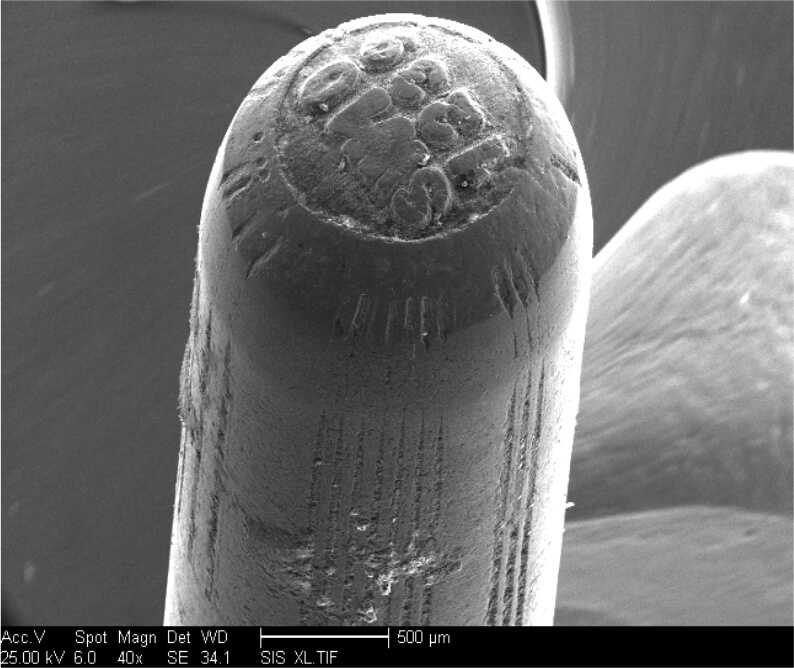
In the CA DOJ report they cited their demonstration using a Glock 43 and a S&W 1911, neither of which is legal for the general public to buy new in CA. It reported that transfers would make it completely onto the shell casing, or at least significantly narrow the potential list of serial numbers to create a lead to follow up on. The CA DOJ report also noted that the New Jersey SAFE office conducted their own study with 8 of 10 collected casings, from 50 fired from a 1991 Colt Commander, produced a full set of gear codes that could be read, and at least half the alpha numeric characters. The overall theme of the DOJ report was that this technology was imperfect but viable, and would at least be able to provide leads, much like a partial license plate can do in a traffic crime.
Some raise concerns that criminals can simply remove the firing pin or striker and replace it with an easily purchased non-microstamping firing pin. Or they could deface the firing pin’s tip, removing the microstamping figures on the pin. As a former police officer, I can attest to the ingenuity of some criminals who I could see doing things just like this, similar to removing serial numbers from firearms, although this would be far more obvious to an inquisitive police officer.
It would mean that they would have to have enough technical expertise to remove the striker or firing pin, which is not hard on many firearms. Secondly, they would have to be motivated enough to do this, which surprisingly didn’t translate to how criminals dealt with serial numbers. A 2015 study found crime guns recovered in Chicago only had serial numbers removed in a range of 3.4% for non-gang members to 5.4% for gang members of the guns recovered. I would suggest that a gun with its serial number removed would be a more obviously nefarious sign that criminals may want to avoid, thus the reason it might not be a common occurrence.
The truth is, there is some wear on the firing pin or whatever surface holds the imprinting characters. The more the gun is used, the likelihood of a successful imprint on the case will decrease to some degree or another. The types of imprints can also impact how the microstamping can be read. Alpha-numeric symbols and “gear codes” fare better over time, while bar codes degrade faster. Even the holder for the microstamping patent acknowledged problems with the system. Using a scanning electron microscope, or SEM, to read the results can improve these results, but not every jurisdiction has one or the budget for one. Additionally, an SEM does not always correct the problem.

A study in 2008 from UC Davis concluded that the mandate for microstamping was not advised. It should be noted that this is not some bastion of “right wing gun people” but a respected, and often left leaning institution for education and research. After reading their executive summary it was clear, this technology was not ready, was not reliable, and could be easily defeated.
What I found a little concerning was publications like “The Trace”, a gun-control advocacy publication, seemed to gloss over many issues and concerns in a “this is better than nothing, which is what we have right now” kind of way. Real concerns are just brushed aside. Some of which we will get to later. More importantly, with the potentially massive impact this will have on firearms manufacturers, and on gun owners potentially, this is an incredibly cavalier response. Gun owners and the firearms industry absolutely want to be part of the solution in solving gun crime. However solutions need to work, they need to be reasonably cost effective, and finally, implementers must study, then mitigate the unintended consequences. That is just good governance and legislation.
Why Gun Manufacturers Have Not Embraced Microstamping
Finally, manufacturers wouldn’t use the technology. Perhaps it was pressure from the 2A community, or maybe it was feared the cost increases would have pushed the prices of their products into the stratosphere. One problem noted in an NSSF fact sheet identified that each individual firearms manufacturer would likely need to study and adapt the system to their firearm to make sure the imprints would be successful. This research and development is another factor that could drive up firearm prices and potentially make this technology unwieldy.
Initially, the concerns held by many in the 2A community were issues of patents, and how much this would potentially increase firearm prices. The inventors amended the patent to allow it to be used without this impediment. However, depending on who you talk to, microstamping will still increase the cost of a firearm anywhere from $10 – $200.
Remember, it’s not just the cost of research or development to get the technology to work with their design, it’s also tracking and logging each firing pin to each firearm, like a new additional serial number just to make sure everything matches up. You have now created another controlled component of a firearm, much like the serialized frame. How will these be tracked, moreover how will the system track replacement parts that are bought openly on the web from numerous manufacturers. This will be a large and painful logistical challenge with more legislation and more regulation. Not impossible, but very problematic for a community that is battered with constant impacts by constantly increasing government regulation.
The Big Problems Microstamping Supporters Keep Brushing Past
The initial research believed that casings with imperfect or incomplete imprints could still be used by comparing multiple shell casings from a crime scene and using their combined imprints to piece together a full set of figures. They suggested 10 such casings could make sure to identify the firearm. However, statistics used by NSSF, using a 2004 NIJ study, stated that the average amount of shots fired by offenders in a single incident is only 4 rounds or less.
Finally, concerns were often raised about potential suspects taking used casings from a shooting range to scatter at a crime scene and divert attention. This is discounted by many of the studies that push for microstamping legislation. They gloss over the fact that this will be a new technology and cavalierly just blow past any risk to innocent gun owners. You know, their citizens who they work for.
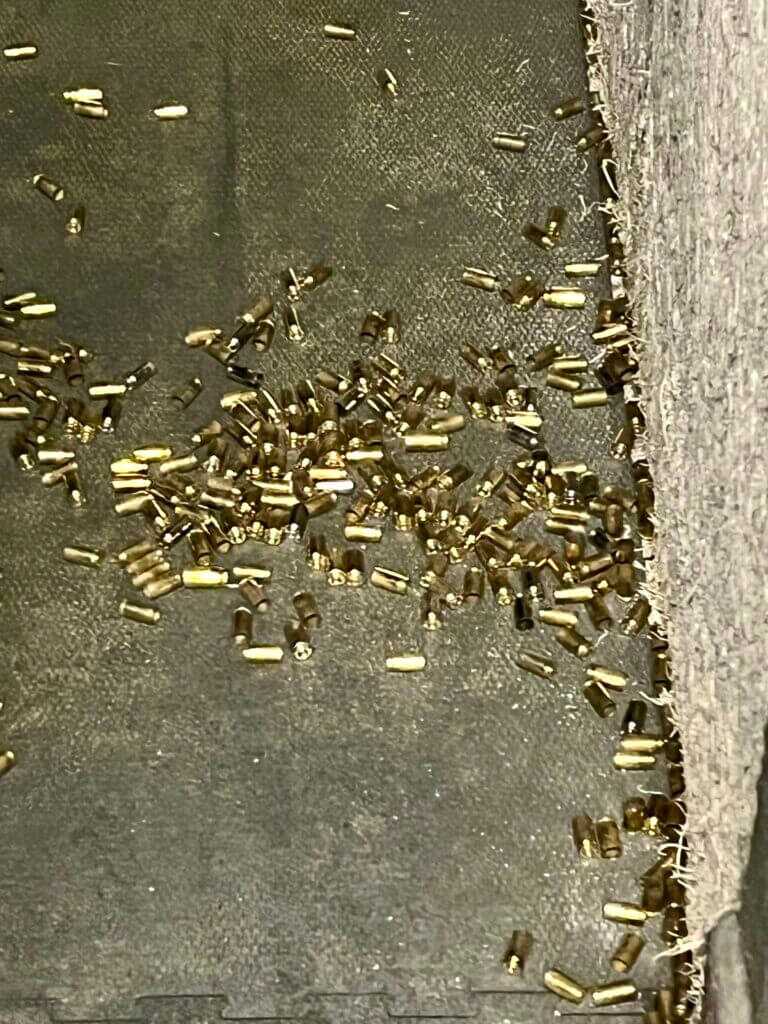
They could have made this a much more productive point by proposing systems so police don’t get it wrong by blindly following this new type of evidence. This is nothing new, as there are protocols for things like DNA evidence. While I believe most police will try to do the right thing, you can’t assume that police will always go the extra mile. They need to verify the shells legitimately belong there instead of being placed there to confuse authorities and don’t go after the “easy” target to close a case, permanently ruining a person’s life. If the gun control motto of “if it only saves one life it is worth it” applies, maybe they should also embrace “if it only prevents one false conviction for murder.”
California Microstamping Laws: How a Crime Tool Became a Handgun Choke Point
California mandated the use of microstamping on any new semiauto pistol once the technology was declared viable or usable. Any new weapon to get on our roster must imprint microstamping on two places on the expended casing. It demanded these imprints be made on two portions of the shell casing. Later, this was attested to as viable and ready for the marketplace, being signed by then Attorney General Kamala Harris, yes, that Kamala Harris, on May 17th, 2013.
What the California experience became was an eventual ban on any new semiauto pistols added to our roster after 2013. So, for 10 years, we were stuck with older, and arguably less safe firearms that had been grandfathered in. Nothing newer than a Gen 3 Glock or a first generation S&W Shield could be sold from a gun store; no M&P 2.0’s, no HK VP9’s, or anything that was not already on the roster. The DOJ then did everything they could to kick guns off the roster, such as when HK changed a spring on their USP line of pistols. Think on that for a second. An inconsequential spring removed HK USP’s from the entire California market. For them to get back on the roster, they would have to redesign the gun to incorporate new features like a loaded chamber indicator, magazine disconnect safety, and of course microstamping.
Perhaps the state, feeling their cause was so just, thought they could force manufacturers to comply. They do it in other industries, why would this be any different. But it was. This is a basic constitutional civil right. A state government was trying to impose a new, imperfect requirement that would create cost increases and logistical nightmares for manufacturers. These are companies that serve international markets, and one state wants to force them to retool for California. One of two things was going to happen, and we can assume the government knew this. Either new semiauto pistol developments would cease to come to California’s citizens, or the manufacturers would comply.
As it is now clear, manufacturers did not comply and just let their older models ride it out on the roster. Even when the state opted to allow imprinting on a single place on the casing to make the system more palatable, they put the poison pill in the legislation that required three older guns be removed, without any criteria as to how those three models be chosen. Of course no one would embrace this with that amount of downside.
Fortunately, in March of 2023, several aspects of the safety items required by California’s Roster were ruled unconstitutional. The state appealed it, except the portion on microstamping, likely because they knew they could not win and it would kill the roster as a whole. As a result, new guns have been coming into the state.
New Microstamping Legislation: Why 2028 Matters
California has already mandated that all semi auto pistols sold, new or used, must have microstamping by 2028. This is if two things happen. First, the CA DOJ must certify the technology is technically viable, which they did last year. Second, they must certify the components are commercially available to the public or industry at “commercially reasonable prices.”
“If the DOJ cannot determine that microstamping components that meet specified performance standards are available at commercially reasonable prices from licensed producers, or that microstamping-enabled firearms are otherwise readily available for purchase in California, then the requirement at Penal Code section 27533 will not take effect.” CA DOJ Report, page 16.
So, say this second portion is certified, either by enough of the firearms industry to justify it, or by aftermarket vendors who create the firing pins to retrofit existing or future designs. I could not find any documentation as to how much of the industry or how many vendors must be creating these aftermarket microstamping pins for older designs, nor how many types or brands of guns had to be available to certify this. Basically, consumers at gun shops will have to find a vendor to supply a microstamping firing pin for their specific firearm to be able to sell or transfer it. Some will be stuck with firearms they cannot sell.
If this goes really south, only a small number of new semi autos will be available to transfer, buy, or sell because these are the only ones that manufacturers or vendors create the firing pins for. Aside from that, only revolvers will be for sale. How much will it cost to buy these special firing pins, and how much will it drive up the cost to the seller, or buyer, to make this happen.
New Jersey still incentivizes the technology but does not mandate it. New York passed a mandate in 2022, but their State DOJ is still in the process of certifying the viability of the technology.
Is microstamping coming to your state? Possibly, depending on how successful it is in these more restrictive states. Federally it could be proposed, but that will depend on who is running the show. I would encourage you to be politically active, write, march, and make your voice be heard on this issue. California was a disaster for their own citizens. Remind them.
Final Word: Microstamping Needs Guardrails Before Mandates
OK, I learned a lot about microstamping while researching this article. Depending on current legislation and who we have in office we might as well accept we will see this again. And to be completely fair, if this is truly an attempt to solve crimes and not to be used as a gun ban like it was in California, it could be a good thing. But there’s the rub. Neither side of this debate trusts the other and California has already shown this will become a de facto semi-auto handgun ban. As these laws have been proposed, manufacturers will not comply, whether by their choice on the economics of it, or the logistical challenges. You know what they say, fool me once, shame on you, fool me twice, shame on me.
I will say, at least on its face, they have some safeguards built in to the California model in order to prevent this from becoming a semi-auto handgun ban. However, there are a lot of details that aren’t there to give me more comfort. Also, based on past performance, I am somewhat skeptical.
Moreover, if this technology wants to be successful in solving crimes, it needs guardrails at the very least. Microstamping needs to work, consistently and reliably. There needs to be protocols created to prevent innocent people from being sucked into suspicion by a nefariously placed cartridge being left at a crime scene. This means directing police on specific criteria they need to check before this is even admitted into court, and when it can actually be used in court.
Finally, the state needs to use less stick, and much more carrot to the firearms industry if the states want them to adopt this technology. This was the route New Jersey took, if even halfheartedly. Perhaps even easing other restrictions on firearms states already have in order to get this adopted. Perhaps if the government really wants to find ways to use spent brass to solve gun crimes, it goes to the gun manufacturers and asks for their help. Maybe even let them come up with a solution that they can live with. Ask them, this is the goal we want, to be able to track brass found at a crime scene to a particular gun, at least as it left your factory. What is your, the gun industry’s, solution.
This technology does not feel ready. It’s a potentially good idea that has already been abused or misused to ban an entire class of firearms in California, and I will pound that point home until people get it.
Both sides of this debate keep citing the imperfect statistics of the technology. Those pushing for it see it as something better than what we have at its least, and a way to find a specific gun when it works correctly. Those who oppose it ask if the juice is worth the squeeze. Will this system’s less than perfect outcomes justify the impact to the industry, and citizens.
This technology itself is neither good or bad. It just is. It has the potential to be both good, or bad. It depends on how it’s used or implemented. Do I want it to work, yes, it could be a valuable tool in solving crimes. But I don’t want to mandate it at the cost of everyone’s constitutional rights and in a way that feels half baked. There are many logistical hurdles that need to be addressed, and how do you convince gun companies to adopt it. It also needs to be carefully controlled to prevent innocent people being charged, and to prevent the fiasco that happened in California. Finally, we as gun owners need to be part of the solution. Create ideas that work, encourage both sides of this debate to work collaboratively, because at the end of the day we are all in this together.
Pros and Cons of Microstamping Guns
- Pros: Could give investigators another lead when spent brass is recovered, could help trace crime guns when it works correctly, and could provide partial identifier data similar to a partial license plate.
- Cons: Reliability questions remain, wear can degrade marks, firing pins can be replaced or altered, costs may rise, logistics are messy, false leads are possible, and California already showed how the mandate can choke off new handgun access.
Related Reads from GunsAmerica Digest
- More Second Amendment and Firearms Law Coverage
- California Handgun Roster Updates and Analysis
- Gun Rights, Gun Control, and Industry News
Sources
https://www.thetrace.org/2023/01/microstamping-gun-bullets-new-york
https://thegunzone.com/are-any-firearms-in-the-u-s-microstamp
California Study on Microstamping Viability: DETERMINATION REGARDING THE TECHNOLOGICAL VIABILITY OF MICROSTAMPING COMPONENTS, PURSUANT TO PENAL CODE SECTION 27532 CALIFORNIA STATE SENATE BILL 452, FIREARMS 2023-2024
https://www.nraila.org/get-the-facts/micro-stamping-and-ballistic-fingerprinting
NSSF Microstamping Fact Sheet (2021) https://www.nssf.org/wp-content/uploads/2022/09/NSSF-factsheet-Microstamping-22upd.pdf
https://smokinggun.org/report/why-does-the-gun-industry-oppose-microstamping
https://scholarlycommons.law.northwestern.edu/cgi/viewcontent.cgi?article=7538&context=jclc
https://www.nraila.org/get-the-facts/micro-stamping-and-ballistic-fingerprinting
David Howett, Frederic A. Tulleners and Michael T. Beddow, What Micro Serialized Firing Pins Can Add to Firearm Identification in Forensic Science: How Viable are Micro-Marked Firing Pin Impressions as Evidence?, California Policy Research Center, University of California, 2008, at 9-10. https://docslib.org/doc/12055840/what-micro-serialized-firing-pins-can-add-to-firearm-identification-in-forensic-science-how-viable-are-micro-marked-firing-pin-impressions-as-evidence

Brian Jensen has been a shooter for over 45 years, and served in law enforcement for over 30 years in Southern California. During that time he served for over 27 years on the Department Range Staff. Brian has written for Guns America and Harris Publications, and currently trains law enforcement trainees in a local police academy as well as civilians for CCW courses.
Away from writing Brian does photography and exploring the southern California backcountry.
Experience:
-45+ years as a shooter
-Prior Law Enforcement for over 30 years
-27+ years instructing firearms for peace officers
-Civilian CCW Instructor
This technology would do nothing to deter crime, since it does not address the criminal element. As a gunsmith I can think of several ways to get around this innovation. The simplest being — pick up your brass. New firing pins/strikers don’t need to be high quality, so simply make your own.
How can I kill thee? Let me count the ways. Baseball bat, 2 by 4, 2 by 2, 1 inch dowel rod, piece of rebar, hammer, screwdriver, pipe wrench, wood chisel, rope, paracord, lamp cord,… Shall I go on? Oh, I nearly forgot one of the most often used “hands and feet”.
A brief correction on the removal of the USP pistols from the roster…
It appears that the guns were removed from the roster when HK forgot to pay the roster re-listing fee. There was some other issue with a changed part (I still believe it was a new manufacturer for a spring) but the research I am doing seems to the gun being dropped was over being late in paying the fee. To be fair, neither the manufacturer or the state formally said why they were dropped. My apologies on the error.
It is true that many CZ pistols were dropped from the roster due to “manufacturing changes” in 2024. The actual changes appear to be a normal update to the pistol’s manufacturing process.
Just keeping to the facts.
Seems most firearms used in the commission of a crime would most likely be stolen and that point renders the stamping void.
Did Maryland not pass this into law several years ago and after spending $5 million on the program solved absolutely ZERO crimes? This whole idea is just more retarded liberal BS trying to confiscate or ban guns because the left is terrified of an armed citizens becoming intolerant of their bovine excrement!
First: Criminals obtain guns mainly from theft. Microstamping will only lead police to the original owner, not the criminal.
Second: Microstamping can be rendered useless with a small file or replacing the firing pin.
Third: Firearm manufacturers will suffer extreme costs to create the process. Firearm manufacturers will pass the cost of this technology and process onto the original purchaser making the price of the firearm skyrocket.
Fourth: If a firearm had microstamping and the original purchaser sells the firearm, how will the original purchaser’s name be removed form ownership? The simple answer would be that when the firearm is transferred to the next purchaser the serial number would be transferred to the new purchaser when the new purchaser fills out the 4473. Now, the ATF has two owners to add to the illegal gun registry the ATF is not supposed to have according to federal law.
Well said👍
No matter what you try to do, criminals will find a way around it. You put it on the tip of the firing pin, they change out the firing pin to a 3-D printed one or file the tip off. If liberals focused more on the criminals instead of the weapons they use, we’d have a lot less criminals on the street.
How many crimes in California were solved primarily as a result of Microstamping evidence?
From what I can find…that would be zero.
To be fair, the technology was never even deployed in firearms so it never was possible for it to do so. While ballistics themselves have solved or assisted in many crimes, which could trace a particular shell casing or projectile using unique markings / defects transferred to the case. This was only, however, once the gun was located and identified, then tested.
I would ask, at what cost are willing to deploy this technology.