
What size gun safe do you need? Bigger than you think. Count every gun you own today, add the ones you will buy in the next five years, and pick a safe whose real capacity, not the number on the sticker, holds all of them with room left for documents and valuables. The number one complaint from new safe owners in our Gun Safe Buying Guide series is simple: “I wish I had a bigger safe.”
Then look past size. A good safe buys you time against two threats, a thief with a screwdriver and a house fire. This guide covers sizing, what to look for, security and fire ratings, locks and the threats you are planning against, with what our series author Jon Hodoway learned after a house fire, a few stolen guns, and years of buying and selling safes.
Table of contents
- How to Figure Out What Size Gun Safe You Need
- Advertised Gun Count vs Real Capacity
- What to Look for in a Gun Safe
- Security Ratings: What RSC Really Means
- Gun Safe Fire Rating vs Burglary Rating
- Electronic, Mechanical and Biometric Locks
- Plan for Space, Weight and Delivery
- Specialty Safes and Upgrades
- Plan for the Threats, and for the Day After
- Insurance Is Part of the Plan
- You May Need More Than One Safe
- Buying a Used Safe
- More From the Gun Safe Buying Guide
- What Size Gun Safe FAQ
How to Figure Out What Size Gun Safe You Need
Start with an honest inventory, then size up.
- Count long guns and note which wear scopes, bipods, lights or slings. Scoped rifles and AR-15s with optics take far more room than a bare shotgun.
- Count handguns. Door panel organizers and shelf racks can move handguns out of the long gun space.
- Add what else goes in: passports, deeds, cash, jewelry, hard drives, optics, knives and ammunition you want to secure.
- Add your next five years of purchases. Most gun owners buy more guns, not fewer.
| What you are storing | Size class to shop | Notes |
|---|---|---|
| A few long guns and handguns, apartment or closet | Small: under about 24 advertised guns | Expect a tight fit with scoped rifles |
| A growing collection, a family’s guns plus documents | Medium: about 24 to 36 advertised guns | The most common choice and a good default |
| Many scoped rifles, or guns plus lots of valuables | Large: about 40 advertised guns and up | Check floor load, doors and delivery first |
| A defensive handgun you need at 2 a.m. | A separate quick access safe | Pair it with the big safe, not instead of it |
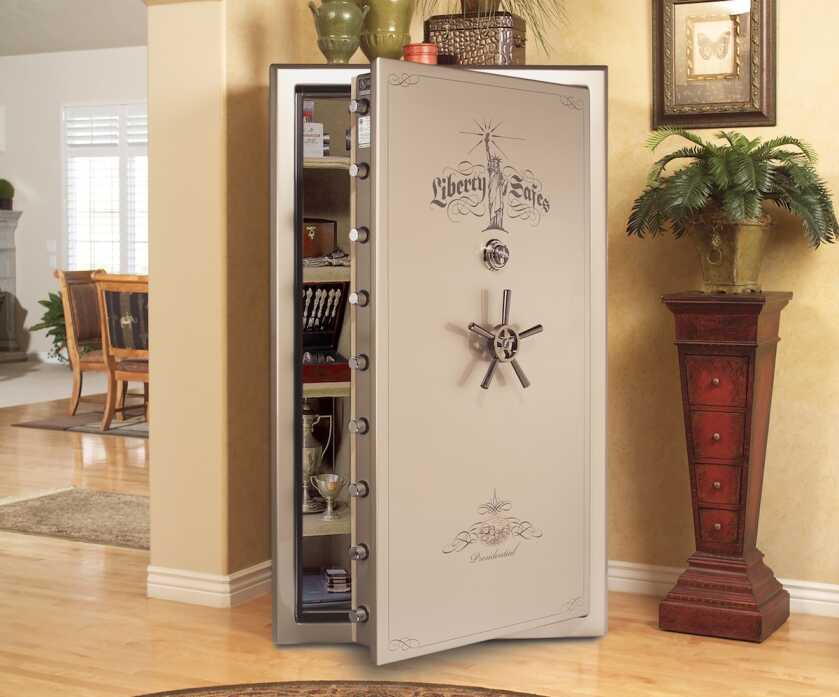
These are general size classes, not standards. Advertised counts vary by brand. If you are torn between two sizes, buy the bigger one.
Advertised Gun Count vs Real Capacity
Safe makers rate capacity by how many guns fit when they are packed tightly, often without scopes and with the whole interior set up for long guns. Real collections do not fit that way.
As an editorial rule of thumb, plan on usable long gun capacity of roughly half to two thirds of the advertised number once scopes, accessories, shelves and handguns are in the mix. A safe sold as a 24 gun model often works best for about a dozen rifles and shotguns plus handguns on the door. If you can, take your largest scoped rifle to the store and test fit it.
What to Look for in a Gun Safe
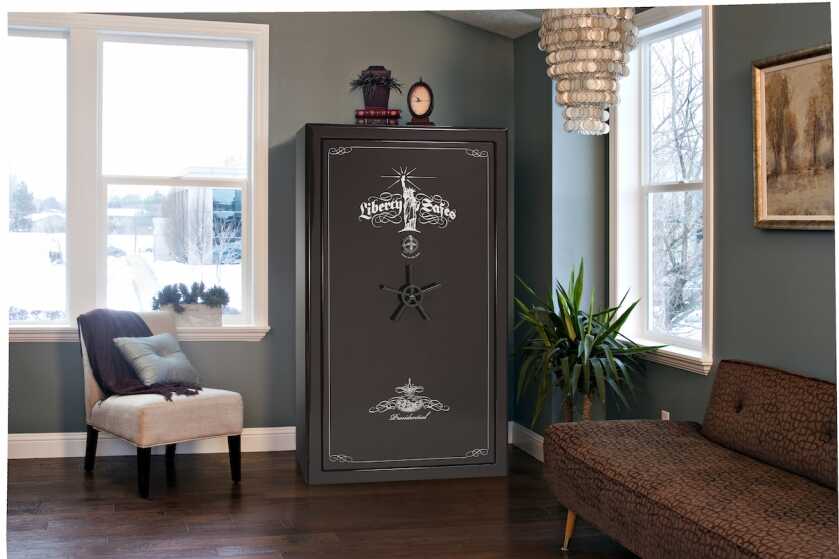
Shopping for a safe can feel like watching a magic act. You know you are being tricked, you just are not sure how. Two safes the same size sit side by side, one under $1,000 and one at $2,500, and both have thick doors and bolts everywhere. Here is what actually separates them.
- Steel. Steel is measured in gauge, and a lower number means thicker steel. A steel security cabinet is typically 17 gauge, while better safes run 11 gauge or thicker. Bent seams beat welded ones, because every welded joint is a place to attack.
- The door. The door is the main point of attack. A tight gap between door and body leaves less room for a pry bar.
- Bolts. Locking bolts on all four sides resist prying and keep the door from warping in a fire. Check both bolt size and how the bolts mount.
- The lock. Look for a UL listed lock protected against drilling and punching, usually with hard plate or ball bearings in the shielding. Sargent and Greenleaf is the name the series called the industry gold standard.
- Fire protection. Fireboard should cover every side and fit without gaps, and the door should have a seal that expands when heated.
- Who built it. Look past the brand name on the door and find out who made the safe.
The best theft prevention costs nothing: limit the number of people who know you have a safe.
Security Ratings: What RSC Really Means
Here is the hard truth. Most boxes people call gun safes are, by Underwriters Laboratories (UL) standards, Residential Security Containers. An RSC rating means the container withstood a short attack by one person using common hand tools, such as a screwdriver and a hammer. That is meaningful protection against a smash and grab, not a true high-security safe. If there is no UL label inside the door, there is no recognized rating, and some brands advertise their own self-defined ratings that cannot be compared across brands.
That screwdriver is not a random example. The series’ research found a big flat-tip screwdriver is the number one tool of the burglary trade, because a crook stopped with a crowbar goes to jail and a crook stopped with a screwdriver was “just fixing his car.” Most thieves are not bringing cutting torches. They are bringing what fits in a pocket, plus something heavy to hit it with, and a limited amount of time.
Gun Safe Fire Rating vs Burglary Rating
These are two different tests, and a safe can be good at one and weak at the other. A burglary rating like UL RSC measures resistance to tools. A fire rating measures how long the inside stays cool enough to protect what is in it.
| Burglary (security) rating | Fire rating | |
|---|---|---|
| What it measures | Resistance to an attack with tools | How long the interior stays below about 350 degrees F |
| Common label | UL RSC (Residential Security Container) | Minutes at a test temperature, often 1,200 degrees F |
| Who tests it | UL, when the label is present | Usually the manufacturer. Most home gun safes have no UL fire rating |
| What helps | Thicker steel, tight door gap, four-side bolts, a protected UL listed lock | Fireboard that fits without gaps, a heat-expanding door seal, anchoring |
| Series minimum | Look for the UL label | At least 30 minutes at 1,200 degrees F, and more is better |
Paper chars at around 350 degrees Fahrenheit, which is why fire ratings are written around that number. Room fires can run far hotter. The series cited an average maximum room fire around 2,100 degrees, with flashover starting around 1,600. Most home gun safes still do not carry an independent UL fire rating, because a true fire-rated box gets too heavy for most homes and UL testing costs more than $50,000 per model, according to the series. So manufacturers rate their own, and methods vary. Buyer beware.
Jon has lived through a house fire and would not wish it on anyone. He chose a Liberty Fat Boy, rated at the time for 75 minutes at 1,200 degrees, with 11 gauge steel, three layers of 5/8 inch fireboard in the ceiling, door jambs and door, two layers in the walls, and a Palusol heat-activated door seal. Bigger safes are not automatically better in a fire, either. A larger door has more seam to protect, so check the rating on the specific model.
How to Improve the Fire Protection of the Safe You Own
- Pick the location carefully. Putting the safe in one of the cooler areas of the house during a fire can turn a marginal safe into a good one for free.
- Close the gaps. The door is the weakest point against heat. An intumescent seal like BASF’s Palusol expands into a heat-insulating foam when it gets hot.
- Anchor it. A safe knocked over when the house collapses can warp or split a seam, and then the fireboard does not matter.
- Fit the fireboard. Most safes use gypsum board, which cools by releasing trapped water. A thin layer cut to fit perfectly beats thicker layers with gaps.
- Protect papers inside. Jon uses a Liberty Cool Pocket for documents. Liberty says it keeps contents about 50 degrees cooler during a fire inside a fire-rated safe.
- Prevent the fire. Keep an extinguisher on every level, ditch the space heaters, and screen the fireplace. The series notes a fire can get out of control in about 30 seconds.
Electronic, Mechanical and Biometric Locks
| Lock type | Strengths | Weak points |
|---|---|---|
| Electronic keypad | Fast, even under stress or in low light. Multiple user codes you can add or revoke | Needs batteries. Average life of six to eight years per the series, and most do not last past 15. Can fail from heat or moisture |
| Mechanical dial | No batteries or electronics. Handles heat and moisture better. Warranties often five years to lifetime | About four times slower to open. Not locked unless you spin the dial. A locksmith to change the combination |
| Biometric | Nothing to remember or lose | Good readers are expensive. A cut or burned finger can lock you out. Often bolted to cheap pistol boxes |
| RFID | Quick, and you can lend a card or fob | A damaged or shielded chip will not open it. Chips can be read and cloned |
If you go electronic, change the battery when you change your smoke detector batteries, replace a keypad once the worn keys start telegraphing your code, and remember that the warranty clock starts at manufacture, not purchase. For EMP worries, the series pointed to three answers: a mechanical lock, a shielded electronic lock, or a redundant setup with one of each. For more on handgun lockboxes, see our quick access sections below.
Plan for Space, Weight and Delivery
A bigger safe only helps if you can get it into the house and keep it there.
- Measure doorways, hallways, stair turns and the spot where the safe will sit, including room for the door to swing fully open.
- Large safes can weigh many hundreds of pounds or more. Ask about delivery, and for upper floors or older homes, check floor load with a contractor.
- Plan to anchor it. Bolting the safe down keeps thieves from carrying it off to work on it somewhere else, and it keeps the safe upright in a fire. See how to anchor a gun safe, Part 3 of our series.
- Fight moisture from day one. The NRA Firearms Museum recommends 65 to 70 degrees and 45 to 50 percent humidity year round. Our guide to gun safe humidity covers dehumidifiers and desiccants.
Specialty Safes and Upgrades
Not every safe is a freestanding box, and the series walked through the trade-offs of each type.
- Vault doors: if you are building a new home with a reinforced concrete room, proper wiring and ventilation, a vault door can make sense.
- Floor safes: set in concrete, well hidden and naturally fire resistant, but very prone to moisture problems.
- Wall safes: easy to hide between two studs, but vulnerable to prying if found, and weak against fire and water.
- Under bed safes: fast access to one or two long guns and gear, with little fire protection.
- Chest safes: the chest freezer version of a safe, easy to disguise as a hope chest or coffee table.
- Hideout spots: hollow books and furniture compartments are hiding places, not safes.
If the safe you already own feels a little too small, a makeover can buy room. The series’ list: lighting, a proper power outlet kit, long gun organizers like rifle rods (which it says can add 50 percent more gun capacity), handgun racks and hangers, magazine holders, and under-shelf drawers for small valuables.
Plan for the Threats, and for the Day After
A safe buys time. It does not watch itself. Decide what you want to know when you are away: whether the door opened, whether the safe was moved or bumped, and whether the temperature or humidity is off. Jon ran a Liberty SAFELERT, a one-time $199 purchase at the time with no monitoring fees, that texts on door openings and bumps and checks its connection every hour. An alarm company or a do-it-yourself sensor kit also works.
Then plan for the worst day before it happens.
- Inventory every gun with maker, model, serial number and value, and photograph them. A picture gets the word out faster than a description.
- Store that inventory outside the safe, such as in secure cloud storage you can reach from any phone.
- Know who to call: police, fire, and the right person at your insurance company.
- After a fire, expect water damage too, and know what your policy covers for cleanup.
- Watch for a second hit. Thieves sometimes come back after the insurance check replaces what they took.
Insurance Is Part of the Plan
A safe is self-insurance, but check your policy too. When Jon looked into it in 2016, some homeowner policies covered guns for as little as $500, if at all. His own coverage was $2,500, and raising it to $5,000 cost a few dollars a year. Review your coverage, and remember some guns cannot be replaced at any price. His Uncle Jerry’s Union Switch and Signal 1911 is one of those.
You May Need More Than One Safe
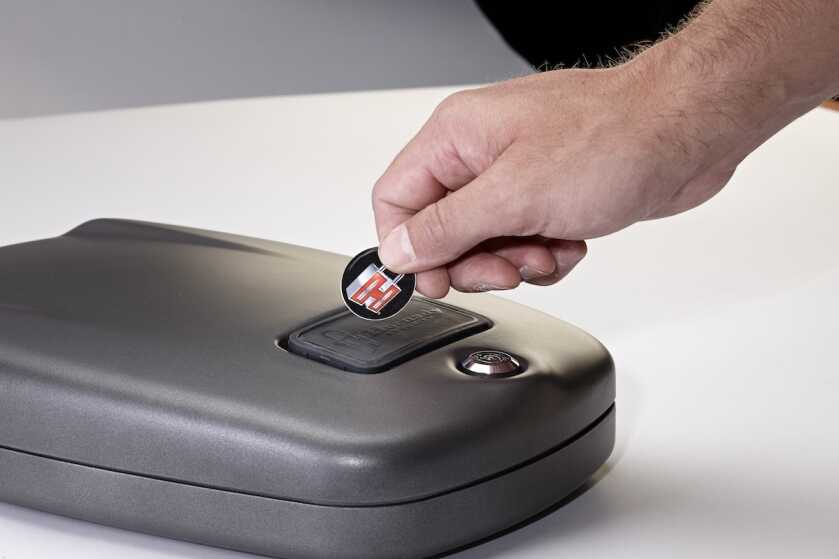
A large safe in the basement does a great job storing a collection and a poor job of getting a defensive handgun into your hand at 2 a.m. Many gun owners pair a big safe with a quick access safe by the bed and a vehicle safe. See our best quick access gun safes guide and our guide to quick access safes. Reviews of specific models include the Hornady Vexis, the SnapSafe two gun keypad vault and the Vulcan Headrest Safe for vehicles. For display rather than security, our Hold Up Displays Gun Wall review covers a wall system.
Buying a Used Safe
Used safes can be a real bargain. Jon has bought most of his used, and a safe for sale is usually about a move or an upgrade, not a defect. Our guide to buying and selling a used gun safe covers pricing, delivery and safety.
More From the Gun Safe Buying Guide
- Anchoring your safe: where to put it, moving it safely and floor anchors.
- Quick access safes: biometric, keypad, RFID and key locks for a bedside handgun.
- Buying and selling used safes: what used safes are worth and what to check.
- Moisture, the constant battle: humidity targets and the tools that hit them.
For safe handling and storage habits beyond the safe itself, see our handgun safety guide.
What Size Gun Safe FAQ
How many guns will a 24 gun safe really hold?
Fewer than 24 in most real collections. With scoped rifles, accessories and some handguns, plan on roughly half to two thirds of the advertised long gun count, and test fit your largest rifle if you can.
Is it better to buy a bigger gun safe?
Yes, within the limits of your space, budget and floor. Our series author’s advice was to always buy one size bigger than what you need today.
How do I choose a gun safe?
Size it to your real collection plus five years, then check steel gauge, door fit, four-side bolts, a UL listed lock, and the fire rating and who tested it.
What fire rating should a gun safe have?
Our series recommended at least 30 minutes at 1,200 degrees Fahrenheit, and longer is better. Check whether the rating is independently tested.
What is the difference between a fire rating and a burglary rating?
A burglary rating like UL RSC measures resistance to a tool attack. A fire rating measures how long the inside stays below about 350 degrees. A safe needs both, and they are tested separately.
Does a gun safe need to be bolted down?
It should be. Anchoring keeps thieves from moving the safe to work on it elsewhere, and it helps keep the safe upright in a fire.
Should I buy a used gun safe?
Used safes can be a good value. Our used safe guide covers what to check before buying and how to sell your old one when you upgrade.