
Estimated reading time: 12 minutes
Australia pointed Lewis guns at 20,000 emus and pulled the trigger. The birds scattered, the guns jammed, and history got hilarious and a little horrifying.
Meet the Enemy: Emus Big, Fast, Ugly, Unstoppable
It is generally frowned upon in modern circles to fire into crowds with automatic weapons. Only the most heartless of despots might engage in the sordid practice. However, back in the dark days of 1932, the government of Australia unlimbered its machine guns in an effort to exterminate an entire species. The results were, to say the least, underwhelming. It seems that, to quote Michael Crichton’s Jurassic Park, life always finds a way.
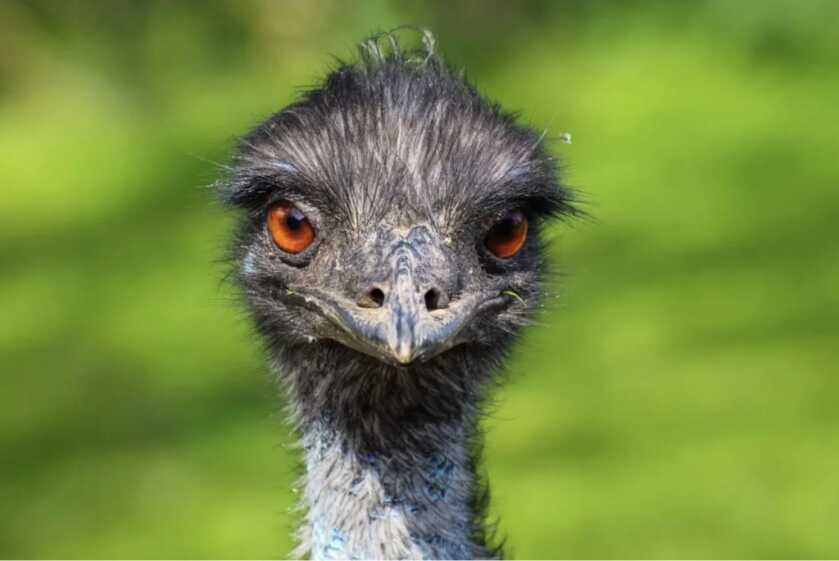
Some animals are just naturally ugly. Armadillos and opossums up close can give off sort of a zombie vibe. Likewise, one of the reasons I make my way in life as a word monkey is that I was blessed with a face that was clearly optimized for radio. In a similar fashion, the Australian emu is an exceptionally ugly bird.
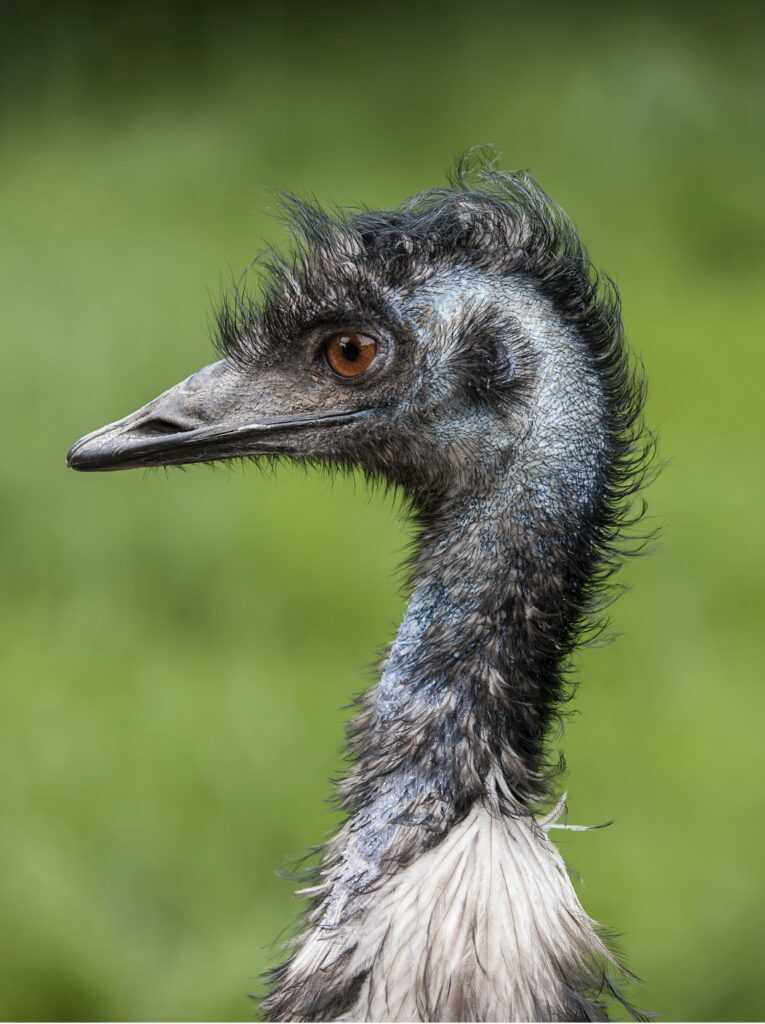
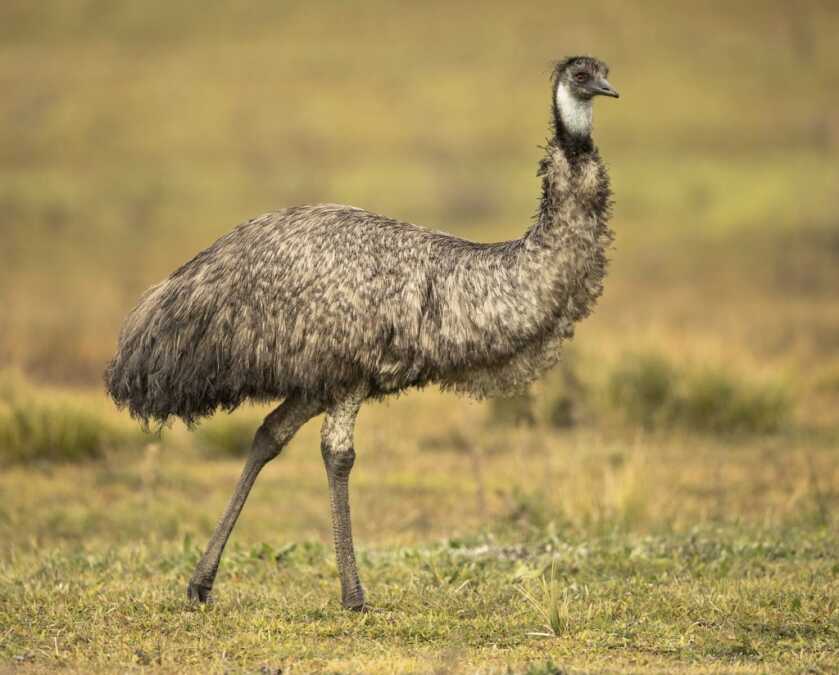
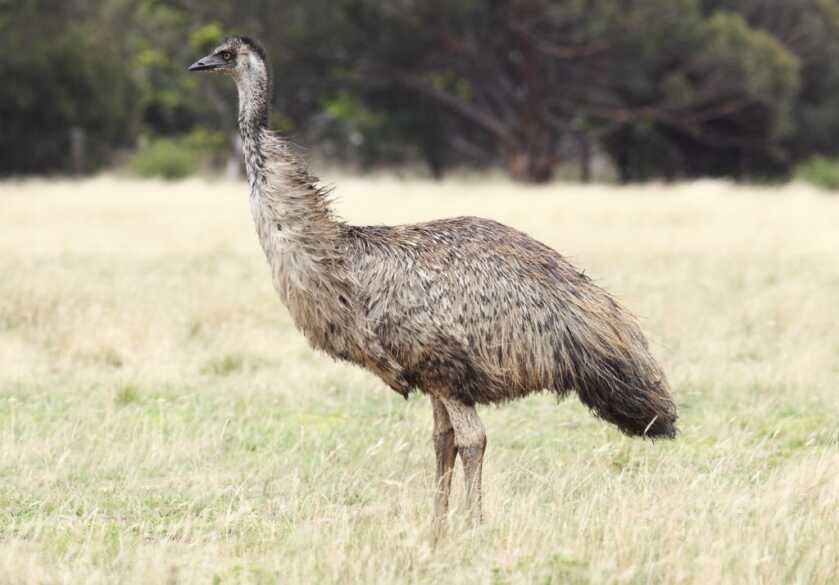
A fully grown emu stands about six foot three and can run at up to 30 mph. The emu is the second-largest bird in the world, behind the ostrich. These massive flightless creatures weigh upwards of 130 pounds. I saw these ghastly-looking things up close during a military deployment Down Under back in the 1990s. Their big bulbous eyes are mounted in a bizarre furry head perched atop a long neck that exhibits a meandering, snake-like flavor. If you suddenly awakened to one of these things staring at you up close, you could be forgiven for believing you had gone to hell.

Emus enjoy a curious matriarchy. The ladies of the clan can become repeatedly impregnated and produce multiple clutches of eggs per annum. The guys then sit on the nests and tend to the young, losing a substantial fraction of their body weight in the process.
Emus can go long periods without food and water. They’re like avian camels in that regard. When they finally find some, they tend to eat and drink to excess. Back in 1932, with the world still in the throes of the Great Depression, massive flocks of migrating emus were stripping Western Australia bare.
Tactical Planning: When Australia Called in Machine Guns
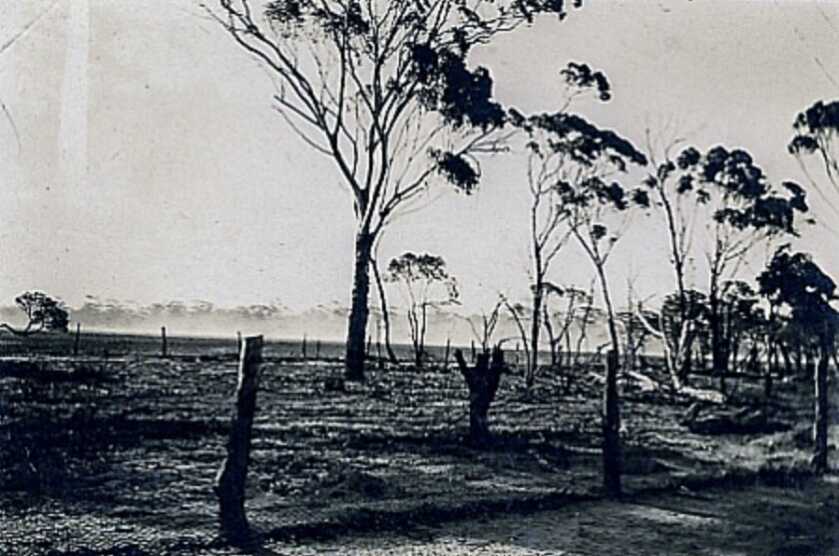
Australian veterans returning from WW1 had been gifted a nasty, arid, semi-useless land in the Campion district of Western Australia in exchange for their service. With much of the planet starving, the Australian government promised but failed to deliver subsidies to help offset the costs of producing wheat in such a desolate environment. Coaxing these desiccated wastes into producing a decent bounty required back-breaking toil. The Aussie farmers who had done so were therefore none too pleased when rampaging hordes of emus descended upon their farms, tore down their fences, and ate all their crops. The destruction of the fences also allowed the exploding rabbit population access to all those succulent leafy greens. Something drastic had to be done.

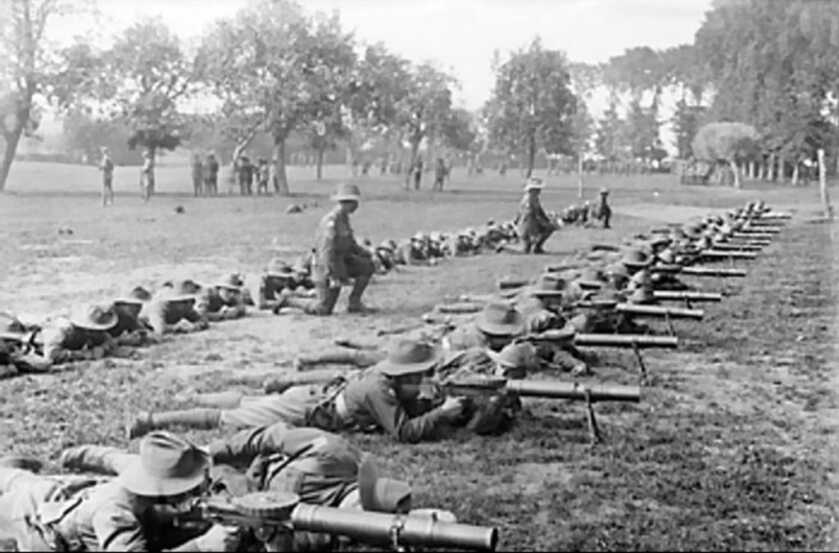
World War 1 was fresh on everyone’s minds, and the horrible symphony of the Maxim gun across no-man’s land had left a deep, visceral impression. As a result, Australian Defence Minister Sir George Pearce ordered the deployment of the Royal Australian 7th Heavy Artillery. The result was a two-man detachment consisting of SGT S. McMurray, along with Gunner J. O’Halloran, under the tactical command of Major Gwynydd Purves Wynne-Aubrey Meredith. The Aussies do rock some exceptionally quaint names.
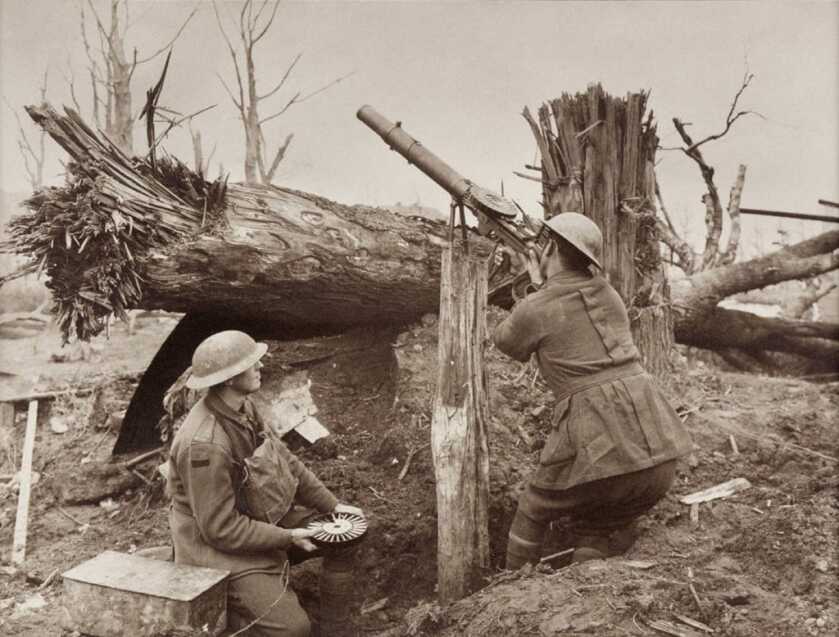
The agreement was that the government would supply the hardware and the manpower. The local farmers would be responsible for food, accommodation, and reimbursement for the ammunition consumed. Troopers McMurray and O’Halloran duly deployed with a brace of Lewis guns and some 10,000 rounds of .303 British ammo.
Inside the Lewis Gun: .303 Firepower vs Feathered Foes
The Lewis gun was designed by an American Army Colonel named Isaac Newton Lewis in 1911. Acrimony between Colonel Lewis and the chief of the Army Ordnance Department, General William Crozier, resulted in a lack of interest by the US military. Lewis grew justifiably frustrated and resigned his commission, stating that he was “Slapped by rejections from ignorant hacks.”
Lewis subsequently took his revolutionary design overseas. He began initial production in Belgium. However, the Birmingham Small Arms Company (BSA) in Great Britain turned out to be his most enthusiastic customer. BSA built the guns under license in the UK, paying Lewis a royalty for each weapon produced. Retired Colonel Lewis became filthy rich as a result. The guns were produced by BSA as well as the Savage Arms Company in the US. The cost per gun in 1918 was 62 pounds Sterling. That would be just shy of $6,000 today.
The total production run was around 300,000 copies. Interestingly, COL Lewis declined to accept royalties on the guns made for use by the US military. This amounted to around $1.2 million at the time, or around $35 million today, that he left on the table for patriotic reasons.
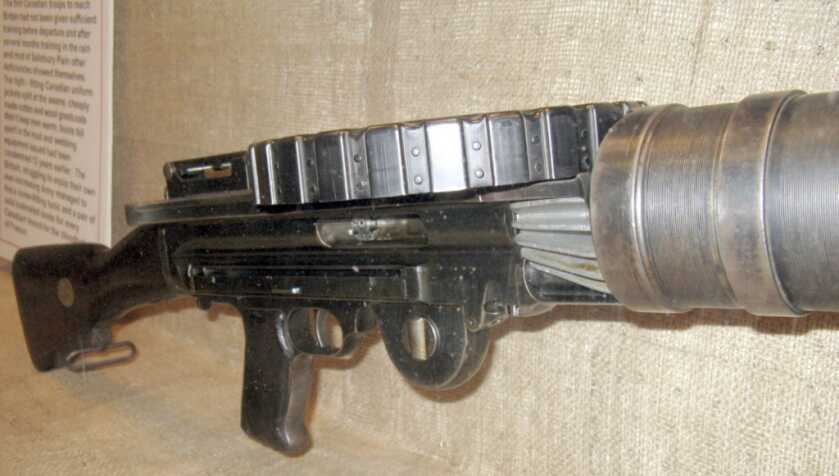
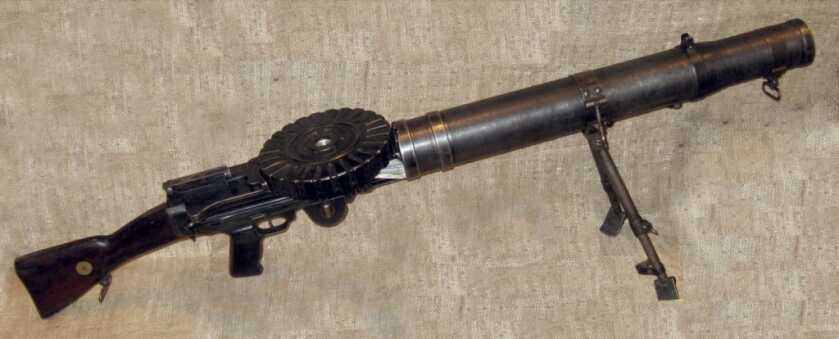
The Lewis was produced in .303, .30-06, 7.92x57mm, and 7.62x54R variants. The gun was a gas-operated design that fed via a rotating pan magazine from the top. Magazine capacity was either 47 or 97 rounds. Interestingly, the Lewis gun was driven by a helical clockwork spring housed in the bulbous protrusion on the bottom of the receiver.

One of the Lewis gun’s most striking characteristics was its massive aluminum barrel shroud. This component enclosed a series of aluminum cooling fins intended to keep barrel heat in check during protracted firing. In theory, air might be drawn into the assembly during firing, which would help dissipate excess heat.
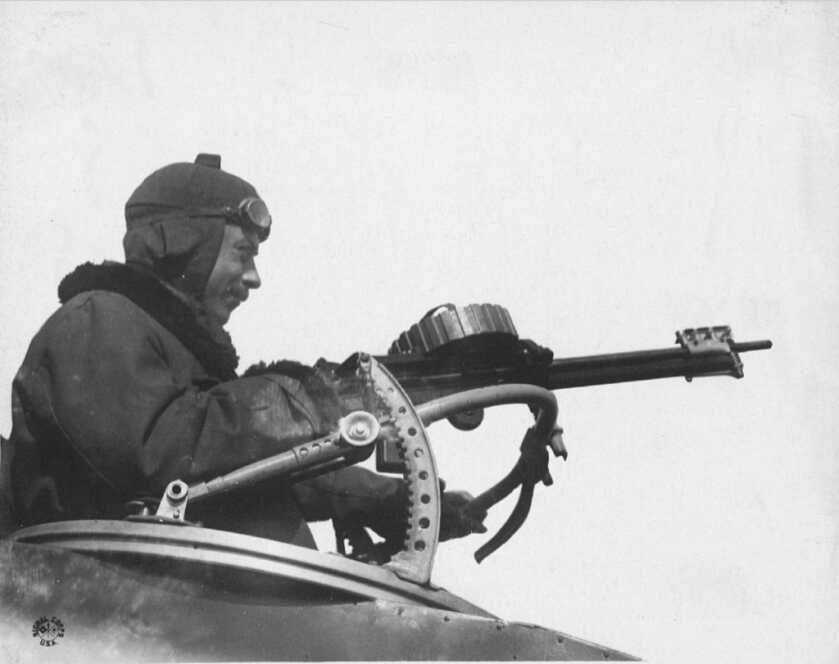
Lewis guns mounted on aircraft did away with this component altogether. It has been postulated that the entire contraption might have actually been superfluous. That likely would not come as welcome news to the unfortunate Tommies who lugged these 28-pound monsters across Europe.
Shaping the Battlefield: First Contact Goes Sideways
The first day was inauspicious. On 2 November 1932, a modest flock of fifty birds was sighted, but they were out of range of the machine guns. Local farmers attempted to herd the beasts into a kill zone only to have them fragment into fast-moving subunits once the firing started. The body count was reported as “perhaps a dozen.” Given that the pestilential population was estimated at around 20,000, things were not looking good for the soldiers.
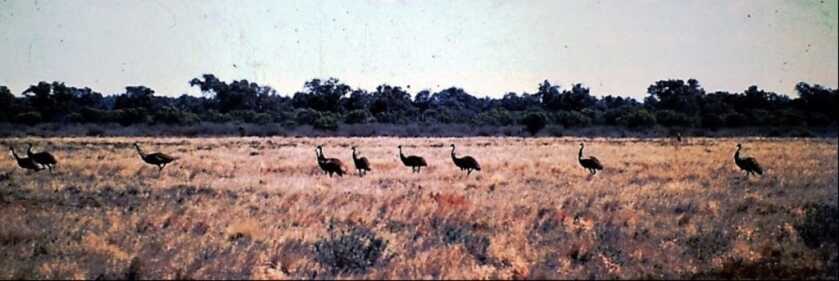
Two days later, a flock of around 1,000 birds was sighted near a dam. The troopers waited until the animals got close before triggering their ambush, but their machine gun jammed. They only bagged twelve emus. The rest escaped.
By day four of the operation, the enemy was getting wise. It was reported that every pack of birds now seemed to sport a long-necked lookout whose sole mission was to keep an eye out for the soldiers and their Lewis guns. The Diggers mounted one gun on a truck, but the lack of decent roads made the ride so rough that they still could not produce accurate fire.
One week in, they had expended some 2,500 rounds for about 50 birds terminated. Supervising ornithologist Dominic Serventy later reported that, “A crestfallen field force therefore withdrew from the combat area after about a month.” Major Meredith’s official despatches did report that there had been no human casualties resulting from enemy action.
Meredith likened the emu hordes to unkillable Zulus, stating, “If we had a military division with the bullet-carrying capacity of these birds it would face any army in the world…They can face machine guns with the invulnerability of tanks. They are like Zulus whom even dum-dum bullets could not stop.” That’s high praise indeed from a combatant commander.
Round Two: Lessons Learned and a Higher Body Count
About a week later, the local farmers kindly reminded government officials that there was still a migratory flock of 20,000 enormous, ugly flightless birds that was ravaging their farmland, and that, if further action was not taken, all of Australia would likely soon starve. James Mitchell, the Premier of Western Australia, endorsed a resumption of military counter-EMU operations. Major Mitchell was once again deployed to the combat zone.
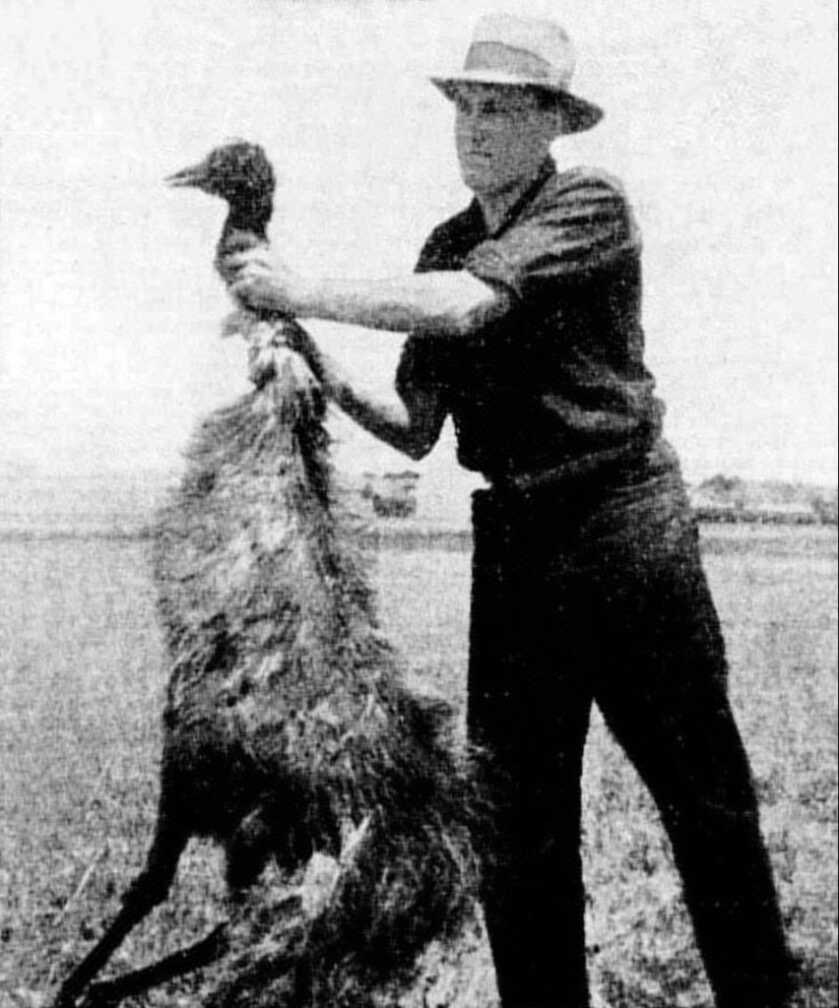
This time, Mitchell and Company applied the lessons learned from their previous forays and met with better success. Starting on 13 November, the machinegun team bagged roughly 40 birds. The body count dropped off after that, but by early December, the Diggers had found their stride. Once they got the hang of things, the troops were reporting roughly 100 kills per week. By mid-December, Meredith and his team were officially recalled. Their final tally was 986 confirmed kills with an estimated 2,500 wounded for the expenditure of 9,860 rounds. That made for a rate of ten rounds expended for every confirmed emu corpse. In the grand scheme, it made no difference at all.
After-Action Review: Why the Emus Won and What Fixed It
The Lewis gun was a superb tool with which to prosecute the Great War. It was fairly substandard for strategic pest control. The practical solution was simply to activate the redneck mafia. Over the next few years, the Australians operated a bounty system that paid farmers for culled emus. In 1950, Army Minister Josiah Francis even released half a million rounds of .303 ammunition from military stocks for issue to the crusading farmers. During one six-month period, these counter-avian vigilantes accounted for 57,034 birds.
The ultimate answer was actually just better fencing. Barrier fences successfully excluded the creatures from agricultural areas, along with the pesky bunnies and dingoes as well. Nowadays, the emu population is thriving, and the insane Australians who still eke out a living from these arid spaces successfully do so.
In 2019, an Australian playwright named Simeon Yialeloglou began work on a musical adaptation of the Emu War, collaborating with composer James Court. An action comedy script based upon actual events was penned by Monty Python phenom John Cleese, along with Monty Franklin and Rob Schneider. Film production begins sometime in 2023. I simply cannot wait to see that.
Related Reads from GunsAmerica Digest

Will is still trying to figure out what he really wants to be when he grows up. However, shooting guns and claiming it was work seemed like a pretty sweet hustle. As a result, Will serendipitously transformed an avocation into a vocation.
Raised in the Mississippi Delta, Will flew UH1H, OH58A/C, CH47D and AH1S helicopters operationally as an Army Aviator. He is SCUBA-qualified and has parachuted out of perfectly good airplanes at 3 o’clock in the morning. Will has summited Mount McKinley, Alaska, six times…always at the controls of an Army helicopter, which is the only way sensible folk climb mountains.
Will has delivered sixty babies and occasionally wrung human blood out of his socks. He is married to his high school sweetheart and has three awesome adult children. Turn-ons include vintage German machineguns, flying his sexy-cool RV6A airplane, Count Chocula cereal and the movie “Aliens.”
www.word-monkey.com
Experience:
-Professional Writer-thousands of publishing credits for dozens of titles
-Mechanical Engineer/Practicing Physician
-Instrument-rated Commercial Pilot
-Sunday School Teacher