Authors

Show First

Mossberg 30-30 Levergun – Model 464 – Gun Review

{ 74 comments }


When most people think of the classic deer rifle, they think of the lever action 30-30. Very few avid gunners don’t have one, yet this is a gun that is not the most powerful, not the most accurate, not the most quick shooting, and not the most reliable. For all the new gun owners, shooters and hunters that have come into the gun world over the last few years, you just have to re-ask the question, “why on earth would I ever want a lever action 30-30?” Is it just sentimental value in an old time cartridge that keeps the 30-30 going, or is there something there?

Guns are different from most things except maybe cars and guitars in that they have an “aura” about them. You won’t often see a rich businessman driving a Honda CRX “tuner” to the office, and you certainly shouldn’t play Ozzy songs on a Fender Telecaster, not that you can’t. Likewise, a lot of people feel weird stomping around the woods with an AR-15. It isn’t that the AR isn’t capable of taking a deer, a hog, or a coyote. It just doesn’t feel right.

The same thing goes for a high-powered bolt gun. In the thick woods of New England, Pennsylvania and other popular hunting grounds, you can feel like you are overdoing it with a high powered rifle. Most shots are under 100 yards and you don’t need all that power for a deer. For many hunters, a lever action 30-30 is “just right,” and it makes you feel like rough and tumble cowboy, which is always cool for a gun guy.

That is why there are literally millions of 30-30s are out there hunting this season, and one that has become very popular is the Mossberg 464. It is made in America by Americans, and we found it to be as accurate as most bolt guns for the first five shots in a cold gun. The point of balance on the 464 is right in the middle of the receiver, exactly where you want it to be for walking around the woods for hours, and right in the middle of a mounted normal length rifle scope, so it retains the balance. If you look at the 464, it looks like a Winchester Model 94, the most classic of all leverguns. But some of the features inside are much more like the Marlin 336, which is the other US made 30-30 still available today. The 464 is smoother than the 94, yet feels more like one than it does the Marlin.

Hornady revolutionized the 30-30 in 2007 with the introduction of their LeverEvolution ammunition. Prior to this, all traditional leverguns with tubular magazines had to use flat pointed bullets. Otherwise the tip of the bullet in the magazine would impact the primer of the round in front of it, setting it off inside the magazine and blowing a hole out of the side of your gun. LeverEvolution utilizes an aerodynamic spitzer type bullet with a polymer tip, so that they don’t set off the primer. They really actually work, and since the more than 4 years that have passed since their introduction, the LeverEvolution ammo has taken over the market for 30-30 deer rifles.

Read More…

The Ruger Gunsite Scout Rifle – Gun Review

{ 108 comments }


As the 2012 SHOT Show approaches, one of the guns that didn’t get as much attention as it should have from this past year’s show was the Ruger Gunsite Scout Rifle. If you haven’t seen this gun, it is based on a theoretical design from a shooting legend, Colonel Jeff Cooper, who started the Gunsite Academy. The premise of the gun is a “one gun solution, ” with a spec that it has to be a .30 caliber with an effective kill power on a man sized target out to the effective range of the shooter, and that is has to be short , light, and handy. This isn’t the first “Scout Rifle” design to hit the market, and Col. Cooper was involved with a Steyr project back in the day that is still sold today. But for the money, Ruger definitely has a very strong offering, and has nailed the Scout concept at an affordable price, MSRP $995.

Chambered in .308 Winchester, the 16.5″ barreled Ruger Gunsite Scout Rifle comes in at 7 lbs. empty and is 38″ long. This is basically to the spec of Col. Cooper, and this is with a wood, not plastic stock. The length of pull is adjustable with stock inserts from 12.75 inches to 14.25 inches, so it fits all sizes of shooters and can be adapted to body armor. Gunsite has a method of training shooters where length of pull is crucial, and this rifle is made to help you “settle into it.” I think that is the reasoning behind the wood composite stock as opposed to plastic. Laminated wood looks a little funny, but it is just as durable and weatherproof as plastic, and it is only about a half a pound heavier. The fine checkering on the beefy feeling forend and handgrip make you feel good with the gun, like it was made for you, and the weight distribution of the wood also just “feels right,” which is what the designers at Ruger and Gunsite were going for.

When you see the profile of this new Ruger Scout collaboration, a couple things immediately stick out. One is the ten round removable box magazine. To my knowledge there are no other bolt rifles in this price range that even have a box magazine. You are stuck with 3 or 4 rounds in the mag. The Scout also has a forward optics rail, for a special type of scope called, coincidentally, a Scout Scope. The Scout Rifle concept is 50 years old and the methodology of the Scout has been applied to experimental rifles for two generations now, using everything from standard Remington, Winchester and Ruger actions, to surplus Mosin-Nagants and Mausers. The forward mounted Scout Scope has what is called a “long eye relief.” That means you can see a full field with the scope 8 or 9 inches away from your eye. These scopes are also used on pistols to some degree by handgun hunters and long range target shooters.

The forward mounted scope allows you to take advantage of the optic, while retaining your peripheral vision for optimum situational awareness. It takes some getting used to, but most major optic companies make a Scout Scope model, and once you get used to it, the advantage is clear. In an unknown situation with nobody but you covering your back you don’t want your eye locked into a normal scope. Col. Cooper had this forward mount in his spec, long before long eye relief scopes were popular, and he was definitely on to something. The respect that his name commands in the gun world is well deserved. Most of us don’t have the ability to go out to Gunsite to train, but the expertise there has given us what amounts to the right tool for the job.

Read More…

LaserMax Guiderod Lasers for Novice Shooters

{ 31 comments }

LaserMax Guide Rod Lasers https://www.lasermax.com/ by Thoughtful Reader Let’s just get something out of the way. I’m not a “gun guy”. I don’t frequent forums and discuss the finer points of this firearm or that, nor am I concerned with the incessant caliber debates. To me, the gun I carry is just a tool, like [...]

3 Gun Competition STAG 3G AR-15

{ 128 comments }


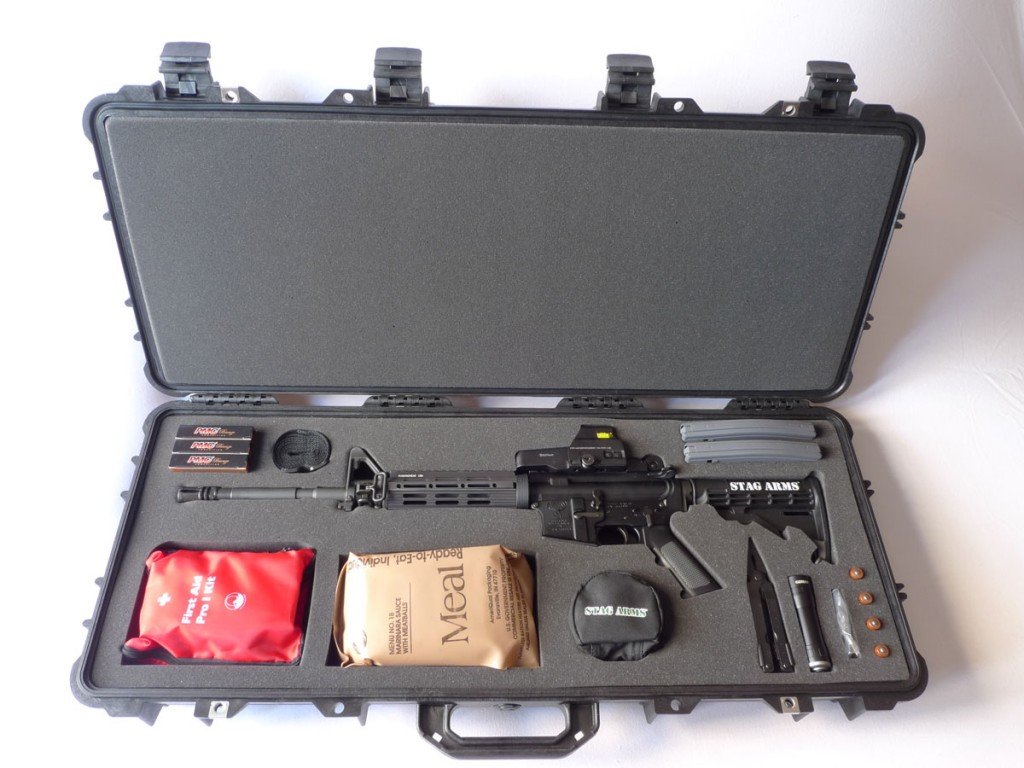
Zombies may not be taking over America yet, but in the world of shooting sports, 3-Gun competitions for sure already are. You can’t talk about shooting these days without hearing about the popularity of 3-Gun. STAG Arms, a sponsor of the TV show 3-Gun Nation, hopes to capture the rifle part of the 3 Gun market with a new rifle created specifically for competition in 3-Gun events. It is called the STAG Arms 3G, MSRP $1,495. All of the competitors in the finals of 3-Gun Nation this year, being held in Las Vegas next week, will be shooting the STAG Arms 3G, and I am pretty sure all of the competitors are going to ask to keep them or buy them after the event. It is a really nice gun.

The 3G is an 18″ barreled AR-15 with about all the bells and whistles you could want for 3-Gun and a lot more. It comes standard with a 15″ Sampson free floating handguard, a Magpull ACS stock and MOE handgrip, and a Geissele Super 3-Gun trigger created specifically for 3-Gun competition. The gas system is the full rifle length version, not the shorter M4 version. This makes for a lot less felt recoil and very smooth controllability shot to shot. STAG also makes one of the few reliable .22 conversion kits for the AR, and it works flawlessly in this new 3G.

I guess the question is, how many people would buy a dedicated gun for 3-Gun? The STAG 3G would answer that question,” it doesn’t matter. ” The 3G is a formidable battle rifle with almost perfect balance. The twist on the gun is 1 in 8,” which is capable of stabilizing a wide range of bullet types, and the 18″ barrel turns a corner as fast as a 16″ M4, but with a better gas system and more velocity. You also couldn’t ask for a better stock and hand filling grip than the Magpull product. STAG really didn’t skimp on this rifle and they made some important add-on choices that you may not have gotten as right forced to make the choices yourself.

I personally find quad rails annoying, even with too-fat rail covers. This smart Samson handguard comes with 3 short rail sections to mount whatever you like on the gun. It makes for a comfortable, hand sized forward grip and the flexibility to add whatever you like. You can see from the pictures I like the stumpy UTG/Leapers forward vertical grip, and I was able to mount this in less than five minutes. What I like about it most is that you don’t need a special AR wrench to take the handguard off. It utilizes a collar and two Allen screws, and slides off with little or no effort. For ease of use the Samson wins hands down.

Read More…

UPDATE! Springfield XD(M) 5.25 9mm, 40S&W, 45ACP Field Test

{ 18 comments }


The last time we saw the new Springfield Armory XD(M) 5.25 I was only able to try the gun for about an hour before having to send it on to the next reviewer. GunsAmerica was the first to have pics and tests of this exciting new competition pistol designed by champion shooter Rob Leatham. At the time it was only available in 9mm as well. Several of the comments that came in asked the question, when are they going to offer it in .40S&W and .45ACP? The answer is “right now.” The guns should be on your dealer shelves, and there is still some time on the 3 magazines promotion from Springfield.

For competition, Springfield Armory has upped the game on the 5.25 with these two new guns. Both calibers give you more flexibility than the 9mm in competition. They give you the ability to make what is called “major power” in USPSA and other competitive shooting rule systems, and you can make doctored loads for what is called the “power floor.” With the .45ACP you can experiment quite a lot, as you’ll see we did some, and the .40S&W just makes the floor for major power factor, and may be your best option if you want to use the gun in competition as well as self defense or duty.

Power factors are all based on published rules for what the individual competition organizations. The speed of the bullets is measured by a chronograph at the competition itself. To calculate the power factor and figure out the power floor you multiply the weight of the bullet, in grains, with the measured speed in feet per second, divided by a thousand. So for a 125 grain 9mm travelling at 1100 feet per second it works out to 135. A 230 grain 45acp at 850 feet per second is 195.

You will notice that the power factor computation is far different than the foot/pounds computation we have covered in a number of other articles. In the latter, velocity is squared before it is multiplied. In power factor it is simply multiplied. So while in foot/pounds calculations velocity is king, in power factor bullet weight has much more impact.

To “make major” in USPSA for the Open division the power factor is 160, and it is 170 for the Standard and Modified divisions. The minimum caliber to “make major” in the Standard division is .40, which gives you two XD(M) 5.25 guns to choose from. Note also that there is an absolute power floor for USPSA and other competitions of 125. So if you are concerned only with competing at the division level without shooting to make major, you can load to the absolute floor for little or no recoil, if you can get the gun to work properly with low powered loads, as I will explain a bit later.

Read More…

Ballistics of the Taurus Judge 2″ Poly Public Defender

{ 84 comments }


Civilian gunfights almost always happen by surprise. You could argue that in home defense situations there is sometimes a warning that a threat is imminent. You may have dogs that bark, or an alarm system that wakes you in the night, or you may think to grab a gun if a stranger knocks at your door. But daytime threats, at the gas station, at the bank, in the parking garage, in the bad neighborhood you were forced to stop for a red light, can appear from anywhere at any moment.

In such cases, if you even have the ability to defend yourself, how fast you are able to get a projectile into your attacker may mean the difference between your life and death versus those of your attacker. For this reason, the Taurus Judge series of .410 shotshell double action revolvers has gained immense popularity. While researching for this article I googled around for holster options, and many holster makers now have the Taurus Judge at the top of their list to catch the eye of interested buyers. As a defensive handgun, the Taurus Judge has eluded all speculation. The Judge has arrived.

This polymer version of the 2″ Public Defender is the most practical of the Judge line for daily carry. Though the 23 ounce gun is only 5 ounces lighter than the steel Public Defender due to a steel under-frame, the 5 ounces is a welcome reduction in a carry gun, and the plastic coated frame is completely corrosion-proof. The cylinder is blued steel, which can rust, but the Taurus finish is extremely durable and in a holster will most likely last several years with no appreciable wear.

As you can immediately tell from the pictures here, I was really curious as to the actual ballistics of the 2″ Judge with the most popular load for the gun, the Winchester PDX1 .410 shotshell. This round was created specifically for the Judge line. It contains 3 plated disks and 12 standard BB gun sized BBs. I also wanted to look at some standard 000 buck shells in .410, as well as the .45 Long Colt, which is the cartridge that has the same external dimensions as the .410 shotshell (except of course shorter) and for which all Taurus Judge revolvers are made to shoot.

If you aren’t familiar with the Judge and you are wondering how on earth a pistol can be sold as what amounts to a “sawed off shotgun” in .410 gauge, the Judge utilizes a loophole in the gun laws that specifically applies to the .410 only. Because there is a genuine firearm caliber in the same head and body size as the .410, the .45 Long Colt, there have been for generations pistols and revolvers, and even derringers, made with rifled barrels and longer chambers that can specifically handle the .410 shell. The .410 in a handgun used to be a novelty, in the occasional small production revolver and most notably in derringers, but the Judge took the concept prime time, in a reliable gun with a built in gun lock and a lifetime guarantee to boot.

Read More…

1911 Master Series Lasergrips from Crimson Trace

{ 26 comments }


The idea of aesthetics is a bit of a strange concept for people who think of guns solely as tools to hunt with or protect yourself. But going all the way back to Sam Colt when he introduced his first revolver, the Colt Patterson, in 1836, the way a gun looks has always been almost as important to the owner as how well it can do its job.

If you are a fan of another famous Colt, the 1911, the aesthetics and look of the gun are part of what you love. Custom grips have always been a booming side industry in the 1911 community and everyone from rock stars to presidents to Nascar drivers have commissioned custom 1911s to both treasure and carry. Crimson Trace, maker of the world’s leading lasergrips, has recognized this market for some time and we have heard for a while that a custom, high-end series of grips was on its way for this class 100 year old and still popular pistol, the 1911.

If you aren’t familiar with Crimson Trace Lasergrips, you have probably been hiding in a cave for ten years, but I guess you could also be new to guns and shooting and not have encountered them yet in your travels. The Crimson Trace system is the most unobtrusive and professional of all the handgun laser devices. A Crimson Trace replaces the factory grips of the gun, integrating a red laser on the side of the grip that is activated by your fingers around the front of the grip. Several firearm manufacturers now even offer Crimson Trace lasers standard in many of their models. Crimson Trace Lasergrips are pricey, but they are the choice of most professionals.

The Master Series from Crimson Trace, MRSP $399, was created so that you no longer have the choose between aesthetics and function with your favorite 1911. These gorgeous rosewood grips that you see here on an STI Shadow have a Crimson Trace laser in them. The two 2025 Lithium batteries for the laser fit into both sides of the replacement grips and are protected from electrical connection by plastic panels on the frame. For those who carry a 1911 this was a long time coming and it is no surprise that they are listed as “Out of Stock” on the Crimson Trace website at present. I’m sure if you look around you can find them, but you may have to wait in line.

Read More…

Zeiss Rapid-Z “Zero Math” Riflescopes

{ 11 comments }

Try to quick calculate the “minutes of angle,” or MOA adjustment, for your riflescope on an big bull elk 435 yards away. Go ahead, try it, with the ammo you plan to use this hunting season. Some of you will say “no problemo” and easily be able to calculate the correct click adjustment or holdover quickly and quietly in your head.

The rest of us are a little too excited about the elk to have a clear enough head to do that. And many of us have little if any ability to calculate these kinds of things in our head on the fly even on our best day with no elk in the picture.

This has led to the advent of what I call “Zero Math Riflescopes.” With a Zero Math Riflescope, the lines in the scope reticle have already been pre-calculated at given distances for the ballistics of the load you are using. We’ve already covered this somewhat on the Nikon .223 series, but those scopes are really for only one load of one caliber. The lines in the reticle, or the clicks on the turrett, match the distances if your velocity matches the standard value for that caliber, in this case 2340fps. for .223. But what if you have a shorter barrel than the test barrel on the ammo, or your handload doesn’t match the published numbers for factory ammo velocity?

The Zeiss Rapid-Z Reticle series, tested here on their Victory FL and Conquest riflescopes, calculates these numbers (click here to log in to the calculator) for any big game hunting caliber, and provides you with easy holdovers for distances from 100 to up to 1000 yards. The scope does this with no math whatsoever, and the online calculator explains how to make sure you scope is set correctly so that the 100 line hits at 100 yards, the 200 at 200, the 300 at 300, all the way up to 1000 at 1000 with the Rapid-Z 1000. Check out the pictures of the reticles here on the side. As you can see, they all have these what seem arbitrary lines, but they aren’t so arbitrary. The Rapid-Z calculator on the Zeiss Sport Optics website calculates the correct power setting on your riflescope to match these lines to actual distances downrange based on your ammo.

Read More…

Shooting the Desert Eagle .44 Magnum

Shooting the Desert Eagle .44 Magnum

{ 71 comments }

Do you want a shock? If you have an Android phone, go into the Marketplace and search for the word “guns.” Hundreds of apps will appear relating to every angle on guns and shooting you can imagine. What I found interesting was that by far the most common picture of a gun chosen for the thumbnail is none other than the Desert Eagle. As guns go, the Desert Eagle is not that common, but maybe due to video games, or movies, or just plain old coolness, it is one of the most notorious guns of all time.

Most people think of the Desert Eagle in the most famous .50AE (Action Express) caliber, but when it comes to actually buying a gun to shoot, I would suggest the far more affordable .44 Magnum. Brass is plentiful, and you can buy the ammo on the shelf at Wal-Mart or Bass Pro Shops. Ballistically, the .50AE is overkill in a pistol and rocks your world far too much to be an effective weapon anyway. It is more of a novelty cartridge that a functional participant in shooting sports, unlike the .44 Magnum that is used extensively and successfully in self defense, handgun hunting and as a backup for dangerous game.

To understand the difference in ballistics of the two cartridges, the standard 300gr. bullet in a .50AE travels at roughly the same 1400fps. that a 240gr. bullet travels in a .44 mag. In muzzle energy this equates to a 50% advantage for the .50AE, 1449ft./lbs vs. 971ft./lbs. for the 44 mag. With a similar weight 300gr. bullet, the .44 mag comes in at even less, at 881ft./lbs. But when it comes to hand cannons, how much is too much? Even against a Grizzly, the ability to aim a follow up shot quickly should you miss is more important that eeking out every foot-pound of energy from a gun when you are limited to carrying a pistol.

This is why I ordered a test gun in .44 Magnum. As romantic as the “Big 50” may be, I wanted to see what it was like to shoot this famous and enormous gun with a practical cartridge. My perspective is, most .44 Magnum shooters shoot revolvers, Smith & Wesson Model 39s, Ruger Super Redhawks, etc. With a .44 Magnum Desert Eagle, you have 8+1 rounds, not just six, and you can slap a mag if this isn’t enough to get the job done, or if you need to be ready for the next threat. Compared to a revolver the Desert Eagle is far more firepower, and let’s face it, the gun is among the coolest on the planet. It looks like a Battlestar Gallactica blaster for heaven’s sake!

Weighing in at nearly four and half pounds (70.5 oz.), the Desert Eagle .44 Magnum still has a good deal of recoil and muzzle flip. It may not be the biggest boy on the block anymore, but the .44 Magnum is still a beast of a cartridge. I would not call it punishing though. I have fired lightweight alloy J-frame revolvers with .357 Magnum loads that were a lot more unpleasant to shoot than this.

Using the gun successfully takes some practice though, and Magnum Research provides a picture guide to help you save frustration. The Desert Eagle is not a gun you can just take out of the box and shoot properly. Many of the good habits you may have developed from shooting large revolvers don’t apply to the Desert Eagle, and you have to consciously change them or the Desert Eagle doesn’t work so good.

With a big, .44 Magnum revolver, like a Ruger Super Redhawk, (for a right handed shooter), you hold your left hand under the grip to apply two handed counter pressure to shoot the gun. When you shoot it, you allow the revolver to roll backwards with the recoil. If you do this with the Desert Eagle, the next round won’t lock up correctly and it will behave like a standard failure to feed correctly. Two things about this you have to consciously change.

Read More…

The Walther PPS – Is it the Best Micro-9mm?

{ 79 comments }

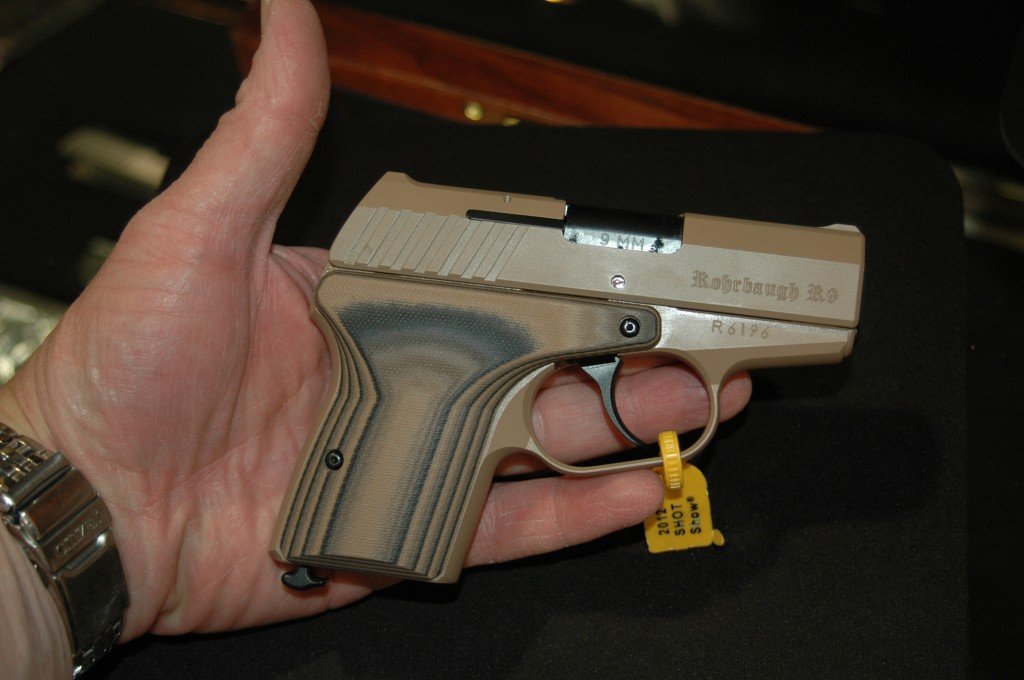
This year saw the flood of extremely small 9mm pistols into the gun market. I call them as a group, “the Micro-9mm.” Just about any gun nut will get excited about on the promise of 9mm firepower in a small package that will fit in your pocket. And with the wave of new concealed carry laws across the US, tens of thousands of new gun owners have come into the market, all looking for the best Micro-9mm. I can’t say I have tested in hand all of the different offerings out there, but after extensive testing, I have to vote that the Walther PPS, if you did go test them all side by side, would come up on top. I’ll try to explain why.

When you have a lot of products that essentially do the same thing (think TVs), you have to figure out what the differences are, and which of the differences are important to you. Trigger action, a manual safety, not having a manual safety, thickness, price, capacity, etc. all factor in and will effect your buying decision.

The most important difference, however, is obviously reliability. Everyone will claim that they have great reliability, and you won’t find a real review of any of the guns either in print or online that says “I tried this gun and it didn’t work.” But not all guns work all the time in every instance, and understanding when and how a gun can be relied upon is extremely important, more important than all of those other factors combined. I want to be able to pick up my carry gun and expect it to fire every time with every ammunition if possible, and cycle correctly, chambering the next round to fire as reliably as the last.

With ultra-compact, or Micro-9mm pistols, reliability is a particularly a huge factor. That size of pistol has traditionally been constructed to handle the .380ACP cartridge, and forcing it to handle the much more potent 9mm, or even .40S&W is a not a feat for the faint of heart. 9mm kicks much harder. The rounds are bigger and longer, and the barrel thicker. Yet “thin” is in when it comes to pocket pistols, so that means the parts have to be smaller. In many cases the Micro-9mm is smaller than any gun the company has ever made, even a .380. Add to this that many of the people making these Micro-9mm pistols have never made a small gun before at all, at least not that small, and you realize that the gun you buy to protect your life is actually just the realization of an engineer’s drawings that so far has worked, as far as you have heard. You may feel that this is true of most guns, but there is a huge difference between making a new model with variations on a gun you have been making for a while as opposed to a completely new gun with design challenges you have no experience dealing with at all.

Read More…