Authors

Show First

Ruger LCR-22 New Gun Review

{ 143 comments }


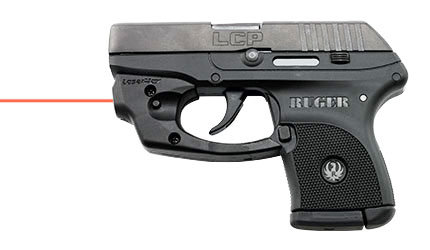
Break out the party hats, Ruger’s LCR just got a little brother! The newest member of the LCR family shares all the great features of its brethren and is now available in .22 caliber. The LCR-22 is light, fast handling, and accurate for a 1.875” barrel, and it’s a ball to shoot.

If you’re not familiar with Ruger’s LCR (Lightweight Compact Revolver) which debuted in January of 2009, it is best known as the first production polymer framed revolver. Several others have come out since but Ruger was ahead of the pack with the LCR.

The polymer lower part of the frame houses all components of the fire control mechanism and is mated to an aluminum alloy upper which houses the stainless steel cylinder and barrel liner. Polymer is a rugged material, rust and corrosion proof, and light weight. The aluminum upper and heavy fluting on the cylinder contribute additional weight savings. My review gun came in at 14.8 ounces empty on my stamps.com electronic scale, but the reported weight is 14.9 ounces. The balance point is at the back of the cylinder which I consider ideal for a snub nose revolver. It comes on target out of the holster quickly, thanks in part to the great balance as well as the natural grip angle and excellent rubber grip from Hogue.

The hammer is completely enclosed making, this a double-action-only (DAO) revolver and eliminating a potential snag for anyone interested in concealed carry. The DAO trigger, like its bigger brothers, is very smooth with no stacking and little overtravel. It measured right around 12 pounds but didn’t seem that much thanks to the way they cam the trigger.

The LCR-22 is compact, little more than 6.25” long and 1.25” wide. It sits so lightly in a holster or in your pocket that you’ll forget it’s there

The big news, of course is that you can now get it in .22 caliber which opens the opportunity to do a lot more shooting since .22 ammo is inexpensive and widely available. The LCR-22 will handle .22 short, .22 long, and .22 long rifle ammo, including shot shells, which means that you can personalize it for your needs.

I see this fun little revolver filling a number of roles. The most important component to shooting any gun accurately, aside from the gun itself, is practice. No matter how good (or bad) you are, more practice will make you better. Unfortunately, center fire ammo can get expensive, especially if you want to shoot hundreds of rounds a month. With a .22, you can shoot for pocket change.

Read More…

2nd Amendment Voters Should Vote RON PAUL

2nd Amendment Voters Should Vote RON PAUL

{ 310 comments }

As the New Hampshire primary approaches nobody should question who the real 2nd Amendment candidate is. It is Ron Paul. The mainstream media is ignoring Ron Paul as a viable candidate, and many of them have come right out and admitted that they will skip over covering Ron Paul no matter how many votes he gets, but you can’t silence the people forever. I don’t expect that Ron Paul will win my former home state of New Hampshire. But if you plan to vote in a primary this election and you vote for anyone other than Ron Paul, be very clear that you are not voting for a Constitutional America, and you are not voting for 2nd Amendment freedom.

Coonan Arms Classic .357 Magnum 1911 Pistol

Coonan Arms Classic .357 Magnum 1911 Pistol

{ 82 comments }

What do you call a giant stainless steel .357 Magnum 1911 pistol? Well, if you listen to Coonan Arms, maker of this righteous beast called the Coonan Classic .357, the answer is that it may be many things, but it is for sure…

Not Your First Pistol!
The .357 Magnum is considered by many to be the most effective handgun round for human sized targets. But unfortunately the cartridge was created for revolvers, not pistols. So for fans of 1911 and other auto pistols, the .357 Magnum isn’t practical. It has a rim around the back of the case, unlike a .45ACP or 9mm that are flat and don’t. The extra lip that sticks out of the .357 Magnum and other rimmed cases creates trouble in semi-auto pistol magazines, and the .357 Magnum case itself is very long to fit lengthwise in the grip of a pistol as well.
This leaves 1911 fans who are also devotees of the .357 Magnum in a lurch, because though you can carry several guns at one time, you can only shoot one gun effectively at a time. Until now you had to choose between a 1911 and a .357 Magnum revolver. The Coonan Classic .357 seeks to combine these two choices, and they have done a really great job of it. If you are fan of both the 1911 and the .357 Magnum, you will be pleasantly surprised with this gun. It definitely isn’t for the uninitiated, but with a proper understanding of how the gun works and why, it isn’t a gun to be afraid of as a novice shooter . It works really well and is also a lot of gun for the money.

Cimarron Evil Roy Cowboy Colt Replica

Cimarron Evil Roy Cowboy Colt Replica

{ 28 comments }

We are often so focused on the black guns these days that sometimes you miss what is going on in other parts of the shooting and hunting world. A lot of it is deeper and a more enjoyable than all of the tactical stuff combined. Cimmaron Firearms specializes in cowboy era firearms, from the percussion age of the 1830s through 1873, and the cartridge guns from Colt, Winchester, Smith & Wesson, Marlin, Sharps, and others through the turn of the century. The dawn of the repeating firearm is not only a lot of fun historically, you can actually live it and breath it through a very popular shooting organization called the Single Action Shooting Society, or SASS. Cowboy Action Shooting is a lot of fun, and if you are of the competitive bent, at the regional and national level the competition is fierce.

This “Evil Roy” model of the 1873 single action Colt Peacemaker is engineered to meet the needs of the discriminating SASS competitor. More than 90% of the people who shoot Cowboy Action are not competitive and have no interest in winning anything, but we all like to shoot good. And for that small percentage of serious competitors, they are really serious and like to shoot perfect, not just well, and win the prized trophy SASS belt buckles. All of the SASS shooting is on metal plates, not paper, and the plates are set as close to the shooter as is safe for splatter. This makes Cowboy Action really easy to shoot well, so the competition really boils down to speed. Hit the metal plates, every time, as fast as you can.

Ultimate Plinker - New Ruger SR22 Pistol

Ultimate Plinker – New Ruger SR22 Pistol

{ 184 comments }

Every gun nut looks for that perfect .22 pistol that will always be a staple of their gun collection. Even if you have more than one, and most of us do have several, a .22 pistol is lifetime purchase, so even though they are less expensive than most centerfire pistols, you have to choose carefully.

The “old” Ruger .22LR pistol, currently called the Mark III, is one of those guns you can always advise someone to choose and they will never regret it. The classic Luger lines of the gun and the hefty weight of 30oz. and up make it easy to shoot for novice shooters, and steady and accurate for a lifetime of punching paper and eliminating the dreaded grey squirrel. The Ruger Mark III will never let you down. But the world has moved on from steel guns, and most people want a .22LR pistol that looks and feels like the centerfire pistol they use for home defense, concealed carry, or competition.

Free Bullets for Life – Bullet Casting 101 Part 1

{ 32 comments }


If you love to shoot it can get expensive. Factory ammo is not at its peak that it was during 2009 into 2010, but even cheap 9mm is still upwards of 30 cents per round. If you reload, you save the cost of the brass, and the savings are huge over factory loads, but you still have to buy the bullets. And while bullets have improved drastically over the last ten years in consistency and quality control, with these improvements have come higher prices. Spot metals on the commodity market have spiked as well, sending prices even higher. Bullets aren’t cheap anymore. You may pay almost as much for the box of bullets as you used to pay for the box of loaded ammo.

I started bullet casting about 15 years ago, and initially I treated it like some sort of black art, that only the gurus could get right. Back then you could get lead for next to nothing. Pipes were still being torn out of old houses that were made of lead, and every junkyard and tire shop had a good supply of used wheel weights, the kind with the steel clip. I tried my best to make perfect bullets with no lines in them, that all weighed the same, and I had some moderate success. But I can’t say I ever mastered that, and if I ever get back into being able to shoot BPCR (black powder cartridge rifle), maybe I’ll try again.

Recently it occurred to me that I don’t hear as much about bullet casting as I should these days. Did everyone forget about it? Jacketed bullets are too darned expensive to shoot all the time, but I like to shoot all the time, and I’m not alone. Once you start asking around, stopping in at tire places and developing a hawk eye for lead at the junkyard and flea market, you can usually get lead for free or extremely cheap. Once you buy the tools, you have them for life and they last. If you learn the basic skills of bullet casting, it could amount to a lifetime of free bullets.

Read More…

Bloomberg Internet Gun Sting a Scam as Usual

{ 67 comments }


We don’t do a lot of opinion pieces in the GunsAmerica Blog. This is the first one in fact. New York City’s mayor Bloomberg announced the results of a new sting conducted by his office today, focusing on internet gun sales. He is using the same tactics he has employed to go after legal gun sales at gun shows, implying that American gun owners are by nature dishonest and willing to break the law to sell their firearms. Would you break a federal law for $450, or even ten times that? Probably not. American gun owners are law abiding citizens and proud of our long history of supporting law enforcement and the laws as they are written, even if we disagree with them.

As usual, the facts are skewed all over the place, vague where Bloomberg chooses to be vague, and specific and factual where he has an anecdotal soundbyte or video clip he can play. Thankfully they do not appear to involve GunsAmerica sellers, but this is only the tip of the iceberg and if we don’t say something nobody will. Unfortunately Diane Sawyer and the talking heads at ABC News don’t question the sketchy report as usual, and we have received no questions from them, from law enforcement or from Mayor Bloomberg’s office to request for comments. CNN seems to have lost the picture of me from 1999, but you may remember that Chuck Schumer tried to regulate internet gun sales back then. The article is here, and they even brought me into a little secret CNN studio in Boston to do an interview. As I explained to Mr. Schumer back then, the gun grabbers just don’t have their facts straight. American gun owners by and large are overwhelmingly honest and law abiding. At least Schumer in 1999 wasn’t deliberately manipulating the facts for political gains.

I wonder why GunsAmerica is not mentioned? Could it be that Bloomberg targeted unknown, old, dead and dying websites that have no supervision over who comes and goes, then targeted specific ads that appear to have been placed by people who own but know little about guns? He does mention Craigslist, which of course has a NO GUNS POLICY, similar to Ebay, Amazon and other national online for-sale and auction websites. And the article does mention our only major competitor, Gunbroker, as if they are the Kleenex of internet gun sales, but according to Compete.com, it is GunsAmerica that has the most unique visitors looking for guns these days, even without a NASCAR sponsorship. Go figure.

Bloomberg says that the BATFE is not doing their job, be we know they are, and they do it well. We are generally in weekly contact with the US Department of Justice. They know we have a “no subpoena” policy and they ask us to investigate suspect accounts all the time. We have also been involved with several cases over the years involving state and local police agencies, mostly to catch scammers who never possessed any guns, and BATF (now E) has always know that we have an open policy with anything they need from us. Since the Patriot Act, several federal agencies, including BATFE, monitor GunsAmerica every day. Over 3 million people come and go from here every month (about twice what is shown on Compete, as measured by Google Analytics). Even though we don’t agree with all of the laws, we support law enforcement efforts to catch the actual bad guys. Bad guys make law abiding American gun owners look bad, and we want them in jail as quickly as possible.

Yet despite our almost 15 year record of complete cooperation with law enforcement, no calls or emails from Bloomberg. I wonder why?

Read More…

Learn Gunsmithing at Home With AGI

{ 25 comments }


Gunsmithing is not something you can just sit down and teach yourself through trial and error. Guns are a high ticket item, and a little too much sanding here or a little too much pressure in a vice there and your treasured and expensive firearm could be destroyed. The destruction of the American family has produced a difficult byproduct in our generation. Skills that should have been handed down from father to son weren’t, and as the last generation passes on, the next generation doesn’t know how to do stuff that the previous generation did. Now, at 30 and 40 plus years old, a lot of us wish we could do some of that stuff, yet sadly we have nobody to teach us. Everything from electronics, to woodworking, to leatherwork, even sewing, are falling away as things that hobbyists know how to do. In gunsmithing, for someone who has never been taught, even taking apart the guts of a 1911 slide can be mind boggling.

The American Gunsmithing Institute, or AGI, has tried to fill this generational gap by producing a series of extremely good videos on the disassembly and reassembly of most popular firearms, gunsmithing basics, and even advanced gunsmithing courses. Some of them are so advanced that you would expect to have the mechanics of a gunsmithing degree in place before ever having access to such advanced skills. Believe it or not, there are still physical gunsmithing schools in the US (very few), but for those of us who don’t have the time or freedom to go to school, with AGI you can get a real gunsmithing education in your own home, right on the screen, as you have time or it. Depth is optional. Just an armorer’s course at $39.95 might be all you need.

Read More…

The 1911 – A Century of Excellence – Triggernometry

{ 25 comments }


“This is the finest close quarters combat handgun ever designed.” Said my friend and fellow firearms instructor Ken Hackathorn holding up a 1911 .45 Pistol in front of a class he was teaching at RangeMaster back in the late 1990s. I could not have agreed more. Ken may have changed his mind since then, I do not know, but I haven’t changed mine.

According to 1911 authority William Goddard, the first lot of 1911s (other than test pistols and tool room samples) were assembled at the Colt plant on 28 December 1911 (barely making it into the year the pistol was christened). They were shipped the first week of January. The rest, as they say is history. The collecting of 1911s is a joy and a field all to itself. But after 100 years, the 1911 still soldiers on, and not for nothing.

My focus is on use of the 1911, not collecting, but I am a student of history and the history of the 1911 in use for what it was intended is one of sublime success. My intent here is to touch on that use as well as some personal shooting impressions. I intend to spend a good bit of time on the “real” 1911. That is to say, U.S. Military issue and Commercial Government Models made before 1924 when the transition was begun to the 1911a1. To be sure the 1911a1 has very few fleas on it, but it is a slightly different pistol in my estimation.

My first personal experience with a 1911 was not exactly an auspicious occasion. My father was an excellent shot, worked for the Army for most of his adult life and was a WW-II veteran. Like many former military men he had an abiding respect for the .45 Automatic. And so, other than an old double barreled shotgun that had belonged to his father, the only firearm that he owned was an ex military 1911 for which I believe he paid the munificent sum of $15.

At the age of five, I had my first encounter with this pistol. It did not bode well. My dad had to help me hold the gun up but I was the one to press….ah jerk…on the trigger. Ear plugs? Real men did not use earplugs in the early 1950s! So their little boys didn’t either. Eye protection you ask? Nobody thought about it.

When I touched that pistol off I thought the world had come to an end! There was noise, and recoil and I probably would have dropped the blamed thing if my Dad’s hands hadn’t been wrapped around mine. To add injury to insult the hot empty case dropped right down the neck of my shirt and stayed there!

My next one 10 years later, didn’t do anything to improve my assessment. My first centerfire handgun was not a 1911, it was a 1911a1. I saved up money from soft drink bottle deposits and at age 15 bought a surplus Remington Rand .45. I did not buy it because I wanted a .45 Automatic. I bought it because I wanted a center fire handgun and it was cheap. By accident of birth and circumstances I was able to purchase this gun legally, though the owner of the pawn shop insisted that my Mother vouch for me. Just two years later I could not even purchase ammo as the 1968 Gun Control Act started taking effect.

Read More…

Glow Ammo Cold Tracers Ready for Prime Time

{ 22 comments }


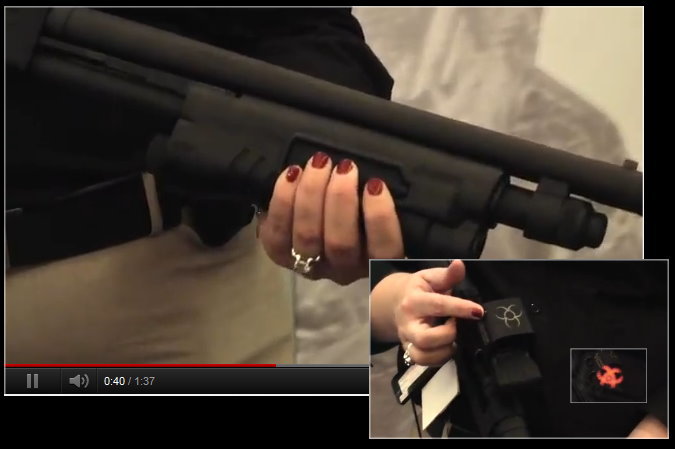
The hardest thing in the world is to be the only one out there with a new product that people don’t understand. That is the challenge that Brian Hallam of Glow Ammo faces with his cold tracer, trajectory marking technology that is unlike anything else on the market.

“Most people don’t understand Glow Ammo,” explains Brian. “They think you can only see it at night like standard hot military tracers, but you can see our tracers under normal range lights, and outside at dawn and dusk, not just at dark. Our cold technology is also much less dangerous than hot tracers and ranges that won’t allow hot tracers allow Glow Ammo. ”

“We call Glow Ammo trajectory markers, not tracers, because it opens up a whole new aspect to shooters. You get to see your bullet leave the barrel and hit the target. In the video game generation this is a whole new dimension that people really enjoy. It is like a laser beam in a video game.”

“It also has a lot of practical and defensive applications as well. Only you can see the trajectory marker as the shooter. When you get more than about 15 degrees off of the bore axis you can’t see the flash of the Glow Ammo marker, and from the front, downrange, it is not visible at all. This means that your enemy can’t see your shots but you can. Whether your eyes are on your sights or not, you can see where your shots are hitting, and there is no disadvantages like you see with lasers and standard hot tracers.”

Police and Military Applications
Brian’s vision for Glow Ammo is more far reaching than a range novelty or even simple self defense, and if you think about his points, he’s kinda right. He has a long way to go before people understand and accept what he has to say, but hopefully this article will start opening people’s minds. He explains the police and military potential like this:

“Think about a classic police shootout. The first officer on scene is forced to engage in a gunfight and calls for backup. With Glow Ammo, as soon as the backup arrives on scene, they immediately see where the shots of their fellow officer are going, and the bad guy on the receiving end can’t see them. The dangers we all know that exist with lasers for the shooter, that the bad guy can see where the laser is coming from, doesn’t exist with trajectory identification technology. It is a different way to think about gunfight dynamics. ”

“It is the same thing with the military. Right now there is only red colored Glow Ammo, but soon we will have other colors. This way a team leader can carry one color marker and the team members a different color, so that in a firefight, the team sees where the team leader is directing fire, and they know it is him because of the different color. The potential is limitless for trajectory identification, and because it is a cold technology, there are no adverse side effects or potential collateral damage. It just works. ”

Read More…