
CZ-USA has an extensive line and this year a whole bunch of new guns makes for a good looking year for this smart and affordable line of guns from CZ. The 712 shotgun is adjustable for length of pull. There is a new 1911 for concealed carry, the P07 comes with a threaded barrel, and in forest green. The 455 line of rimfires and a whole bunch of competition designs.
Authors
Show First
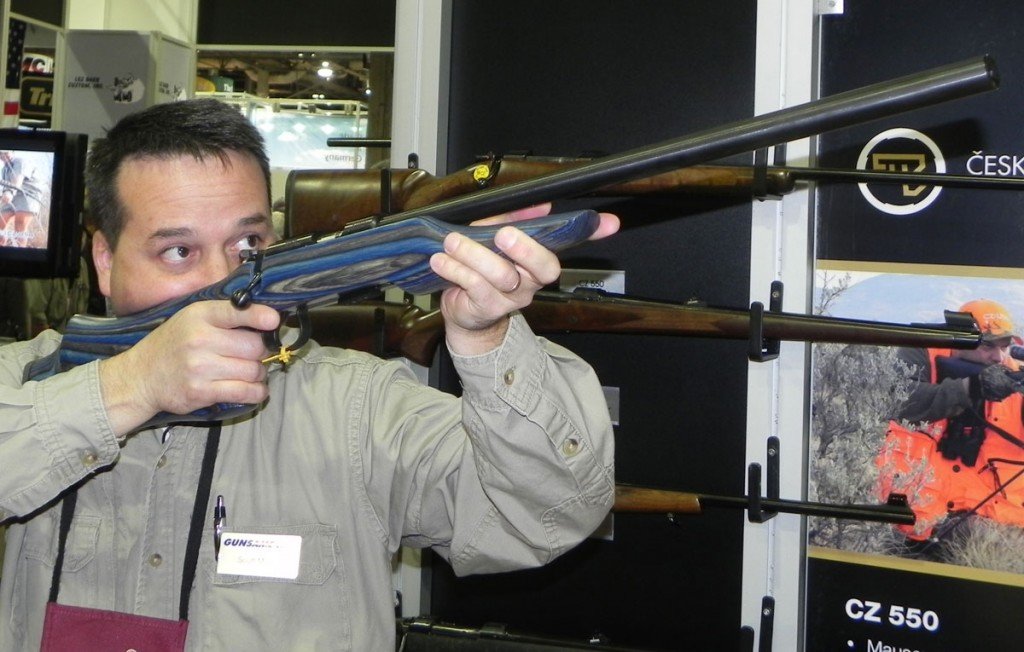
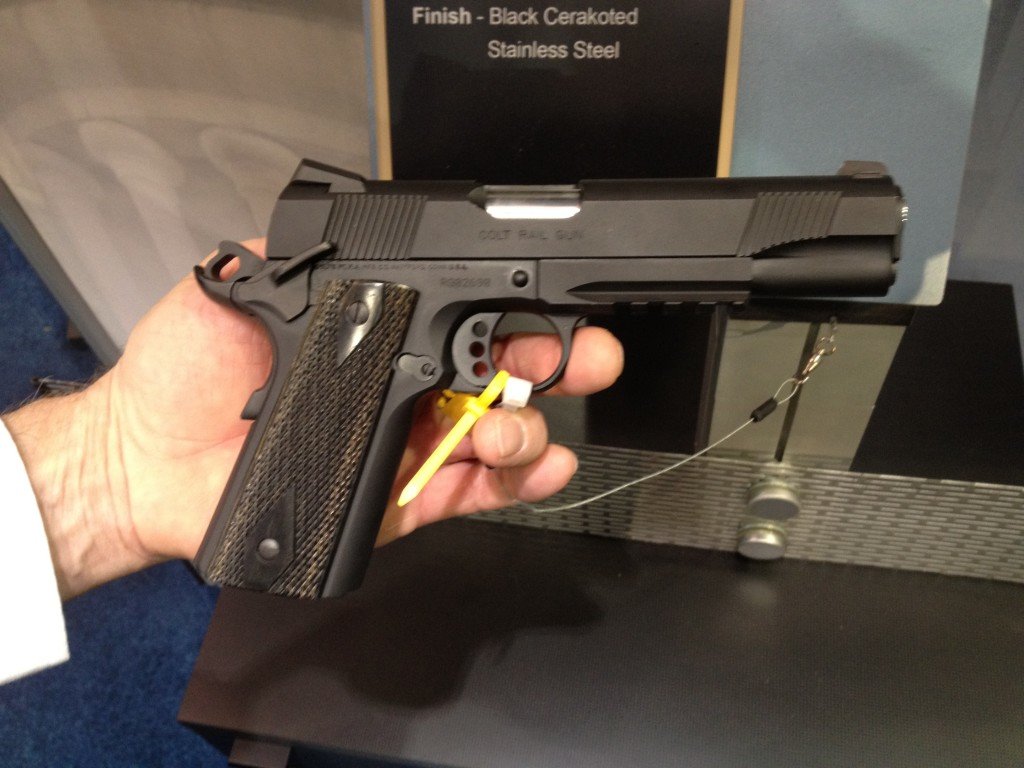
Colt Mustang Pocketlite & Special Combat Model
Published: January 18, 2012 { 83 comments }SHOT Show is always an exciting time for us gun enthusiasts, as we wait with baited breath for new models. This year is no different, but Colt did one better, they re-introduced a longtime favorite, while continuing to build on their winning line of 1911-style pistols.

Leupold Improves VX-I and II to VX-1 and 2
Published: January 18, 2012 { 8 comments }One of the most common questions I get is “What’s a good value-priced riflescope?” Well, that depends on your budget. If your budget is a few hundred dollars, then I don’t see anything wrong with one of Leupold’s VX-I scopes. Add a couple hundred bucks more to your budget, and the VX-II line is a step up without breaking the bank. This year though, Leupold is replacing those lines with improved VX-1 and VX-2 lines, respectively. Typically a manufacturer uses a change like this to implement a price increase, but Leupold’s Pat Mundy says the company was able to “hold the line on price,” and that’s good news for the consumer.

Trijicon Adds Smaller Red Dot Sight and Serious Tactical Scope
Published: January 18, 2012 { 6 comments }My first experience with any sort of red dot or reflex sight was many SHOT Shows ago when C-More sight owner, Ira Kay, explained how to use one properly. He demonstrated how keeping both eyes open when using the “heads up” screen on the C-More eliminated the perception of looking through a tube, which is exactly what you got with some of the cylindrical sights of that time. He also showed how with both eyes open, you could get the lens front covered with mud, blood or even broken, and still see the dot to aim. I was very impressed, and have owned several dot sights since. For close- to medium-range shooting where hitting the target quickly is the goal, you simply can’t beat a dot.
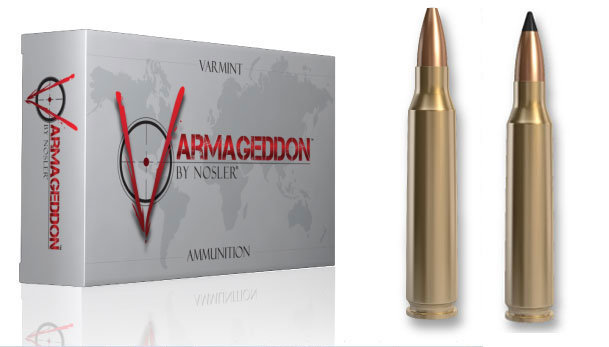
Nosler’s Varmageddon Varmint Bullets
Published: January 17, 2012 { 0 comments }For 2012, Nosler added a new line of lower priced bullets and ammunition for high-volume varmint shooters called “Varmageddon.” They’re available as component bullets in .172″, .204″, .224″ and .243″ diameters, and loaded in .17 Rem., .204 Ruger, .221 Fireball, .222 Rem., .223 Rem., .22-250 and .243 Win. ammunition. The new bullets are quite a step up in quality from cheap bulk and rather different from Ballistic Tip Varmint bullets. For one thing, a quick scan through Internet suppliers shows that Varmageddon bullets cost about 65 percent that of Ballistic Tips for the same count, diameter and weight. I’ve been fortunate enough to get into some prairie dog and ground squirrel towns where the number of shots I took was only limited by how much ammunition I brought. In towns like those, the cost of ammunition can really add up. It’s tempting to try and shoot a town like that with cheap bulk bullets or “seconds,” but in my experience, doing so simply results in more misses and thus firing more shots, so it’s really a false economy. It’s a good thing that a manufacturer known for excellent bullets to begin with, can also make excellent affordable bullets.
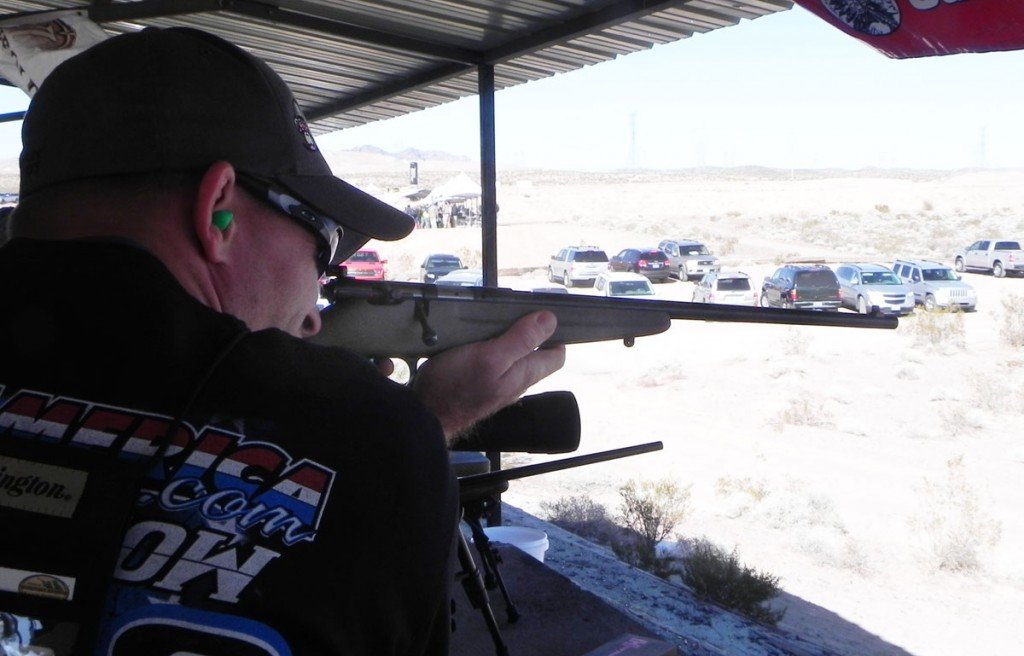
The Savage Rascal .22LR Boys Rifle
Published: January 17, 2012 { 49 comments }A brand spanking new .22 Rimfire is a rite of passage for many American kids and getting the right .22 is perhaps the most important decision a parent can make. Of all the variables a parent has to consider, safety is probably at the top of their list. Parents need to think about safe places to shoot, eye and ear protection, how to safely store the gun and more. One thing they shouldn’t have to consider is having a gun that is safe, and safe to shoot—those ought to just be givens.
When we get our kids their first gun, it’s natural to want to get them something like what we had as kids, and a popular feature of “boys” guns “back in the day” was a cocking knob. It seems simple and safe enough to open a bolt, chamber a round, and pull back the cocking piece to shoot. I’ve even heard many parents insist on that type of action because they can easily see if the gun is cocked or not. They see the cocking knob as a safety feature. Well, I’m not so sure about that anymore after seeing the new Savage Rascal at Media Day. Its action is specifically made without a cocking knob—for safety reasons!
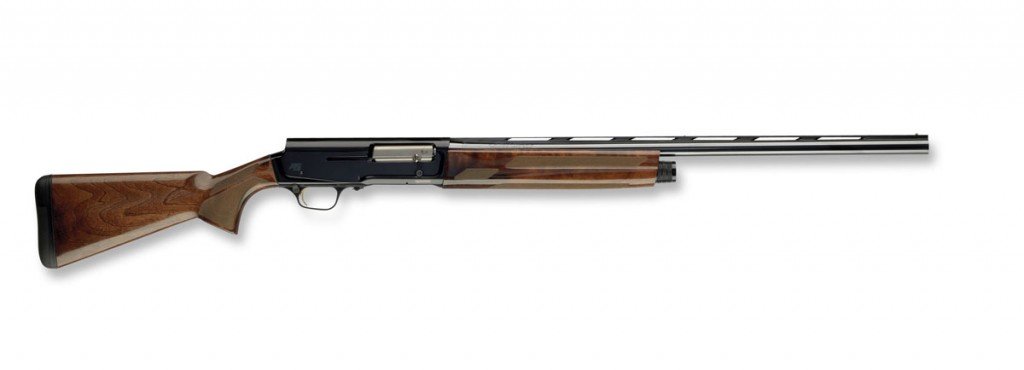
This Ain’t Your Grandaddy’s Humpback! Browning’s New Auto-5
Published: January 17, 2012 { 39 comments }Browning’s Auto-5 is a no less an iconic firearm than Winchester’s Model 70 or Colt’s Single Action Army. The beloved “humpback” was in almost continuous production from 1903 to 1999, and has been manufactured in variations by Fabrique Nationale, Remington, Savage, SKB, Miroku and almost certainly by other, smaller companies. On November 26, 1997, Browning announced that the Auto-5 would be discontinued, and the “last” of them were shipped out in February 1998. Then, in 1999, Browning manufactured a limited edition of 1,000 “A-5 Final Tribute” guns, sold them out in 2000, and so ended a legacy.
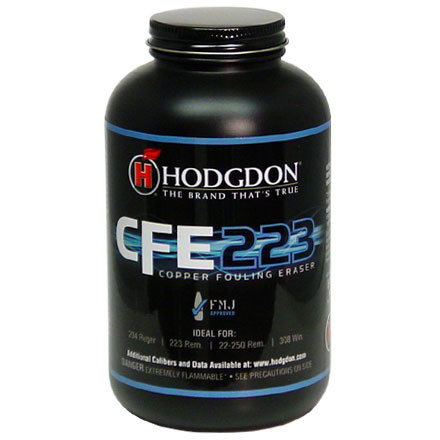
Gunpowder That Cleans Your Bore? Hodgdon CFE223 Smokeless Powder
Published: January 17, 2012 { 17 comments }I called Chris Hodgdon a couple of weeks before SHOT Show to get information on any new powders his company had for handloaders. I had recently seen a press release about Hodgdon’s new Copper Fouling Eraser (CFE223) and jokingly said to Chris, “So I hear you have a new powder that’s going to clean my gun for me.” Chris is not one to embellish or exaggerate, so his reply emphasizing how much this powder really does cut down copper fouling got my attention.
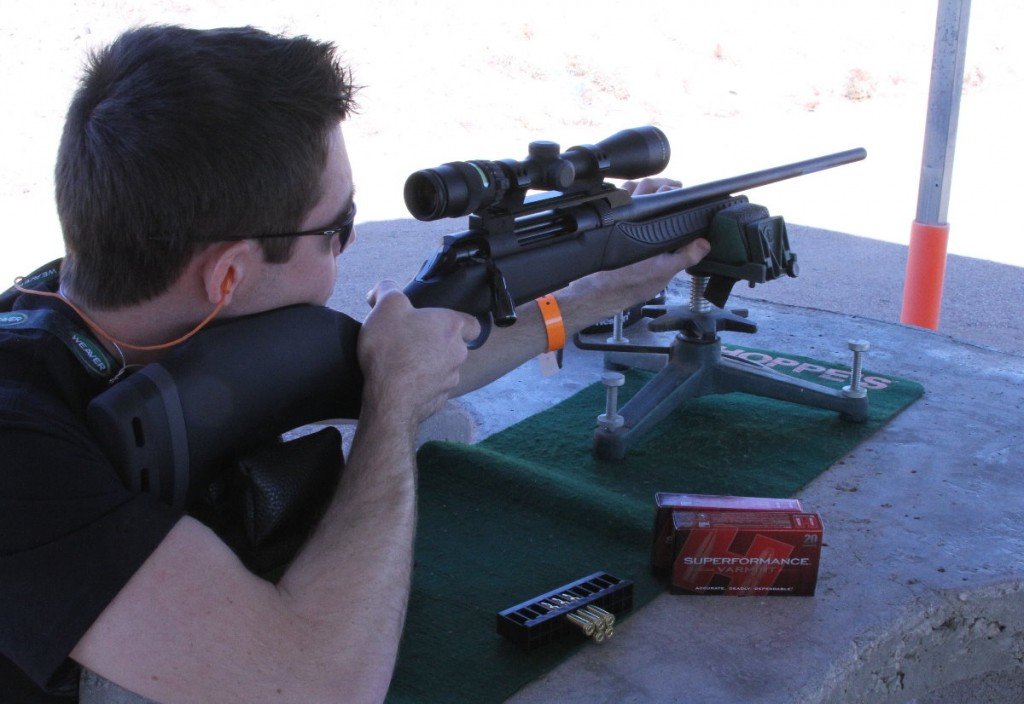
A New Era for Thompson Center – The Dimension Modular Rifle
Published: January 17, 2012 { 59 comments }I can’t say that the Thompson Center Dimension rifle is the biggest story at SHOT Show 2012, but it is definitely the most interesting. Being from New Hampshire myself, I was an early Thompson Center customer (I had a White Mountain Carbine) and have been a fan since. In fact one of the early articles on the GunsAmerica Blog was about out of the box MOA guns, and both the TC Venture and Icon made MOA easily, and they are both great values in a deer rifle.
By far the most famous product of Thompson Center is the line of pistols known as the Contender, then later the Encore and G2 Contender. If you are new to shooting sports, the Contender pistol series is a modular system that utilizes one universal frame and interchangeable barrels and forends for varying calibers. You buy one Contender, and several, or even dozens, of barrels, from .17 Hornet to .416 Rigby in the later versions. Several calibers were invented specifically for the Thompson Contender series, including the .30TC and numerous wildcats. A whole cottage industry of making Contender barrels sprung up over the years, based on the overwhelming success of the Thompson Contender. For the hobby shooter, there has never been a finer instrument to nerd out on with your reloading press and bench rest.
Fast forward to now, since TC was bought by Smith & Wesson, and a lot of us TC fans out there have been wondering what would become of our old friend, especially since the plant in Exeter, New Hampshire was closed last year. Smith & Wesson is a public company, so what the gun nerds think doesn’t always count when you boil everything down to nuts and bolts shareholder profits.
So it is with gratitude to the folks at Smith & Wesson that I say, Thompson Center is charging forward with a completely new, and revolutionary rifle system called the Dimension. It has been two years in the works and the Dimension made its debut today at Media Day at the Range, SHOT Show 2012. Take a look through the pictures here, and I will try to explain how it works to the best of my ability.

Springfield Armory XDS Single Stack .45ACP Micro
Published: January 17, 2012 { 359 comments }So far the biggest story I have seen at SHOT Show 2012 is the XDS from Springfield Armory. It is a single stack .45ACP that holds 5 rounds in the magazine and 1 in the chamber. The barrel is 3.3 inches, and the overall length is 6.3 inches. It is only one inch thick. Empty the XDS weighs 21 ounces, and it is a striker fired pistol in the tradition of the XD and XD(M), with a polymer frame and forged steel slide.
I don’t know how many times we need to say that Springfield Armory is always raising the bar, but Springfield Armory is always raising the bar. Last year at SHOT Show about a half a dozen companies came out with single stack 9mm ultra-compacts. Over the past year they have all come into the market, with mixed reviews on most (our favorite was by far the Walther PPS). This year some of those guns have now been released in .40S&W, and it is common for 9mm and .40S&W to share the same frame in pistols. But when you want to make a pistol that small in a .45ACP, you have to go back to square one and make a whole new gun, and that is what Springfield Armory did.