
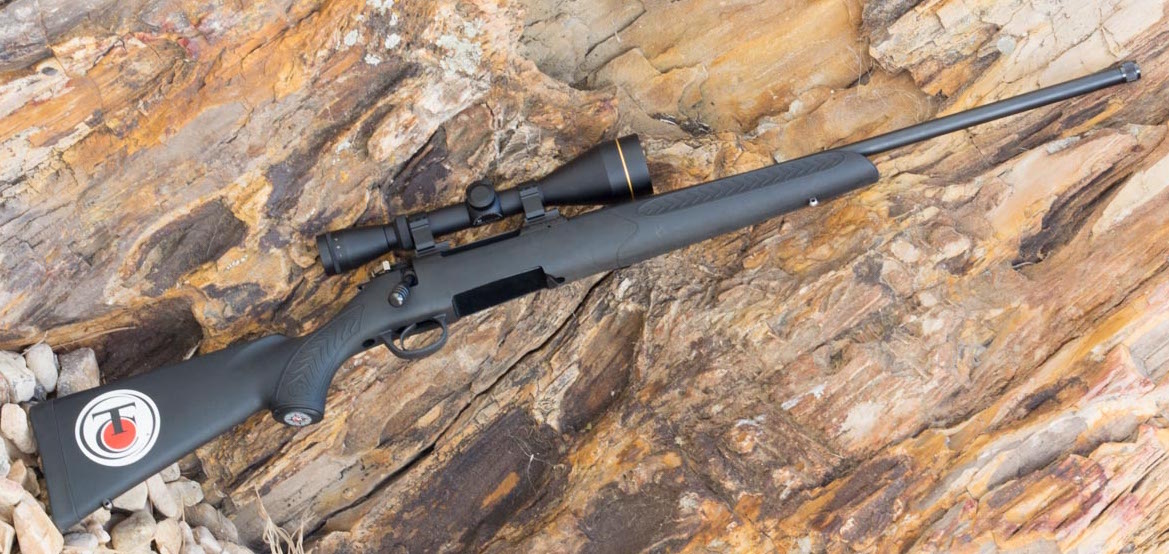
Thompson Center’s new Compass rifle is a bargain considering its performance.
To learn more, visit https://www.tcarms.com/firearms/bolt-action-rifles/t-c-compass-rifles/t-c-compass.
To purchase a Thompson/Center Compass on GunsAmerica.com, click this link: https://www.gunsamerica.com/Search.aspx?T=Thompson%20Compass.
I first fired one of the new Thompson/Center Compass rifles at a pre-release event and was immediately hooked. Why? It’s a very affordable rifle that shoots and handles like a very unaffordable rifle. What’s not to love about that?

Towards the end of my 780-round shooting binge, I might have slipped off the rifle rest…
My first impression of the Compass was very favorable. It’s not like I fired a few shots and made some snap judgment. Rather, I came to that conclusion after firing over 780 rounds from the same rifle in just two days. For a bolt-action rifle, that might qualify as cruel and inhumane punishment, especially considering that the barrel got so hot, I completely melted a rifle rest. Still no word on whether the gunsmiths back at Smith & Wesson have removed all the melted goo from that barrel… Anyway, I shot the heck out of one of these rifles, chambered in .204 Ruger, and it performed. As a result, I wanted to get my hands on a more versatile caliber model and give it a more in-depth trial.
Compass II Key Specifications
- Calibers: Available in .223 Remington, .243 Winchester, 6.5 Creedmoor, .270 Winchester, 7mm Remington Magnum, .308 Winchester, .30-06 Springfield, and .300 Winchester Magnum.
- Capacity: 5+1 rounds
- Barrel: 21.625-inch threaded barrel, standard threading at 5/8×24
- Overall Length: 41 inches
- Weight: 7 pounds
- Stock: Black polymer
- Finish: Blued steel
- Sights: None included, but scope bases come pre-installed
- Trigger Pull: Factory set at 3.4 pounds
- MSRP: $405
This lineup offers plenty of flexibility when it comes to caliber selection, whether you’re chasing whitetails, testing your skills at the range, or prepping for a larger hunt.
The sample for this review was a Compass chambered in .308 Winchester. As of this writing, Thompson/Center also offers the Compass in the following calibers: .204 Ruger, .223 Remington, .22-250, .243 Winchester, .270 Winchester, .300 Winchester Magnum, .308 Winchester, .30-06 Springfield, 7mm Remington Magnum, and 7mm-08. During SHOT Show 2017, the company announced yet another caliber option – 6.5 Creedmoor.

The Compass barrel is comfortably free-floated. You can easily slide a business card all the way to the receiver.
Barrel Lengths and Threading Options
Barrel length on the Compass II varies by caliber, so you can expect either 21.625-inch or 24-inch free-floated options depending on the chambering you select. If you like to run suppressors or muzzle devices, you’ll appreciate that the muzzles are already threaded—either 1/2×28 or 5/8×24—making it easy to add your favorite accessory from brands like SilencerCo or SureFire right out of the box.
How Does the Compass II Stack Up?
If you’re scouting around for alternatives, it’s interesting to note how the Compass II positions itself among popular bolt-action options. Price-wise, it undercuts both the Ruger American Rifle and the Winchester XPR, coming in with a retail tag of $405, which leaves a surprising bit of change in your pocket compared to the Ruger ($489) or the XPR ($549).
As for heft, the Compass II tips the scales as the heaviest of the trio—about four ounces more than the Winchester and nearly a pound heavier than the Ruger American. Still, it stands out as the only one of the bunch to sport 5R rifling, which brings some unique advantages for accuracy and barrel maintenance.
Key Design Features Carried Over
Much of what made the original stand out makes a return here, with some welcome consistency. The Compass II continues the tradition with a full-diameter bolt, ensuring you get that same smooth cycling found in the predecessor—something you typically don’t find in rifles of this price range. It keeps the three-lug bolt design, which means you benefit from a shorter bolt lift and faster follow-up shots.
The rotary magazine is another carryover, fitting securely and clicking into place without any hassle. For those who appreciate intuitive operation (any fellow Winchester Model 70 fans out there?), the familiar three-position wing safety is present as well, providing a reassuring sense of control and familiarity.
Notable Improvements with the Compass II
So, what’s new in the Compass II, and does it matter to anyone who’s ever gnawed their fingernails during Range Day? The most significant upgrade is the Generation II trigger, and for budget-minded shooters, this is a win. Instead of the gritty, heavier pull on the original, the Compass II now features a redesigned, bladed trigger that consistently breaks right around 3.4 pounds—smooth, predictable, and confidence-inspiring. (I tested with a Wheeler gauge; no fishing scales required.)
The essentials from the Compass remain, but Thompson/Center didn’t stop there. The full-diameter bolt and three-lug action design make for smoother cycling and a noticeably shorter bolt lift. Translation: faster follow-ups without feeling like you’re wrestling an old door hinge.
The original rotary magazine design returns, but it’s been refined for a more secure fit—no more wiggling or fiddling or the dreaded mag drop right when you’re trying to impress at the bench. Fans of the classic Winchester Model 70 will appreciate that the three-position safety sticks around, wing-style and intuitive, while the stock itself sports nicely contoured grip panels and a chunky recoil pad that actually fits the shoulder pocket—unlike some cut-rate competitors where comfort is an afterthought.
Another pain point addressed: overall build quality is up. No more questionable seams, nothing that rattles or feels like it’s playing “guess which part will fail first.” Controls, from the safety to the bolt release, operate crisply. Even the muzzle threading is clean and even, so you won’t end up cross-threading your favorite suppressor or brake.
Overall, with Compass II, the improvements are purposeful and noticeable—making it a real contender in a category where details matter.
The Quick Tour
Build Quality Compared to the Budget Crowd
Budget rifles can be a mixed bag, but the Compass stands out as a pleasant surprise. Unlike some entry-level options that sport clunky controls and plastic parts prone to wiggling like a loose tooth, the Compass shows real attention to detail. Parts fit together neatly—no rattles or unsightly gaps to be found after a day in the field or a season in the safe.
The wing safety and bolt release both move with satisfying precision, avoiding the cheap, toy-like feel you sometimes encounter on rifles at this price point (looking at you, big-box specials). Even touches like the threaded muzzle show care, with clean, even machining—none of that haphazard cross-threading headache seen on some competing models. In short, the Compass feels solidly built compared to its budget classmates, punching slightly above its weight in both durability and finish.
Stock Design and Comfort
One of the first things you’ll notice when shouldering the Compass II is its stock—it’s more than just a place to rest your cheek. The synthetic stock comes equipped with boldly textured grip panels sporting deep, V-shaped contours. Whether your hands are wet, cold, or gloved, these generous grip zones lock your hand in place for solid control, much like the tactile grips you’ll find on a Weatherby Vanguard.
A thick, well-fitted recoil pad at the rear helps take the sting out of firing, even if you’re putting .308 or 6.5 Creedmoor downrange. While these cartridges aren’t known for punishing recoil, the pad’s dense construction makes shooting even more comfortable, especially during longer sessions at the range or on a hunt. It’s the kind of feature you’d expect on higher-end models but is a welcome addition here.
The straight comb of the stock encourages a consistent cheek weld, helping with proper sight alignment whether you’re shooting offhand or from a bench. The design also keeps things simple—no adjustable bells and whistles, just effective ergonomics that help you stay on target. One thing to keep in mind: the fore-end, with its slightly ramped profile, is wide enough to offer stability from field rests or a bipod, but it could also let in debris or snow if you’re trekking through the backcountry, so a little awareness is always smart.
Let’s start with the barrel as that’s the really important part, at least for accuracy and longevity. This model features a 1:12 twist rate, but that’s caliber specific, so yours may vary depending on which model you choose.
What Does 5R Rifling Bring to the Table?
The 5R rifling pattern isn’t just neat to look at; it offers some practical benefits, too. Instead of the typical even-numbered lands and grooves, 5R uses five, with each land set at a gentler, more angled edge compared to the sharper corners you’ll find in traditional rifling (think Remington’s approach, not your grandpa’s old hunting rifle).
This unique design aims to minimize how much the lands cut into the bullet jacket, reducing deformation as the bullet zips down the barrel. In theory, less bullet distortion equals better downrange accuracy—a claim that’s found loyal fans among precision shooters.
There’s also an edge in maintenance: the rounded lands mean fewer sharp corners for fouling to cling to, making the bore easier to clean after a long day turning ammo into noise. These tweaks might sound subtle, but those who have spent time behind rifles with 5R barrels—like a certain Prairie Dog Compass after a few hundred rounds—often walk away impressed with easier cleaning and tight groups on target.
[one_half]
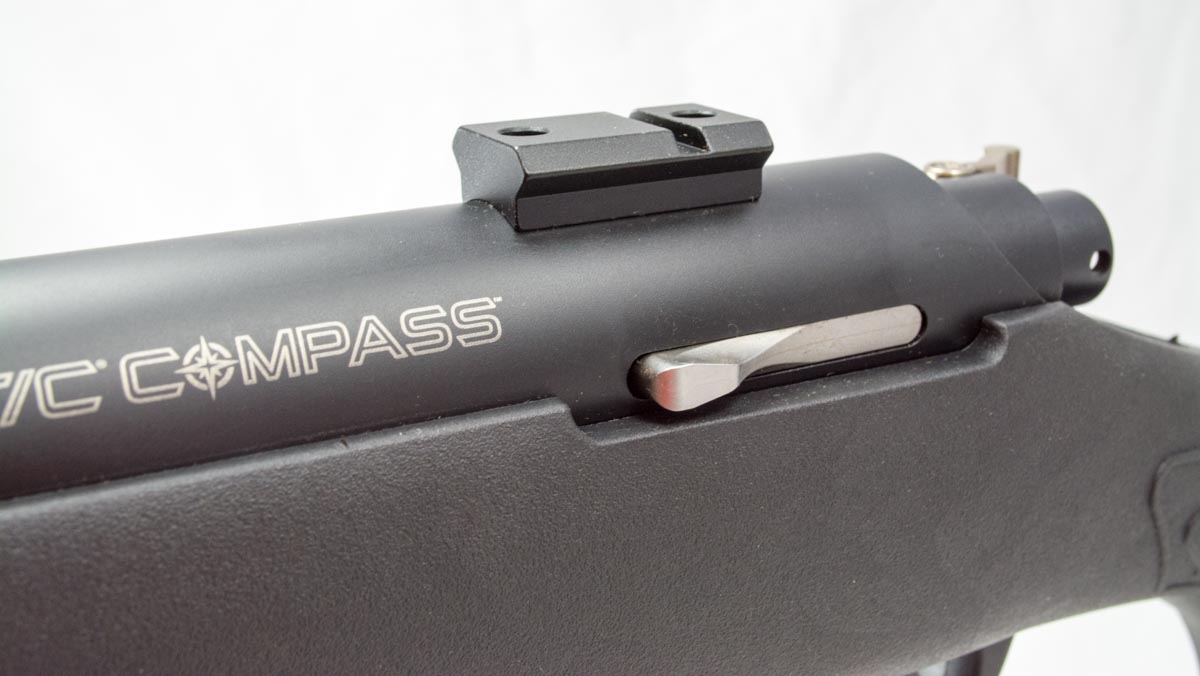
The Compass comes with scope ring bases installed, so adding an optic requires only the right size rings.
[/one_half]
[one_half_last]
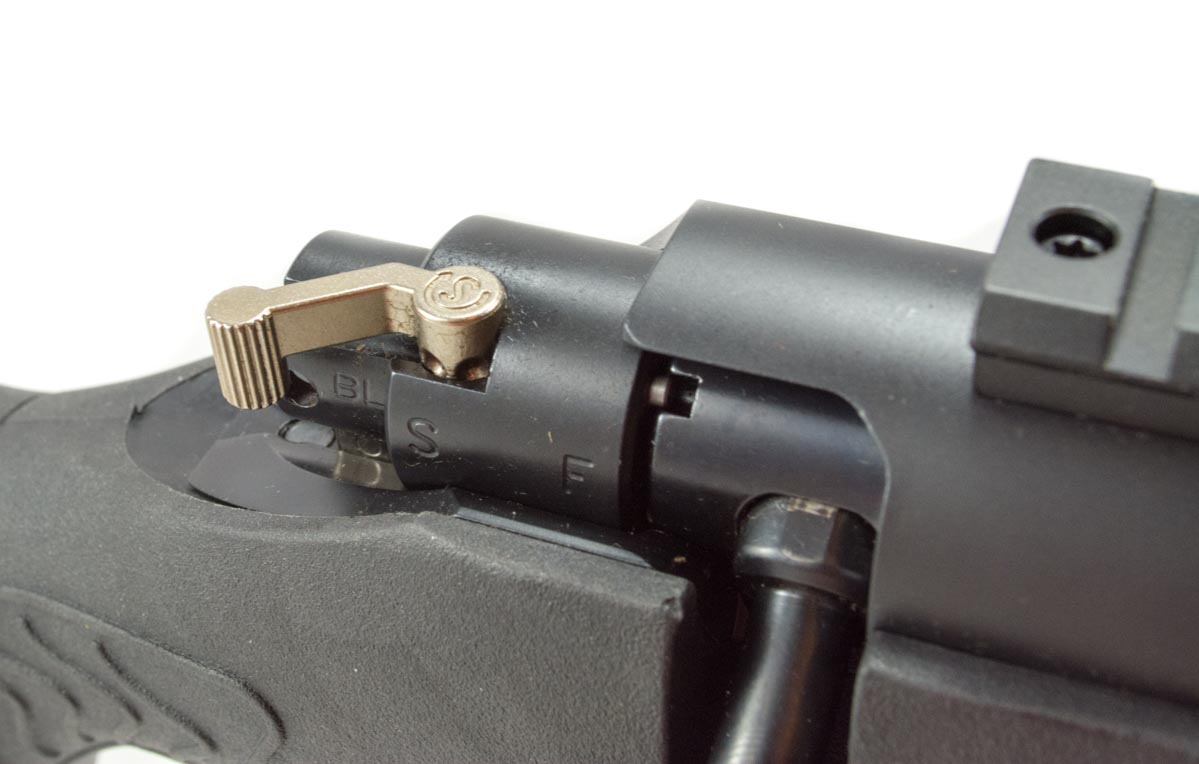
The three-position safety is easy to reach from a normal firing grip.
[/one_half_last]
So the marketing benefits claim accuracy, but so does everyone. What makes this $399 MSRP rifle stand out is that it comes with something far more rare in its price range, a minute of angle accuracy guarantee. Simply put, Thompson Center puts in writing that your rifle will shoot three shots into a one-inch group at 100 yards. Of course, you have to use quality ammunition that’s capable of the same accuracy, not junk. I put that to the test, and we’ll cover the results later in this article. Or you can ask relatives (if there are any left) of the disintegrated Prairie Dogs if this rifle is capable of hitting them from 300 to 600 yards away. The answer is a resounding yes.
There’s one more big thing to mention about the barrel. It comes factory threaded. I love this feature because once you shoot suppressed, you’ll never go back. It’s so easy for a manufacturer to add this at the factory and such a pain to do on your own. The threading pattern varies by caliber. For example, .204 Ruger, .223 Remington, and .22-250 feature a 1/2×28 TPI pattern while .243 and larger caliber rifles have a 5/8×24 TPI pattern. The Compass comes with a thread protector cap with a knurled surface so you can easily remove it by hand.
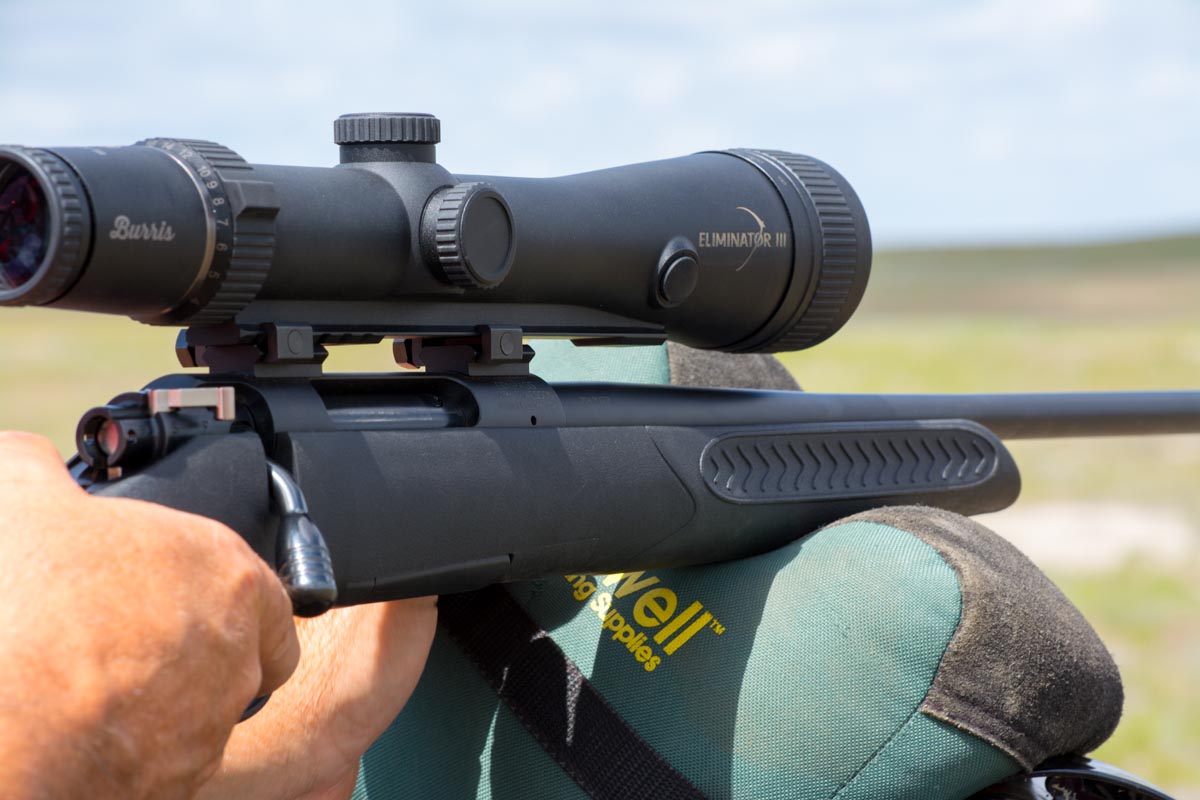
For a while, I mounted a Burris Eliminator III laser range finding scope. That made prairie dog hits at 500 – 600 yards with the .204 Ruger-chambered rifle somewhat easy.
The timing on an affordable factory rifle with a threaded barrel couldn’t be better. I’m very encouraged by the possibility of the Hearing Protection Act passing and being signed into law something this year. That means that buying a suppressor will be no harder than buying the rifle itself. No special paperwork, no $200 check to Uncle Spendy, and no waiting period of six to 12 months to get your suppressor. Pester your Congress Critters on this issue now, we’ve never had a better opportunity to get this done.
Moving on, the Thompson/Center Compass employs a detachable magazine. The magazines in all calibers are flush fit with the bottom of the stock, so you don’t have to worry about the rifle getting hung on on gear, rests, or your support hand. Capacity depends on caliber. Most calibers have a five-round magazine capacity, and Magnum calibers have a four-round capacity. The .308 Winchester model shown here holds five rounds in the magazine plus an extra in the chamber if you like. The magazine drops out the bottom of the stock with the press of an inset lever. It’s an easy system, and I found the magazine simple to load. Of course, you can leave an empty magazine in place and single feed into the chamber as well. The magazine itself is mostly polymer, so it’s almost entirely rust-proof.
Rotary Magazine: Details and Field Impressions
The Compass II sticks with the proven rotary magazine design, which locks smoothly and securely into the rifle. In practice, loading the magazine is straightforward, and it slides neatly into place without any wrestling. Just pay attention to how the cartridges are seated—if a round’s tip is angled up too much, you might experience a missed feed. But that’s true of plenty of rotary systems out there, not just this one.
I have to say, the overall construction feels more robust than the bargain-bin plastic mags you’ll find in some other value-focused rifles. The polymer build shrugs off wet days and gritty environments with ease, so you won’t be babying it in the field. Capacity holds steady at five rounds for standard calibers, and four for magnums—plenty for a morning on the prairie or a day at the range.
[one_half]
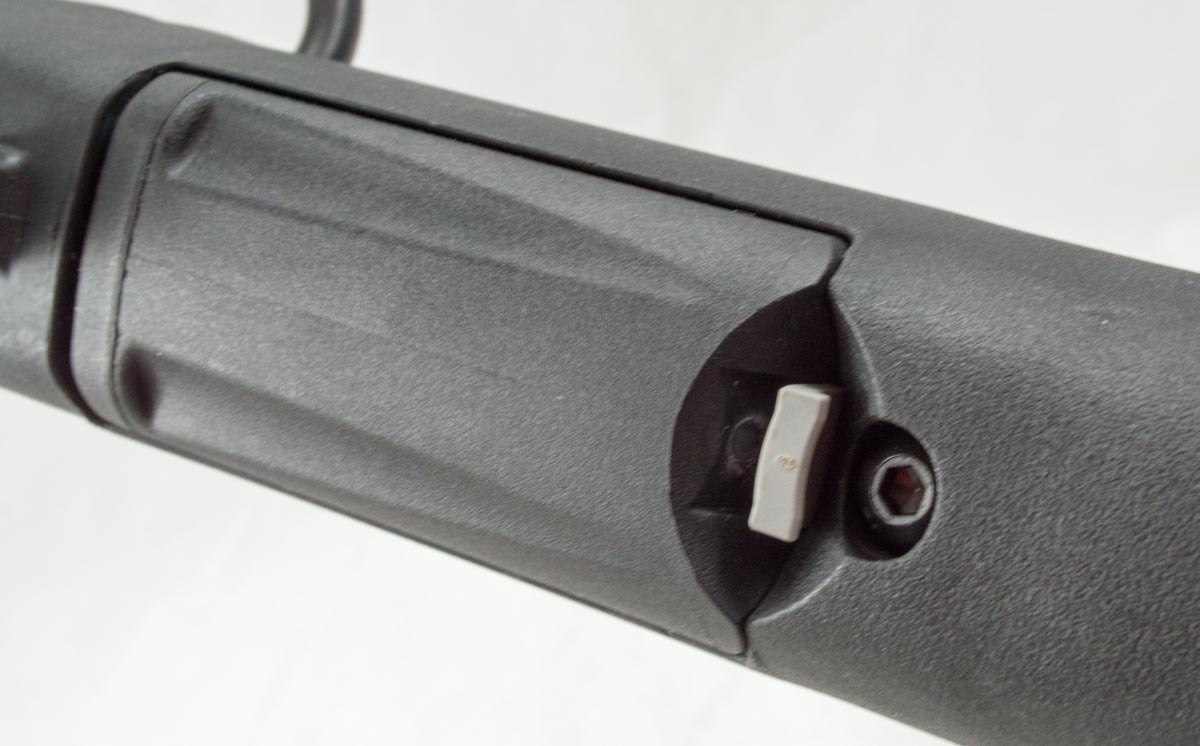
The detachable box magazine holds five rounds of most calibers, four for magnum sizes.
[/one_half]
[one_half_last]
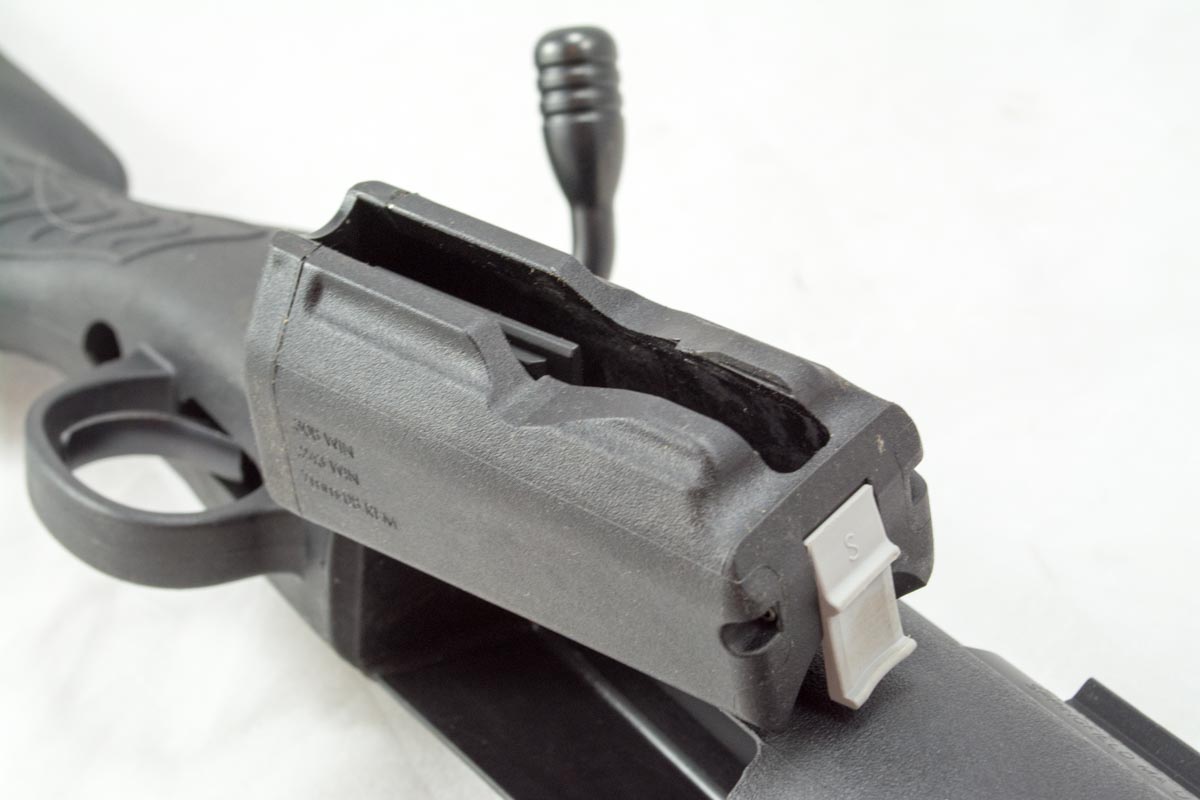
The polymer magazine is ready for field conditions and designed to resist rust and gunk.
[/one_half_last]
Improved Trigger Performance in the Compass II
The Compass II takes things up a notch in the trigger department. The Generation II trigger features an updated bladed design and arrives from the factory already set lighter than its predecessor. In my hands and with a Wheeler gauge on standby, I found the break hovered right around 3.4 pounds after a series of ten pulls—noticeably lighter and crisper compared to the original Compass.
This new trigger doesn’t just shed weight; it provides a smooth, consistent pull without any grit or creep getting in the way. The result? A reliable and predictable trigger press that’s easy to manage, helping you squeeze off more accurate shots whether you’re at the bench or in the field.
Bolt Action and Handling
Much like its predecessor, the Compass II carries forward a bolt design that delivers the goods where it counts. The full-diameter bolt glides along the raceway with a smoothness you don’t often see in this price bracket—think more along the lines of a well-broken-in Tikka than what you’d expect from your buddy’s loaner rifle. Thanks to its three locking lugs, you get a snappy 60-degree bolt lift, which makes quick cycling a breeze. No need to wrestle the handle up near your scope or punch yourself in the cheek when chambering the next round. The end result? Fast follow-up shots and an operation that feels reassuringly robust, even when your hands are gloved up or half-frozen after a morning in the field.
The bolt operation is smooth and positive. it uses a three-lug design that offers plenty of strength and a solid lockup. The bolt lift angle is 60 degrees. In plain English, that means that the bolt operates without the operator having to live the handle too high. If you have a scope mounted, that leaves clearance for your hand with less chance of interference from the scope body.
One of the hidden gems in this rifle is an adjustable trigger. Using a series of three nuts, you can make easy adjustments to both pull weight and over-travel. Just remove the action from the stock, and you’ll see those three nuts behind the trigger assembly. The two on the top adjust the pull weight while the single one on the bottom sets the over travel distance. It goes without saying to exercise extreme care while tinkering with the trigger. Too light a weight can be dangerous, and the wrong over travel setting can prevent your rifle from firing at all. When finished, apply a couple of drops of nail polish to keep everything locked in place.
From the factory, the trigger weight on this particular rifle measured a consistent five pounds. A little on the heavy side for my preference, but since it’s fully adjustable, I see why the Thompson/Center folks send it out on the weightier side. The single-stage trigger is grit-free and has a nice crisp break. If I keep this rifle, I might consider adjusting the trigger down to 3 1/2 pounds, but other than that, it’s good to go.
The safety is mounted on the rear right side of the bolt and easily accessible by the firing hand thumb. It’s a three position safety that performs the following functions:
– Locks the trigger and bolt operation. If you’re trekking through the woods, you might use this safety position to ensure no accidental discharges or unplanned bolt openings.
– Load and unload. The center safety position allows the bolt to operate so you can load a shell into the chamber or remove one. This position prevents trigger operation.
– Fire. As the name implies, this one unlocks everything so you can operate the bolt and fire a shot.
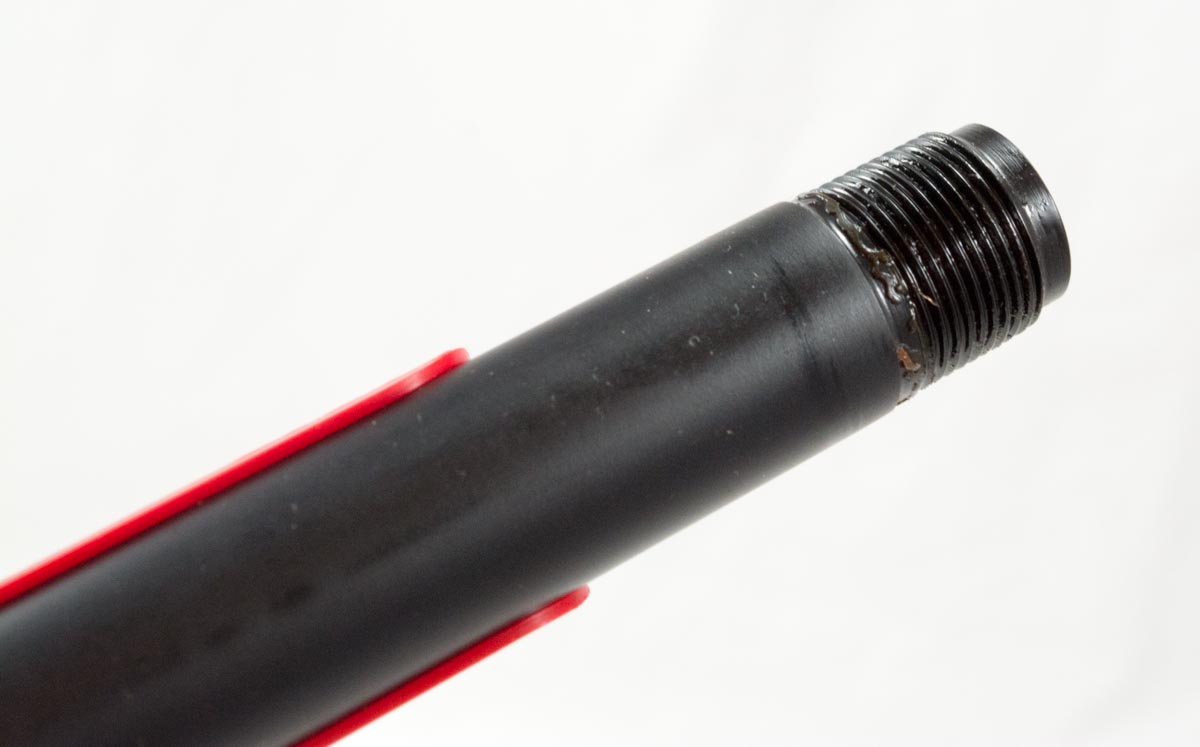
One of my favorite features is the factory threaded barrel.
Potential Drawbacks: Fore-End and Bolt Knob Considerations
While I’m a fan of the straight comb stock—my cheek weld appreciates the consistency—there are a couple of quirks worth noting. The fore-end is styled with a bit of an upslope, almost as if it’s beckoning stray pine needles, mud, or a snowflake or two to join the party between barrel and stock. In particularly messy conditions, you might end up with some debris sneaking in for a closer look, but unless you’re planning on a snow angel mid-hunt, it’s unlikely to cause major headaches.
As for the bolt knob, you’ll notice it sports that familiar honey dipper look. It works just fine, but on the petite side at about 0.6 inches in diameter. If you’re used to the oversized bolt knobs found on some tactical rigs or certain models from Savage or Ruger, this may feel a tad dainty by comparison. For folks with bear paws or if you love operating with gloves in place, it’s something to keep in mind.
Three-Position Safety Mechanism
The Compass II features a practical three-position safety mounted on the rear right side of the bolt—right where your thumb naturally rests. This setup gives you versatile control over the rifle’s operation:
- In the rear (fully engaged) position, both the bolt and trigger are locked. This is ideal when you’re hiking through brush or transporting the rifle, eliminating worries about accidental bolt openings or unintentional discharges.
- The middle position allows you to operate the bolt—handy for safely loading or unloading a round—while still blocking the trigger.
- Move the safety all the way forward, and both bolt and trigger are free to use, putting the rifle in firing mode.
This user-friendly design is a big plus if, like me, you appreciate that extra margin of safety during field use. It’s a familiar and intuitive system for those who have spent time with iconic hunting rifles, and works smoothly on the Compass II.
Shooting the Compass
Proven Accuracy at 100 Yards
So, what kind of real-world precision can you expect from the Compass II when you head out to the range? In my own experience, it lived up to that bold minute-of-angle accuracy guarantee. With three different brands of factory ammunition, the rifle consistently punched out tight groups—think somewhere in the neighborhood of 0.8 to 1.3 inches for three shots at 100 yards. For a rifle in this price bracket, that’s impressive. Whether you’re ringing steel targets or squaring off with wary prairie dogs on the far edge of the field, the Compass II flat-out performs like a champ.
I mounted a Burris Fullfield E1 3-9x40mm scope to the compass as it seemed an appropriate price point match. The compass includes Weaver-style sight bases, so all I needed was a set of one-inch rings to finish the process.
I fired some shots “as is” to feel the relative recoil of the Compass .308 with nothing done to the muzzle. Recoil was mellow, and the substantial recoil pad was easy on the shoulder.
Recoil Pad Performance
Even though the 6.5 Creedmoor is no shoulder-breaker to begin with, I found the generous recoil pad on the Compass made a noticeable difference. Each shot was tamed to a gentle push rather than a sharp jab, letting me stay comfortable through extended range sessions. The pad’s cushioning helped minimize felt recoil, soaking up what little kick the Creedmoor delivers and making follow-up shots a breeze.
[one_half]
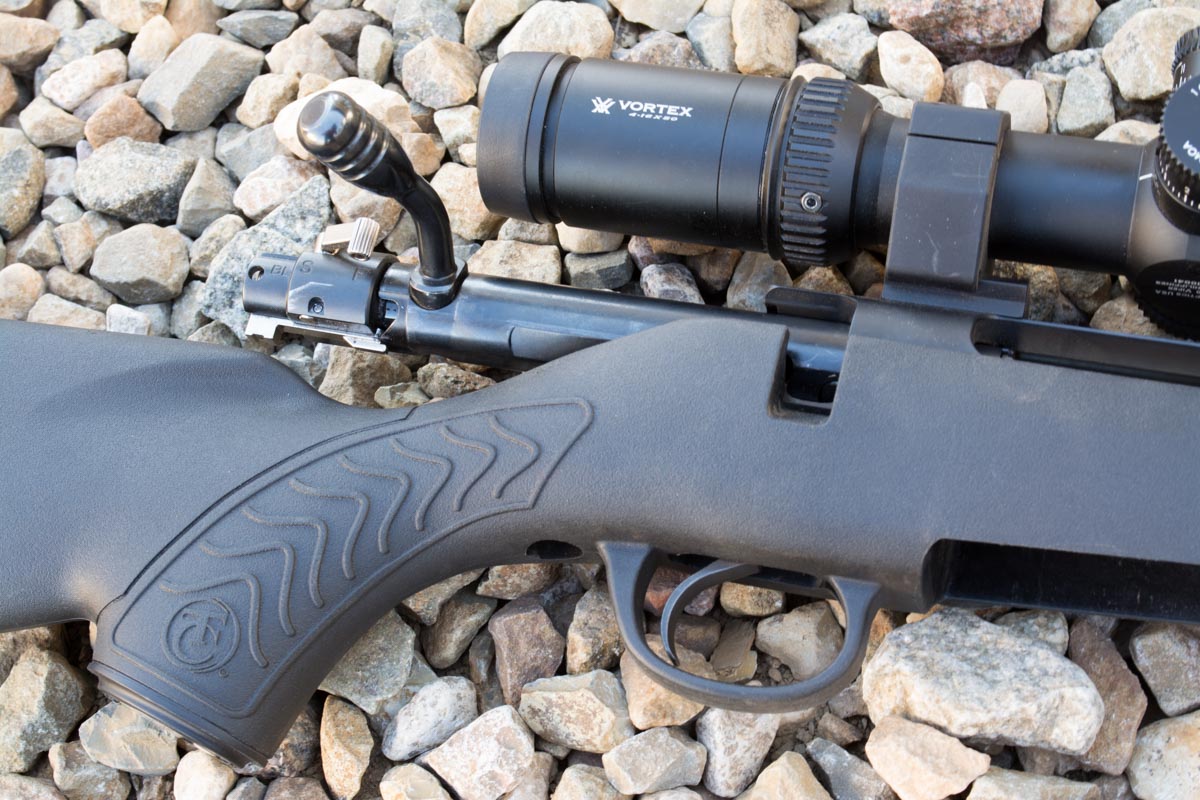
The bolt throw is 60 degrees so optics won’t get in the way.
[/one_half]
[one_half_last]
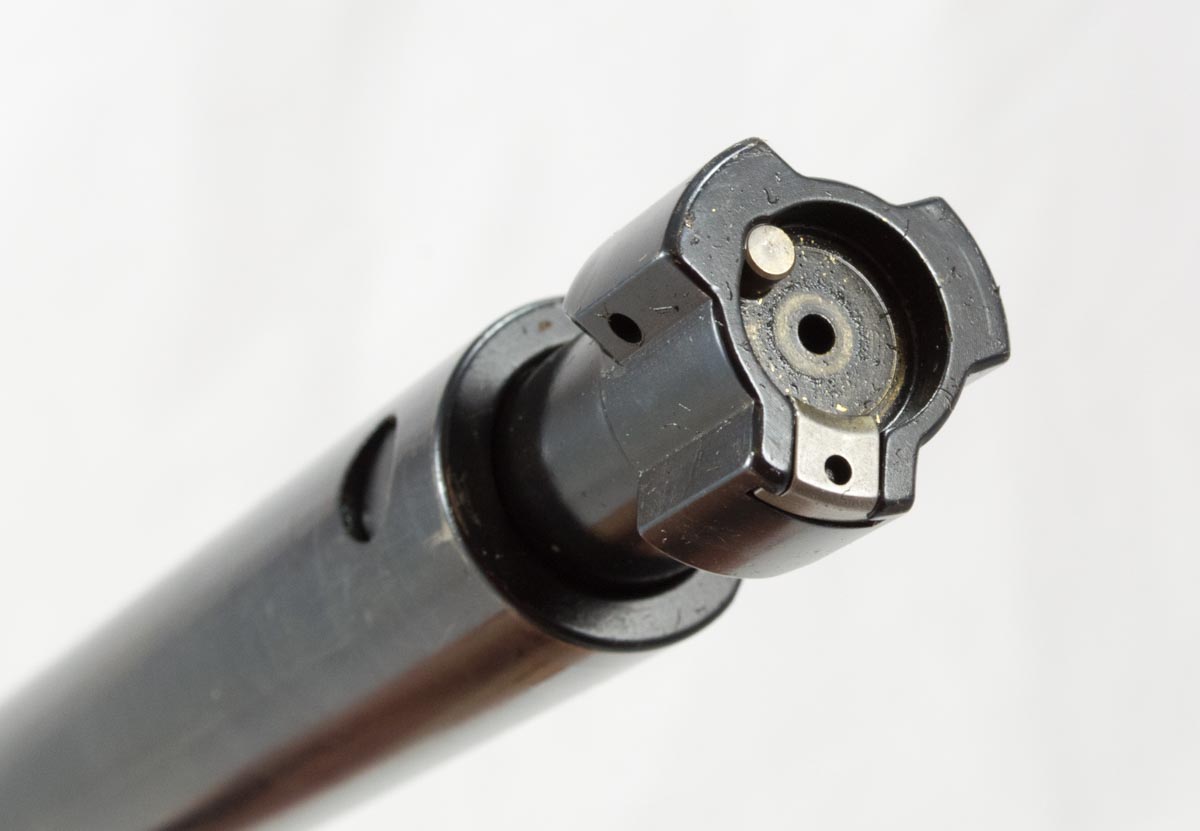
The bolt locks with three large lugs.
[/one_half_last]
With that out of the way, I decided to put the threaded muzzle to good use. I mounted a SilencerCo ASR muzzle brake so I could attach a SilencerCo Specwar 762. That made shooting the Compass a whole new bundle of fun, so I kept it on for the rest of the shooting. While physics is still physics, the addition of the big heavy silencer mellowed out perceived recoil even more and brought the noise down to a much more neighbor-friendly level.
For ammo, I used four different factory loads:
Sig Sauer Elite Performance .308 Winchester Match 168-grain. These cartridges are loaded to exacting tolerances and use the world-class Sierra Matchking projectile.
Federal Premium Gold Medal 168-grain. Also using the Sierra Matchking projectile, this one is an accuracy demon.
Federal Premium Gold Medal 175-grain. For longer range applications, this load uses a slightly heavier Sierra Matchking bullet.
Federal Premium Fusion 165-grain. This load is, for lack of a better word, a bonded type of expanding hunting round where the jacket is fused to the lead core inside. It’s designed for expansion and consistent penetration, not match grade accuracy.
First up I shot for velocity, using a Shooting Chrony Beta Master Chronograph placed 15 feet down range from the now relatively quiet muzzle. I didn’t record velocities without the suppressor attached, but you might assume that the numbers below have a slight velocity boost from the suppressor, perhaps 20-30 feet per second.
|
Velocity (feet per second) |
|
| Federal Gold Medal Match .308 Winchester 168 grain |
2,621.7 |
| Federal Gold Medal Match .308 Winchester 175 grain |
2,620.3 |
| Sig Sauer Match Grade OTM .308 Winchester 168 grain |
2,638.0 |
| Federal Fusion .308 Winchester 165 grain |
2,643.7 |
For accuracy, I set up targets and 100 yards and fired three shot groups. With a “hunting” rifle like this, I prefer not to heat up the barrel with higher shot volume, and the three-shot approach is more of a realistic indicator of what it needs to do in the field. I fired from a concrete bench using a Blackhawk! Titan III adjustable rest with rear bag. I weighed down the Titan with a 25-pound bag of lead shot to firm things up. I also kept the suppressor attached for all the accuracy shooting. Because fun. Also, while suppressors usually cause a constant shift in point of impact, I’ve not yet seen one that had a negative impact on accuracy, so I didn’t feel like keeping quiet would skew the accuracy measurements of the Compass rifle.
Here’s what I measured.
|
Distance |
Group Size (3 shots) |
|
| Federal Gold Medal Match .308 Winchester 168 grain |
100 |
.58” |
| Federal Gold Medal Match .308 Winchester 175 grain |
100 |
.92” |
| Sig Sauer Match Grade OTM .308 Winchester 168 grain |
100 |
.67” |
| Sig Sauer Match Grade OTM .308 Winchester 168 grain |
200 |
2.16” |
| Federal Fusion .308 Winchester 165 grain |
100 |
2.01” |
So, using match grade ammo, the Compass absolutely lived up to its one minute of angle factory guarantee. As for the Fusion results, that’s consistent with most every other Fusion caliber and load combination I’ve tried from different rifles. It’s designed for penetration and expansion performance, not match accuracy, so the larger group didn’t surprise me.
[one_half]
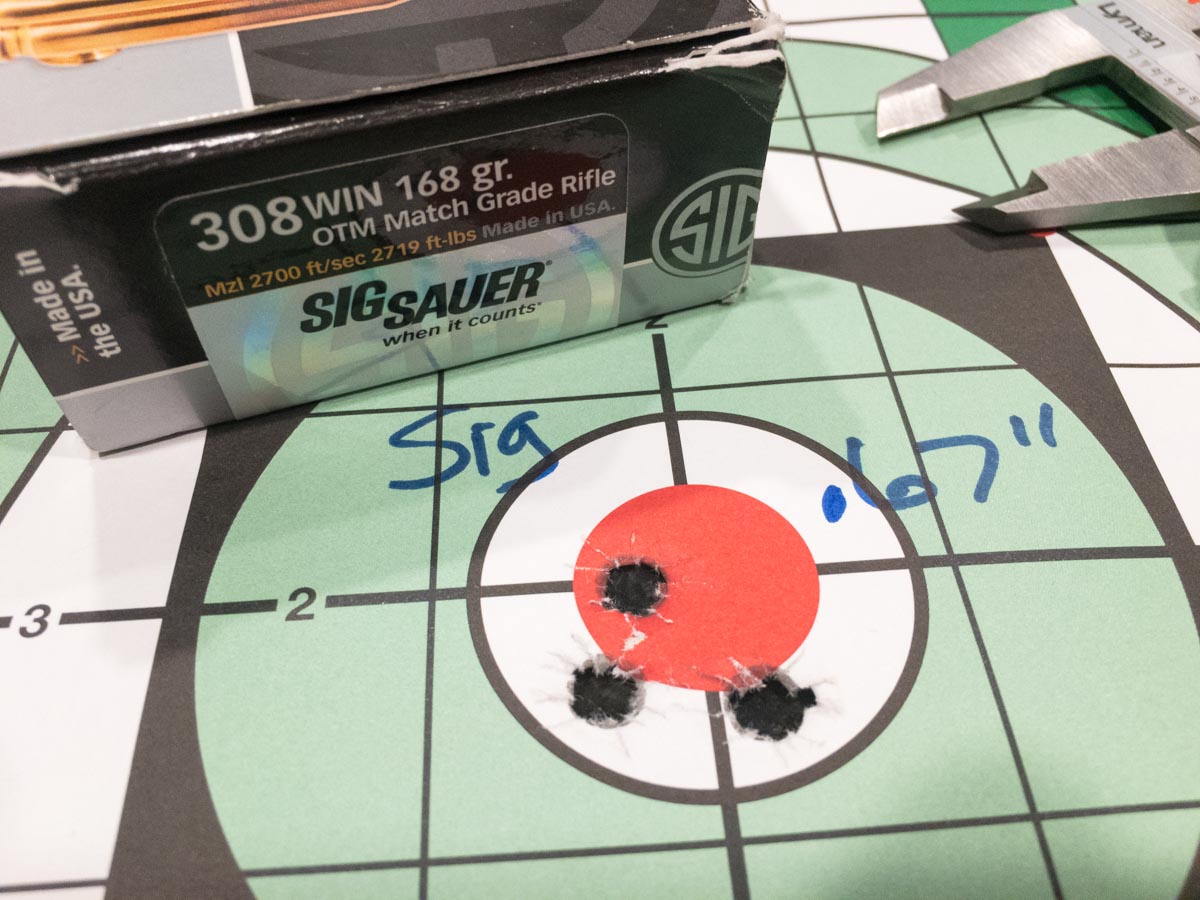
The Compass had no trouble living up to its one minute of angle accuracy guarantee.
[/one_half]
[one_half_last]
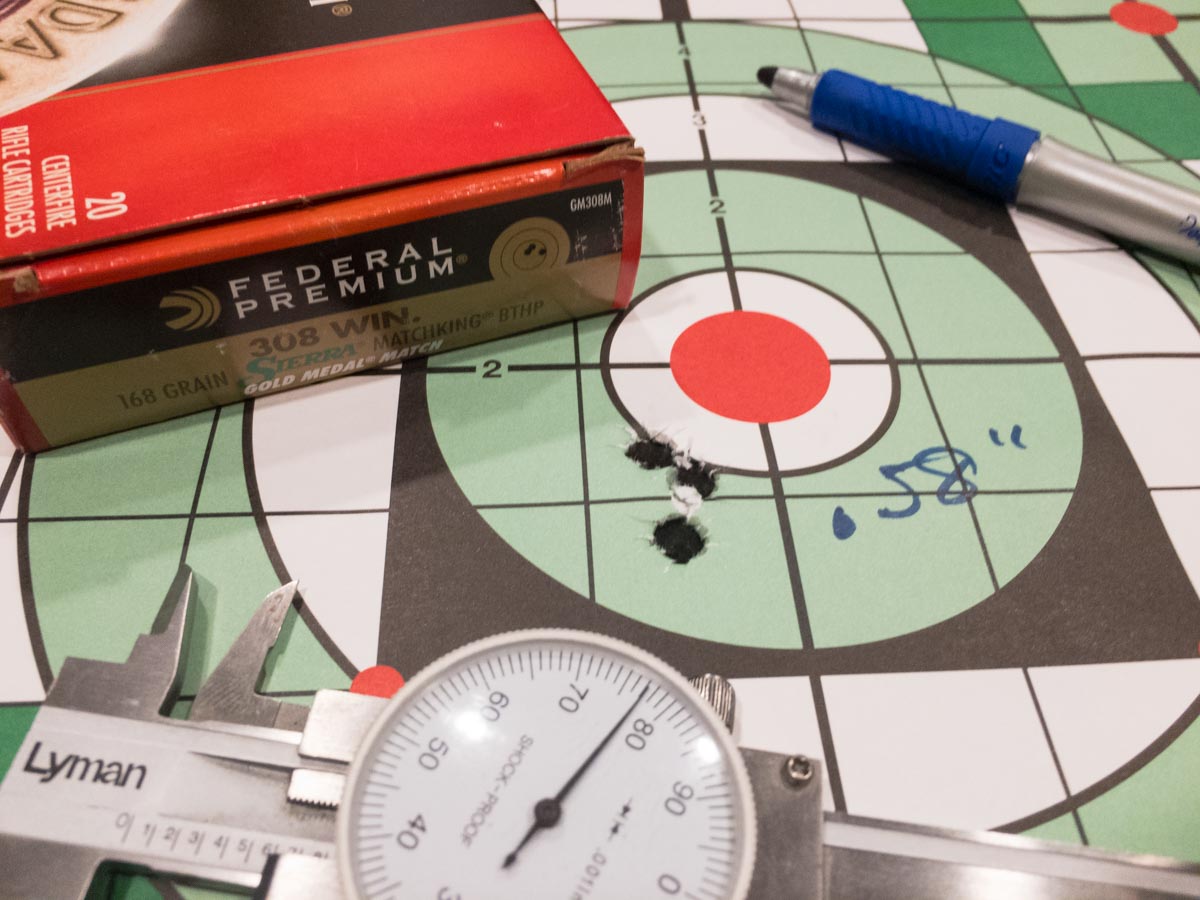
The Federal Premium 168-grain match grade load turned in the best 100-yard groups.
[/one_half_last]
Closing Arguments
Ideal Rifle for the Dedicated Hunter
If you spend much of your season slipping into tight box blinds, squeezing into ground blinds, or maneuvering among the limbs of a tree stand, the compact build of this model is a genuine asset. Hunters who value portability—especially those navigating the thick woods and close quarters so common in the East—will appreciate its shorter overall length and barrel.
For anyone seeking a reliable addition to their deer camp arsenal—without straining the budget—this is an option that delivers impressive performance for the investment.
There’s a lot to like about this rifle. With an MSRP of $399, you’re going to find it for somewhat less than that if you shop for it here on GunsAmerica.com. The accuracy and associated minute of angle guarantee is a rare thing for a rifle at this price point. Then you factor in things like the threaded barrel and adjustable trigger, and you’re quickly getting a lot of value for that four hundred bucks. I’m getting one. Perhaps a 6.5 Creedmoor … .
How the Compass II Stacks Up in the Budget Rifle Arena
Let’s talk about how the Compass II fares against its competition—because, let’s face it, when you’re comparison shopping, dollars and details count. The Compass II rolls in with a suggested retail price of $405, which undercuts popular competitors like the Ruger American Rifle and Winchester XPR by a decent chunk of change. That means more money left in your pocket for optics, ammo, or maybe a celebratory steak dinner after your first range trip.
But value isn’t just about being the cheapest game in town. The Compass II brings some engineering muscle to the table with features you don’t often see at this price point. Take the 5R rifling, for example—found in far more expensive rifles—helping to deliver tighter groups and easier cleaning. Even though it tips the scales a few ounces heavier than its rivals, that extra heft translates to a little less felt recoil and a confidence-inspiring, solid build.
What really seals the deal, though, is the rifle’s real-world performance. Consistent sub-MOA groups with quality ammo show that this isn’t just budget-friendly; it’s a legit shooter that can hang with rifles costing hundreds more. Fit and finish? Better than you’d expect. Everything from the bolt release to the safety feels crisp, not chintzy, and the threaded barrel is ready for your favorite muzzle device or suppressor straight out of the box.
So, if you’re in the hunt for a new rifle that won’t hammer your bank account but still offers impressive accuracy, bulletproof build quality, and features you’d expect north of this price range, the Compass II makes an awfully strong case. Call it a reminder that you don’t have to sacrifice performance or feel for affordability—at least not here.
Price Point
The Compass II comes with a suggested retail price of $405, placing it well below competitors like the Ruger American Rifle and Winchester XPR.
To purchase a Thompson/Center Compass on GunsAmerica.com, click this link: https://www.gunsamerica.com/Search.aspx?T=Thompson%20Compass.

Literary assault dude writing guns & shooting books and articles. Personal accountability rocks!
I bought both my boys Thompson center compass rifles in 2018 and in 308 caliber and we have ran thousands of rounds and they run just fine. I do have a local gun Smith that I trust if we ever do have issues.
I’ve had one of these (in .308) for a couple of years now and I can honestly day that it’s worth at least 3-times what I originally paid for it. It does everything you could possibly ask of it significantly better than ever imagined. Plus, it comes with the finest trigger I’ve ever had the joy of experiencing, right out of the box.
If you’re in the market for an extremely accurate, all-around GREAT bolt-action .308 rifle, you’re not going to find any much better, even at 5-times the price. I couldn’t possibly be more impressed!
Spent a year in research, and I find for the money the Thompson Compass in .308 the best sub $1,000 snipe/bolt gun in the market. Yep that includes the beloved 700. The fact that I landed it a Academy Sports (with rebate) at $179 is just gravy.
With reasonable glass and GOOD ammo, you are a menace out to 1,0000 yards. 500-800, forget it — you rule.
Sub MOA is attainable (for me ) to 600 yards then it takes patience, practice and the right shot, but I hit 12×16 at 1,000 yards more times then I don’t. Remarkably well made, and the triple lug, IMHO, is a root cause to greatness. Barrel is exceptional at this price point. Value, reliability and accuracy and an embarrassing price.
OBTW the trigger an be brought down to 3 1/2, and the threaded barrel is so easy to add suppressor, flash—but you save so much on the gun, you can indulge in better optics which this gun WILL SUPPORT with performance. So glad I did my homework.
Whoops, sorry that’s 1,000 yards and 3.5 pound on the trigger pull. Please excuse typos!!!!
When did you buy yours to get a 3.5lb pull? Anything produced after the Recall supposedly ships with a 5lb minimum pull trigger.
I bought two of these rifles, one in 6.5 Creedmoor, and the other in 22-250, my friend also bought one in .308, for under $200 with the $75 rebate you can’t beat this rifle.
Many people have complained about the trigger, but all three of these rifles have a nice crisp trigger at 5 pounds, far better than many other more expensive rifles I have, and all three shoot MOA with regular ammo, not the premium stuff, you can lighten the trigger on these also, but I would only do that on a rifle I’m not carrying around such as shooting varmints, or targets.
I fully suggest if you’re in the market for a rifle, buy one of these they’re great.
I own two of these. Love them!the shoot great out of the box. I see a few people complaining. dont get it I got mine for $199.99. Shoots great never a miss fire and I shoot Fusion ammo. for $200.00 there is no way anyone can complain. American made lifetime warranty…… hits the target! Great job T/C ans S&W.
Where did you find one for $199
The Compass is a very nice looking rifle. The reviews and rebate persuaded me to purchase one. After six months or so I took it to the range to sight it. I figured I would get accustomed to the rifle first and shoot some inexpensive rounds. I first tried four Russian Silver Bear followed by the same number of Aguila 7.62X51. Not a single one of the rounds would fire. Nice little dent in the primer but no fire-in-the-hole. It was a weekday so I whipped out my cell phone and called S&W. The Compass expert said I needed to use some better quality ammo. I borrowed a couple of rounds from another shooter and they both fired. Since I had no other “good” rounds I left. About three weeks later I went back with Winchester and Hornady Whitetail rounds figuring that should do the trick. Only 50% of the Winchester would fire and 66% of the Hornady. Not happy. I also had a new Savage AXIS II in .308 so I tried it with the four .308 size ammo I had. It would eat anything I put in it; cheap, mid-range or expensive ammo. I did have one Winchester not fire out of at least 30 rounds of various brands I fired that day. I took the Compass bolt apart and it all looked fine and had no hang-ups anywhere. There was plenty of firing pin movement range beyond the bolt face. I called back to S&W and they told me they had no history of this many duds with the rifle. It is in their hands now so I will attempt to do a follow-up when it comes back in early 2018. So, you can’t judge the book by its cover. The Compass sure looked good but the Savage worked good.
Bought my compass around Xmas. Shoot lots of cheap steel case TulAmmo. Not a single problem. Bought some nicer Aguilar brass boat tail and took it out. Was so excited to see what it would do with decent ammo. I now have 3 shells with dented primers. Drove to WallyWorld, got a box of Tulammo and a box of Winchester. Tulammo shot fine. Winchester shot fine, but had a definite, different zeroing point. Wish I could get the pin to strike hard enough to use the 4 boxes of Aguilar that I foolishly bought without trying first.
Many have had issues with the polymer stock here, and I would like to suggest an upgrade to laminate wood stocks such as Boyd’s – the prices are reasonable, the fit is drop in, and with a recoil pad installed it can be had in a lot of color combinations for about $150. Take your $150 street price rifle and add a $150 stock and you are still at the MSRP for the rifle and it will look and feel like a much more expensive one. Of course there are those who will ask why TC didn’t offer this kind of stock in the first place, and to them my answer is you don’t get a Lincoln at Ford prices. The point of a basic offering is just that – a low buy in price. Once you have it, the aftermarket manufacturers offer upgrade options for your base model. That is how the economy works. Some people are perfectly happy with polymer stocks and their idiosyncrasies, and for them they see no need for upgraded stocks. If you keep it in perspective, you are buying a low priced bargain rifle so don’t expect it to have the accoutrements of a model 70 Winchester – you truly do get what you pay for when it comes to features and fancies on firearms. Accuracy at a low price is the point of this rifle, and in that regard TC/S&W are providing a much needed product for the working man’s budget.
The trigger on my post-recall Compass is bad. It’s heavy. At its lowest setting it trips my trigger scale at over five pounds. It’s easy enough to remove one of the hex nuts and lower the pull to 3.5 pounds, but it’s no longer bump safe. Fortunately it’s only unsafe when bumped directly on its buttpad, but it’s still disappointing. There’s also a strange lever within the mechanism that has no apparent reason for being there. The Savage Axis has a worse trigger out of the box, but at least the Axis trigger is easy to fix.
And speaking of the Axis, the Compass has a heavier, grittier bolt lift than the Axis, which is saying something.
The Company tech support is not even aware of the weight in the trigger to prevent a dropped gun discharge. There is a weight in the trigger that prevents a drop fire now after the recall. but if you ever send the Thompson Compass line of rifles in for repair they farm it out to a third party to repair also.
So verdict. 1. Don’t change the trigger by taking out the weight. 2. You pay for what you get. 3. Is your life or someone else worth the savings of ($254.99 PLUS a $75 rebate).
Went to Field & Stream sportings goods store thinking to purchase a pistol but had seen the Compass advertised at an unbelievable price ($254.99 I think) PLUS a $75 rebate and I thought I’d at least look at one while I was there. I have several rifles with nice synthetic stocks and the optics have never had to be adjusted unless I switched ammo, so I was sceptical about the flimsy look in the ad. The store was out of the pistol I wanted to buy so I looked, and handled, the Compass in .308 and 30-06. It felt good, cheek-weld was excellent(for me), action was stiff(the safety too), and the synthetic magazine a little scary. But this is the day and age of synthetics from ARs to handguns so I looked for any positives I’d overlooked. I handload and the 30-06 magazine had little extra room for the new VLD bullets(yes, the counter person allowed me to insert a live round in the magazine that she removed from the rifle) but the .308 looked like there would be plenty of available space for bullet seating. So I bought it. And while waiting on approval picked up a lot of extras. I think the whole idea of being in a ‘Q’ while the background check takes place is to encourage browsing the aisle to find those items you just can’t live without! Even the checkout areas in grocery stores are loaded with enough stuff to feed anyone’s need for impulse buying. So my $179.99(after rebate) new rifle cost me $524 and change. Oh, and a side note: I was a day or two late on the sale price. The Sales Manager didn’t even blink, just gave the sales clerk his approval. I’ve found a new place to do my firearms buying.
With the $75 rebate and prices down to $255 this got my attention. The main deterrent is they changed the trigger after concerns of safety. I spoke with the factory and they now ship at 5 lbs which is the lowest setting. Adjustable to 6.5 lbs. The original was capable of 3.5 or so. The fix for the accidental firing was to increase trigger pressure? They told me they have no modification available to lighten trigger pull and do not recommend it. 5 seems a bit high if you are looking to dial in precision accuracy but then again, this is a $200 rifle.
I have a recent model in 308. Not a Model 70 for sure, but it does work as he says. Except you cannot adjust trigger below 5.5lbs. Maybe if you change the spring yourself. I have seen this type of issue with Smith before ( Walther PPK/s) , they need to step up and change how they market the trigger action.
This rifle is crap. Mainly because the trigger is bad and it had a recall in 2016. Problem is it would not pass a drop test when adjusting the trigger. After the recall the problem was not fixed, they just put a stronger spring in it. Passed the drop test, but the rifle now comes with a 6.5 lb pull! The man I emailed in TC repair dept told me it doesn’t have an adjustable trigger any more, and what the rifle comes with as pull, is what it is! TC is still advertising it as having an adjustable trigger! TC is not living up to their obligations or taking their customer’s safety in mind!
I called them .Was told it ships @ 5 lbs and can be adjusted to 6.5 lbs. Not good but the prices are down to $180 after rebate. There is always a reason for a deal.
Great article and writing, no extra fluff, I like that.
What Vortex sight and rings is that in the one photo? It sits nicely on that rifle… just not sure if it’s a good hunting scope. I’m scope shopping for my .308 Compass now. This rifle is gonna be my Whitetail Deer rifle this year. Will be hunting inside 200 yards, but practicing out to 300. I was eyeing the Primary arms 4-14 FFP scope. Seems to be a great value… but doesn’t have the Vortex warranty. Thanks!
Excellent article…. Tom Mchale is a very good writer and it’s a pleasure to read his articles… I am very interested in this rifle, but have heard some complaints about the flexibility of the stock. especially the forearm area.. wonder if there is anything that can be done to help that? i understand bedding does not work very well with synthetic stock materials…. seems like it needs to be stiffened.
What?
I don’t believe it!
An “affordable” gun review under $2000?
Did someone other than me complain about the range of what could be considered “affordable”?
I would have never even considered any T/C rifle affordable until I saw this.
And even better, a rifle that shoots AND is affordable 🙂
great article and review I can attest to the 5R riffeling I have a t/c Icon in 22-250 and it is a real shooter 1/4 to3/8 groups with hand loads you have convinced me to buy a compass probably a 6.5 creedmoor when i can find one current retail have the prices at and around 350 dollars what more could you ask for in a rifle at that price point
Was surprised to see no mention of previous recalls of T/Cs firearms. They have corrected the issue but saying so would have been appropriate, me thinks.
Nice T/Cs sister company S&W cleaned gun for him.
I enjoy articles on fine shooting rifles and it appears this new line is just that. To top it all off, they appear to be rifles that working people can afford to buy. That is all good and I don’t think I can add much to what other reviewers have already stated. I do have a comment but not about the rifle but about the author. Mr. Mchale should be ashamed to admit that he took a rifle from a manufacturer that supplied it at no cost to him and then send it back to them covered with melted plastic. He admitted that he tested the devil out of a .204 caliber and then seemed proud that he sent it back to Thompson UNCLEANED. What a crud! The absolute least he could do is sent the rifle back in the same condition in which he received it. I think all manufactures should think about weather it makes sense to send this bozo another rifle. There are lots of other gun writers that can give a good test to a rifle without treating it as junk. I would ask readers one question. Would you be willing to loan one of your rifles to Mr. Mchale. I sure would not loan him one of mine.
NICE RIFLE; NOT SO NICE GUN WRITER.
And here we go, ranting without knowing anything about the situation. This was at a Smith & Wesson event, not the rifle sent to me for later evaluation. So, in other words, I didn’t mistreat a rifle they sent me, I was with the Thompson Center folks when this happened. They thought it was pretty darn funny and a great testament to the durability of their rifle. Shooting the living heck out of the rifles at the event was the whole point, by their design. They wanted the rifles sent back AS IS for evaluation at the factory. Don’t judge without knowing what the heck you’re talking about.
Did you happen to notice what the receiver is constructed with? Al or Steel.
Why only one set of results at 200 yards; had to look hard to see this anomaly.
Great article….would be a great rifle to add to my bench rest collection.
PM
It was a very windy day and I had a quick opportunity to sneak over to the 200 yard range for a minute. Wish I could have done more at 200 yards!
Great, where is it manufactured? China, Indonesia….?
These are all manufactured at the Smith & Wesson factory in Springfield, MA. It’s a pretty amazing facility and impressive to see thousands of barrels lined up as they go through the process.
No mention of Left handed ??
Not at this time… I don’t have any official word as to whether there will be a left-handed model. Given the popularity, I would hope that we see left-handed models soon.
Exactly the point I’ve been wondering for the past few months. Have lefty shooters become the scourge of the gun world? Every shop I go into has no LH bolt actions available and have no desire to stock any.
Nice article on the rifle and the features of it. HOWEVER, I am a little confused. Twice in this article the author commented that 780 rounds of .204 Ruger out of this rifle. But then the accuracy results in the table are for the .308 Winchester. S-o-o-o
which rifle did the author actually shoot .204 or .308? Or both? How many rounds were shoot in .308 or are the targets shot
with ..204 Ruger with .308 cartridge boxes included in the photographs? Sorry, I just am an old confused senior citizen and
not sure of what was shot, Otherwise the article is great. Nice explaination of all the features and the benefits of each of them.
The threaded barrel is also nice. Especially if the safe hearing act does pass. Our chief law enforcement officer in the county that I reside will not sign off on any Class II firearms or suppressors. So you are left with setting up a gun trust with attorney
fees, a long wait time, the $200 fee, plus buying a suppressor. Suppressors quieten the shot report but do not silence it. Probably would have saved me $6,000 for the hearing aids that I now wear.
Hi Dewey – Sorry for the confusion, let me clear it up. I shot both rifles at different times. I shot the .204 Ruger at a Thompson Center launch event where we got a couple days of hands on shooting before the launch. The idea was to shoot them – a lot – to test them out. Later, after the product release, they sent me a .308 Winchester Compass for testing at home. That’s the one talked about in the second half of the article. So I’ve actually used two different Compass rifles over time, one in .204 Ruger and the other in .308. Does that help clarify?
Great article ! Apparently a great riffle although I’d prefer the stock not have the synthetic checkering. With the selection of calibers offered there is something tobplease just about everyone. The price is unbelievably good. Lacking imagination I’d stick with the .308 as there is always ammunition floating around in that caliber. It makes for enough money to spend on optics.
Sounds great and I’m looking for a 223. The only thing I hate about ALL the budget rifles is the trigger guard being molded in. I like my guns to have laminate wood and to switch to an aftermarket stock leaves you dead in the water
Great review, no BS, easy and informative read! Thanks.
does the t/c compass come in left hand
Great Article/Review. Had meat not deversion, excuse or fluff. Well done. Other Writers take note!