
Estimated reading time: 10 minutes
Is 5.56 ever coming out of the .50 cents per shot realm? It certainly doesn’t seem so, and I don’t think we’ll see 9mm for 8.99 a box ever again. Benjamin Franklin once said, “Nothing is certain except death and taxes.” If Ben were a shooter, he could also add, “Ammo prices will always go up.” This draws us to the subject of today’s conversation, .22LR Trainers.
While all ammo prices have risen, the .22LR remains an affordable option for most shooters. Cheap, bulk-pack ammunition is still sold at an affordable price point. For those of us with an itch to shoot, the .22LR provides the scratch without taking the scratch out of our wallet. Those of us who want to train without going broke can turn to .22LR trainers.
Table of contents
.22LR Trainers
A .22LR trainer is nothing more than a weapon that can be used to train a shooter. Any .22LR can serve as a training tool, but some are better than others. The best .22LR trainers will match the platform you’re training to use. Using a Ruger Mk series pistol to get better at shooting a revolver doesn’t make much sense. Sure, some basic skills will transfer over, but it’s not the optimum option.
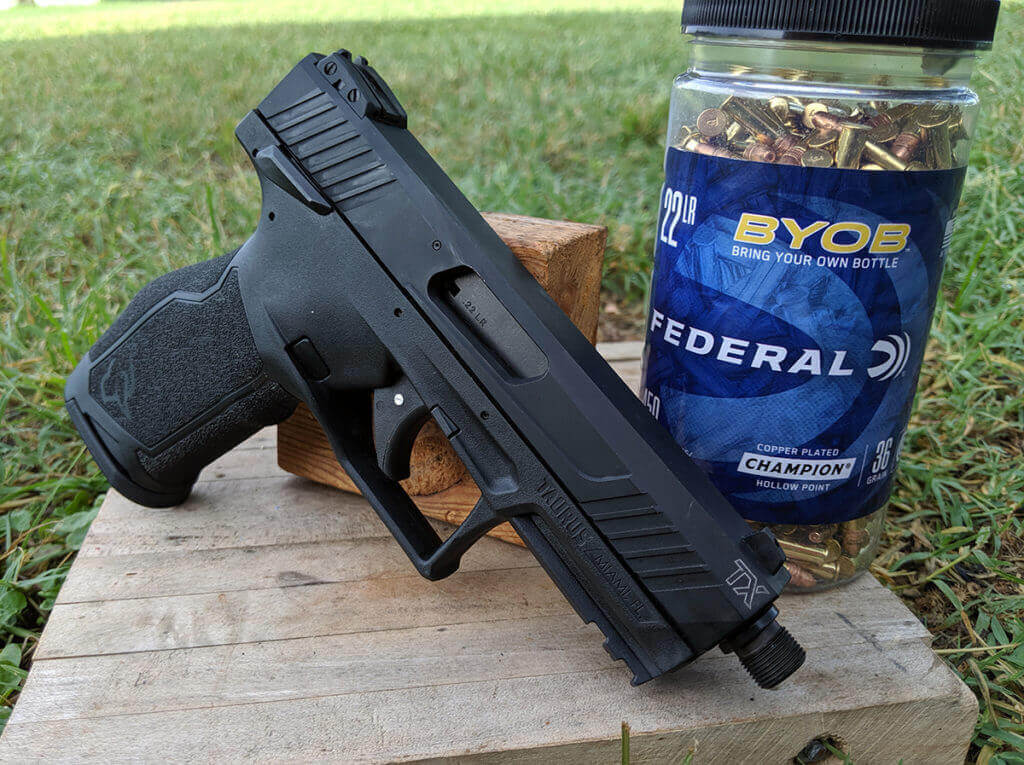
Today, we are going to examine five .22LR trainers that match a variety of common platforms. They may not be 1:1 replicas of every platform within a genre, but they are close enough to be beneficial for training purposes.
.22LR Trainer Expectations
You have set proper expectations when it comes to .22LR Trainers. The biggest downside to using these platforms is the lack of real recoil. You won’t be able to train for recoil control with these platforms, and recoil control is a big part of shooting. With that said, there are still plenty of skills you can work with a dedicated .22LR training weapon.
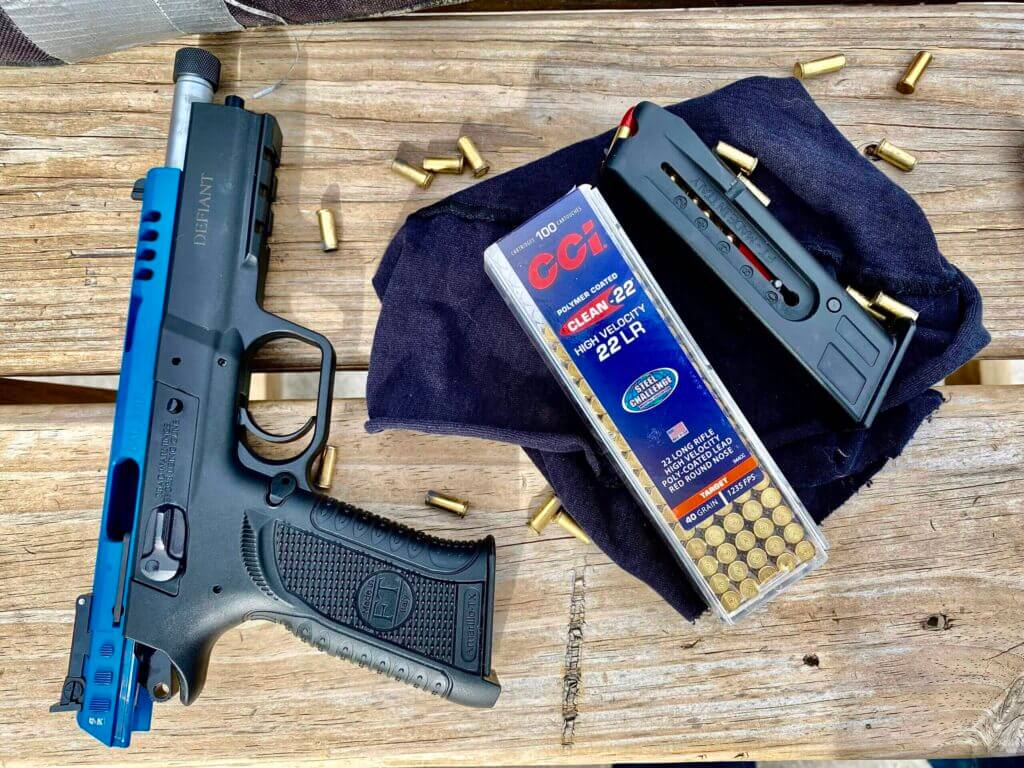
We can work on drawing for handguns with live fire shots. We can work on shooting around barriers, sight tracking, and consistent and proper grip, presentation, and basic marksmanship. There is a lot more to shooting than recoil control.
.22LR trainers are best used as a supplement to your live fire training. They fall somewhere between training with your preferred platform and dry fire. Unlike dry fire, these .22LR trainers can be a little more entertaining and engaging.
The Five Best .22LR Trainers
Let’s look at five of the best options for .22LR trainers. These guns replicate a variety of platforms well and tend to be affordable, reliable, and easily available.
CMMG Bravo Kit
The CMMG Bravo Kit is a drop-in bolt and magazine conversion that converts your standard AR into a .22LR trainer. There are lots of great .22LR AR variants, like the S&W M&P .22LR, but the CMMG Bravo Kit is cheaper and allows you to use your actual AR. The AR is massively popular, and so are accessories. With the CMMG Bravo kit, you can use your AR and all its attachments.
ARs are immensely personal guns in most cases. When using your own AR, you will have to account for a different zero. Rezeroing an optic can be a hassle, especially just to train. In my case, my CMMG Bravo kit conversion isn’t far off from my LPVO zero. It hits about an inch low at 25 yards, so I just ignore it for the most part and account for the accuracy difference.
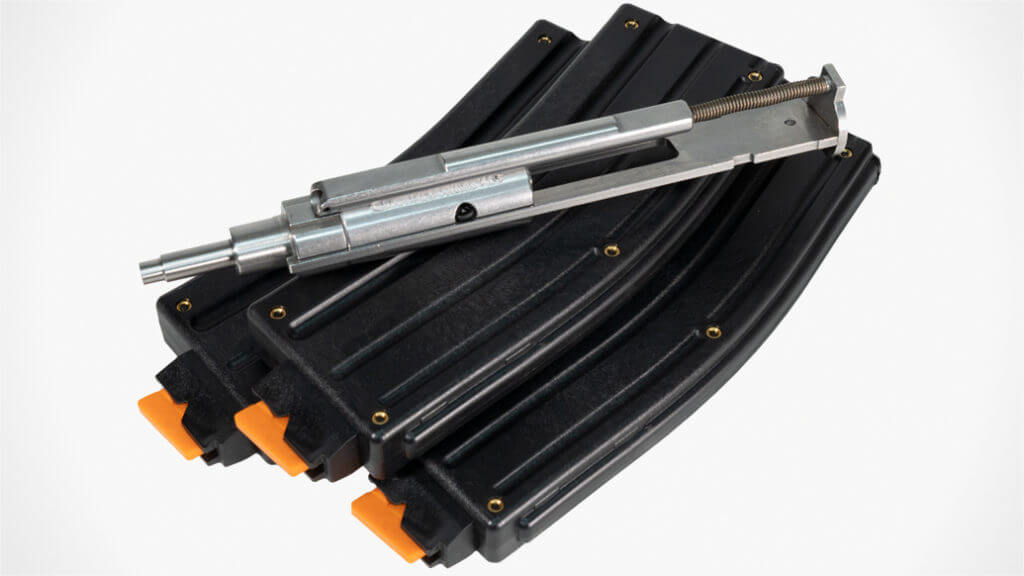
These kits are very simple to install. Remove your AR bolt and magazine. Drop in the CMMG bolt and use the CMMG magazine. That’s all there is to it. The kits are affordable and don’t require an FFL, so you can order them directly to your door. In terms of reliability, like most semi-autos, they prefer high-velocity loads, but even with bulk-pack Federal Automatch, they work quite well.
The biggest problem is that the kit doesn’t lock the bolt open like a real AR, which can reduce reload training effectiveness. If you can bypass that, you can shoot and train with your AR for pennies on the dollar.
Ruger LCP 2 22LR
If you’re packing a pocket pistol, then you know how hard it is to shoot one effectively. It’s a weapon that requires a lot of proficiency, and that proficiency will wane quickly without practice. I find the Ruger LCP 2 in 22LR a great pocket pistol and an excellent training tool for those who carry .380s and .32 ACPs. It’s a great stand-in for the LCP, the Bodyguard, the P3AT, and every other micro .380.
The LCP 2 features a fairly long trigger pull, like most pocket pistols, a limited grip, small sights, and all the other problems with pocket pistols. It easily fits into most common pocket holsters and is a great stand-in for pocket pistols.
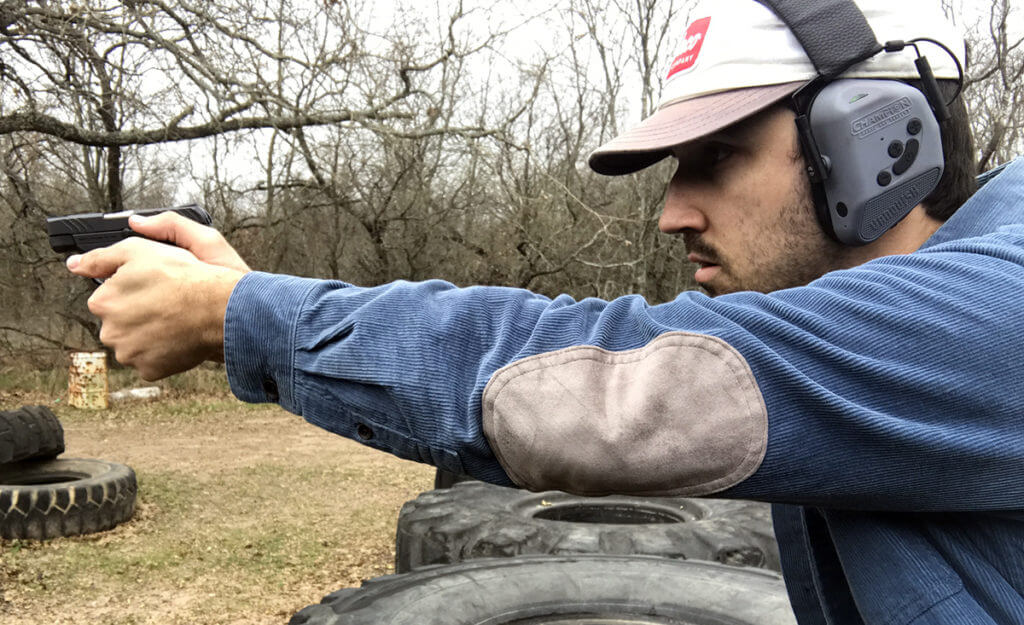
Unlike most pocket pistols, it doesn’t have the brutal, annoying recoil of a .380 ACP. The lighter recoil .22LR doesn’t translate perfectly, but it also doesn’t wear you out and allows you to train longer and cheaper.
The Ruger LCP 2 is perfect for training your draw, your trigger control, and accuracy practice on the cheap. The micro-sized gun is still tough to shoot accurately, so you have to work to use the sights and put rounds right where you want them. The LCP 2 in .22LR works surprisingly well with most ammo types, but as you’d expect, higher velocity rounds work best.
SIG P322
The SIG P322 wasn’t released as a dedicated .22LR trainer for any particular SIG platform. It’s also not a pile of garbage like the Mosquito back in the day. The P322 is an excellent stand-in for any modern striker-fired pistol. If you own a SIG P320, a Glock 19, an FN 509, or any of the other dozen polymer frame striker-fired 9mms, the P322 will work for you.
What I love about the P322 over other platforms is how it embraced modern accessories. A Shield RMSc cut on top of the optic allows you to attach a red dot. A threaded barrel allows you to use muzzle devices, including suppressors and compensators. Other viable options, like the TX-22 and the Glock 44, lack that kind of modularity.
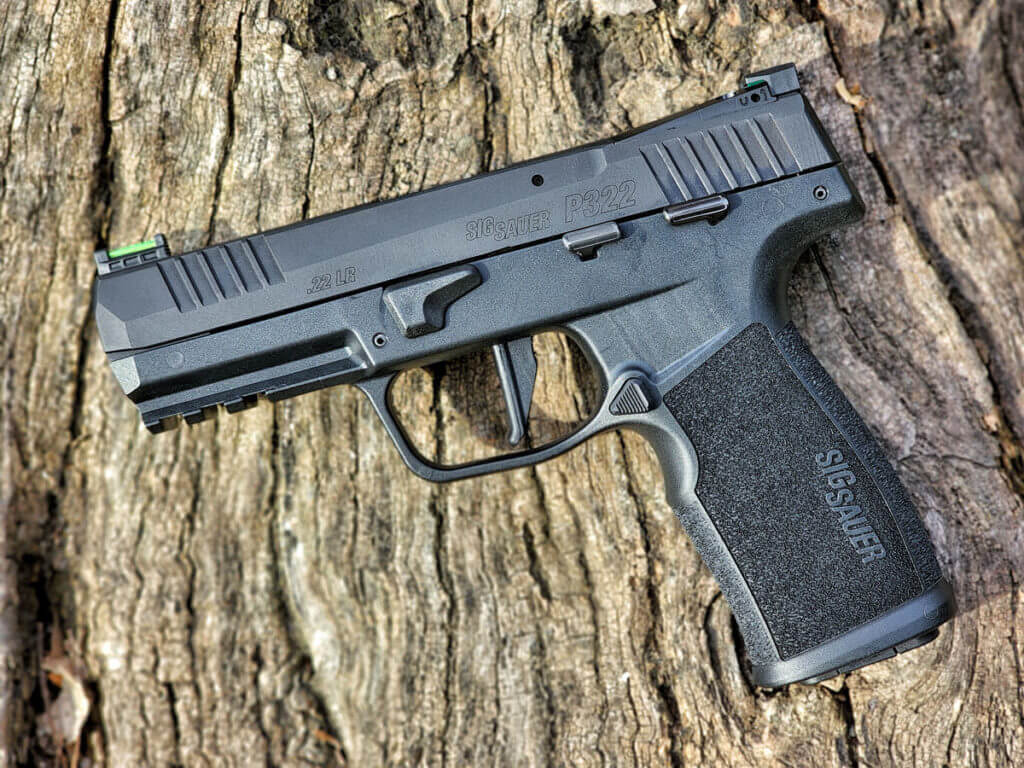
The P322 uses magazines with a fairly modern capacity of 20 rounds. That meets and even slightly exceeds most 9mm magazines. The gun comes with two mags, and the gun operates like any standard handgun. Transitioning from the P322 to your average handgun won’t be a big problem at all.
The SIG P322 doesn’t break the bank and can be a solid contender for a beginner’s Steel Challenge pistol, so there is some value beyond training purposes. It’s reliable and affordable as well.
Ruger LCR
If you’re a revolver guy, then you have plenty of options for training revolvers. I’m partial to the LCR due to its affordability. A S&W Kit gun costs 800 bucks when you can find them, the LCR sells for a whole lot less than that. It mimics a standard concealed carry snub nose perfectly.
Instead of five shots, you get eight. We still get a concealed hammer, short grips, and a trench rear sight with a ramp-style front sight. At first glance, the gun looks like any other snub-nose defensive revolver.
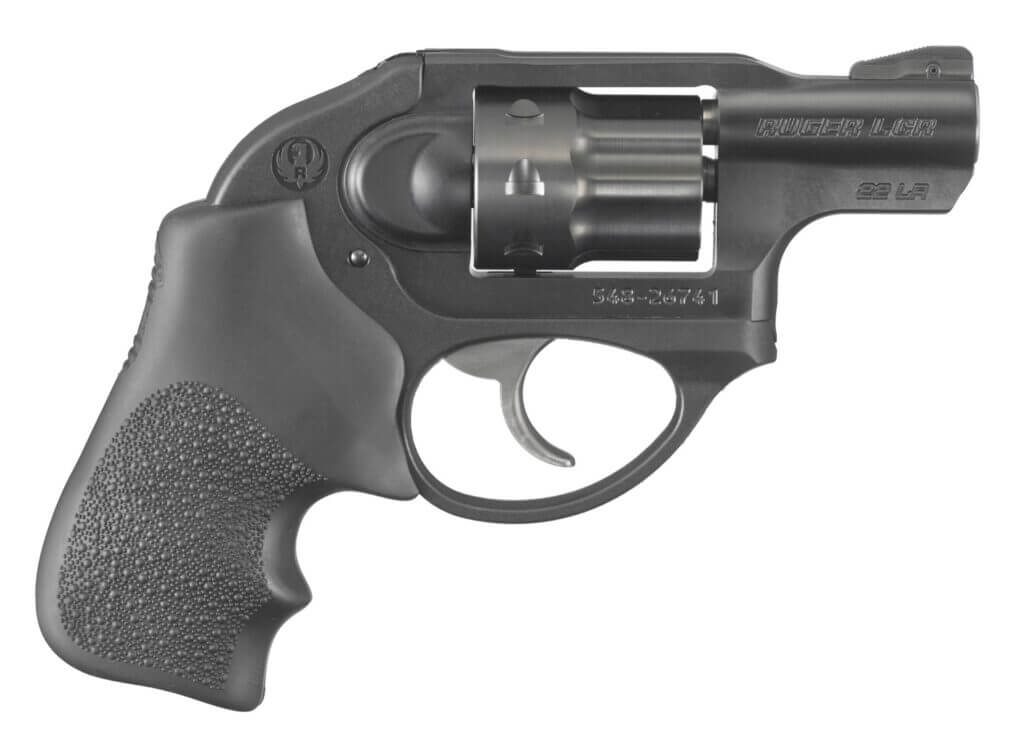
While we don’t get the recoil of the .38 Special, we still get to work our long double-action trigger, our draw, and our marksmanship skills. With the price of dedicated revolver ammunition, this gun just makes sense for dedicated training.
Unlike other LCRs, the trigger is a fair bit heavier due to the rimfire design. If you can shoot a heavy trigger well, you’ll excel with a light trigger. This will give you the training needed to work on trigger control and rapid-fire shots.
There is also an LCRx with an exposed hammer and an LCRx with a 3-inch barrel for those folks packing a larger-than-average defensive revolver. Any of these three would be solid .22LR trainers.
READ MORE HERE: Modern Rimfire Shootout – P322 vs P17 vs TX22
Savage Rascal
Last but not least, let’s mention the Savage Rascal. It’s not meant to replicate any specific gun or to help you train for a defensive encounter of any kind. The Rascal is just a single-shot bolt-action rifle designed to be lightweight, super short, and easy to shoot.
Unlike all the other .22LR Trainers on this list, the Rascal is designed to train new shooters on the basics of rifle shooting. The lightweight and short LOP makes it easy for young shooters to climb behind the gun and safely fire it. The lack of recoil, concussion, and muzzle rise makes it super easy to shoot for shooters of any skill level.
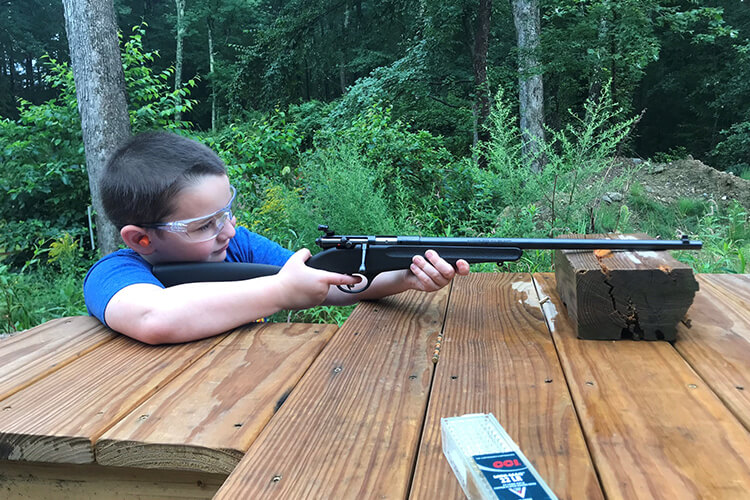
The Savage Rascal comes with peep sights, but it’s also tapped and ready for an optics rail. From the ground up, it’s designed to be the perfect tool for teaching younger shooters and new shooters in general how to safely use firearms.
Guns like the Rascal are arguably the most valuable .22LR trainers because they can help usher in the next generation of shooters and 2nd Amendment Defenders. Check out this article.
Keep Going with .22LR Trainers
Which of these .22LR trainers appeals to you? Do you use or believe in the idea of a .22LR trainer? If so, share below. Let us know your thoughts and feelings on the idea. These are the five I regularly train with or use to train new shooters, but I’m always willing to try something new and better.
*** Buy and Sell on GunsAmerica! ***

Travis Pike is a dedicated firearms writer, a Second Amendment Advocate, and a subject matter enthusiast for all things firearms. He is an amateur competitor with dreams of one day not coming in 4th place at a local defensive match. If he’s not putting text to word processor, he’s likely spending time with family, enjoying Florida’s Nature Coast, or drinking hipster beer. As the resident Florida man he has a preference for obscure guns and calibers.
Experience
- Hunter – Long time deer and hog hunter in the swamps of Florida
- Instructor – Volunteers to teach basic firearm safety classes to kids, adults, and cats
- Wannabe Competitor – Has recently dipped his toes into competitive shooting and has happily discovered an expensive hobby.
- Marine – Served five years with the infantry before transferring to the First Civ Div.
To insinuate that the TX22 ‘lacks that modularity’ hasn’t done pre-publish homework, especially since the T.O.R.O. version has been on the market for more than half a year.
As a GSSF member and owner of 11 Glocks, I’m scratching my head wondering why you mentioned the Glock 44 only in passing, but you did however point out it lacks a MOS mount like that’s a negative. It would be a negative if the G44 was intended as a plinker, but your article was about “trainers”, not “plinkers”.
The P322 is a really nice gun, I love Sig, and I’d love to have one, but you touted it as a trainer when in actuality it’s more of a plinker with it’s 20rd mag and optical mount. Splitting hairs? Maybe, let me explain …
The Glock 44 was designed specifically as a trainer with no MOS mount and a 10rd mag for a reason – it’s a trainer – not a plinker. Can you “plink” with it? Of course, I do all the time, especially with a threaded barrel I added, but that’s not what Glock designed it for.
How many LE departments use Glock – most do. How much money can the officers and the departments save by using a copy of their service weapon that’s designed to use .22LR and have the same trigger pulls as their service weapon? Whom else makes a direct copy of their LE issue guns in 22LR to allow officers to practice with?
You’re not a Glock hater, are you?
my lcp22 isn’t for sale. its the most reliable small 22 auto I’ve ever owned and I am happy to use it for ccw when going small. I’ve put 100s of rounds through it and can call my shots. cci minimag 40gr is the carry but it eats just about anything I feed it.
I picked up a GSG Firefly for training. It works well, especially for my wife. She has a M&P 380 Shield EZ. I have several .22LR rifles, but my favorite is still my Marlin 781 bolt action — my first firearm (1975). I still remember my dad taking me to the local Western Auto a few weeks before Christmas to let me pick it out. He was a bit surprised when I wanted the bolt action. When he asked why I had a great answer! My two year older brother got his when he was 14 also. He was always “chasing” squirrels with bullets! I told dad that, and I felt the bolt action would make me take better aim before shooting and wasting ammo. No argument from him to that! I also have a Glenfield (Marlin Model 60 – that’s what my older brother had, this isn’t his old one… I think he or his son still has it though), a Stevens (Savage) 87A (from the 1950s, I believe), and a Chiappa M1-22 as well (didn’t want to spend the money on the real thing, and the Chiappa is the closest affordable substitute — looks like one due to the magazine design, and with a minor adjustment to the inletting on an original M1 stock the Chiappa receiver is supposed to fit). And a couple .22LR revolvers. Yeah, I like .22LR to keep in practice!
I am pro .22LR trainers! Cheap fun shooting. Your points on the transfer of skills are on point. I have use a 22Lr trainer for my Beretta 92 platform. I have both guns set up the same way. I am curious why the Glock 44 didn’t make your list. Keep up the good work and shoot straight!
You left out one of the best trainers, the Taurus TX22. It’s a great option for training to shoot full-size pistols. Its design received input from competitive shooters who supported its use as a trainer. The magazines can be extended to hold up to 25-rounds. Also, the Beretta Neos .22 LR, which is a heavier pistol for training to shoot heavier frames like 1911s.
The CMMG Bravo Kit is THE Gateway Drug into the world of .22 AR’s. What I found to be the biggest limiting factor is that the rimfire rounds do not play well with modern 8-7 twist .223/556 barrels. Typical twist rates on a 22LR it 16/1, with some boutique manufactures playing around with 12/1. The further you reach out, the more frustrating it becomes. I ended up building a dedicated upper, which then introduced me to the wild variations of rimfire ammo. Pick any 10 different variations of 22lr ammo, you will get 10 different accuracy results. If accuracy is your top priority, make sure you buy well reviewed match barrel with corresponding match chamber. And be prepared to clean the chamber/barrel every 100 rounds or so. When you are ready to dive in, check out the BoreBuddy website. So much good info and products.
Some have stated as having issues with feed problems with the Sig 322. If you take your time loading the magazines, and let the mag spring seat each round as you load it, you will rarely suffer a feed problem. My only real complaint is that the P322 is too light. I find it hard to settle on a target. It is much better with the weight of a suppressor, even thought the balance is way off. It sounds silly but a heavier aluminum (or or even steel) frame would make it a much better trainer.