
Estimated reading time: 16 minutes
I carried the Echelon 4.0C for a year through desert dust, frozen peaks, and long range days. It stayed reliable, carried comfortably, and earned a real spot in my rotation.
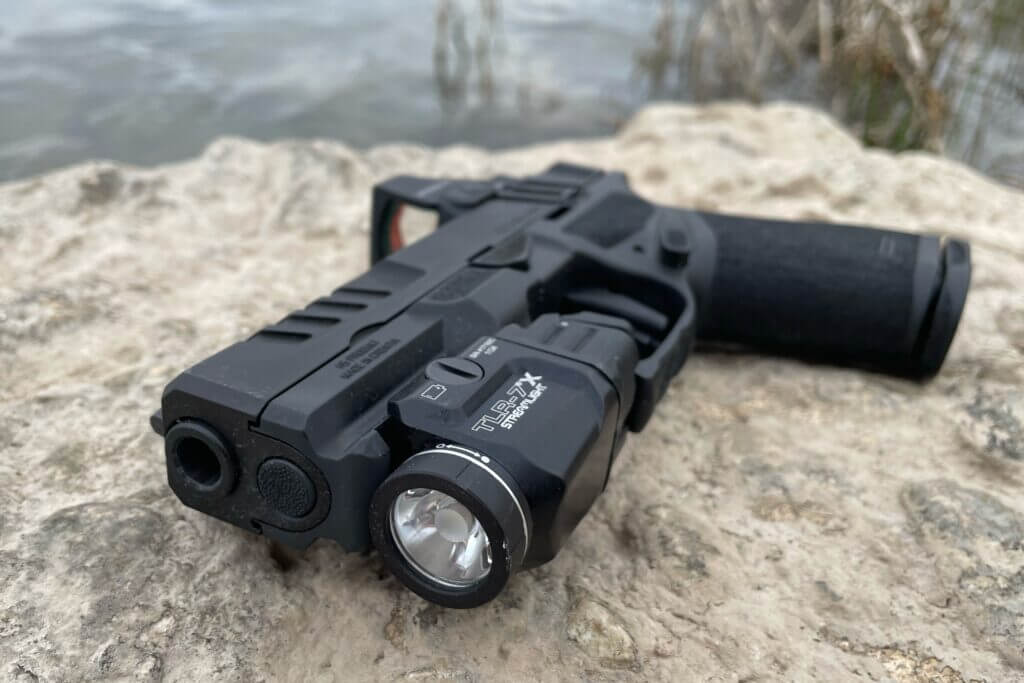
Over the last year, I have climbed mountains, backpacked through the desert, explored frozen mineshafts, and motocamped Texas trails, all while carrying my Echelon 4.0C. Read along as I recount my adventures and share what I learned about the Echelon along the way.
Table of contents
- Inside Springfield’s Factory: Where the Echelon Is Born
- Daily Carry Reality: Why the Echelon Jumped My G19
- Motocamping Texas: Dirt Roads, Bad Turns, Good Holsters
- Hard Lesson Learned: Brakes, Gravel, And Gravity
- Campfire Shakeout: Ergonomics, Sights, And Real Carry Comfort
- Backpacking Big Bend: Chest Rig Carry That Just Works
- Shots In The Distance: Quick Map Work And A Reminder
- Colorado’s Decalibron: Thin Air, Cold Steel, Steady Pistol
- Mineshaft Detour: Pitch Black, Ice, And A Handy Weapon Light
- Three Summits And A Smart Call
- Range Proof: Cheap Ammo, Hollow Points, Zero Malfunctions
- Final Verdict: A Compact 9mm That Earned Its Keep
- Springfield Echelon 4.0C Specifications
- Pros And Cons
- Related Reads from GunsAmerica Digest
Inside Springfield’s Factory: Where the Echelon Is Born
It was about this time last year that I took a trip up to Geneseo, Illinois, to visit Springfield’s headquarters. The plan was to try a few of their new firearms and see their updated production facility. With my day job being in heavy industry, I always itch for the opportunity to explore any type of manufacturing process. Thankfully, the folks at Springfield happily offered to show me a few of their production lines. Although I may have made them regret it shortly after, as I consistently lagged behind the group, asking Larry (one of their engineers) more questions than he had time to answer.
The experience did not disappoint. The 180,000 square foot facility was massive. Yet, beyond sheer size, the thoughtful layout of the processes and equipment impressed me most. Everything was set up for maximized efficiency to make the most of each of their 400 employees’ time. Every machine operated one after the next along a path, so any completed part would not have to move more than a few yards to reach the next step in its process.
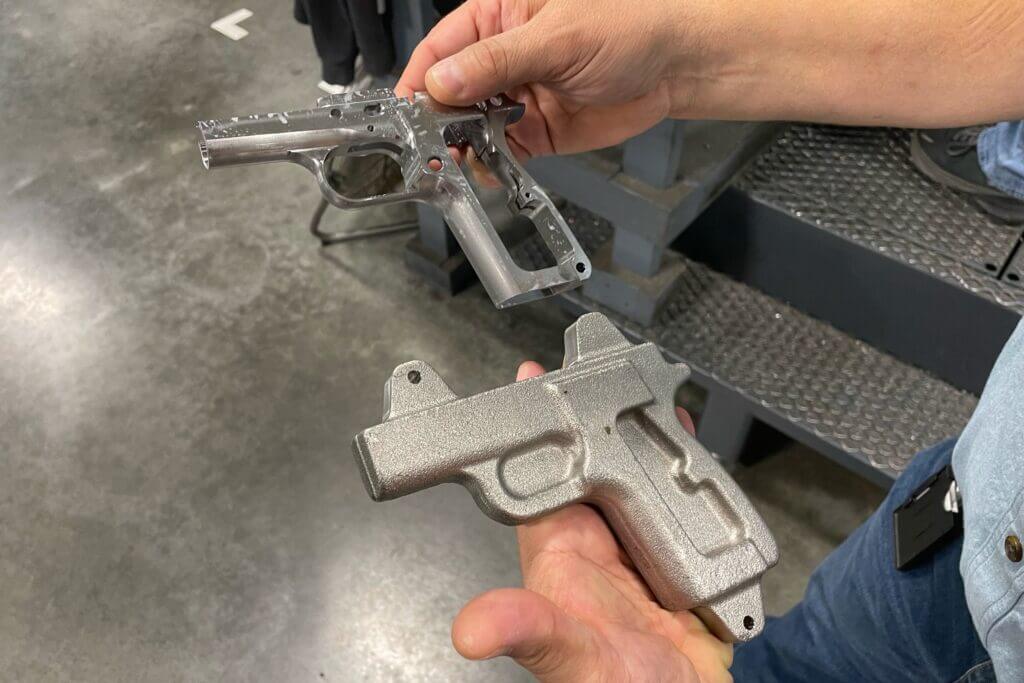
After the tour, we headed to the range to try the new Echelon 4.0C, Prodigy Compact, and the Kuna. Each was a lot of fun, but I particularly enjoyed the Echelon and Kuna. I requested both for review, and Springfield obliged, sending a Kuna on loan and giving me an Echelon to keep. It’s not typical for me to keep the guns I review, so it’s worth mentioning for transparency’s sake.
🛒 Check Current Price for Springfield Echelon 4.0C on GunsAmericaDaily Carry Reality: Why the Echelon Jumped My G19
With no loan period driving me to complete a review by a particular deadline, I tossed the Echelon to the back of my priority list. All spring, summer, and fall, I carried and shot the pistol to the extent that it nearly replaced my G19. The only difference was that every once in a while, I’d snap a cool picture of the Echelon, knowing one day I’d get around to writing this article.
Motocamping Texas: Dirt Roads, Bad Turns, Good Holsters
One of the first adventures I took the Echelon on was a solo motocamping trip through the Texas Hill Country. I started in the Fredericksburg Walmart parking lot after first buying a couple of ready-made corndogs from inside. I figure if I’m going to leave my car in a lot overnight, I should at least be a paying customer.
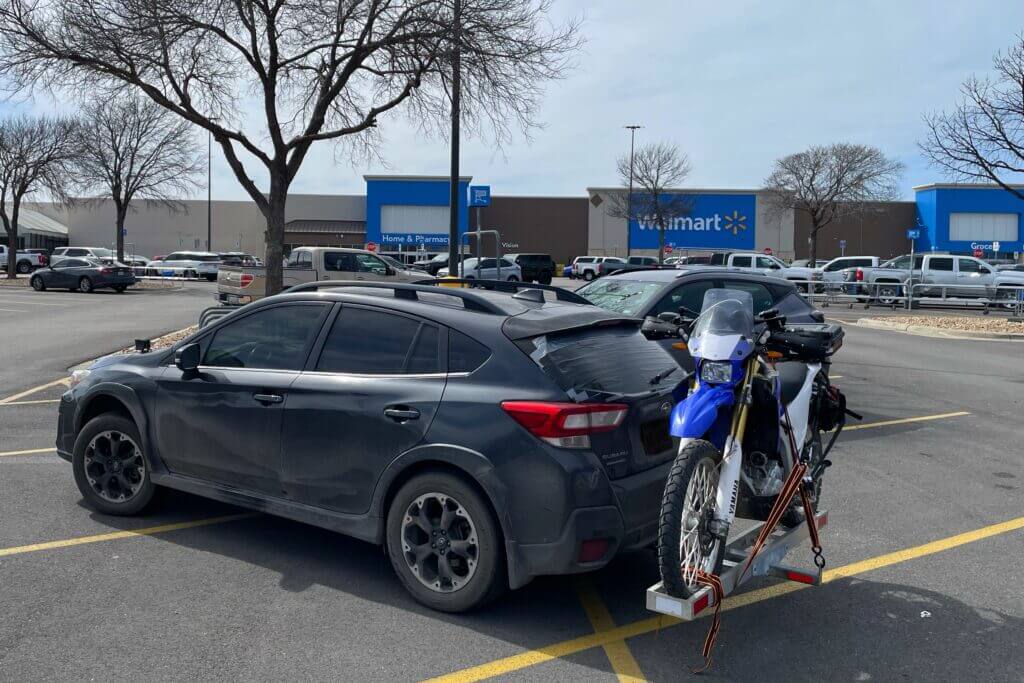
For this trip, I was carrying the Echelon in the appendix position inside my waistband (AIWB) with a T-Rex Arms holster. It carries well in my thick riding pants, but I would have been better off if I had gotten another holster from Tier 1 Concealed, like I have for my G19. The Tier 1 holster seems more refined, and I prefer the narrower spacing of the belt clips. Either way, it gets the job done.
From there, I headed out of town and quickly hit a dirt road. I planned to loosely follow the Texas Hill Country Overland Route. While not very technical, this path promised a relaxing ride and good views. Too bad it was already dark, and I was more than ready to get to camp. Many hours in, nearing 9 pm, I found myself thoroughly in the middle of nowhere. I rounded yet another of the innumerable wide curves that gently wound through the darkness, my headlight revealing yard after yard of gravel road as I clipped along at about 45 mph. Then, in an instant, the near entirety of my headlight’s view shifted from gravel road to complete void, and just as quickly, I realized I was in trouble.
Hard Lesson Learned: Brakes, Gravel, And Gravity
In the few milliseconds that followed, I deduced that the road had not, in fact, led Bugs Bunny style off a cliff, but instead made a steep dive with a sharp right turn partway down. It might as well have been a cliff. I started braking, but it was useless. The gravel under my tires might as well have been marbles. I dipped over the hill, still going far too fast to have any chance at making the turn. My only hope was to jump the ditch, ramp the far embankment, and come to a stop in the brush on the other side.
That plan held together just long enough for my front tire to hit the loose ditch dirt and bury itself to the spokes. The bike did stop, but I kept going. Up and over the handlebars I went. Weightless in the darkness. With the bike’s headlight buried in the embankment behind me, I could see nothing as I flew. It almost felt like I wasn’t moving at all. That is, until my face also found the embankment, and then the tumbling bike came to find me as well.
I lay there for a moment, taking stock and assessing the situation.
Bike: busted and lying on my leg.
Leg: not busted but has a bike on it (I’m glad I wore my moto boots)
Head: busting headache, but not actually busted (thank God)
Helmet: actually busted, well, the visor at least.
Pistol: still holstered and in place (maybe that holster isn’t complete crap)
With no life-threatening injuries detected, I pulled my leg out from under the bike and sprang to my feet. I was truly engulfed in darkness. Thankfully, I had my tiny Princeton Tec headlamp strung around my neck, so I was able to quickly shed some light on the scene. Other than a bent lever guard and the headlight dangling by its cable, the bike was in good shape. I made quick work reattaching the headlight with my Leatherman, snapped a selfie to ensure my pupils were evenly dilated to check for a concussion (ugly but even). And just like that, I was back on the trail. After another hour or so, I found a decent enough spot to set up camp and called it a night.
Campfire Shakeout: Ergonomics, Sights, And Real Carry Comfort
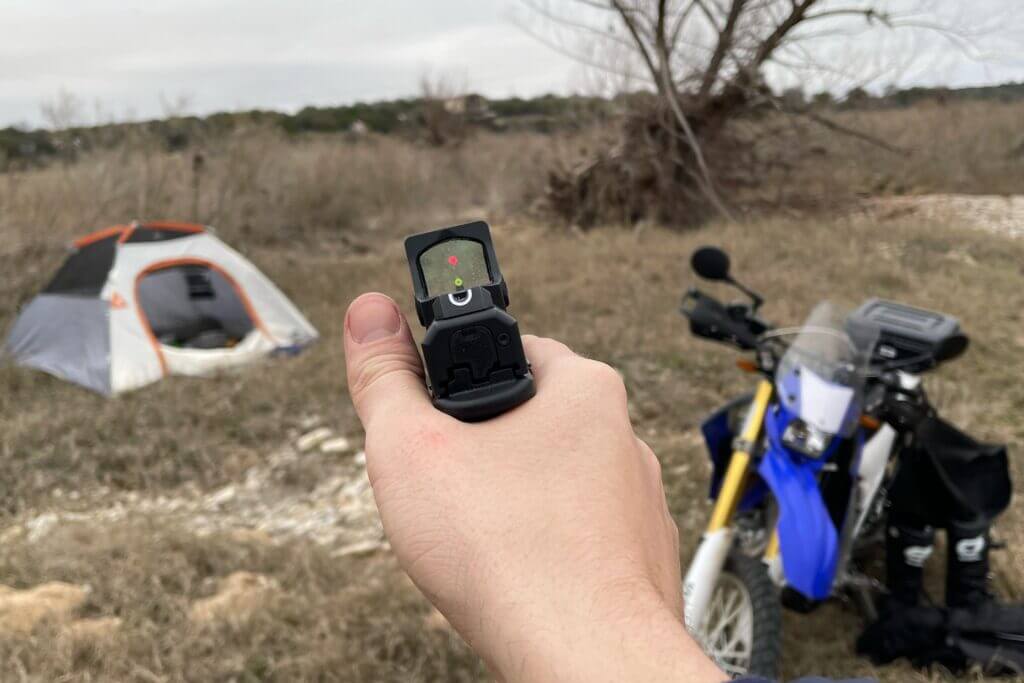
The next morning, my head was still killing me, so I hung around the river and played with the Echelon a bit before packing up. One of the first things you notice when handling this gun is the ergonomics. It fits my hands exceptionally well, and I like the level of grip texture it provides. Not so smooth that it’s slippery when wet, and not so aggressive that it’s uncomfortable rubbing against your skin for hours when carrying it inside the waistband.
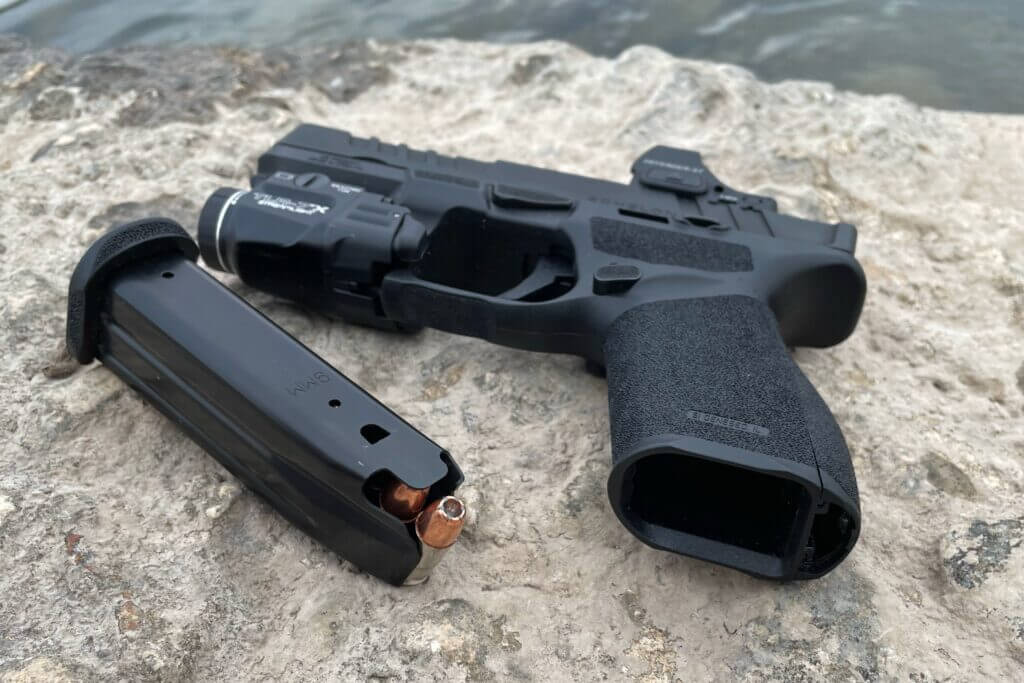
Another feature I appreciate is the textured shelf just above and forward of the trigger guard. This subtle “gas pedal” allows me to push forward and down with the thumb of my left hand to help manage recoil. I stippled that area on my Glock for this reason, so it is nice to have it included in an OEM design.
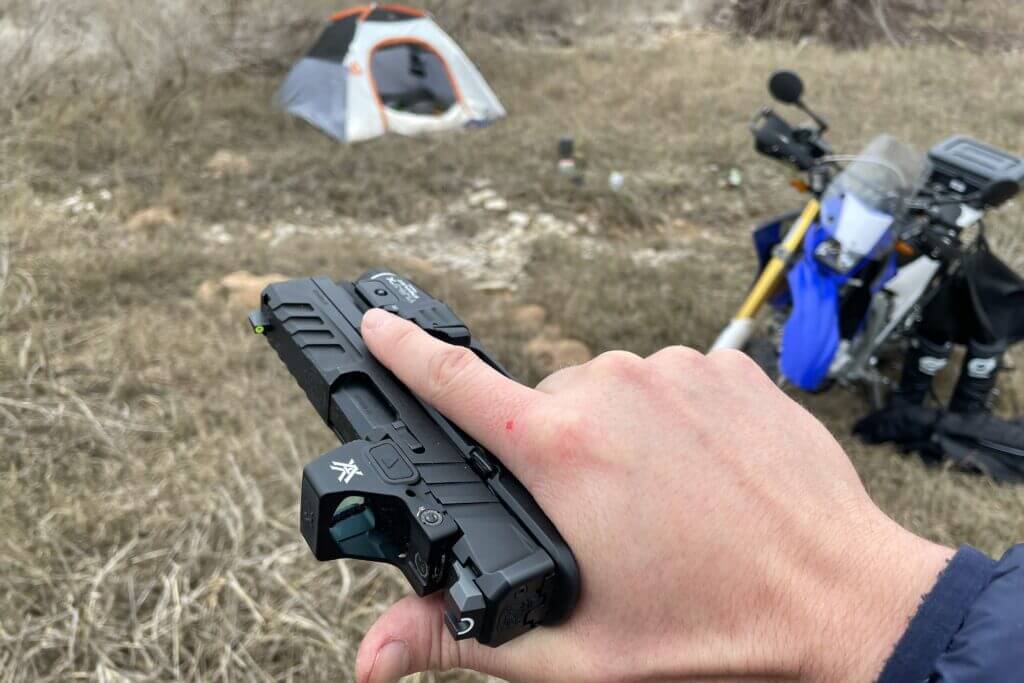
The Tylenol had begun to kick in, which gave me just enough autism to finish taking the pictures I needed and pack out. The rest of the trip was far less eventful. I’m just thankful it didn’t cost me more than a headache and a lever guard to learn that unknown dirt roads and impatience are not a good combo.
Backpacking Big Bend: Chest Rig Carry That Just Works
My next trip with the Echelon was a backpacking trip to Big Bend with the dudes from my Bible study. All six of us piled into my buddy’s Expedition and headed west. I had been carrying the Echelon for a few months at this point, so I was quite comfortable with it. The holster was still working well, and I had been appreciating the overall size of the Echelon. Similar to the G19 or an M&P Compact, the Echelon is the perfect size for everyday carry. It is large enough to be a true fighting pistol, but small enough for me to comfortably conceal.
For the ride out there, I was carrying AIWB as usual, but for the hike, I swapped to my chest rig. I love carrying in a chest rig while backpacking. It keeps the pistol readily accessible on my chest and clears my waistline for my pack’s waist strap. Plus, I like having some weight on my front to balance my pack.
Another benefit to carrying this way is that I always have the pistol with me. People who carry in their pack typically take much longer to access the pistol if needed. Additionally, they also leave their pistol behind any time they drop their pack to take a rest.
There is one drawback to this carry method, though. Unless you carry the pistol in a holster inside the chest rig, I would not recommend carrying with a round chambered. For the Big Bend trip, I wanted to shave all the weight I could, so I decided to leave the holster in the car and carry without a round in the chamber. Thankfully, the Echelon has multiple design features that help with quick slide manipulation.
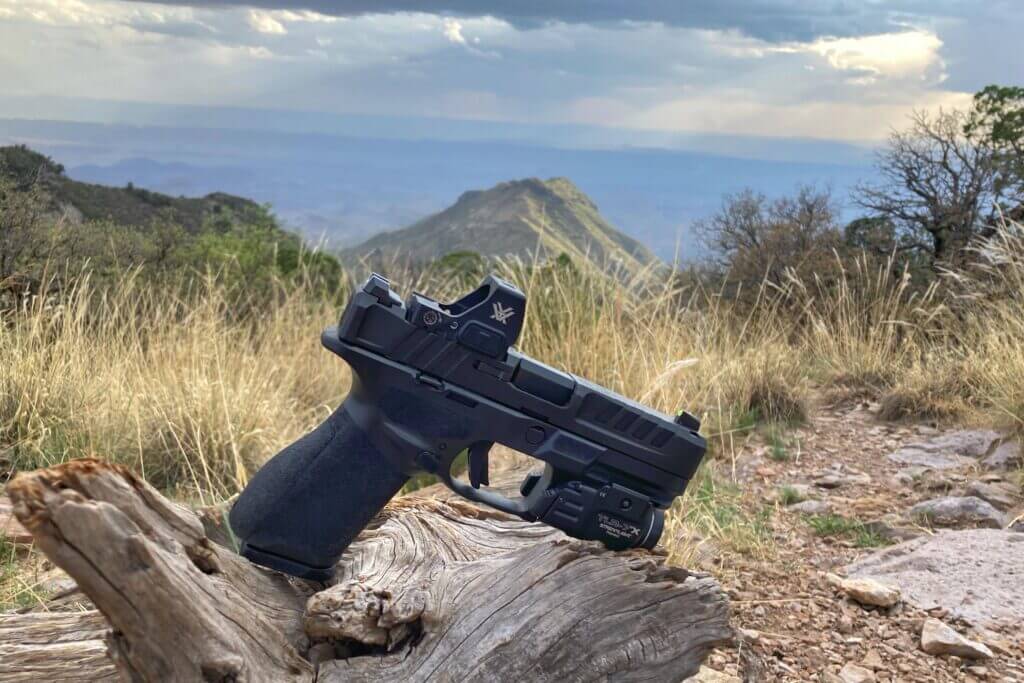
First, the rear of the slide sports machined cutouts that help you pinch the slide and pull it to the rear. Second, the front of the slide has aggressive channels that are great if you prefer to manipulate the slide from the front. Finally, the solid optic mounting system gives me the confidence to rack my slide using the optic. This is my preferred method since it seems to be the fastest, and I have experienced no shift in zero.
I attribute the zero retention to Springfield’s Variable Interface Optic System. This system can mount multiple optic footprints without the use of adapter plates. It also uses cammed pins that apply torque as the screws are tightened to solidly lock the optic in place.
Shots In The Distance: Quick Map Work And A Reminder
It was the final day, and the trip was going well. The group had separated for the last stretch back to the trailhead. Just a couple of miles out, my buddy and I heard a gunshot in the draw to our right. We paused for a minute and heard another. I typically wouldn’t have thought much about it, but being in a national park gave me a bit more pause. After hearing nothing for a couple of minutes, we continued down the mountain and to the trailhead.
The area at the base of the mountain was abuzz with activity. Two or three park workers asked us if we had heard the shots before we even reached the parking lot. After confirming that we had, they directed us to the two officers who were walking up. They were asking about the location and time of the shots. While my buddy was giving his statement to one officer, I whipped a map from my pack and plotted where we had been when we heard the shots and traced a line in the direction it came from.
Just as I was doing this, one of the park volunteers walked up who had heard the shots from the trailhead. We repeated the exercise, plotting location and direction. Where the lines crossed gave the cops a good starting point to check for foul play.
While these shots were not likely malicious, it is a good reminder that you may have to be your own first responder. If someone had been getting shot at by a crazy person in the backcountry, they would have been waiting far too long for the cops I passed to be any help. No matter where you are, no response is quicker than your own.
Colorado’s Decalibron: Thin Air, Cold Steel, Steady Pistol
The final big trip for the Echelon was to the Colorado Rockies on a trail known as the Decalibron. If completed in its entirety, this trail summits four mountains: Bross, Lincoln, Cameron, and Democrat. Each measures over 14,000 feet in elevation.
After finding a spot to park at the lower trailhead, we geared up for the trek and were off. I would typically carry my 10mm G20 when hiking in Colorado, but since the majority of this hike would be above the treeline, I figured an encounter with a bipedal predator was more likely than a bear. The Echelon tucked in my chest rig would cover that contingency nicely.
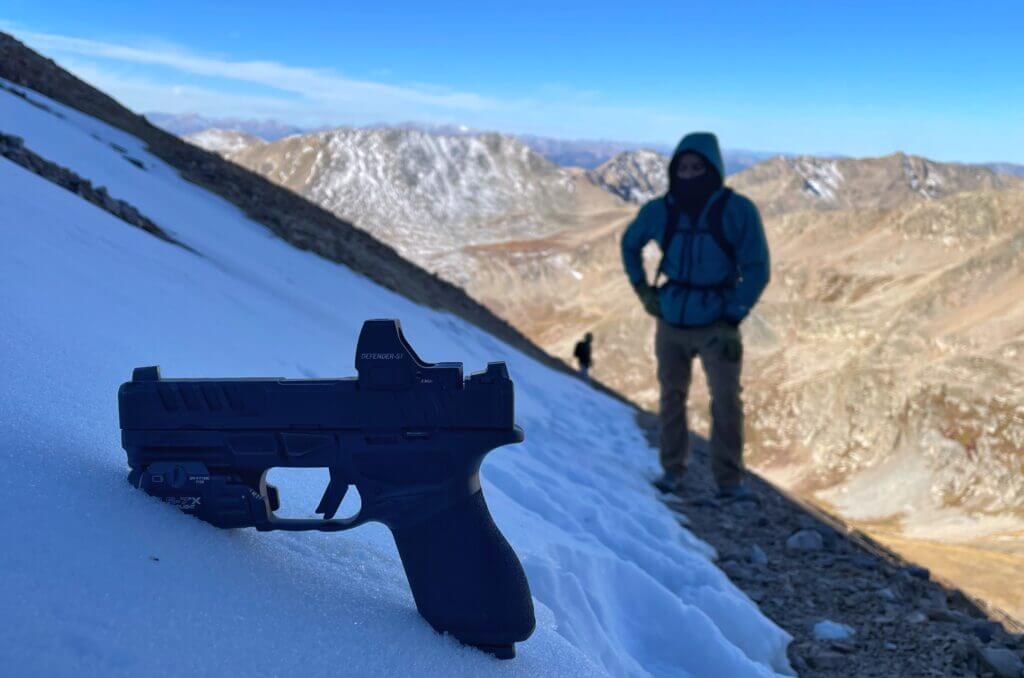
Mineshaft Detour: Pitch Black, Ice, And A Handy Weapon Light
A few thousand feet of elevation gain later, we were out of breath but determined. The air was thin, and it felt as if we had forgotten half our lungs back in Texas. During one of the rest stops, we spotted an old mineshaft piercing the mountain about a quarter mile away. It’s not every day I see a mineshaft, so I had to take a look.
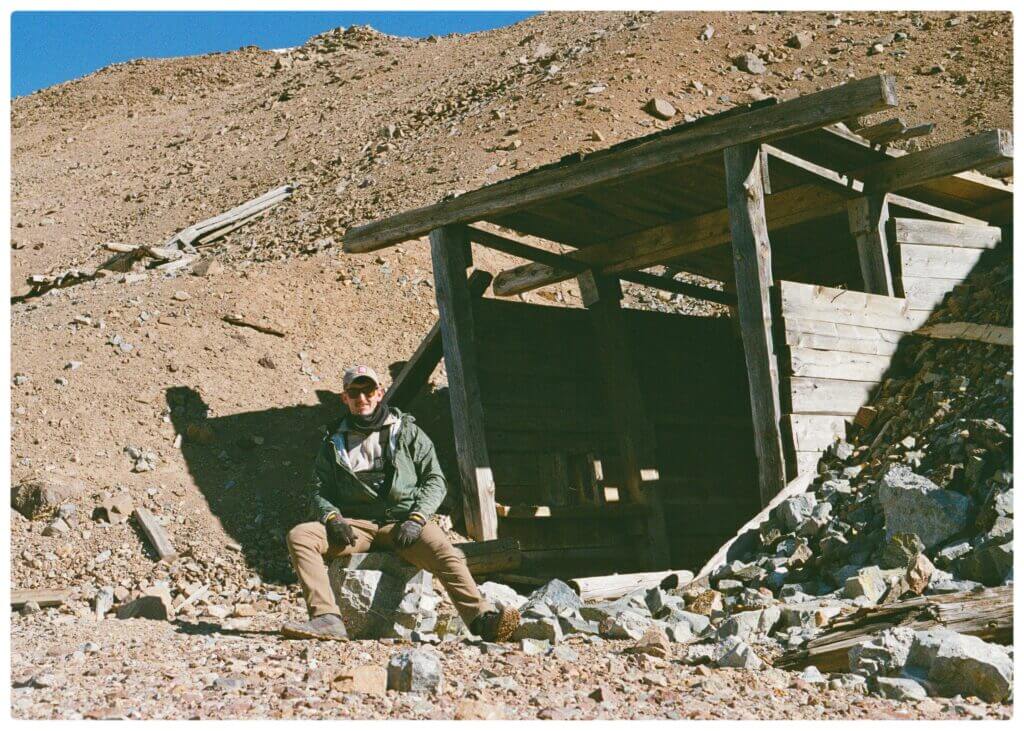
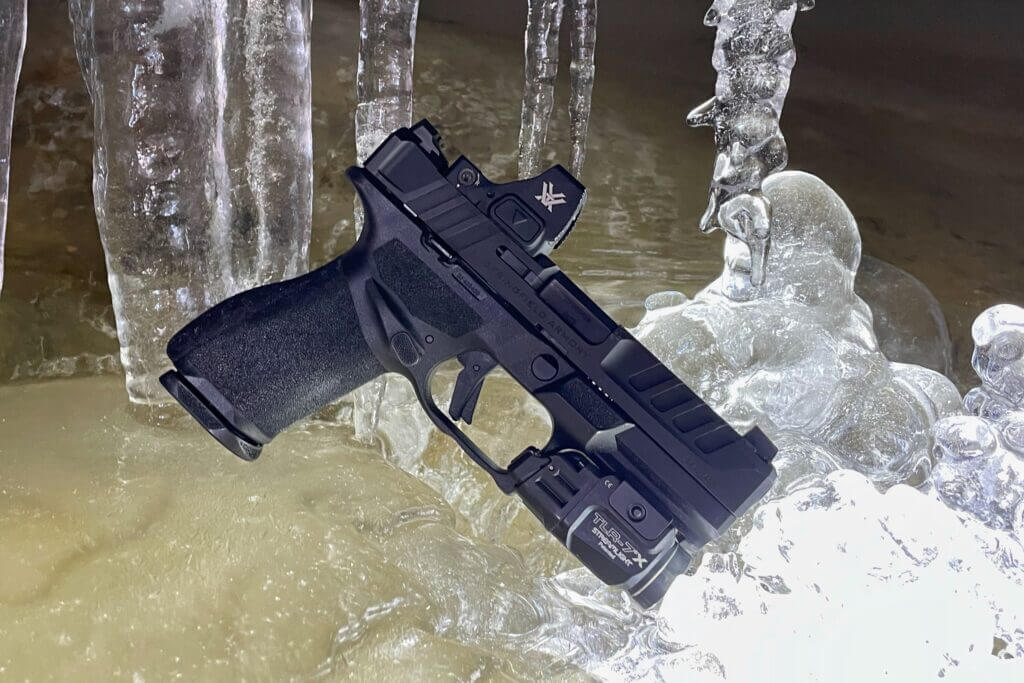
After scampering the quarter mile or so through the loose scree, I reached the opening. Making my way inside, I found that it had collapsed only a few yards in from the entrance. However, the detour did not disappoint. The entire remaining shaft was full of massive icicles stretching from floor to ceiling.
While I was not far from the entrance, it got dark fast, and my headlamp was in my main pack, which I had left with my friends on the trail before making the detour. But I did have my chest rig, and in it, my Echelon equipped with a Streamlight TLR-7X. The pistol light pierced the darkness, reflecting and refracting off the ice structures and illuminating the entire cavern.
Three Summits And A Smart Call
Back on the loosely defined trail, we summited Bross, then Lincoln, then Cameron. Standing atop Cameron, we knew we were not going to summit the fourth. Not only were we physically spent, but the weather had started to turn. Being stuck on the mountain in a storm would be a good story, but one I would rather not have. We passed the trail leading up to Democrat and hoofed the two hours back to the car.
Skipping Democrat was a tough decision, but it was the wise one. Bypassing that trail saved us a couple of hours, and with a storm on our heels, I stand by the decision. Plus, now I have an excuse to go back.
Range Proof: Cheap Ammo, Hollow Points, Zero Malfunctions
This pistol has performed flawlessly. Even after feeding it hundreds of rounds of discounted Winchester white box seconds that have been known to cause malfunctions in other guns, I didn’t experience any from the Echelon. I also fed it a variety of hollow points and subsonic rounds, all without issue.
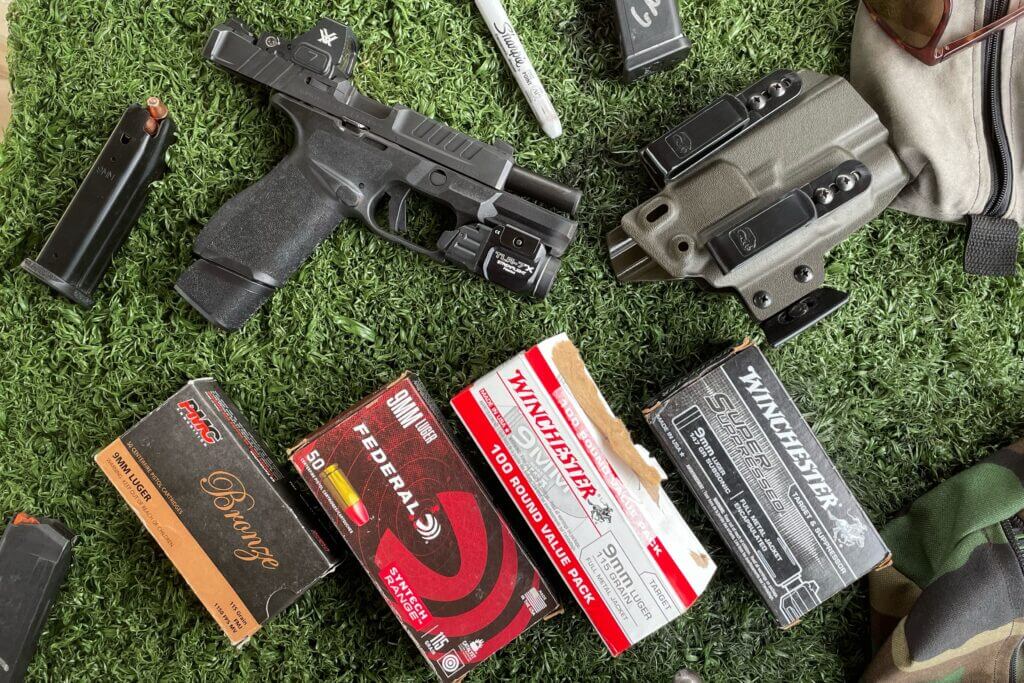
The trigger is pretty good for a striker-fired pistol. It doesn’t have much pretravel, and there is minimal creep before it breaks at just under five pounds.
The recoil feels a bit snappier than similar-sized pistols, but only slightly. Overall, it is very comfortable to shoot.
Final Verdict: A Compact 9mm That Earned Its Keep
All the trips carrying the Echelon were fun, but what matters more is the day-to-day. Over the last year, carrying and shooting the Echelon, I found it to be a good option. I have helped a couple of friends buy their first carry gun recently, and I included the Echelon 4.0C in my recommendations each time. I haven’t historically been a fan of Springfield’s pistols, but this one seems to have changed my mind. It was thoughtfully designed, and with a street price around $580, I think it is a solid choice.
Head over to Springfield’s Website for more detailed information on the Echelon 4.0C or to find a dealer near you.
Springfield Echelon 4.0C Specifications
| Model | Echelon 4.0C |
|---|---|
| Caliber | 9mm |
| Barrel Length | 4.00 in |
| Overall Length | — |
| Weight | — |
| Capacity | 15+1 (flush), 18-round extended included |
| MSRP | — |
Pros And Cons
- Pros: Reliable with mixed ammo, great ergonomics, strong optic mounting system, ambidextrous controls, easy slide manipulation, carries well AIWB, and ina chest rig.
- Cons: Recoil is a touch snappier than some peers, holster fit and clip spacing preferences may vary, and street price varies by region.
Related Reads from GunsAmerica Digest
Available on GunsAmerica Now
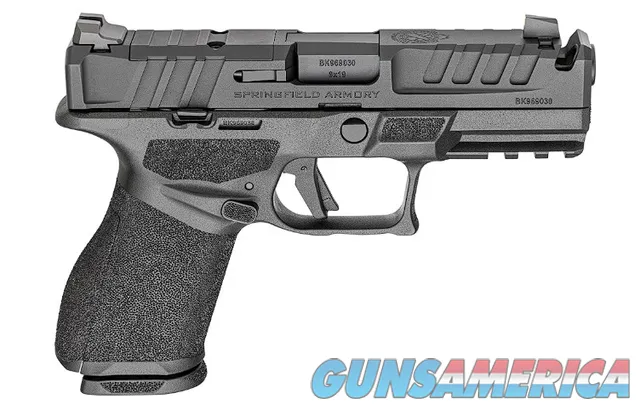

Garrett has a wide variety of skills and interests. His profession as an engineer in the steel industry aligns with his active approach to hobbies. Whether going to the gym, shooting, hunting, riding his motorcycle, or just tinkering in the shop, Garrett always strives to be his best.
Experience:
Mechanical Engineer – Supervises a small group of reliability professionals who deliver practical solutions and keep the plant running.
Practical Shooting – Former member of Oklahoma State’s Practical Shooting Team, and continues to hold himself to a high standard in defensive shooting.
Adventurer – Hiking, moto camping, backpacking, hunting, shooting. Life is too short to take it easy. Garrett is always looking for the next opportunity to get outdoors.
Colorado limits magazine capacity to 15 rounds . Did you leave your extended magazines at the border ?
I like the idea of the solid munimula frame, but I;ll just stick with my SHEILD 9 for now although I did add the TLR light laser package!
Not much for optics anymore as my eyes don’t work with them well anymore and something else to carry batteries for and if I can’t get it done with iron sights and the laser, it won’t get done!
Thanks for story and the input, sounds like you got it going!
P.S. Watch out for those Walmart parking lot trolls, you may come back missing your vehicle or missing parts of it!
I had to stop at:
“For the Big Bend trip, I wanted to shave all the weight I could, so I decided to leave the holster in the car and carry without a round in the chamber.”
I can’t wrap my head around that, especially considering the very public 💀 cases just in recent history alone where such a thing ended with fatalities. If your chest pack doesn’t have a holster, put one in it rather than carrying your only defensive weapon in the outdoors unloaded. If we could talk to 👻 I wonder if they would still choose not to keep a round in the chamber if they could do it all over again. Probably not. Sounds like poor planning to me. If you know you like carrying in a chest pack why in the world wouldn’t you put a holster in it rather than carrying a gun without a round in the chamber? There are way too many real life cases where people did that exact thing and then when something bad happened, the time it took to retrieve the gun combined with fumbling the chambering due to adrenaline dumps resulted in tragedy for me to even consider such an unsafe method of carry.