
Estimated reading time: 11 minutes
Smith & Wesson brought the 940 back and gave it real sights and real grips. We shot it across loads and distances to see if this 9mm snub can outpace your pocket semi.
Table of contents
Meet the New S&W 940 9mm: Snubbie Reborn
The Smith & Wesson 940 is one revolver that has come full circle. Originally introduced in 1991, when the revolver market lagged as law enforcement toward semi-automatic pistols in 9mm. Traditionally, the Model 40 was in .38 Special, but the 940 was a modest facelift, as it chambered the 9mm pistol cartridge and used moon clips for quick, convenient reloading. But as dated as the .38 was getting, it held market sway, and the 9mm Luger cartridge fell behind the .40 S&W in law enforcement work. In 1998, the 940 was discontinued. Now in 2025, the 9mm Luger has returned to become standard, and revolvers are experiencing a rebound. Fittingly, Smith & Wesson, with input from Davidson’s, has re-released an upgraded version of the S&W 940. Here is the skinny:

Smith & Wesson has been rereleasing old designs over the past few years. The 940, at its heart, is still a stainless-steel five-shot 9mm Centennial model. But the grips and sights, those great criticisms inherent to snubbie revolvers, have been addressed for a more shootable package.
The original 940 was built on the old-style J-frame and featured fixed gutter sights and a partially shrouded ejector rod. Think of it as a hammerless all-steel .38 but in 9mm. In terms of footprint, the 940 now available is the same as a new 640 chambered in .357 Magnum. It is built on the Magnum J frame, which has a longer cylinder and cylinder window.

The grips are likewise improved with a pair of VZ Black Cherry Diamond stocks. The panels leave the round butt exposed but take up the distance between the rear of the trigger guard and the front of the grip frame, where the fingers would normally sit, ill-supported.

Like its predecessor, the new 940 is a double-action-only revolver that does away with an exposed hammer spur. Like all Smith & Wesson handguns, there are no manual safeties, and it can be carried fully loaded thanks to an internal hammer block safety that prevents accidental discharge when dropped. In any event, the long double-action trigger pull makes that event even more improbable.
The 940 ships in a Smith & Wesson hard case and three TK Custom five-round full moon clips.
Range Test: S&W 940 9mm Snub Nose
When it comes to revolvers, I am a fan of Smith & Wesson .38 Special models, but I have gone down the rabbit hole of 9mm revolvers as of late. I was particularly keen on their viability as backup guns for LEOs that are now back to carrying 9mm duty pistols. I was a bit shocked that the J-frame lineup from Smith did not have a 9mm and settled on a Ruger LCR in that caliber. Lo and behold, a month later, the 940 is back, and I had to have one. While my run with the 940 was not a clean sweep, the positives far outweigh the negatives.
Moon Clips Make This 9mm Fly
The Smith & Wesson 940 is a moon-clip-fed revolver that uses short, stout, and very available 9mm Luger ammunition. Since the 9mm round has no exposed rim, it relies on the moon clip for the ejector of the revolver to knock the clip and the empty cases out of the cylinder.
Loading up the 940 starts with the full moon clips. These TK Custom are easy to load with the rims of the cartridges pushed into the recesses of the clip until you get five rounds on it. With the clips loaded, you are ready for the range.

Accuracy: Paper Plate Honest at Ten Yards
I started my testing of the S&W 940 by getting on top of the sights with some mundane off-hand accuracy testing. The ammunition used included:
- Igman 124 grain FMJ
- Winchester 115-grain JHP
- Winchester 147 grain JHP subsonic
- Federal Punch 124 grain HP
- Hornady Critical Duty 135 grain FTX +P
Small revolvers like the 940 can be peculiar in the accuracy department in so far as different grain weights can visibly change the point of impact even at closer distances. To my surprise, accuracy and point of impact were similar, whether I shot the revolver using standard-pressure 115-grain rounds or 147-grain subsonics.
I shot a series of five-shot groups using the available ammunition on paper at ten yards. Once loaded, the 940 can only be fired in double-action mode. The trigger is thoroughly average for a J-frame. Out of the box, it was smooth but heavy at 8 lbs. 12 oz. on my Lyman trigger scale. The XS sights are easy to pick up, but that front tritium sight is a little too big for precise target work. But that is not the forte of a snubbie like the 940. Even so, it turned out to be a good effort.
The Winchester 147-grain jacketed hollow point load, whose velocity out of this revolver clocked in at 947 feet per second, was more sedate in the recoil department and produced the best accuracy. At ten yards, I could reliably place five rounds inside a three-inch circle. The Igman 124-grain target load did no better. The worst performer was the Hornady Critical Duty round. In spite of the +P designation, it was no hotter than the other standard pressure rounds. But there was more vertical stringing, and my groups averaged four inches. The 940 is not only a minute of man, but a minute of paper plate with a consistent trigger press.

Snubbies like the 940 are in their element ten yards and in, but it was still possible to get hits further out. Out of the three hundred rounds I fired through the revolver, I spent a fair bit of that allotment shooting from fifteen out to fifty yards.
The sights on the revolver are vastly improved for quick snap shooting at close range, but the large XS tritium front sight covers up more of the available target as the distances get greater. If you are going for groups on a bullseye, you will be discouraged. But by picking out an aiming point, it is not hard to get concrete hits. I switched from bullseye targets to more realistic FBI Q Targets and aimed center of mass. Out to twenty-five yards, I could get five for five in the preferred area. Out to fifty yards, the sights are too big on what is available, and the best I can manage is 2 out of 5.
Ergonomics: Sights, Weight, VZ Grips
The Smith & Wesson 940 gets good marks in the ergonomic department, at least, for a snub-nosed revolver. It comes down to sights, weight, and grips.

The revolver itself is dense, yet compact in the hand, and well balanced, which complements a natural pointing alignment of the sights. Fully loaded, the 940 weighs 25.6 ounces. That puts this 9mm revolver in the same camp as all-steel compact .357 Magnums but heavier than the typical .32 or .38 caliber Airweight models. The all-steel construction does well to handle the pressures of 9mm Luger and absorb some of its recoil tangibly. In my experience using Smith & Wesson and Ruger .357 snubbies, recoil is still prohibitive with a steel-framed gun. But the 940 recoils and shoots closer to a .38 Special, but with the more powerful 9mm round in tow. Recoil is light enough not to break the grip after each shot, even with +P loads.

Part of that recoil mitigation and shootability is the use of VZ’s black cherry grips. The grips leave the backstrap exposed, which leaves a hard ledge in your hand that would be a deal breaker with a .357. But with the 9mm, the backstrap doesn’t wallop your hand, and the lack of any grip material here helps to conceal the handgun under clothes.
Where the material truly matters is at the sides and front. The left side of the grip is well relieved to allow for the ready loading and ejection of moon clips without hanging up. The front strap has a pair of well-placed finger grooves that position the hand for best leverage on the revolver to run the trigger. The only issue I found is that the top of the first finger groove was a bit sharp on casual inspection. It proved to be a non-factor on the firing line.
Reliability: With Clips It Just Runs
Reliability is normally a strong suit of a properly set-up revolver. But chambering that revolver in 9mm Luger and equipping it with moon clips creates a new wrinkle. Like traditional revolver rounds, the 9mm headspaces off the case mouth, but there is no rim to catch the extractor. The moon clips allow for easy and clean ejection. In theory, 9mm can be loaded in the revolver without the clips and still be held in the cylinder at the proper height to fire. They just won’t eject.
When using the three TK Customs moon clips, I had no problems at all. No misfires, no dragging parts. Simply nothing at all. Things got more interesting when I loaded loose ammunition without the moon clip. The rounds do not sit as proudly in the cylinder, and on the firing line, I could only fire perhaps 2-3 cartridges out of a full cylinder. The rounds would fire when struck again, but it was clear that reliability is best when using the clips.
Verdict: Is the S&W 940 Worth It in 2025?
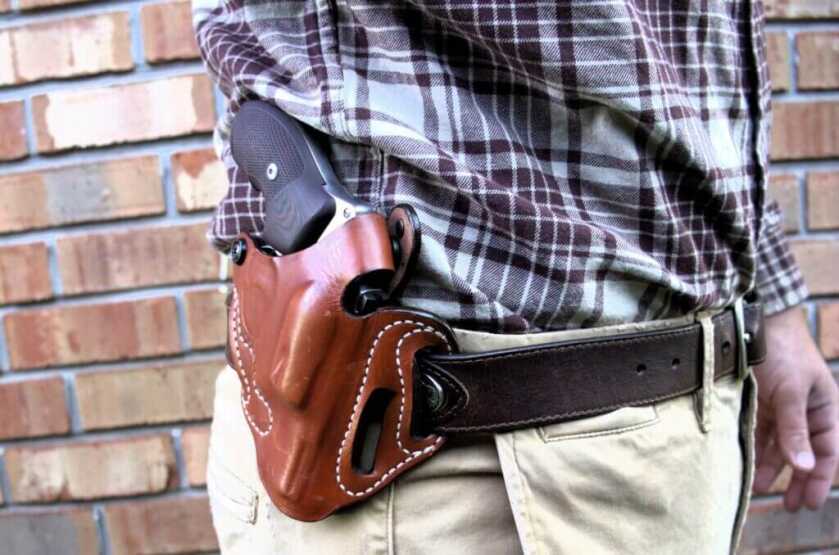
The new 940 from Smith & Wesson is not a revolver made for everyone. From a concealed carry or backup gun perspective, it is on the heavy side for a five-shooter and is at its best on the belt rather than in a pocket or on the ankle. From a capacity perspective, a single-stack 9mm pistol is better. That is, if you can get those rounds off.
Getting rounds off quickly is a definite strong suit of the Smith & Wesson 940. Over other 9mm revolver alternatives like the Ruger LCR, SP101, and Taurus 905, the smaller size of the 940 makes it more convenient to carry, while the steel frame makes it easy to shoot. It is a combination that is not easy to pull off, but Smith & Wesson did it once again with the 940. If you are looking for a shootable snubbie in a common caliber, the 940 may be the best of the bunch.
S&W 940 9mm Specifications
| Model | Smith & Wesson 940 |
|---|---|
| Caliber | 9mm Luger |
| Barrel Length | 2.1 in |
| Overall Length | 6.6 |
| Weight | 25.6 oz |
| Capacity | 5 |
| MSRP | $999 |
Pros & Cons: The Real Carry Math
- Pros: Real sights for a snub, controllable recoil for 9mm, fast moon clip reloads, compact J frame footprint, handsome and grippy VZ stocks
- Cons: Heavier than alloy snubs, DAO trigger is stout, sight picture grows chunky past 25 yards, best reliability requires moon clips.
Related Reads from GunsAmerica Digest
Available on GunsAmerica Now

Jim Maybrick has been a consistent voice in the firearms world for over a decade, writing hundreds of articles and producing dozens of videos that span nearly every corner of the shooting sports. With a background in military and economic history, Jim has a talent for weaving compelling stories around historic firearms designs and the rise and fall of legacy manufacturers.
But Jim’s interests go far beyond the past—he’s just as comfortable diving into muzzleloading traditions as he is testing the latest rimfire loads or mastering cutting-edge modern systems. His thoughtful, data-driven approach brings clarity and depth to every review.
When he’s not at the range or deep in a spreadsheet, you’ll find him enjoying time with family, chasing game, or refining the lost art of starting a perfect campfire.
Experience:
– Veteran Writer & Content Creator – Over twelve years of experience in firearms journalism with hundreds of published pieces.– Military & Economic Historian – Academic background that fuels in-depth analysis of historic firearms and industry trends.– Versatile Shooter – Covers a wide range of topics from muzzleloaders and rimfire ballistics to today’s most advanced platforms.– Storyteller at Heart – Known for insightful writing that blends technical detail with engaging historical context.– Outdoorsman & Family Man – Reconnects with nature through hunting, fishing, and old-school firecraft.– Analytical Mindset – Brings precision, structure, and storytelling to every article—whether it’s a gear review or a deep historical dive.
Thanks to Jim Maybrick for a very comprehensive review. I liked it so much that I bought the S&W 940 without handling one first! I
am very happy with the purchase because I know from personal experience that Davidson’s lifetime guarantee means exactly that, and the wholesaler’s proprietary upgrades on the sights and grips are worth the extra cost, at least for me. I will accept the extra weight to mitigate recoil and for wear resistance, as I dry-fire nightly. The first range visit confirms Jim’s findings, so thanks again to him for helping me make a great decision!
There’s no reason I can think of for putting a five-shot, 9mm cylinder in a “magnum” j frame. We shot 38 +p+ in the little stainless model 60 without ever having an issue. If they want a “j frame” nine… then put it in a J frame.
I believe the longer cylinder and barrel of the “magnum” frame allow for a longer ejector rod and stroke, ensuring that the 9mm rounds in the moon clip will entirely eject from the cylinder.
Merry Christmas! Sorry to take so long replying… I have more irons in the fire than attention span, sometimes. I got my J frame out along with some .38 and 9mm rounds, and the .38s are longer by far than the nines. The original J frame, with the original ejector rod, would push the nines out all day long. I suspect S&W just doesn’t want to retool anything to start mass producing the little frames again. Too bad. They were/are much handier than the larger ones they make today.
Hope your celebrations go well!
Sights are nice, but still would rather see the .357 with a 3in barrel. That extra inch makes all the difference in the world.
I have an original Centennial model 940 from 1990 in 38 spl and while the sights on this new one are better the overall size is definitely longer. I got mine before S&W released the Air weight version and that would be my only issue with a snuby type revolver.
$1000 is a lot of money for a CC revolver, even a nice S&W. I never carried moon clips, but they seem bulky and likely to separate.