
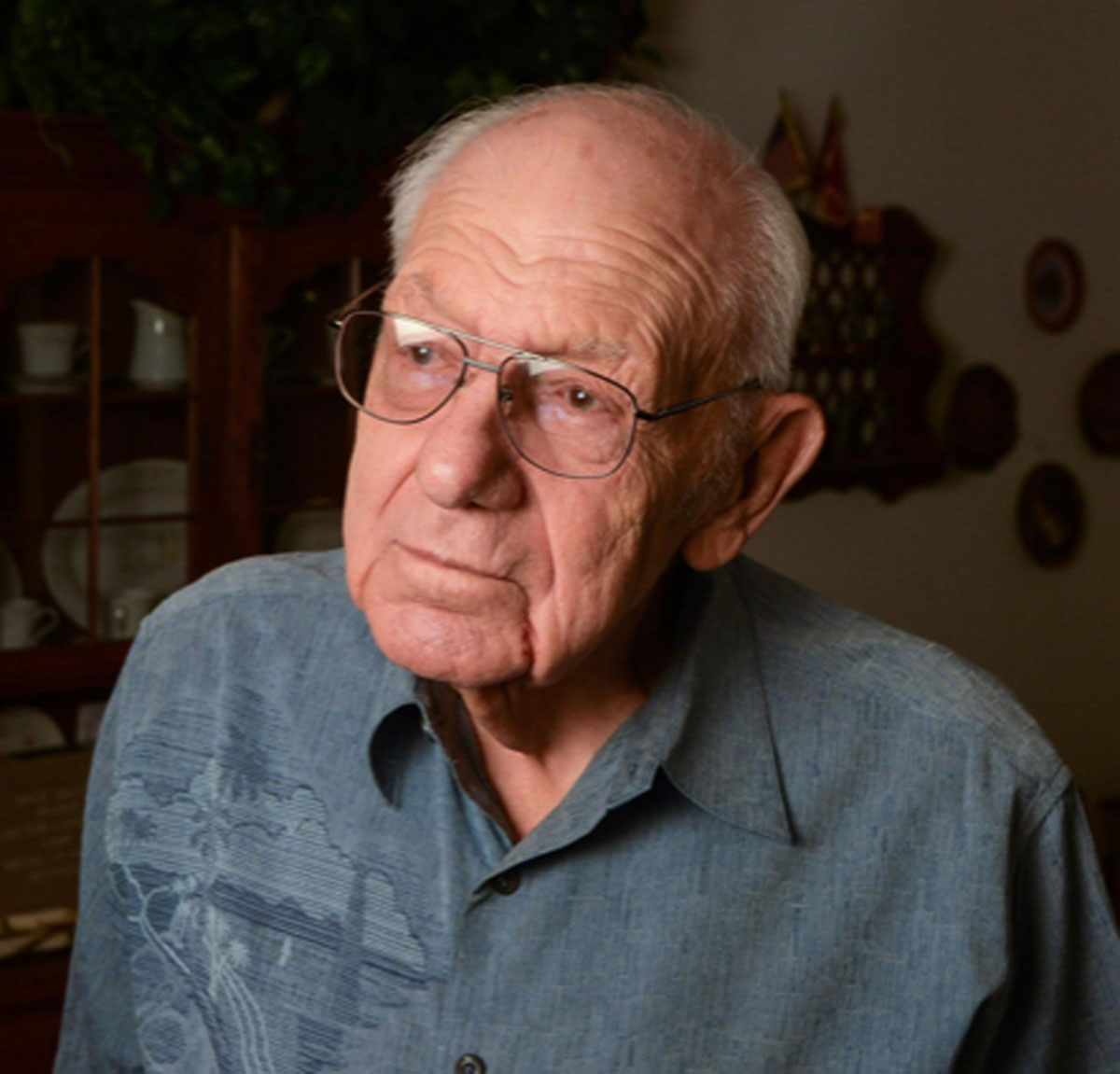
Hector Cafferata was the archetypal humble hero.
Hector Cafferata died at 86 in a hospital in Venice, Florida, in April of 2016. He was a big man who had once aspired to a career in professional football. Cafferata spent most of a lifetime in New Jersey selling hunting and fishing licenses. He owned a bar for a while. Cafferata retired to Florida because of the weather. Mr. Cafferata had really good reason to despise cold weather.
Baby, It’s Cold Outside…
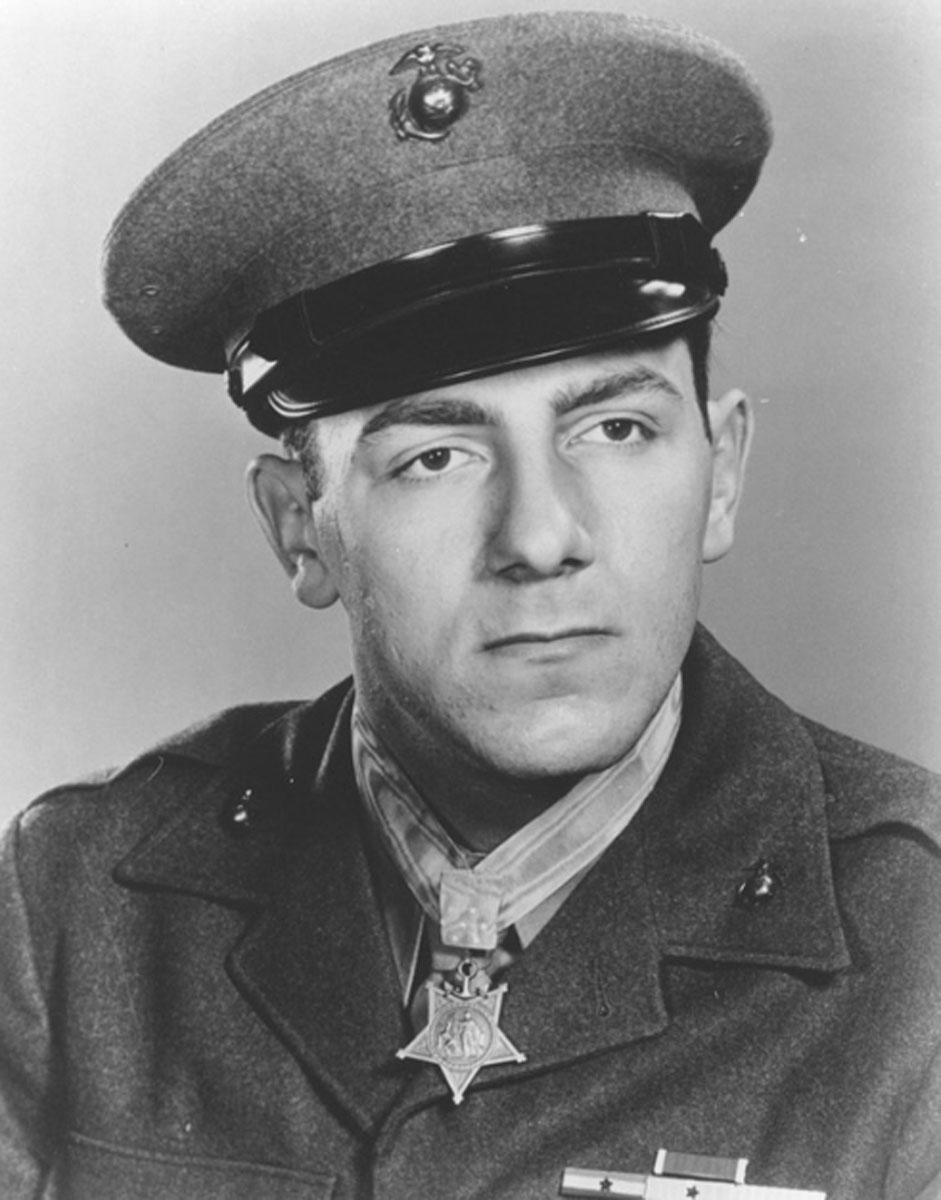
During the Korean War Hector Cafferata defended his frigid fighting position against overwhelming odds.
On November 28, 1950, Hector Cafferata was asleep in his sleeping bag in a mountainous area near the infamous Chosin Reservoir in Korea.
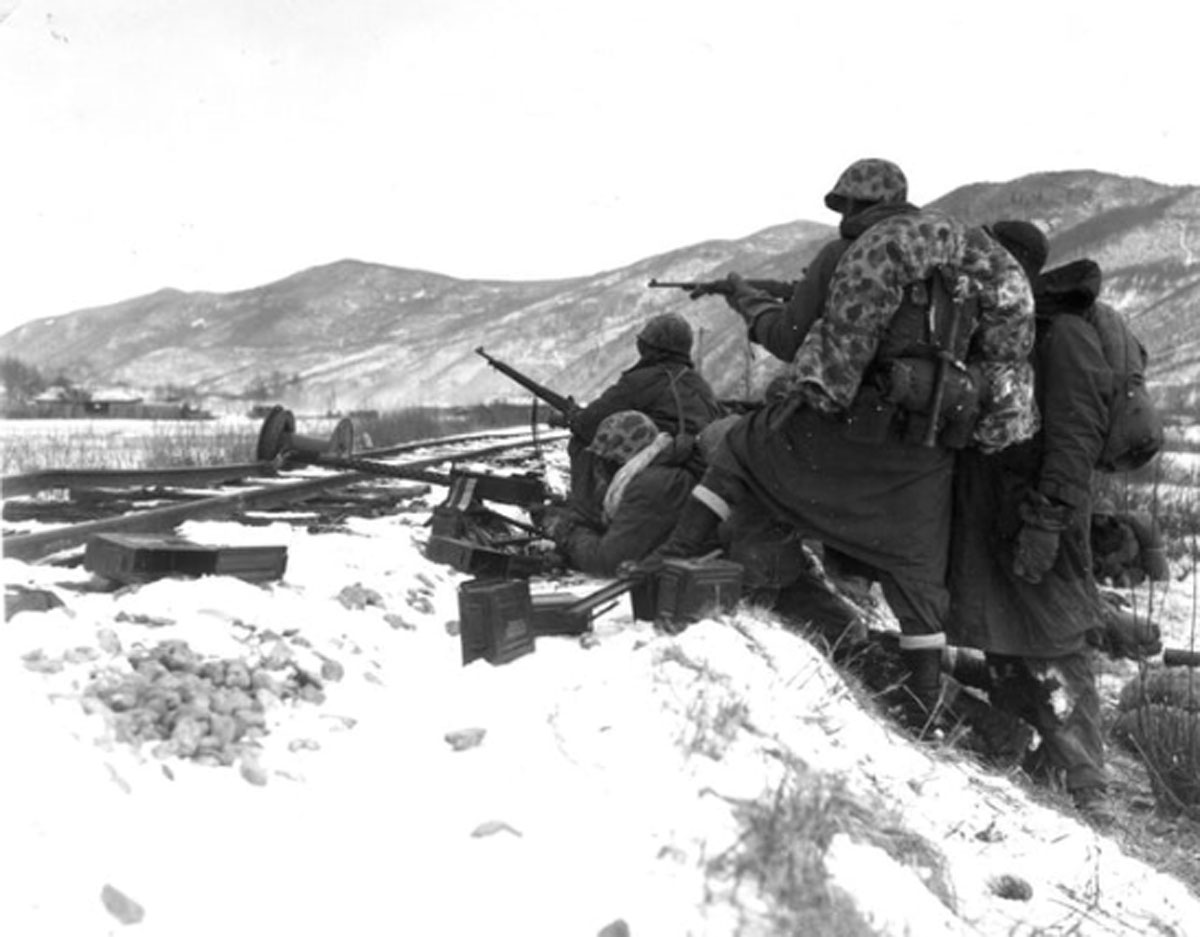
Winter in Korea was a desolate and pitiless thing.
The ground was frozen too hard to dig foxholes, so he and his fellow Marines simply covered themselves in tree branches in an effort to approximate some modest degree of cover. At around 0130 Cafferata was shocked awake by small arms fire nearby.
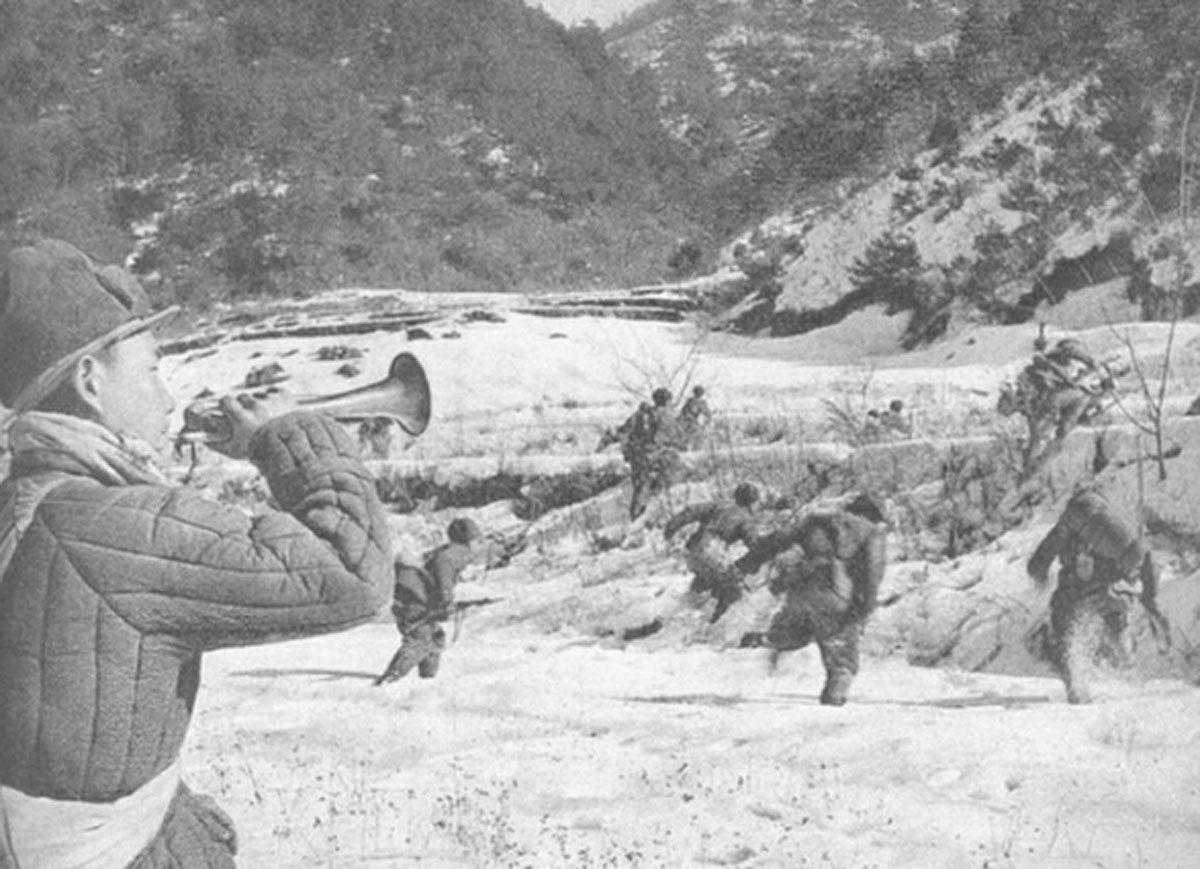
Attacking Chinese troops frequently used bugles to help control their troops during night attacks.
The Chinese were particularly adroit at nocturnal operations, and this nighttime ambush was horribly effective. The rest of Cafferata’s rifle squad was either killed or wounded in the opening stages of the attack.
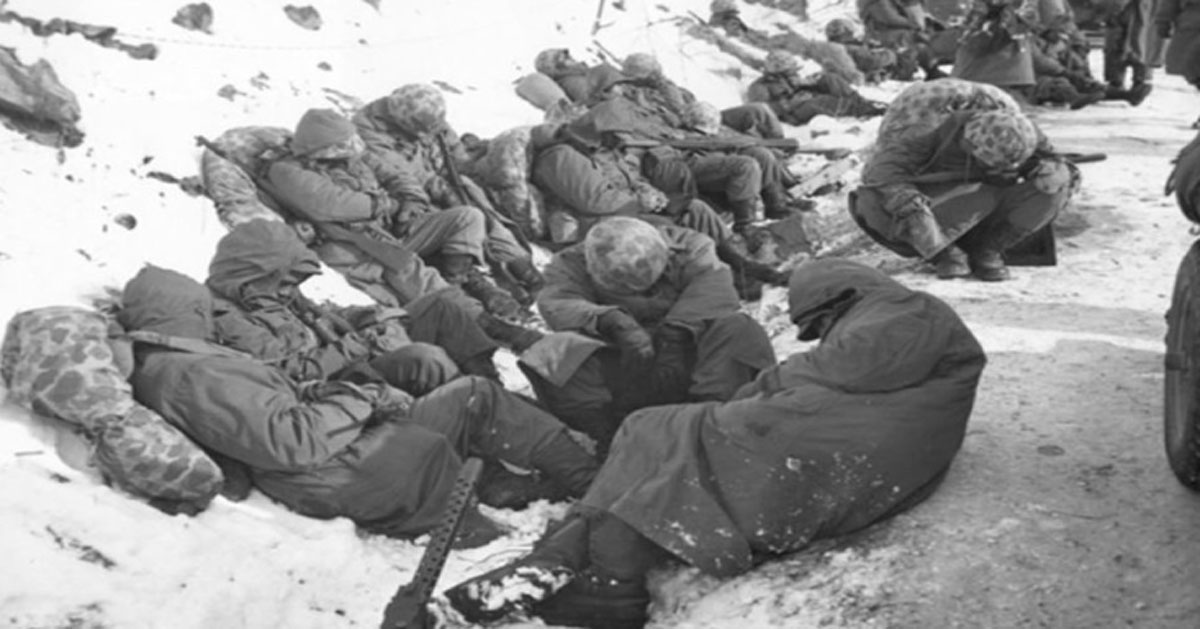
In Korea, in the winter the cold could kill as effectively as a bullet.
In the chaos that ensued, Cafferata had no time to retrieve his coat or boots. Gathering the few injured survivors and maneuvering through the frigid snow in nothing but his sock feet, Hector Cafferata prepared for the fight of his life. He shared his fighting position with a fellow Marine named Kenneth Benson who was so badly wounded as to be rendered combat ineffective.
Things Heat Up
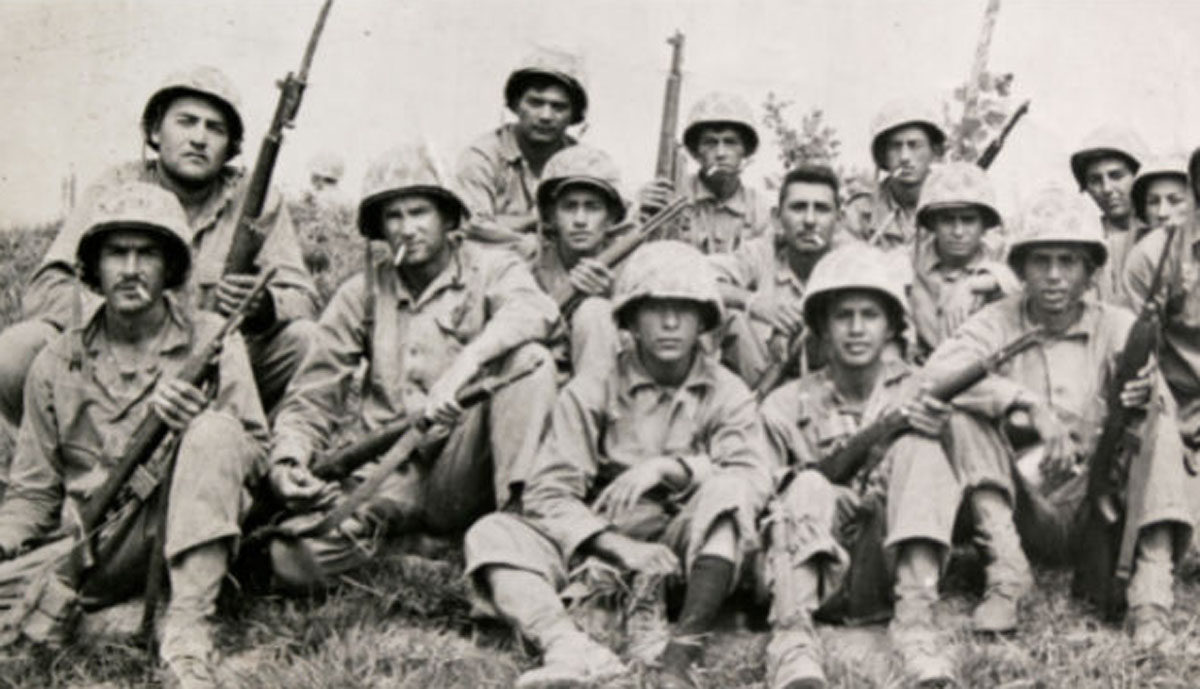
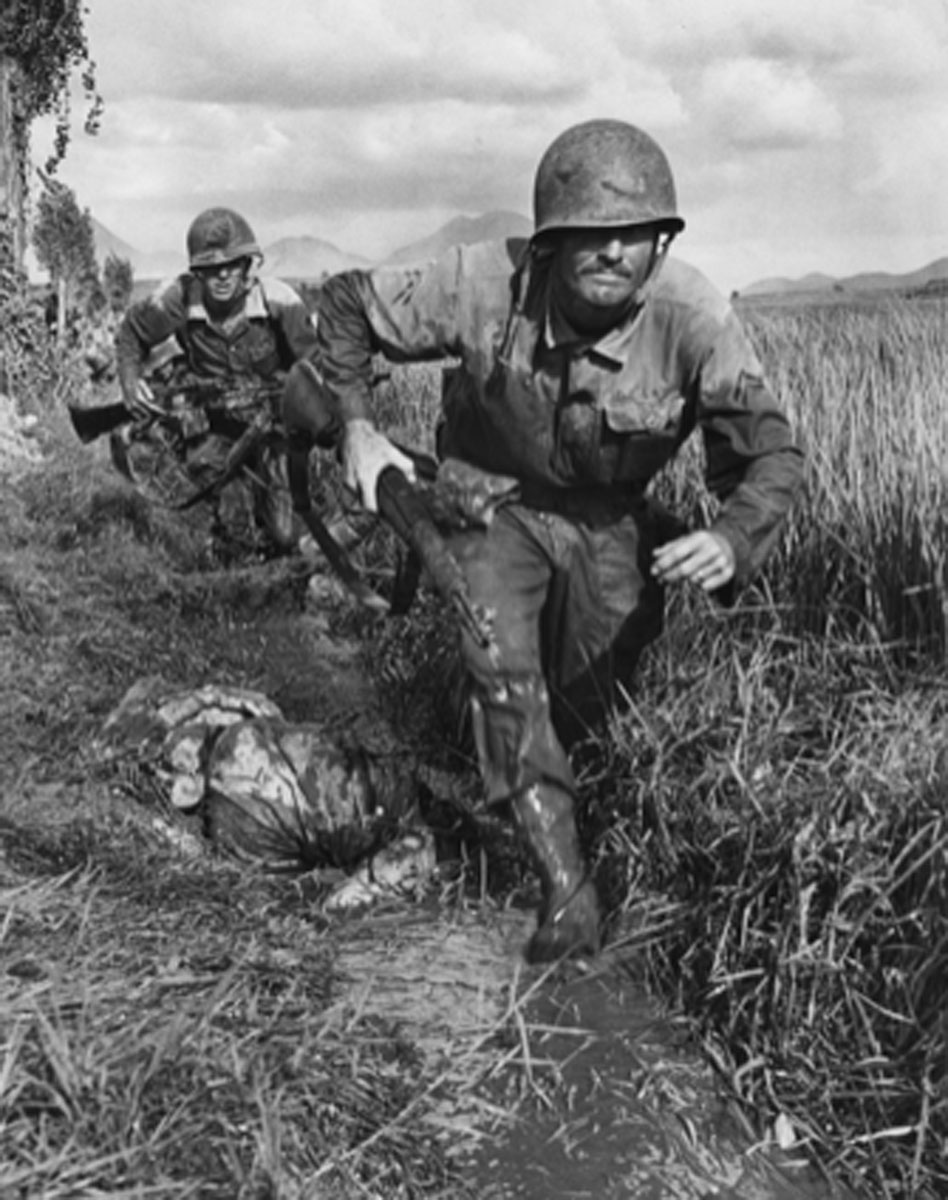
Cafferata settled into his little ditch and got ready for a hard fight.
As darkness gradually turned to dawn, Hector Cafferata hurled grenades at the assaulting infantry. Benson was hurt too badly to fight, but he reloaded Cafferata’s M1 in the dark by feel. For five hours these two Marines battled an overwhelming number of attacking Chinese troops.
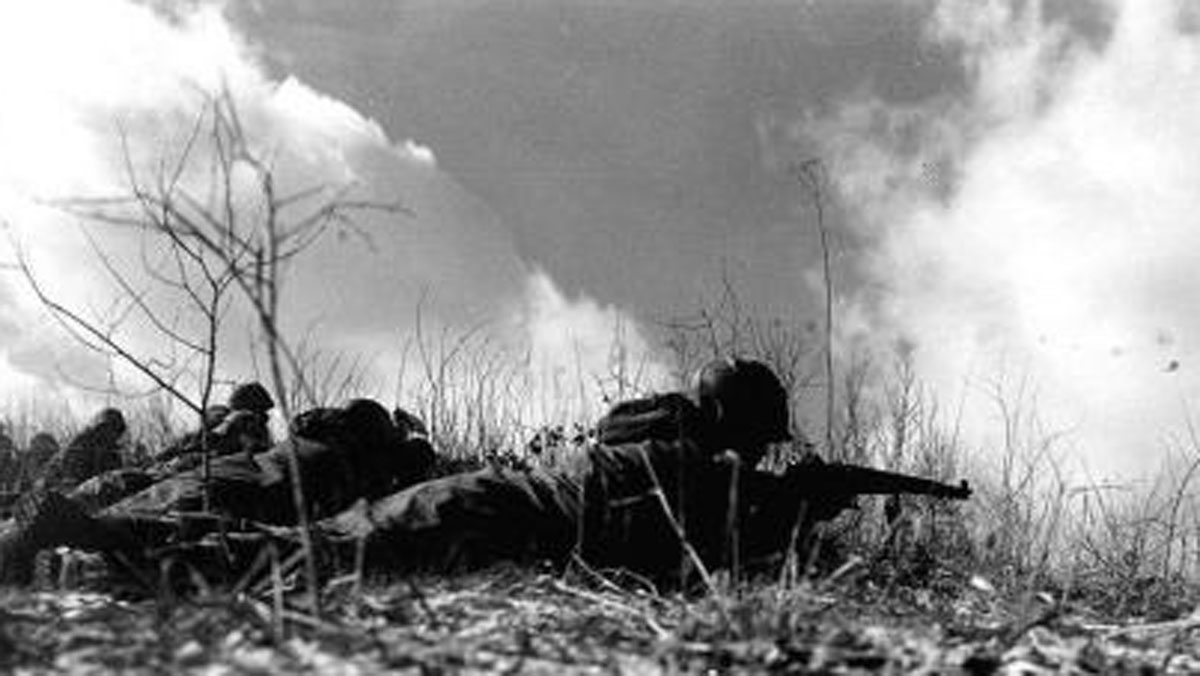
Hector Cafferata burned countless rounds through his M1 Garand as he defended his position against a Regimental-sized attack.
Under constant assault by small arms, grenades, and mortars, Cafferata fired his M1 until the forearm actually burned to charcoal. He packed snow around the weapon to cool it down.
“I was the World’s Worst Baseball Player”
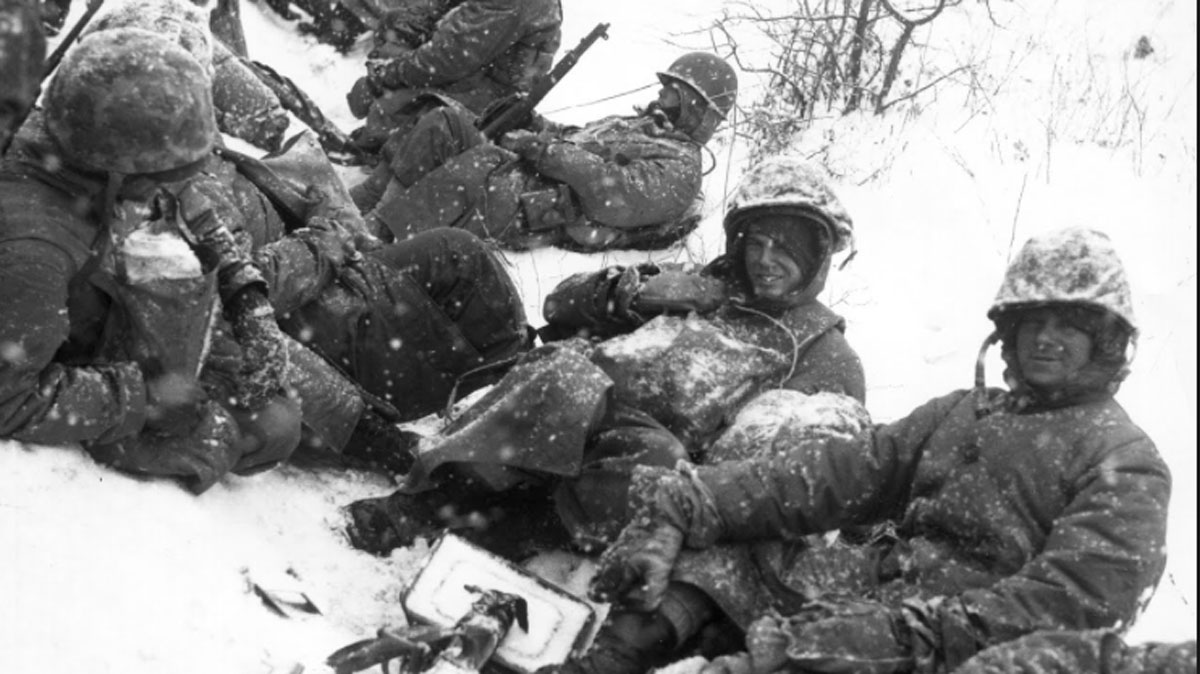
Cafferata fought throughout the horrible Korean night.
At contact ranges one of the primary tools used by the attacking Chicom soldiers was the hand grenade. Hector Cafferata unlimbered his entrenching tool and used it like a baseball bat to swat grenades back at the attacking Chinese. He did this for five hours. When asked how many times he had returned Chinese grenades to their previous owners he estimated maybe a dozen. I simply cannot imagine.
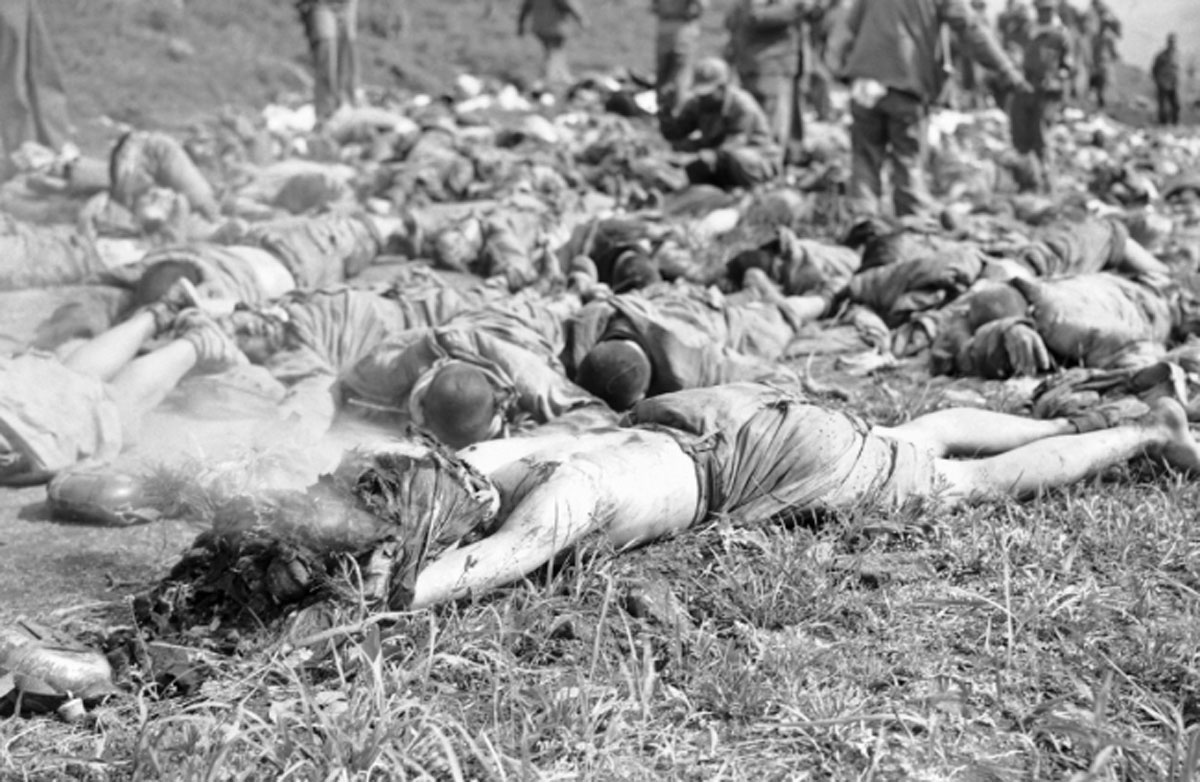
As the battle wore on, the bodies stacked up around him.
One grenade dropped into the depression where Cafferata and his wounded buddies had taken refuge. Cafferata scooped up the sputtering bomb and hurled it back, saving his friends in the process. However, the grenade detonated just as it left his hand and ripped into Cafferata’s fingers. It also left his right arm liberally peppered with shrapnel.
Finally, Hope
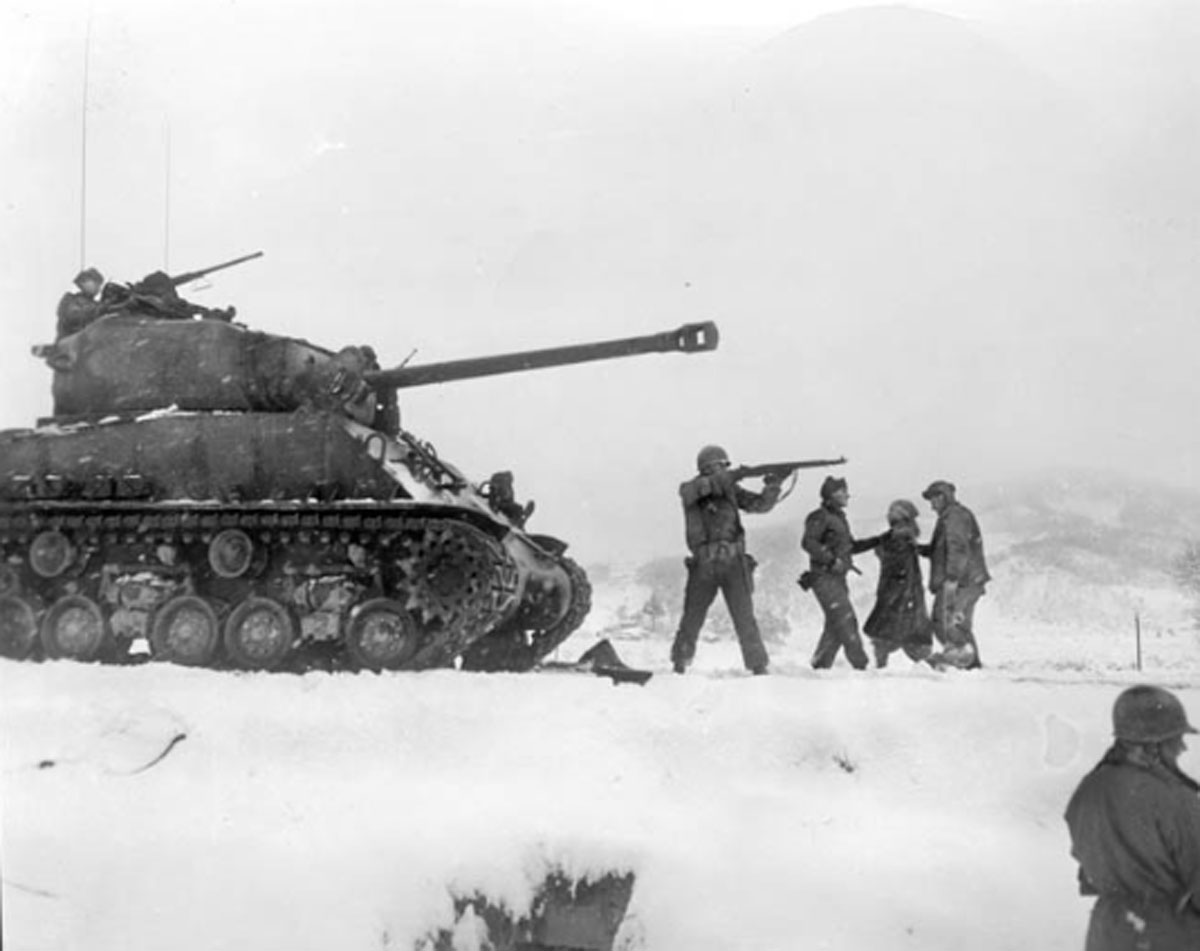
With dawn the following day came relief from supporting Marines.
Throughout it all, Cafferata fought like a man possessed. He killed Chinese soldiers at ranges as close as fifteen feet. Once the sun came up and visibility improved, Cafferata was hit and badly wounded by a Chinese sniper.
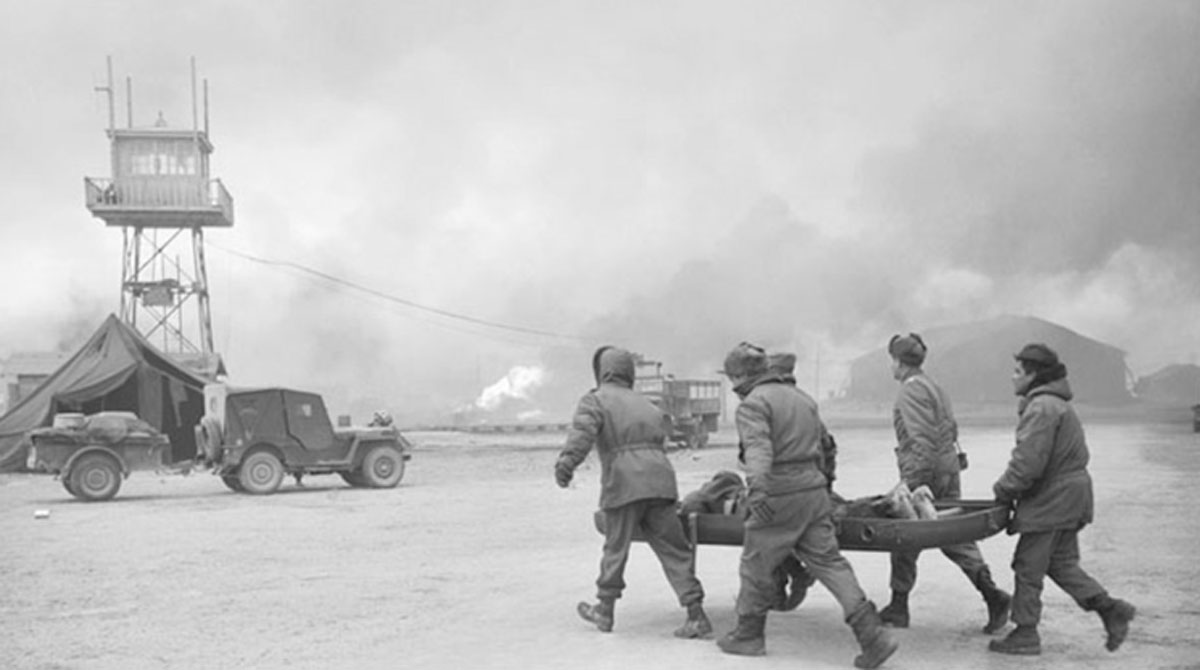
Frozen, blown up, and shot, Hector Cafferata was finally evacuated for treatment.
Supporting Marines eventually reached his position and evacuated the exhausted man to an aid station. His feet were by now white with frostbite. Hector Cafferata had defended his position and his blinded friend throughout the frigid night with neither boots nor a coat.
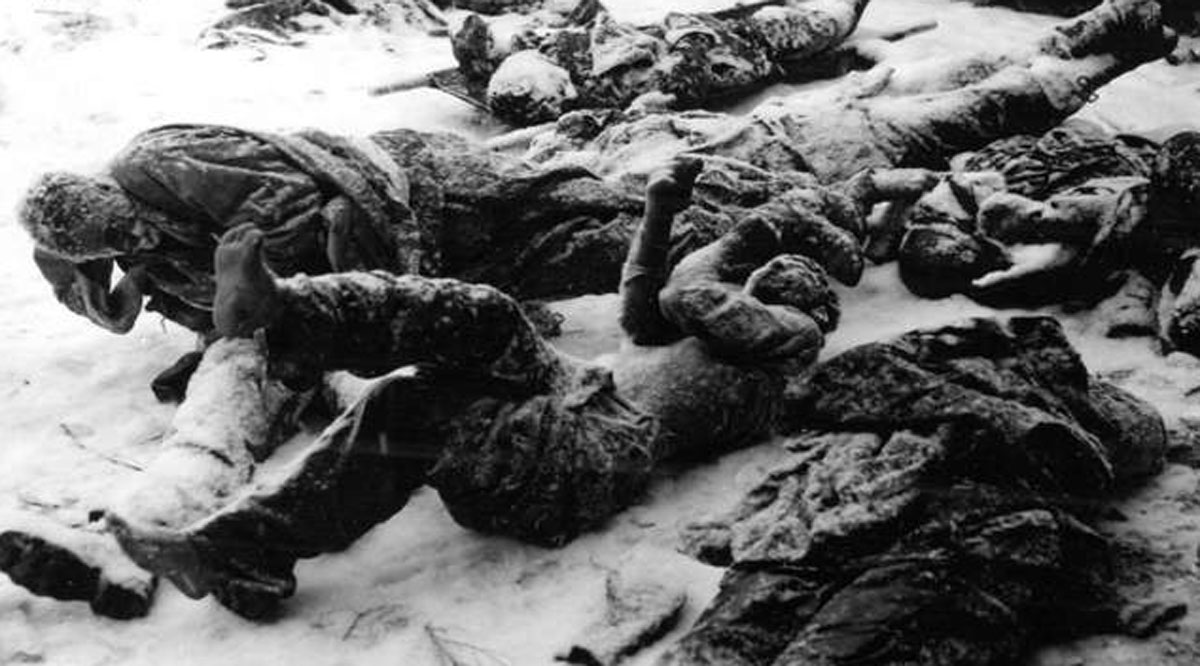
The carnage that resulted from Cafferata’s last stand was literally unbelievable.
Follow on forces later counted more than one hundred dead Chinese soldiers around the shallow ditch that had served as Hector Cafferata’s one-man Alamo. The number was officially reported as fifteen because the officers involved did not feel that the true number would be believed.
The Rifle
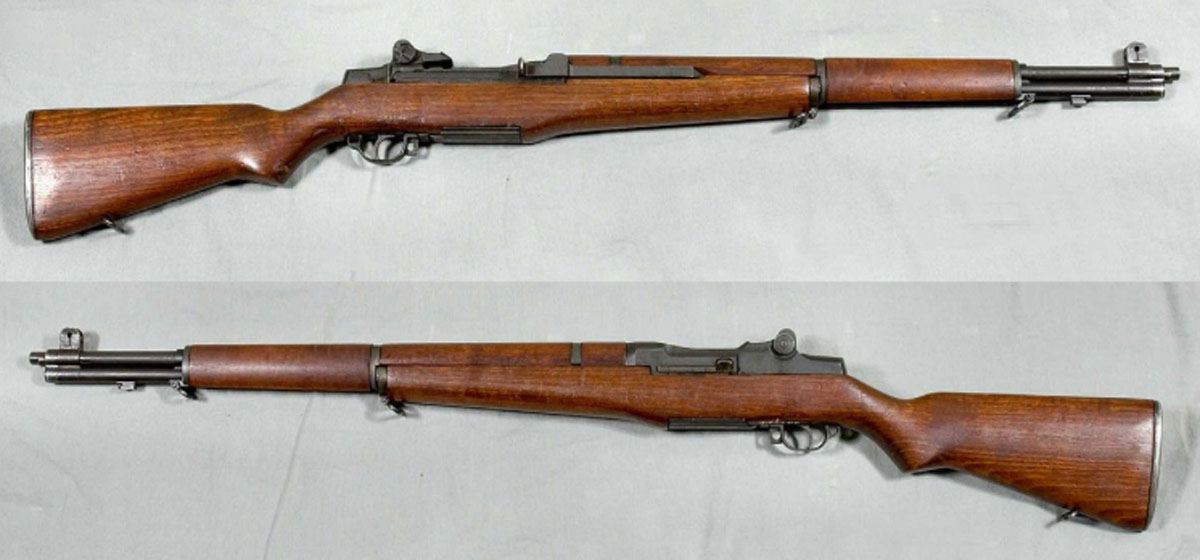
The M1 rifle was the mainstay of American Infantry fighting forces throughout World War 2 and Korea.
The M1 Garand rifle was the standard service rifle for the United States Army from 1936 until 1959. Designed by Canadian gun designer John Cantius Garand, his eponymous rifle represented the state of the art in autoloading Infantry weapons throughout World War 2.
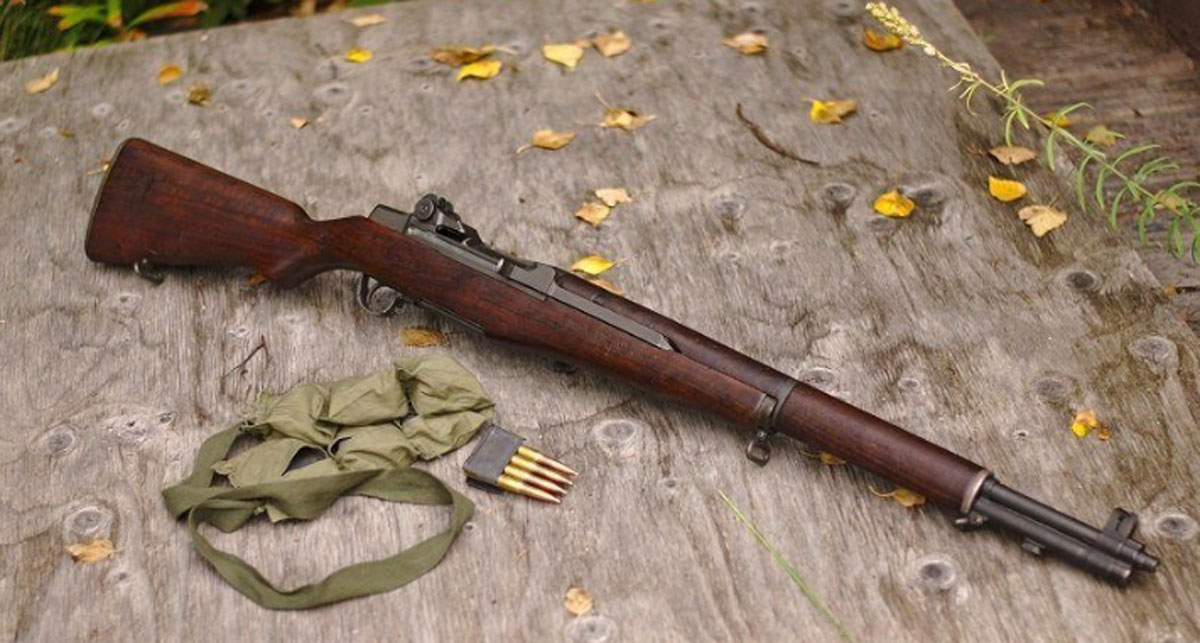
The M1 loaded from the top via 8-round spring steel clips.
While we frequently refer to this weapon as the Garand in deference to its designer, vets who served in WW2 and Korea have told me the gun was always just the M1 to them. The M1 Carbine was the Carbine, and the M1A1 submachine gun was called the Thompson. However, there was only ever one M1.
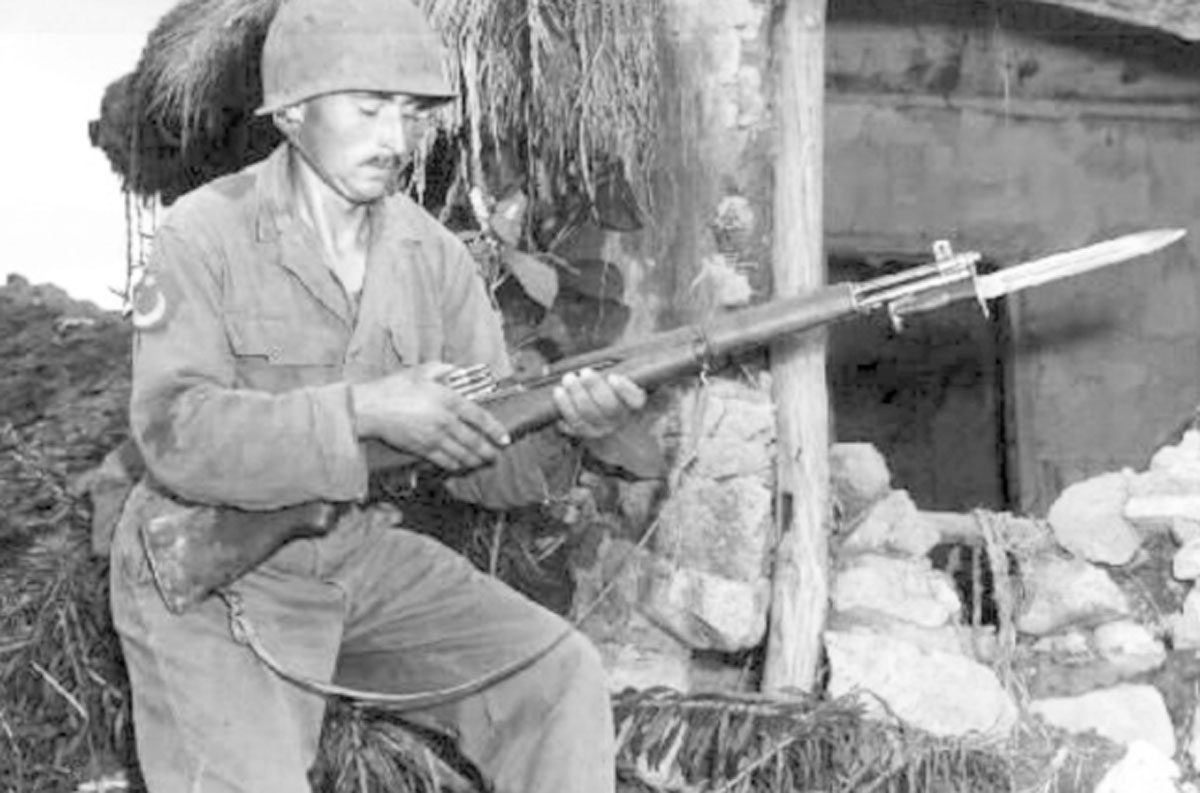
While the M1 was revolutionary for its time, it was still awkward to manage in combat.
The M1 is a gas-operated weapon with a rotating bolt that feeds from an internal 8-round en-bloc clip. En-bloc simply means that the spring steel clip remains a part of the weapon during its operation. An internal mechanism forcefully ejects the empty clip on the last round fired. The distinctive ping sound it makes is like fine music to any proper gun nerd.
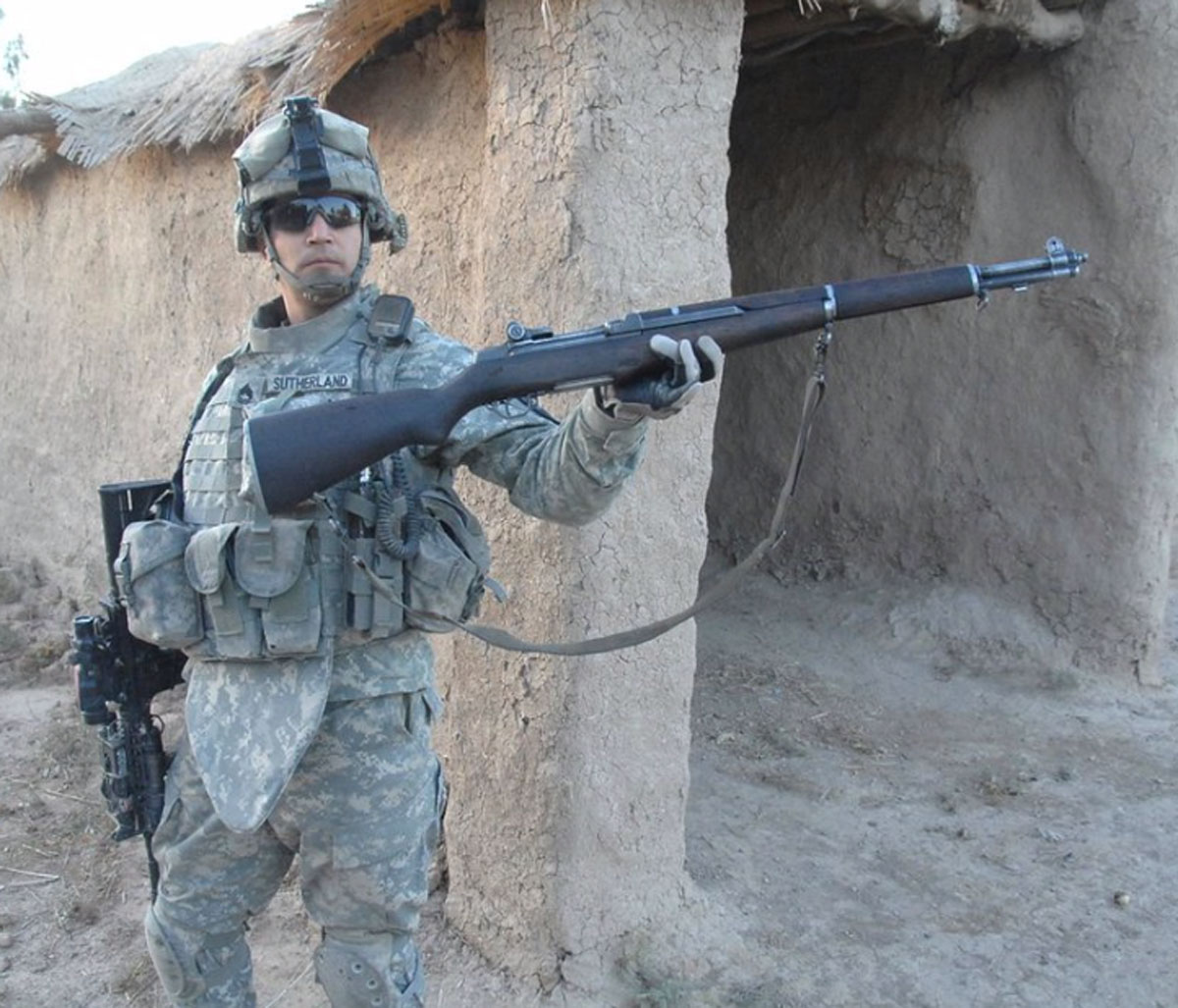
M1 rifles still show up in modern combat zones even today.
Nearly 5.5 million copies were produced. The gun cost the government around $85 apiece during World War 2. That equates out to about $1,200 today. The M1 saw service with more than forty nations, and copies have been captured in the recent wars in Iraq and Afghanistan.
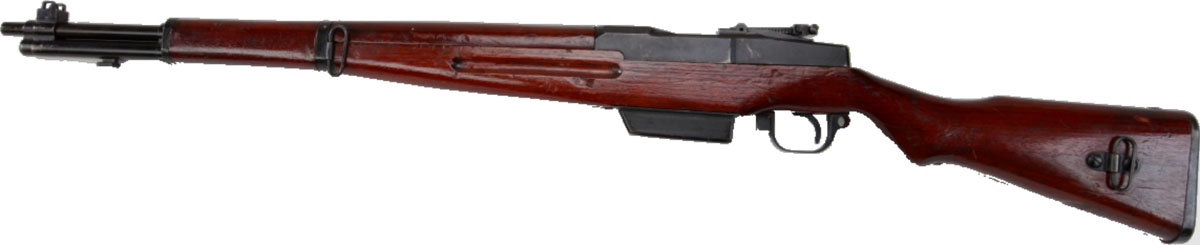
The Japanese Type 4 was a failed attempt by Imperial Japanese forces to copy the American M1. Original examples are quite spendy today.
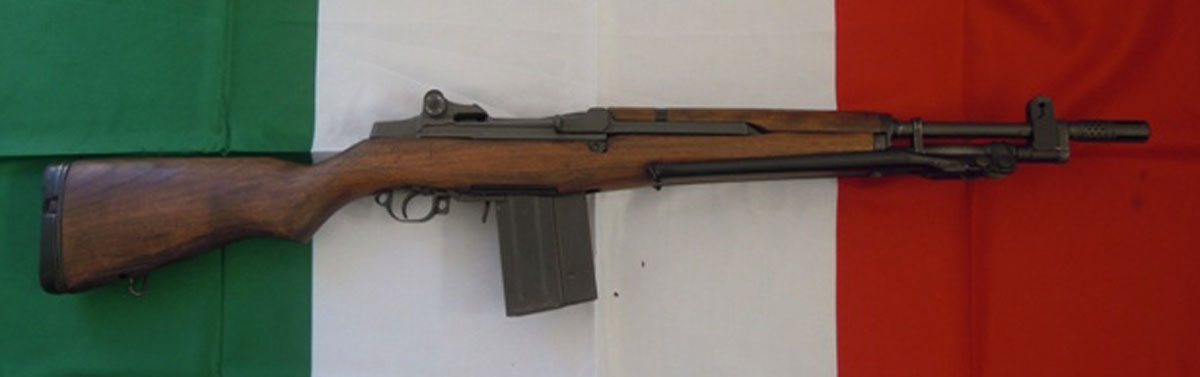
The Italian BM59 was a magazine-fed selective-fire copy of the M1 that fired 7.62x51mm rounds.
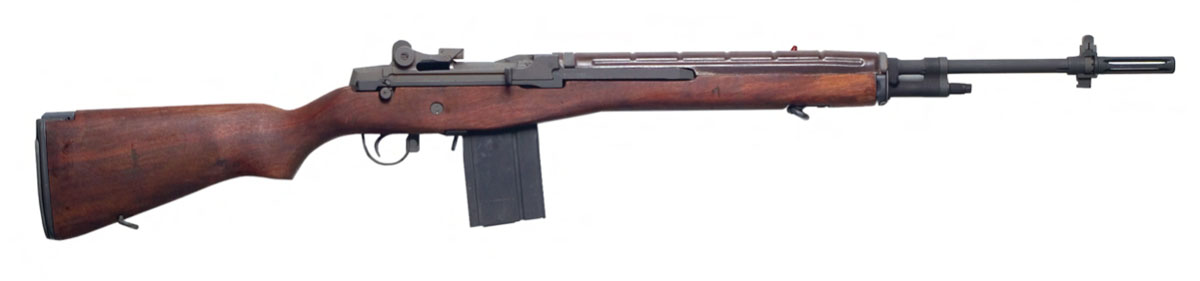
The M14 was an evolutionary development of the basic M1 action.
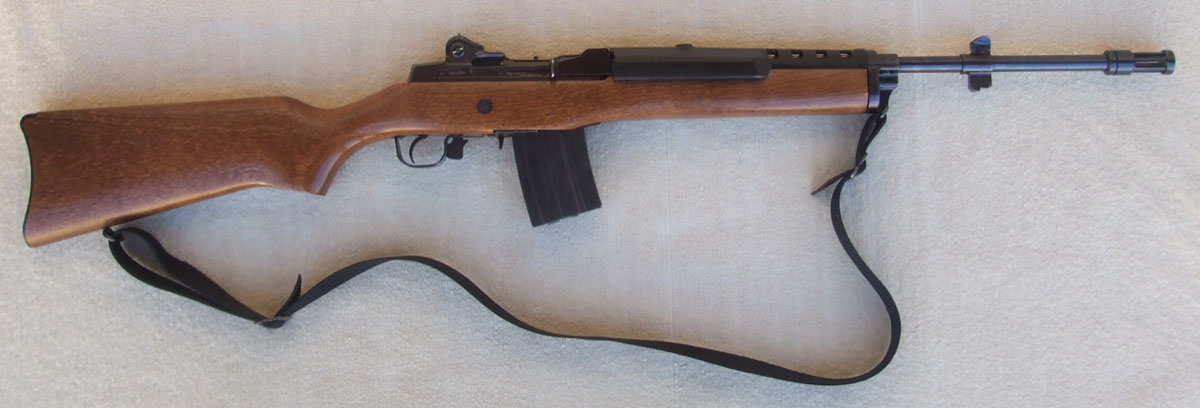
The Ruger Mini14 rifle was a scaled-down version of the M14 chambered for .223 Remington. However, the entrails were completely different.
The basic action served as inspiration for the Japanese Type 4, the Beretta BM59, the American M14, and the Ruger Mini14 sporting rifle.
The Grenade
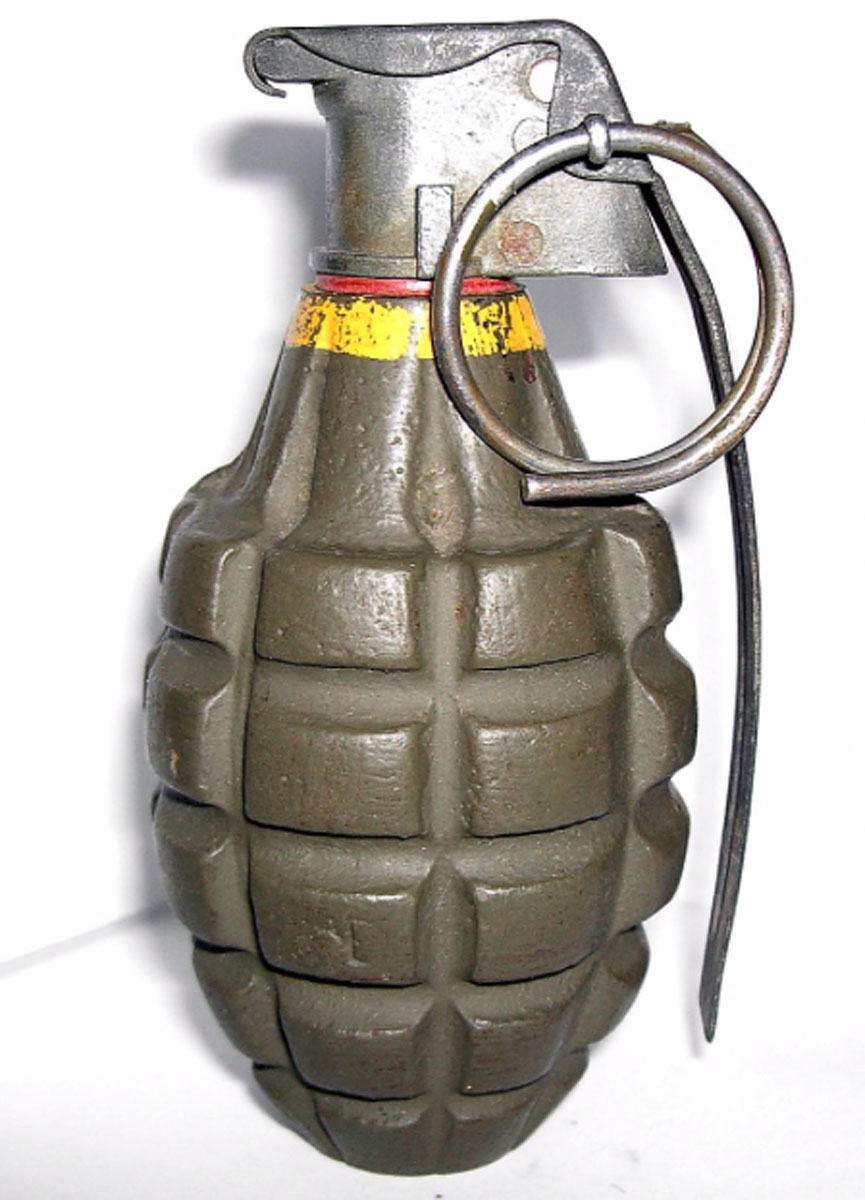
The Mk 2 Pineapple grenade served US forces in combat for decades.
The Mk 2 “pineapple” grenade was a World War 1-era design. Originally designated the Mk II, The name was changed to Mk 2 in April of 1945. This classic American close quarters weapon replaced the failed Mk 1 grenade of 1917. The Mk 2 earned the pineapple moniker based upon its heavily serrated exterior.
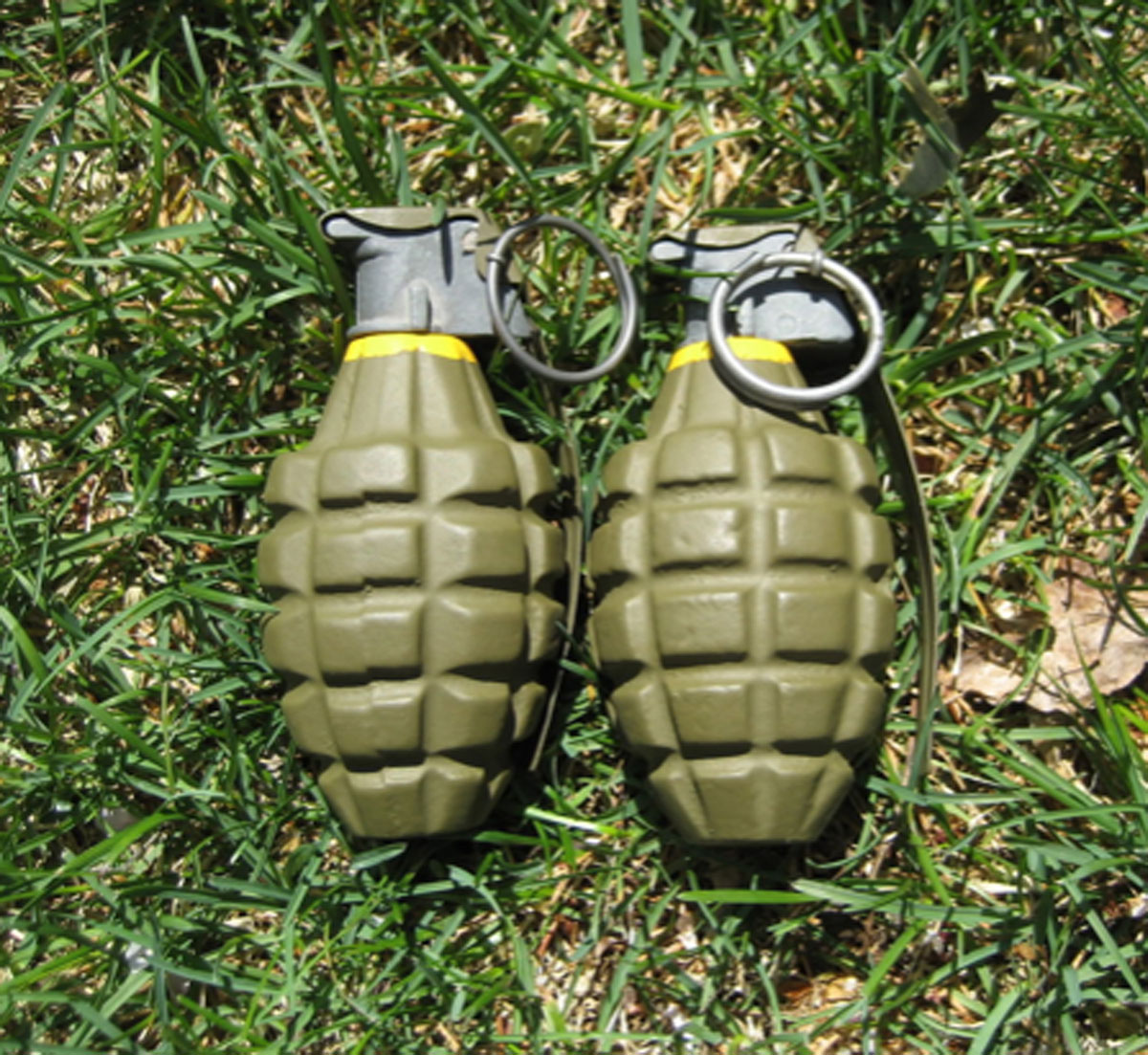
The characteristic knobs on the outside of the Mk 2 did little to improve the weapon’s fragmentation effects but did make it easier to grip.
The cast iron Mk 2 sported forty heavy knobs in five rows of eight. While it was found in practical testing that these knobs did not substantively enhance fragmentation, they did make the little bomb easier to handle. Fillings included TNT, Trojan, Amatol, or Grenite. Some of these grenades were even packed with loose EC smokeless powder. The Mk 2 was fired via a variety of fuses that typically offered a delay of four to five seconds.
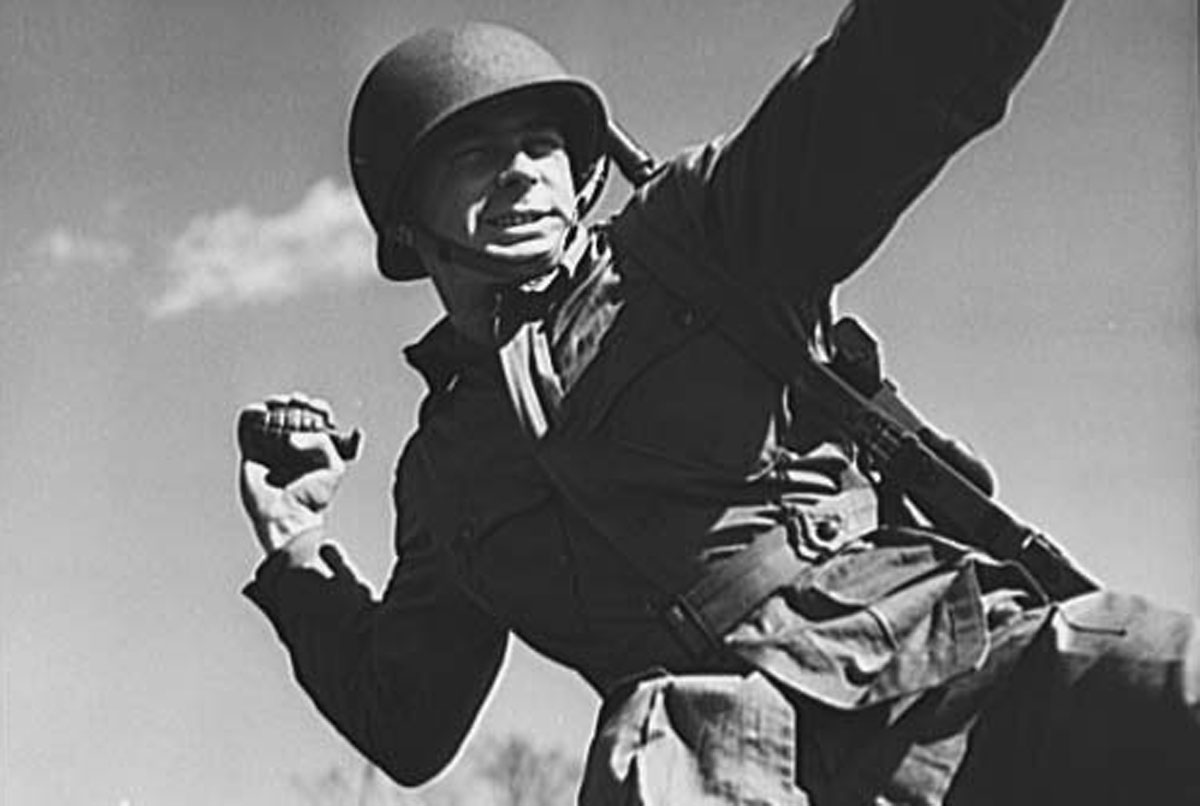
The Mk 2 was an effective close combat tool.
The definitive model of the Mk 2 was painted olive drab with a thin yellow band at the top of the grenade body. The US military consumed Mk 2 grenades by the tens of millions.
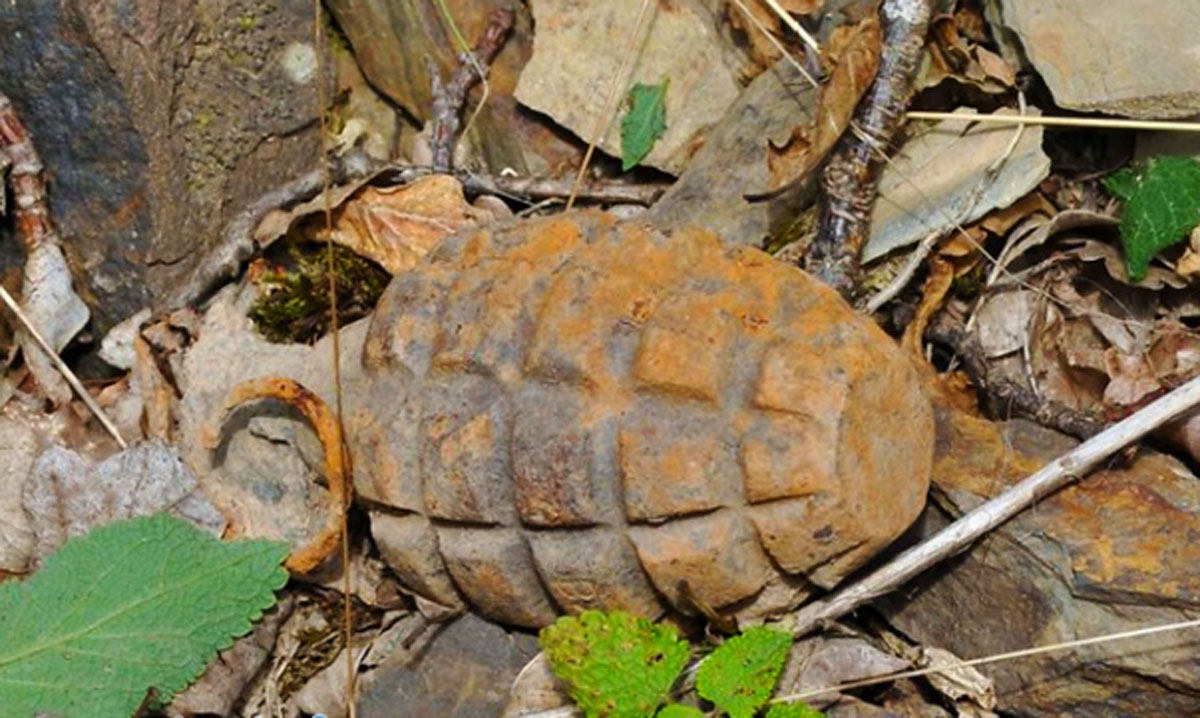
Mk 2 grenades still turn up unexpectedly from time to time.
The Mk 2 was not fully phased out until the 1960s. It can still be encountered in some of your less well-funded war zones even today.
Aftermath
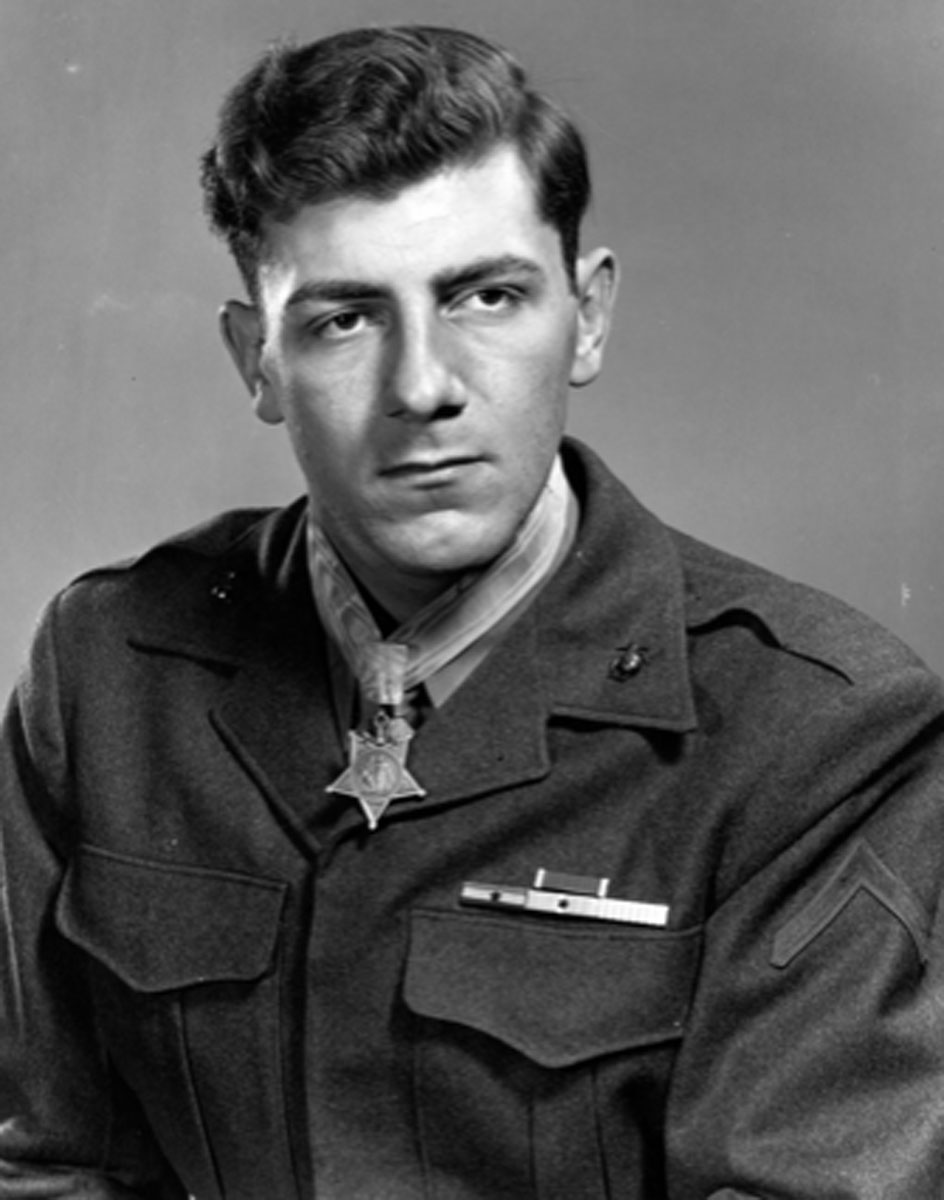
Hector Cafferata was an unassuming hero who shunned the spotlight.
Hector Cafferata subsequently spent a year and a half in military hospitals recovering from his ordeal. In November of 1952, Harry Truman presented Hector Cafferata with the Medal of Honor, his nation’s highest award for valor in combat against a hostile enemy.
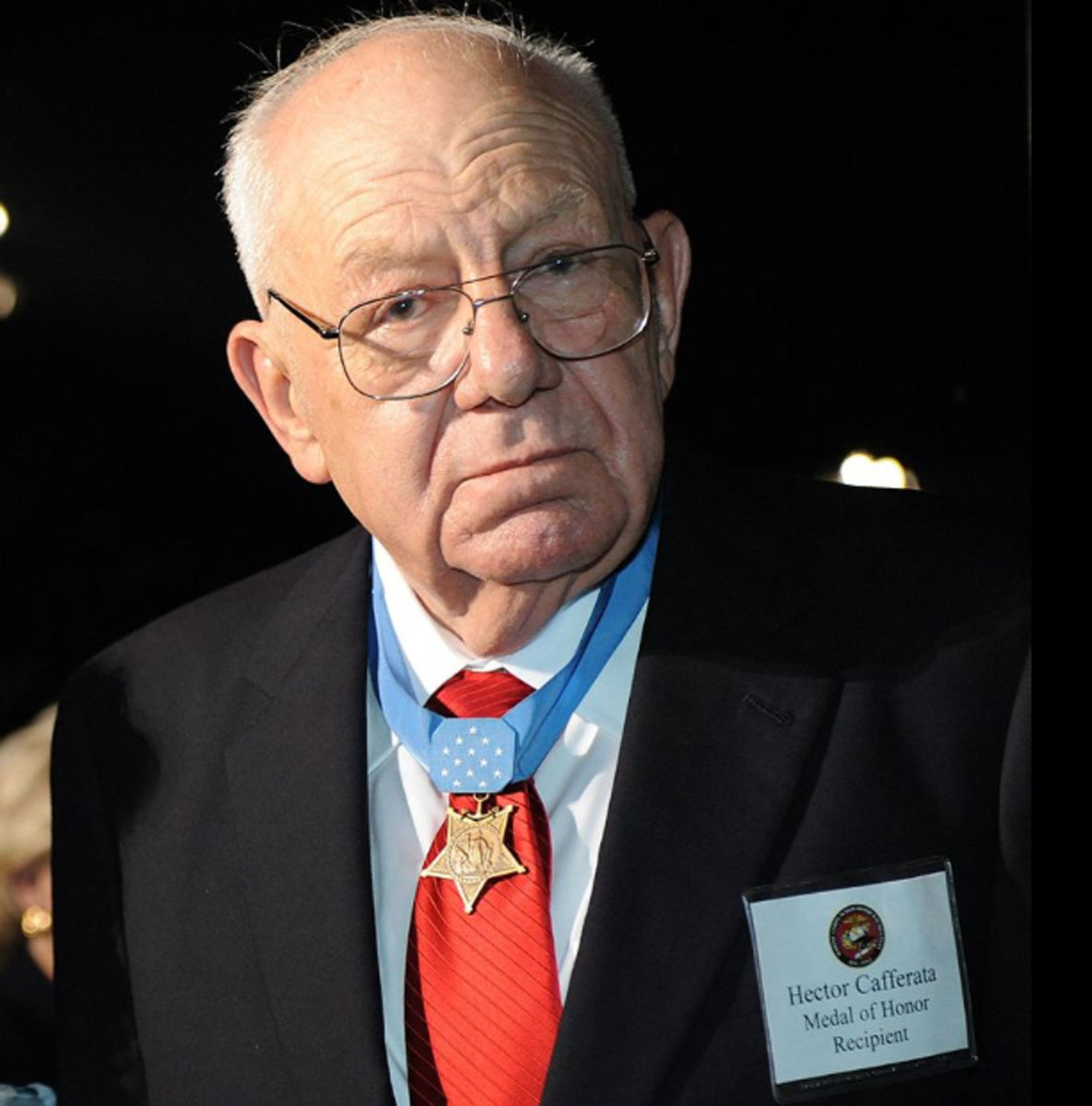
Cafferata served his country valiantly before settling down to a quiet life in relative obscurity.
Though Cafferata occasionally attended events for Medal of Honor recipients, he seldom spoke of his experiences from the war.
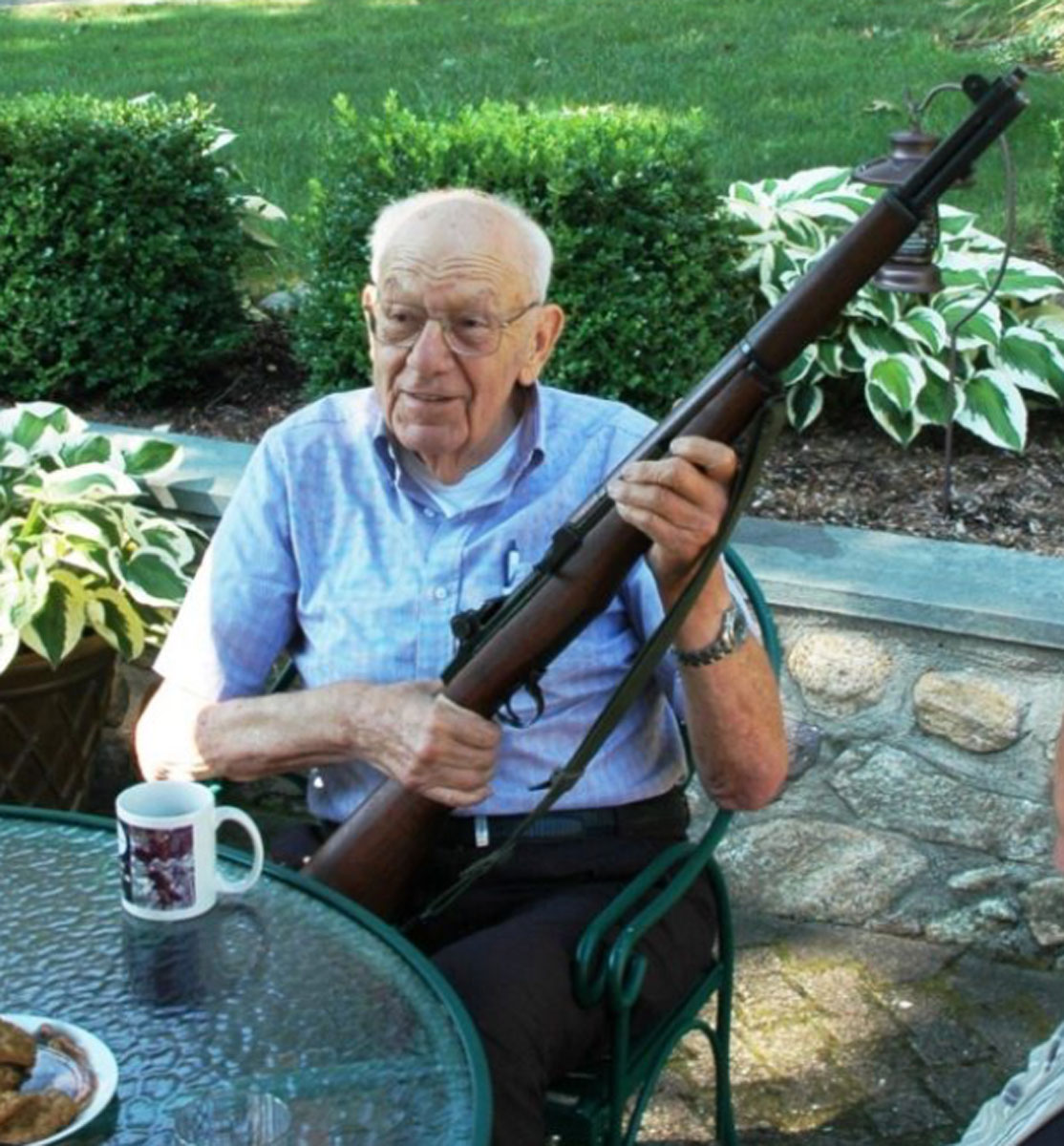
This friendly old guy looks like somebody’s grandfather. In fact, he was somebody’s grandfather. However, looks can be deceiving. Hector Cafferata proved how effective a single rifleman could be under dire circumstances.
In 2014 Hector Cafferata was interviewed for an article in the Sarasota Herald Tribune. He had this to say of the long cold night that so defined his life, “I did my duty. I protected my fellow Marines. They protected me. And I’m prouder of that than the fact that the government decided to give me the Medal of Honor.”
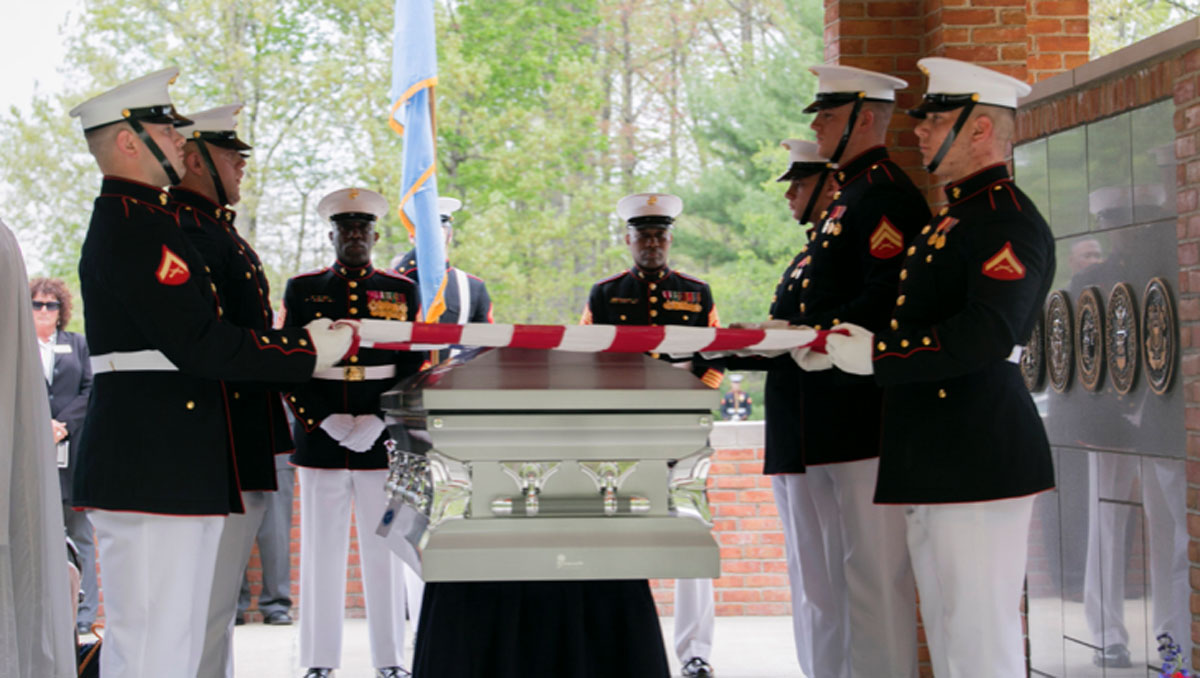
Upon his death in 2016, Hector Cafferata was rightly afforded a hero’s funeral.
He remained humble to the end. At the time of his death, Cafferata left a wife of more than fifty years, four children, six grandchildren, and three great-grandchildren. Cafferata formally petitioned to have his comrade Kenneth Benson awarded the Medal of Honor as well. Benson was ultimately given the Silver Star in 2000 for his actions that fateful evening.
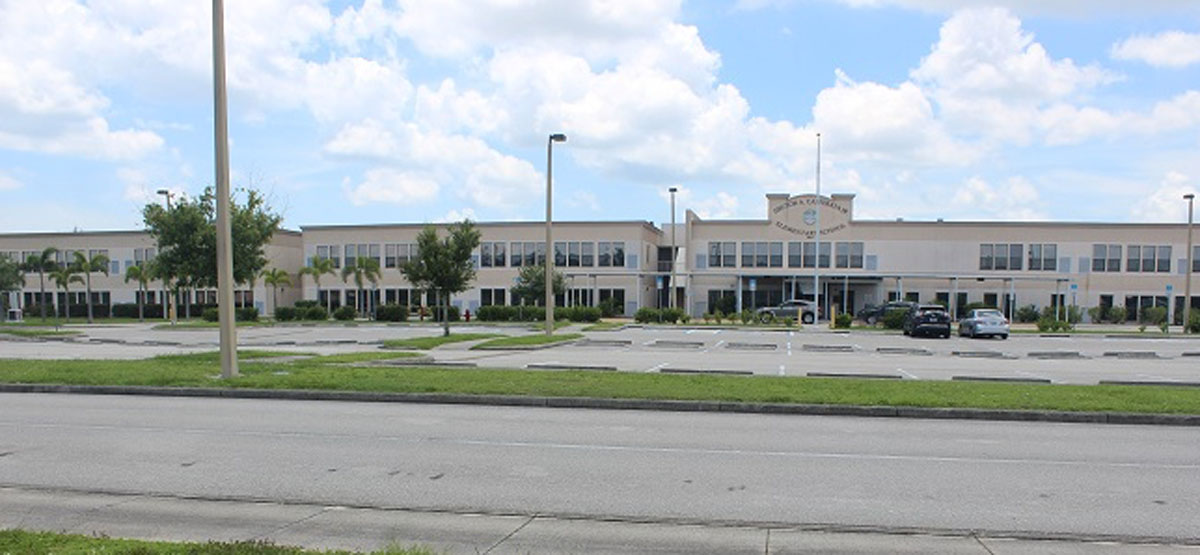
A grade school in Florida bears Cafferata’s name today.
A section of Interstate 287 as well as an elementary school in Cape Coral, Florida, were named in his honor. In 2014 Cafferata’s likeness was included in the folio of a two-stamp set commemorating Korean-era Medal of Honor recipients.
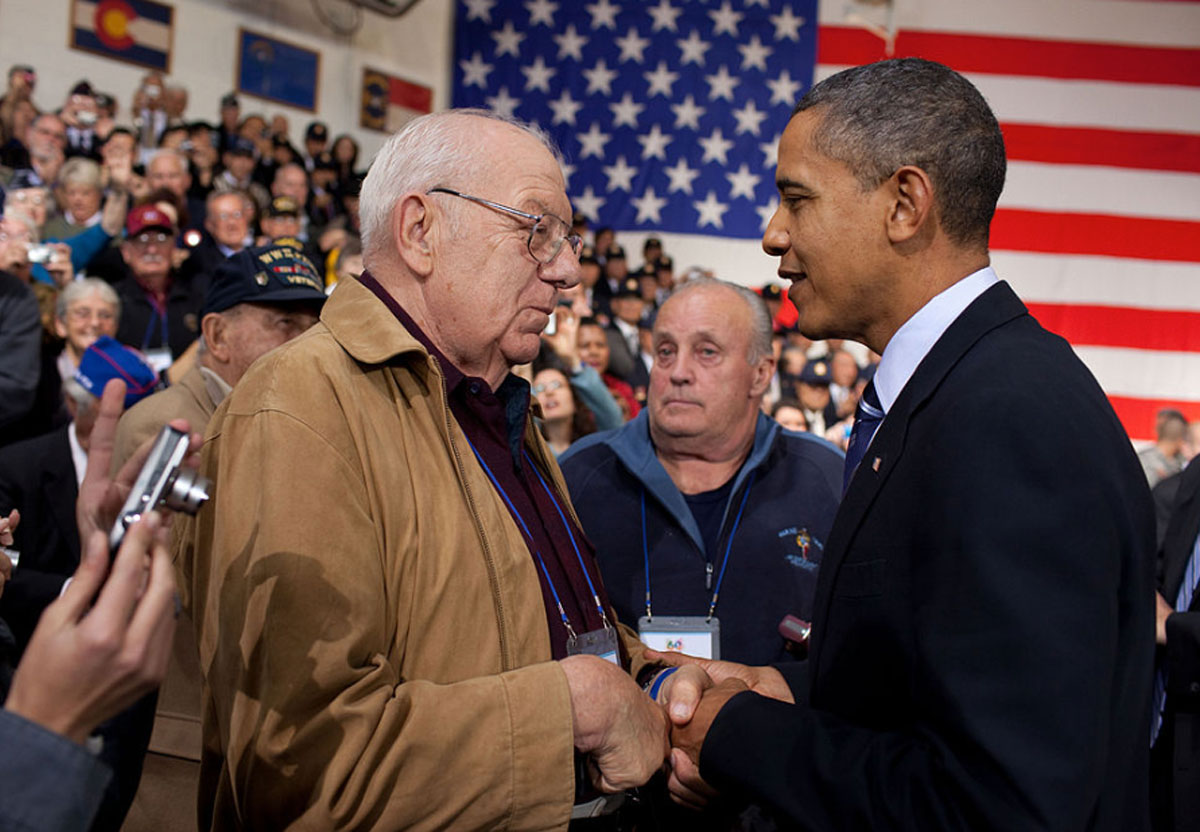
Hector Cafferata never sought fame or recognition despite his superhuman performance during the Korean War.
Valiant in war, industrious in life, and humble throughout it all, Hector Cafferata was a normal American who found himself in some decidedly abnormal circumstances. This regimental-sized attack by all accounts should have overwhelmed his unit and inflicted strategic damage on American forces positioned around the Chosin Reservoir. However, PFC Cafferata picked his place and fought the hundreds of attacking Chinese literally to a standstill. His superhuman stamina and courage held the line against overwhelming forces and showed the world exactly what a single determined Marine with a rifle was capable of.
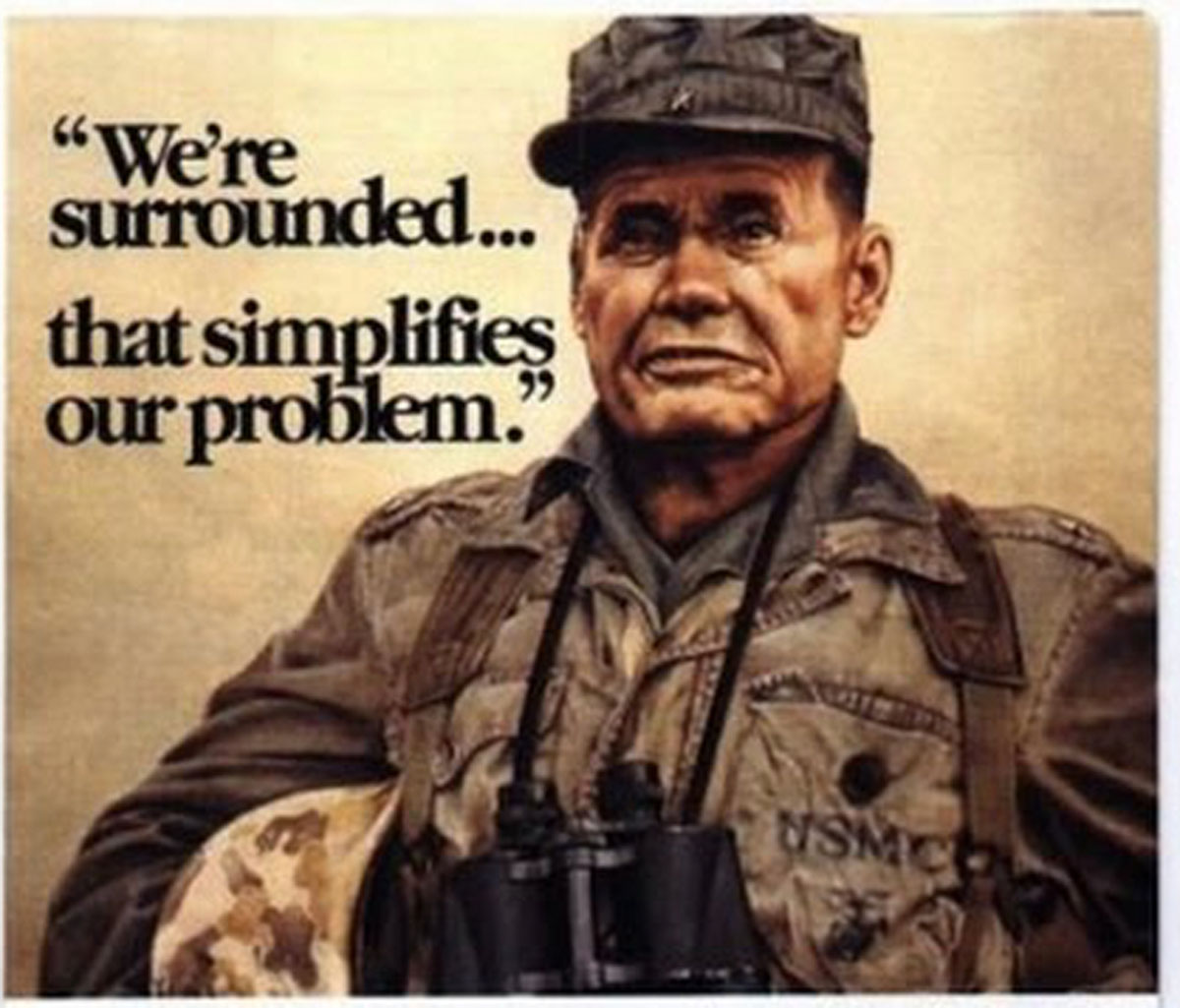
Men like Chesty Puller and Hector Cafferata built the warrior legacy enjoyed by US Marines today.
***Buy and Sell on GunsAmerica!***

Will is still trying to figure out what he really wants to be when he grows up. However, shooting guns and claiming it was work seemed like a pretty sweet hustle. As a result, Will serendipitously transformed an avocation into a vocation.
Raised in the Mississippi Delta, Will flew UH1H, OH58A/C, CH47D and AH1S helicopters operationally as an Army Aviator. He is SCUBA-qualified and has parachuted out of perfectly good airplanes at 3 o’clock in the morning. Will has summited Mount McKinley, Alaska, six times…always at the controls of an Army helicopter, which is the only way sensible folk climb mountains.
Will has delivered sixty babies and occasionally wrung human blood out of his socks. He is married to his high school sweetheart and has three awesome adult children. Turn-ons include vintage German machineguns, flying his sexy-cool RV6A airplane, Count Chocula cereal and the movie “Aliens.”
www.word-monkey.com
Experience:
-Professional Writer-thousands of publishing credits for dozens of titles
-Mechanical Engineer/Practicing Physician
-Instrument-rated Commercial Pilot
-Sunday School Teacher
I liked your story. Wish they’d make this a movie.
Respectfully
Batting back grenades to their previous owners. Had to Laugh out loud!
love your stories, Doc.
Pfc. Cafferata belonged to Fox Company, 2nd Battalion, 7th Marine Regiment (F/2/7). His company held a crucially important hill overlooking the Toktong Pass, for several days against that Chinese regiment as it sought to cut off the withdrawal of the 1st Marine Division from the Chosin Reservoir. Of the 220 Marines who dug in on what was subsequently known simply as “Fox Hill,” only 82 were able to walk off the hill when relieved by units conducting the famous fighting withdrawal down the Main Supply Route.
By all rights, the 1st Marine Division should have been destroyed completely by the huge numbers of Chinese troops who assaulted them at the Reservoir and throughout the ensuing withdrawal. I am unaware of any comparable instance in US military history.
Will, another great story. Reading about MoH awardees will never get old. Thank you.
This story of courage under fire, exemplifies the spirit of America. As hundreds of WWII veterans leave us daily. Those of the generations following them can honor them thru stories as this. Thank you Dr. Dabbs