
Estimated reading time: 12 minutes
Hezbollah grabbed Soviet diplomats in Lebanon in 1986 and expected leverage. The KGB answered with ruthless pressure that forced a fast release and sent a message the region still remembers.
The Hook: Why This 1986 Hezbollah Kidnapping Still Matters
We don’t negotiate with terrorists…that’s a well-intentioned sentiment, to be sure. However, what if they were holding somebody for whom you actually cared deeply? Kidnapping is one of the most horrific of all modern crimes. It is a powerful tool in the dark, twisted toolbox of the modern criminal terrorist.
There is nothing new about any of this. People have been running off with other people’s people ever since we discovered we had opposable thumbs. Human beings form emotional attachments that are unimaginably profound. It really doesn’t matter how powerful you are. If your adversaries take a member of your tribe, chances are you’ll be ready to play ball. That is, unless you are the Soviet-era KGB.
The Setting: Lebanon’s Long Wars and a Powder-Keg 1986
I’ve spent a little time in the Middle East myself. It was arguably the most fascinating place I have ever visited. Old stuff in my neighborhood dates back a couple of hundred years. Old stuff over there might be a couple of thousand. It is enlightening to view Middle East politics through that profoundly antiquated lens.
I’m an American who lives in Mississippi. I take pride in my heritage and am imbued with a natural urge to defend it both literally and metaphorically. Human beings are tribal. You simply cannot fight that. No amount of aggressive social engineering will ever excise that fundamental attribute from our souls.
Folks have been killing each other over that curious scrap of Middle Eastern dirt ever since the very dawn of time. Sundry hatreds and assorted blood feuds date back hundreds of generations. Offenses and insults initially launched millennia ago still reliably foment bloodshed even today. It’s a cycle of violence that will not soon end. However, it can be mitigated. The Soviets showed us how to do that back in 1986.

The Players: Hezbollah Builds a Terror Machine, the KGB Takes Notice
Hezbollah has been a thorn in the flesh of the entire freaking world ever since its initial formation in Lebanon back in 1985. A terrorist organization dedicated to the tenets of radical Shia Islam and funded by the bloodthirsty nihilists in Iran, Hezbollah has been fomenting chaos on scales both large and small for some four decades now. Until recently, when they were systematically deconstructed by Israel, Hezbollah fielded a formidable regional army. Nowadays, several of their senior leadership positions remain unfilled, and their weapons caches are deep, smoking holes. I think the message there is don’t screw with the Israelis, but that’s a topic for another day.

Back in the mid-1980s, Hezbollah was still building its reputation in international terrorism. Pro-Syrian militiamen were shelling rival Muslim Hezbollah positions in the northern Lebanese city of Tripoli. Hezbollah grew weary of this. The Soviets were supporting these pro-Syrian militias. Hezbollah fully appreciated that implacable human tendency toward tribalism. Some Hezbollah rocket surgeon had the bright idea that they could kidnap a few Soviet diplomats and then use them as leverage to get the communists to call off the heat. What could possibly go wrong?
The Political Milieu: Cold War Muscle Meets a Lebanese Civil War
The Soviet Union formally collapsed the day after Christmas 1991. My abiding antipathy towards the Russians today likely stems from the fact that I spent my formative years expecting to be nuked by them at any minute. Today’s generation has the radical Islamists to fret about. For me and mine, it was the Russians. That’s probably the reason I would really love to see them get spanked in Ukraine.
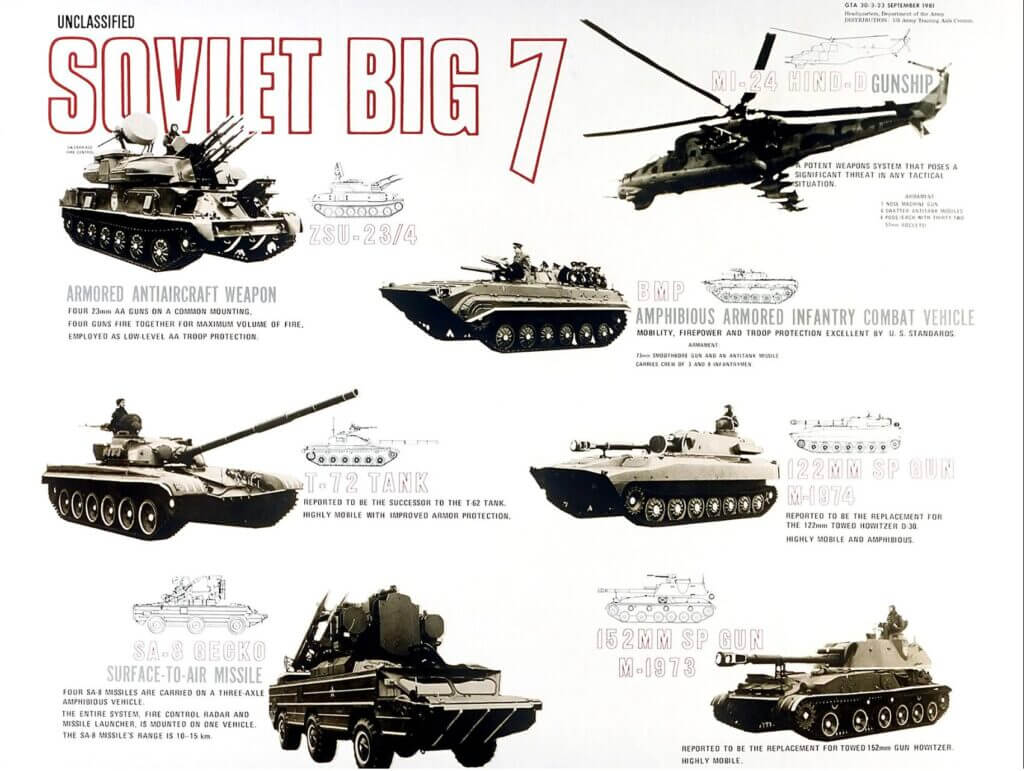
Prior to 1991, the Soviets were unimaginably intimidating. They fielded tens of thousands of tanks and hundreds of thousands of troops just waiting to roar across the Fulda Gap and forcibly impose their communist ideals upon the rest of the species. They also spread unrest and rank terrorism anyplace they could touch. Back in 1986, one of those places was Lebanon.
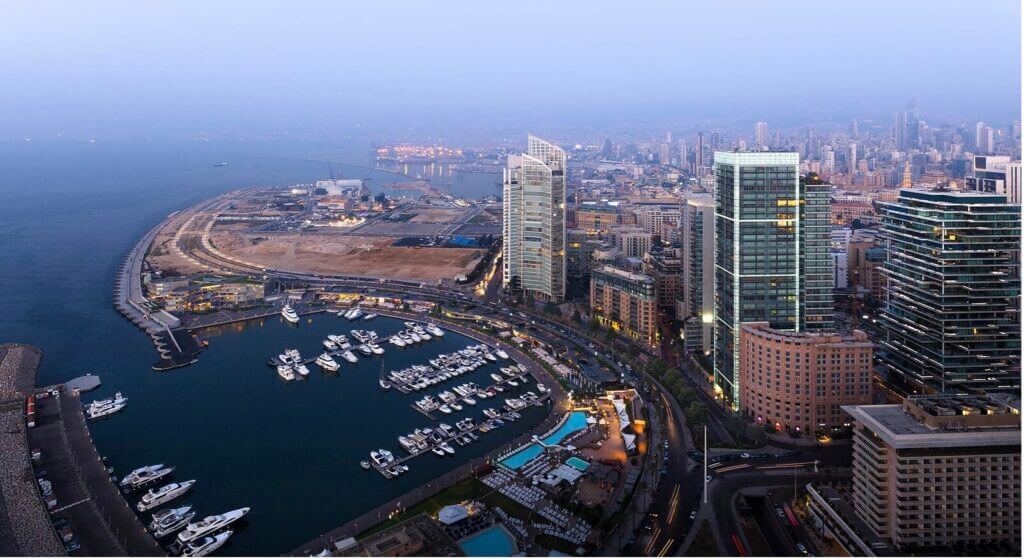
I’ve not personally set foot inside Lebanon. However, I have peered across the Bekaa Valley and visualized what life there back in the 1980s must have been like. I’m told that Lebanon was once a lovely place. Beirut was known as the Rio of the Mediterranean. Upscale hotels, fine dining, and rarefied shopping opportunities made Lebanon a desirable vacation destination for well-heeled folks from around the globe. And then radical Islam happened. The resulting violent civil war tore the country apart. Even half a century later, there seems to be little sign of that getting substantively better.
The Lebanese Civil War ran from 1975 to 1990 and was a masterclass in how to destroy an otherwise nice country. Faction threw itself against faction. A dear friend who grew up in that ghastly place at that ghastly time once told me what it was like. Scampering across the Green Zone with his little backpack, he had to dodge sniper fire just to attend grade school. It was amidst this hellish world that Hezbollah was about to get sideways with the USSR.
The Kidnapping: Four Soviets Taken, One Killed, Stakes Skyrocket
The brouhaha began when Hezbollah fighters kidnapped four Soviet government officials on duty in Lebanon. Their demands were simply that the Soviets use their influence to stop the shelling of their positions. The attacks didn’t stop, so Hezbollah killed one of the hostages, a diplomat named Arkady Katkov.
At this point, the Soviet leadership had a decision to make. There were three of their officials still in captivity. Hezbollah claimed they were healthy but would not remain that way for long if the communists didn’t play ball. As a result, the Soviet diplomatic service turned the problem over to the KGB.
KGB is an acronym for Komitet Gosudarstvennoy Bezopasnosti which translates to the Soviet Committee for State Security. Founded in 1954, the KGB was a sort of arithmetic mean between the American CIA and the FBI, only operated by the military and enjoying essentially unlimited power. Vladimir Putin naturally got his start in the KGB.
The KGB technically went away in 1991 with the fall of the Soviet Union. It was replaced in short order by the FSB along with several other sneaky-Pete alphabet agencies. Putin personally took the helm in 1989.
Options: Comply, Negotiate, or Unleash the KGB
The KGB could have complied with their demands or used some of their regional connections to open up a dialogue with the kidnappers. However, that’s not really the way they rolled. Instead, they dispatched a hit team to the region to take care of business.

Kidnapping in Lebanon during this time was an absolute scourge. In the decade between 1982 and 1992, 104 foreign hostages were seized. Once the dust settled, it was discovered that all of these people were taken by as few as a dozen individual terrorists, all operating under the umbrella of Hezbollah. Their leader was a proper villain by the name of Imad Mughniyah. However, it turned out that the terrorists themselves also had families. That was to be their undoing.
The Op: The KGB’s Message Lands and Hostages Walk Free
The Soviet hitters tracked down a close relative of Imad Mughniyah and kidnapped him. Without a great deal of fanfare, they cut off this unfortunate man’s penis and testicles and sent them in a box to Mughniyah along with a letter of explanation. The note elaborated that more of this man’s relatives would suffer a similar fate if the three remaining Soviet diplomats were not released quite sharpish. The other three (Oleg Spirin, Valery Mirikov, and Nikolai Svirsky) were set free unharmed in short order.

Those 104 foreign captives came from 21 different nations. There were 25 Americans, 16 Frenchmen, 12 Brits, 7 Swiss nationals, 7 West Germans, and 1 Irishman. At least eight perished in captivity. A few, like Arkady Katkov, were murdered to make some point or other. Still more succumbed to a lack of medical care in the austere conditions of their imprisonment. During the course of the protracted Civil War, some 17,000 Lebanese were also abducted. While some of these hostages were obviously eventually released, none were released as expeditiously as were those from the Soviet Union.
Practicalities: What Terrorists Understand About Power

And therein lies the rub. We cannot negotiate with the Russians or the sundry terrorist factions in the Middle East the way we might with more sensible folks. The Russians will always have their national best interest at heart and will gladly lie, cheat, slander, bribe, blackmail, or steal to get what they want. By contrast, the terrorists are just flat-out crazy. Neither group can be trusted…like, at all.
What all of these many-splendored psychopaths do understand is raw, unfettered power. They are not impressed with our altruism or our facility with words. They care not for our nation-building efforts or the Peace Corps. They understand and respect the capacity to forcibly impose one’s will upon others.
The very worst thing we could do when confronted by such darkness is exactly what we have done. When terrorists blew up the Marine barracks in Beirut in 1983, we just took our toys and went home. When we grew weary of feeding money, meat, and weapons into Afghanistan, Joe Biden just snatched everybody up and left the Afghan government to collapse under its own weight.
Our opponents study such stuff. We have inadvertently trained them to believe that if only you can keep nipping at the heels of the American monster long enough, eventually he will give up and leave. Tragically, they’re not wrong.
Ruminations: Hard Truths From a Ruthless Case Study
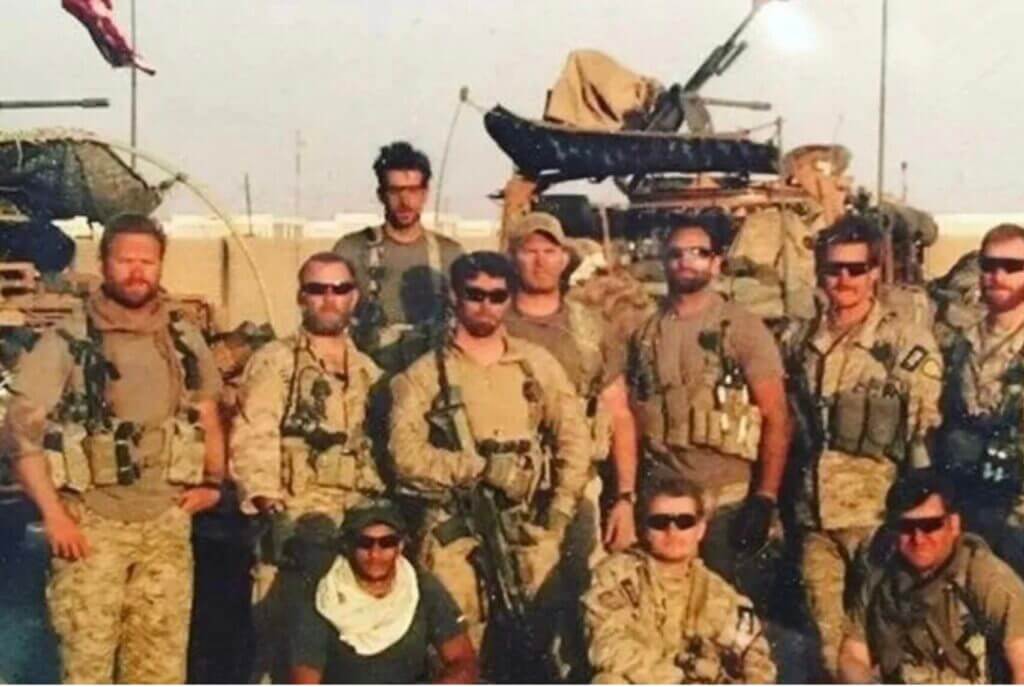
We can negotiate with people like Hezbollah, Hamas, and the mullahs in Iran until the sun burns out. We can pick them up and pack them off to Gitmo, offering them free healthcare and legal representation in the process. Or we could pull out the embedded reporters, give SOCOM a tasker with a broad, scary mandate, and then just get out of the way. I’m honestly not as torn up about stuff like due process and individual rights when it comes to international terrorists as I might be with normal people.
We can fool ourselves into thinking that modern unconventional war is honorable and tidy. Or we could make an example out of some psychotic unwashed cavemen and perhaps, in so doing, secure a lasting peace. That decision is ours to make…
Key Facts: 1986 Hezbollah Kidnapping vs KGB
| Year | 1986 |
|---|---|
| Location | Lebanon, primarily Beirut and Tripoli |
| Group | Hezbollah |
| Victims | Four Soviet diplomats, one killed (Arkady Katkov) |
| Response | KGB retaliation targeting relatives of Imad Mughniyah |
| Outcome | Three hostages released quickly, message sent across the region |
Related Reads from GunsAmerica Digest
- Hezbollah and Lebanon: A Brief History for Gun Folks
- SOCOM 101: How Unconventional Warfare Really Works
- Cold War Relics That Still Matter Today

Will is still trying to figure out what he really wants to be when he grows up. However, shooting guns and claiming it was work seemed like a pretty sweet hustle. As a result, Will serendipitously transformed an avocation into a vocation.
Raised in the Mississippi Delta, Will flew UH1H, OH58A/C, CH47D and AH1S helicopters operationally as an Army Aviator. He is SCUBA-qualified and has parachuted out of perfectly good airplanes at 3 o’clock in the morning. Will has summited Mount McKinley, Alaska, six times…always at the controls of an Army helicopter, which is the only way sensible folk climb mountains.
Will has delivered sixty babies and occasionally wrung human blood out of his socks. He is married to his high school sweetheart and has three awesome adult children. Turn-ons include vintage German machineguns, flying his sexy-cool RV6A airplane, Count Chocula cereal and the movie “Aliens.”
www.word-monkey.com
Experience:
-Professional Writer-thousands of publishing credits for dozens of titles
-Mechanical Engineer/Practicing Physician
-Instrument-rated Commercial Pilot
-Sunday School Teacher
We’ll there was a time a long time ago,the U.S. did such a thing …
Time travel to Vietnam, do you remember the Pheonix Program…..
Came about by a man named William Colby,a WW2 war hero, who by the way
I believe was killed by unknown people,for what ever reason,that’s another story…
Object kill,kidnap or win over people from vc to nva to any enemy combatant that was a problem…….Well it was a total success ,thousands were killed…
To this day anyone in the program does not exist and you will never know who they were….TOTALLY CLASSFIED…………
Hezbollah and Lebanon: A Brief History for Gun Folks
SOCOM 101: How Unconventional Warfare Really Works
Cold War Relics That Still Matter Today
Error 404 pages not found
some of us would like to read such stuff
Spare the Rod, spoil the… terrorists?
I say go Russian on every terrorist you can find family for. They are nothing but animals that practice something some call a religion that encourages them to lie, cheat, steal, and kill anyone that does not agree with them. (Sounds like a group we have here in the U.S.)
that’s the absolute right way to do business, gloves off, no holds barred, no rules. just get’er done and get respect. Mr Trump can order this and Pete Hegseth is the man to do it. Reminds me that Marine General James Matt is would have achieved this as well were he still Sec of War and I’m betting he’d approve of any and all tactics required to get the job done. God bless these folks!!
Excellent article Will, but by far, the greatest thing therein, is the photo of those big-assed, 16″ explosive projectiles, on the way to obliterate everything in their path… with EXTREME Prejudice!
From my youth, I’ve never believed in war, just for the sake of war, but if/when it becomes inevitable, it should be completely unrestrained destruction. I’m not advocating for the use of nukes, but limited warfare is rarely successful in the long run. If it’s done “right”, take Carthage for instance, the problem goes away. The same sort of thing will be required to finally eradicate the Islamists. The way I read it in Ezekiel, we’re not gonna have to worry about that one.
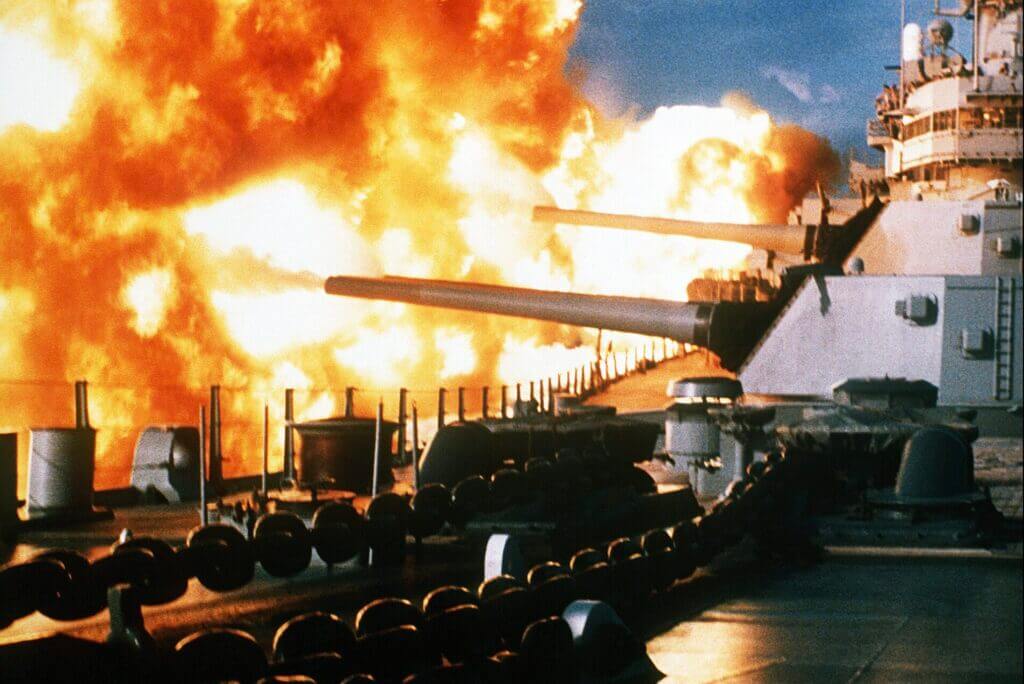
“This is a broadside from the American battleship New Jersey while she was doing the Lord’s work off the coast of Lebanon back in the 1980s”. Doing the Lords work a 16″ shell at time.
Politicians have taken us back to the pre-shores of Tripoli days. Lessons learned and Politicians are easily forgotten in today’s age.
Love this
Jack Carr wrote a book about the US follies in Beruit…
Excellent read.
Another great article from Dr Dabbs!
Our so called elected officials have learned nothing about how to deal with these people unfortunately…
Lots of money in it though!
Great article, Doc. I always look forward to reading your work!