

Estimated reading time: 8 minutes
Two centuries in and the lever-action still drops deer, runs fast, and keeps the fun meter pegged. From 45-70 Government to 357 Magnum, here’s why a lever belongs in your safe and in your truck.
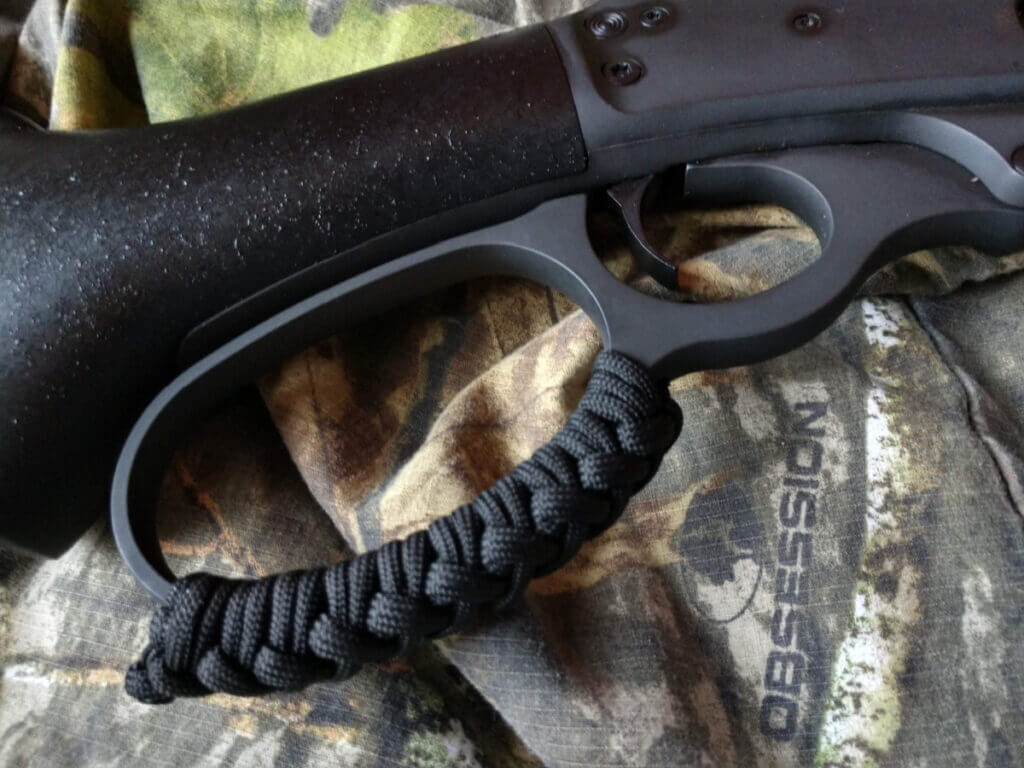
Table of contents
- Why A Lever-Action Still Earns Space In Your Deer Truck
- Lever-Action Basics And The Roots Of A Classic
- Capacity That Fits Deer Season
- Real-World Lever Accuracy You Can Hunt With
- Levers Are Flat-Out Fun To Run
- Optics On A Lever That Actually Helps You Hunt
- Versatility Beyond The Whitetail Woods
- Lever-Action Deer Hunting Quick Specs And Tips
- Pros And Cons For Deer Hunters
- Related Reads from GunsAmerica Digest
Why A Lever-Action Still Earns Space In Your Deer Truck
It’s been nearly two centuries since the lever-action was invented as the Volition Repeating Rifle. Like many of the original and classic firearms platforms, the lever-action is often considered antiquated thanks to its age and tube magazine. Sure, modern versions come out semi-regularly, but what about the standard lever-action? Is it useful? I think so, and I’m going to tell you why you should have at least one lever-action rifle in your safe for hunting.
Lever-Action Basics And The Roots Of A Classic
A lever-action rifle is a firearm that requires you to manipulate a lever to eject and chamber each round. That’s the simplest description. The original Volition Repeating Rifle was the first patented lever, but the design involved so many intricate parts that it was doomed from the start. Eventually, a new Volcanic Repeating Arms Company purchased the patent. Long story short, Oliver Winchester was an investor and the only one who decided to stick it out for the long haul, and the 1860 Henry rifle was born.
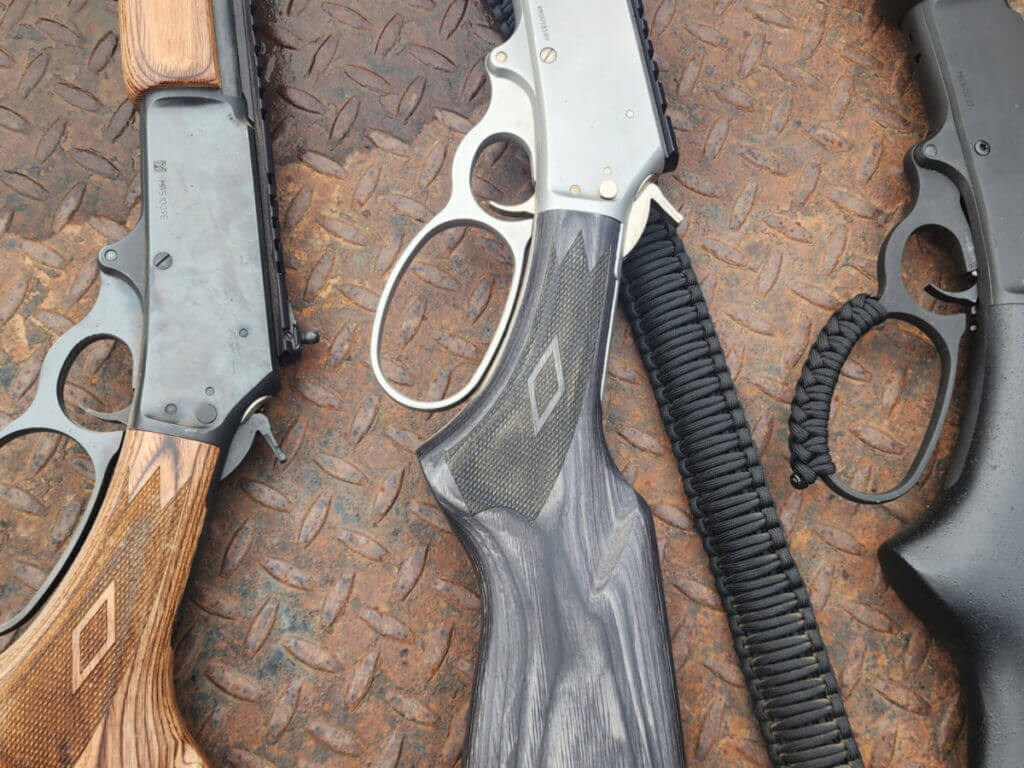
Today, there are lever-action rifles available made by numerous companies, including Winchester, Henry, Marlin, Smith & Wesson, Rossi, Chiappa, Heritage, and Taylor’s & Company. Thanks to modern innovation and technology, caliber options now include everything from handgun cartridges like 9mm to traditional rounds like 444 Marlin. If you want it, it’s probably out there.
Capacity That Fits Deer Season
Indeed, lever-action rifles don’t have the higher capacity of something like an AR-15. Usually, you’ll find levers hold about a 5 to 7 round capacity unless you’re looking at smaller calibers. In the latter case, capacity might be around 13 rounds. Many factors come into play for capacity, including the caliber and manufacturer. It might seem like 5 +1 rounds isn’t much, but when we’re talking 45-70 Government and you’re deer hunting, it’s plenty. Personally, the only time I’ve found the capacity limiting is when I’m after a sounder of feral hogs. Now, have I shot quite a few hogs with levers? Yes, it’s just not as ideal when your goal is to drop multiple pigs in a row. If you’re deer hunting—and most of you probably are—the capacity is totally fine.
Real-World Lever Accuracy You Can Hunt With
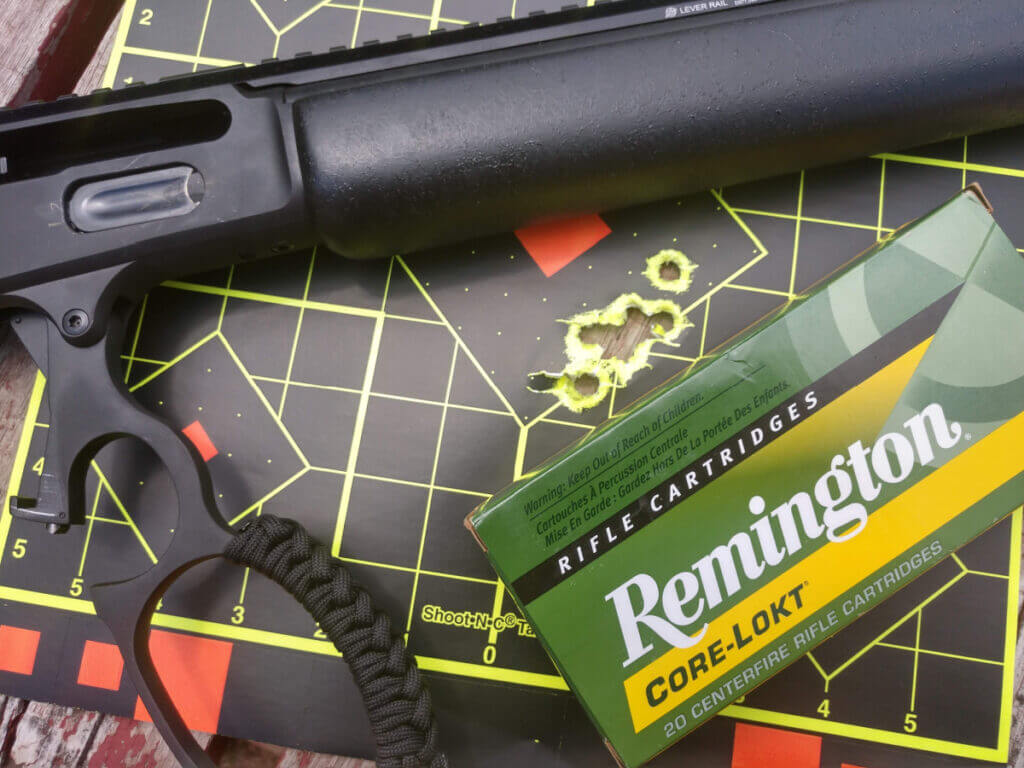
Just like any gun, levers are as accurate as the quality control and design of the manufacturer producing them. Most lever-actions are accurate, with the specifics depending on the gun. Many, if not most, levers produce nice three-shot groups at 50 yards or more with irons. Some levers might be considered precise, but mostly they’re simply accurate. Accurate is great for deer hunting. I don’t expect my levers to produce the kind of sub-MOA, five-shot groups my other guns do, and it’s not necessary for them to, either.
Levers Are Flat-Out Fun To Run
Part of the greatness of levers is the fun factor. You don’t have to channel John Wayne or Wyatt Earp to appreciate the joy of running a lever-action. There’s also something satisfying about shooting a deer with a lever-action, and you just know your grandfather is looking down with pride. Unlike with a bolt-action, you can rapid-fire a lever once you get used to manipulating it. It’s possible to fire a lever quite fast. Levers are a classic platform that’s been in use for centuries, and using them is a good way to connect to the gun-loving past. Also, it’s simply smart to be familiar with different operating systems. If the only gun you can run well is an AR-15, that’s not a win. Learn to use other firearms, preferably well.
Caliber Options That Hit Hard
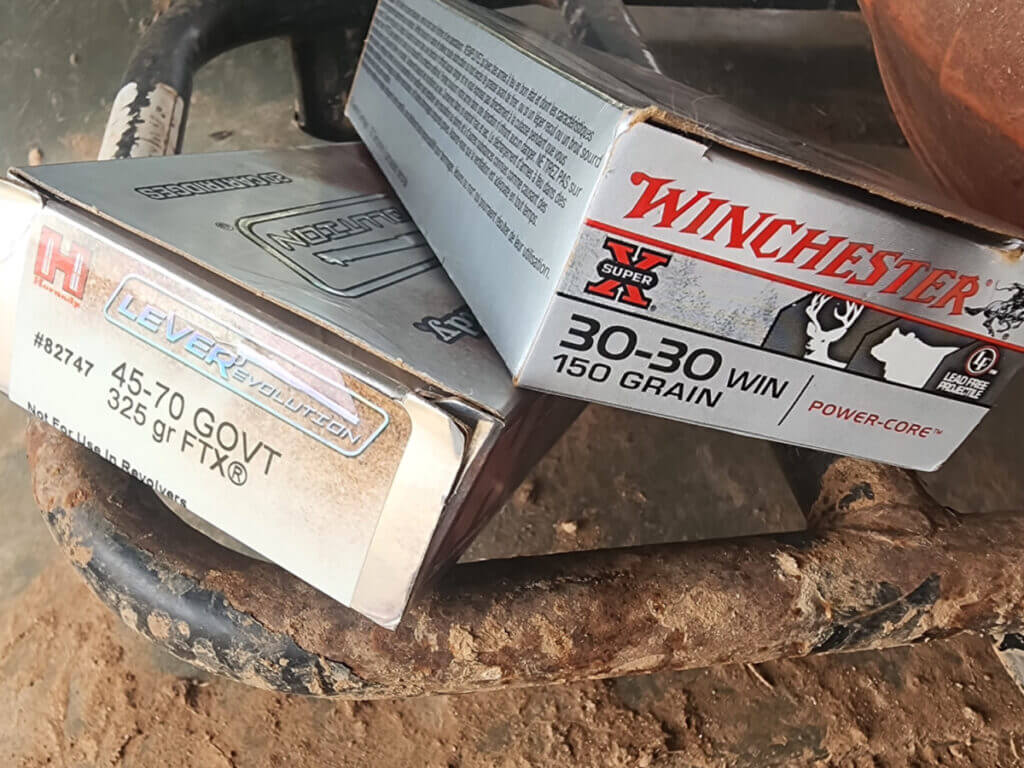
You can choose from a lot of calibers in lever actions, many of which aren’t available in other platforms. Take the 444 Marlin and 45-70 Government. Those are two options that are awesome big bores for hunting. Guns chambered in 444 Marlin or 45-70 Government make fabulous brush or guide guns and are capable of dropping almost any predator or animal you’re facing. You’re also not going to lose a ton of meat as long as your shot placement is on point and you use the right ammo. When you shoot a deer with a 444 Marlin, you’re not going to be chasing a blood trail hours later, wondering where it went.
Levers also give you hunting access to revolver cartridges you might not otherwise use. That includes 357 Magnum, 454 Casull, and 44 Magnum. The longer barrels give you far better ballistics than you get with handguns. It also mitigates felt recoil because you’re shouldering a rifle rather than firing a handgun with one or two hands.
Optics On A Lever That Actually Helps You Hunt
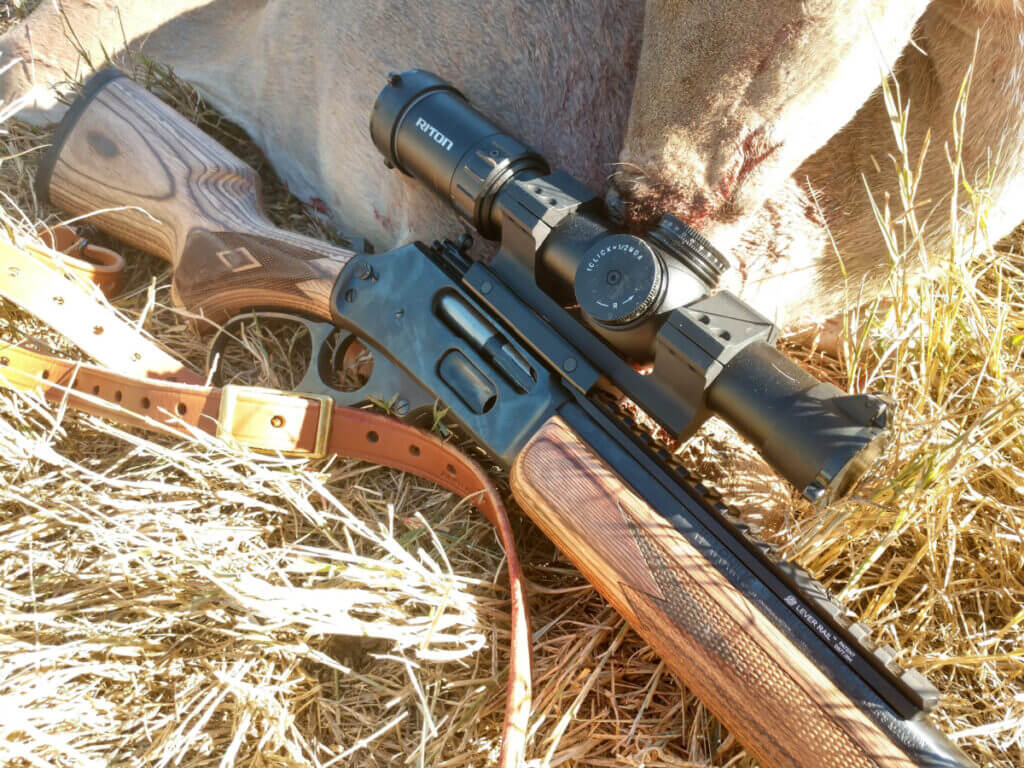
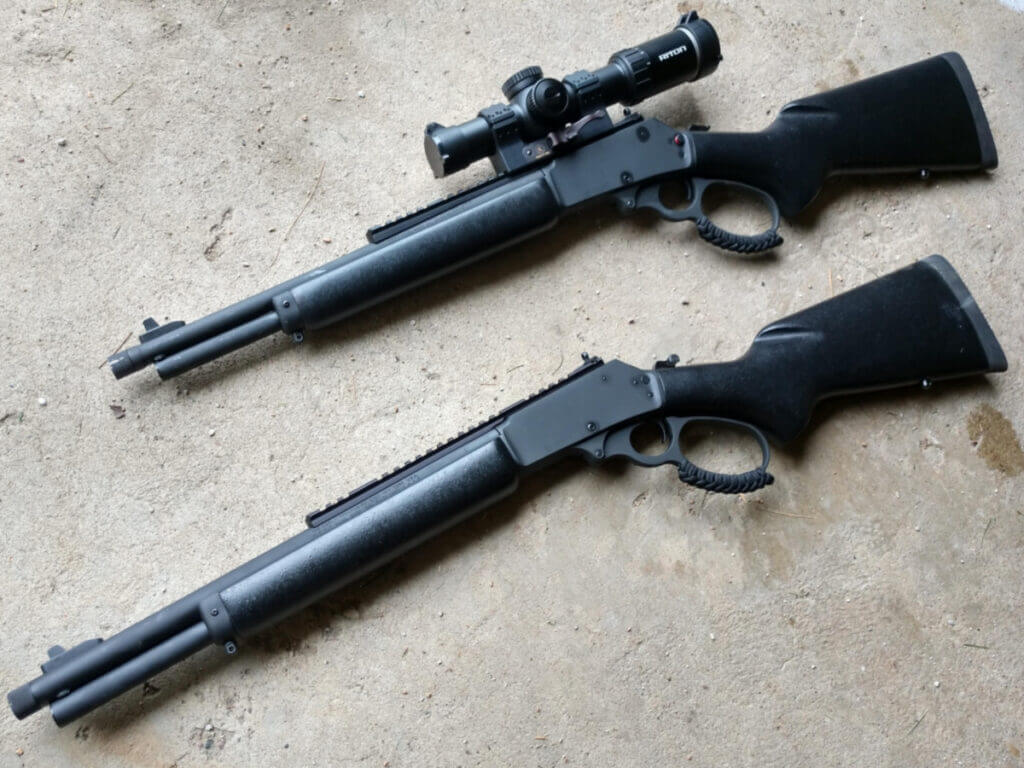
Yes, it’s possible to put scopes on lever-action rifles. Not all levers ship from the manufacturer drilled and tapped for mounting a rail or rings, but most modern designs are. In addition, an increasing number of lever actions are shipping with Picatinny rails already in place. Some see this as a tactical move that mars the classic aesthetic of the platform, but in reality, it’s a great way to make them more user-friendly.
Optics on levers is a good way to stretch out the visible effective range. I don’t know about you, but my eyes generally aren’t going to manage a 75 or 100-yard shot on a deer with the irons on a lever. Adding a red dot or a riflescope makes it a lot easier to get eyes on your target and also helps you positively identify the size, age, and general shootability of the deer.
The one thing you need to know about putting optics on your lever is that you need to watch the height of the rings or mount. If you throw taller rings on your lever and then add an optic, you can lose your cheek weld almost entirely. Using shorter rings does mean you typically can’t utilize a larger objective scope, because the scope is going to touch the rail or the barrel, but you don’t need a long-range scope, anyway. On a lever, even an LPVO can be perfect. You don’t need a lot, just enough to improve the quality of what you’re seeing.
Versatility Beyond The Whitetail Woods
Surprise, surprise—you can use your lever-action for defensive purposes. I know from experience that I can take 100-yard shots on steel with a lever and make it ring every time, and that’s with irons. Lever actions aren’t only for deer hunting. They can be good truck guns or used for home defense. There’s no reason a lever needs to be relegated to whitetail hunting alone.
Lever-Action Deer Hunting Quick Specs And Tips
| Typical Capacity | 5 to 7 rounds in common calibers, up to ~13 in smaller calibers; 5 +1 in many hunting setups |
|---|---|
| Common Calibers | 45-70 Government, 444 Marlin, 357 Magnum, 454 Casull, 44 Magnum, 9mm |
| Accuracy Expectation | Many levers produce clean three-shot groups at 50 yards or more with iron sights |
| Optic Choices | Red dot or LPVO; keep ring height low enough to maintain cheek weld |
| Use Cases | Deer hunting, hogs, truck gun, home defense, range fun |
| State Considerations | Straight-wall friendly and capacity-restricted deer seasons may favor lever setups |
Pros And Cons For Deer Hunters
- Pros: Proven accuracy at deer distances, fast follow-ups, powerful calibers like 45-70 Government and 444 Marlin, optics friendly, flat-out fun to run.
- Cons: Lower capacity than semi-autos, cheek weld can suffer with tall rings, not ideal for large sounders of hogs.
Related Reads from GunsAmerica Digest
- Savage Revel – A New Lever-Action 22
- More Gun Reviews on GunsAmerica Digest
- All Lever-Action Coverage on GunsAmerica Digest
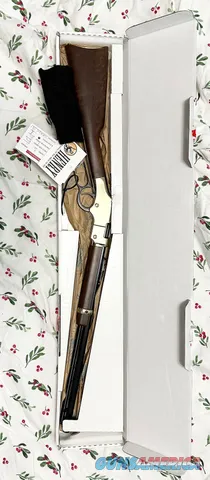
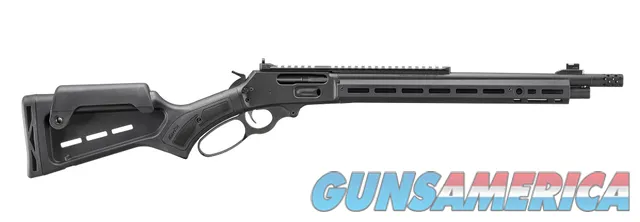
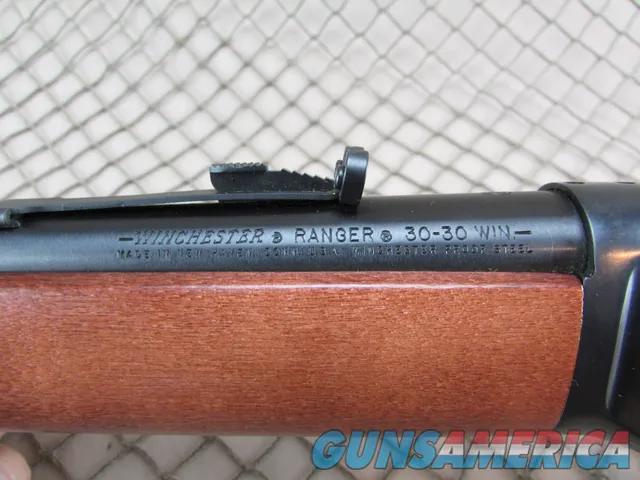
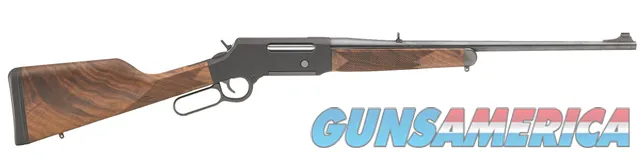
Available on GunsAmerica Now




Kat Ainsworth Stevens is a prolific outdoor writer based in North Texas. Her love and enjoyment of firearms extends to both self-defense and hunting, and she’s driven to teach safe gun handling. Kat’s the author of several books and thousands of articles as well as a successful editor with more than a decade of experience in marketing. With experience in everything from defensive handgun use to field dressing a deer, Kat’s background is varied and extensive. She firmly believes in the importance of protecting the Second Amendment as well as the First.
When she’s not behind a gun or processing her own game meat, Kat can be found trapping, boating, doing yoga, and mudding. The outdoors and the Lone Star State are where she belongs.
Experience
Author:
Handgun Hunting and anthologies including The Deer Shot Back: And Other Hunting Tales and How Not to Shoot Fish and Other Deer That Got Away.
Dedicated Outdoorsman:
Year-round enthusiast of hunting, trapping, and fishing.
Advanced Training:
More than 1000 hours of training in defensive handguns, long guns, edged weapons, self-defense law, force-on-force, handgun retention, and related topics.
Focused Specialty Skills:
Expert witness. Massad Ayoob Group certified Deadly Force Instructor and graduate of Active Self Protection The Practice & Preparation of Being an Expert Witness.
Lever actions are where it’s at for whitetails in the woods. The 45-70 is now legal during shotgun season in a number of States. Surprised no mention of Henry Rifles that are quite popular in today’s updated versions.
How can common calibers miss .30-30? If I see a new lever on the rack, .30-30 is much more likely what it’s chambered for than 9mm or 454 Casull.