
If you are going to actually click through on some of these companies from SHOT 2013, Ashbury Precision Ordnance wouldn’t be a bad choice. They are the “in your face” company of long range rifle chassis. We stumbled on APO last year at Media Day at the Range, and as you’ll see from the video, they have an absolutely fascinating line pf products to learn about. The rifle chassis you see here are completely modular and interchangeable, so you can go from a bare bones starter system and upgrade it to the most tricked out model they make. They also have unique features, and many of them are patented. Check out some of the new products for this year. This is a long video, but cool stuff just keeps coming so hang in there and watch the whole thing. Ashbury Precision Ordnance makes muscle cars, that fit on your long range or hunting rifle.
Columns
Show First
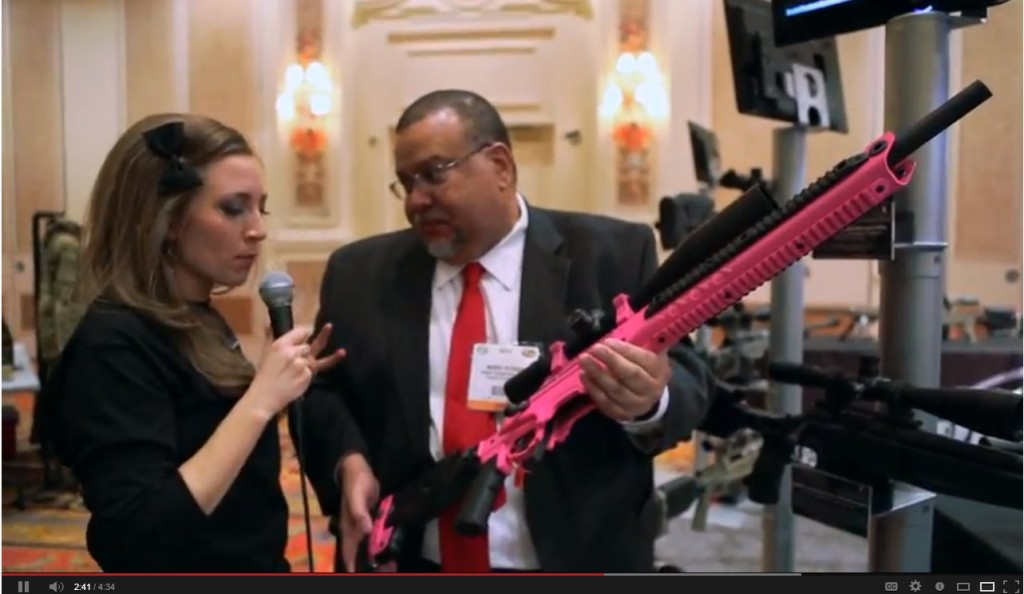
Muscle Car APO Rifle Chassis – Ashbury Precision Ordnance – SHOT Show 2013
Published: January 16, 2013 { 4 comments }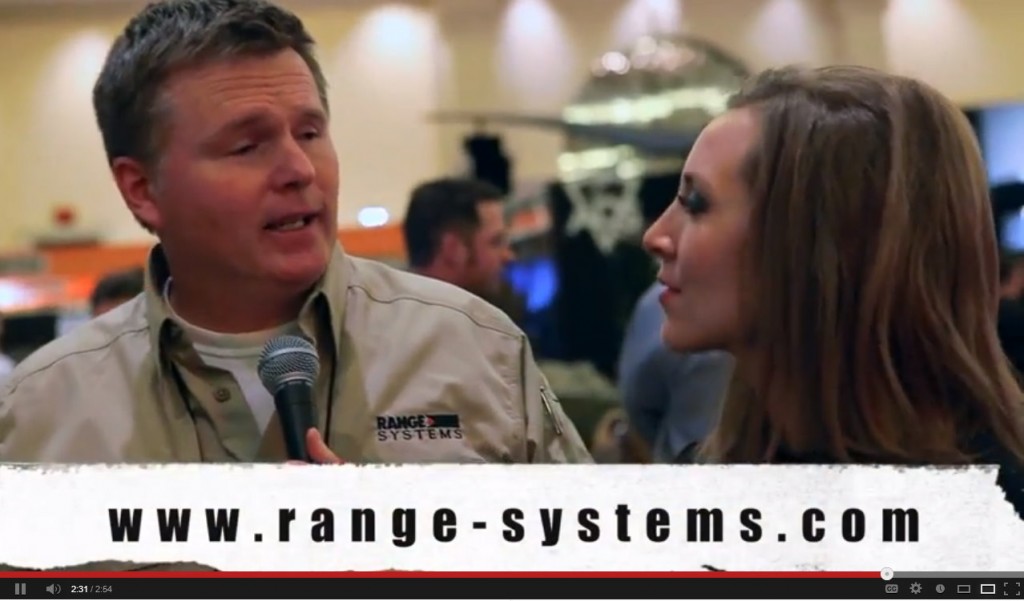
Range Systems Shooting Rests & Bullet Traps – SHOT Show 2013
Published: January 16, 2013 { 1 comment }You may have spotted a big black rubber shooting block in some of our recent articles. It is made by this company, Range Systems. We have found it a great replacement for sandbags and traditional cloth and metal rests because you can leave it outside. This SHOT video appointment was an education in the other stuff that the company makes, and it is far more advanced than a simple shooting block. Range Systems makes whole bulletproof rooms for law enforcement training, as well as gunsmith and home range traps, all based on the same thick rubber technology as our humble little range block. Now Range Systems is even making steel target systems, check out the video.
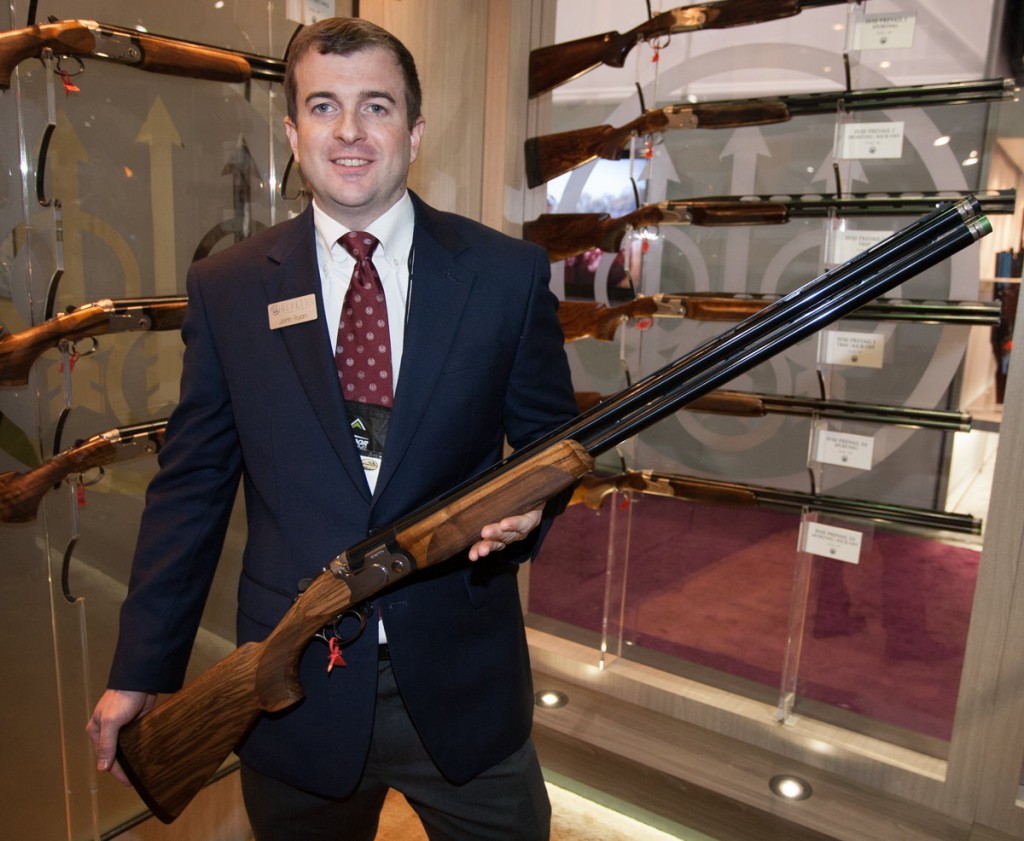
Beretta 692 Sporting Clays Shotgun & Model 92 – SHOT Show 2013
Published: January 16, 2013 { 1 comment }It was 1526 when Beretta was pressed into service producing gun barrels for the Republic of Venice, and the fact the company continues to thrive speaks volumes about its dedication to producing quality firearms. One of the company’s introductions for 2013, the 692 Sporting over-under shotgun, continues that tradition, with an eye toward competitive shooters.
Employing a new style of barrel from the company called Steelium Plus, the forcing cone has been lengthened to 360 millimeters in a 76 centimeter barrel (prior to the development of Steelium technology, the typical forcing cone on competition barrels was only 65 millimeters). The change, according to Beretta, increases performance while reducing muzzle rise and perceived recoil. The 12-gauge shotgun is chambered for three-inch shells.
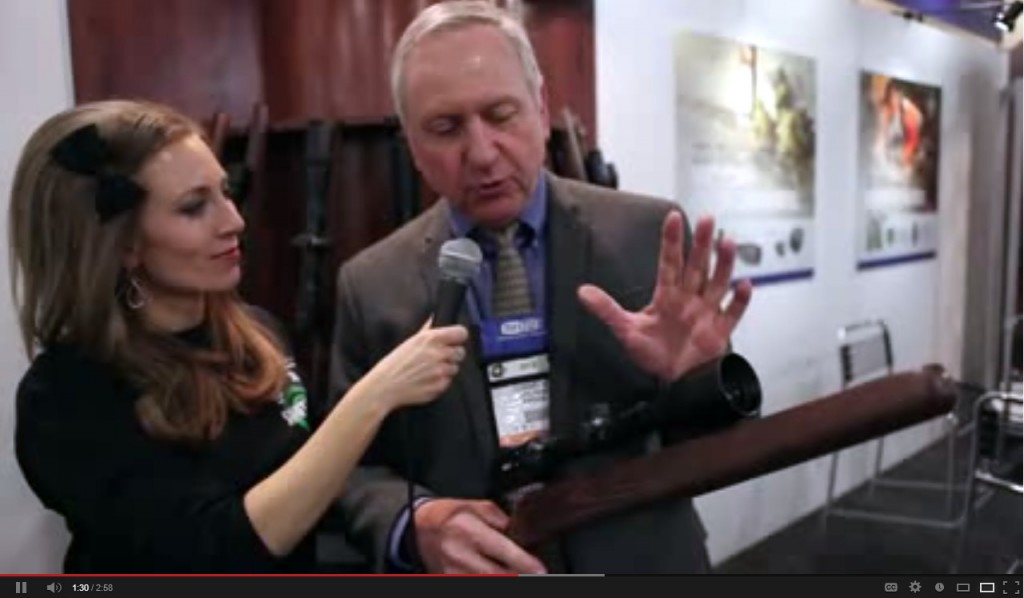
Meopta Hunting Scopes & Tactical Holosights – SHOT Show 2013
Published: January 16, 2013 { 3 comments }You may ask, “Who is Meopta?” It isn’t an optics brand that you don’t bump into much when you walk into a big box store, yet worldwide Meopta is considered to be in the top tier of optics, with the likes of Zeiss and Leopold. Meopta is an 80+ year old company based out of the Czech Republic that has made optics and related products for the likes of NASA. Over the last few years, after opening offices in the US, Meopta has gained a reputation in America for building some of highest quality and well thought out optics products in the market. Meopta designs, develops, and builds its own products, including their own reticles, glass, and tubes for their scopes. No outsourcing.
At SHOT, they introduced several new rifle scopes and two new holographic sights. In the video our host Julie Mac takes you through their flagship hunting scope, a 3.5-10 x 44 lightweight big game model that is extremely light and extremely high quality.
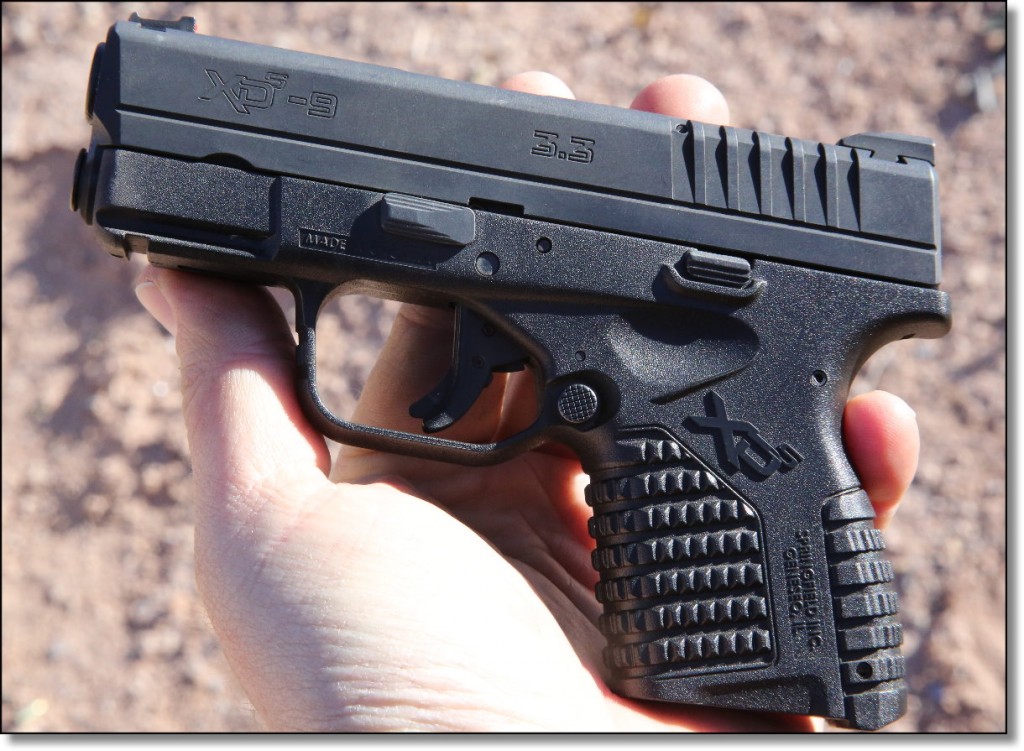
Springfield Armory XD-S 9mm – Media Day at the Range SHOT 2013
Published: January 15, 2013 { 35 comments }A year ago all the buzz in guns was about the Springfield XDS, a six round pocket .45ACP that proved to be a game changer in the concealed carry world. Everyone has asked over the past year, will the XDS be available in 9mm and .40 S&W? For SHOT Show 2013, Springfield answered for the 9mm, and the answer is yes. The XD-S 9mm is the same dimensions as the XD-S .45ACP, but it holds ?? more rounds. We got to shoot the gun today with Rob Leatham, and as little as the .45ACP kicks in the XD-S, the 9mm is even lighter shooting. Check out our Media Day at the Range video with our host, Julie Mac. No word yet on an XD-S .40, but the 9mm is going to be a big hit. Hopefully we’ll get one soon for a full review.
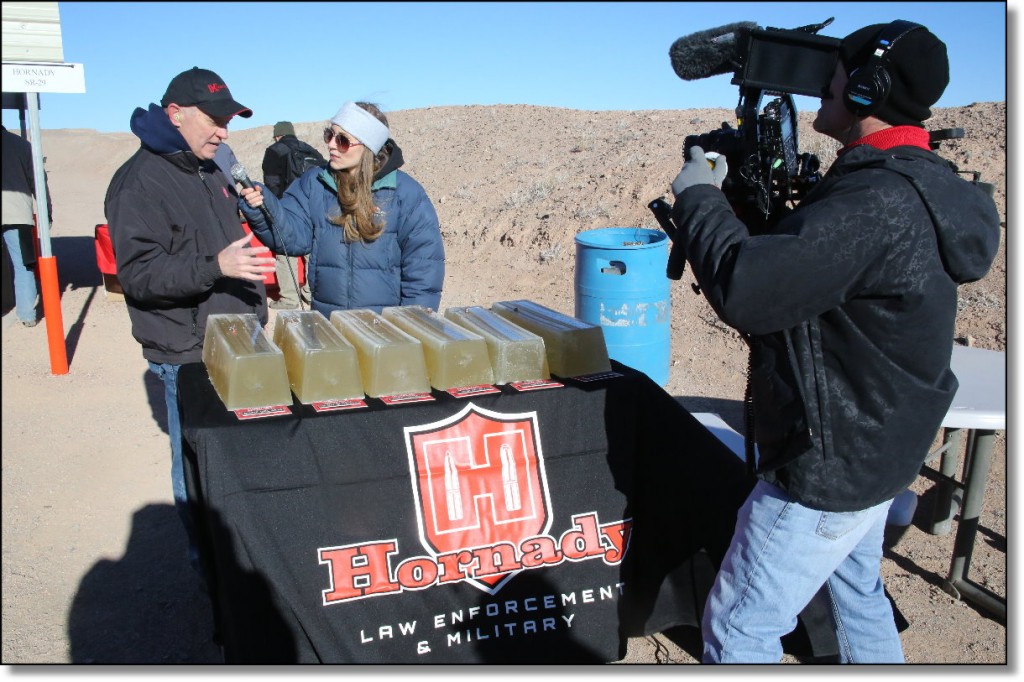
Hornady Critical Duty – Media Day at the Range SHOT 2013
Published: January 15, 2013 { 4 comments }Bullet design is tricky. On the one hand you want to bullet to open up, but you also want good penetration. Add in some barrier materials, like clothing, wallboard, glass and car doors, and the dynamics of how a bullet behaves after it leaves the gun gets a little squirrely. The classic hollowpoint works great in gelatin, but shoot through a jean jacket and flannel shirt into the same gelatin and it will sometimes fail to open up. Law enforcement test ammo in the real world every day, and though many “carry rounds” perform very well overall, they sometimes fail on specific barriers. The FBI designed an Ammunition Protocol Test to address these issues, and this Hornady Critical Duty ammunition was the result. The “heavy duty” bullets are designed to stay together through common barriers, including heavy clothing, drywall, plywood, sheet metal and glass, yet they also open up and don’t over-penetrate. You may be familiar with the Hornady Critical Defense line of carry ammo, and Critical Duty is the next step up for the challenging needs of law enforcement and personal self defense in an urban environment.
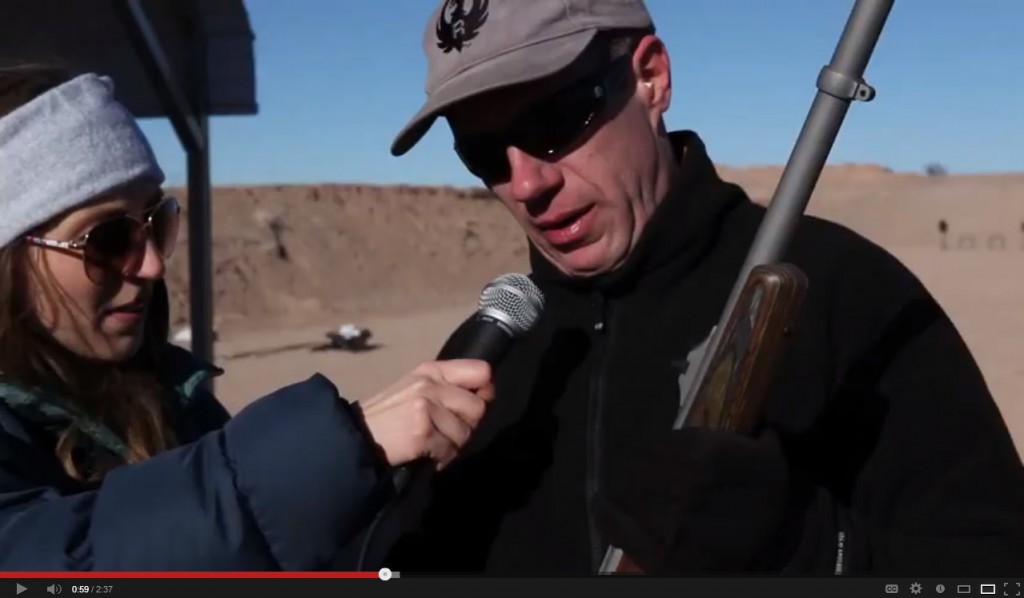
Ruger Hunting Rifles – Media Day at the Range SHOT 2013
Published: January 15, 2013 { 11 comments }In the blitz of demand for Ruger’s polymer pistols, it is easy to forget that America’s gunmaker has the widest line of firearms in the industry. For SHOT 2013 Ruger has introduced three new bolt rifles based on the reliable M77 platform. All three guns have a new heavy caliber muzzle brake from Ruger called the “radial-port” muzzle brake that is said to reduce recoil significantly, and we can’t wait to get one of these guns in to give them a try. The Ruger Guide Gun has an estimated street price of about $900 and is available in several .30 caliber magnums up to .375 Ruger. The new Hawkeye African with the radial-port muzzle brake is available in calibers up to .416 Rigby and is expected to be the same price. Both of those guns have open sights installed, and it appears there will be a left hand in .375 Ruger. The Magnum Hunter is currently available in only .300 WIn. Mag. at $829 expected street price, and comes standard with a Hogue overmolded stock. We also expect a few new Ruger #1 rifles this year, including maybe a .284, but they weren’t ready for the show. There is also a new lightweight American we hope to get to later in the week. Expect an exciting year for Ruger hunting rifles, made in America by Americans. This is a sneak peek with our host Julie Mac from Media Day at the Range, SHOT Show 2013.
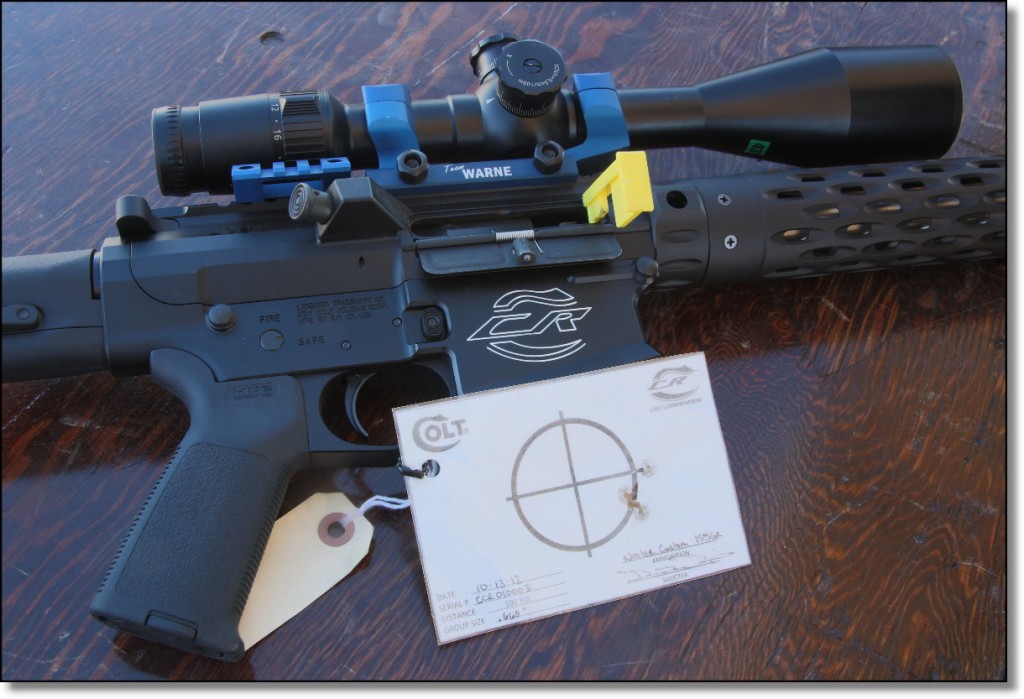
Colt Competition Rifle – Precision Colt AR-15 Rifles for Competition
Published: January 15, 2013 { 12 comments }Add this to the old “you learn something new every day” column. If you are wondering what is that strange logo on that Colt, it is the logo of Colt Competition Rifle, and Oregon based company licensed by Colt to make extremely accurate and reliable versions of their AR-15 platform rifles. This was our most interesting story today at Media Day at the Range. These rifles are made with special Colt parts, made to exacting tolerances that are too tight for a military specification M4. Priced from about $2200 to $3500, the guts of the guns, in both .223/5.56 and .308/7.62, are the same regardless of price, and each rifle is hand crafted by one gunsmith regardless of price. The price difference is a function of what components go on the guns, and almost every part you see on these guns, from the forends to the scope mounts, are custom crafted by Colt Competition Rifle in Oregon. No rifle leaves the factory until it is tested on a bag with a human shooter at under 1 MOA using factory ammo, and the laminated target comes with the rifle. Several of the actual competition guns at the show were tested with the inexpensive steel cased Hornady Steel Match. These are real Colts, not just licensed copies, and Colt engineers sign off on all the mods built into these stock rifles from Colt Competition Rifle. This is a really cool story and a pleasant surprise. Check out our Media Day at the Range with our host Julie Mac on a few of the ten models this year from Colt Competition Rifle.
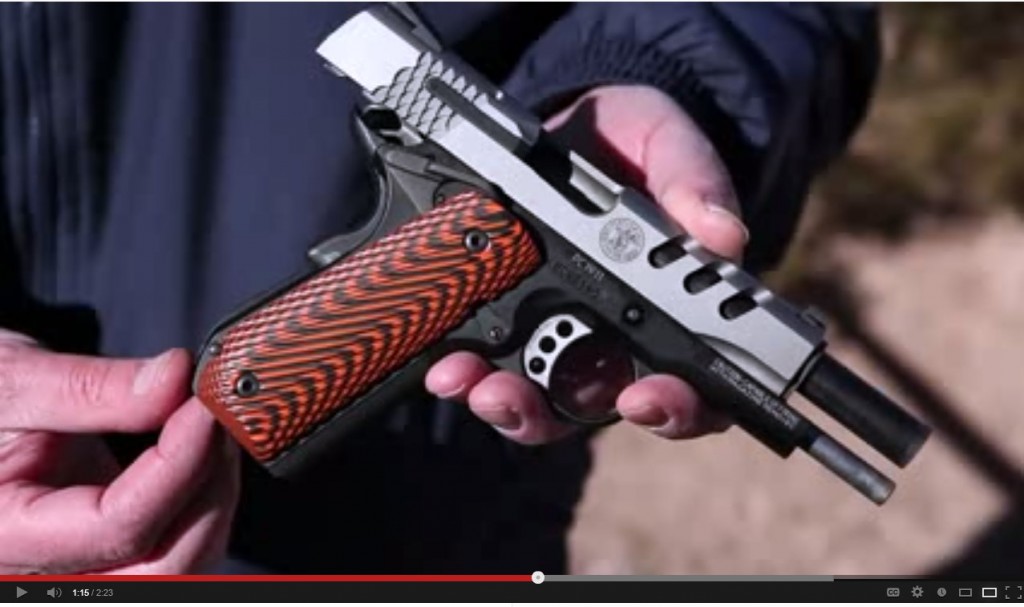
Smith & Wesson Custom Shop 1911 – Media Day at the Range SHOT 2013
Published: January 15, 2013 { 12 comments }Every year at SHOT Show we try to get to some of the more interesting stuff first, and the Smith & Wesson Custom Shop is always in that bunch. When you think of Smith & Wesson, you usually think of production guns available at just about any gunshop, but the Custom Shop is a whole other thing. If you are of the bent to buy something like a standard Smith & Wesson 1911, then bring it to your local gunsmith to have it tricked out, the Smith & Wesson Custom Shop is meant to save you the trouble of rolling the dice to find a good gunsmith, then potentially getting some questionable advice about Smith & Wesson firearms. Custom Shop guns are hand tuned out of the box. These 1911s even have hand lapped rails and select custom parts. If you plan to compete with a 1911 or you just want the most accurate carry gun that money can buy, check out the labor of love you’ll find at the Smith & Wesson Custom Shop. These guys aren’t just gun nuts, they are Smith & Wesson nuts.
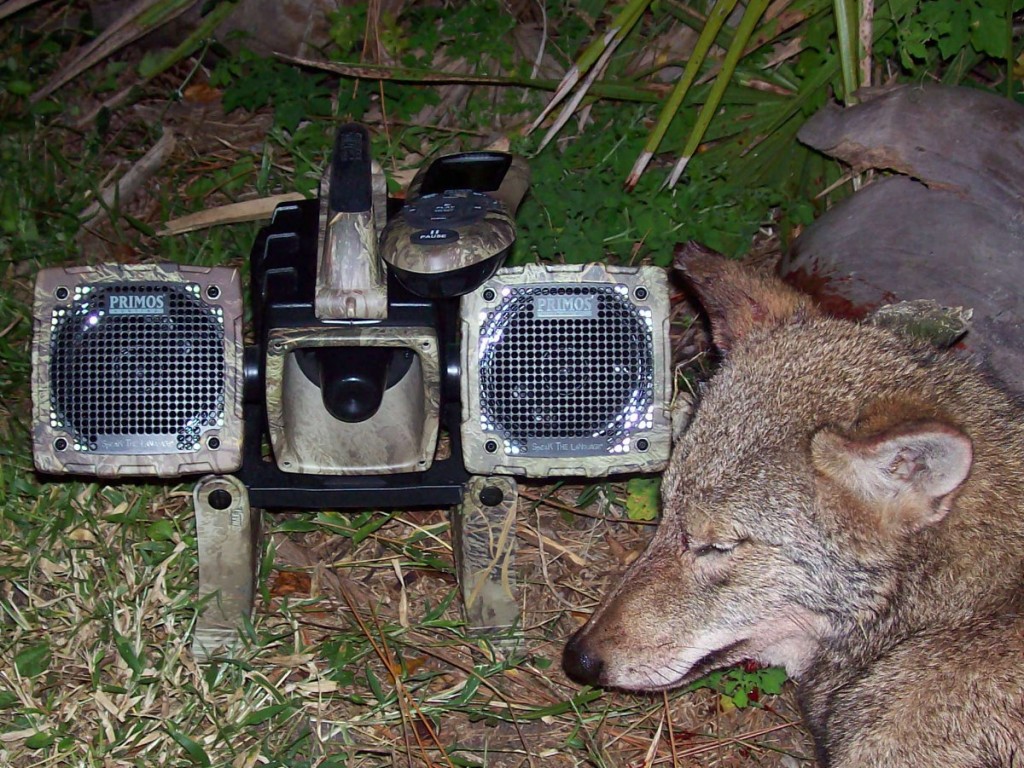
Killing Coyotes 101 – Daytime and Night Hunting Problem Coyotes
Published: December 9, 2012 { 105 comments }“Know your enemy” is something of a misnomer when hunting coyotes. They are not creatures of habit, but of instinct and opportunity. Creating what a coyote believes is an opportunity kicks in its instincts, and that is how you get a wily coyote within shooting range. If you are overrun with coyotes and you don’t know what to do, this is an overview of the basics, based on over six months of research with our guide Dwayne Powell in Okeechobee, Florida. The state of Florida is second only to Texas in beef production, and coyotes are an incessant problem on the cattle ranches, especially with newborn calves and birthing mothers.
We have hunted these creatures during the day, at night, when the ground is wet and when the ground is dry, when it is hot and when it is cool, and there is almost never a time when coyotes do the same thing. There are times when you won’t be able to lure them out, and others when they will stand 30 yards in front of you and let you shoot at them. But of one thing you can be certain. Make sure that your rifle is zeroed and that you shoot really well, really fast. She or he who hesitates is lost when hunting coyotes. They don’t give you a lot of time, even on the easiest day. More of Dwayne’s clients miss coyotes than all the other types of game combined. The Creator in His infinite wisdom made the coyote a ruthless, heartless, killing machine that is extremely suspicious and careful. You have to be no less than that if you expect to eradicate them from your property and hunt coyotes successfully. It really isn’t about coyote hunting. It is about coyote killing.