
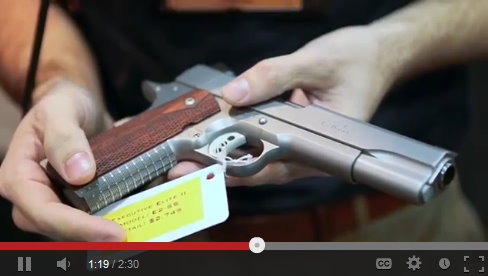
If you are a gun nut most likely you have already heard of Ed Brown. They are the defining 1911 by which all the other 1911 companies have been measured, because they make everything in the gun in-house, and their quality is second to none. Innovation in 1911s isn’t something many people talk about, because the gun is after all over 100 years old, but Ed Brown actually has a patent on that bobtail grip. Apparently other companies license it or buy the parts. They are also an innovator in checkering patterns, because besides new customers who want the latest and greatest, there are a ton of collectors of… Ed Brown. Because they make everything themselves, you don’t see the excuses and bottlenecks of why you can’t get your gun with Ed Brown. Delivery time has been in the half a year or so range for a while and if you order now you’ll have it by summer most likely. If you are silly in love with the 1911 and you want one of guns called “the best money can buy,” treat yourself to an Ed Brown 1911.
Columns
Show First
Ed Brown Custom 1911s – Two New Checkering Patterns – SHOT Show 2013
Published: January 18, 2013 { 6 comments }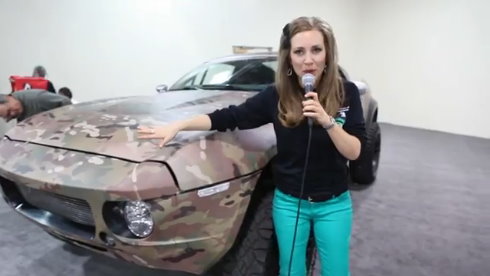
Rally Fighter Custom Hotrods from Local Motors
Published: January 18, 2013 { 3 comments }We don’t usually take the time to cover any of the non-gun exhibitors here at SHOT Show, but with over 1500 different companies represented, you can find everything from turkey fryers to monster trucks here. This is a camo version of a custom hotrod called a Rally Fighter, and it costs 100 grand. If you check their website, they make them in other colors too. They are made in America by Americans and they actually involve you in the building in the car if you wish. Something a little different and interesting for SHOT Show. Now we’ll get back to the guns.
Limbsaver Handle Slings & AR-15 Accessories
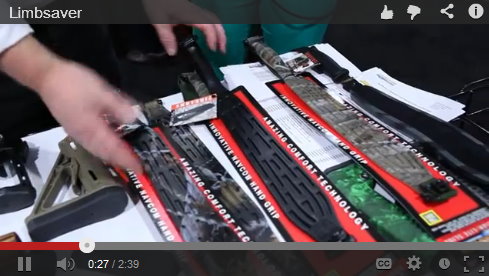
Published: January 17, 2013 { 1 comment }The biggest secret in rifleslings is the Kodiak Sling from Limbsaver. You probably know this company for their damping technology and sights in the archery business, but they have secretely created the best riflesling ever made as well. You have seen our Kodiak sling on the Ambush Rifle we use all the time in our hunting articles with our guide Dwayne Powell at Kissimee River Hunt & Fish, and now they have come out with a lighter version that uses nylon instead of rubber for much of the non-bearing surfaces. Something as simple as a riflesling isn’t usually a big story, but these slings have a handle on them, made of rubber, so you have a firm place to hold the weight of your arm up as you walk along with your rifle. They sell these at most big box stores and a lot of stocking gun dealers, so stop and try one. Also check out the new AR accessories. They have a front grip with a riflestock profile. Neat stuff from Limbsaver for 2013. Note that if you order the Kodiak online, the “crossbow” sling is the same as the rifle sling and is easier to find.
Viridian Green Laser Auto-On Holsters – SHOT Show 2013
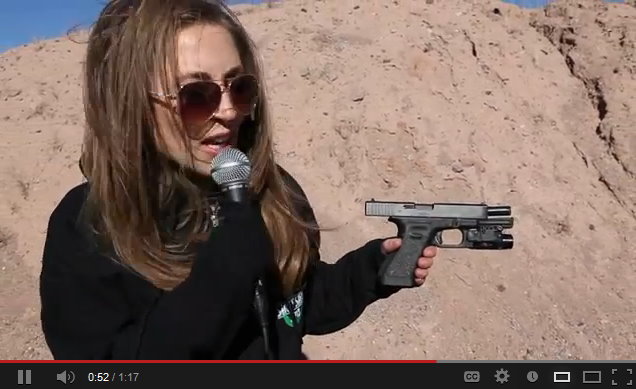
Published: January 17, 2013 { 4 comments }In a gunfight microseconds count. Turning on a laser can cost you a bunch of time, so several of the laser companies have come up with different ways to turn on the laser instinctively, without a separate thought operation required. Viridian’s take on it is the Tac-Loc holster, which they call an Enhanced Combat Readiness technology. Marketing terminology aside, the holster actual turns on the laser as you draw it, so you don’t have to put your finger in a certain place and press, and you don’t have to hold the gun in any particular way for the laser to go on. We have not tested this in house, so this Media Day at the range outing was the first we got at it in actual use. If you have been wondering how it actually works, it works great, but be aware that not all of their units fit all of the holsters. If you already have a Viridian green laser, make sure it actually fits the Tac-Loc holster before you buy one. We should have more stuff from Viridian this week. This is kind of a follow up to the introduction at last year’s SHOT Show because we haven’t actually gotten our hands on one over the course of the year.
Chiappa Triple Barrel Shotgun – The Triple Crown – SHOT 2013
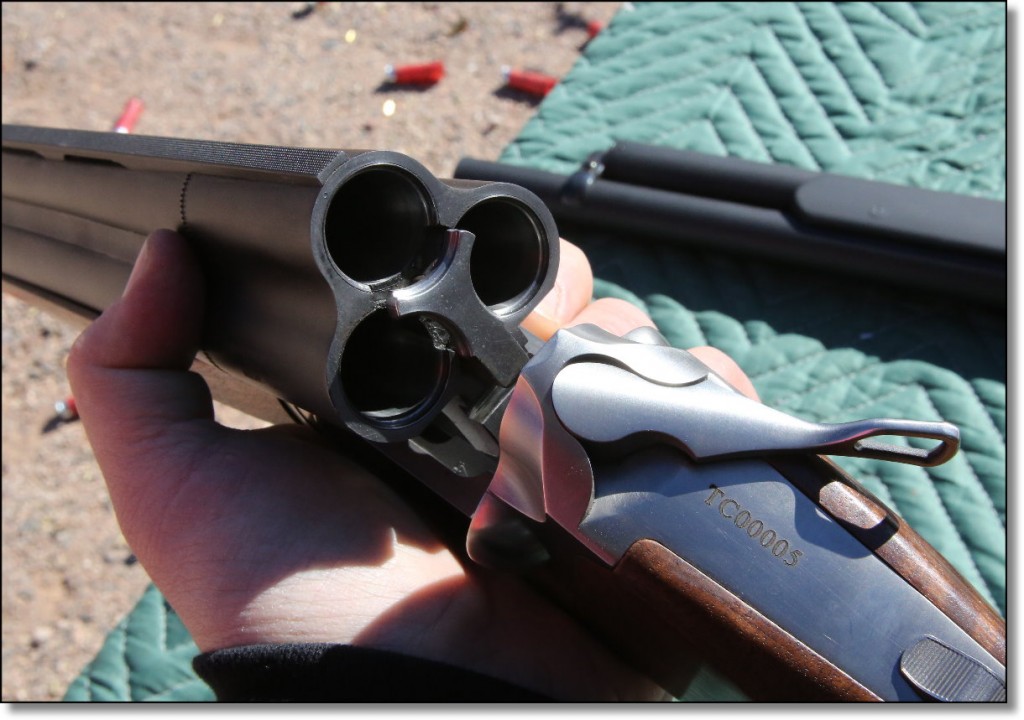
Published: January 17, 2013 { 49 comments }Ok, before you beat our host Julie Mac up for calling this a rifle (er, twice), please keep in mind that Julie is a regular shooter here in Las Vegas, but she has never been exposed to shotguns. This was her first encounter out at Range Day, and though she shot that .375 Cheytac from APO at 500 yards and dinged the steel, she was afraid to actually shoot these three barrel shotguns. Ron Norton from Chiappa was such a gentleman for not correcting her and just saying SHOTGUN loudly twice, so do him a favor and go buy one of these silly guns. Three barrel shotgun and rifle combination guns, called Drillings, were very popular right after WWI in Europe, but I personally have never seen a three barrel sidexside+middle like this before. The Triple Crown and Triple Threat may do very well in the market because of the sheer simplicity of firing 3 rounds of 12 gauge in a home defense situation. At about $1,600, they aren’t cheap, but leave it to Chiappa, makers of that nifty, different, and great shooting Rhino revolver, to come up yet again with everyone’s new favorite oooh and aaah gun at the range.
Colt USMC Service Pistol – SHOT Show 2013
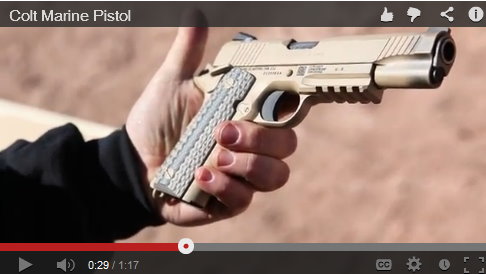
Published: January 17, 2013 { 72 comments }Over 100 years later the Colt 1911 soldiered on in 2012 by capturing a huge new service contract for the United States Marines for 12,000 pistols, made by Colt Manufacturing in Hartford, Connecticut. We tried to get a review gun as soon as the news dropped, but the gun wasn’t available for the consumer market. Colts are generally tough to get anyway, because consumer demand is so high for them, yet on the handgun side, Colt is not a huge company. It is with great pleasure that we got the news here at SHOT that Colt will be producing 80 of these USMC guns per month for the consumer market. The price will probably be somewhere in 2nd mortgage land, but hey, it’s a Colt and it will only go up in value. These are actually going to be Colt Custom Shop guns, so they will be tuned and slicked up as well. Nobody thought to bring any Hoppes to the Colt tent at Media Day so we only have dirty pictures of the gun, but this is the actual gun they will be selling to the public. Eighty guns a month isn’t going to be enough, but at least we’ll have a shot a getting one. It takes a little while to process the 2nd mortgage anyway.
Kahr CW380 & CM45 … Plus 10″ Desert Eagle Barrels
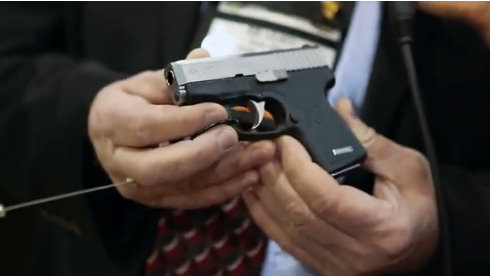
Published: January 17, 2013 { 2 comments }The small gun market has exploded over the last few years with a vast expansion of concealed carry permit holders across America. One of the very first companies to perfect the extremely small gun was Kahr, and they carry 6 patents to that effect, many of which have actually been defended successfully in court. They are extremely high quality firearms, but the P series is very expensive, prohibitively so for many features. For this reason, Kahr started making some of their smaller guns in a C series, to bring down the overall cost. They did this by simplifying the manufacturing process, eliminating some of the more complex operations that only added marginal performance. These C series guns are still better performers than most of the other small guns in the market, at about the same price. Here at SHOT 2013 we take a look at the new CW380 and CM45. All Kahr firearms are manufactured in Worcester, Massachusetts.
This video also covers Magnum Research, which is owned by Kahr. They make their guns in Minnesota, the most famous of which is the Desert Eagle. Over the years this gun has obviously been a movie gun favorite, but it has also become very popular with gun nerds and handgun hunters. For 2013 Magnum Research will be selling a 10″ barrel for their guns, in .50 and .44, and they do swap out easily with your standard barrel. Magnum Research will also be offering a porting service for their guns. For $200 they will make it look a lot cooler.
FNH-USA .338 Lapua Sniper & Long Slide FNS – SHOT Show 2013
Published: January 17, 2013 { 3 comments }New from FNH-USA for SHOT Show 2013 comes a long slide FNS in .40S&W made for competition. It should be priced along the lines of the existing FNS guns, but it will come with three different sight configurations for different rule sets of competitive shooting. The sights you see in the video here are the standard, drift adjustable “Svigney” sights that are also meant for holster carry. A lot of LEOs and belt holster CCW guys have come to prefer a long sight radius for daily use. When the front and rear sights are farther apart it gives you a lot more of a precision alignment for a slightly longer shot. Our test of the FNS was stellar, so much so that people thought it was some kind of PR piece from the company itself, but it wasn’t. There are a lot of great black pistols out there, but if you put your ear to the ground for range chatter, the FNS has been at the top of the pack since its release.
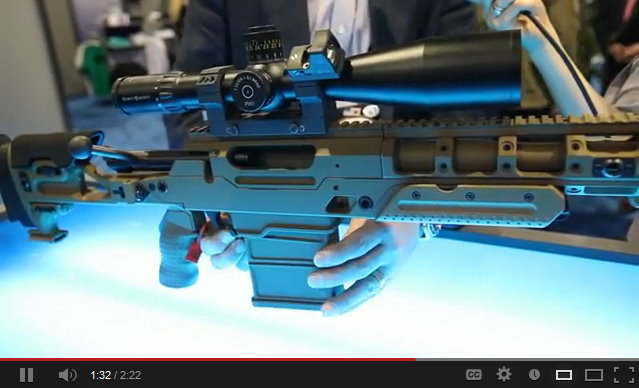
Also check out the new Ballista from FNH. This is one of those very high end sniper rifles that has come out of the government’s competition to replace the M24 and M40. FNH has brought their entry to the civilian market at under $7,000 in .338 Lapua and two other calibers, probably .300 Win. Mag. and .308. FNH makes more than half of all US Military arms, so you can never question that the gun will be of the highest possible standards. We hope to get one of these Ballista rifles in this year for a full review.

Mossberg Flex MVP Patrol Rifle Takes AR-15 Mags – SHOT Show 2013
Published: January 17, 2013 { 16 comments }Mossberg has added to their MVP bolt action rifle series by expanding their Flex line of innovative modular construction. If you didn’t see the Flex Shotgun last year, the design is unique, because it utilizes a completely tool-less system. You pop out the removal lug and pop it back in. There are no parts to lose and no parts to booger with a screwdriver. The Flex system is brilliant and has nothing by great reviews.
The Mossberg MVP rifle series is meant to be a ton of gun for the money, and that succeed at exactly that. This new MVP Patrol rifle is one of those
guns that is purely aimed strait at people needing a patrol-style bolt rifle meant to put meaningful hits downrange, at a reasonable and affordable price. You may not be in law enforcement, but this rifle is light, carries well, and comes with features you’d expect to see in a much higher priced gun.

Media Day at the Range – SHOT Show 2013 Highlight Video
Published: January 16, 2013 { 1 comment }This year for SHOT Show we have scheduled currently over 50 videos coming your way over the next couple weeks. There is a crushing amount of footage to edit for our team, and some of the spirit of the show has gotten lost in prior years. We are hoping to bring you a little more flavor of the show this year, and our host Julie Mac is having a lot of fun with it. Media Day is the day before SHOT, on Monday, and it takes place out at a giant range in the desert outside of Las Vegas for more than 1,000 members of traditional and new media. We used our video and pictures from Media Day 2012 this entire past year as guns from Media Day came in for review, but 2013 was completely different. Bone chilling cold, in the low 20s, with a 30+ MPH wind, made even taking notes nearly impossible, but it didn’t dampen the spirit of the event even a little bit. This short video is worth the time to watch it, and we still have at least half a dozen more coming on specific products this week as well. Cracked and frozen hands didn’t stop Julie from shooting every gun she could get her hands on, even a .375 Cheytac from Ashbury Precision Ordnance. It was a fun day.