
Estimated reading time: 13 minutes
Fast to shoulder, light in the woods, and still pure Americana, the Winchester Model 94 remains a freezer filler and a bucket list lever for hunters who actually hunt.
Why This Winchester Model 94 Still Owns Deer Season
If there is one bucket list rifle that should be on every rifle shooter’s list, especially if you are a deer hunter, it is the Winchester 94. This rifle had nothing to do with taming the Old West like the Winchester Model 1873 or the Model 1892, but the Model 94 earned a reputation as a deer getter with generations of hunters. Over 7.5 million have been produced and still counting. That in itself is a good reason that the Model 94 should be in the top 10 of a rifle shooter’s bucket list. Another reason is that the Model 94 was the first American-made rifle to be chambered in the then-newest cartridge technology at the time, which was smokeless powder. That cartridge was the .30 30 Winchester Center Fire or .30 WCF or just plain “Thurty Thurty,” the first American smokeless rifle cartridge.
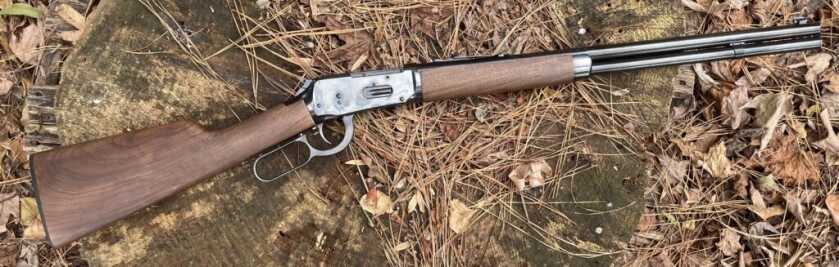
Table of contents
- Why This Winchester Model 94 Still Owns Deer Season
- Winchester Model 94 History In Brief
- What Makes The Winchester Model 94 So Great
- Winchester 94 Calibers: First To Go Smokeless
- Key Features Of The Winchester Model 94
- New Production Winchester 94s With Modern Craft
- Winchester Model 94 Clones Worth Knowing
- Shooting The Winchester 94: MOD Over MOA
- Collecting Winchester Model 94 Rifles
- The Winchester Model 94 Legacy
- Specifications: Winchester Model 94 Carbine
- Pros And Cons From The Deer Stand
- Related Reads from GunsAmerica Digest
Winchester Model 94 History In Brief
You probably already figured out that the Model 94 was introduced in 1894. It was originally named the Model 1894 following Winchester’s method of naming rifles after the year they were introduced. By 1927, the name was shortened to the Model 94.

There were numerous model variants of the 94: a rifle, takedown models, trapper’s carbine, saddle ring carbine, and an Eastern version of the Saddle Ring Carbine without the saddle ring. The main difference among these variants is the barrel length. They all used the same action. Some had fancy pistol grip buttstocks or had a plain, straight stock. The Model 94 went through three design changes, and collectors typically refer to them as a Pre 1964, Post 64, and guns made after 1982. Pre-64 Model 94s are the most coveted by collectors because of their craftsmanship. Post 64 guns were made cheaper with sintered steel, a type of cast alloy, in place of billet steel in Pre 64 guns. The result was a receiver as strong as billet steel, but the sintered steel did not take a traditional blue finish well and did not have the lush finish of Pre-64 Model 94s. Some small parts were cheapened, too. Post 64 Model 94s function the same as Pre 64s, had the same safety features, and were as accurate as Pre 64 models, but they were not as beautiful as the original Pre 64 guns. Winchester’s reputation took a hit with Post 64 guns.
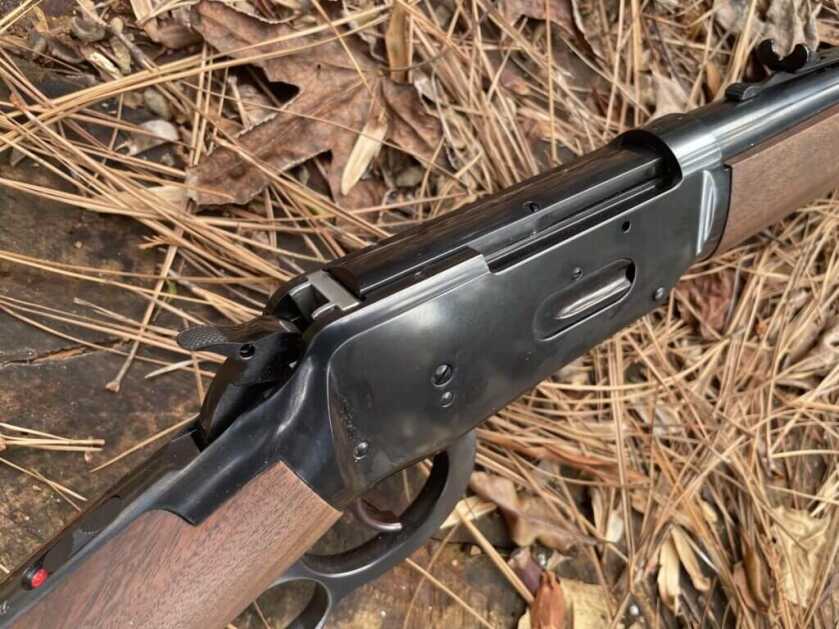
As optics became more popular with hunters, the Model 94 lost sales to the Marlin Model 336, which has a solid receiver top and is side-ejecting. Mounting a scope to a Marlin was simple and easy. The Winchester 94 is a top-eject rifle that didn’t lend itself to mounting a scope. In 1982, the Model 94 action design was changed to an angled ejection and allowed optics to be traditionally mounted on top of the receiver. Winchester called this new era of Model 94s Angle Eject models. Winchester also changed back to billet steel receivers.
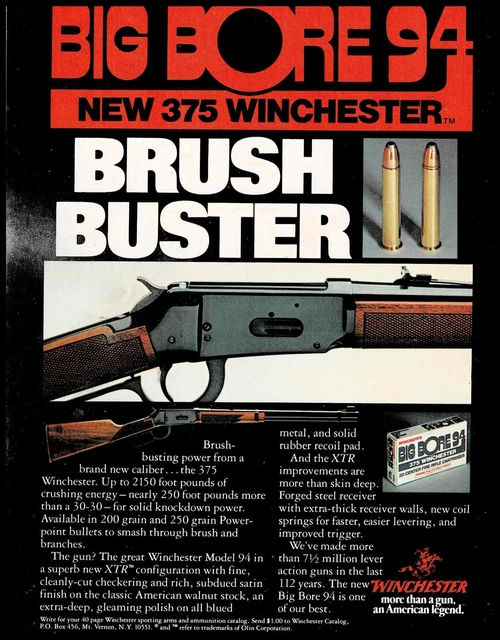
A cross bolt safety was added to the rifle in 1992, which many Winchester purists feel is a wart on an otherwise beautiful rifle. In an effort to give the 94 more power, the Big Bore 94 was introduced chambered in caliber options like .307 Win., .356 Win., .375 Win., .444 Marlin, and .450 Marlin. These large-bore calibers did not have the long-range capabilities that hunters desired, but they did provide a wallop at closer ranges.
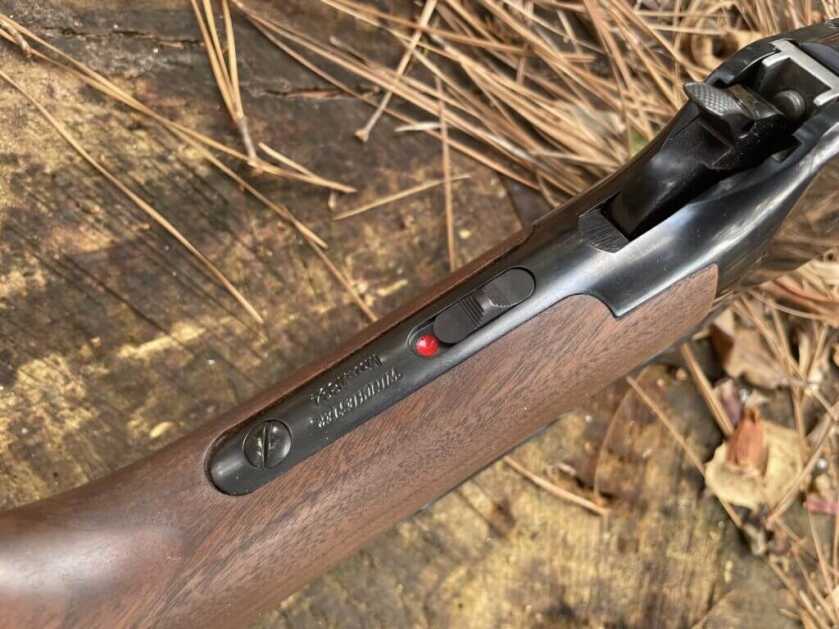
By this time, bolt-action rifles were the top deer hunting rifles, and all lever-action rifles struggled for relevance. Bolt-action rifles are more accurate and chambered in high-velocity cartridges. No lever action could compete. In 2006, U.S. Repeating Arms, the name under which Winchester firearms restructured, went belly up in bankruptcy. FN purchased the company and slowly started to reintroduce the iconic rifle. One of the main changes in post 2006 production rifles is that the manual safety was relocated to the receiver tang, giving it a more refined look.
What Makes The Winchester Model 94 So Great
A few generations ago, a Model 94 chambered in .30 30 was in nearly every whitetail deer hunter’s gun rack. But whitetails weren’t the only game the 94 was used for. Add black bear, elk, and mule deer to the list, and add nearly every four-legged critter hunted in the lower 48. The Model 94 was lightweight, compact, and comfortable to carry. It was quick with follow-up shots and offered mild recoil. Hunters liked the calibers it was chambered in, especially the .30 30 Winchester.
Winchester 94 Calibers: First To Go Smokeless
Upon its introduction, the 94 was chambered in either .32 40 Winchester or .38 55 Winchester. The 94 was and is still chambered in a slew of other calibers. Over the years, that list included .25 35 Winchester, .32 Winchester Special, 7 30 Waters, .307 Winchester, .356 Winchester, .375 Winchester, .357 Magnum, .44 Remington Magnum, .444 Marlin, .45 Colt, and .450 Marlin. It has even been chambered in .410 bore.
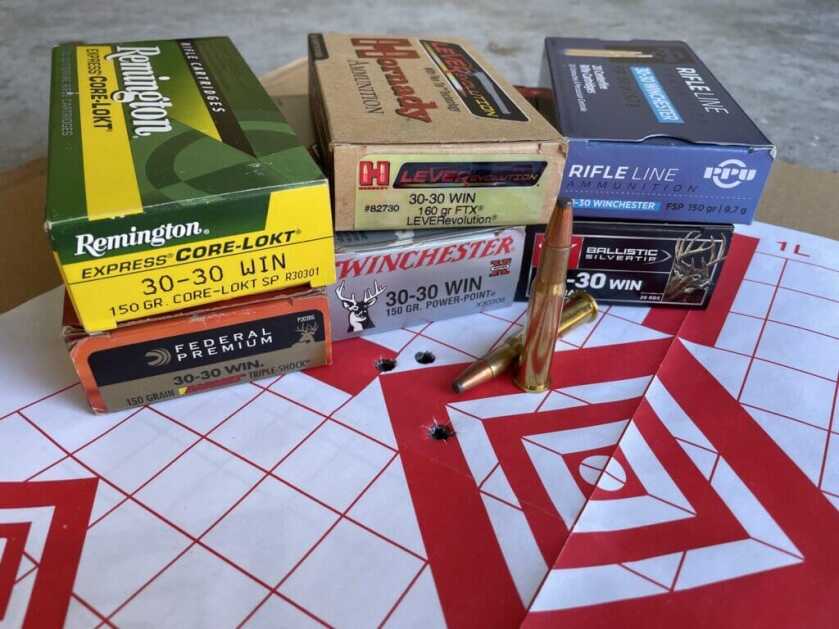
The truth is, the Model 94 is most associated with the .30 30 Winchester cartridge since that was the caliber Winchester executives asked John Browning to design a new lever-action rifle around. In fact, the 94 is typically called a Thirty Thirty. As a kid, my dad, uncles, and their friends called them Thirty Thirtys. I didn’t realize it was a Model 94 until I read the roll mark on the barrel. Nearly 70 percent of all Model 94 rifles and carbines produced were chambered in .30 30. It was an unbeatable combination at the time.
I know what you are thinking. The .30 30 is a weak cartridge, and by today’s standards it is. Under 100 yards, it will kill deer and fill your freezer. To appreciate the Winchester 94, shoot one chambered in .30 30 to get the real feel for the rifle.
Key Features Of The Winchester Model 94
The Model 1894 is different from previous lever actions manufactured by Winchester. The 94 uses a single locking bar rather than two locking lugs like the Model 1886 and Model 1892. The single lug of the Model 94 locks the bolt in place on both sides of the receiver, so the receiver is strong not only for black powder cartridges but for use with smokeless powder cartridges.
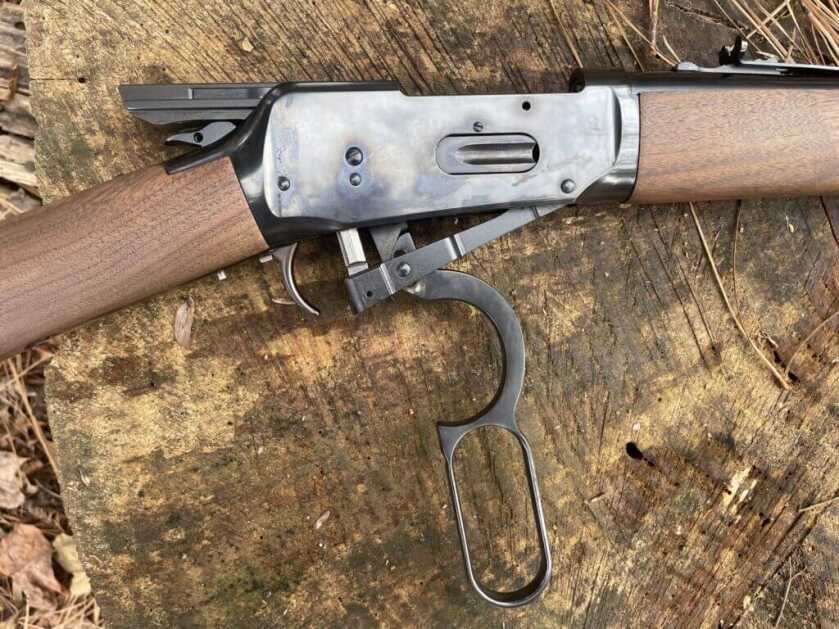
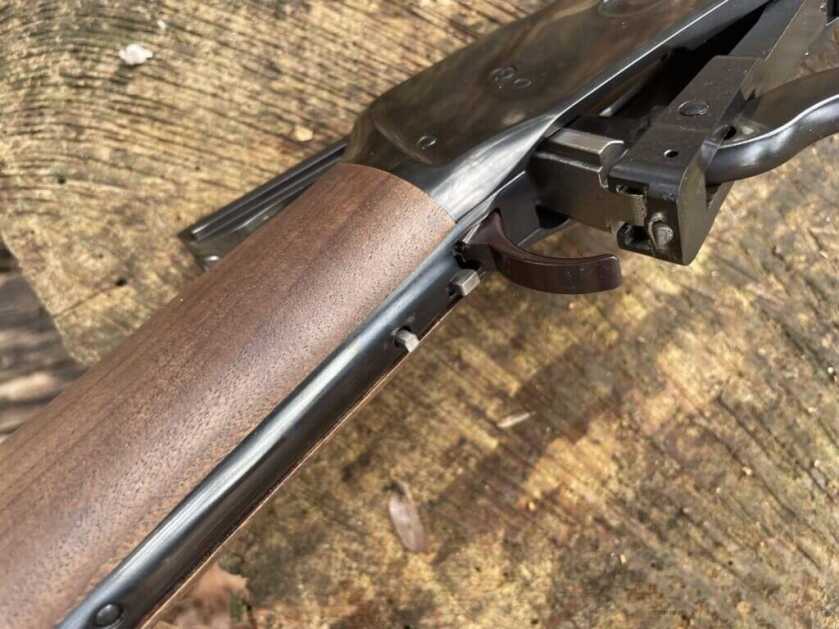
The locking bar also worked with the transfer bar for the firing pin and simplified the safety system in the bolt compared to prior models. The 94 also incorporates a pin that protrudes from the bottom receiver tang. This pin blocks the trigger as the lever is cycled. The lever needs to be fully closed to press the pin and allow the rifle to be fired.
New Production Winchester 94s With Modern Craft
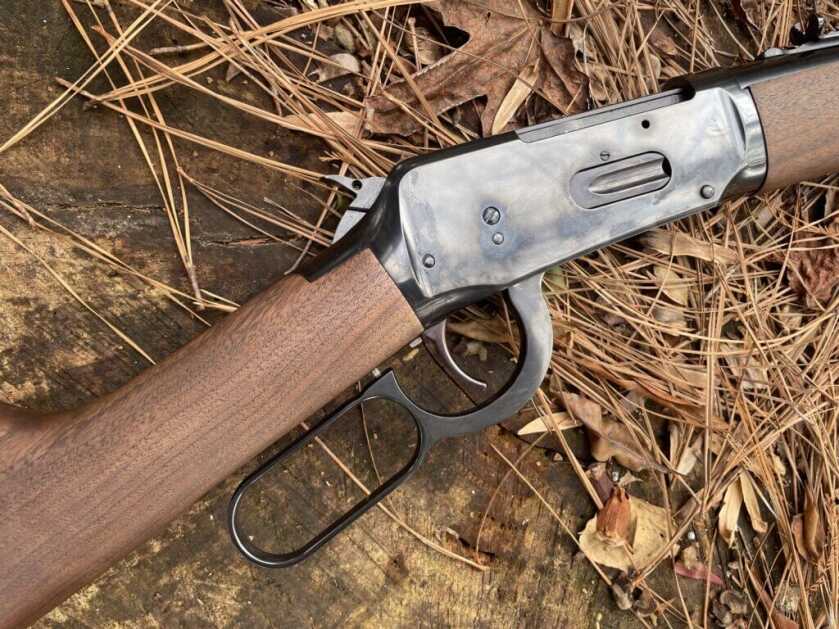
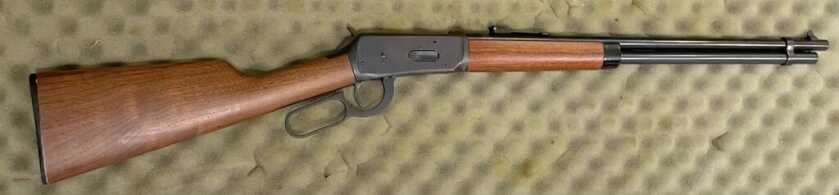
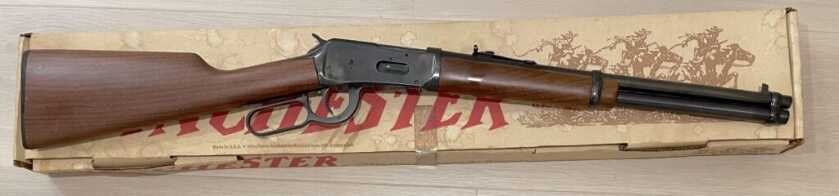
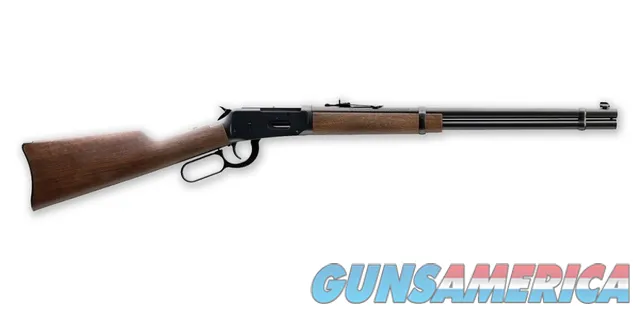
New production Winchester Model 94s are still being produced even though they are no longer manufactured in New Haven, Connecticut. Winchester’s newest 94s are made in Japan and have a craftsman touch to them. The Deluxe Sporting and Sporter rifles feature beautiful case-hardened receivers, checkered stocks, crescent-shaped buttplates, and 24-inch round barrels. A Trails End Takedown is designed for fast disassembly and compact carry. A Short Rifle has a shotgun-style buttplate, 20 inch round barrel, and fore end cap. Perhaps the most common is the Carbine, a plain variant with 20 inch barrel that looks like what your granddaddy hunted deer with.
Winchester Model 94 Clones Worth Knowing
Sears, Roebuck may have been the first to clone Model 94 rifles. Back in the 1960s, Ted Williams endorsed a lever-action Model 100 that was a Model 94 clone manufactured by Winchester for Sears. Firearm manufacturers in Italy, like Uberti, have been recreating a variety of Winchester lever-action rifles for decades, including the Model 94. Cimarron offers the Model 1894 just like John Browning originally designed it, with top ejection and no manual safety, just common sense. The Taylor’s & Company 94 clone is the working man’s version with a smooth wood stock and blued finish, or the ranch owner’s version with case-hardened receivers and checkered stock.
Shooting The Winchester 94: MOD Over MOA
I like to classify the accuracy of the Model 94 as MOD, Minute Of Deer, instead of MOA. It is not a tack driver, and for hunting deer and hogs, you don’t need one. I have a new production Model 94 Short Rifle in .30 3,0 and it is a swell option for shots under 100 yards. I shoot it open sights, though it is drilled and tapped to take a scope.
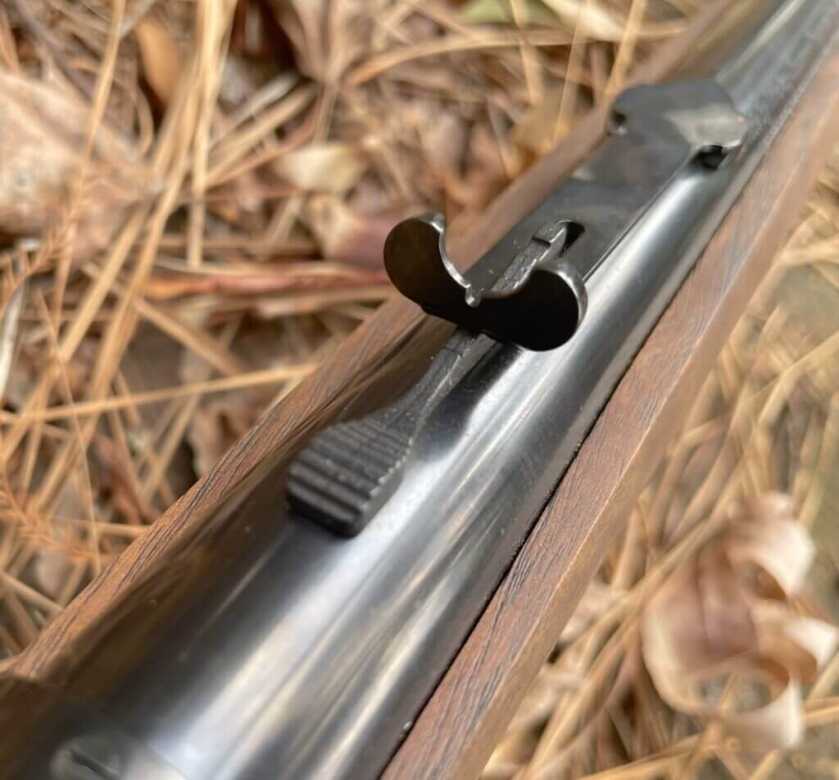
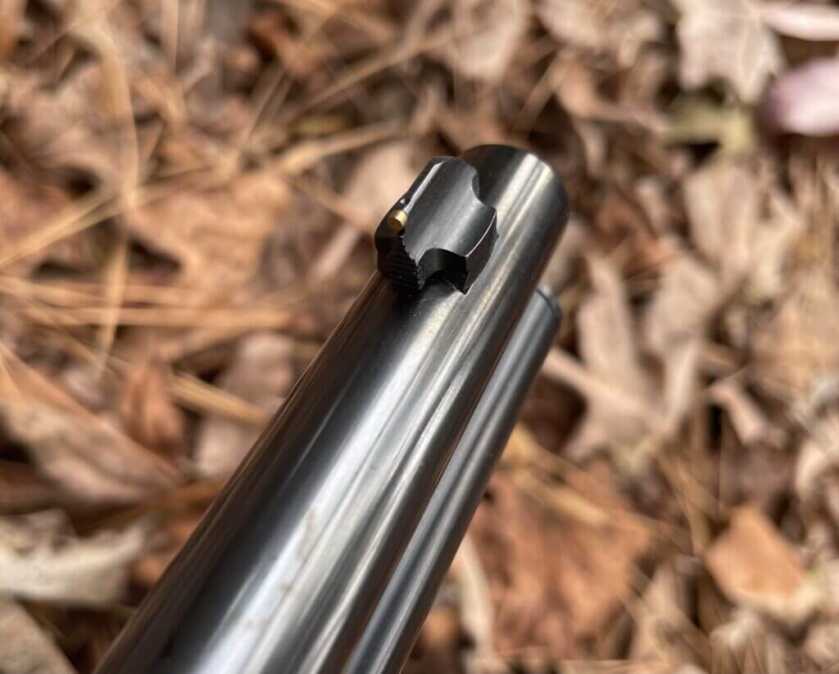
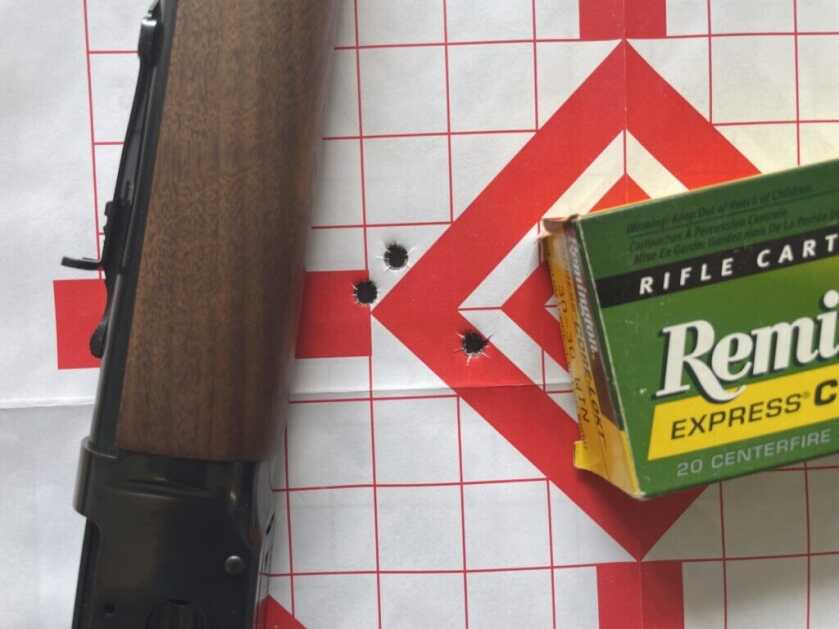
With Remington Core Lokt 150-grain soft-point bullets, my best 3-shot group at 50 yards is 1.38 inches. With Hornady Leverevolution’s 160-grain FTX bullet, I’ll get about 100 fps more velocity, and my best 3-shot group averaged 0.68 inches. That’s pretty darn good shooting with open sights. Yes, I’m using a rest and not aiming at a buck, so my heart rate isn’t jacked up. Still, you can’t discount the round’s ability, but know your limitations with a .30 30. I prefer to hunt more and shoot closer.
Collecting Winchester Model 94 Rifles
There are plenty of original Winchester-made 94 rifles and carbines on the used gun market. The pre-64 rifles, even in well-used condition, fetch high values. More affordable Model 94 rifles include the guns made post 1964 and those with the cross bolt safety. Some calibers, like 7 30 Waters, demand higher prices.
The Winchester Model 94 Legacy
There was a time when every young deer hunter learned to silently cock the hammer of a lever-action rifle and not spook a deer. More than likely, it was on a Winchester 94. The lever-action rifle has been eclipsed by other platforms for hunting. There are some hunters, however, who understand what a near-perfect combination the Model 94 and the .30 30 Winchester caliber make. While others just appreciate the history of this iconic American hunting rifle. A definite bucket list rifle.

Specifications: Winchester Model 94 Carbine
| Model | Winchester Model 94 Carbine (new production) |
|---|---|
| Action | Adjustable semi-buckhorn |
| Caliber | 30 30 Win., 38 55 Win., 25 35 Win., 32 Win. Spl. |
| Finish | Blue |
| Stock | Smooth walnut |
| Front Sight | Marble Arms brass bead post |
| Rear Sight | Adjustable semi buckhorn |
| Barrel Length | 20 in. |
| Overall Length | 38 in. |
Pros And Cons From The Deer Stand
- Pros: Light and lively in the woods, fast follow-up shots, mild recoil, classic .30 30 effectiveness under 100 yards, Angle Eject models accept optics, timeless American design.
- Cons: Limited range compared to modern high velocity bolt guns, early top eject models are harder to scope, some Post 64 cosmetics turned off purists, not a benchrest tack driver.
Related Reads from GunsAmerica Digest
- Marlin 336 Classic Review: Side Eject Workhorse
- Henry Side Gate .30 30 Review: Modern Lever Done Right
- Winchester 1873: The Gun That Won The West
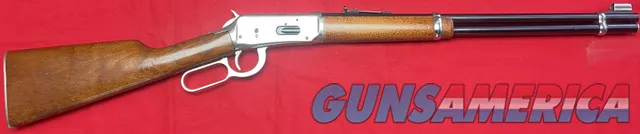
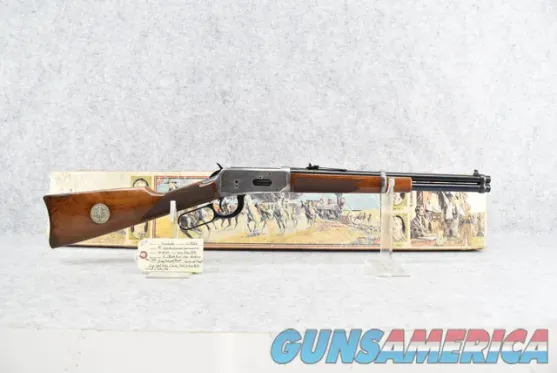
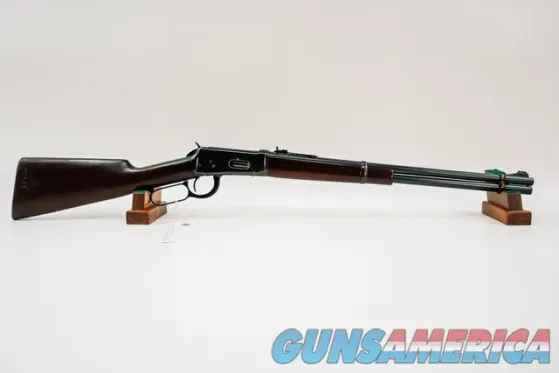
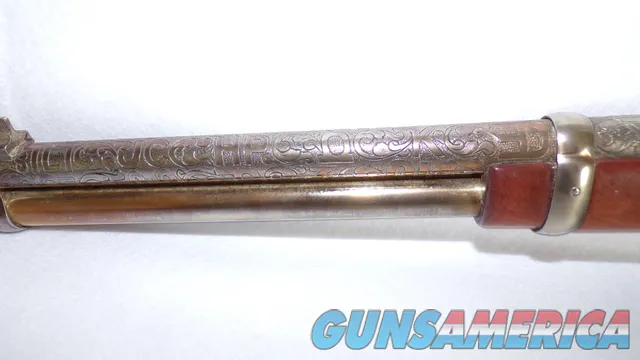
Available on GunsAmerica Now

Robert A. Sadowski is an American writer and journalist.
He has written about firearms and 2A issues for decades, and has trained with some of the country’s finest firearm instructors in handguns, rifles/carbines, shotguns and long-range shooting. He has also had the opportunity to interview numerous individuals deeply involved in protecting our 2nd Amendment.
He a is a frequent contributor to numerous gun-enthusiast publications, a few of which include:
- TheArmorylife.com
- TheTruthAboutGuns.com
- GunsAmerica.com
- GunBroker.com
- Gun-Tests.com
- Shooting Illustrated
- SHOT Business
- Gun Digest
Sadowski is also the author of numerous gun books, including: “9MM — Guide to America’s Most Popular Caliber” and “Book Of Glock,” both of which were #1 new releases on Amazon. He also wrote the popular DIY gun book series: Shooter’s Bible Guide to Firearms Assembly, Disassembly, and Cleaning Volume 1 and Volume 2. Other gun books authored by Sadowski include “50 Guns That Changed the World,” and edited “The M16A1 Rifle: Operation and Preventive Maintenance”originally published by the U.S. Department of the Army. He also edits the annual “Gun Trader’s Guide” to firearm values.
Sadowski is also the Treasurer/Secretary of the GLOCK Collectors Association, a non-profit organization with the mission to educate and preserve: Educate the public on the models, variations, and commemoratives built by GLOCK, as well as provide members with information on GLOCK serial numbers, importation, and other facts unique to GLOCK pistols.
Never were the same after 64. If it had originated with the current action, it would never have made it.
Current buyers must have never tried a pre-64.
Any chance the 1894 Winchester is currently offered in 25/35 ?
Would really like a modern day production in 25/35, 26″ octagon barrel, case colored frame, receiver sight, crescent but plate.Hornady leverlution ammunition wouild make this a true want to get bucket rifle.
I always heard 150 yards as max range not “under 100”. With modern powders and bullets, it comes close to the 300 Savage in power.
My best shots ever (circa 1980) were 3-foot holdover on 4 bucks took two out of the herd.
Took three shots too dial in on the first one. When he hunched up on the fourth shot, second buck was no problem.
The other two just stood there not knowing where the shots came from. Dad bought the gun in 58 and put side mount El paso Weaver 4x power scope fine crosshair on it. If not for my uncle standing there watching this story would have been B _ LLSH_T.
I have a 1951 model 94 30-30 that is one of the finest shooting lever guns I’ve even owned. Winchester got it right with this one. No wonder the 1894 has been popular for over a 100 years!
I was wondering how these late model 1894s are performing out in the wild. Too much green when there is a sea of old models out there, but anything coming out of Miroku is something good.