
Estimated reading time: 10 minutes
I feel a bit like a heretic saying this, but I really like 9mm revolvers. They have their quirks, but they can be a solid defensive choice and are often a great entry point for new revolver shooters. In the last year or two, I’ve leaned into snub nose revolvers and have been lucky enough to test a variety of calibers and have come to adore both the LCR in 9mm and the S&W 940.
Both are concealed carry-friendly revolvers that fall into that snub nose variety. The LCR 9mm has been in production for quite some time. The 940 has come and gone from S&W’s catalog, but recently came back as a Davidson’s exclusive.
Since both are 9mm revolvers aimed at the same general task, I wanted to put the two side by side and face to face to see if one excels over the other.
Table of contents
Why 9mm Revolvers?
The 9mm Parabellum cartridge is traditionally a round designed for semi-automatic handguns. Moving it into a revolver isn’t its typical use case, but that doesn’t mean it can’t be effective. The 9mm isn’t going to offer you much ballistic advantage over traditional revolver rounds, but it is an effective cartridge for self-defense.

The primary reason I like 9mm revolvers is their ammo price. Traditional revolver rounds like .38 Special are expensive, or at least more costly than 9mm. I can find 9mm for 18 cents a round if I shop around, but .38 Special is around 50 cents per round.
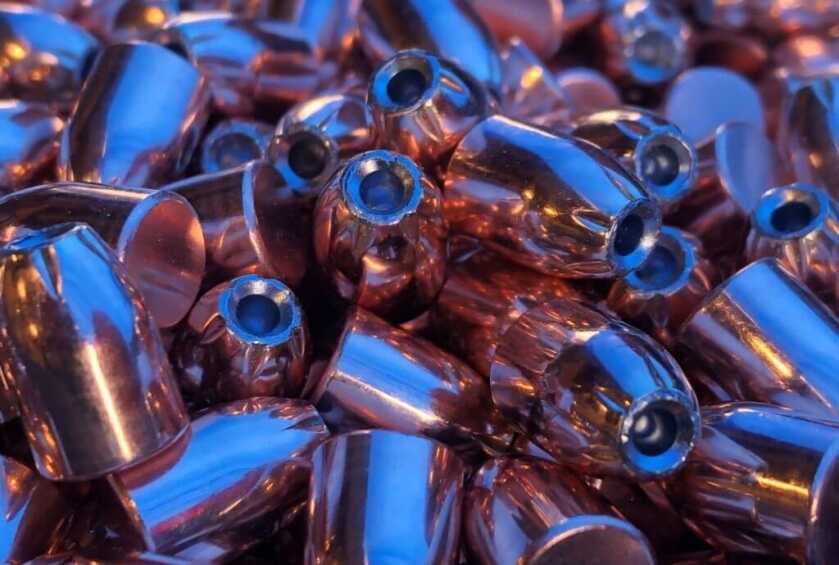
There are tons of different 9mm loads available. Various hollow point designs, different bullet weights, and enough options to find the right pet load for you and your gun. Specialized short-barreled loads and low-recoil rounds are available, and they all function reliably in snub-nose 9mm revolvers.
Downsides
There is no free lunch, and 9mm revolvers have their flaws. They require moon clips to properly eject, and in some cases, to properly fire. Moon clips aren’t all that bad, but they tend to be fragile, a pain to unload, and easily bent or broken.
Additionally, 9mm ammunition doesn’t feature the same tight crimp as revolver rounds. When a revolver recoils, every cartridge is rammed rearwards with recoil, then it flies forward. This shaking effect can cause projectiles to jump the crimp.

The bullet becomes unseated, and the best-case scenario is that it just slides out of the cylinder, and you get a slight pew when the primer fires. The worst-case scenario is that the round jams between the cylinder and frame, and you get a complicated malfunction.
Crimp jump is a fairly rare occurrence. It tends to happen more with lighter revolvers and with higher recoiling loads. So 9mm +P might not be the best choice for 9mm revolvers. You should experiment with your chosen load to see if crimp jump is an issue.
Let’s Talk Concealment
The guns are almost identical in size, but there are some key differences worth noting. The LCR is substantially lighter. The LCR utilizes a combination of polymer and steel to produce a lightweight and affordable firearm.
The 9mm LCR utilizes the same construction as the .357 Magnum variant, yet it remains lightweight at 17.2 ounces. The S&W 940 weighs approximately six ounces and 0.52 ounces more at 23.52 ounces. That’s quite a jump in weight for a small gun; for comparison, a Glock 19 weighs 23.63 ounces.

Weight matters, especially in the role a snub nose often excels at. Snub nose 9mm revolvers are great for pocket carry, ankle carry, and other off-the-waistband tasks. In those tasks, an extra six ounces can make a difference.
The 940 features a 2.17-inch barrel compared to the LCR’s 1.87-inch barrel. That’s minimal for ballistics, but the 940 is the longer gun. Overall, it is 6.63 inches, and the LCR is 6.5 inches long.
The LCR is the more concealable firearm, and it’s the most comfortable concealed carry firearm.
Accuracy
I took both guns to 10 yards and used an 8-inch circle printed on copier paper as my target of choice. I fired slowly, attempting to roll the trigger and make the best shots I could. In terms of accuracy, each gun has a serious strength.

The 940 comes with a dovetailed rear sight and an XS front sight. This creates a revolver that’s much easier to aim. I suck with the rear trench style sight, and this dovetailed rear sight made it easy to punch tiny groups at 10 yards.
The LCR 9mm has the Ruger friction-free trigger. It’s incredibly smooth and easy to roll and shoot. This helps a fair bit, especially on a small gun. The downside is that the lack of a real rear sight makes it harder to aim, and the LCR punched larger groups.

Beyond ten yards, and even out to 25 yards, I could ring steel with the 940. That rear sight made a serious difference in my shooting and accuracy.
Reliability
Both guns are revolvers from brands with a proven track record of performance. They are reliable guns. The cylinders won’t fall out of time easily, you won’t get light primer strikes, and the cylinder always turns.
I fired mostly 115-grain brass-cased ammo through both guns, but mixed in some 147-grain and 124-grain Nato rounds.

The real gut punch to reliability was the crimp jump. I’ve experienced crimp jump with the LCR. I was shooting 147-grain rounds, and a projectile got stuck between the frame and cylinder. It was a complicated and slow malfunction to fix.
The S&W 940 did not experience any crimp jump when firing the same ammo or any other ammo. I think the extra six ounces does wonders to prevent crimp jump by reducing recoil. I can’t get it to happen with this gun, and that’s a substantial benefit if you’re getting into 9mm revolvers.

With that said, the S&W 940 requires moon clips to fire. If you load the gun without moon clips, you get mixed reliability, and it seems like the headspacing on the cartridge mouth is no longer the case, or they’ve changed something with the revolver.
I can shoot the LCR without moon clips with no problem. Every round will fire without a moon clip and without a problem.
Controllability
Both guns come with extremely small grips, which is the norm for a snub-nose revolver. I disliked the LCR’s tiny boot grips more than I could stand and replaced them with a larger Hogue grip. I couldn’t get more than two of my sausage fingers on the grip, and it led to poor control.

The 940’s tiny grips allow me to get all three fingers on the gun, but just barely. The grip panels are aggressively textured G10, which helps prevent the grip from sliding in your hands. I like the 940’s stock grips a bit more than the LCRs.
Additionally, the rear end of the 940 is squared off and forms a stout wall you can brace your hand against. This keeps the gun from rolling in your hand with recoil. The upside is that it stays on target; the downside is that it’s a bit less comfortable. The LCR’s rounded rear end tends to roll in your hand, which is comfortable, but takes your sight off target.

The 940 also packs about five ounces more weight, and as we know, weight eats recoil. The 940 is the more controllable of the two 9mm revolvers. I can put five rounds of 9mm into an eight-inch circle faster and with more control with the 940 than the LCR.
READ MORE HERE: Colt King Cobra 22: A Snake You Want On The Trail
Price
Sometimes, the most important part of the rubber meeting the road is price. The price difference between these two guns is fairly large. The LCR in 9mm can be found for around $650.
That’s not the same bargain as the .38 Special version, but it’s still affordable and in line with quality revolvers. The S&W 940 series costs a whopping $999. That’s a big jump in price.
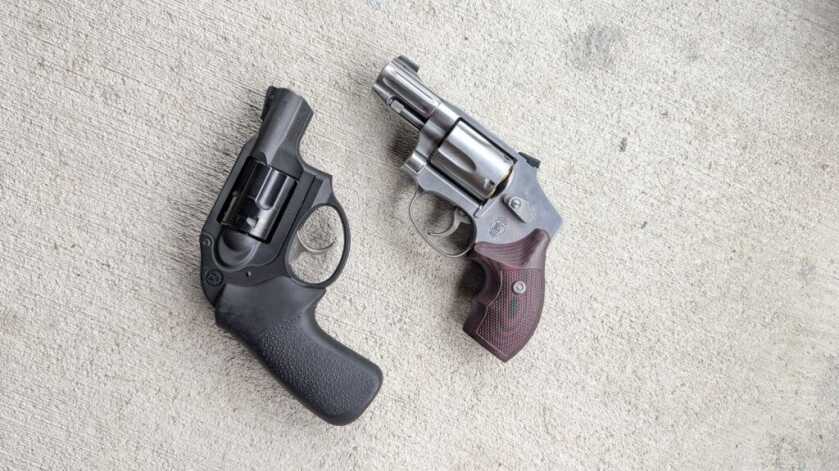
The LCR is more concealable, doesn’t require moon clips to function, and has a much better trigger. The 940 seemingly has no crimp jump issues, better sights, and is easier to control.
Which one would you choose?
*** Buy and Sell on GunsAmerica! ***
Available on GunsAmerica Now


Travis Pike is a dedicated firearms writer, a Second Amendment Advocate, and a subject matter enthusiast for all things firearms. He is an amateur competitor with dreams of one day not coming in 4th place at a local defensive match. If he’s not putting text to word processor, he’s likely spending time with family, enjoying Florida’s Nature Coast, or drinking hipster beer. As the resident Florida man he has a preference for obscure guns and calibers.
Experience
- Hunter – Long time deer and hog hunter in the swamps of Florida
- Instructor – Volunteers to teach basic firearm safety classes to kids, adults, and cats
- Wannabe Competitor – Has recently dipped his toes into competitive shooting and has happily discovered an expensive hobby.
- Marine – Served five years with the infantry before transferring to the First Civ Div.