
Estimated reading time: 11 minutes
Sig jumps into the 2011 game with the P211 GTO, and it flat-out rips. We ran plates and a match to see if this ROMEOX-equipped 9mm really stays glued to target.
First Shots With Sig’s P211 GTO – It Isn’t Just Another 2011
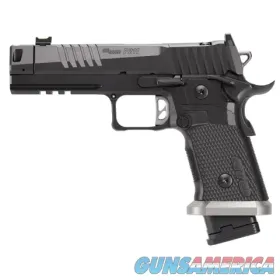
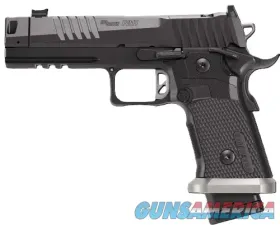
“Oh geez!” These were the first words out of my mouth after I shot the new Sig Sauer P211-GTO; more on this reaction later. The P211-GTO is SIG getting into the red-hot 2011 market with their own take on what a modern 2011 handgun should be. With plenty of features, SIG styling, and modernization, the P211 is a strong effort from SIG Sauer.

When I heard that Sig was introducing the P211, my interest was certainly piqued as I am a true 2011 fan. I knew that Sig would have their own take on how to build this modular 1911-style pistol, but they surprised me with how many different ways it went about making it their own design. With a quick glance, one might think it’s just another 2011-style handgun, but don’t be fooled, it is unlike any other 2011 you have shot or owned. In this review, I will go through what’s in the box, range testing (including a 3-gun match), and a detailed look at the parts in this build.
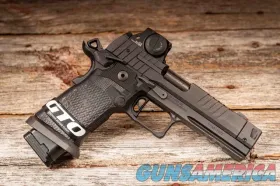
The model that Sig sent me came with a ROMEOX Pro red dot sight installed directly on the slide. The red dot is mounted so low that it co-witnesses unbelievably well with standard height iron sights. The gun also came with one 23-round magazine and two 21-round magazines, 3 in total. What makes these mags different is that they are P320 magazines, not a standard 2011 magazine. It came packaged in the classic Sig hard case with an optic plate to replace the red dot if the shooter so desires.

Table of contents
- First Shots With Sig’s P211 GTO – It Isn’t Just Another 2011
- Red Dot Reality Check – The P211 GTO Shoots Laser Flat
- Ran A Match – Here’s How Reliability Shook Out
- P320 Magazines On A 2011 – Smart, Available, Cheaper
- What You Get – P211 GTO Features That Matter
- Top End Breakdown – ROMEOX Fit, Extractor Choice, Comp
- Recoil Spring Tuning – Included 8 and 10 Pound Options
- Grip and Frame – Familiar 2011 Feel With Sig Tweaks
- P211 vs Traditional 2011 – What Buyers Should Know
- Sig P211 GTO Specifications
- Pros and Cons – The Quick Take
- Related Reads from GunsAmerica Digest
Red Dot Reality Check – The P211 GTO Shoots Laser Flat
I once heard Kenny Powers say red dots are a crutch for the talentless, and I have similar feelings and still run iron sights on my handguns. I know that dots are insanely popular, but I am one of the few holdouts. On my first trip to the range, I decided to run some plate rack drills after a couple of reps of dry fire to get used to the red dot. After my first run on the plate rack, that’s when I had the verbal reaction I referenced earlier. It was fast, it was flat, it was…easy. I ran the plate rack several more times, and the results were the same or better every time I ran it. Several factors to consider here, including the effectiveness of the comp, weight of the gun, 9mm cartridge, and at its core, it’s a 1911. It was smooth.
For accuracy, I shot it standing unsupported at 10 yards and from a rest at 18 yards. It was decent, what one would expect from a factory gun. Accuracy certainly improved with quality ammunition as expected it would.

Ran A Match – Here’s How Reliability Shook Out
During my testing and a subsequent 3-gun match, the gun performed perfectly, except when one particular 30-round magazine was used. All other magazines that came with it worked perfectly, and so did other magazines supplied by other shooters and me. There was just the one 30-rounder that had issues.
For the purpose of testing, I loaned the gun to a friend who recently decided his eyes had betrayed him and he needed the aid of a red dot sight. I handed the gun over on the day of the match, and it worked great for him. The red dot was sighted in from the factory, and his ability to hit targets went up significantly compared to what he had been recently experiencing. During this match, we found the 30 rounder that just didn’t want to work.
P320 Magazines On A 2011 – Smart, Available, Cheaper
A note about magazines. When Sig decided they wanted to enter the 2011 market, they did extensive research. They bought every model of 2011 that was on the market and tested them for failures. Almost every failure was caused by magazine-related problems, which is something every 2011 owner knows: quality magazines are a necessity for a reliable gun. At this point, Sig made the decision to go with what they were already making and had extensively tested, P320 magazines. Using magazines other than 2011 mags is not new, as there are several models that use Glock magazines. This works out really well for people who already own P320 magazines. Also, the retail price of P320 mags is significantly lower than that of most high-quality 2011 magazines.

What You Get – P211 GTO Features That Matter
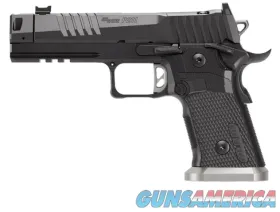
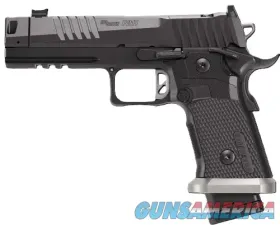
Now let’s get into the details of this gun. Here is a list of some of the specs that come standard with all the models currently available. 4.4 inch bull barrel with 3D manufactured Mach30 comp, fiber optic front sight and black serrated rear sight, aggressive slide cuts, external extractor, series 80 style safety, slide cut for the Sig-Loc footprint, ambi thumb safety, ambi slide stop and release, grip safety, flat and skeletonized trigger, G10 grip panels, metal magwell, full length dust cover with a 1913 pic rail, single action trigger, and coated in a Nitron finish.
All of these items and features included on each P211 are available on many other 2011s on the market, but in true Sig fashion, they did it their way. Whoever the lead engineer was on this project would certainly make Frank Sinatra happy. As I take the reader through the details of the handgun and its parts, I will point out what is standard and what is nonstandard for most 2011 pistols. Obviously, the biggest difference thus far is the use of P320 magazines, but there are more differences, and potential owners of the P211 should be aware of the others.

Top End Breakdown – ROMEOX Fit, Extractor Choice, Comp
On the slide of the P211 sits a standard rear and a fiber optic front with green fiber. These items are quickly becoming obsolete as the vast majority of shooters are buying optics for their handguns. The P211 I sampled came with a ROMEOX optic installed, and it seemed to fit the gun nicely. Some optics are so large that they look out of place on a handgun. Granted, the window size might be smaller, but with an enclosed emitter and a side-mounted battery compartment, the ROMEOX makes for a nice choice on the P211. Also, the height to bore is really good as no mounting plate is needed for installation. The ROMEOX screws are installed from the bottom of the slide, which is one reason why Sig went with an external extractor, while traditional 1911s and 2011s have internal extractors.
The serrations and slide cuts are certainly Sig style and even reminiscent of a P320 style of cuts and shapes. The front serrations are cut aggressively enough that the shooter can easily rack the slide using the thumb and index finger pinch to rack the gun. Some people like to grab the optic, and others prefer grabbing the front of the gun to rack the slide. The slide is essentially commander length, and the comp on the barrel makes the complete length of the top end the same (within .100) as a government length 1911. The slide actually features an external extractor, and I believe this is due to the Sig-Lok cut. To mount the red dot, you have to screw it into the sight from the bottom of the slide, and a series 70 extractor would interfere with this. Another difference from other 2011s is that the P211 has a series 80 style ignition system, which includes the spring-loaded plunger in the slide. The series 80 makes it drop safe.

Recoil Spring Tuning – Included 8 and 10 Pound Options
Included with the gun are two recoil springs, which allow the shooter to tune the gun to them and their loads. 2011 shooters have been doing this for decades; hats off to Sig for knowing this and giving the owner an option. 2011 springs can range in spring weight from 6 pounds to 25 pounds. Sig includes an 8 and 10-pound spring. Last thing I will mention is the top end of the gun. It does feature a full-length guide rod, but the way that the Mach30 comp is made, it hides the guide rod and gives the muzzle a clean look.
Grip and Frame – Familiar 2011 Feel With Sig Tweaks
The bottom end of the gun is again similar to a standard 2011, but Sig again put its own spin on it. The P211 does have a grip and frame that separate from each other. Sig went with a roll pin at the trigger guard and bushing-less screws in the grip. The grip does have removable G10 panels to swap as desired.
As mentioned earlier, Sig did incorporate a Series 80-style ignition system. An added element of safety, but it is harder to get the trigger that a Series 70 gun can offer.
The ambidextrous slide release is a nice feature that many shooters will really enjoy. The right side is captured and has a small hole in it for take-down. The shooter has to line up the take-down notch and then use a punch or paperclip-sized item to push the left side out. The P211 also has an extended ejector, extended grip safety, and extended (kind of) ambi thumb safeties. To give it a little pop, Sig installed a stainless commander hammer, a flat aluminum trigger shoe, and a stainless magwell. These three parts certainly stand out and provide some contrast to the otherwise all-black gun.

P211 vs Traditional 2011 – What Buyers Should Know
As I finish this up, I think Sig did some great things with the P211, but make no mistake, it is a Sig. That’s not a bad thing, but buyers should know that it is not a “standard” 2011. Parts interchangeability and availability will be an issue until aftermarket parts come online. With that disclaimer out of the way, there is nothing to be worried about when purchasing this gun. The gun works, the mags work, and the price is right, as the MSRP with red dot installed comes in at $2,799. Shoot it as is or customize it to your liking; the Sig P211-GTO should be a great option for many shooters. For more information, check out the Sig website here.
Sig P211 GTO Specifications
| Model | Sig Sauer P211-GTO |
|---|---|
| Caliber | 9mm |
| Barrel Length | 4.4 in |
| Overall Length | N/A |
| Weight | N/A |
| Capacity | 21 or 23 |
| MSRP | $2,799 |
Pros and Cons – The Quick Take
- Pros: Super flat with comp, ROMEOX sits low and co-witnesses, runs great with P320 magazines, thoughtful recoil spring options, and clean build quality.
- Cons: One 30-round magazine was unreliable, the series 80 system limits peak trigger tuning, and aftermarket parts will lag traditional 2011s.
Related Reads from GunsAmerica Digest
Available on GunsAmerica Now

Aaron was born into a 2A friendly family and firearms have been a part of every stage of his life. He started competing at 11 yards old and still competes actively in the action shooting sports with 3 gun being his main passion. Aaron enjoys working on and building guns, teaching himself and learning from others whenever possible.
Aaron has worked in or been a part of the firearms industry for over 20 years, including being the Operations Director for an AR15 manufacturer for 10 years. Aaron is also active in his local shooting community as the President of his local gun range. He also runs a national level 3 gun match every year as well as monthly shooting events at the range.
Experience
Gunsmith that builds 2011s, ARs, Rifles and Shotguns
Competitive Shooter, 3 gun, 2 Gun, USPSA, IDPA, Long Range
Board member and Range President
Firearms Industry for 20 years
Ruger stock was down by 50% last year. No surprise. Plastic, tang safety’s ugly guns, push round feed and ridiculously short barrels on ugly rifles. Heavy barrels have become the Ruger trademark. When hunters want lighter rifles. Nobody I know wants to lug around a rifle with a suppressor on the end of its barrel. Shorten a barrel to 16 inches will take the “bite” out of many popular rounds. Add a laminated stock and you add weight. They redesigned the Mk2 stock and put heavy wood stock on the Hawkeye rifle. Another stupid Ruger idea. Remember hunters want light rifles? Ruger builds them heavy. The stock market reflects the results.
great
I take it that the 30 round magazine was a Sig P320 30 Round Magazine, since they make one. Correct?
great article. thanks. did you find the safety lever too narrow, especially before dumping it in a box during your three gun match? anyway, you couldn’t give me another sig until they make me whole on my 320. get the idpa to un ban it. allow me to shoot it at my range (or many others). yeesh. what a mess. i’ve got a thousand dollar paper weight sitting in my safe. sig should have a trade in program. dollar for dollar. i’d buy a gto tomorrow.