

Estimated reading time: 7 minutes
As someone who has spent over a decade using night vision and nearly as long running thermal optics, logging roughly 2,000 hours behind NV and the same behind thermal, I’ve had the chance to explore this technology in ways most people only read about. Over the past six years on Pulsar’s prostaff team, combined with my work as a writer for GunsAmerica, I’ve gotten hands-on experience with dozens of night vision and thermal devices. From many nights hunting in pitch-black conditions to shooting matches after dark, I’ve seen firsthand what works, what doesn’t, and what beginners often get confused about. Here are the five questions I hear most often, along with practical insights for anyone curious about NV and thermal.
Available on GunsAmerica Now

Table of contents
The Difference Between Night Vision and Thermal
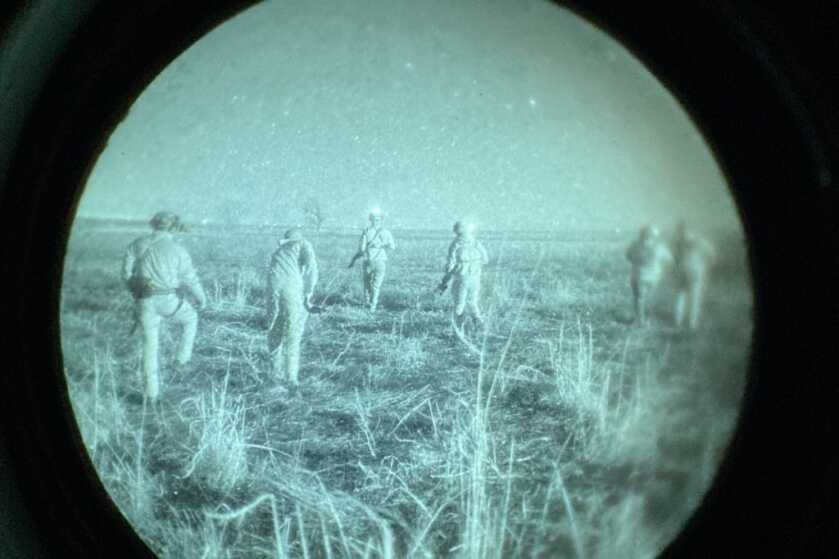
This is the foundation question, and one that determines how someone should approach buying or using gear. Simply put, night vision amplifies available light. Moonlight, starlight, or even a flashlight, and displays it in a green or white-hued image. Thermal, on the other hand, doesn’t rely on light at all. It detects infrared radiation, or heat, from people, animals, and objects, and turns that into a visible image.
The differences go deeper than just “green vs. black and white.” Night vision can give you more detail, like tree branches, textures, and shapes, making it excellent for identification. Thermal is more about detection. If something has heat, it will show up, even in total darkness or through light cover such as brush.

For readers who want a deep dive into the technical differences between analog and digital NV and thermal, I wrote a full article that goes into the science, pros, and cons: Analog vs Digital Night Vision and Thermal Explained.
Thermals and Seeing Through Walls, Glass, or Thick Brush
This is the question that often comes with a lot of myths. The short answer: no, not in the way movies show. Thermal sensors detect heat radiation, which means they can see heat through thin obstructions like light brush or fog, but they cannot see through solid walls or glass. Glass will reflect infrared, and walls completely block it as well. However, while thermal fails here, NV works just like our eyes. It can see through glass, but still can’t see through walls.
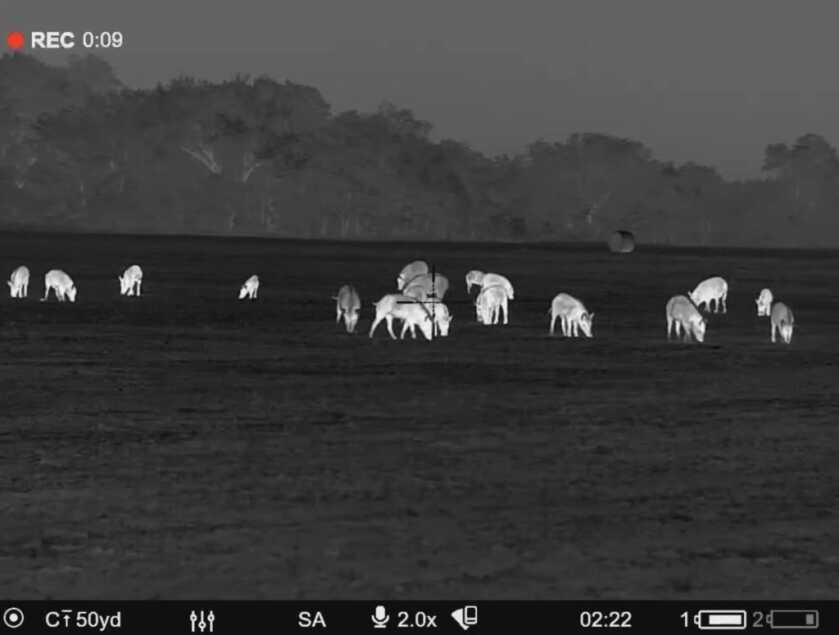
However, thermal does excel at spotting animals or people hidden in brush, even in pitch darkness. A coyote trotting through tall grass or a hog partially obscured by tree branches will glow brightly against the cooler background, making detection far faster than with standard night vision alone. This is also why hunters love thermal for tracking movement in dense terrain.
Using night vision or thermal during the day
Here’s where a lot of first-time buyers get tripped up. Night vision is not designed for daylight. Exposing it to bright light can permanently damage the image tube. While you can use protective caps with a pinhole to check for clarity and bless, they’re strictly nighttime tools. Even when they are turned off, if they are pointed at the sun, it can ruin the NV intensifier tube.
Thermal, on the other hand, works 24/7. During the day, sunlight heats everything, and everything glows on a thermal display. Even after sunset, trees, rocks, and roads will retain heat signatures, which can make spotting animals or people more challenging. However, after the sun sets, most things start to cool off, while warm-blooded animals continue to remain warm. This change in the differential between warm living things and nature makes animals much quicker to detect than during the day.

For Hunting or Home Defense: Night Vision or Thermal
The age-old “which should I buy?” question has a nuanced answer. For hunters, thermal is often the go-to for detection. You can spot movement at a distance, locate bedded animals in thick cover, and operate in total darkness without any external light. Thermal makes the deep-cover hunts significantly easier.
Night vision shines when detail is critical. If you need to identify a specific animal species or track movements with clarity, NV gives you that extra detail. It’s also the best choice for navigation. Whether hiking or driving, NV can help you get to where you need to be. It also has a much wider field of view, making it the better choice for use in close spaces, such as in a house. However, it may require an IR illuminator to work well in dark enclosed spaces. This also applies to nights without moonlight, heavy cloud cover, or in the woods.
How Far I Can See With Night Vision Vs Thermal
Distance is always the most practical concern. With night vision, detection ranges depend heavily on ambient light and the quality of the NV tube. A standard Gen 2 tube might let you identify a human-sized target at 100–200 yards on a moonless night, whereas a high-end Gen 3 or Gen 4 tube can stretch further.

Thermal operates differently. Detection distances can be impressive, even under total darkness, because the sensor is looking for heat differences rather than light. Modern thermal scopes with good lenses and sensors can detect a human or large animal well over 1,000 yards, though recognition (identifying what you’re looking at) will often occur at shorter ranges. Terrain, vegetation, and temperature differences all play roles, but thermal generally gives you longer detection distances than NV under most conditions.
READ MORE HERE: Symbiote Night Vision & Thermal Bridge Review
Conclusion
Whether you’re a seasoned hunter, a tactical gun guy, or someone just curious about exploring the night, understanding the differences between night vision and thermal is the first step toward getting the most out of your gear. NV offers unmatched detail in low-light environments, while thermal gives superior detection, especially in total darkness or obscured conditions. I have had many friends end up disappointed when trying to hunt with NV, yet are unable to see pigs in the brush just 50 yards away, while I can see them clearly with thermal. Neither is inherently better. It’s about knowing what you want to achieve and how you intend to use the device.
By addressing these five questions, you’ll have a solid foundation to make smarter buying decisions and get the most from your NV and thermal devices.

*** Buy and Sell on GunsAmerica! ***

Mitchell Graf is a dedicated hunter, competitive shooter, and firearms enthusiast. As a former instructor and president of Oklahoma State’s Practical Shooting Team, he has a strong foundation in marksmanship and competition shooting. These days, he spends as much time as possible chasing pigs and coyotes with night vision and thermal optics.
When he’s not in the field or on the range, Mitchell works as a full-time Mechanical Engineer in the Aerospace and Defense industry and manages a part-time farming operation. Whether he’s behind a rifle, designing parts, or working the land, his drive for precision and performance remains the same.
Experience:
– Mechanical Engineer – Full-time professional in the Aerospace/Defense industry.
– Competitive Shooter & Instructor – Former President and Instructor of Oklahoma State’s Practical Shooting Team.
– Night Vision & Thermal Hunter – Passionate about night time predator and hog hunting.
– Part-Time Farmer – Working to provide for my family, and raise food for this great nation.