

Estimated reading time: 17 minutes
We took Armasight’s Commander 640 thermal weapon sight and Warden 640 thermal monocular into a West Texas night hunt where game cams love to lie. The thermals did not. Here’s what impressed me, what annoyed me, and how the rig performed when hogs finally showed.
Game Cams Will Break Your Heart, Then Thermal Shows Up
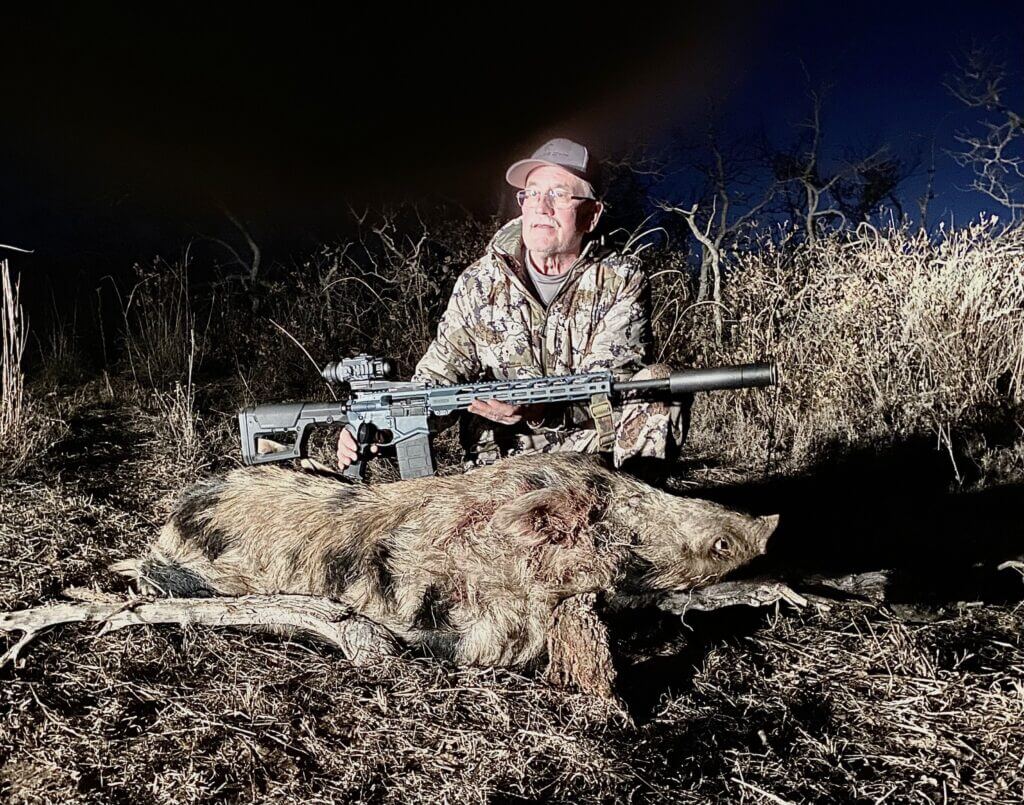
I started hating game cameras several years ago on hunts just like this one. You know, hunts where the cameras show all kinds of activity in the days before your hunt, and you are all psyched up, but then you sit for hours and sometimes days, and nada shows?
Which was turning out to be my hunt on my first night in Kent County, Texas, early December 2025. I was there to field test a pair of Armasight thermals, the Commander 640 1.5-6×35 Thermal Weapon Sight and the Warden 640 2-8×35 Thermal Monocular.
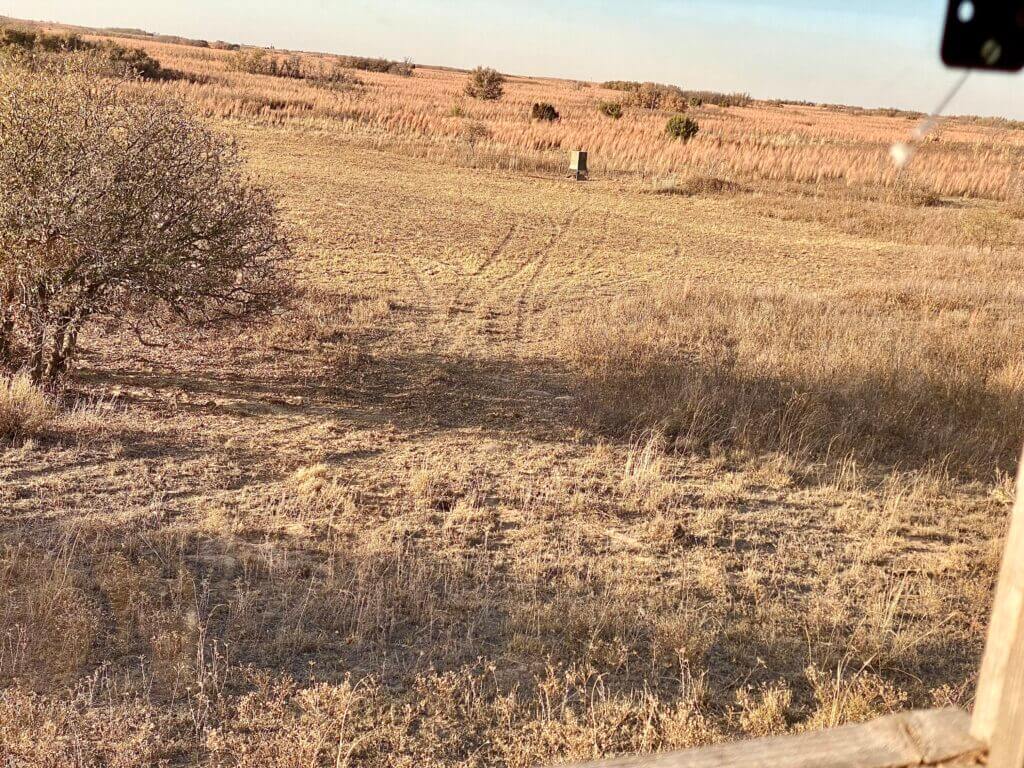
I settled into my elevated stand, nicknamed The Dink, an hour before dark to figure out the local landscape, including the likely travel routes to and around the feeder that sat 140 yards away. I was ready for the sounder of hogs that hit the feeder for the last three nights, 20-plus hogs in a group, plus various big lone boars appearing later.

Maybe 15 minutes after dark dropped, my Warden monocular picked up three deer on the hillside above the feeder. A good sign, I thought, as I watched the deer move towards the feeder and then into the field below it. They milled around for half an hour, joined right at the end by another deer, the images sharp and focused in the thermal.
I scanned and scanned with the Warden. I picked out warm rocks hundreds of yards away and thick brush glowing from the day’s sun. Yet not another animal.
Damn game cams.
Table of contents
- Game Cams Will Break Your Heart, Then Thermal Shows Up
- The Hunt Setup: West Texas Night Work on a Working Ranch
- Commander 640 Thermal Weapon Sight: Clean Glass, Real Reach
- Armasight Commander 640 Specs (Field-Test Context)
- Warden 640 Thermal Monocular: Your Scanner, Your Early Warning
- Armasight Warden 640 Specs (Field-Test Context)
- What These Armasight 640 Thermals Nailed (and What Didn’t)
- The Rifle: Ruger SFAR in 6.5 Creedmoor, Lightweight and Mean
- A Quality Suppressor: SilencerCo Scythe STM Smoothed It Out
- Ammo: Federal Terminal Ascent Put Hogs Down Fast
- Uber Eats, Texas Style: Stand Delivery and a Propane Heater
- One Down: When the Commander 640 Finally Got Its Moment
- A Newbie to Thermal: One Shot, One Grinning Wisconsin Guy
- The Tornado Stand: Shooting Through the Doubled Fence Question
- Pros & Cons: Commander 640 and Warden 640 in the Real World
- Related Reads from GunsAmerica Digest
The Hunt Setup: West Texas Night Work on a Working Ranch
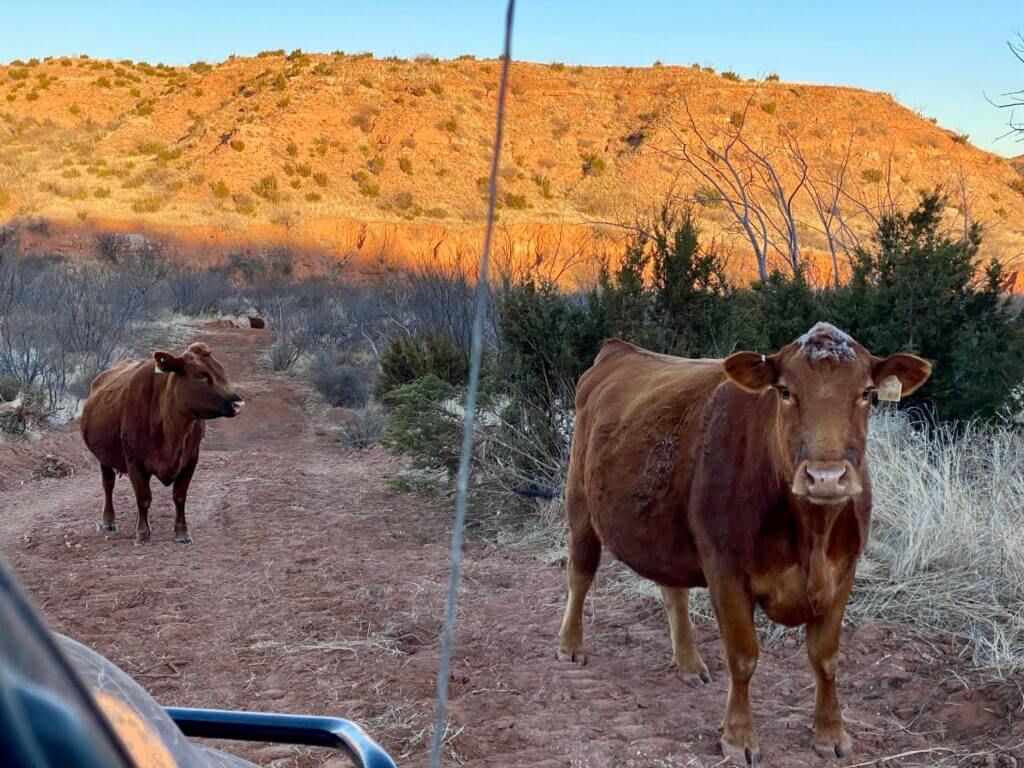
I was hunting a large working cattle ranch, a place I’d hunted many times before. My outfitter and very good friend, Craig Archer, operated TBD Outdoors on the ranch and provided deer (mulie and white-tailed) hunts, as well as turkey and hog hunting opportunities.
Thinking about a West Texas-style hunt? Contact TDB Outdoors at 214-301-3434.
The ranch held very diverse landscapes, from red rock canyons to mesquite flats and river bottoms, thick tangles of brush. One whole side of the ranch was rolling open areas of what locals termed “shin oak,” scrubby oak stands interspersed with large swaths of waist-high grasses.
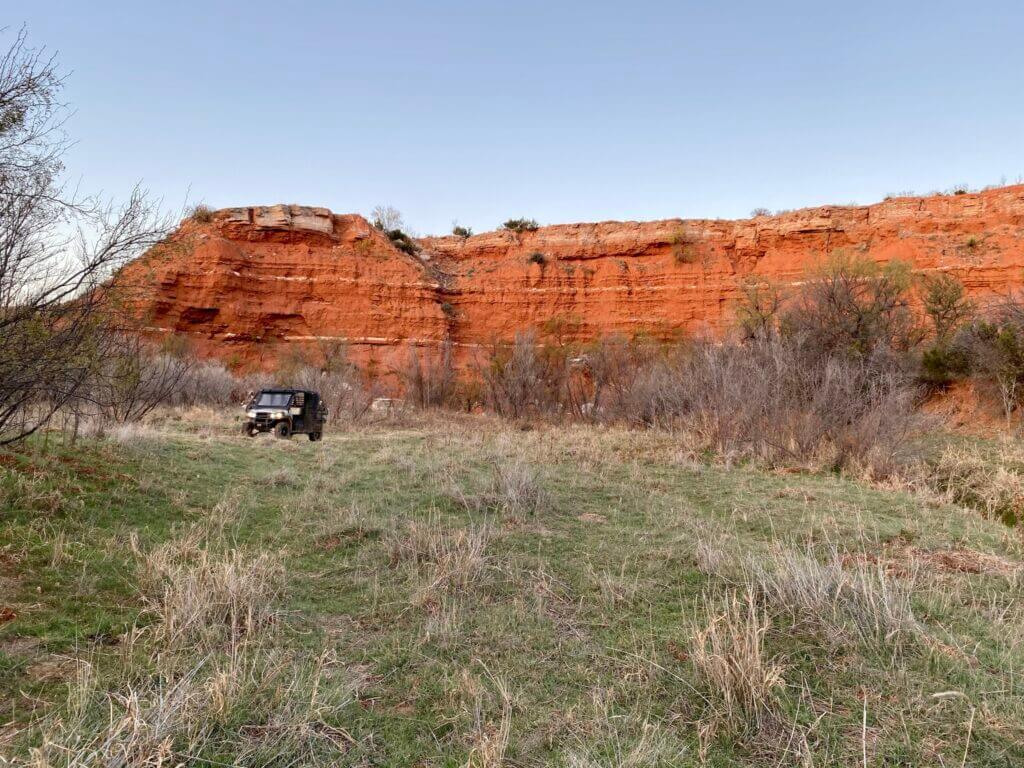
The Dink sat atop a small hill overlooking a sea of shin oak and tall grass.
Commander 640 Thermal Weapon Sight: Clean Glass, Real Reach
Armasight’s Commander 640 1.5-6×35 Thermal Weapon Sight features an ArmaCORE™ 640×480 thermal sensor and a 35mm Germanium objective lens, and the unit provided very clean images throughout my time with it. A pair of CR123 batteries powers the Commander.

Armasight rates the unit’s detection range at approximately 1,400 yards. The Commander 640 also features video and image capture, USB video streaming, and a USB-C interface for viewing content on external devices. Multiple color palettes, a simple 3-button control setup, a customizable reticle option, and an IP67 environmental rating round out the offerings.
The unit sells with a quick-detach mount, too, which went onto my rifle very easily.

Armasight Commander 640 Specs (Field-Test Context)
| SPECS | Commander 640 1.5-6×35 Thermal Weapon Sight |
|---|---|
| Manufacturer | Armasight |
| Detector Type | ArmaCORE™ 640 x 480 12um Thermal Core |
| Refresh Rate | 60 Hz |
| Thermal Sensitivity | NETD <40mK |
| Detection Range | 1,422 Yards Human-Sized Target |
| Optical Magnification | 1.5x |
| Digital Zoom | 1x – 4x |
| Display | XGA (1024 x 768) OLED |
| Wireless | None |
| Objective Lens | F/1.00; 35mm w/Manual Focus |
| Power Supply | 2 x CR123A (3V) |
| Battery Life | 4 hours at 68° Fahrenheit |
| Recoil Rating | Up to .50 Cal |
| Dimensions | 9.48 x 3.61 x 3.32 In. w/QD Mount |
| Weight | 1.39 Lbs. |
| Warranty | 3 Years w/Registration |
| MSRP | $3,999.00 |
Warden 640 Thermal Monocular: Your Scanner, Your Early Warning
The Warden 640 2-8×35 Thermal Monocular sports an ArmaCORE 640×480 thermal sensor. Like the Commander, this unit also features a 35mm Germanium lens, provides high-contrast images and detects heat signatures up to 1,400 yards, and is IP67-rated and fully waterproof.

The Warden 640 offers video and image capture, USB video streaming, a USB-C interface, multiple color palettes, simple 3-button controls, and image enhancement capabilities.

Armasight Warden 640 Specs (Field-Test Context)
| SPECS | Warden 640 2-8×35 Thermal Monocular |
|---|---|
| Manufacturer | Armasight |
| Detector Type | ArmaCORE™ 640 x 480 12um Thermal Core |
| Refresh Rate | 60 Hz |
| Thermal Sensitivity | NETD <40mK |
| Detection Range | 1,422 Yards Human-Sized Target |
| Optical Magnification | 2x |
| Digital Zoom | 1x – 4x |
| Display | XGA (1024 x 768) OLED |
| Wireless | None |
| Objective Lens | F/1.00; 35mm, w/Manual Focus |
| Power Supply | 2 x CR123A (3V) |
| Battery Life | 4 hours at 68° Fahrenheit |
| Dimensions | 5.5 x 2.98 x 3.32 In. |
| Weight | 0.99 Lbs. |
| Warranty | 3 Years w/Registration |
| MSRP | $3,499.00 |
What These Armasight 640 Thermals Nailed (and What Didn’t)
As noted, images viewed through both units were very clear and sharp edged. The manual focus adjustments on the front and rear lenses of both units worked very well to fine-tune those images, too. Likewise, both units easily spotted heat signatures far out. On my hunt, I easily identified deer versus hogs out to 400 yards.
Graphics and icons popped nicely on the display screens, and the many palette options allowed me to adjust to environmental conditions. The Commander offered seven reticle options, and the T-Dot in green worked really well for me and my eyes.
The three-button controls worked well initially, though the rubberized buttons became stiff once the air temperature got below 50 degrees. Which made it more difficult to make adjustments in the field.
The 123A batteries I used really didn’t last more than half the rated time, and my batteries were new Ray-O-Vac 3V lithiums. Now, that limited battery use could’ve been the batteries I picked up, or the fact that I was running demo units that maybe were due for some sort of upgrades.
In the future, I’d only run these two thermals using rechargeable CR123 lithium batteries, which hold power longer than their non-rechargeable cousins.
The Rifle: Ruger SFAR in 6.5 Creedmoor, Lightweight and Mean
I went with my Ruger SFAR (Small Frame Autoloading Rifle) chambered in 6.5 Creedmoor. This lighter-weight AR10 platform hits the scales at 7.3 pounds, unloaded. It sports a 20-inch barrel, cold hammer forged chrome-moly steel barrel.

It also features a Magpul MOE grip, plus a 15-inch aluminum handguard, free-floated and lined with Magpul M-LOK accessory attachment slots. A pair of sockets for Quick Detach sling swivels are at the muzzle end of the handguard, with one at the butt stock.
The SFAR’s bolt carrier assembly features a chrome-lined steel bolt carrier and nitride-processed gas key staked in place. The titanium firing pin is DLC-coated for long service life. The bolt includes dual ejectors and an optimized extractor; spent brass kicks many feet from the rifle.
It’s not a standard feature, but my SFAR has a blue Cerakote finish on the upper and lowers, plus the handguard. I like some color! Plus, instead of the standard Magpul MOE SL stock, I outfitted my SFAR with a Magpul PRS Lite Stock.

My SFAR has always been MOA or better, and it continued that pattern of accuracy. Before I headed to Texas, I zeroed the rifle and the Commander at 100 yards. My three-shot groups came in at .70 to 1.20 inches.
The SFAR platform is also available in .308 Win, with a 16-inch barrel.
A Quality Suppressor: SilencerCo Scythe STM Smoothed It Out
I outfitted the SFAR with the SilencerCo Scythe® STM, a stainless steel build intended for harder use; it is full auto rated with no barrel restrictions. The Scythe STM will run rifles from .223 Rem./5.56 NATO up to .300 RUM.

Modular, it can run long at 6.9 inches or more compact at 5.1 inches, in both cases with the attached muzzle brake. Weight is 14.7 ounces long and 10.4 ounces compact. Overall diameter comes in at 1.73 inches.

The Scythe STM direct threaded onto my SFAR’s barrel. Recoil from a 6.5 Creedmoor isn’t a real thumper to begin with, but the STM smoothed it out even more, and I shot comfortably without ear protection.
Ammo: Federal Terminal Ascent Put Hogs Down Fast
For my 6.5 Creedmoor hunting ammunition, I relied on Federal Premium Terminal Ascent loaded with a 130-grain, poly-tipped bullet. I zeroed the Commander and SFAR with this round before I left for Texas.

The Terminal Ascent made four one-shot kills on hogs, shooting from 75 to 180 yards (see below).
Uber Eats, Texas Style: Stand Delivery and a Propane Heater
When he dropped me off at my stand, Archer said he’d gladly bring me out some dinner. I didn’t plan on asking for that, as the drive to the stand was a good half-hour from the ranch house.
But, true to my past hunts, I got hungry…as soon as I chowed down on my salty snacks, my candy bar, and an apple. I waited for as long as I could, at least 16 minutes, and texted Craig for much-needed food support.
He arrived within the hour, true gentleman that he is, with grilled chicken, a small salad, and three cookies for dessert.

It was very kind of him, and did make the lack of any hog movement easier to take.
One Down: When the Commander 640 Finally Got Its Moment
Originally, I wanted to spend all night at The Dink and rack up an impressive body count. But these shin oak hogs were not cooperating, and around 11 P.M., I started thinking about heading in. The internal debate (My warm bed back at the ranch house? No, damnit, man up and stay out!) lasted about an hour before I gave in. I texted Craig to please come and get me.
“On my way,” he texted back ten minutes later.
I sat and waited and scanned the shin oak prairie.
Nearly an hour later, I spotted the glow of Craig’s headlights in the distance. I swung the Warden towards the feeder once more, and damned if a hog wasn’t standing between the feeder and me about 100 yards away.
I quickly turned on the Commander and slid open the side window. The 40-some degree air poured in. I set the SFAR onto the window ledge, shifted my chair to get comfortable behind the rifle, and lined up the thermal’s green reticle on the hog.
He faced me. I really didn’t want to take that shot. I waited, nervous that Craig would roll up and scare off my one chance at a hog. But the boar turned, right side to me as he nosed the ground.
I immediately shot. The Terminal Ascent 6.5 Creedmoor bullet took him right down.

Craig showed up a few minutes later, and we went to retrieve my first hog of the hunt.
A Newbie to Thermal: One Shot, One Grinning Wisconsin Guy
My good friend, Mike B. from north-central Wisconsin, also came along on this Texas adventure, hunting deer and hogs during the day with his crossbow. And he very much wanted to get into the thermal game.
The night after, I hunted from the Dink found Mike and me standing along a fenceline near the ranch house. We had a tripod set up, my thermal rigged SFAR mounted in place.
I’d given Mike a thermal preview pre-Texas, which included some night shooting. But this was his first in-field experience with the tech.
Scanning with the Warden revealed dozens of hogs in the field and among the trees before us. But the field was also home to ranch cattle and their feeding stations, and the hogs and cattle were intermingled in a way that made shots impossible.

We waited and scanned, hoping the hogs and cattle would separate for a safe shot. That happened a half hour later when several of the hogs drifted to the left, putting over 75 yards between them and the closest cattle.
Mike was already on my rifle, scanning with the Commander.
“You see those pigs on the left?” I whispered.
“No, I can’t—oh, yeah!”
“They are under 100 yards,” I told Mike. “Just aim dead on. Remember, heart-lungs on hogs are low.”
“Got it.”
A minute later, Mike squeezed the trigger, and his first-ever thermal hog smacked the ground almost immediately.
“This is so damned cool!” he said, nearly giggling in his excitement.

Even suppressed, the SFAR barked loudly enough to scare off the other hogs. Through the Warden, I watched them run straight away a couple of hundred yards, then slow down and begin to re-group into three different sounders.
Meanwhile, the cattle weren’t bothered by the shooting at all. They glanced around at the sound of the SFAR and then continued to feed at their stations or rest under the trees.
There was a nice, wide gap between the two groups of cattle, and hogs drifted into that gap while still a couple of hundred yards away. I took over with the SFAR, increased the Commander’s digital zoom, and got onto a hog. That little piggie quickly turned and ducked in behind a rock pile.
Another pig appeared from behind the rock pile, made a circle around it, and then stationed himself at the right edge of the rocks, nose in the air.
I fired.
This time hogs and cattle scattered, running in circles and crossing in front of me. It took a few minutes before all the animals cleared out, and I swung the Commander back to the rock pile. A heat signature hugged the ground to the right of the rocks.
Hog Number Two of the night is down!
The Tornado Stand: Shooting Through the Doubled Fence Question
My last night hunt took place at a stand called The Tornado. It was so named because tornadic winds ripped through the area a few years back, tore the steps from the stand and corkscrewed them, plus half lifted the stand itself out of the ground.
The problem I saw with my pre-dusk scouting of the location was the fence around the feeder. The feeder sat 100 yards in front of The Tornado, with the fence surrounding the feeder pulled apart to allow hogs into the enclosure area. But in opening up that front section of the fence, the fence end became doubled up, and heavy fence wires partially blocked the very front of the feeder.
I tried to pull the fence back, but it was secured tightly to the ground.
Once it was dark, I powered up the Commander to find out if the doubled-up section of fence showed up in the thermal. It didn’t.
Which made me wonder about taking a shot through the doubled-up section of fencing. Would my bullet zing off a wire?
An hour later, a good-sized boar slipped into the enclosure before I knew he was there and began foraging around the base of the feeder. Behind that double-up fence.
The Commander showed the hog perfectly as he circled the feeder once and then started another go ‘round searching out corn kernels. I figured once he completed his second circuit, he’d head out, and I might not have a shot.
Now or never. The boar found more corn, paused broadside to gobble up the kernels. I aimed for his lung area and squeezed the trigger. Muzzle blast lit up the thermal imagery with a brief flash of light. I blinked a few times, and when my vision cleared, I saw no hog.
But before I started to swear at that section of fence, I caught sight of movement. The boar’s rear legs kicked the soft ground under the feeder, faster and then slower and then done.
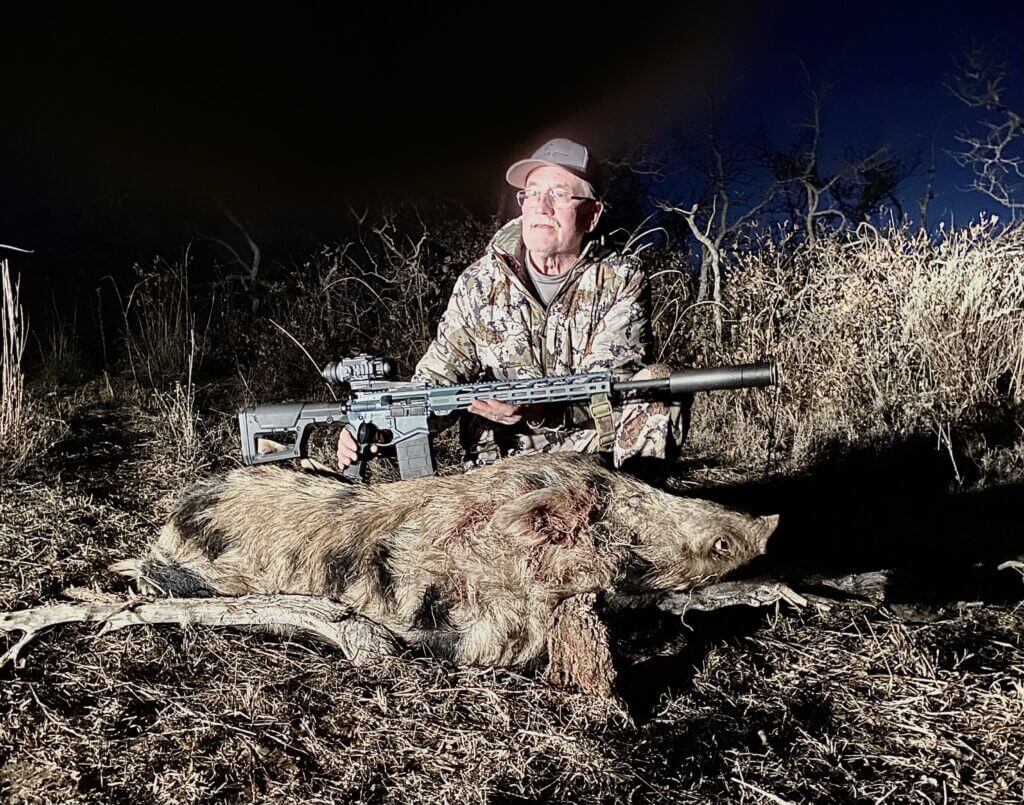
I stayed at The Tornado another couple of hours to see if anything else would show up. Nothing did. But the night and my Kent County hunt were a success. Three hogs for me and, maybe more importantly, I’d helped a thermal newcomer bag his first pig.
Texas made it all possible! I love the state.
Pros & Cons: Commander 640 and Warden 640 in the Real World
- Pros: Very clear, sharp-edged thermal imagery in both units; manual focus worked great for fine-tuning; easy heat signature spotting far out; strong palette options; Commander reticle choices with a green T-Dot that worked well; QD mount installed easily.
- Cons: Rubberized buttons stiffened up below 50 degrees, making field adjustments harder; CR123A battery life fell well short of the rated time in my use.
Related Reads from GunsAmerica Digest
- Best Thermal Scopes (2025)
- Infitac IOL25 Thermal Review: Tiny Body, Big Wins
- Ruger’s New SFAR: A Big Surprise In A Small Package
Brian McCombie (Writer)
A full-time writer, Brian’s work focuses on hunting and firearms, day and thermal optics, and other shooting gear. He’s been fortunate enough to hunt much of the USA and Canada. His favorite hunt is chasing Texas hogs at night using a suppressed rifle outfitted with a thermal scope.
Dream hunt: Alaskan brown bear.
He’s taken handgun self-defense courses and long-range rifle classes for hunters. Brian continues to dive deeply into the new technologies so much a part of today’s hunting and shooting experiences.
His top firearms include AR-15’s and AR-10’s, double-stack 1911’s, and lever actions.
Great article and an amazing hunt! Thanks for the memories and the opportunity at taking my first hog with a thermal and suppressor! You Da Man Brian