
Estimated reading time: 11 minutes
A compact revolver chambered in .22 LR may not be the ideal tool for some tasks, but it does many of them well. A lightweight, reliable, and low-recoiling setup like this can be used in roles ranging from training to personal defense to small game hunting, and probably a few more that are not necessarily front of mind. Any .22 revolver can fit that niche, but one that ticks a few more necessary boxes is the Colt King Cobra 22 revolver series. Here is the rundown on what the Colt King Cobra 22 is and how well it puts holes in things.
Table of Contents
Colt King Cobra: From .357 Magnum to .22 Rimfire


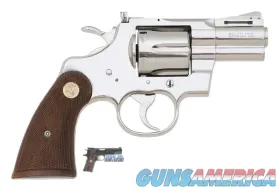
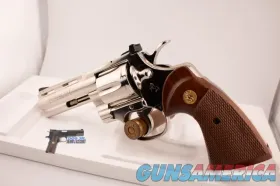
At that compact size in an all-stainless steel frame, it is a bit small for a .357 Magnum, but the perfect candidate for a stable shooting iron in .22 Long Rifle. That was realized with the Colt King Cobra Target released in 2022. These revolvers wear 4.25-inch and 6-inch barrels. In 2025, a 2-inch and 3-inch barreled model made the catalog. Unlike the reintroduced King Cobra in .357, the barrels on the .22 models come with the iconic vent rib.


For this overview of the King Cobra 22 lineup, I chose the standard 4.25-inch barreled model as well as the snubnose 2-inch model. Their specifications are as follows:
Colt King Cobra 22 Quick Specs
- Caliber: .22 LR
- Capacity: 10
- Barrel Length: 2.0 inches/4.25 inches
- Overall Length: 7.25 inches/ 8.75 inches
- Height: 5.5 inches
- Width: 1.75 inches (at the cylinder)
- Weight: 1 lb. 13.5 oz./2 lbs. 2.8 oz. (loaded)
What The King Cobra 22 Is Intended For
When it comes to handguns, it is often easy to box them into a given category and assign performance values afterwards. Some handguns are meant for duty work, others for concealed carry, and others still for hunting and training. Small-framed revolvers chambered in .22 tend to cut across categories, and the King Cobra .22 is no exception. The 4.25- and 6-inch models are absolute candidates for small game hunting and plinking, while the 2-inch model is light enough for everyday carry if .22 rimfire is right for the shooter’s specific circumstances. These factors were in mind as I set out for the range to run them hard.
On the Range With the Colt King Cobra 22
Every so often, I like to take my dedicated woods gun out and shoot for groups both offhand and off the bench at twenty-five yards to make sure the sights are on, and I still have a feel on the trigger. For years, an old and beat Ruger Single Six has been my woods gun. This year, the small and full-sized King Cobras joined the Six on the firing line before squirrel season to run the same accuracy drill.
Accuracy
For the accuracy test and much of the offhand work, I used the following ammunition:
- CCI Blazer 40 grain RNL
- CCI Mini Mag 36 grain hollow-point
- CCI Stinger 32-grain hollow-point
- Federal High Velocity Match 40 grain RNL
- Remington Viper 36-grain flat-point
- Winchester Western 36-grain hollow-point

On the face of it, the longer-barreled 4.25-inch Colt King Cobra should be the better shooter. Its red fiber optic front sight is sharper and more distant in relief to the rear sight, and that sight picture should make it a better shooter as less of the target is covered up by that front sight. It also had a steady, slightly muzzle-heavy balance, while the snub is more proportional.
As it happened, the 2-inch rivaled its bigger brother. In fact, the Federal HV load produced consistent groups that run just north of one inch. Most of the ammunition used consistently produced 2-2.5-inch groups at 25 yards from the bench. The Remington Viper round was the worst offender, with consistent groups between both revolvers at the three-inch mark. For social work, plinking, and small game work, any one of these loads gives more than the minimum. In terms of recoil and noise, the Viper and Stinger loads were louder than the other loads, but neither of these all-steel tanks quivered. There was absolutely no recoil.
Shootability
I quantify shootability as a mix of ergonomic and shooting cues that tend to show up when you get off the bench and put quite a few rounds downrange off-hand at various distances. In all, I put three hundred rounds through each revolver, usually shooting them side by side at various targets as close as ten yards and as far as fifty.

Loading the King Cobra 22s is straightforward, but it can take a while. Like any Colt revolver, the cylinder release is pulled back and the cylinder rolled out to the left side. These snakes have plenty of strikes. Ten to be exact. Loading in ten of those little .22 LR cartridges can take a minute, going round by round. There are a few speedloader options available, but I made do with a pair of .22 caliber Quick-Strips when I remembered to pack them. Once loaded up, the cylinder is pushed back into the battery. Since the King Cobras have exposed hammer spurs, you can cock the hammer and pull the trigger for a lighter press. Alternatively, you can press the trigger all the way through to fire the revolver.
When it comes to shooting double-action/single-action revolvers, it can be easy to use the single-action shooting mode of cocking the hammer as a crutch to get over throwing shots with the longer and heavier pull of the trigger in double action, which cocks and releases the hammer in one stroke.
With the new generation of Colt revolvers, this dynamic is turned on its head. Old Colt revolvers tended to be prized for their light, crisp single-action trigger pull, but the double-action pull was very heavy and stacked heaviest at the break.
On the Range
New Colts are engineered to sacrifice some of that single-action capability for a shorter and lighter double action. There is less of a difference, but the action is lighter and easier to pull overall. On my Lyman trigger scale, the snubbie King Cobra .22 breaks in single action at 3 lbs. 11 oz. The double-action pull is only 5 lbs. 11 oz. The 4.25-inch model came in at 4 lbs. 4 oz., and the double-action was two pounds heavier than that.
With triggers like these, I spent more time reloading than shooting because going through ten rounds proved too easy. The single-action trigger proved to be a useful tool as the ranges grew, since the trigger takes a hard touch to set off. But I had no issues hitting an eight-inch steel plate at fifty yards by pressing straight through and keeping the sights level as the trigger breaks at the end of their stack. Ordinarily, I am not a fan of rubber grips and fiber optic sights.

Rubber grips are overkill for a .22, and fiber optics are open to damage coming in and out of a safe, but both of these features added more than they subtracted. Although I favor a good pair of Badger or Altamont grips, the Hogue rubber grips are compact but hand-filling enough for a full firing grip. The fiber optic shows in stark relief both in dark shadow and the cloudless, relentless Louisiana sun. All things considered, the King Cobra 22 is squared away in the categories of accuracy and reliability.
Reliability
Rimfire guns tend to favor some ammunition over others in terms of both accuracy and reliability. In a bid to improve reliability, most manufacturers use heavier springs so that the hammer will convincingly smack the primer of the rimfire cases. Colt seems to have gotten away with not doing that and gave us a good trigger as a result. Out of the six hundred rounds I have gone through both handguns so far, I have had no failures to fire.

Both revolvers took no cleaning in their initial run, and it showed after the first two hundred rounds in the unloading process. To get the empty cases out and new ammunition in, the cylinder is retracted in the usual fashion and the ejector rod pushed to kick the empties out. The rod is long enough to easily kick the cases out, and it was easy to do with thumb pressure. But as these revolvers got dirtier, a firm hit with the palm was needed. If anything, I was surprised, given how dirty .22 ammunition is, that I did not have to do it earlier. But after a good, sharp wrap, the chambers were empty and ready to take more ammo.
Accessories
The new Colt King Cobra/Viper series is an entirely new design compared to the legacy model. As such, parts and accessories meant for the latter will not work for the former. But since its reintroduction in 2019, the King Cobra has had a healthy and growing number of extras.
In terms of speed reloading options, I mainly used some ten .22 LR Quick Strips I had on hand. Speedloaders from Five Star and Speedbeez are available and can speed up the reloading process quite a bit.
Galco is the standout maker of King Cobra holsters in terms of variety, but I have made a K-frame Bianchi Shadow II holster work for the 4.25-inch model. The King Cobra is stuck in the middle ground of being too big for a J-frame and just a hair small for K-frame holsters.
There is also a growing number of aftermarket grips to choose from, ranging from square butt target grips to boot grips. Altamont and Hogue own the market on the larger style grips, but Badger offers excellent grip setups for more discreet carry.
In 2025, Colt announced a line of optic mounting plates for their Python and Anaconda revolvers. Interestingly, if an optic is on the agenda, Allchin Gun Parts offers their STS optics mount for micro-red dot optics and red dot scopes.
READ MORE HERE: Full Review: Girsan Witness2311 Match X – Imported by EAA & Enjoyed By You
Colt King Cobra 22: The Bottom Line
There are plenty of good .22 revolvers out there. They run the gamut from airweight snub-nosed models made for everyday carry to long-barreled single actions that can rival a rimfire rifle in the squirrel woods. But when you try to split the difference, the options become non-ideal. Colt saw an opening and went for it by chambering their small-framed King Cobra in .22 Long Rifle. If my time with these models is anything to judge by, the Colt King Cobra strikes a good balance of being compact yet shootable.
*** Buy and Sell on GunsAmerica! ***
Available on GunsAmerica Now

Jim Maybrick has been a consistent voice in the firearms world for over a decade, writing hundreds of articles and producing dozens of videos that span nearly every corner of the shooting sports. With a background in military and economic history, Jim has a talent for weaving compelling stories around historic firearms designs and the rise and fall of legacy manufacturers.
But Jim’s interests go far beyond the past—he’s just as comfortable diving into muzzleloading traditions as he is testing the latest rimfire loads or mastering cutting-edge modern systems. His thoughtful, data-driven approach brings clarity and depth to every review.
When he’s not at the range or deep in a spreadsheet, you’ll find him enjoying time with family, chasing game, or refining the lost art of starting a perfect campfire.
Experience:
– Veteran Writer & Content Creator – Over twelve years of experience in firearms journalism with hundreds of published pieces.– Military & Economic Historian – Academic background that fuels in-depth analysis of historic firearms and industry trends.– Versatile Shooter – Covers a wide range of topics from muzzleloaders and rimfire ballistics to today’s most advanced platforms.– Storyteller at Heart – Known for insightful writing that blends technical detail with engaging historical context.– Outdoorsman & Family Man – Reconnects with nature through hunting, fishing, and old-school firecraft.– Analytical Mindset – Brings precision, structure, and storytelling to every article—whether it’s a gear review or a deep historical dive.
Price wasn’t mentioned — and I see why. Just under $1000 ($989 at my local Sportsman’s Warehouse). A Diamondback sidekick is just under $300 ($295), a Heritage Cocobolo is $190-210 depending on model. But those are blued, not stainless steel. The Taurus 942 is stainless at $400, and the Carter Arms Pathfinder is a bit more at $429, but only 8 rounds (the Diamondback and Heritage mentioned are 9 rounds). There are cheaper .22 revolvers like the Heritage Rough Rider ($140-160) and Ruger Wrangler ($220-250), but not stainless and only 6 shot. You’d have to really love/want a Colt for the money. I have a Rough Rider and although it’s SA only it shoots very well. I don’t think I’ve tried a 50 yard shot, never over 25-30 yards. At those ranges I can put all six in a 2″ or so group easy enough. 50 yards would take more practice than I usually do, but after a couple boxes (about 100 rounds) I’m confident I could make a 3″ or less group at 50 yards. Stainless steel helps for a pack gun, but I just clean mine after an outing. If I had to have stainless I’d probably get the Pathfinder though.
Frank, thanks for your comments, and I’m glad you like your Rough Rider. By all means, carry on!
Rimfire revolver buyers who browse Colt, S&W, and Ruger (specifically the Bearcat, Single-Six, Single-Ten, SP101, and GP100) are obviously considering more than just the bottom line.
If you’re mentioning Wranglers and Rough Riders in the same sentence with a Colt Cobra, then you are not the target demographic for which the Colt is intended.
Good article, however “The Bottom Line” doesn’t mention a price.
Great article! Insightful writer! I would be interested in reading more articles by him.
I would like to see you test the Federal Punch and Norma ECO. They have been impressive and a wheel gun removes the potential jamming issues that plague .22 pistols with exotic ammo.
Get out of my head! Actually, I did some gel testing with the King Cobra snub over this weekend with the Winchester Silver Tip and the Punch. I hope to get the CCI Uppercut in there too. I’ll have to look at the ECO, but the Punch is punching through 15 inches of gel + denim. Nothing to sneeze at.
I should have been more specific. The .22LR Federal Punch 29 grain and the Norma ECO 24 grain all copper. Out of a 4 inch SIG 322 and an S&W 6″ 617 these rimfires will smack down a steel plate similar to a 158 gr. .38 Special. We were able to shred a bowling pin with the 24 grain ECO which is no small feat. You will get well over 1,000 fps out of your 4″ barrel with the Punch .22 LR.
I bought one. Love the look and feel