
Estimated reading time: 12 minutes
Beretta finally gives the Bobcat a real modernization with the 20X, and it shows. We shot both side by side to see if the new gun truly fixes the 21A’s quirks or just dresses them up.
Tip Up Legacy: Why These Tiny Bobcats Still Matter
Most of the time, when a new generation of an existing gun hits the market, it’s not too much different. Glock has been making the same gun for three decades now. That’s most of the time, but sometimes things get radical. Beretta has quietly produced the tip-up pocket pistols for decades now, and recently they revamped the lineup and made it part of their X series of firearms with the 20X and 30X.
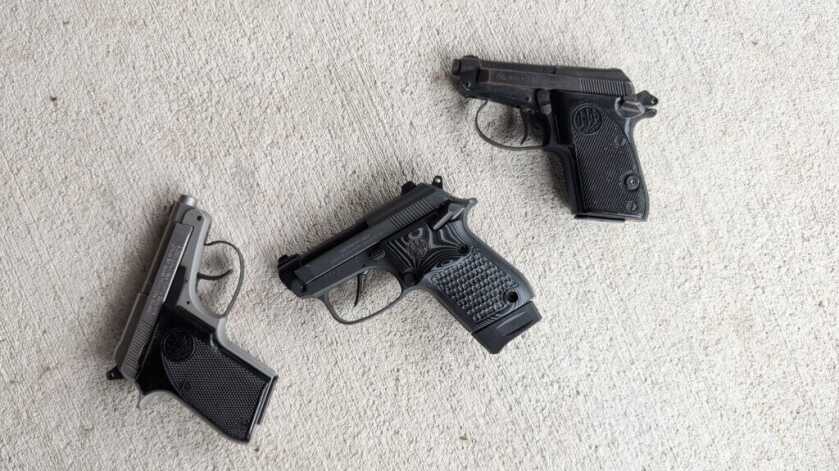
The 20X is replacing the 21A, which was Beretta’s micro-sized .22LR pocket pistol. The 21A has been around for a long time and earned the name Bobcat as a moniker. The X series has graced the Beretta 92, the old 80 Series Cheetahs, and now it’s reached the Tomcat and Bobcat lineup.
What X typically implies is a modernization of a Beretta classic. They keep the charm and soul of a Beretta handgun, but give it a much-needed facelift. The 20X series has made significant changes to the 21A, but are these upgrades? That’s what we plan to figure out today.
Table of contents
- Tip Up Legacy: Why These Tiny Bobcats Still Matter
- The Tip Up Tale: How The System Works And Why It’s Unique
- 20X vs 21A: The Big Design Changes That Matter
- Reliability Face Off: The 20X Finally Stops The Drama
- Accuracy Check: Real Sights, Real Hits With The 20X
- Shootability And Control: Comfort Favors The 20X
- Concealment Reality: Smaller 21A, More Trustworthy 20X
- Which Bobcat Wins For Carry?
- Beretta 20X vs 21A Specifications Compared
- Pros And Cons After Real Range Time
- Related Reads from GunsAmerica Digest
The Tip Up Tale: How The System Works And Why It’s Unique
The Bobcat family of handguns is are micro-sized pocket pistols that fire the .22LR cartridge. Both are straight blowback pistols that have the typical Beretta layout. We get an exposed barrel, a DA/SA, hammer-fired design, a single-stack magazine, and most importantly, a tip-up barrel.

With the press of a lever or a button, the barrel tips up, and you have direct exposure to the chamber to load or unload the gun. The user never has to rack the slide to operate the weapon. In fact, the only way to clear the chamber is to tip up the barrel. Beretta invented the tip-up system in 1952, and it’s been advertised for folks who lack the strength to rack a slide.
Beretta has produced them in .25 ACP, .22 Short, .22LR, and .32 ACP. The current production lineup includes the .22LR and .32 ACP.
20X vs 21A: The Big Design Changes That Matter
There are lots of differences between the 20X and 21A, more than you’d think. Let’s talk about the main differences that turn the 21A into the 20X.
Let’s start with the tip-up barrel. With the 21A, you press a lever forward. With the 20X, you press a button inward to deploy the barrel. I have no opinion on which is better. Both work perfectly fine.
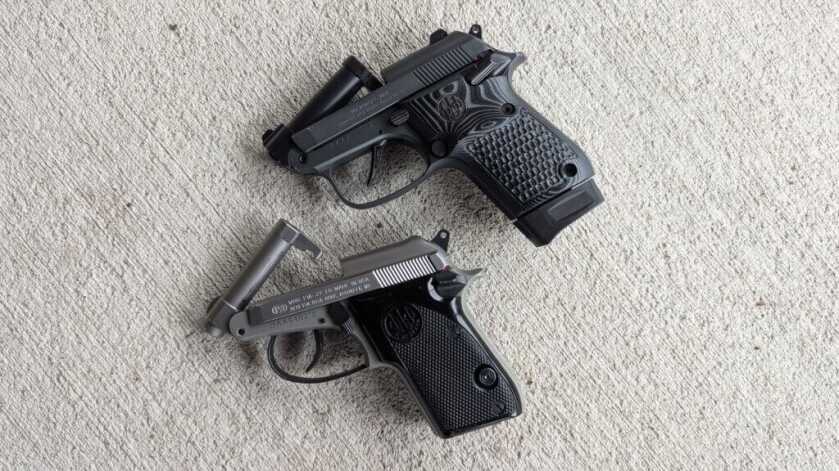
The 20X comes with a flat-faced trigger, which is positioned further forward than the 21A. The small size of the gun means this isn’t a major issue and doesn’t position the trigger far from the shooter’s trigger finger.

The 20X repositions the magazine release to directly behind the trigger. The 21A positions it on the bottom left of the grip. The 20X location is better and more ergonomic than the 21A, but reloads with this gun are already fairly slow if you have to use the tip-up barrel to load the chamber.
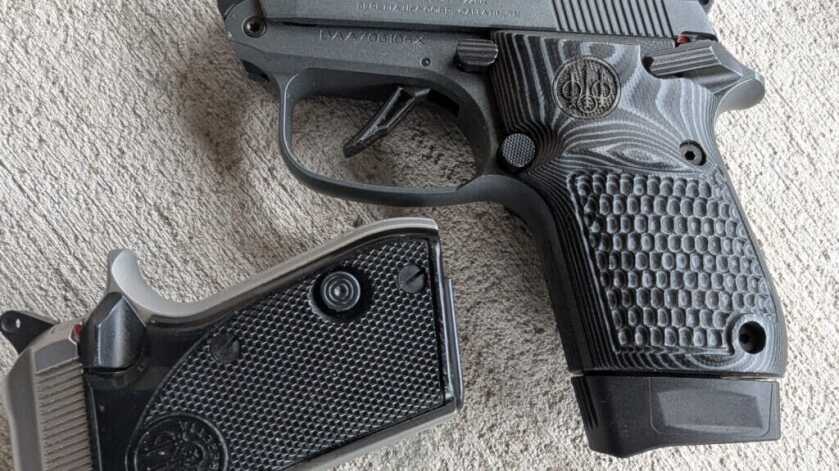
One of the best changes is the sights. On the 20X, they are larger and more pronounced, easier to see, and you can even remove and replace them. The 21A features micro-sized sights built into the gun that cannot be replaced.

The magazine of the 20X is now polymer and holds eight rounds compared to the 21A’s seven-round metal magazine.
Reliability Face Off: The 20X Finally Stops The Drama
Here’s the most critical difference to me. I love tip-up guns and the charm of the tip-up barrel; it’s just cute, fun, and neat.
I don’t use these guns for concealed carry or self-defense, but plenty of people do. Reliability is critical to a defensive gun’s success. So which is more reliable?

The 20X by far. I own two 21As, and neither is reliable enough for me to suggest for defensive use. They are the most sensitive, ammo-picky pistols I’ve ever shot.
Drawbacks You’ll Actually Feel On The Range
Grip it too tight? It fails.
Slide hits your hand? It fails.
Shoot anything besides CCI Mini Mags? It fails.

Shoot Mini Mags? It still might fail.
When these guns fail, they fail hard. The lack of an extractor makes it difficult to remove an unfired or spent casing. All malfunctions are complicated malfunctions, and they all require time, patience, magazine removal, and maybe a pocket knife.
The 20X is much more reliable after a break-in period of 150 to 200 rounds. Inside those first few hundred rounds, you’ll get a handful of light primer strikes and a couple of failures to cycle.

In the case of those light primer strikes, it always happened in single action. Once the hammer drops and the gun converts to double-action, the gun always fires when using double-action. After the break-in period, the gun is reliable enough for defensive carry.
You can shoot cheap stuff like Federal AutoMatch and CCI Blazer, and it runs well. You aren’t stuck using the more expensive stuff.
Accuracy Check: Real Sights, Real Hits With The 20X
Accuracy goes a long way with a defensive firearm. These are micro-sized .22LRs, and overall, they are designed for close-range engagements. You might think it doesn’t matter that much as long as they are minute-of-bad-guy accurate at seven to ten yards.
I prefer a gun that can engage at whatever distance the threat decides to present itself. In that case, the 20X takes the cake. The larger, easier-to-see sights are easier to align and use at any range. They are faster up close and more precise at range.

At 25 yards, I can put a magazine’s worth of .22LR into a target’s chest with the 20X. With the 21A, I am all over the place. The 20X also has a much lighter trigger and a shorter trigger pull in double action and a crisper trigger in single-action.

Plus, the 20X is larger with a longer grip. Sights and grip are the king and queen of accurate shooting, and the 20X does it better than the 21A.
Shootability And Control: Comfort Favors The 20X
Is shootability a word? When I say shootability, I mean a measure of the gun’s recoil, its comfort while shooting, and how easy it is to handle. In this case, the 20X is more shootable.
First, unlike the 21A, the 20X isn’t chewing up my hand with slide bite. Steps were taken to prevent that with the 20X, and it shows. I love shooting the 20X.

Neither gun has notable recoil by any means, but the aggressive grip texture of the wide G10 grips keeps the gun from moving when your hands are soaked in sweat. The larger, wider grip of the 20X makes it more shootable overall.
The longer magazine provides a pinky extension, preventing a hanging pinky. More fingers mean a better grip, and that matters even with a .22LR.
Concealment Reality: Smaller 21A, More Trustworthy 20X
Both guns are small, smaller than a SIG P365, smaller than a Glock 43, so both are easy to conceal. The 21A is significantly smaller than the 20X. It appears Beretta is using the same frame for the 30X and 20X.
The 20X is 1.3 inches wide compared to the 21A’s 1.1-inch width. The 21A is shorter at 3.7 inches compared to the 20X’s 4.3 inches. With the extended baseplate, the 20X is closer to 4.5 inches tall.
The 20X weighs 14.4 ounces, and the 21A weighs a hair over 11 ounces. When it comes to length, the 20X is marginally longer than the 21A at 5 inches versus the 21A’s 4.92 inches.

Pocket-Sized Or IWB: Pick Your Use Case
The 21A is a true pocket pistol. It’s small, light, and disappears into a pocket with ease. The 20X can still fit in most pockets, but it’s going to create a bulge. I guess the good news is that you can say it’s a gun in your pocket and you’re not excited to see it.
I think Beretta should sell cheaper, thinner grips and a seven-round flush-fitting magazine. That would aid in concealment. I think it’s clear Beretta is breaking away from the pocket pistol design and making a convenient IWB option.

Heck, they even sell a modern AIWB holster for the gun on their website. Their focus seemed to be on creating a more shootable and more reliable gun than minimizing size. There are some steps they can take to fix that, and I hope they do. A blacked-out pocket cat would be a great addition to the lineup.
Which Bobcat Wins For Carry?
While the 21A is easier to conceal, the 20X is the better gun. If I want one feature in a carry gun, it’s reliability. The 20X takes that cake by a long shot. It’s also more accurate and easier to shoot. You can put eight rounds into a target in less than two seconds, and that’s valuable when shooting .22LR.
The 20X is the way to go, but I still shoot my 21As fondly.
Until I have to clear a jam.
Beretta 20X vs 21A Specifications Compared
| Model | Beretta 20X Bobcat | Beretta 21A Bobcat |
|---|---|---|
| Caliber | .22LR | .22LR |
| Width | 1.3 in | 1.1 in |
| Height | 4.3 in (approx. 4.5 in with extended baseplate) | 3.7 in |
| Overall Length | 5 in | 4.92 in |
| Weight | 14.4 oz | Just over 11 oz |
| Capacity | 8 | 7 |
Pros And Cons After Real Range Time
- Pros: 20X has real replaceable sights, lighter and shorter trigger, improved reliability after break-in, better grip and control, easier hits at 25 yards.
- Cons: 21A is smaller but far more ammo and grip sensitive, 20X is thicker and heavier, tip up design still complicates hard malfunctions without an extractor.
Related Reads from GunsAmerica Digest
- Hands-On: The Canik Mete MC9 Prime
- More Bobcat and Tomcat Coverage on GunsAmerica Digest
- Latest Handgun Reviews

Travis Pike is a dedicated firearms writer, a Second Amendment Advocate, and a subject matter enthusiast for all things firearms. He is an amateur competitor with dreams of one day not coming in 4th place at a local defensive match. If he’s not putting text to word processor, he’s likely spending time with family, enjoying Florida’s Nature Coast, or drinking hipster beer. As the resident Florida man he has a preference for obscure guns and calibers.
Experience
- Hunter – Long time deer and hog hunter in the swamps of Florida
- Instructor – Volunteers to teach basic firearm safety classes to kids, adults, and cats
- Wannabe Competitor – Has recently dipped his toes into competitive shooting and has happily discovered an expensive hobby.
- Marine – Served five years with the infantry before transferring to the First Civ Div.
The article “Beretta’s Improved Micro 22: The Bobcat 20X DIY — SHOT Show 2025” had a couple of comments on this .22 LR is being prone to jamming and no extractor to assist in clearing the chamber. Kind of shut down any interest with me unless one of the other calibers proves reliable, but I doubt that’s the case.
The 21A Bobcat can be made reliable. No lube in the chamber- bone dry. Lube can cause hydraulic lock. GREASE those frame rails! Load one less round in the factory magazine. High velocity ammo only. CCI mini mags are the standard for this pistol. But do try other ammo.Ive found Aquilla Supermaximum HP expanded to .33 caliber right out of the tube hitting the paper target at 7 yards! That turns your 22 into a 32. Before you sell off your Bobcat put a little effort into making it run- after all it’s paid for!
I like the tip-up, but would carry the .32 Beretta or maybe better the .380 Girsan MC-14T. The Girsan is much larger, just small enough for concealed carry but not a “pocket” pistol. If you have a hard time racking a slide but want a little more power than the .32 it’s the only choice. That or the M&P Shield EZ in .380 or now 9mm. I bought a EZ .380 for my wife, but if the Girsan had been available when I bought her gun I’d probably have went with it. I thought seriously about the Beretta in .32, but felt she would be more comfortable with a bit larger sized gun.
I had a tomcat shortly after they debuted. the slide beat the crap out of the frame. I wonder how the 30 holds up? the 20x seems like a gun i will get.
I bought one of the 950 Minx .22 Shorts with the shoot-thru holster back in the 70’s and it was one of the neatest little gun I ever owned. A sling shot had more power, and probably more reliable, but it sure was a easy little thing to hide with it’s shoot-thru holster in the back pocket. No wonder they outlawed them, they were too cool for school!
$500 for that? Secondly all gun manufacturers, after producing a firearm with a name that has a number in it, should they upgrade it, they either add a letter/additional number to the name such as “A1”. Or they rename the firearm using a higher number. Leave it to Beretta to lower the number name for the upgraded version.
Problem is the caliber. In .25 ACP these run fine. Not for big hands, sure, but otherwise utterly reliable in .25 ACP. Same for the .32.