

Estimated reading time: 9 minutes
Compact, rugged, and built to answer questions fast, the Armasight Warden 640 delivers clean thermal detection, smooth 60 Hz motion, and field-ready simplicity that makes a handheld the smart first buy.
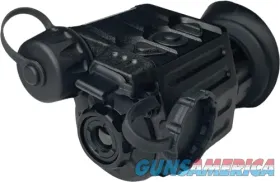
Thermal optics have moved from niche military equipment to tools that regular civilians, law enforcement officers, and prepared homeowners can realistically own and use. The Armasight Warden 640 handheld thermal monocular sits squarely in that space. It is compact, powerful, and purpose built as a scanning and detection tool rather than a weapon mounted optic. That distinction matters, and it is one of the reasons the Warden makes so much sense for real world use.

This review focuses on what the Warden does well, where it fits, and why a handheld thermal is often the smarter first purchase compared to a rifle mounted unit.
Table of contents
- Watch: Warden 640 Thermal Footage And Quick Walkthrough
- What The Warden Is Built To Do And What It Is Not
- Sensor And Core Performance You Can Read At Distance
- 35mm Lens, Practical FOV, And Real Detection Range
- 60 Hz Refresh For Smooth Scans And Clean Tracking
- Display Quality That Matches The Sensor
- Controls That Work In The Dark
- Color Palettes That Favor Fast Detection
- Power: CR123A Simplicity With USB C Flex
- Photo And Video Recording For Proof And Training
- Carry Options That Fit Your Kit
- Where A Handheld Thermal Shines
- Build Quality You Can Trust
- Price And Value For A 640 Core Handheld
- Final Thoughts On The Armasight Warden 640
- Armasight Warden 640 Specifications
- Pros And Cons
- Related Reads From GunsAmerica Digest
- Product Link
Watch: Warden 640 Thermal Footage And Quick Walkthrough
What The Warden Is Built To Do And What It Is Not
The Armasight Warden 640 is a handheld thermal monocular. It is not designed to be shot through, zeroed, or used as an aiming device. It exists to answer one question quickly and reliably: is there something alive out there?
That sounds simple, but in low light or total darkness, that capability changes how you move, observe, and make decisions. Whether you are responsible for clearing property, monitoring a perimeter, or simply trying to understand what is happening beyond your porch light, a handheld thermal gives immediate context without pointing a firearm at everything you see.
🛒 Check Current Price for Armasight on GunsAmericaSensor And Core Performance You Can Read At Distance
At the heart of the Warden is a 640×480 thermal core with a 12 micron pixel pitch. That combination has become the benchmark for serious thermal performance, and for good reason. A 640 core provides enough resolution to distinguish shapes, movement, and relative size without the excessive cost and diminishing returns of higher resolution systems.
The 12 micron sensor improves image detail by packing smaller pixels closer together. In practice, this translates to cleaner edges, better definition, and more usable information at distance compared to older 17 micron systems.
The sensor is rated at NETD 40 mK. NETD numbers are often overstated across the industry, and they should be treated cautiously. What matters more is how the image looks in real conditions. The Warden does an excellent job separating subtle temperature differences, which is exactly what allows animals, people, and vehicles to stand out against cluttered backgrounds.
35mm Lens, Practical FOV, And Real Detection Range
The Warden uses a 35mm germanium objective lens. Germanium is standard for quality thermal optics because it transmits infrared energy efficiently and consistently.
A 35mm lens strikes a smart balance between range and field of view. Larger lenses offer more magnification and longer detection distances but narrow your field of view. Smaller lenses give you a wide picture but sacrifice range. Armasight chose a middle ground that works across multiple scenarios.
Armasight lists detection of a human sized target out to approximately 1,300 meters. That figure aligns with what you would expect from a 640 core paired with a 35mm lens. More importantly, within realistic observation distances, the image remains useful and intelligible rather than just a glowing dot.
60 Hz Refresh For Smooth Scans And Clean Tracking
The Warden runs at 60 Hz. Refresh rate determines how smoothly motion appears. Slower refresh rates can introduce lag or blur when tracking moving targets. At 60 Hz, the Warden feels immediate and natural. Fast moving objects track cleanly, and panning does not produce distracting smear or latency.
For handheld scanning, this matters more than many people realize. A smooth image reduces eye fatigue and makes extended observation easier.
Display Quality That Matches The Sensor
Inside the monocular is a 1024 resolution display. This is a critical but often overlooked component. A high resolution sensor means little if the display cannot present that information clearly.
The Warden’s display is crisp, with good contrast and definition. When combined with proper focus and objective adjustment, the image feels refined rather than grainy or washed out.
Controls That Work In The Dark
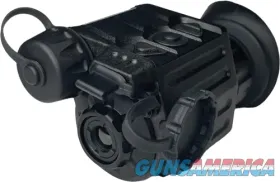
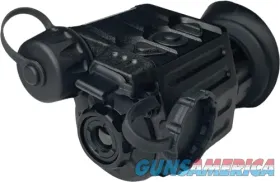
The Warden’s housing is compact and rugged. It feels like a purpose built tool rather than a consumer electronic device. The metal body is lightweight, and the overall unit comes in just under one pound.
Buttons are protected by raised metal guards, reducing the chance of accidental activation. The control layout is simple, using three primary buttons that are easy to learn and operate by feel. The menu system is straightforward, with no unnecessary complexity.

Focus adjustment is located at the objective end and features aggressive texturing. This makes fine adjustments easy, even with gloves or cold hands.
Color Palettes That Favor Fast Detection
The Warden offers multiple color palettes, including white hot and black hot. White hot remains the most intuitive and widely used option, especially for detection and scanning. Targets pop immediately, and the image is easy to interpret.
Color palettes have their place, particularly for specific environments or long observation sessions, but the Warden’s strength is giving you flexibility without forcing complexity.
Power: CR123A Simplicity With USB C Flex
The Warden runs on two CR123A batteries, providing approximately four hours of continuous runtime. Some users prefer internal rechargeable batteries, but there are real advantages to the Warden’s approach.
CR123A batteries are widely available, shelf stable, and easy to carry. When they die, you replace them and keep moving. There is no waiting to recharge and no dependency on external power sources. For preparedness, field use, and professional applications, that reliability matters.
The unit also features a USB-C port, allowing external battery packs or data transfer for photos and video.

Photo And Video Recording For Proof And Training
The Warden can capture both photos and video. This is valuable for documentation, training, evidence collection, or after action review. The ability to record what you see adds utility beyond simple observation.
Carry Options That Fit Your Kit
The Warden includes multiple lanyard attachment points and comes with a quality carrying case featuring MOLLE webbing. It integrates easily into chest rigs, bino harnesses, packs, or duty gear.
There is also a small Picatinny rail on the housing for accessories, though most users will appreciate the Warden’s simplicity and compactness as is.
Where A Handheld Thermal Shines
While thermal optics are often marketed heavily toward hunters, the Warden excels in other roles.
For law enforcement, it offers rapid area scanning, suspect detection, and situational awareness without escalating a situation unnecessarily.
For personal protection and home security, a handheld thermal allows you to identify people or animals on your property before making decisions. You can understand what is happening without pointing a firearm or relying on white light.
For preparedness and survival planning, a thermal monocular may be one of the most valuable observation tools available. In low visibility environments, thermal vision provides information that no flashlight or night vision device can match.
In practical use, a handheld thermal is often used far more than a weapon mounted optic. Scanning with a handheld keeps your rifle down and your awareness up. When a shot is required, that is when a dedicated optic comes into play.
Build Quality You Can Trust
Armasight is an American company, and the Warden reflects that philosophy. The housing is robust, the design is thoughtful, and the overall feel inspires confidence. While the thermal core itself is part of a global supply chain reality, Armasight’s approach to assembly and quality control stands out.
The Warden carries a three year warranty, which is strong reassurance in the thermal optics world.

Price And Value For A 640 Core Handheld
At roughly $3,500, the Warden sits in a competitive but realistic price range for a 640 core thermal. It is not entry level, but it is far from out of reach for serious users who want reliable performance without stepping into extreme pricing territory.
Given its capabilities, build quality, and versatility, the Warden represents solid value.
Final Thoughts On The Armasight Warden 640
The Armasight Warden 640 is a well executed handheld thermal monocular that prioritizes usability, durability, and real world performance. It delivers strong image quality, intuitive controls, and practical features without unnecessary complication.
For anyone considering thermal optics for law enforcement, personal security, preparedness, or general situational awareness, a handheld unit like the Warden is often the smartest place to start. It answers questions quickly, works in any lighting condition, and integrates seamlessly into existing gear.
The Warden does exactly what it is supposed to do, and it does it well.
Armasight Warden 640 Specifications
| Model | Armasight Warden 640 |
|---|---|
| Sensor Resolution | 640×480 |
| Pixel Pitch | 12 micron |
| NETD | <40 mK |
| Objective Lens | 35mm germanium |
| Refresh Rate | 60 Hz |
| Display Resolution | 1024 |
| Magnification | 2.8x |
| Detection Range | Up to 1,300 meters on human sized targets |
| Power Source | Two CR123A batteries |
| Runtime | Approximately 4 hours |
| Weight | Just under 1 lb |
| Recording | Photo and video capture |
| Interface | USB-C |
| Warranty | 3 years |
| MSRP | $3,500 |
Pros And Cons
- Pros: Crisp 640×480 core, smooth 60 Hz motion, practical 35mm lens, simple controls, CR123A field readiness, photo and video recording, robust housing.
- Cons: Not an aiming device, runtime limited to about 4 hours on CR123A, higher cost than entry level 384 units.
Related Reads From GunsAmerica Digest
- Best Thermal Monoculars Buyer’s Guide
- Thermal vs Night Vision: Field Lessons
- Handheld Thermal Scanning Tactics
Product Link
Armasight Warden 640 Thermal Monocular
https://armasight.com/warden-640-2-8×35-thermal-monocular/
Available on GunsAmerica Now

As the Editor-in-Chief of GunsAmerica, Hunt365, Decoding Darkness, and Suppressor Academy, True Pearce brings a rare blend of legal expertise, competitive shooting credentials, and deep hunting knowledge to the forefront of the firearms world. A former professional sponsored 3-Gun and Multigun competitor with multiple championships and titles, True’s shooting career began in long-range and tactical sniper matches—and he still burns powder in precision competitions, now branching into Hunter NRL.
A certified firearms instructor who has trained over 10,000 students face-to-face, True has also served on both sides of the courtroom as an attorney and currently as an elected Prosecuting Attorney. He has prosecuted and defended high-profile self-defense and firearms cases, giving him a unique, real-world perspective on the Second Amendment.
Outside the courtroom and off the range, True is a true western outdoorsman. A lifelong hunter and rancher, he rides and hunts off his own string of horses and pack animals, chasing elk, mule deer, wolves, coyotes, and anything else in season. He’s a longtime reloader, producing both precision rifle ammo and, back in the day, handloading over 40,000 rounds of 9mm and 5.56 annually for competition.
He’s also a thermal and night vision expert, known for his obsession with high-end optics, and is rarely found without a camera or a guitar nearby. Whether he’s glassing a distant ridge, reviewing cutting-edge gear, or deep in legal research, True brings passion, precision, and grit to everything he does.
Experience:
– Professional Shooter – Sponsored 3-Gun & Multigun competitor with multiple titles and a foundation in long-range and sniper/tactical matches.– Firearms Instructor – Certified instructor with over 10,000 students trained face-to-face.– Elected Prosecuting Attorney – Attorney with real-world experience defending and prosecuting self-defense and gun-related cases.– Hunter & Rancher – Horseback hunter with a working ranch, passionate about elk, deer, predator, and backcountry hunting.– Reloading & Ballistics Expert – Precision reloader and former high-volume competition handloader.– Optics Authority – Known for his deep knowledge and unrelenting standards in optics, thermal, and night vision gear.– Outdoor Creative – Avid photographer, guitar player, and outdoorsman with a sharp eye for gear and storytelling.– 2A Advocate – Committed to protecting the Second Amendment and educating Americans about their rights and responsibilities.